
 Published on and written by Cyril Jarnias
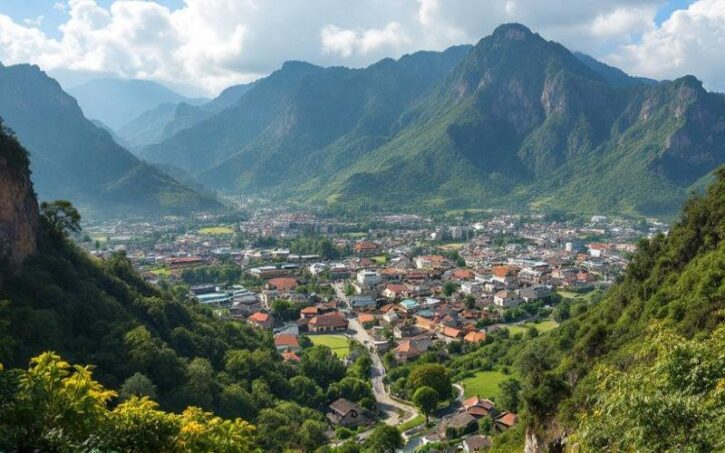
Nestled in the heart of the Pacific, Palau is often associated with spectacular coral reefs, turquoise lagoons, and a deeply rooted island culture. However, the archipelago has also developed, within just a few decades, a unique educational landscape, where public schools, private religious institutions, burgeoning international structures, and a single community college serving as a mini-university coexist. For expatriate families, diplomats, NGO staff, or multinational company executives, the question is simple: where to enroll their children under good conditions, without compromising a potential return to North American, European, or Asian systems?
The best international options are primarily located in Koror, the former political center and current economic heart of the country. This article details the national educational framework, schools offering American and international programs, and the role of Palau Community College for older students.
An Educational System at the Crossroads of Influences, Dominated by the American Model
Before diving into international schools per se, one must understand the backdrop. The Palauan educational system is largely modeled on the American system: compulsory schooling until age 16 or until obtaining a high school diploma, a division into elementary (grades 1 to 8) and secondary (grades 9 to 12), a credit-based rather than strictly year-based progression, and instruction largely conducted in English.
Percentage of children aged 6 to 17 enrolled in the primary public sector in Palau.
The common core in public schools emphasizes English, Palauan language, mathematics, science, and social studies. Literacy and numeracy are central, as are environmental education and the affirmation of cultural identity. This focus is not incidental in a country pioneering marine conservation: the reefs, fisheries, and lagoons are both classroom and real-life laboratory.
For expatriates, public schools offer immersion but with variable resources and support for non-English speakers. Private international schools, concentrated in Koror, provide a homogeneous pedagogical standard close to North American, European, or Asian norms, within a Palauan setting.
Koror, Epicenter of International Schools
Palau does not host a forest of international schools like Singapore, Dubai, or Hong Kong. But around Koror, a few institutions structure the offer for foreign families and for a segment of the local elite. Among them, two names consistently appear in specialized resources: Koror Academy and International School Palau (ISP). In addition to these, there are more traditional private schools—often religious—that, without claiming the “international” label, nonetheless operate in English and follow American or global frameworks, such as Palau Mission Academy or certain Catholic institutions.
In the Palauan context, international schools are typically institutions that offer a curriculum aligned with international educational standards, often taught in English or another foreign language, and that host a diverse student population, frequently including expatriates. They generally distinguish themselves from the national school system through their curriculum, pedagogical methods, and sometimes their tuition fees.
– use English as the primary language of instruction;
– are inspired by foreign programs (American, British, IB, etc.) or formally apply them;
– welcome both local and foreign students;
– have high tuition fees relative to the local cost of living but offer small class sizes, varied extracurricular activities, and facilities above the public sector average.
Their goal is not only to ensure educational continuity for children who may change countries after a few years. It’s also to maintain strong compatibility with the most sought-after post-secondary pathways, whether in the United States, Canada, Europe, or Australia.
Koror Academy: A Pre-K to Grade 12 Continuum on an American Program
Koror Academy is frequently cited as one of the main privately-run schools with an international orientation in the archipelago. It offers continuous schooling from kindergarten (pre-K) to grade 12, making it an appreciated “all-in-one” institution for families wanting to avoid school changes at each level.
An American Curriculum for Mobile Students
The school adopts an American curriculum, aligned with the standards commonly used in K-12 schools in the United States. Concretely, this means:
– programs structured by level (kindergarten, elementary, middle, and high school);
– progression by credits and modules, allowing each course to be valued for a future American university application;
– continuous assessment (quizzes, projects, participation) rather than solely based on final exams.
The school program includes core subjects (English, mathematics, science, social studies) complemented by variable electives (arts, technology, etc.). Instruction in English, within an English-speaking island context, facilitates future reintegration into an American or Canadian school system.
School Organization and Student Profile
Even though precise enrollment numbers are not public, international schools in Koror generally operate with smaller classes than large public schools, which enhances individualized follow-up. The student population at Koror Academy combines children of diplomats, NGO employees, staff of international organizations, and local families with the means to afford high tuition fees.
Annual fees per child amount to several thousand US dollars, a significant level relative to the local average income.
English Language Instruction and Language Support
Koror Academy delivers instruction in English, while providing support for students for whom it is not their native language. ESL (English as a Second Language) programs can be implemented, whether through dedicated classes, small group support, or pedagogical adaptations. For Francophone families or those from non-English-speaking countries, this support is a key factor for successful integration.
International School Palau (ISP): An American Anchor, an IB Opening
International School Palau (ISP) stands out for a dual characteristic: it is a private school with an American curriculum, but it also offers an International Baccalaureate (IB) Diploma Program at the high school level. This positioning makes ISP a particularly attractive option for families explicitly aiming for higher education abroad, especially in Europe and the Commonwealth.
American Program Day-to-Day, IB as the Culmination
At the elementary and early secondary levels, ISP operates as a classic American school: instruction structured in K-12, standards such as Common Core or equivalents, importance placed on participation, projects, group work, and assessment via GPA (Grade Point Average). English is the language of instruction, and the school culture emphasizes creativity, initiative, and student responsibility.
A rigorous two-year study program for high school seniors, following the standard IB model.
Designed for high school seniors, the program typically spans two years.
The program follows the standard and recognized International Baccalaureate model.
– six subject groups (language and literature, foreign language, individuals and societies, experimental sciences, mathematics, arts or an elective);
– a common core (Theory of Knowledge, Extended Essay, Creativity-Activity-Service);
– courses at Standard Level (SL) or Higher Level (HL);
– a mixed assessment, combining internal assessments and external exams graded from 1 to 7, for a maximum total score of 45 points.
Advantages of the IB for a Student Schooled in Palau
The use of the IB DP in an island environment like Palau is strategic. The IB is the only truly global curriculum, offered in over 160 countries and recognized by universities worldwide. For a student who has grown up in a relatively isolated setting, validation of this diploma is an academic passport: it attests to a demanding level of critical thinking, research skills, and the ability to work in an intercultural context.
The International Baccalaureate (IB) is known for its intensive workload. At ISP, reasonably sized classes provide favorable support to meet this demand. The high tuition fees fund the specific costs associated with IB authorization, including teacher training, educational resources, and external assessments.
A “International” Environment on a Human Scale
Even though ISP remains a small structure compared to a large Asian international school, its school community is typically diverse: Palauan children, Micronesians from other states, children of American, Asian, or European nationals, members of environmental NGOs, etc. This diversity provides on a daily basis the mix of cultures that IB and international programs precisely seek to cultivate pedagogically.
The school offers, like other institutions of the same profile, a range of extracurricular activities (sports, clubs, community projects) that promote both local integration and “global” socialization.
Private Religious Schools: A Compromise Between Local and International
Alongside Koror Academy and ISP, several private religious institutions play an important role for families seeking English-language instruction in a setting that is both local and outward-looking. Among them: Palau Mission Academy (PMA), Emmaus-Bethania High School, Belau Modekngei High School, Mindszenty High School, and Maris Stella Elementary School.
Palau Mission Academy (PMA): Boarding, Vegetarianism, and Adventist Network
Palau Mission Academy, better known by the acronym PMA, is a four-year secondary school belonging to the Seventh-day Adventist Church. Located in Ngerikiil, in the state of Airai, it welcomes students of diverse origins and is distinguished by several strong characteristics:
This first Adventist institution in Micronesia stands out through several fundamental aspects of its educational project.
The first Adventist institution in Micronesia to offer this type of residential structure for its students.
A vegetarian diet is integrated into the institution’s educational project.
Active participation in local competitions through the Belau Inter-school Interscholastic Athletics Association.
Instruction is delivered in English and follows North American frameworks, allowing students to eventually consider higher education within the international Adventist network or at other universities. Without presenting itself as an “international school” in the marketing sense, PMA nonetheless offers a multicultural and English-speaking environment, interesting for certain expatriate profiles, especially those sensitive to the religious dimension or to a more structured living environment (boarding).
Other Accredited Private Schools: Quality Overseen by WASC
Several other private institutions – Emmaus-Bethania High School, Belau Modekngei High School, Mindszenty High School, Maris Stella Elementary School – have obtained accreditation from the Western Association of Schools and Colleges (WASC), the same regional entity that accredits many international schools in Asia and the Pacific.
WASC accreditation, granted for a maximum of six years and sometimes renewed for three years, certifies compliance with strict requirements regarding governance, pedagogical quality, student support, and continuous improvement. Although not all these schools offer specifically IB or British programs, this accreditation ensures their diplomas and transcripts are widely recognized, facilitating admission to American universities in particular.
Understanding Accreditation: WASC, IB, and International Recognition
In Palau, accreditation plays a key role in assessing the quality and “internationality” of schools. Two acronyms constantly recur: WASC (Western Association of Schools and Colleges) and IB (International Baccalaureate).
The ACS WASC accredits public schools (like Palau High School), private schools, and Palau Community College. The full six-year accreditation cycle is based on self-study, a visit by experts, and an action plan. For expatriates, this accreditation is a mark of seriousness for a school.
For its part, the IB is run by a global foundation that authorizes schools to offer its programs (PYP, MYP, DP, CP) after a long candidacy and pedagogical compliance process. In Palau, ISP is positioned on the IB Diploma for secondary school, which complements the WASC framework and further strengthens the international portability of the educational path.
The following table illustrates, in a synthetic way, how these systems combine in the Palauan landscape.
| Type of Accreditation | Institutions Concerned (examples) | Main Effect for Families |
|---|---|---|
| WASC (ACS/ACCJC) | Palau High School, several public elementary schools, Palau Community College, private schools (PMA, Emmaus-Bethania…) | Regional and American recognition of diplomas and credits |
| IB (Diploma) | International School Palau (high school level) | Worldwide recognition, strong visibility for universities outside the US |
| Religious Accreditations / Church Networks | Palau Mission Academy, Palau SDA Elementary, etc. | Integration into international faith-based educational networks |
Costs, Daily Life, and Extracurricular Activities
As in most countries where international schools represent a niche, the financial question is central. Tuition fees at private institutions in Koror are in the thousands of dollars per year, with variations according to level, services included (meals, transportation, activities), and the school’s reputation. Even if precise fee schedules are not always public, sources agree: for local families, these amounts are “very high”; for expatriates from Western Europe, North America, or East Asia, they often remain lower than fees charged in Singapore, Tokyo, or London.
Estimated annual cost for a student in Palau, including housing, food, transportation, and other monthly expenses.
International schools, private or assimilated, enrich this framework with a wide range of extracurricular activities: sports (volleyball, basketball, swimming), arts clubs, science workshops, community service actions. These activities have a dual role: they complement academic learning and facilitate the integration of children from diverse backgrounds.
Homeschooling: A Regulated Option
Palau allows homeschooling, but within a framework regulated by the Ministry of Education. Families wishing to opt for homeschooling must obtain official approval and demonstrate compliance with specific guidelines, particularly regarding pedagogical content, assessment, and workload.
For some expatriates, homeschooling can serve as a temporary solution, for example while waiting for a spot in a highly sought-after international school, or as a transition device between two school systems. However, this approach requires significant availability and pedagogical expertise within the family, and does not always guarantee structured socialization comparable to that offered by institutions like Koror Academy, ISP, or PMA.
Palau Community College: A Pivot for Higher Education
While not a “international school” in the K-12 sense, Palau Community College (PCC) is essential in the educational landscape, even for students from international tracks. The country’s only post-secondary institution, located in Koror, PCC awards Associate degrees (two years) and certificates in fields directly aligned with the local economy and national priorities.
A Bilingual Community College, Accredited by WASC
PCC is a public institution, founded in its current form in 2006, but heir to a vocational school created in 1926. It has about 500 to 550 students, with a student-to-staff ratio of about 5 to 1, and welcomes young people from five different nationalities. English is the primary language of instruction, facilitating the arrival of students from abroad or the Pacific region. The college is accredited by the Western Association of Schools and Colleges (WASC) via the ACCJC, which guarantees a certain equivalence of its degrees in the American system.
The programs offered cover a broad spectrum:
Palau Community College offers a range of associate degree programs designed for university transfer or direct entry into the workforce.
Program in liberal arts or Palauan studies (minimum 65 credits), designed for subsequent transfer to a four-year university.
Degrees in professional fields: education, information technology, agriculture, environmental and marine technology, accounting, tourism, hospitality, and construction.
Customized and technical curriculum, focused on specialized skills for specific careers.
PCC also stands out for its education programs, the only local pathway for teacher preparation, with specializations in general education, early childhood, elementary education, and certificates for secondary education and early childhood development.
Costs, Scholarships, and International Student Body
For a foreign student, the cost of studying at PCC is moderate compared to Western universities. The per-credit rate is around 140 to 155 USD; a full-time semester (12 to 15 credits) thus costs between 1,680 and 2,325 USD. For an academic year, the tuition fee range for an international student is approximately between 3,500 and 4,800 USD.
The estimated total annual cost for a student living in a PCC dormitory, including tuition, additional fees, and expenses for books and supplies.
PCC offers several aid mechanisms:
– Board of Trustees Scholarships awarded based on academic and/or social criteria;
– scholarships from the Endowment Fund, often targeted at specific sectors (marine science, education…);
– a Work-Study program, allowing part-time students (at least 6 credits) in good academic standing to work on campus to fund part of their expenses.
Students from other Micronesian countries or benefiting from bilateral agreements may sometimes obtain partial fee reductions or exemptions. For other international students, it is necessary to contact the admissions office to inquire about possible aid. Admission and compliance with immigration rules require proof of financial resources, often amounting to 10,000 USD for a single student, with an additional amount per dependent.
International Admissions: Procedures and Language
To enroll at PCC, international applicants must provide a complete application dossier: form, high school diploma or equivalent, official transcripts (and certified translation if needed), proof of English proficiency, financial documents, health and vaccination records, copy of passport, and, in some cases, previous higher education transcripts for credit transfer.
Proficiency in English is essential, especially at the academic level. PCC may require standardized test scores (TOEFL, for example), or assess the level through internal placement tests or proof of previous schooling in English. International student status also requires compliance with Palauan immigration laws: entry permit, possible work authorization under the Work-Study program, health insurance.
The following table summarizes the main financial parameters for a foreign student at PCC.
| Element | Annual Estimate (USD) |
|---|---|
| Tuition (24–30 credits) | 3,500 – 4,800 |
| Books and Supplies | ≈ 1,200 |
| Housing + Meals (dormitory) | ≈ 3,381 (average room & board) |
| Miscellaneous Fees (registration, technology, health, activities) | ≈ 610 – 700 |
| Estimated Total On-Campus Cost | ≈ 9,000 – 9,500 |
Continuing Studies: From Palau to Universities in the Pacific and Beyond
One of the challenges for families choosing an international educational path in Palau is the prospect of higher education. On this point, the country does not yet have a full-fledged university awarding complete bachelor’s degrees on site; PCC remains an associate-degree-level institution. Students wishing to pursue a bachelor’s or beyond generally go abroad.
Several pathways exist:
Palau Community College (PCC) collaborates with the University of Guam, Hawai’i, and the University of the South Pacific (USP) for hybrid or transfer programs, allowing PCC graduates to pursue bachelor’s or master’s degrees without starting over. A recent agreement notably allows Palauan teachers to prepare for a specialized bachelor’s degree in elementary education without leaving Palau. The region also benefits from scholarship and exchange networks via the Pacific Islands Forum, PREL, Australian scholarships, and aid linked to the Compact of Free Association with the United States.
For students who have followed an IB education at ISP or a solid American track at Koror Academy, orientation towards universities in Australia, Japan, the United States, or Europe is greatly facilitated: their applications are legible and compatible with international requirements.
A Unique Learning Environment: Open-Air Marine Laboratory
Beyond programs and credits, Palau’s primary argument for an international family lies in its environment. Few countries offer such an extensive natural laboratory for studying reefs, mangroves, marine conservation, or climate issues. Schools, whether public or private, widely integrate this dimension into their activities: sea outings, environmental science projects, collaborations with conservation NGOs, participation in citizen science programs.
For high school students doing an IB Extended Essay on an ecological topic or students in environmental and marine technology, the country constitutes an exceptional field of inquiry. Opportunities such as internships, volunteer work, or scholarships may sometimes cover housing and food while allowing for the earning of academic credits. This applies especially in the context of NGO internships or marine fellowship-type programs.
Choosing an International School in Palau: Balancing Family Goals and Local Reality
Given the limited but real offer in Palau, choosing an international school involves a set of precise trade-offs.
For a highly mobile family, who knows a return to North America, Europe, or Asia is likely in the medium term, International School Palau is attractive for its dual anchor: American curriculum and International Baccalaureate in high school. It maximizes academic portability, at the cost of high tuition fees and a significant workload in secondary school.
Koror Academy offers a complete educational path, from pre-K to grade 12, entirely structured on the American model. This program allows for integration into a North American university or a switch to an International Baccalaureate (IB) at another institution. Although its framework is less formally ‘branded’ than that of an IB school, the K-12 logic remains perfectly suited to the classic trajectories of expatriate families.
Private religious schools – led by Palau Mission Academy – attract families sensitive to tighter supervision, boarding, or strong religious values. They can also offer, for some, an interesting financial or geographical compromise, especially outside the center of Koror.
Public schools, finally, should not be dismissed out of hand. WASC-accredited for a growing number of them, they provide an excellent springboard for deep cultural immersion, a solid level of fluent English, and integration into local society, even if support systems for non-English-speaking students remain improvable.
In all cases, the country’s small size implies limited capacity. It is better to anticipate enrollment procedures, check seat availability, clarify admission modalities (tests, interviews, dossiers), and, if necessary, consider transitional solutions (partial homeschooling, complementary online courses, tutoring).
Conclusion: A Small Country, Possible Global Trajectories
Palau will never rival, in the number of institutions, the great capitals of international education. But the country offers an unusual mix of safety, reasonable cost of living, unique natural environment, and increasingly globally aligned educational programs. In Koror, Koror Academy and International School Palau structure the offer for expatriate families, while private religious schools and a public network in the process of improving quality complete the picture. For higher education, Palau Community College plays the pivotal role, opening doors to universities in the Pacific, the United States, and beyond.
For families seeking to combine adventure and academic excellence, international schools in Palau offer a unique opportunity. Education there is set in an environment where the ocean, local culture, and learning interact daily, far beyond a mere fallback solution.
Disclaimer: The information provided on this website is for informational purposes only and does not constitute financial, legal, or professional advice. We encourage you to consult qualified experts before making any investment, real estate, or expatriation decisions. Although we strive to maintain up-to-date and accurate information, we do not guarantee the completeness, accuracy, or timeliness of the proposed content. As investment and expatriation involve risks, we disclaim any liability for potential losses or damages arising from the use of this site. Your use of this site confirms your acceptance of these terms and your understanding of the associated risks.

Cyril Jarnias is an independent expert in international wealth management with over 20 years of experience. As an expatriate himself, he is dedicated to helping individuals and business leaders build, protect, and pass on their wealth with complete peace of mind.
On his website, cyriljarnias.com, he shares his expertise on international real estate, offshore company formation, and expatriation.
Thanks to his expertise, he offers sound advice to optimize his clients' wealth management. Cyril Jarnias is also recognized for his appearances in many prestigious media outlets such as BFM Business, les Français de l’étranger, Le Figaro, Les Echos, and Mieux vivre votre argent, where he shares his knowledge and know-how in wealth management.





