
 Published on and written by Cyril Jarnias
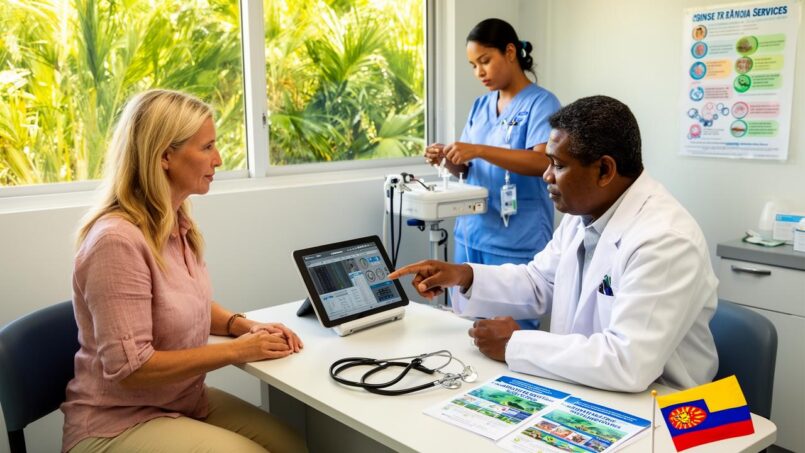
Moving to Palau sounds dreamy: turquoise lagoons, jungle-covered islands, laid-back vibe. But for an expat, health considerations can’t be summed up by a lagoon view. Between a healthcare system designed primarily for a small island population, costly medical evacuations, and sometimes confusing insurance, it’s best to arrive prepared.
The local Palauan healthcare system has limited capabilities. It is crucial for expats to obtain suitable international health insurance, specifically covering medical evacuations, long-term treatments, and to research required vaccines and specific tropical health risks for the region.
Understanding the Palauan healthcare system as an expat
Palau’s healthcare system is a mix of public facilities and private clinics. It is designed for a population of about 18,000, scattered across a dozen inhabited islands, with a high concentration (around 70%) in Koror State.
The Ministry of Health and Human Services (MHHS) plays a central role. It oversees the Belau National Hospital, public health services (prevention, environmental health, mental health, epidemiology, oral health) and a network of community health centers on the outer islands.
For an expat, this means two essential things: access to basic care is real and generally effective, but as soon as complex conditions or serious emergencies arise, limitations quickly become apparent and evacuation abroad becomes a very likely scenario.
Belau National Hospital: the backbone of the system
The Belau National Hospital, located in Koror (Meyuns), is the national and main referral hospital. It is an acute-care hospital with about 80–100 beds (some documents mention 65–75 beds depending on the period), originally built with American financial support and designed to meet modern standards.
It includes:
Explore the full range of medical services and specialties available at our facility to ensure comprehensive care.
Emergency medical service open around the clock for immediate care at any time.
Surgical management for a wide range of procedures and conditions.
Diagnosis and treatment of complex and systemic diseases in adults.
Specialized medical care dedicated to children and adolescents.
Comprehensive support for pregnancy, childbirth, and postnatal follow-up.
Technical platform including radiology and medical laboratory.
Dispensing and management of medications within the facility.
Adult and neonatal intensive care units.
Equipped operating rooms for surgical procedures.
Important feature for a diving country: the hospital has a hyperbaric chamber to treat decompression sickness, which is strategic for expats who are diving enthusiasts or work in the industry.
For most expats living in Koror or on Babeldaob, the hospital is accessible within two hours of travel. This is largely sufficient for routine consultations, minor injuries, common infections, uncomplicated births. Problems start when the condition requires specialized surgery, prolonged heavy intensive care, or complex treatments (interventional cardiology, advanced oncology, complex orthopedics, etc.).
Community Health Centers: territory coverage, limited capacities
Outside Koror, access to the Belau National Hospital can be difficult. This is where the network of ten Community Health Centers (CHCs), spread across different states to provide local care, comes in:
| Community Health Center | Main Location |
|---|---|
| Koror Central CHC | Koror |
| Koror Out-patient Department | Koror |
| Ngarchelong CHC | Ngarchelong |
| Eastern CHC | East Coast (Babeldaob) |
| Western CHC | West Coast (Babeldaob) |
| Central CHC 2 (Airai) | Airai |
| Kayangel CHC | Kayangel |
| Southern (Peleliu) CHC | Peleliu |
| Angaur CHC | Angaur |
| Southwest Islands CHC | Southwest Islands |
These centers provide general medicine consultations, maternal and child health follow-up, vaccinations, management of the most common chronic diseases, some minor procedures, and stabilization of emergencies before transfer.
Health centers on the outer islands suffer from a chronic shortage of medical staff and often operate as dispensaries. For an expat, it’s crucial to anticipate that in case of a serious emergency, evacuation to Koror (often by boat and road) is a long and perilous journey.
Private clinics: more comfortable alternatives, but limited in number
Alongside the public sector, a few private clinics have developed, mainly in Koror. According to sources, there are three to five private medical clinics, a private dental center, and an independent private pharmacy. They offer:
– General medicine and quick consultations
– Minor surgeries and treatment of minor injuries
– Pediatric consultations
– Diving medical exams, occupational medicine
– Dental care (check-ups, cavities, extractions, dental X-rays)
– Optical care and eyeglass prescriptions
– Wellness services
Private clinics generally offer shorter wait times than public hospitals, more flexible hours, and a more comfortable environment. For expats, they are often the first point of contact, especially for treating minor ailments or regular medical follow-ups.
However, the cost is higher, and the general rule remains the same: immediate payment required, most often in cash or by credit card.
A system generally effective for routine care, fragile for complex cases
On paper, Palauan authorities aim for universal health coverage. Citizens and legal residents are entitled to public care, mostly subsidized. Wait times are even reported to be shorter than in large countries for many procedures.
But the structural reality remains that of a country with 18,000 inhabitants, isolated in the middle of the Pacific, with limited resources and a shortage of specialists. Officially, just over 80% of adults report having health insurance, and more than half have had a recent annual medical exam. Yet, about 14% say they have forgone care in the past year due to financial or transportation constraints.
For an expat, it’s therefore important to distinguish what the local system handles well — routine care, prevention, simple emergencies — and what will eventually require leaving the country.
Health insurance: the cornerstone for expats
In Palau, healthcare is not free for foreigners. Even in the public sector, a non-citizen pays for care, sometimes at rates significant by local standards. Add to this a much heavier factor: the near-impossibility of treating certain serious conditions on-site, making medical evacuations to the region (Philippines, Taiwan, Guam) or to Hawaii frequent. These evacuations easily cost tens of thousands of dollars.
Without appropriate coverage, an expat therefore faces a dual risk: financial and health-related. Hence the importance of understanding the options well: local insurance versus international coverage.
Palauan-side health financing: useful to know, but largely inaccessible to foreigners
For citizens and legal residents, the country has set up an original system, the National Healthcare Fund, established by the 2010 funding law. It consists of:
– A national health insurance (National Health Insurance), which covers hospitalizations and partially funds care sent abroad
– Individual Medical Savings Accounts (MSA) for outpatient care, check-ups, certain medications or private insurance premiums
Each employee and their employer contribute 2.5% of the salary. Seniors (from 60–65 years depending on the scheme) benefit from public coverage of their contributions. The fund reportedly covers about 95% of the population and funds hundreds of medical referrals abroad each year.
Palau’s public healthcare system allows hospitals to treat citizens without resources and the state to fund some medical transfers. However, for expats, this system offers indirect and limited protection. Except in very special cases, they do not have access to it on the same terms as citizens and must absolutely obtain private health insurance to cover their medical expenses.
Local or international insurance: what to choose concretely in Palau?
For a new resident, the question often arises: should you get local insurance or international health insurance?
Local Palauan insurance, like the “Palau Preferred Plan” offered by NetCare, are designed for residents. They offer coverage with no deductible for many services, an annual and lifetime maximum, defined copayments (e.g., a fee for 90 days of certain medications), and a clear referral mechanism to partner care centers in the Philippines or Taiwan.
A key point: to be covered outside Palau, a prior referral from an approved doctor, validated by the insurer, is required. Without this procedure, no coverage abroad. Care received from non-partner providers outside Palau, the Philippines, and Taiwan is generally not reimbursed. The insurance also includes specific limits per type of condition, e.g., for chronic orthopedic conditions (cap of $5,000 per contract period).
From an expat’s perspective, these local plans have several weaknesses:
– Restricted geographical coverage (Palau + a few targeted partner countries)
– No coverage for prolonged stays outside Palau beyond a certain number of consecutive days
– Little to no coverage if you return to your home country for treatment
– Numerous exclusions (dental care except accidents, fertility treatments, certain paramedical procedures, etc.)
– Rigid referral procedures for care abroad
Conversely, international health insurance (IPMI – International Private Medical Insurance) is designed for expats and globalized lifestyles. It offers:
– Worldwide or regional coverage (e.g., worldwide excluding the US, or worldwide including the US)
– The possibility of being treated in many countries, even in your home country, without changing contracts
– High reimbursement ceilings (often over a million dollars per year)
– Medical evacuation and repatriation included as standard
– Freedom to choose doctors and hospitals within a large international private network
– Service in multiple languages, with 24/7 emergency assistance
– Modular options (hospitalization only, + outpatient, + maternity, + dental, etc.)
In return, premiums are significantly higher than for simple local insurance. But in Palau, where a single serious medical event can ruin a budget, this extra cost must be compared to the real risk.
Five pillars for evaluating insurance when living in Palau
A useful framework for comparing offers involves examining five essential aspects:
| Analysis Pillar | What it means in Palau |
|---|---|
| Coverage Ceilings | Ability to absorb an air evacuation + care in a third country |
| Geographical Area Covered | Does it include Palau, your regional travels, your home country? |
| Medical Evacuation | Full coverage for evacuations to Philippines/Taiwan/Hawaii |
| Network & Direct Billing | Partner hospitals, direct settlement of major bills |
| Management of Pre-existing Conditions | Exclusions or surcharges for pre-existing illnesses |
In Palau, the “Medical Evacuation” pillar is non-negotiable: certain types of cancer, complex heart conditions, or neurosurgical emergencies simply cannot be treated locally. You must also ensure the contract covers hospitalization and care in the countries to which patients are typically transferred: Taiwan (notably Shin Kong Wu Ho‑Su Memorial Hospital), the Philippines, Guam, or Hawaii.
Pre-existing and chronic conditions: a delicate issue
Expats living with chronic diseases (diabetes, heart failure, cancer, kidney failure, autoimmune diseases, COPD, severe psychiatric disorders) face a harsh reality: most international insurers refuse to cover these known conditions, or accept them with exclusions and/or significant surcharges.
It is crucial to understand the systematic distinction between:
– Pre-existing conditions (diagnosed or manifest before enrollment)
– New conditions (diagnosed after the policy takes effect)
Pre-existing conditions are generally excluded or subject to strict conditions. Conversely, illnesses contracted after the policy is taken out are covered, even if they evolve into chronic and costly forms.
For those with a serious pre-existing condition, two paths exist:
– Group contracts negotiated by an employer or large organization, which can sometimes be arranged “medical history disregarded”, i.e., without exclusion of pre-existing conditions
– A combination of international coverage (for new risks) and local or home country national coverage for the known condition, accepting that part of the care will be out-of-pocket
In all cases, full transparency upon enrollment is imperative. Omitting a medical history can lead to a denial of coverage when a claim is made, or even to policy cancellation.
Why simple travel insurance is not enough for an expat
Some people arriving in Palau confuse travel insurance and expat health coverage. Travel policies are designed for short trips. They typically cover:
– Unforeseen medical emergencies
– Evacuation and repatriation
– Trip cancellations, delays, lost luggage
But they do not cover the regular management of a chronic disease, nor check-ups, nor planned care. They are time-limited (a few weeks or months at most) and do not automatically renew for a long-term resident.
For an expat settling in Palau, travel insurance can only serve as a temporary measure, for example during the first few months while setting up appropriate international coverage. Beyond that, it is absolutely necessary to switch to long-term health insurance.
Medical evacuations: a scenario to anticipate, not endure
In Palau, the quality of basic care is generally satisfactory. But for many specialties (interventional cardiology, advanced oncology, complex orthopedics, neurosurgery), the country is officially classified as a “medically underserved area.” Reliance on evacuations abroad is structural.
National statistics show the state spends over two million US dollars per year on medical referrals outside the country. Between 2020 and 2022, the total cost of specialized evacuations exceeded seven million dollars. Oncology and cardiology are the most costly items, with annual amounts in the six figures. Preferred destinations are Taiwan and the Philippines, with Hawaii and Guam involved for a portion of cases.
For an expat, this has several very concrete implications.
The real cost of an evacuation from Palau
A medical air evacuation from Palau — typically to Manila, Taipei, or Honolulu — can easily reach or exceed several tens of thousands of dollars, depending on:
Several factors determine the organization and cost of a medical repatriation. Here are the key elements to consider.
Choice between a dedicated air ambulance, equipped like an intensive care unit, or a commercial flight with specific medical arrangements.
Level of care required during the flight, ranging from simple monitoring to the presence of a full medical team (doctor, nurse).
The length of the journey and the arrival airport influence the type of aircraft, crew, and necessary overflight permits.
Organization of ground transportation (ambulance) between airports and healthcare facilities, including emergency care.
Add to this the cost of the hospital stay at the destination, which can quickly become very high in a country like the United States or Japan. Without appropriate coverage, such an episode can lead to massive debt or force one to forgo optimal care.
How medical referrals work for residents
For Palauans, the Ministry of Health’s Medical Referral Program organizes transfers. The National Health Insurance generally covers 80% of the estimated cost, while the family must cover the remaining 20%. A case study shows a patient whose treatment in Taiwan was estimated at about $17,345 US: national insurance absorbed 80%, leaving the family to pay around $3,500.
Key partner hospitals include:
– Shin Kong Wu Ho‑Su Memorial Hospital (Taipei, Taiwan), a large multidisciplinary facility with over 40 medical departments
– Specialized care centers in the Philippines
– Tripler Army Medical Center and Shriners Children’s Hospital (Hawaii), under specific programs, often with tele-follow-up
For expats, the local health insurance scheme does not apply. It is the international health insurance policy that takes over. It is responsible for coordinating the medical evacuation, choosing the receiving hospital, and covering the financial cost of care.
What good insurance should provide for evacuations
In Palau, medical evacuation should be considered a central component of your protection. The “evacuation and repatriation” clause in an international policy should be judged on several key points:
– Who decides on the evacuation? Ideally: a joint decision between the local treating physician and the insurer’s medical service, not solely the insured.
– Where can you be evacuated to? Some contracts limit it to the nearest hospital capable of treating the condition. Others allow a return to the home country if medically justified.
– What is covered? Medicalized transport, an accompanying person, admission to the destination hospital, possible subsequent return to Palau or the home country.
– Are there specific limits for evacuation? They must be high enough to cover a trans-Pacific journey.
In the absence of this coverage, you must be prepared to pay for the entire operation yourself, which is unrealistic for almost anyone.
Daily access to care: what the local system can really do for an expat
Once insurance and emergency scenarios are clarified, there’s daily life. The good news: for everything concerning basic care, prevention, common infections, minor injuries, and part of chronic disease management, Palau offers a relatively solid provision.
Consultations, exams, and routine care
Expats can receive care in Palau, both in public facilities (Belau National Hospital, Community Health Centers) and private clinics. Services routinely available include:
– General medicine consultations
– Management of hypertension, diabetes, dyslipidemia
– Pediatric consultations, free childhood vaccinations for residents
– Basic gynecology and pregnancy follow-up
– Wound care, minor trauma
– Common lab tests and standard imaging
Population health studies show that just over half of adults have had a recent annual medical exam, indicating fairly frequent use of care. Most facilities operate by appointment, but emergencies can be seen without prior notice.
Wait times are generally reasonable compared to large public systems. However, for certain areas like specialists, advanced imaging, or dental care, saturation can lead to waits of several months for scheduled appointments.
Dental care: accessible, but sometimes slow
Oral health is a major issue in Palau. A significant number of adults report having lost at least one tooth due to cavities or gum disease. Regarding access, studies indicate:
– 94% of surveyed individuals have seen a dentist in Palau at least once
– Nearly 84% have had at least three dental visits in their lifetime
– But less than 40% report having seen a dentist in the past year
The main obstacles mentioned are:
– Long appointment wait times (several months, sometimes up to six to eight months)
– Perceived high costs, especially in the private sector
– Consultation hours conflicting with work schedules
For an expat, this means it’s better to:
For a smooth expatriation, it is crucial to anticipate dental care. Arrive with a recent dental check-up and all major work completed before departure. Plan well in advance for important appointments like surgeries, prosthetics, or orthodontic treatments. On-site, an effective strategy is to combine the public hospital for certain aspects and a private dental center to optimize both wait times and comfort of care.
Telemedicine and international partnerships: an underutilized resource for expats
Thanks to the connection to the SEA‑US submarine cable in 2017, Palau is much better served by high-speed internet. The country has begun building telemedicine programs, including:
– An online referral program with Tripler Army Medical Center in Hawaii, existing since the 1990s, for complex cases
– Tele-follow-ups after surgery with Shriners Children’s Hospital for pediatric orthopedic surgeries
– Remote training and consultations with Shin Kong Wu Ho‑Su Hospital in Taiwan
– A project to create a telemedicine network between Community Health Centers and the national hospital
For an expat, this infrastructure means some specialist opinions can be obtained remotely, without leaving Palau, in partnership with a specialist abroad. But for now, this resource remains mainly organized for the benefit of Palauan residents and official programs; individual use by an expat relies mostly on personal tools (e.g., video conferences with doctors from their home country).
Living with a chronic condition in Palau: continuity of care and medications
Moving to an isolated island country poses particular challenges for those with a pre-existing chronic condition: type 1 or 2 diabetes, heart conditions, autoimmune diseases, kidney failure, psychiatric disorders, etc.
Before departure: preparing your medical file and strategy
Advice from studies on expat health converges:
– Schedule a complete medical check-up before departure, ideally at least four weeks before
– Obtain a detailed medical summary: diagnoses, current treatments (drugs, dosages), important test results, past interventions
– Request this summary in English, even adding a translation in another language if your future doctors require it
– Prepare a concise “health profile” to keep with you: allergies, vital medications, contact details of your doctors in case of emergency
– Scan all these documents and store them securely (health app, encrypted cloud, international medical record service)
This preparation greatly facilitates integrating with a new doctor in Palau, in the public or private sector, and improves coordination with specialists based abroad.
Medications: availability, imports, and prescriptions
Continuity of access to medications is a critical point. The Belau National Hospital pharmacy has many basic medications, but the supply is far from exhaustive, and some specialized products may be unavailable or frequently out of stock.
Recommendations are clear:
– Check, before departure, if the drugs you take are available locally, and under what brand names
– Plan for a longer supply of medications than your initial stay duration, to deal with potential resupply delays or customs issues
– Transport medications in their original packaging, accompanied by the prescription and a doctor’s letter explaining the indication and dosage
– Inquire with Palauan customs about the legality of importing each product to avoid confiscation upon arrival
International insurers have their own drug formularies, prior authorization rules, and reimbursement limits. Coordination between your doctor, your pharmacist, and your insurer is essential to avoid unpleasant surprises.
Adapting disease management to the Palauan environment
Palau is a tropical maritime environment. Heat, humidity, mosquitoes, sun exposure, and local diet can influence the balance of certain conditions. For example:
– Intense heat can alter insulin needs in diabetics, or promote dehydration in heart failure patients
– The presence of mosquitoes carrying dengue or other arboviruses can complicate the management of hematological or immune diseases
– The relative distance from certain advanced exams requires reviewing the frequency or mode of monitoring (e.g., performing certain check-ups outside the country during planned travel)
Hence the importance of building, with a local doctor, a realistic follow-up plan that accounts for available resources on-site, and planning for returns or stays in better-equipped countries for comprehensive assessments.
Specific health risks in Palau: protecting yourself intelligently
Living in the tropics has health implications. Palau does not have all the dreaded tropical diseases, but some risks do exist.
Vector-borne diseases and the tropical environment
Dengue fever is present in Palau, with sporadic outbreaks. Recently, several local cases were reported after years of relative calm. There is no universally recommended vaccine for all travelers; prevention therefore relies mainly on mosquito control:
– Long, light-colored clothing
– Suitable skin repellents
– Mosquito nets, ventilation, and air conditioning when possible
– Eliminating stagnant water around the home
The presence of bats implies a theoretical risk of rabies-related viruses (bat lyssavirus), although no recent human cases have been reported. Pre-exposure vaccination is only recommended for certain high-risk profiles, such as cavers or wildlife professionals.
Digestive illnesses (traveler’s diarrhea, typhoid) remain a classic of tropical countries. Even if drinking water is generally better controlled than elsewhere in the region, caution is still advised:
– Avoid untreated water
– Be mindful of hygiene in restaurants outside tourist areas
– Wash hands regularly or use hand sanitizer
Recommended vaccinations before moving
There is no systematic vaccination requirement to enter Palau (except specific cases like arriving from a yellow fever endemic zone). However, international organizations recommend that any long-term resident or visitor be up-to-date on a number of vaccinations.
In practice, for an expat, the minimum core generally includes: coverage for routine care, hospitalization, medical evacuation, and civil liability abroad.
– Basic boosters: diphtheria-tetanus-polio, pertussis (Tdap)
– Complete vaccination against measles-mumps-rubella (MMR)
– Hepatitis A, highly recommended in tropical areas
– Hepatitis B, especially for long stays or occupational risk
– Typhoid, for those who will often eat outside hotels
– Seasonal flu and COVID‑19, especially for vulnerable individuals
Depending on age, health status, and length of stay, other vaccines may be relevant (pneumococcal from age 65 or if immunocompromised, tuberculosis for children who will live there long-term, etc.). Ideally, consult a travel medicine center at least one to two months before departure.
Emergencies, natural disasters, and personal preparedness
Palau is exposed to typhoons and the effects of climate change. Authorities have developed response mechanisms, but in a small island country, the system’s resilience remains limited.
Emergency services and numbers to know
In a medical emergency, the number to dial is 911, notably in Koror, to request an ambulance. The Belau National Hospital can also be contacted directly by phone. Emergency teams treat both residents and foreigners, without discrimination.
Response times remain reasonable in urban areas but can lengthen significantly once you leave the center of the archipelago, especially on the outer islands.
Upon arrival at the hospital, payment is generally required immediately, in cash or by credit card. Some international insurers offer direct billing, but it’s essential to verify that the facility knows your insurance policy and its coverage arrangements.
KLEMAT: a national emergency medical team in support
Since 2022, Palau has established a national emergency medical team, called KLEMAT. It brings together doctors, nurses, logisticians, and environmental health experts trained according to WHO standards to intervene during disasters or health crises, including in remote areas.
For expats, the presence of the KLEMAT team offers additional protection in case of a typhoon or natural disaster in isolated areas. However, its intervention capacity is modest, as it is sized for a country of less than 20,000 inhabitants and cannot match the resources deployed by large states.
Natural disasters: what to prepare individually
National emergency plans (via the National Emergency Management Office, NEMO) provide for preparation, evacuation, and shelter phases in case of typhoon or major crisis. In practice, an expat would benefit from:
– Familiarizing themselves with NEMO instructions and alert levels (Condition III, II, I)
– Identifying evacuation centers and solid structures near their home
– Maintaining an emergency kit including personal medications, copies of documents, water, non-perishable food, flashlight, radio, etc.
– Ensuring their international insurance also covers injuries or illnesses in the context of a natural disaster
How to build a coherent health strategy as an expat in Palau
All the elements presented lead to one conclusion: in Palau, an expat’s health relies on a balance between smart use of the local system and setting up a solid international safety net.
In practice, a coherent strategy involves several steps.
1. Assess your personal risk profile
Before even choosing insurance or a doctor on-site, ask yourself some clear-eyed questions:
– Do I have chronic diseases or serious medical history?
– Am I in a higher-risk age group (e.g., over 60)?
– What types of activities will I engage in (diving, sailing, offshore work, extreme sports)?
– Will I need regular treatments (psychotropic drugs, insulin, biologics, etc.)?
The more these answers point to vulnerability, the more essential it is to opt for robust international coverage, with few specific limits and options for covering pre-existing conditions if possible.
2. Choose insurance adapted to the Palauan reality
The decision between local and international insurance must be based on concrete criteria, not just the premium amount. In Palau, it is rarely reasonable to rely exclusively on local insurance, unless:
This option is suitable if you are young and healthy, with no plans to travel outside Palau. It also works if you already have solid health coverage in your home country and plan to return there in case of a serious medical problem. Finally, it assumes accepting that specialized consultations are limited to a network of partner healthcare centers.
For most expats, an international health insurance remains the most secure option. It guarantees continuity of coverage when traveling to other countries, more flexible management of evacuations, and access to a vast network of quality hospitals in the Asia‑Pacific region.
3. Organize your care between local and abroad
Once insured, it’s about organizing your actual care pathway:
For routine care, screenings, and minor accidents, use the Belau National Hospital or local private clinics. Plan specialized check-ups, advanced exams, and major surgeries in better-equipped countries, with prior coordination with your insurer. Utilize telemedicine to maintain contact with your specialists from your home country or a major regional center. Finally, plan regular stays in a reference country for check-ups impossible to perform in Palau.
This “shared care” logic requires more organization but allows you to make the best of each system.
4. Become integrated into the Palauan healthcare system
Living in Palau also means accepting to enter the local network:
– Identify in advance the doctor and clinic you will consult first
– Learn the practical procedures (making appointments, payment, opening hours)
– Consider local customs (frequent request for cash payment, importance of family in medical decision-making for Palauans, etc.)
For an expat, good integration into the local healthcare system of the host country facilitates obtaining effective support when needed. This integration can also be an asset in coordinating a potential international referral.
—
Moving to Palau means accepting to live in the heart of an island paradise that lacks the density of medical facilities of a large metropolis or the full range of subspecialties. The local system can adequately handle the majority of common needs and some emergencies. But as soon as serious conditions arise, it relies heavily on foreign partnerships, costly evacuations, and complex logistics.
For an expat, the key is not to avoid this reality, but to account for it from the very preparation of the project: a well-organized medical file, up-to-date vaccinations, anticipated medications, international insurance covering evacuation and serious care, and precise knowledge of what the facilities in Koror and surrounding islands can — and cannot — offer.
This is the price to pay to enjoy translucent lagoons and Palau’s forests serenely, without any health hiccup turning into a personal or financial disaster.
Disclaimer: The information provided on this website is for informational purposes only and does not constitute financial, legal, or professional advice. We encourage you to consult qualified experts before making any investment, real estate, or expatriation decisions. Although we strive to maintain up-to-date and accurate information, we do not guarantee the completeness, accuracy, or timeliness of the proposed content. As investment and expatriation involve risks, we disclaim any liability for potential losses or damages arising from the use of this site. Your use of this site confirms your acceptance of these terms and your understanding of the associated risks.

Cyril Jarnias is an independent expert in international wealth management with over 20 years of experience. As an expatriate himself, he is dedicated to helping individuals and business leaders build, protect, and pass on their wealth with complete peace of mind.
On his website, cyriljarnias.com, he shares his expertise on international real estate, offshore company formation, and expatriation.
Thanks to his expertise, he offers sound advice to optimize his clients' wealth management. Cyril Jarnias is also recognized for his appearances in many prestigious media outlets such as BFM Business, les Français de l’étranger, Le Figaro, Les Echos, and Mieux vivre votre argent, where he shares his knowledge and know-how in wealth management.





