
 Published on and written by Cyril Jarnias
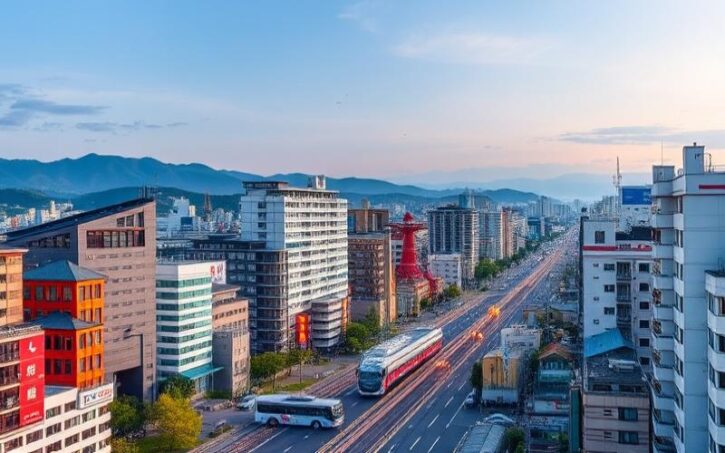
At a time when much of Japan is grappling with an aging population and real estate deflation, the city of [Fukuoka] stands out as an exception. The capital of Kyushu, considered “Japan’s gateway to Asia,” combines population growth, soaring prices, solid rental yields, and major urban projects. The result: its real estate market is now among the most active and most watched in the country, by both Japanese investors and foreign capital.
1600000
Fukuoka has a population of approximately 1.6 million residents, making it an attractive market for real estate investment.
This analysis provides a comprehensive overview of the real estate market in for a French-speaking investor: demographic dynamics, prices, yields, neighborhoods, taxation, risks, not to mention specifics for foreigners.
A red-hot real estate market under control
The first characteristic of is the strength of its price increases. While Japan is only just emerging from decades of stagnation, the city is racking up records.
Between 2015 and 2025, public land prices there surged by nearly 200%, from approximately 120,500 ¥/m² to 239,800 ¥/m². More recently, data shows an annual increase in residential values of around 9% in 2025, the highest among major Japanese cities for the second consecutive year. At the prefecture level, average land prices are still rising 5.5% per year, with increases of 4.9% for residential and 6.5% for commercial.
Good to know:
New condominiums are trading on average between 56 and 60 million yen (about $400,000), with an increase of more than 40% in one year for some types. In the most sought-after neighborhoods in the hypercenter, residences over 100 m² and less than ten years old easily exceed 100 million yen.
Here is a summary of average prices in the city:
| Indicator | Approximate Value |
|---|---|
| Average property price (2025) | 56 M¥ |
| Average land price | 239,800 ¥/m² |
| Average used condo 70 m² (center) | 37–38 M¥ |
| Similar used condo (suburbs/prefecture) | ~23 M¥ |
| Recent single-family home (city) | 40–60 M¥ |
| Single-family home (suburbs) | 30–50 M¥ |
This is far from Tokyo levels: in the capital, a simple two-room apartment often exceeds 50 million yen, while an equivalent apartment in [Fukuoka] can still be found around 30 million or less. At purchase, the cost per square meter in the city center (approximately 785,000 ¥/m²) remains less than half that of Tokyo (approximately 1.62 M¥/m²).
Projections for 2025–2027 nonetheless point to a continued rise, at a more moderate pace of 1 to 3% per year. In other words, the phase of violent catch-up is beginning to level off, but the trend remains clearly upward.
Demographics, economy, quality of life: the three drivers of demand
The price increase in [Fukuoka] is not purely speculative: it rests on fundamentals that few Japanese cities can claim.
A city gaining residents… young ones
While Japan’s population is declining, Fukuoka is a rare demographic oasis. The city has been gaining more than 10,000 residents per year for several years, and between 2015 and 2020 recorded one of the highest increases in the country (more than 73,000 additional residents in five years). It is frequently cited as the major Japanese city with the lowest average age.
The proportion of new arrivals aged 20 to 29 is particularly high, fueling strong rental demand: students, young professionals, tech workers, starting families. The homeownership rate reaches 62%, slightly above the national average (61%), a sign of a solid residential market.
18
Approximately 18% of new tenants in 2024 are foreigners, according to some local agencies.
An economic and technological hub
Economically, Fukuoka is a major regional center: GDP of approximately $154 billion, solid employment (unemployment rate around 4.6%), diversified economy (services, industry, healthcare, logistics, tourism). The city has obtained “Global Startup City” status and a national special zone for startups, with tax breaks and visa schemes for foreign entrepreneurs.
The result is visible: more than 100 local startups, global players like Softbank, Line, Microsoft, and Amazon present locally, an innovation ecosystem structured around projects like Fukuoka Growth Next (an incubator housed in a former school in Tenjin). Kyushu also concentrates a powerful semiconductor and advanced industries cluster, with more than 400 companies linked to this sector in the prefecture alone.
2
The vacancy rate for prime office space, illustrating continuous demand for offices.
A quality of life that attracts
In terms of daily life, Fukuoka accumulates several advantages often highlighted in international livability rankings: relatively mild climate (average 18 °C per year, 67% humidity), sea and mountains nearby, dense but compact transport network, modern hospitals, recognized universities, high density of restaurants and shops.
The city is described as a “compact city”: the airport is connected to the center in about ten minutes by subway, Tenjin and Hakata are only about five minutes apart by train, and most commutes remain under 35 minutes, a national record among large metropolitan areas.
The icing on the cake for investors and residents: a cost of living about 35 to 40% lower than Tokyo, for both rents and everyday expenses. The estimated monthly budget for one person is around $1,100 in Fukuoka, compared to over $1,700 in the capital.
Rental yields: better than Tokyo, with genuine demand
For an investor, the key question remains the price/rent ratio. In this respect, [Fukuoka] clearly stands out from Tokyo.
Higher yields than the national average
Aggregate data indicate an average gross rental yield around 4.2% to 4.3% for the entire city in 2024–2025, a level already higher than Tokyo (often between 3% and 4%). In the city center, ranges rise to 4.5–5.8% for residential, and certain targeted products (studios, small 1K, entire buildings) exceed 7 to 8%, or even 10% in well-chosen cases.
Here is a summary of gross yields by apartment size for all of Fukuoka:
| Apartment Type | Average Gross Yield (all zones) |
|---|---|
| Studio | ~3.80% |
| 1 bedroom | ~3.79% |
| 2 bedrooms | ~3.87% |
| 3 bedrooms | ~4.14% |
| 4 bedrooms and up | ~5.52% |
In the city center (areas like Chuo-ku / Tenjin or Hakata), the hierarchy strengthens:
| Type (city center) | Average Gross Yield |
|---|---|
| 1 bedroom | ~3.25% |
| 2 bedrooms | ~4.01% |
| 3 bedrooms | ~4.34% |
| 4 bedrooms and up | ~6.58% |
Net yields, once management fees, taxes, maintenance, and condominium fees are included, are generally 1.5 to 2 points lower than gross yields. A gross yield of 7% thus frequently translates into 5–5.5% net, which remains very competitive in a large developed market.
Example:
A theoretical example illustrates the difference in net yield depending on property price in Japan: a property worth 20 million yen with a gross yield of 7% generates around 6% net yield, while a property in Tokyo worth 50 million yen with a gross yield of 3.5% leaves only about 3% net yield after deducting expenses.
Rising rents and controlled vacancy rates
Rents in Fukuoka have been on an upward trend for several years. According to Savills, the average level increased by around 17% between 2016 and 2021, while occupancy rates remained above 96%. In 2024, the residential vacancy rate across the market is about 4.9%, and even lower in central neighborhoods.
Typical monthly rent ranges are as follows:
| Housing Type | Average Monthly Rent Range |
|---|---|
| Studio | 42,000 – 65,000 ¥ |
| 1 bedroom | 80,000 – 120,000 ¥ |
| 2 bedrooms | 120,000 – 180,000 ¥ |
| 3 bedrooms | 180,000 – 250,000 ¥ |
In a central ward like Chuo-ku, a studio runs around 58,000 ¥, a 2LDK rather around 140,000 ¥. In highly sought-after areas like Tenjin and Hakata, a comfortable 1LDK or 1K generally rents between 60,000 and 120,000 ¥.
Attention:
Rental demand is mainly driven by three segments: students (university proximity), employees on assignment (services and tech), and young families (lifestyle). Two other significant segments add to this: expats (nearly 20% of new tenants) and travelers (short-term rentals).
The case of short-term rentals
The regulatory framework for short-term rentals is relatively flexible in Fukuoka, although operators must comply with national law (“minpaku” law) or specific hotel regimes. In practice, the city’s Airbnb performance is solid: median monthly income around $1,678, with a median occupancy rate of 61% and nights averaging over $100 in average price.
The best properties — well-located, well-managed, targeting international clientele — sometimes achieve over $5,400 in monthly revenue, occupancy rates above 90%, and daily rates exceeding $270 during peak periods (sakura in March, Golden Week in May, year-end holidays).
For an investor, these figures confirm the appeal of central neighborhoods or those near attractions (Tenjin, Hakata, Nakasu, Ohori Park, Momochi) for hybrid long-term/short-term strategies, subject to compliance with applicable legal frameworks.
Neighborhoods with very contrasting profiles
One of Fukuoka‘s strengths for investors is the clarity of its urban map. The city’s seven main wards (Chuo, Hakata, Minami, Sawara, Jonan, Nishi, Higashi) each have a distinct positioning in terms of prices, target tenants, and appreciation potential.
Chuo-ku: high-end heart and urban laboratory
Chuo Ward, which encompasses Tenjin, Daimyo, Ohori Park, Yakuin, Hirao, and Maizuru, concentrates a major share of [Fukuoka]’s real estate value. Prices for used condos surged 25.7% in 2023 to an average of 36.8 million yen, and some segments far exceed that threshold.
The sub-neighborhoods are clearly differentiated:
| Chuo-ku Sub-area | Average Price per m² (approx.) | Positioning |
|---|---|---|
| Maizuru | ~800,000 ¥ | Ultra high-end |
| Ropponmatsu | ~650,000 ¥ | Affluent family, cultural |
| Yakuin | ~580,000 ¥ | Very central, trendy |
| Hirao | ~550,000 ¥ | Residential, friendly |
| Hakozaki* | ~500,000 ¥ | Changing, affordable |
Hakozaki administratively belongs to Higashi-ku but, in terms of prices, is comparable to certain changing sectors of Chuo-ku.
Tenjin and Daimyo form the commercial and nightlife “lung” of the city. Tenjin is even presented as the largest shopping district in western Japan (outside Kansai). Rents are the highest in [Fukuoka] but remain lower than those in comparable Tokyo neighborhoods. On the yield side, studios and 1Ks are in high demand, with monthly rents of 80,000 to 120,000 ¥ and gross yields potentially reaching 6–8% on certain targeted products. For short-term rentals, nights are frequently billed at 5,000 to 8,000 ¥, or more for well-located properties.
Tip:
The Ohori Park neighborhood in Chuo-ku embodies the luxury residential segment, combining tranquility, greenery, and proximity to the city center. It features large apartments with park views and family homes. Recent properties over 100 m² and less than ten years old regularly reach prices exceeding 100 million yen (¥).
Hakata-ku: transport hub and business center
Hakata Ward is the other pillar of the market. Around Hakata Station — a major railway node (Shinkansen, JR lines, subway) — redevelopment projects are multiplying as part of the “Hakata Connected” program. Land prices there rose 11.5% over one year, with an average price now exceeding 1.25 M¥/m² for land in the most sought-after areas.
The area attracts a clientele of employees of large companies, business travelers, expats, with a slightly more mature profile than Tenjin. Rents for modern apartments often range between 100,000 and 150,000 ¥ per month, with yields in the order of 5 to 7% depending on the standard and exact location. Proximity to major commercial complexes (Canal City, JR Hakata City) further enhances the appeal for investors targeting long-term rentals or serviced apartment formats.
Near suburbs and residential neighborhoods
Beyond the Tenjin/Hakata duo, several areas offer an interesting balance between entry price and yield:
Fukuoka neighborhoods for rental investment
Overview of the main Fukuoka neighborhoods, their advantages, and their potential for different types of rental real estate investments.
West of the center, combines practicality (subway, shops) and nature (large Ohori Park). Ideal for family rentals or medium-stay stays.
Immediately south of Tenjin, hyper-connected (Nishitetsu, subway). Popular with young professionals and small families. High m² prices but affordable vs Tokyo, with continuous rental demand.
Ropponmatsu has an upscale profile (art museum, large residences). Befu marks the transition to suburban. Good transit, slower pace, many homes.
Further west, slightly cheaper areas, more traditional atmosphere, proximity to university (Seinan Gakuin). Interesting for student shared housing or small yield apartments.
To the south, Minami and Jonan are more residential wards, mostly flat, with gentler prices, single-family homes, and low-rise buildings. The extension of the Nanakuma subway line has improved Jonan’s accessibility, opening up prospects for gradual revaluation.
Coastline and nature: Momochi, Meinohama, Itoshima, Nishi
On the coast, the Momochi neighborhood features upscale residential towers, sea views, Fukuoka Tower, and new luxury hotels (a 20-story Prince Hotel is scheduled to open there in 2026). Rents for large apartments and family homes range between 150,000 and 250,000 ¥ monthly, with yields around 4–6%. Target audience: wealthy Japanese families, expat executives, retirees seeking a seaside setting while staying 30 minutes from the center.
350000
Average price per square meter in Meinohama, significantly lower than values in central Fukuoka neighborhoods.
Emerging areas
Several neighborhoods are transforming and should interest medium-term investors:
– Hakozaki (Higashi Ward): long perceived as distant, with an older housing stock, this area — home to the famous Hakozaki Shrine — is seeing the arrival of cafés, small shops, and real estate projects. Prices around 500,000 ¥/m² make it a serious candidate for renovation/value-add operations.
– Former Kyushu University campus in Higashi: a consortium led by Sumitomo has acquired the site to develop 2,000 housing units and facilities over the next decade, which should reshape the hierarchy of values in eastern Fukuoka.
Overall, price increases by ward well illustrate this geography of opportunities:
| Ward / District | Annual Increase 2025 | Average Price per m² (approx.) |
|---|---|---|
| Hakata | +11.55% | ~1,259,200 ¥ |
| Chuo (central) | +10.30% | ~1,547,000 ¥ |
| Sawara | +10.15% | ~321,000 ¥ |
| Nishi (west) | +8.73% | ~285,000 ¥ |
| Minami | +8.71% | ~299,744 ¥ |
| Jonan | +8.09% | ~211,673 ¥ |
| Higashi | +7.85% | ~195,000 ¥ |
For an investor seeking capital appreciation, the question is therefore to choose between premium areas (Chuo, Hakata, Momochi) where increases have already materialized but should continue, and more affordable zones (Sawara, Nishi, Jonan, Higashi) where a “catch-up” effect may provide additional leverage.
Major urban projects: Tenjin Big Bang, Hakata Connected, and company
The crane frenzy in the sky above Fukuoka is no coincidence: the municipality has bet on an aggressive urban renewal strategy, giving the private sector the lead while granting regulatory “bonuses”.
Tenjin Big Bang: reconfiguring the city center
Around the Tenjin axis, within a 500-meter radius, the “Tenjin Big Bang” project aims to replace around forty, or even sixty, buildings with new, taller, safer, and more efficient structures. Rather than providing direct subsidies, the city negotiated height increases (via relaxations of aviation regulations) and higher floor area ratios (FAR) for developers meeting certain criteria: architectural quality, public spaces, greenery, universal accessibility, seismic resistance.
850
The estimated overall annual economic impact of the project is on the order of 850 billion yen in the long term.
Among the flagship developments:
– Tenjin Business Center, the first project delivered, directly connected to Tenjin Station, featuring advanced seismic structure, flexible office spaces, and costing over 50 billion yen.
– ONE FUKUOKA BLDG., a new 19-story above-ground complex (23 including basements), housing shops, offices, a hotel, coworking spaces, and a startup hub (CIC Fukuoka), designed with international architects, and hosting thousands of jobs and over a hundred shops.
These developments boost surrounding land values, contribute to the relative scarcity of central residential supply (land being absorbed by commercial use), and reinforce the perception of Tenjin as the economic “capital” of Kyushu.
Hakata Connected: densifying around the station
On the Hakata side, the twin scheme “Hakata Connected” applies the same logic within a 500-meter radius of the station. Increased floor area ratios, requirement to create public spaces, pedestrian projects, new office and commercial plots. Projections indicate a 1.5-fold increase in floor space and a 1.6-fold increase in the number of employees in the zone, with a total investment estimated at 260 billion yen and an annual impact of 500 billion.
Good to know:
The metropolis is strengthening its strategic position with several major projects: the extension of the Nanakuma subway line to Hakata, redevelopment of parks like Meiji Park, expansion of the airport’s international terminal, and the commissioning of a second runway scheduled for 2025.
For an investor, these mega-projects mean two things: upward pressure on prices within redevelopment perimeters, and a sustained strengthening of attractiveness for businesses, and therefore households.
Investing as a foreigner: rules of the game, financing, taxation
Japan, and Fukuoka in particular, stands out for a level of openness to foreign real estate ownership that is quite rare in Asia. There are no nationality restrictions: a non-resident can purchase freehold land and buildings, with no limit on area or obligation of residence.
Financing your purchase
Japanese banks lend to foreigners, but the practice remains more demanding than with a Japanese resident.
Generally, a down payment of 20 to 30% is the norm. For a non-resident or non-permanent resident, some banks require even higher down payments (30–50%) and a fairly long history of stable income in Japan (3 years or more). Major names like SMBC Prestia, Suruga Bank, SBI Shinsei, or Tokyo Star Bank have developed specific offerings for foreigners, with rates that can remain very attractive internationally: around 1–1.5% for variable-rate loans, 1.5–3% for fixed-rate.
For many international investors, however, the simplest solution is to buy with cash, transferring funds via exchange platforms or their local banks, which avoids the paperwork complexity.
Acquisition and holding costs
Beyond the nominal price, one must factor in taxation and fees related to the Japanese system:
Good to know:
Buying real estate in Japan entails several mandatory fees: agency fees (up to 3% of the price + 60,000 ¥ + VAT), registration fees (0.4% for a new building, 2% for an existing property, sometimes with reduced rates for land), acquisition tax (around 3–4% of the taxable value, with reduced rates for residential properties), stamp duty (variable depending on price), and legal fees for land registration (often 100,000–150,000 ¥).
In total, transaction costs commonly range between 8 and 12% of the price, sometimes up to 15% on certain complex transactions.
Then, each year, the owner pays:
– Property tax (about 1.4% of the taxable value)
– City planning tax (0.3% in urbanization zones)
– Condominium fees (kanrihi) and reserve fund for repairs (tsumitate shūzenhi) for apartments, often amounting to 300–400 ¥/m² per month.
20.42
Withholding tax rate applicable on rents for a non-resident owner in France.
Upon resale, capital gains are taxed at a rate depending on the holding period: approximately 39% (national + local) if the property has been owned for five years or less (short-term capital gain), approximately 20% beyond that.
Rental management and operational practice
For an investor living abroad, management is typically entrusted to a local agency. In Fukuoka, residential management fees range from 5 to 8% of collected rents (3–5% for commercial, 8–12% for student housing).
The contract typically covers tenant screening, rent collection, routine maintenance management, and regulatory compliance. These fees are often supplemented by a leasing commission (equivalent to one month’s rent when signing a new lease) and turnover costs between tenants (complete refurbishment of a small unit can cost 100,000–150,000 ¥, installing new wallpaper 4,000 to 6,500 ¥ per room).
Attention:
For large condominiums, it is crucial to examine the long-term maintenance plan and the state of the reserve fund. Some major repairs (elevators, waterproofing) can run into tens of millions of yen, which may lead to special assessments from co-owners.
Visa, residency, and business
Owning property in Japan does not automatically entitle one to a visa or permanent residency. There is no “golden visa” based on real estate investment alone. However, real estate can be part of structuring a business project for a “Business Manager” visa.
This visa, the main instrument for investors, generally requires a capital of at least 5 M¥ (threshold under possible revision to 30 M¥), the existence of a business office separate from the residence, and the presentation of a solid business plan. Many foreigners thus create rental management companies, short-term rental operations, akiya (vacant houses) renovation, or hotel businesses to fit this framework. Real estate investment then serves as the asset base for the business.
Fukuoka also has a “Startup Visa” scheme that temporarily eases certain establishment conditions for foreign entrepreneurs, which may interest those combining professional relocation and property purchase.
For which investor profile is Fukuoka interesting?
Given all these factors, the city of Fukuoka lends itself to several strategies.
“Yield” investor on small units
Studios, 1R, 1K, and small 1DKs under 20 m², often located in buildings from the 1980s–90s, offer very affordable acquisition prices (some under 5 M¥) and rents compatible with high gross yields, sometimes exceeding 8–9%, particularly in neighborhoods like Hakata, Nishijin, parts of Minami, or Jonan.
A typical case: a two-room apartment of 42.6 m² listed at 4.5 M¥ with a monthly rent of 50,000 ¥. Even after including condominium fees of about 13,300 ¥ per month, the profitability remains interesting, provided vacancy and future renovation costs are managed.
“Mixed” investor: yield plus appreciation
For those willing to accept higher prices but aiming for both income flow and capital gains, areas like Yakuin, Hirao, Ropponmatsu, or Hakozaki, still undergoing revaluation, seem relevant. Per-square-meter prices there are lower than in Tenjin or Maizuru, but transport links, shops, and gentrification trends (cafés, independent stores, schools) suggest above-average appreciation for the city over 10–15 years.
“Wealth” investor in the high-end segment
For larger portfolios — or families seeking a long-term base in Japan — luxury condos around Ohori Park, Maizuru, Momochi, or large homes in sought-after residential neighborhoods offer a more wealth-oriented profile. Rental yields are often more modest (4–5% gross), but the quality of tenants, demand resilience, and supply scarcity (especially for large homes) make them long-term assets in a city where central land pressure is rising.
“Opportunistic” investor on short-term rentals
With the airport ten minutes from the center, rising tourism (return to 80% of 2019 volumes nationwide, increase in visitor spending), and a regulatory environment for minpaku considered relatively flexible, [Fukuoka] has genuine short-term potential.
Tip:
For a rental investment in Fukuoka, prioritize the areas of Tenjin, Hakata, Nakasu, Momochi, and sectors near major parks or attractions. Profitability heavily depends on occupancy rate, management quality, seasonality, and future regulatory changes. This segment, highly profitable for experienced operators, nevertheless requires a cautious approach.
Risks and points of caution
Fukuoka‘s dynamism should not obscure the risks inherent in any real estate investment, nor certain partial overheating signals.
On a macro level, the city is emerging from a period of strong increases (+40% on some segments in one year); a normalization or plateau in prices, or even corrections on highly speculative products, is entirely possible, especially if the global economy slows or Japanese interest rates rise.
The supply of new condos is shrinking, supporting prices, but sales of single-family homes fell nearly 18% in 2024 in the prefecture, a sign that household capacity to keep up with rising values is not unlimited.
Specific risks also include:
– Yen volatility, which can amplify or reduce gains for an investor in foreign currency.
– Sector concentration (semiconductors, tech, tourism): attractive but potentially cyclical.
– Natural hazards (typhoons, earthquakes), although [Fukuoka] is considered less exposed than other regions and is strengthening its anti-seismic standards through major projects.
– Possible adjustments to short-term rental regulations, as seen in other Japanese cities.
The best response remains diversification (by neighborhood, property type), rigorous selection of buildings (structure, year of construction, maintenance plan), and reliance on experienced local professionals, particularly for management and tax matters.
Conclusion: a window still open, but narrower
In a decade, Fukuoka has gone from “affordable regional market” to the driver of prices and yields in non-metropolitan Japan. The numbers are telling: 13 consecutive years of residential increases, land values nearly doubled since 2015, yields higher than Tokyo, low vacancy rate, expanding economy, and a population that continues to grow, driven by young people and foreigners.
For a French-speaking investor seeking exposure to Japan, the city offers a rare compromise: a dynamic urban environment, lower entry cost than Tokyo or Osaka, deep rental demand, massive urban projects, clear taxation, and full openness to non-residents.
Good to know:
Fukuoka’s real estate market is now well known. The best opportunities are not the same as five or ten years ago. It is essential to be selective by identifying micro-areas, property types, and management strategies suited to combining decent net yield with realistic long-term appreciation, rather than rushing into a property simply because it is cheaper than in Tokyo.
In this perspective, Fukuoka retains serious advantages. Its demographic youth, role as an Asian hub, pro-startup policies, and major urban redevelopment programs make it more than just a growth relay: a genuine investment metropolis on a Japanese scale, where real estate is no longer merely an alternative to Tokyo but a strategic choice in its own right.
Disclaimer: The information provided on this website is for informational purposes only and does not constitute financial, legal, or professional advice. We encourage you to consult qualified experts before making any investment, real estate, or expatriation decisions. Although we strive to maintain up-to-date and accurate information, we do not guarantee the completeness, accuracy, or timeliness of the proposed content. As investment and expatriation involve risks, we disclaim any liability for potential losses or damages arising from the use of this site. Your use of this site confirms your acceptance of these terms and your understanding of the associated risks.

Cyril Jarnias is an independent expert in international wealth management with over 20 years of experience. As an expatriate himself, he is dedicated to helping individuals and business leaders build, protect, and pass on their wealth with complete peace of mind.
On his website, cyriljarnias.com, he shares his expertise on international real estate, offshore company formation, and expatriation.
Thanks to his expertise, he offers sound advice to optimize his clients' wealth management. Cyril Jarnias is also recognized for his appearances in many prestigious media outlets such as BFM Business, les Français de l’étranger, Le Figaro, Les Echos, and Mieux vivre votre argent, where he shares his knowledge and know-how in wealth management.





