
 Published on and written by Cyril Jarnias
Moving to or investing in Palau is a dream for many: turquoise lagoons, pristine coral reefs, light taxation, income in dollars… but behind the postcard image, the legal and land ownership framework is very particular. An expat cannot buy land there as they would in Europe or North America. The whole challenge, therefore, lies in understanding what one can actually own, how to structure a project, and what returns to expect.
This article provides a pragmatic analysis, based on available economic and legal data, to help French-speaking expats calmly assess the relevance of a real estate investment in Palau.
Understanding Palau’s Context Before Investing
Palau, officially the Republic of Palau, is a small Pacific island nation of about 18,000 inhabitants. The archipelago is often presented as one of the most spectacular in the region, with lagoons of an almost unreal blue and some of the world’s most resilient reefs. The local culture is deeply linked to nature, which is reflected in how land is conceived and protected.
Over 90% of the population speaks English, one of the two official languages alongside Palauan.
The economy remains highly dependent on tourism, foreign aid, and the public sector, which employs about 30% of the workforce. Despite this dependence, Palau boasts one of the highest standards of living in the Pacific.
Key Economic Data Useful for an Investor
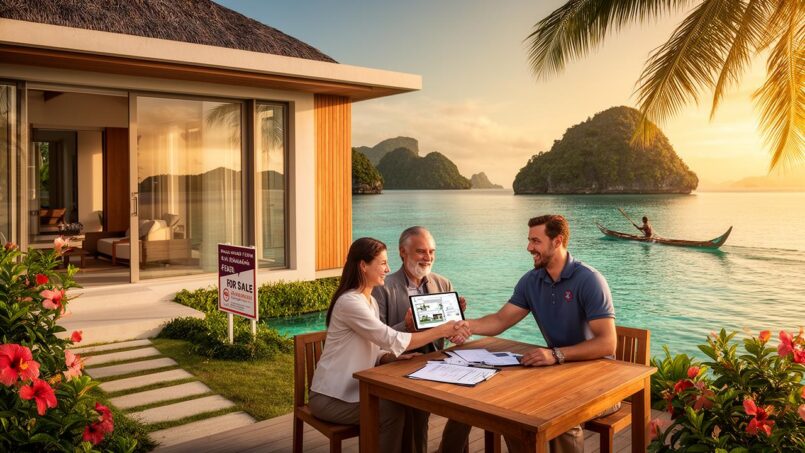
For a real estate project, it is essential to look beyond the picture of a stilted bungalow. The evolution of GDP, per capita income, or public debt gives an indication of the country’s dynamics, and thus the potential for long-term capital appreciation.
Synthesis of estimates from various international sources concerning a few key indicators.
Estimated annual growth rate of Gross Domestic Product, reflecting overall economic health.
Estimated change in the general price level, measuring the purchasing power of the currency.
Estimated percentage of the labor force seeking employment.
Estimated difference between the value of exports and imports of goods and services.
Estimated level of government debt, often expressed as a percentage of GDP.
Estimated index measuring households’ sentiment and expectations about the economic situation.
| Indicator | 2023 (est.) | 2024 (est.) | 2025 (est.) | 2026 (est.) | 2027 (est.) |
|---|---|---|---|---|---|
| GDP (billions USD) | 0.28 | ~0.31–0.32 | ~0.33–0.35 | ~0.35–0.38 | ~0.37–0.40 |
| Real GDP Growth (%) | 0.9 | ~7.1–8.1 | ~5.7–8.5 | ~3.5–6.1 | ~2.3–2.7 |
| GDP per capita (USD) | 16,014 | ~17,400–17,978 | ~18,993–20,088 | ~20,146–21,808 | ~21,205–22,830 |
| Public Debt (% of GDP) | 80.9 | ~69.7–78.0 | ~64.7–66.6 | ~57.2–60.7 | ~50.3–54.4 |
| Inflation (%) | 12.4 | 4.0 | 2.8 | 2.8 | 2.5 |
The emerging picture is that of a country slowly emerging from the health crisis but with rather favorable medium-term prospects: strong expected recovery, gradual debt reduction, inflation normalizing.
For a real estate investor, this means potential for long-term asset appreciation, but also exposure to external risks (tourism shocks, changes in air traffic, etc.).
What a Foreigner Can – and Cannot – Own in Palau
This is the central point for any expat considering an investment: in Palau, the land tenure system is extremely protective of local citizens.
Prohibition on Land Purchase by Foreigners
The rule is clear: a foreigner cannot become the owner of land in Palau. This prohibition is constitutionally inspired and reflects a desire to preserve land as cultural and community heritage.
In other words, the classic idea of buying a seaside plot and building your villa on it does not work with full and outright ownership.
Possibility to Lease Land and Own Buildings
However, several levers remain open:
A foreigner has the right to enter into a long-term lease on land. Furthermore, they can legally hold ownership of the buildings and structures they construct or erect on that leased land.
The typical scheme for an expat or investor, therefore, involves securing a land lease for a maximum term that can go up to 99 years, then financing and owning the constructions: villa, small resort, apartment building, etc.
This setup resembles what is found in some Asian countries (long leases rather than full ownership). But here, it also fits within a particular customary context, with traditional rights and sometimes overlapping claims on the same parcel.
Complexity of Land Titles and Claims
Obtaining a clear land title can be tricky. The system of traditional ownership, where land is often tied to clans or families, can generate competing claims. It is not uncommon for multiple parties to consider themselves legitimate owners of the same land.
The key authorities in this area are:
– the Bureau of Lands and Surveys, sometimes referred to as the Palau Land Authority or Land Registration Authority, responsible for land registration;
– the Office of Planning and Statistics, which is involved in land planning and development.
For an expat investor, this means that thorough due diligence must be conducted before signing any lease or construction contract. The assistance of a local lawyer well-versed in customary subtleties is not an option, it’s a necessity.
The Foreign Investment Framework: Sectors, Permissions, Local Partners
Palau has historically attracted little FDI (Foreign Direct Investment), although the trend is improving. According to international reports, FDI flows reached $58 million in 2022 (up from $33 million the previous year), for a total stock of about $659 million. Most of this capital goes to tourism and real estate, with the main partners being the United States, Singapore, and Japan.
Reserved Activities, Semi-Restricted Sectors, and Palauan Partner Requirement
The country distinguishes several categories of economic activities:
Certain economic activities in Palau are reserved for citizens, such as retail, transportation, tourism, and commercial fishing. Other sectors are semi-restricted: foreign investment is possible only through a partnership with a Palauan national, with no minimum local ownership quota imposed by law.
For a commercial real estate project (small hotel, guesthouse, ecotourism facility, long-stay residence), it is therefore common to have to structure the project with at least one Palauan partner, especially if service activities (transport, excursions, tourism) are integrated.
A Mandatory Step: The Foreign Investment Board
All foreign direct investment must be submitted for approval to the Foreign Investment Board. This body requests a detailed application specifying, among other things:
– the targeted economic sector;
– the amount of the investment, quantified in US dollars;
– the intended duration of the investment in the country;
– the nationality of the investors involved;
– the distribution of ownership percentages among them.
Although the process may seem cumbersome, validation of a project by the Board provides security. In principle, a project validated in this way will be better recognized by local authorities and administrations.
Procedure and Administrative Constraints
The country is not known for the transparency and speed of its procedures. Various reports highlight:
– low transparency in some administrative processes;
– slowness in resolving disputes;
– the obligation to prioritize the employment of Palauan citizens in businesses;
– annual fees for obtaining a work permit for foreigners.
For an investor planning to reside on-site while managing a real estate project, one must therefore integrate: legal aspects, local taxation, market conditions, and available human resources.
– costs and delays to obtain a visa, work permit, or resident status (see below);
– the frequent obligation to hire locally;
– a legal environment that strongly protects local interests.
Residing in Palau: Visas, Work, Residence, and Link to a Real Estate Project
A real estate investment is often part of a life project: settling there, spending several months a year in Palau, or even transferring one’s tax residence. Here too, the country has its specificities.
Short-Term Stay and Visa on Arrival
For a standard stay, Palau issues a visa on arrival valid for 30 days, renewable twice, up to a maximum of 90 consecutive days. Environmental fees, such as the Palau Paradise Environmental Fee (about $100), are often included in the airfare price, as are some departure taxes.
This format is suitable for scouting, prospecting, or occasional supervision of a construction site, but not for full-time management of a real estate project.
Working Legally: Central Role of the Employer
To engage in salaried work or manage a business on-site, a work permit is almost always required. Only Americans and citizens of Compact-associated states (Micronesia, Marshall Islands) are exempt from a visa, but not from the work permit.
The standard hiring procedure relies on a local employer who identifies the recruitment need, publishes the job offer, selects candidates, conducts interviews, and finalizes the employment contract, in compliance with the country’s legislation.
– publishes a job offer and must demonstrate the absence of a qualified Palauan candidate after 30 days;
– submits an application to the Bureau of Immigration and Foreign Labor;
– obtains approval, allowing the foreign candidate to enter with an appropriate visa.
On-site, the foreigner must:
– undergo a medical exam within 10 days;
– register with the Division of Labor;
– obtain a local social security number;
– receive their definitive work permit.
For an investor running their own entity, it is common to have to be “sponsored” by one’s own company, which implies strictly following local employment and permit rules.
Specific Residence Programs: Digital and by Investment
Palau is innovating in terms of digital residence and investment-based residence.
Maximum number of days of stay offered by the digital residency program launched in 2022.
On the other hand, the Palau Economic Investment Program (PEIP) grants permanent residence through a qualified investment of at least $250,000, approved by the government and maintained for five years. A real estate project structured within this framework can therefore be the cornerstone of a long-term settlement, provided it falls within accepted sectors and respects the land tenure system (leases, constructions, etc.).
It is important to keep in mind that a resident card, whether digital or classic, does not automatically make you a tax resident. If you remain a tax resident of your country of origin (for example, France), it will continue to tax all or part of your worldwide income. The expatriation strategy must therefore be finely prepared from a tax perspective, prior to any investment.
Taxation in Palau: A Very Favorable Environment for Individuals
For an expat investor, the tax regime is one of Palau’s major assets. The country operates on a territorial taxation system: in short, only income generated locally is subject to Palauan tax, with foreign-source income generally exempt for residents.
Income Tax and Social Charges
For individuals, there is no global taxation of worldwide income, no wealth tax, and no inheritance or gift taxes in the classical sense.
Employment income from Palauan sources is taxed according to a simple progressive scale:
– 6% for annual income between $0 and $8,000;
– 12% for the portion exceeding $8,000 (with higher thresholds for couples).
Social contributions borne by the employer amount to approximately:
– 7% for social security;
– 2.5% for health insurance.
Bank interest is in principle tax-exempt in Monaco. This fiscal characteristic contributes to the country’s appeal as an offshore financial center for certain wealth profiles.
Corporate and Investment Taxation
For companies, the corporate income tax rate is generally presented as around 4%, although some sources sometimes mention 12% depending on the nature of the activity, highlighting the system’s complexity in practice. In any case, the rates remain very low compared to those of most developed countries.
Withholding taxes feature particularly attractive rates:
– 0% on dividends;
– 0% on interest;
– 0% on royalties.
A new 10% tax (PGST) applies to domestic consumption and imports, including construction materials. Since these materials are almost all imported, this tax directly increases the cost of construction projects.
From an administrative standpoint, “Doing Business” data shows:
| Tax and Administrative Indicator | Palau | East Asia & Pacific | United States | Germany |
|---|---|---|---|---|
| Number of Tax Payments / Year | 11.0 | 23.4 | 10.6 | 9.0 |
| Hours/Year for Tax Compliance | 52.0 | 195.1 | 175.0 | 218.0 |
| Total Taxes (% of Profits) | 76.6 | 33.8 | 36.6 | 48.8 |
The procedures are not particularly time-consuming, but the overall burden as a percentage of profits can be high for certain types of businesses, especially once all taxes and contributions are integrated.
Double Taxation and Lack of Treaties
The country does not have a dense network of tax treaties. For example, there is no double taxation treaty with Morocco. For other countries, the situation is similar. For a European expat, it is therefore essential to check the rules of their country of origin to avoid a bad surprise (for example, taxation in France of income that would be locally exempt in Palau).
Real Estate and Rental Market: Ecotourism, High Rents, and a High-End Niche
Even if data on price per square meter is incomplete (sources sometimes indicate “?” for purchase price in or outside the city center), there is plenty of information on rents and cost of living. This allows for a concrete idea of the potential of a rental investment.
Cost of Living and Housing Budget
Average salaries remain modest compared to Europe or North America. The average net monthly income is between $700 and $1,200, with an estimate of about $787.50 for net salary.
At the same time, the cost of living is about 53% lower than in the United States, but slightly above the global average and among the highest in the Pacific region.
For housing and utilities (electricity, water, waste, etc.), typical budgets are:
– $580–600 per month for a single person;
– $900–950 for a family.
Total monthly expenses (including housing) can vary greatly: some calculations suggest a single person can live, housing included, on around $1,100–1,200, while others mention closer to $2,800 for a more comfortable, “expat”-oriented lifestyle.
Rental Levels: Studios, 1 Bedroom, 3 Bedrooms
Rents, expressed in dollars, provide an interesting glimpse into the rental market tension, especially in Koror, which concentrates about 70% of the population and most tourist facilities.
| Type of Housing (Monthly, Furnished) | Area | Range (USD) | Average (USD) |
|---|---|---|---|
| Studio 40–45 m² | Expensive Area | ≈ 600 | 600 |
| Studio 40–45 m² | “Normal” Area | 360–450 | ~400 |
| 1 Bedroom Apartment | City Center | 450–1,000 | ~750 |
| 1 Bedroom Apartment | Outside Center | 250–800 | ~550 |
| 3 Bedroom Apartment | City Center | 1,000–2,500 | ~1,770 |
| 3 Bedroom Apartment | Outside Center | 900–1,000 | ~967 |
It is immediately apparent that rents are high relative to local salaries. This is explained by Palau’s positioning in a niche, rather high-end tourism segment, with a limited housing stock and construction materials that are largely imported.
For an investor, this configuration can translate into:
– interesting rental yields on well-positioned properties (luxury apartments, villas, small tourist units);
– but a clientele that is essentially international or expat, with little room to target the local middle-income population.
Long-Term vs. Seasonal Rental
Long-term rental is described as restricted, especially in Koror, with limited supply and prices remaining high. This suggests that the pressure comes mainly from tourist and expat demand rather than permanent residents.
The country’s reputation for ecotourism (diving, national parks, preserved nature) stimulates demand for various types of short- and medium-term accommodation: hotels, guesthouses, seaside villas, and furnished apartments.
For an expat investor, the classic scenarios are therefore:
– a villa or small set of bungalows to rent to tourists (high season) and expats (off-season);
– a small apartment building targeting NGO staff, hotel employees, airline personnel, or staff from projects funded by international aid;
– a hybrid accommodation combining seasonal and medium-term (3–6 months) rental.
Cost of Services and Utilities: An Item Not to Underestimate
Recurring charges play an important role in net profitability:
– for an apartment of about 85 m², basic utilities (electricity, heating/cooling, water, garbage) run around $170 per month;
– high-speed Internet access (60 Mbps and above, unlimited data) can cost around $129.50 per month, significantly more expensive than in many countries;
– a mobile plan with calls and over 10 GB of data can be around $51.50.
Where overall prices are on average 17% lower than in the United States, the Internet is 82% more expensive, which, for a connected tourist clientele or digital nomads, represents a significant expense.
Cost of Living, Salaries, and Rental Demand Profile
To assess the sustainability of a rent and calibrate an offer, one must compare local and expat incomes with the consumption basket, especially for food and services.
Salaries and Employment Structure
In 2023, GDP per capita is around $15,900–16,000, translating to an average gross monthly income of about $1,188 and an annual gross income around $14,250. The average net salary is estimated around $787.50, with a range of $700 to $1,200 depending on sources.
The country has a very low unemployment rate, around 1.7%, and the public sector remains by far the largest employer. This can reassure an investor about the stability of certain tenants (government employees, staff on long-term internationally funded projects, etc.).
Consumption Basket: Food, Leisure, Transportation
Consumer prices are mixed: some products are cheap, others expensive, mainly due to imports.
The benchmarks mentioned in the article are expressed in dollars.
– inexpensive restaurant meal: about $12;
– meal for two at a mid-range restaurant (3 courses): around $75;
– domestic draft beer (0.5 l): about $1.50;
– cappuccino: around $4 to $5 in expat areas;
– grocery basket: a single person can easily spend $400–500 per month if they frequent supermarkets and restaurants a lot.
The average price of gasoline in Guyana is around $1.78 per liter.
Useful International Comparisons
Compared to the United States, Palau presents the following traits: unique ecosystem, strong indigenous culture, and economic reliance on foreign aid.
– overall prices ~17% lower;
– rents (small apartments center or outskirts) roughly halved;
– Internet significantly more expensive (+82%);
– salaries about 78% lower;
– coffee, bottled water half the price;
– bananas, some fresh produce more expensive.
Compared to France, data shows in particular:
– restaurant budget about 18% cheaper in Micronesia (including Palau);
– leisure budget slightly higher (about 6%).
For an expat receiving foreign income (pension, remote salary, portfolio income), these gaps create an interesting purchasing power effect, which supports demand for better-equipped, better-located rental properties with superior services compared to what most local residents can afford.
Concrete Process of a Real Estate Investment in Palau
Even though each project is unique, there are generally a few typical major steps for a foreigner wishing to invest in real estate in Palau.
1. Clarify Your Objective: Residence, Yield, or Tax Optimization
Before any search for land or buildings, it is essential to determine the main goal of the project:
– live several months a year on-site;
– generate tourist or long-term rental income;
– obtain residence (notably via an investment program) to optimize international taxation;
– or combine these three dimensions.
For example, a European retiree with significant financial assets might aim for tax residence in Palau, attracted by the absence of tax on foreign-source income, while developing a small real estate project eligible for the PEIP.
2. Choose the Right Legal Structure and the Right Partners
The legal framework often imposes:
– a local company or partner structure to carry the commercial activity (hotel, tourist rental, services);
– a Palauan partner for semi-restricted sectors or operational management;
– an application for authorization to the Foreign Investment Board as soon as the investment has a significant foreign dimension.
The initial phase should therefore include:
To secure a real estate or tourism investment in Palau, three key steps are essential. First, find a local lawyer specialized in land law and business law to navigate the legal framework. Second, identify and evaluate potential local partners, such as land-holding families, Palauan entrepreneurs, or established tourism players. Finally, design a clear and detailed shareholders’ agreement to govern the project’s management, profit distribution, and partner exit terms.
3. Secure Land Through a Long-Term Lease
Since a foreigner cannot own the land, securing a 50 to 99-year lease becomes the cornerstone of the project. This step involves:
– identifying a suitable parcel (proximity to tourist sites, accessibility, climate risks, etc.);
– negotiating a lease contract with local landowners, carefully verifying that all legitimate parties are signatories;
– meticulous land due diligence with the Bureau of Lands and Surveys to check for any pending claims or disputes;
– taking into account any environmental or cultural constraints (protected areas, land with high customary value, etc.).
This land lease must be structured to allow for the erection of buildings, their commercial operation, and the transfer of rights over the term.
4. Design, Finance, and Construct the Buildings
Once the lease is obtained, the foreign investor can finance and own the constructions. Financing is most often done through:
To finance a project abroad, two main options are available: using equity (such as cash or proceeds from asset sales in the country of origin) or resorting to structured financing abroad. This second option is often necessary because the local banking system is generally underdeveloped and the country may lack a central bank.
Construction costs are, by nature, high since a large portion of materials is imported and subject to PGST and possible excise taxes. Significant safety margins must therefore be budgeted for construction costs.
In this phase, support from engineers and architects familiar with local climatic and environmental constraints is crucial. Palau is exposed to climate risks and hazards related to global change: the design must integrate these parameters (materials, location, protections, etc.).
5. Operate and Manage: Rental, Maintenance, Ongoing Taxation
Once the project is operational, the investor must manage:
– the rental strategy (short-term, medium-term, target clientele);
– asset maintenance (especially in a marine environment that is harsh on materials);
– personnel management, under the constraint of prioritizing local employment;
– tax and social obligations (PGST filing, profit taxes, social contributions, etc.).
The challenge is to transform a theoretically profitable model (thanks to high rents, an ecotourism positioning, light taxation) into stable cash flow, despite seasonality, maintenance costs, and external risks (variations in air traffic, East Asian economic conditions, etc.).
Strengths and Risks for an Expat Investor
At the end of this overview, the profile of a real estate investment in Palau appears clearly specific, with a combination of advantages and risks.
Major Strengths
First, the country focuses on high-end ecotourism, with relatively limited but solvent visitor numbers. This creates a niche market where well-positioned properties can hope for:
– long-term appreciation, in a context where the real estate stock remains limited and the international appeal of the destination is strong;
– high rental yields, particularly on villas, small charming structures, and housing well-integrated into the tourism ecosystem.
Secondly, the tax framework is very attractive for an expat who becomes a tax resident of Palau:
The tax regime is characterized by the absence of tax on foreign-source income, no wealth tax or inheritance taxes in the classical sense, as well as moderate taxation of local income with rates of 6% and 12% and low corporate tax.
Finally, the use of the US dollar as the official currency provides monetary comfort: no exchange rate volatility to manage between the investment and local income.
Main Risks and Limitations
They should not be underestimated.
The first is legal and land-related: impossibility of acquiring land ownership, complexity of titles, importance of customary law. A foreigner must accept building their strategy on very long-term leases and on a relationship of trust with Palauan partners and local authorities.
Amount, in millions of dollars, allocated to the country under the Compact of Free Association over a twenty-year period.
The third is economic and sectoral: high dependence on tourism (about 40% of GDP), strong exposure to external shocks (pandemics, border closures, fluctuations in tourist flows from East Asia). The post-COVID period showed this: despite the full lifting of restrictions in 2022, the recovery was slow, penalized by the lack of flights and the appreciation of the dollar.
Finally, the fourth risk is environmental: the country is vulnerable to climate change, sea level rise, extreme weather events. The most attractive sites (lagoon front, coastal areas) are also the most exposed. Overcrowding of some dive sites and the fragility of marine ecosystems add a dimension of regulatory uncertainty (creation of protected areas, construction constraints, etc.).
For Which Expat Profile Does Investing in Palau Make Sense?
Given all the elements, investing in real estate in Palau is not for everyone.
This type of project seems most relevant for:
The main identified profiles include: high-net-worth expats, often already familiar with international investment and ready to commit significant capital (e.g., $250,000 or more in an investment-based residence program); individuals seeking to anchor their expatriation in a comprehensive wealth strategy, combining tax optimization, geographic diversification, and a life project; and entrepreneurs interested in a niche ecotourism positioning, capable of developing a coherent project (lease, construction, operation) with solid local partners.
Conversely, for an investor looking for a simple purchase of an apartment for classic rental purposes, with full land ownership, local financing, and passive management, other destinations will likely be more suitable.
Conclusion: A Niche Opportunity, Demanding in Preparation
Investing in real estate in Palau, for an expat, is nothing like a standard investment. Impossible to buy the land, investment procedures filtered by the Foreign Investment Board, crucial importance of long leases and local partners: everything relies on a complex legal and relational architecture.
In return, those who accept this complexity can find:
– a developing real estate market, supported by ecotourism and an expected medium-term GDP growth;
– high rents and potentially attractive profitability in the high-end segment;
– a tax framework that is singularly favorable for residents, especially regarding foreign-source income.
For a French-speaking expat, the key is to consider this endeavor as a complete engineering project (legal, land, tax, environmental) and not as a simple real estate purchase. This implies surrounding oneself with competent local professionals, anticipating climate and political risks, and above all, dedicating the necessary time to thorough due diligence before signing any lease or contract.
In Palau, real estate is not just a financial asset: it is a long-term commitment in an archipelago where land is inseparable from the identity and values of the local population. For the expat ready to respect this balance, the investment can become an adventure as much human as patrimonial.
Disclaimer: The information provided on this website is for informational purposes only and does not constitute financial, legal, or professional advice. We encourage you to consult qualified experts before making any investment, real estate, or expatriation decisions. Although we strive to maintain up-to-date and accurate information, we do not guarantee the completeness, accuracy, or timeliness of the proposed content. As investment and expatriation involve risks, we disclaim any liability for potential losses or damages arising from the use of this site. Your use of this site confirms your acceptance of these terms and your understanding of the associated risks.

Cyril Jarnias is an independent expert in international wealth management with over 20 years of experience. As an expatriate himself, he is dedicated to helping individuals and business leaders build, protect, and pass on their wealth with complete peace of mind.
On his website, cyriljarnias.com, he shares his expertise on international real estate, offshore company formation, and expatriation.
Thanks to his expertise, he offers sound advice to optimize his clients' wealth management. Cyril Jarnias is also recognized for his appearances in many prestigious media outlets such as BFM Business, les Français de l’étranger, Le Figaro, Les Echos, and Mieux vivre votre argent, where he shares his knowledge and know-how in wealth management.





