
 Published on and written by Cyril Jarnias
Settling in Pakistan means entering a country where cooking is not just about taste, but a social, religious, and emotional language. Eating here is being invited into the intimacy of a culture shaped by hospitality, spices, and a deep sense of sharing. This guide offers expatriates a gradual immersion into this vibrant gastronomy, with very concrete landmarks: table etiquette, must-know dishes, regions to explore, typical spots, and how to shop without losing your way.
Understanding the Cultural Framework: Hospitality, Halal, and Conviviality
In Pakistan, the concept of Mehmaan Nawazi—the art of receiving guests—is at the heart of social life. Being invited to eat often means being treated as a guest of honor in the family. Expect tea (chai), snacks, sometimes a full meal, even if you thought you were just stopping by briefly.
Most families observe Islamic dietary rules: all meat served is halal, and pork is completely forbidden. For a Muslim expatriate, this is a very easy environment to navigate: from street stalls to high-end restaurants, halal is the norm. For non-Muslims, this dimension remains important to know, if only to understand why certain products (pork charcuterie, alcohol, non-halal gelatin) are rare or sensitive.
Meals structure the day with a hearty breakfast, a lunch centered around a curry, and a late, abundant family dinner. Major religious festivals are occasions for banquets where hospitality often extends to relatives and passing strangers.
During the month of Ramadan, the daily rhythm shifts: Muslims fast from dawn to sunset. It is courteous for an expatriate to avoid eating or drinking in public during the day, and not to schedule meetings during the call to prayer (Azaan) or at iftar (breaking the fast) and sehri (pre-dawn meal) times.
Integrating at the Table: Codes, Gestures, and Small Mistakes to Avoid
The meal time is as codified as it is warm. You will be served first, sometimes insistently. It is common for the host to insist on serving you a second, then a third portion. A first polite protest is expected, but once you have truly had enough, it is better to decline with a smile while complimenting the cooking.
Some useful pointers for an expatriate invited to a local home:
Before entering a house or mosque, it is customary to remove your shoes. At the table, the eldest or most respected person sits and begins eating first. It is customary to wash your hands before the meal, sometimes at a sink near the dining area. You eat exclusively with your right hand; the left is reserved for tasks considered unclean. The meal is a time of sharing: diners often eat from common dishes, using pieces of bread as utensils. Finally, finishing your plate is a sign of respect toward the person who cooked.
Tea, meanwhile, is almost a parallel institution. Completely refusing a cup of chai or a glass of sharbat (a sweet fruit or flower drink) can be seen as keeping your distance. It is perfectly acceptable to say “just a little” and only drink a few sips.
Gifts, Flowers, and Faux Pas
If you are invited for a meal, bringing a small gift is well-regarded: a box of mithai (sweet pastries), fruit, dates, chocolate, or a souvenir from your home country. However, alcohol should be completely avoided, even for non-practicing hosts. Bouquets of flowers are best given between people of the same gender, and white flowers are often associated with weddings.
Another detail that often surprises expatriates: gifts are generally not opened in front of you. They will be opened later, in private.
Entering the World of Pakistani Spices
You don’t really understand Pakistani cuisine until you’ve stuck your nose over a box of garam masala or a bag of roasted cumin. Here, spices are not mere decoration: they carry the memory of Persian, Mughal, and Central Asian routes.
The basics that an expatriate cook should quickly recognize are as follows:
| Spice / Ingredient | Flavor Profile | Typical Role in Pakistani Cuisine |
|---|---|---|
| Salt (including Himalayan pink salt) | Fundamental | Basic seasoning, present everywhere |
| Red chili powder | Spicy, hot | Adds the “heat” to curries and marinades |
| Turmeric | Earthy, slightly bitter, bright yellow | Colors curries, rice, lentils; reputed anti-inflammatory |
| Cumin (seeds and powder) | Warm, nutty, toasted | Often roasted, base of many curries and rice dishes |
| Coriander (seeds/powder + leaves) | Earthy, lemony | Powder in sauces, leaves as garnish |
| Black pepper | Pungent, deep | Present in nearly all savory dishes |
| Green cardamom | Sweet, highly aromatic | Biryani, korma, desserts, masala chai |
| Black cardamom | Smoky, fresh | Scented rice, rich stews (nihari, pilau) |
| Cloves | Warm, slightly sweet, very intense | Pulao, biryani, korma, nihari, garam masala |
| Cinnamon | Warm, sweet | Rice, curries, desserts, garam masala |
| Bay leaves | Subtle aroma, resinous | Rice and mild curries (korma, dals) |
| Fenugreek (dried leaves) | Sweet, slightly bitter, very fragrant | Final addition in curries, meat and vegetable dishes |
| Saffron | Floral, deep | Biryani, korma, desserts like kheer |
| Nigella seeds | Nutty, onion-like note | On bread, in pickles and some curries |
| Mustard seeds | Tangy, “pickle-like” | Sour curries (achari), pickles, tadka for dal |
| Amchur (mango powder) | Sour, fruity | Chaats, chutneys, salads, street food |
| Chaat masala | Salty, sour, spicy | Sprinkled on chaat, fruits, snacks |
Alongside these essentials are dozens of other ingredients—a plethora of seeds, herbs, and prepared blends (biryani masala, karahi masala, bassar)—that give dishes that unmistakable aroma found nowhere else. Local brands like Shan, National, Laziza, and Alamgeer offer ready-to-use mixes for biryani, karahi, tikka, very handy for a beginner expatriate.
To cook in the style of the Indian subcontinent, start by building a core of five essential spices: cumin, coriander powder, turmeric, red chili, and garam masala. You can then gradually expand your spice palette.
Mapping Regional Flavors: One Country, Many Cuisines
To speak of “a” Pakistani cuisine is reductive. Each province, each geographic area has its own character, shaped by climate, available products, and local history.
Punjab: The Kingdom of Rich Dishes and Ghee
The most populous province and true gastronomic heart, Punjab lives to the rhythm of wheat, dairy, and hearty cooking.
You’ll find:
– countless meat curries: karahi gosht, butter chicken, nihari, payas, kofta curry;
– classic lentil & wheat dishes like haleem, hareesa, varied dals;
– iconic duos like sarson ka saag (mustard greens) & makki di roti (corn flatbread);
– an abundance of breads: naan, chapati, paratha, roghni naan, bhatura.
All generously doused in ghee, yogurt, and sometimes cream. Lahore, the cultural capital of the province, is an endless playground for the expat foodie: entire streets dedicated to food (Gawalmandi, Fort Road Food Street), stalls of gol gappay, halwa puri stands in the early morning, karahi restaurants open late into the night.
Sindh and Karachi: Spices, Biryanis, and the Sea
In the southeast, Sindh, with Karachi as its coastal megalopolis, offers a very different palette. Here, the cuisine is often described as more tangy and highly fragrant, with:
The cuisine of Sindh, Pakistan, features iconic dishes like the famous *Sindhi biryani*, where fragrant rice meets meat, potatoes, dried plums, and a bouquet of spices. It also offers rich vegetarian dishes like *sai bhaji* (a mix of spinach, lentils, and other vegetables) or *daal pakwan*. Finally, fish—especially the palla from the Indus River or sea fish—is often grilled, fried, or cooked in a coconut and tamarind curry.
Karachi, a city of immigration, blends Sindhi, Muhajir (from India), Pashtun, and Baloch cuisines. Burns Road, Saddar Food Street, or Pakistan Chowk are names that come up again and again in food stories: haleem, bun kebab, fish kata-kat, rabri, and ice creams all coexist there.
Khyber Pakhtunkhwa and Peshawar: Grills and Rustic Dishes
Further northwest, Khyber Pakhtunkhwa is rooted in Pashtun and Afghan culture. The mountains and harsh winters encourage:
– a cuisine centered on meat (mutton, beef, sometimes camel), often grilled;
– generous pilafs like Kabuli pulao (rice with raisins, carrots, lamb) or Bannu pulao (rice with beef and broth);
– chapli kebab, a large, crispy minced meat patty, sprinkled with pomegranate seeds and coriander.
In the bazaars of Peshawar, like Qissa Khwani, the smoke from tikka and karahi grills mingles with the scent of green tea (kahwa). For an expat barbecue lover, this is a must.
An expat barbecue enthusiast
Balochistan: Simplicity, Open Spaces, and Slow Cooking
A vast, sparsely populated western province, Balochistan cultivates a more minimalist cuisine, heavily focused on meat and slow cooking:
– sajji, often a whole marinated lamb or chicken (sometimes in green papaya paste and spices), skewered and slow-roasted;
– rosh (or mutton rosh), pieces of meat gently cooked over embers;
– dampukht, meat simmered in its own fat.
Breads like kaak, baked on stones in a clay oven, bear witness to a nomadic and tribal way of life.
Mountainous North: Hunza, Gilgit-Baltistan, Azad Kashmir
In the northern valleys, the cuisine differs markedly from the oily curries of the south. The diet here relies on:
– cereals like barley, wheat, millet;
– plenty of dairy products (yogurts, cheeses);
– abundant fruits (apricots, cherries, apples) often dried or made into jams.
Hunza is famous for specialties like:
– chapshuro, a kind of turnover stuffed with meat and onions;
– thick soups like thukpa;
– local breads and preparations based on apricots.
For an expatriate seeking lighter, less oily, terroir-driven cuisine, these regions are particularly interesting.
Decoding the Great Classics: What to Try First
Faced with a restaurant menu or an Eid buffet, it’s hard to know where to start. Here’s a simplified guide to some pillars of Pakistani cuisine, with their “entry profile” for a foreign palate.
Rice and Wheat Dishes
| Dish | Description | For Which Expat? |
|---|---|---|
| Biryani | Spiced basmati rice, layers of meat (chicken, beef, mutton) and sometimes vegetables, often scented with cardamom, cinnamon, cloves, saffron. Served with raita (yogurt) and pickle. | Ideal if you like complete, aromatic dishes, like a very spicy paella. |
| Pulao / Pilau | Rice cooked in meat broth (yakhni), milder than biryani, often enriched with chickpeas or vegetables. | Good starting point if you fear overly spicy dishes. |
| Naan / Roti / Paratha | Various wheat breads, from simple dry roti to flaky, buttery paratha to soft, seed-topped roghni naan. | To accompany all curries; paratha for breakfast with tea is an experience to have. |
Iconic Curries and Stews
| Dish | Composition & Usage | Notes for Expats |
|---|---|---|
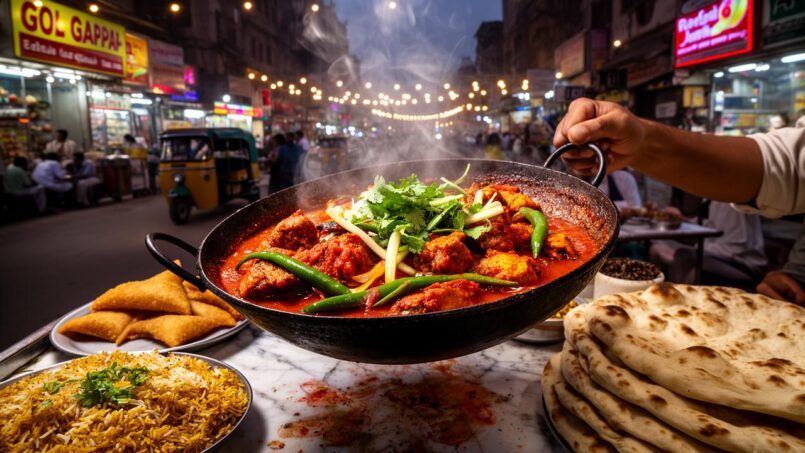
| Karahi (chicken, mutton, beef) | Meat quickly cooked in a deep wok (karahi), with tomatoes, ginger, garlic, green chilies, coriander. Intense flavor, often served sizzling. | Heavily spiced, but easy to share. Try it at a “Butt Karahi” in Lahore or a karahi restaurant in Islamabad. |
| Nihari | Beef or mutton stew, slow-cooked overnight with a complex spice mix, ginger, garlic, and ghee. | Traditionally eaten at breakfast. Very rich, intense, sometimes heavy on fat. Eat with naan. |
| Haleem | A very long-cooked mixture of cracked wheat, lentils, and meat, until it reaches a porridge-like consistency. | Hearty, quite mild on the palate, perfect if you like “savory porridge” textures. |
Grills, Kebabs, and Street Food
| Specialty | Description | Where to Find It |
|---|---|---|
| Chapli kebab | Thin patty of minced meat (often beef), spiced, packed with coriander seeds and sometimes pomegranate seeds. | Peshawar, Islamabad (Monal, Jalil Kabab House), kabab stands everywhere. |
| Seekh kebab | Skewers of minced meat, grilled over charcoal, served with naan, raw onions, and mint chutney. | Grill restaurants, food streets of Lahore and Karachi. |
| Bun kebab | Pakistani-style street burger, often with a shami kebab or an egg, sauce, and onions in a small bun. | Karachi (Super Biryani & Bun Kebab, Azad Bun Kabab House), Lahore. |
| Gol gappay / Pani puri | Crispy hollow shells filled with potatoes, chickpeas, and spiced-tangy water. | Street stalls in Lahore and Karachi, food streets. |
Typical Breakfasts (Desi Nashta)
The Pakistani morning can be surprising: forget a simple coffee and toast. A typical Sunday brunch, halwa puri, is a true feast:
– puri: deep-fried bread that puffs up like a balloon;
– sooji ka halwa: semolina sweetened with ghee, cardamom, and almonds;
– chana masala: chickpea curry;
– aloo ki tarkari: potato curry.
Alongside, you’ll find:
Discover typical dishes of a traditional Pakistani breakfast, rich in flavors and spices.
Scrambled eggs with onions, tomatoes, green chilies, and coriander.
Wheat flatbread served with yogurt, pickle, omelet, or aloo bhujia (spiced potatoes).
Tea brewed directly in milk, without water, very strong and sweet.
Lahore and Karachi are famous for their halwa puri spots. In Lahore, shops like Riaz Halwa Puri or Zafar Halwa Puri turn early morning into a collective ritual.
Desserts and Drinks
Pakistani sweets, often inherited from Mughal and Persian traditions, are both very sweet and highly fragrant.
Some must-tries:
Discover a selection of iconic sweets, rich in flavors and textures, often prepared for celebrations.
Rice or vermicelli pudding in milk, scented with cardamom, dried fruits, and sometimes saffron or rose water.
Fried spirals soaked in a fragrant syrup, sometimes enjoyed with warm milk in winter.
Sweet saffron rice, studded with nuts and raisins.
Cold dessert drink made with milk, vermicelli, basil seeds, and rose syrup.
On the drinks side, the star remains chai in all its forms (doodh patti, masala chai, cardamom tea). But lassi—a yogurt drink, savory or sweet, sometimes with mango or cumin—is a perfect antidote to the heat of Lahore or Multan.
Street Food, Dhabas, and International Chains: Where to Eat What?
The urban culinary landscape of Pakistan is a fascinating mix of tradition and globalization.
Dhabas: The Soul of Popular Cuisine
Dhabas are roadside restaurants, born along highways and gas stations, originally serving truckers 24/7. Today, they are found everywhere, including in city centers. Atmosphere:
– plastic chairs, metal tables;
– laughter, local music, endless conversations;
– hygiene sometimes hit-or-miss… but flavors often unforgettable.
This establishment serves authentic Pakistani cuisine with typical dishes like daal, karahi, tawa chicken, hot parathas, and chai for 20 rupees. It’s an ideal place for expats wanting to experience everyday local food, provided you accept limited comfort. It’s recommended to choose busy dhabas, a sign of fresh food.
International Chains and Modern Local Brands
At the other end of the spectrum, Pakistan is also a playground for major global chains: KFC, McDonald’s, Pizza Hut, Subway, Burger King, Hardee’s, Domino’s, Nando’s, and soon AlBaik (Saudi broasted chicken giant) with hundreds of planned openings.
Alongside, a galaxy of local brands has developed, reinterpreting fast food with a Pakistani twist:
– Cheezious (pizzas, burgers, sandwiches);
– Student Biryani (popular rice and curries);
– a myriad of burger concepts (Mr. Burger, Burger Lab, Oh My Grill, Burger Inc., etc.) or barbecue (BBQ Tonight).
This number represents the two poles of the compromise offered by international chains to expats: the familiarity of standards and adaptation to local tastes.
Fine Dining and “Expat-Friendly” Cafés
In major cities, a more sophisticated restaurant scene has emerged: in Karachi (Okra, Biryani of the Seas, D’Alma), Lahore (Rina’s Kitchenette, Chop Chop Wok), or Islamabad (Monal, Tuscany Courtyard, Chaaye Khana). For an expat, these spots are often the first points of reference:
– bilingual menu;
– service tailored to international expectations;
– quieter environments, terrace or panoramic view (like at Monal, overlooking Islamabad).
But to truly understand Pakistani cuisine, you must sooner or later head down to the food streets, try a plate of tawa chicken on a sidewalk, and chat with the cook.
Being Vegetarian or Flexitarian in Pakistan: Mission Possible
Pakistan is a proudly meat-eating country. Many consider a meal without meat incomplete. Yet, for a vegetarian expat or someone curious about reducing meat consumption, doors are opening.
Understanding Local Constraints
The difficulty comes mainly from two things:
– in many restaurateurs’ minds, vegetables = side dish, not a main course;
– the very concept of “vegan” is still poorly understood, though it is gaining ground.
Some preparations you might think are naturally vegetarian can contain:
In some vegetarian preparations, like certain dal or rice dishes, animal-derived ingredients can sometimes be found. This includes the use of meat broth, the addition of chicken or meat pieces to enhance flavor, or the use of ghee (clarified butter) from milk or eggs. These additions can make the dish non-compliant with a strict vegetarian diet.
To clarify, a few phrases in Urdu help a lot:
– « Me sabzi khor hoon »: I am vegetarian;
– « Me gosht nahi khata / khati »: I don’t eat meat.
You often need to specify whether you also exclude eggs and dairy products.
A Surprising Wealth of Vegetarian Dishes
Paradoxically, once you step outside the “meat restaurant” mindset, the vegetarian range is immense, inherited from neighboring Indian cuisines and Pakistani regions where vegetables and legumes dominate:
– rajma (kidney bean curry), chana dal, lobia (black-eyed peas);
– bhindi (okra), aloo gobi (potatoes-cauliflower), methi aloo (potatoes-fenugreek);
– sabzi pulao (vegetable rice), khitcheri (mild rice-lentil dish);
– simple salads like kachumber (tomatoes, onions, cucumber, coriander, lemon).
Some areas are naturally more “friendly”: the mountains of Gilgit-Baltistan and Hunza, for example, offer many traditional dishes low in meat, based on grains, vegetables, and dairy. In the city, modern cafés (Evergreen in Lahore, Plant Theory or Neco’s in Karachi, The Green Bean in Islamabad) ride the wellness wave and serve bowls, salads, and plant-based options.
Grocery Shopping in Pakistan: Markets, Supermarkets, and Apps
Beyond restaurants, truly settling in involves cooking at home. Here again, Pakistan offers a two-sided landscape: on one hand, modern hypermarkets; on the other, bazaars and traditional markets where everything is negotiable.
Decoding the “Shopping Landscape” for Expats
In larger cities, you’ll find: iconic landmarks, modern infrastructure, a wide variety of restaurants, luxury boutiques, cultural venues, and vibrant events.
– large supermarkets and shopping malls, stocking:
– basic local products (flour, rice, lentils, spices);
– a variable range of imported products (cheeses, sauces, foreign snacks) subject to taxes, sometimes with mandatory Urdu labels, driving up prices;
– a dense network of small grocery stores and neighborhood markets for fruits, vegetables, meats.
For an expat, the best strategy often involves combining:
Favor traditional markets for fresh produce like seasonal vegetables, fruits, fresh herbs, and sometimes fish. Use supermarkets for packaged goods, specific ingredients not found elsewhere, and household items.
With halal options ubiquitous, meat is easily bought from specialized butchers or supermarket meat counters. Just check the type (beef, buffalo, mutton) if you’re looking for a specific meat.
Getting to Know Fruit and Vegetable Markets
Pakistan, thanks to its climatic diversity, produces abundant fruit year-round. Knowing what’s in season will help you buy better and cheaper.
| Season | Key Fruits | Main Producing Regions |
|---|---|---|
| Winter | Kinnow (Pakistani mandarin), oranges, grapefruits, guavas, persimmons, late apples | Punjab (Sargodha, Faisalabad), Sindh, Khyber Pakhtunkhwa, Balochistan |
| Spring | Strawberries, loquats, mulberries (shahtoot), early apricots | Islamabad, northern areas (Swat, Gilgit-Baltistan) |
| Summer | Mangoes (Sindhri, Chaunsa, Anwar Ratol, Langra), watermelons, melons, lychees, plums, peaches | Sindh (Mirpur Khas, Hyderabad), South Punjab (Multan, Bahawalpur), Quetta, Swat |
| Autumn | Apples, pomegranates, bananas, dried dates, guavas | Balochistan (Quetta, Ziarat), Sindh (Khairpur), AJK, KPK |
For an expat, wandering a local market on a weekday morning is an excellent entry point: you might get free tastes, learn Urdu names, discover practices (like salting some fruits when eating them).
Managing Labels, Language, and “Gaps”
First trips to the supermarket can be confusing: Urdu packaging, unknown brands, familiar products nowhere to be found. A few practical tips:
To decipher ingredients, install a translation app with a camera function. Quickly learn a few key words like sugar, salt, fat, milk, nuts, or gluten if needed. Finally, accept substitutions, for example choosing local bakery bread over imported sliced bread, or local plain yogurt instead of a hard-to-find cheese.
It is possible to order some imported products online, but taxes and shipping costs can quickly add up. The ecosystem of food and grocery delivery apps (like foodpanda, but also local initiatives) is booming, especially in Karachi, Lahore, and Islamabad, making daily life easier for expats without a car.
Eating Out with Peace of Mind: Hygiene, Business, and Ramadan
When you haven’t grown up here, you might worry about street food hygiene or certain restaurant codes. A few simple guidelines are enough to enjoy yourself without risk.
– Observe the crowd: a very busy stall with high turnover is generally a good sign (food doesn’t sit around).
– Monitor the hot chain: dishes served piping hot are less risky than lukewarm preparations left out for a long time.
– Be wary of raw, unpeeled vegetables at street stalls if your stomach is sensitive.
– Start your exploration with mid-range restaurants, then gradually work your way down to the more “roots” stalls as you get acclimated.
In a professional context, keep in mind: effective communication is essential for any team’s success.
Meals are first and foremost moments of conviviality and relationship-building. It’s important to avoid bringing up professional topics directly until your Pakistani counterparts have initiated the discussion. Regarding the bill, traditionally the person who invites pays. You can politely offer to contribute, but insisting would be considered rude. The proper way to return the invitation is to offer to host next time.
During Ramadan, the balance changes significantly:
– working hours shorten, business meals are rare during the day;
– iftar is a very convivial moment featuring pakoras, samosas, fruit chaat, jalebi, dates, and sweet drinks. Being invited to an iftar is an honor; even if you are not fasting, participating in breaking the fast and respecting the meal’s rhythm is highly appreciated.
From Expat to “Local”: Progressing Step by Step
Discovering Pakistani gastronomy is not about checking off a list of dishes, but about getting to know a complete world—from market to living room, from dhaba to fast-food chain, from street breakfast to festive table.
For a newcomer, a simple path might look like this:
Start by frequenting ‘expat-friendly’ restaurants in popular neighborhoods of major cities (like F-7 or F-10 in Islamabad) serving local and international dishes. Schedule a weekly outing to a food street or dhaba to discover a different iconic dish (biryani, karahi, haleem, nihari). Get into the habit of buying fresh produce at the market and try cooking with local spice mixes. Finally, accept spontaneous invitations for tea or a meal—these are privileged moments to discover the culinary soul of the country.
The day you find yourself comparing the quality of a chapli kebab from Peshawar to one from Islamabad, debating your favorite mango variety, or correcting a tourist on the proper way to dip a gol gappa into the spiced water, you will have crossed a threshold: food will no longer be just a subject of discovery, but a language you speak almost fluently.
In Pakistan, you often enter a relationship through food. For an expatriate, knowing how to understand it, respect it, and savor it is one of the surest ways to gradually feel at home.
Disclaimer: The information provided on this website is for informational purposes only and does not constitute financial, legal, or professional advice. We encourage you to consult qualified experts before making any investment, real estate, or expatriation decisions. Although we strive to maintain up-to-date and accurate information, we do not guarantee the completeness, accuracy, or timeliness of the proposed content. As investment and expatriation involve risks, we disclaim any liability for potential losses or damages arising from the use of this site. Your use of this site confirms your acceptance of these terms and your understanding of the associated risks.

Cyril Jarnias is an independent expert in international wealth management with over 20 years of experience. As an expatriate himself, he is dedicated to helping individuals and business leaders build, protect, and pass on their wealth with complete peace of mind.
On his website, cyriljarnias.com, he shares his expertise on international real estate, offshore company formation, and expatriation.
Thanks to his expertise, he offers sound advice to optimize his clients' wealth management. Cyril Jarnias is also recognized for his appearances in many prestigious media outlets such as BFM Business, les Français de l’étranger, Le Figaro, Les Echos, and Mieux vivre votre argent, where he shares his knowledge and know-how in wealth management.





