
 Published on and written by Cyril Jarnias
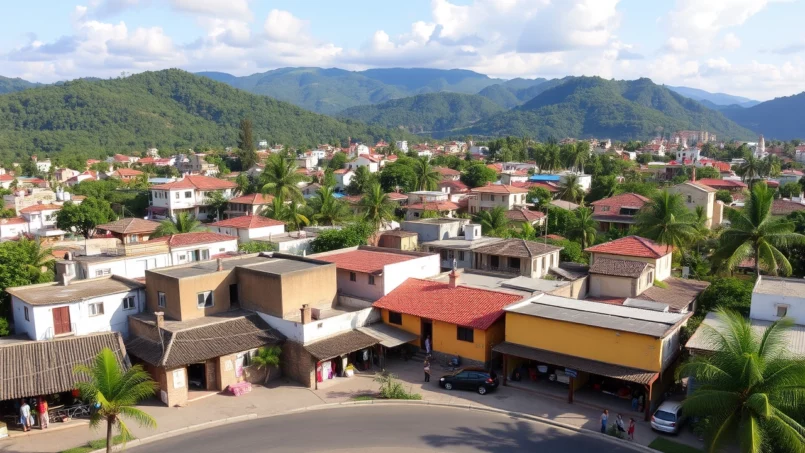
Guatemala attracts more travelers every year, fascinated by its volcanoes, spectacular lakes, and colonial cities. Behind this postcard image, another landscape is transforming just as quickly: the real estate landscape. From Antigua to Lake Atitlán and the Pacific coast, the rise of tourism is profoundly reshaping the housing market. Rising prices, an explosion of short-term rentals, the arrival of foreign investors, and tensions over housing affordability for locals: the effects are many, sometimes beneficial, sometimes problematic.
Good to know:
This article analyzes the impact of tourism on housing in Guatemala, drawing on economic, tourism, and real estate data. It shows how the Guatemalan case fits into global debates on the relationship between these two sectors.
A Favorable Economic Context Amplifying the Effect of Tourism
Before examining the impact of tourism on real estate, it is necessary to situate the country. Guatemala is today the largest economy in Central America, with a GDP estimated at around 92.3 billion US dollars and annual growth between 3.5% and 4% projected through 2028. Inflation, close to 4.1%, remains relatively controlled for the region, and the BB- credit rating with a stable outlook reflects an environment considered risky but relatively solid by the markets.
16
Remittances from Guatemalans abroad reach nearly 16 billion dollars per year, stimulating the local real estate market.
On this already bullish terrain, tourism acts as a powerful accelerator: the sector represents about 2 billion dollars of GDP, is growing at an annual rate of 7% to 9%, and international arrivals are expected to increase from about 2.75 million visitors to 3 million and more in the coming years, with projections of up to 4.6–4.7 million arrivals by 2036 according to the Sustainable Tourism Master Plan.
The direct consequence on the market: real estate demand no longer comes only from urban Guatemalans or families supported by remittances, but also from millions of visitors, expats, digital nomads, and international investors.
Tourism as a Direct Driver of Real Estate Demand
The link between tourism and real estate is no longer theoretical in Guatemala: it is measurable both in statistics and in the physical appearance of cities.
The most tourist areas – Antigua Guatemala, Lake Atitlán, the Pacific coast (Monterrico, Puerto San José, Playa El Tulate), Tikal and Petén, as well as Guatemala City for business and convention tourism – concentrate a disproportionate share of new real estate projects. The need for tourist accommodation is no longer limited to hotels. It extends to apartments, vacation homes, villas, and even land destined for eco-lodges or resorts.
1500
Number of short-term rental listings available on platforms like Airbnb in markets such as Antigua.
At Lake Atitlán, the boom is just as visible. There are about forty vacation rentals listed on certain platforms, with an average rate near $96 per night for a weekend, and lakeside villas or bungalows very popular with couples and families. Properties like high-end villas with jacuzzis, infinity pools, and direct lake access show nightly rates that can compete with much more publicized tourist markets.
Good to know:
In tourist areas, purchasing real estate is now considered a strategic rental investment, aiming to generate income by capitalizing on tourist inflows, and no longer solely as a residential acquisition.
How Prices Are Evolving in the Main Tourist Hubs
One of the measurable effects of tourism on real estate is the rise in prices, more pronounced in the most visited neighborhoods and regions.
Comparative Overview of Real Estate Values
The table below summarizes some orders of magnitude in the main tourism-related markets:
| Area / Segment | Typical Price per m² (USD) | Current Total Investment (USD) | Estimated Annual Appreciation |
|---|---|---|---|
| Guatemala City – Zones 10 & 14 | 1,800 – 2,500 | 250,000 – 500,000 (upscale apartments) | 5 – 7% |
| Guatemala City – Zones 15 & 16 | 1,200 – 1,800 | 150,000 – 250,000 | 5 – 7% |
| Antigua – Historic Center | 2,000 – 3,000 | 400,000 – 1,000,000+ (colonial houses) | 6 – 8% |
| Antigua – Periphery, subdivisions | 1,000 – 1,500 | 200,000 – 350,000 | 6 – 8% |
| Lake Atitlán – Lakeside homes | 1,300 – 2,200 | 300,000 – 800,000 | 7 – 9% |
| Pacific Coast – Beach properties | 1,200 – 2,000 | 200,000 – 600,000 | 8 – 10% |
| Quetzaltenango – Urban areas | 700 – 1,100 | 100,000 – 220,000 | n/a, but rising |
In Antigua, the combination of UNESCO World Heritage status, limited land supply due to heritage conservation rules, and an influx of tourists (visits up 15% in some segments) has driven up the value of restored colonial houses, sometimes exceeding one million dollars. In the villages of the southern “crown” (Ciudad Vieja, San Miguel Dueñas), large gated residential projects with social clubs, pools, and private security offer more “accessible” prices – on the order of $285,000 to $775,000 – which remain high relative to the average local income.
Example:
Around Lake Atitlán, property prices fluctuate considerably depending on type and location. A mountain house with a view or a lakefront villa will not have the same value. Properties directly on the water easily reach $1,300 to $2,200 per square meter. The price of a complete villa generally ranges from $300,000 to $800,000, and can exceed this amount for upscale complexes, such as certain properties in Santa Catarina Palopó or Panajachel, which offer amenities like jacuzzis, pools, saunas, and concierge services.
On the Pacific coast, particularly at Monterrico, Puerto San José, or Playa El Tulate, beach tourism is driving up the prices of seaside residences (condos, villas, boutique hotels) in a range of $1,200 to $2,000 per square meter, for investments of $200,000 to $600,000.
Accelerated Appreciation Near Tourist Sites
Nationally, residential prices have increased by about 5% on average over the past year, but the rise is much stronger in the most tourist areas: properties located near highly visited sites have appreciated by at least 12% over the same period. Over the medium term, studies show growth rates of 6% to 9% per year since 2023, with a projected trajectory of 3% to 7% per year in the coming years.
2 to 3.7
For every 10% increase in tourism revenue, the long-term rise in real estate prices is often of this magnitude, according to an international meta-analysis.
A Rental Market Increasingly Shaped by Tourism
In the rental segment, tourism is reshaping the strategies of owners and developers.
In Guatemala City, luxury long-term rental apartments in zones 10, 14, and 15 offer gross yields of 7% to 8%, with rents for a one-bedroom apartment ranging from $570 to $900 per month in the center, and $340 to $600 in the urban periphery.
Attention:
In tourist areas like Antigua, short-term rental dominates, with gross yields typically between 6% and 9%. This yield is calculated based on daily rates of $72 to $130 and average annual occupancy rates of 40% to 55%, which can spike significantly higher during the dry season and Holy Week.
Around Lake Atitlán, villas and bungalows dedicated to tourist stays often show yields of 7% to 10%. Some studies even mention a total return potential (rental income and capital gains) of 80% to 85% over five years for a strategy combining short-term rentals in high season and medium/long-term rentals the rest of the year.
The following table summarizes indicative yields by segment:
| Segment / Location | Rental Type | Estimated Gross Yield |
|---|---|---|
| Luxury apartments – Guatemala City | Long-term | 7 – 8% |
| Colonial houses – Antigua | Short-term / vacation | 6 – 9% |
| Villas and houses – Lake Atitlán | Short-term / vacation | 7 – 10% |
| Residences in gated subdivisions | Long-term | 5 – 7% |
| Commercial buildings (offices, retail) | Commercial leases | 8 – 12% |
The rise of short-term rentals, driven by tourist flow, therefore offers owners higher yields than traditional rentals, while increasing pressure on the housing stock available for residents, especially in historic centers and the most sought-after villages.
The Massive Influx of Foreign Investors and Digital Nomads
Guatemala’s legal framework is relatively favorable to real estate purchases by non-residents: foreigners can acquire residential, commercial, or agricultural land with the same rights as nationals, except for certain restrictions near borders (15 km) and coasts (3 km), which can be circumvented by creating a local company (S.A.).
International Investors in Guatemala
Analysis of the growing role of foreign buyers in the Guatemalan real estate market, with a focus on profiles and recent trends.
Market Share
Foreign buyers account for at least 20% of all real estate transactions in the country.
Investment Growth
Foreign investment in residential real estate increased by 15% in a single year.
Geographic Origin
The majority of buyers come from the United States, followed by Europe (especially Spain) and Canada.
New Profiles: Digital Nomads
Remote workers attracted by the climate and cost of living, often settled in Antigua or on the shores of Lake Atitlán.
Tourism-Linked Dynamics
International investment is particularly strong in areas with high tourism activity.
In the Antigua region, about 60% of buyers are still Guatemalan, often seeking second homes or retirement houses, but the remaining 40% are mostly foreigners, and this proportion exceeds that range in certain luxury segments. This dual demand – national and international – heightens competition for well-located properties.
Tip:
The internationalization of the real estate market is often accompanied by a phenomenon of “residential tourism,” where visitors, initially tourists, buy properties to stay for several months a year or to rent them out. This trend, observed in several Central American countries, exerts upward pressure on land and housing prices, can encourage land speculation, and increases the vulnerability of territories to fluctuations in international economic and financial cycles.
Infrastructure, Connectivity, and Public Projects: A Virtuous Cycle… for Investors
The Guatemalan government has understood that tourism and real estate are closely linked. Tourism development plans – notably the Sustainable Tourism Master Plan 2026–2036 – aim, among other things, to improve connectivity, infrastructure, and the quality of the offering in major destinations.
8500000000
Budget in quetzales allocated to infrastructure projects for a recent year.
International airlines are also multiplying connections: new JetBlue routes between Fort Lauderdale and Guatemala City, planned direct Montreal–Guatemala City routes by Air Canada, in addition to existing links from New York or other hubs, facilitate the arrival of North American visitors who may in turn become buyers.
Every infrastructure improvement impacts real estate: accessibility boosts the value of served neighborhoods, attracts new hotel projects (Hyatt Place, Marriott in zone 10 of the capital, for example), and drives up the price of surrounding land. Local professional organizations already anticipate a rise in values in areas strengthened by these works.
Tourism, Gentrification, and Pressure on Housing Affordability
But this dynamism has its downside. International studies on the relationship between tourism and housing converge: the intensification of tourist activity tends to drive up prices, reduce affordability for residents, and initiate processes of “tourist gentrification”.
Guatemala already illustrates several of these mechanisms. In Antigua, historic center houses are increasingly converted into vacation rentals, boutique hotels, or short-term rentals. Local families, especially those with modest incomes, struggle to buy in these areas or to remain as renters, as rents follow the seasonal market, often quoted in dollars and indexed to the foreign clientele.
Good to know:
The development of luxury villas and wellness retreats is driving up land prices, particularly in indigenous communities where property titles can be complex. External demand for lake views accentuates this speculation, forcing some residents to move away from the shores to find affordable housing.
Research conducted in other highly touristic destinations (Croatia, Hawaii, US coastal regions) shows that this rise in prices often translates into social tensions: residents forced to leave their neighborhoods, tourism workers unable to live near their workplaces, longer commutes, and the development of precarious or informal occupations. Guatemala is not yet at these extremes in most of its tourist regions, but the ingredients are there: strong tourism growth, a booming real estate market, an increase in short-term rentals, and intensive foreign investments.
Good to know:
High tourist demand during the peak season significantly reduces the number of available homes for local residents and causes a temporary increase in rental prices.
Public Responses: Tourism Planning and Sustainability Goals
Aware of these issues, Guatemala is beginning to integrate the question of housing and planning into its tourism strategy. The Sustainable Tourism Master Plan is based on four main pillars: strengthening sector governance, diversifying the offering, systematically integrating sustainability, and better positioning the country in international markets.
Good to know:
The strategy aims to develop new destinations beyond iconic sites like Antigua, Lake Atitlán, or Tikal. Regions such as Quetzaltenango, Río Dulce, Cobán, Retalhuleu (via the “Guatemágica” program), the Pacific coast, and certain areas of Petén are identified as potential hubs. This approach helps to better distribute tourist flows and economic opportunities, thus avoiding excessive concentration and land speculation in a few localities.
The plan also emphasizes sustainable tourism, eco-tourism, and projects involving local communities, particularly in natural reserves like the Maya Biosphere Reserve. Tourism authorities, supported by international NGOs and institutions like UNESCO or UN Tourism, encourage more environmentally friendly accommodation models (eco-lodges, energy-efficient construction, water resource management), which influences the type of real estate developed.
Attention:
In Guatemala, the integration of housing affordability into tourism policy is embryonic. Unlike other countries that regulate through taxes on second homes, restrictions on short-term rentals, or funds for affordable housing, the country still favors a phase of encouraging investment and growth, rather than a fine-tuned regulation of the social effects of tourism.
Tourism Real Estate: Financial Opportunities and Structural Risks
From an investor’s perspective, Guatemala offers an attractive mix: a growing economy, a construction sector projected at nearly 9.5% annual growth in the coming years, a real estate market still less saturated than that of neighbors like Costa Rica or Panama, and especially solid rental yields, particularly in tourist markets.
3
Transfer taxes on a real estate transaction in Costa Rica amount to about 3% of the property’s value.
Financing can be a hurdle: most purchases by foreigners are made in cash (about 85% of cases), as local mortgages remain difficult for non-residents to obtain and require down payments of 35% to 40%, with rates of 7.5% to 12%. Some developers, however, offer more flexible internal financing plans to attract international buyers.
Tip:
Beyond profitability, it is crucial to incorporate several risks: the complexity of land registries and property titles, particularly in rural areas and indigenous communities; administrative delays, where obtaining a building permit can exceed 200 days; exposure to natural hazards such as earthquakes, volcanic activity, and heavy rains; as well as the potential volatility of tourist demand in the event of an international or local crisis.
From a macroeconomic standpoint, an increased dependence of certain regions on a model combining tourism and real estate speculation also exposes them to “shocks” in case of a downturn in these markets, as was observed after the 2008 financial crisis in other countries in the region, where tourism-residential areas saw poverty and unemployment rise faster than elsewhere.
Toward What Model of Coexistence Between Tourism and Housing?
Guatemala’s experience aligns with major international debates on how tourism transforms cities and territories. Everywhere, the same challenge arises: how to capture the economic benefits of a sector that creates jobs, attracts foreign currency, stimulates construction and renovation, while preserving access to housing for residents, the integrity of communities, and the environment?
Several avenues are emerging, still incompletely implemented in Guatemala, but present in discussions:
Tip:
To mitigate the negative impacts of tourism on real estate and communities, it is crucial to explicitly integrate the issue of affordable housing into tourism and urban policies, assessing the impact of new projects on local markets. It is necessary to diversify forms of tourism to reduce dependence on land-intensive models (such as large resorts) and promote lighter structures (eco-lodges, community-based accommodation). Strengthening transparency and legal security of real estate transactions, especially in areas with customary land rights, is essential. Encouraging investors to adopt sustainable construction standards limits pressure on fragile ecosystems. Finally, systematically involving local communities in project design makes them co-producers of value, not mere spectators.
On a very concrete level, this could involve measures similar to those already tested elsewhere: mandatory contributions from major tourism projects to housing funds, regulation of short-term rentals in historic centers, prioritizing housing credit programs for residents of the most tourist areas, or restrictions on the density of projects on the shores of certain lakes or beaches.
Conclusion: A Balance Still to Be Found
Tourism is rapidly transforming Guatemala’s real estate landscape. It generates very concrete investment opportunities in Antigua, on the shores of Lake Atitlán, along the Pacific coast, or in the upscale neighborhoods of Guatemala City. It pushes real estate prices upward, fuels construction, attracts capital and talent, and contributes to making real estate a major vehicle for wealth appreciation for part of the population.
Attention:
An unregulated dynamic can widen the gaps between populations, territories, and interests: between those who can keep up with tourist market prices and those who are excluded, between hyper-desirable areas and the rest of the territory, and between residents’ housing needs and investors’ yield strategies.
Guatemala is therefore at a pivotal moment. The country has considerable assets: solid growth, exceptional natural and cultural wealth, significant room for tourism growth, and a real estate market far from saturated. The question is no longer whether tourism will continue to influence real estate, but how to steer that influence.
The ability of authorities, local governments, and private actors to articulate tourism development, land regulation, and housing policies will determine whether the current boom leads to a sustainable balance, where tourists, investors, and residents truly coexist, or to a model where the postcard eventually drives out those who live there.

Cyril Jarnias is an independent expert in international wealth management with over 20 years of experience. As an expatriate himself, he is dedicated to helping individuals and business leaders build, protect, and pass on their wealth with complete peace of mind.
On his website, cyriljarnias.com, he shares his expertise on international real estate, offshore company formation, and expatriation.
Thanks to his expertise, he offers sound advice to optimize his clients' wealth management. Cyril Jarnias is also recognized for his appearances in many prestigious media outlets such as BFM Business, les Français de l’étranger, Le Figaro, Les Echos, and Mieux vivre votre argent, where he shares his knowledge and know-how in wealth management.





