
 Published on and written by Cyril Jarnias
The market for luxury properties in Guatemala has established itself as one of the most dynamic in Central America. Driven by the country’s macroeconomic stability, the growth of tourism, the rise of an affluent middle class, and the ongoing influx of foreign investors, it now offers a unique blend of colonial mansions, villas on a volcanic lake, and high-end residential towers in the capital. Far from the image of a marginal “exotic” market, it is now a truly structured, competitive, profitable, and opportunity-rich segment – provided one understands its specificities.
An Economic and Real Estate Context Favorable to High-End Properties
Guatemala is the largest economy in Central America, with a GDP oscillating around $86 to over $90 billion US and an average growth of about 3.2% per year over the last decade. Projections point to a pace of 3.5% to 4% per year at least until 2028, while inflation remains relatively contained at around 4%. This macroeconomic stability, supported by massive remittances (approximately $16 billion in annual diaspora transfers), creates a solid foundation for real estate investment, especially in the premium segment.
9.5
This is the projected compound annual growth rate for the national construction market between 2025 and 2030.
In this context, residential real estate shows steady appreciation. Since 2010, home prices have increased on average by 3% to 5% per year until 2015, then 6% to 8% between 2016 and 2019. After a more moderate phase between 2020 and 2022 (4% to 6% per year), the curve has tightened again, with estimated increases between 6% and 9% in recent years and an average increase of 5% for 2024 alone. Over the 2020-2025 period, nominal home prices would have thus jumped by nearly 60%.
Good to know:
The luxury real estate market in Guatemala benefits from distinct drivers: a clientele less sensitive to economic cycles, financing predominantly through equity, the scarcity of prestigious locations, and demand concentrated in specific hubs such as Guatemala City, Antigua Guatemala, and the Lake Atitlán region.
Guatemala City: Showcase of Vertical Luxury and Price Driver
The capital, economic center, and financial hub, Guatemala City concentrates most of the upscale residential projects. The city, often plagued by a bad reputation of pollution and insecurity, nonetheless houses several very affluent residential areas, characterized by their security, high-end services, and state-of-the-art buildings.
Zones 10, 14, 15, and 16: The Heart of Urban High-End
Zones 10, 14, 15, and 16 constitute the core of the luxury market in the capital. Zones 10 and 14 are considered the most prestigious residential and commercial districts, with a high density of residential towers, offices, premium shopping centers, and upscale restaurants. Zone 15, more residential, and the very exclusive zone 16 complete this quartet, renowned for its gated communities and spacious villas inhabited by diplomats, top executives, and the political elite.
500000
The price of an acre of land in the most sought-after locations in Conakry can reach $500,000.
The table below provides an overview of price ranges per square meter in the capital, according to the level of quality:
| Zone of Guatemala City | Type of Property | Indicative Price per m² (USD) | Typical Total Budget (USD) |
|---|---|---|---|
| Zones 10 & 14 | Luxury Apartment | 1,800 – 2,500 | 250,000 – 500,000 |
| Zones 15 & 16 | Mid/High-End Apartment | 1,200 – 1,800 | 150,000 – 250,000 |
| Zones 9 & 13 | Entry-Level Apartment | 900 – 1,200 | 100,000 – 150,000 |
Rental yields remain attractive for such a developed market: luxury apartments rented on a long-term basis can generate 7% to 8% gross annual yield, while well-located properties in the city center sometimes reach over 9%.
New Towers and Mixed-Use Concepts: An Increasingly Integrated Luxury
The Guatemala City market also stands out for the density of high-end new projects. Several emblematic developments focus on a decidedly luxurious positioning, with top-notch finishes, shared services, and a strong sense of community living.
Example:
Projects like Tiffany Novena, Sekkei in Zone 14, Bosco 23 Avenida, or Maranta Oakland stand out for their contemporary designs and modern amenities (green balconies, grand lobbies, co-working spaces, gyms). Others, like Siena San Isidro, favor a ‘nature in the city’ approach with large private green spaces, running trails, bird-watching areas, heated pools, sports fields, and large children’s play areas.
Mixed-use projects (residential + offices + retail) are also multiplying, such as Granat in Zone 4, Airali in Zone 10, Narama in Zone 13, or MODRA at Cuatro Grados Norte. They embody a major trend: living, working, and consuming within a single urban complex, with a strong emphasis on security, pedestrian mobility, and services.
Attention:
The Diagoseis project, located in Zone 10, illustrates the sophistication of current real estate developments. Spanning 38,000 m², it combines apartments, offices, and retail, with premium services (lobby, pool, gym, pet-friendly terrace). It also incorporates sustainability criteria such as natural ventilation, double-glazed windows, and raised floors for offices. This type of project meets the expectations of the premium urban segment: comfort, image, security, and return.
Demand Driven by Local Elites and Expatriates
In the capital, demand for these high-end properties comes mainly from high-income Guatemalans (business owners, executives, professionals) and a growing expatriate population. Zones 10 to 16 also attract diplomats and staff from international organizations, looking for secure buildings close to major thoroughfares and the best private schools.
Rents are at high levels for the region but remain competitive compared to other Latin American capitals. In the city center, a well-located one-bedroom apartment often rents for between $570 and $900 per month, while a high-end three-bedroom can easily exceed $1,500 in the best buildings. All this in a context of controlled vacancy and potential capital appreciation estimated at 5% to 7% per year in premium zones over the medium term.
Antigua Guatemala: The Colonial Holy Grail of the Luxury Market
Antigua Guatemala holds a unique place in the national luxury market. A former colonial capital and UNESCO World Heritage site, the city combines exceptional architectural heritage, intense cultural life, a dynamic gastronomic scene, and a spectacular natural environment dominated by volcanoes. It is the most emblematic market for character residences and high-end tourist rental operations.
A Mature, Rare, and Highly Sought-After Market
The Antigua real estate market is both mature and under strong pressure. Authentic colonial properties in the historic center are limited in quantity and subject to very strict preservation rules, creating structural scarcity. Since 2020, prices there have increased by an average of 4% to 6% per year, with increases of about 7% in the historic core in recent years.
Values per square meter reflect this uniqueness: a restored colonial house in the center typically trades between $2,000 and $3,000 per square meter, for budgets ranging from $400,000 to over $1 million. Prestigious properties, particularly well-located or large, frequently exceed $750,000; some listings reach or exceed €2 million for houses combining large lots, exceptional finishes, and volcano views.
1500
The price per square meter for modern homes near Antigua’s historic center, in US dollars.
The following table summarizes the orders of magnitude for Antigua and its surroundings:
| Area of Antigua Guatemala | Type of Property | Indicative Price per m² (USD) | Typical Total Budget (USD) |
|---|---|---|---|
| Historic Center (UNESCO) | Restored Colonial House | 2,000 – 3,000 | 400,000 – 1,000,000+ |
| Nearby Periphery | Modern House/Apartment | 1,500 – 2,000 | 250,000 – 500,000 |
| Peripheral Gated Subdivisions | Gated Community House | 1,000 – 1,500 | 200,000 – 350,000 |
| Southern Corridor (Hacienda del Comendador, Antigua Gardens, etc.) | Land + Modern House | Variable (lots from $41,000 to $185,000 and houses up to $450,000) | 285,000 – 775,000 (new homes at Antigua Gardens) |
Who Buys in Antigua and Why?
Antigua’s clientele is very diverse but structured. About 60% of buyers are Guatemalans, often from Guatemala City, looking for a weekend second home, a retirement place, or a family house. The remaining 40% are foreigners, primarily North Americans, followed by Europeans (especially Spanish) and Canadians. Added to this is a growing population of digital nomads and foreign retirees, attracted by the temperate climate, cultural richness, and lower cost of living than in North America or Europe.
This mix has a direct impact on market structure: strong demand for houses with inner courtyards, terraces, gardens, and volcano views, but also for modern apartments that are easy to rent, well-connected, and secure. Condos and small residences with pools, gyms, and 24/7 security have gained ground, even if the ultimate prestige remains the authentic colonial house a few minutes’ walk from the central park.
Short-Term Rentals, Yields, and Airbnb: The Other Engine of Luxury
Antigua has emerged as an extremely promising market for short-term rentals. Tourism in Guatemala is growing by 7% to 9% per year, and Antigua is one of the country’s main visitor hubs. Vacation rental properties there show remarkable performance: a typical Airbnb is occupied about 197 nights per year, with a median occupancy rate of around 54% and an annual income of about $12,000, with some estimates placing this figure between $13,000 and over $15,000 for better-managed properties.
7
The short-term rental market grew by about 7% in 2024 compared to the previous year.
The following figures help to situate the rental performance of Antigua compared to other Guatemalan luxury hubs:
| Luxury Market | Dominant Rental Type | Typical Gross Yield (%) | Expected Annual Appreciation (5 years) |
|---|---|---|---|
| Guatemala City (luxury apts) | Long-term | 7 – 8 | 5 – 7 |
| Antigua (colonial houses) | Vacation Rental / Airbnb | 6 – 9 (up to 12%) | 6 – 8 |
| Lake Atitlán (villas, houses) | Vacation Rental | 7 – 10 | 7 – 9 |
| Pacific Coast (beach projects) | Seasonal / Mixed Rental | 4 – 8 | 8 – 10 |
For investors, Antigua thus combines three strengths: expected capital appreciation of around 6% to 8% per year, rental yield often exceeding 7% for a good product, and strong heritage value linked to a UNESCO site with limited land supply.
Gated Communities Around Antigua: Secure Luxury in the Countryside
The rise of Antigua has led to the proliferation of gated communities in its orbit. In the early 2000s, there were about a dozen secure subdivisions in and around the city; today there are more than forty. These complexes, often located a few minutes’ drive from the center, combine 24/7 security, access control, wide streets, green spaces, playgrounds, clubhouses, pools, tennis courts, and sometimes helipads.
Tip:
These residences offer a secure and controlled environment, with a sense of community and neighborhood rules (quiet hours, façade maintenance), as well as leisure facilities. However, properties there cost on average up to 25% more than non-community houses, and monthly fees ($70 to $200+) are added. Regulations may also restrict pet ownership or the use of platforms like Airbnb, a crucial point for rental investors.
An emblematic property illustrates the top end of this segment: a large villa located in the Bosques de Antigua subdivision, minutes from the city. Built on a lot of about 1,956 m², with 1,100 m² of construction and architecture by Franklin Contreras, it offers four bedrooms with private bathrooms and air conditioning, multiple living rooms, elevator, large kitchen, dining areas, barbecue area, pool with jacuzzi, and a master suite with jacuzzi bath overlooking the volcanoes. This type of property is clearly positioned in the “ultra-luxury” niche for wealthy local or international clientele.
Lake Atitlán: Discreet Luxury and Eco-Tourism Yield
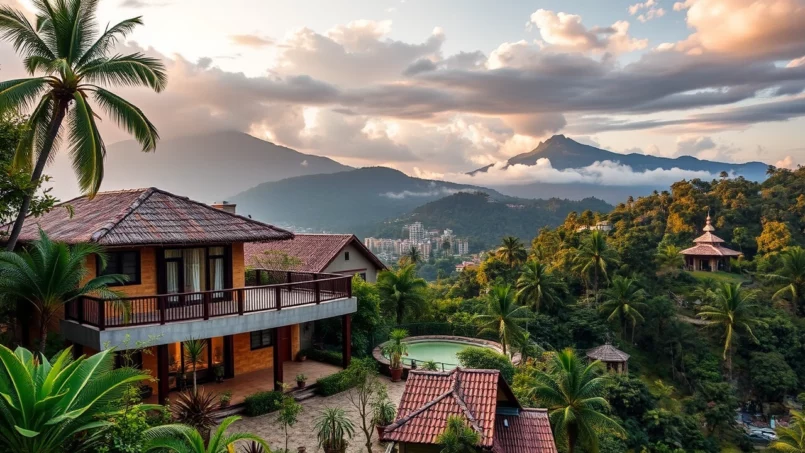
Lake Atitlán, surrounded by volcanoes and indigenous villages, has become the other major hub for luxury properties in Guatemala. Located in the highlands, it attracts retirees, foreigners seeking a more alternative lifestyle, eco-tourism players, and investors betting on a destination that is rapidly moving upmarket.
Still Attractive Prices for a World-Renowned Site
Lakeside houses in places like Panajachel or Santa Catarina Palopó sell for between $1,300 and $2,200 per square meter, for investments ranging from $300,000 to $800,000 depending on lot size, construction quality, and immediate proximity to the water. Higher up, with lake views but no direct access, prices fall between $1,000 and $1,500 per square meter, or even $800 to $1,200 for mountain houses in more isolated villages, with entry tickets around $120,000 to $250,000.
50000-250000
The price of an acre of land intended for building villas or small tourist complexes ranges from $50,000 to $250,000.
Appreciation prospects are considered very favorable: values are increasing by 3% to 7% per year as tourist infrastructure expands, and five-year projections suggest annual increases of between 7% and 9%. In terms of rental operation, gross yields for well-positioned properties typically range from 7% to 10%, with higher peaks for charming villas targeting high-income international clientele.
Gated Communities and Structured Projects on the Lake’s Shores
While a large part of the Lake Atitlán market remains characterized by more informal transactions and individual houses, some structured gated communities stand out for high-end clientele.
Good to know:
This long-established and successful development is ideally situated on a promontory, with easy access from Guatemala City and Antigua via the Pacific coastal axis. It offers permanent security, a helipad, boat storage spaces, a boat ramp, and private beaches. Only three houses have direct lake frontage, making them exceptionally rare properties.
Another project, consisting of eight condo-villa units on the road to Mansion Road beyond Santa Catarina Palopó, illustrates the emergence of small luxury condominiums. Located less than seven kilometers from Panajachel, it offers panoramic views of three volcanoes and lake sunsets, a common lap pool, jacuzzi, artificial waterfalls, 24/7 security, and low operating costs. The combination of low monthly fees, limited property taxes, and promising seasonal rental prospects makes it a particularly attractive product for investors seeking a profitable foothold.
Pacific Coast, Secondary Cities, and New Centers of Interest
While Guatemala City, Antigua, and Lake Atitlán concentrate most of the luxury market, other areas are gradually gaining visibility.
Pacific Coast: A Still-Underexploited Beachfront Potential
The Guatemalan Pacific coast, with localities like Monterrico or Puerto San José, does not yet offer the same density of projects as the Mexican rivieras or Costa Rica, but is beginning to attract high-end investments. Properties on the waterfront or in resorts typically sell for between $1,200 and $2,000 per square meter, for budgets ranging from $200,000 to $600,000.
Good to know:
Price growth forecasts in priority development areas are 8% to 10% per year over five years, exceeding the national luxury average. However, for foreigners wishing to invest on the coast, the legal framework is complex due to constitutional restrictions. It requires structuring through Guatemalan corporations and leases with the public agency OCRET for parcels located within protected shoreline strips.
Secondary Cities: Diversification and Gradual Upscaling
Cities like Quetzaltenango (the country’s second-largest urban area), Cobán, or Jalapa are gradually attracting investors, particularly in agri-business, logistics, or eco-tourism. Prices there remain significantly lower than in premium zones: between $700 and $1,100 per square meter for an apartment or townhouse in Quetzaltenango, with total budgets ranging from $100,000 to $220,000.
4 to 6
Potential annual appreciation of secondary real estate markets in Guatemala over five years.
A Generally Favorable Legal Framework That Requires Diligence
One of the major advantages of Guatemala, compared to some neighboring countries, is the equal legal treatment of nationals and foreigners regarding property ownership. The Constitution explicitly protects property rights, and foreigners benefit, in principle, from the same rights to buy, own, sell, and lease as Guatemalans. There is no minimum investment threshold for real estate required by law simply to purchase a property.
Location Restrictions: Borders, Coasts, Shores
The main limitations concern the property’s location. Legislation prohibits direct ownership by foreigners in certain sensitive areas: strips near international borders (about 15 km) and coastlines (3 km from the sea, 50 km coastal strip under certain frameworks), as well as the immediate shores of lakes and navigable rivers (200 m around lakes, 100 m along navigable rivers, 50 m around springs supplying populations). Land within these strips is considered state reserves and managed by OCRET.
Attention:
To acquire a property in the affected areas, investors typically need to set up a Guatemalan corporation (S.A.), which can hold the lease. OCRET concessions are long-term leases at modest fees (often < $100/year), but strict non-payment leads to confiscation.
Purchase Process: Central Role of the Notary and Costs to Anticipate
Acquiring a luxury property in Guatemala follows a relatively standard pattern but requires strong involvement from a local lawyer/notary. The process, for a cash purchase, can be completed in 30 to 60 days, but upfront preparation (title verification, lien search, cadastral and municipal status checks) is crucial, especially for high-end properties where stakes are significant.
In practice, transaction costs on the buyer’s side typically represent between 5% and 7% of the purchase price. These fees include, among others, a transfer tax of about 3% of the declared value for second-hand properties (or 12% VAT for new constructions), notary and attorney fees that can total 2% to 5% of the value, registration fees around 0.15%, stamp taxes, and VAT on professional services.
Example:
The following table illustrates the typical cost structure for a $200,000 high-end property. This structure is proportional and can be applied to higher investment amounts.
| Cost Item | Approximate Rate | Estimated Amount on $200,000 |
|---|---|---|
| Transfer Tax | 3% | $6,000 |
| Notary Fees | 1 – 3% | $2,000 – $6,000 |
| Legal Fees | 1 – 2% | $2,000 – $4,000 |
| Registration Fee | 0.15% | $300 |
| Stamp Tax | 0.3% | $600 |
| VAT on Services (12%) | on fees | $240 – $720 |
| Total Estimated | 5 – 7% | $10,000 – $14,000 |
In terms of ongoing costs, the property tax (IUSI) is modest compared to other countries: it follows a progressive scale between 0.2% and 0.9% of the cadastral value, with an exemption for very low values. Capital gains are taxed at 10%, and rental income is subject to withholding or flat-rate regimes (5–7% on gross for residents, 15% on gross for non-residents).
Financing: A Market Still Largely Dominated by Cash
For luxury properties, transactions are overwhelmingly cash-based. It is estimated that about 85% of acquisitions by foreigners are financed without recourse to local credit. The reasons are multiple: difficult access to mortgage loans for non-residents, high collateral requirements, higher interest rates than in developed countries, and administrative complexity.
When financing does exist, it comes either from local banks, with down payments of 35% to 40% and rates ranging from 7.5% to 12%, or from developers themselves who offer credit schemes over 20 to 30 years, typically around 7.5% to 10% for the high-end residential market. Seller financing also remains common in higher price segments.
Investor Profiles, Motivations, and Returns
The luxury property market in Guatemala attracts a mosaic of profiles: wealthy Guatemalan families, long-term expatriates, foreign retirees, eco-tourism entrepreneurs, purely financial investors, and digital nomads seeking a more permanent base.
10
Maximum gross return targeted by investors in tourist areas like Antigua and Lake Atitlán during periods of high demand.
Global data suggests that high-end properties in the main tourist hubs saw their values increase by at least 12% in 2024, driven by the explosion of short-term rentals and the continued rise of international tourism. At the same time, the rise of sustainable projects (solar panels, rainwater harvesting, low-carbon materials) has stimulated a niche segment: in 2023, demand for eco-responsible projects jumped by 25%, a trend affecting both lakeside villas and new residences in the capital.
Risks, Challenges, and Mitigation Strategies
Despite clear potential, the Guatemalan luxury market is not without risks. Issues of security, governance, quality of land titles, and exposure to natural hazards (earthquakes, volcanic activity, climate phenomena) must be taken seriously.
In some rural areas or on the coasts, the title history can be incomplete, with overlapping rights, community conflicts, or poorly recorded easements. Corruption, well-documented at the national level, requires increased vigilance in selecting intermediaries (agents, lawyers, notaries). Experienced investors systematically recommend going back at least 30 years in title searches, conducting a field survey, and, when possible, purchasing title insurance.
Tip:
Investing in luxury real estate presents specific challenges. Resale can take time, especially outside the most dynamic markets, due to lower liquidity. Furthermore, the practice of under-declaring values, still common to reduce taxes, carries risks. It not only exposes investors to legal action but also complicates the calculation of capital gains and the justification of acquisition prices to tax authorities in the investor’s home country.
Faced with these issues, several mitigation strategies are essential: prioritize areas already structured for expatriates and tourism (Antigua, Lake Atitlán, Zones 10–16 in the capital), use recognized agencies, work with lawyers experienced in international transactions, declare the real value of transactions, and incorporate a margin of 10% to 17% of the purchase price for acquisition costs (fees, taxes, professional fees).
Outlook: A Luxury Market Poised to Strengthen
On a regional scale, Guatemala today stands out for a particularly interesting price-to-quality ratio for luxury properties. Prices remain overall lower than in Costa Rica or Panama for a comparable, or even superior, level of comfort and return, especially in the seasonal rental segments tied to cultural and nature tourism.
8
This is the projected average annual appreciation rate for high-end properties in Antigua and on the developing Pacific coast, illustrating the significant potential of the luxury real estate market.
The Guatemalan market remains, however, an “insider” market, where information is less transparent than in countries with MLS systems and highly standardized regulations. Succeeding in the luxury segment thus requires accepting a degree of complexity: making multiple visits, testing properties during the rainy season to detect infiltration issues, talking to neighbors, cross-referencing sources, and, above all, surrounding oneself with solid local experts.
Good to know:
This niche market offers unique colonial heritage, spectacular volcanic landscapes, and high rental yields. It is characterized by relatively mild taxation and still reasonable entry prices compared to major regional markets. The best opportunities require patience, selectivity, and a good knowledge of the terrain.

Cyril Jarnias is an independent expert in international wealth management with over 20 years of experience. As an expatriate himself, he is dedicated to helping individuals and business leaders build, protect, and pass on their wealth with complete peace of mind.
On his website, cyriljarnias.com, he shares his expertise on international real estate, offshore company formation, and expatriation.
Thanks to his expertise, he offers sound advice to optimize his clients' wealth management. Cyril Jarnias is also recognized for his appearances in many prestigious media outlets such as BFM Business, les Français de l’étranger, Le Figaro, Les Echos, and Mieux vivre votre argent, where he shares his knowledge and know-how in wealth management.





