
 Published on and written by Cyril Jarnias
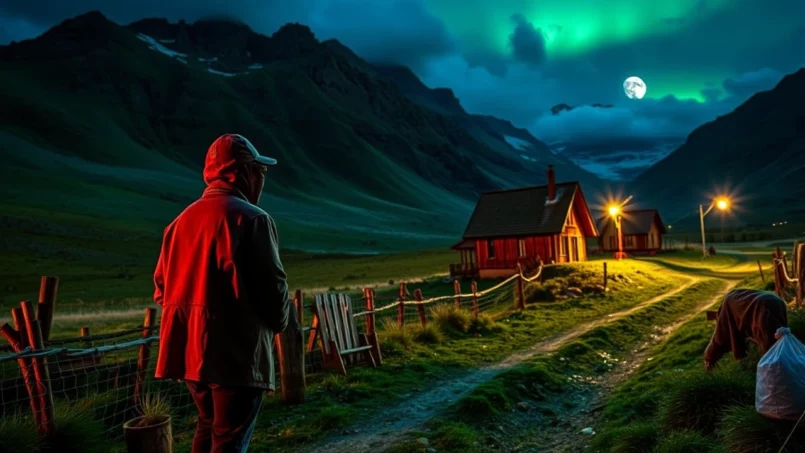
At first glance, you might not immediately picture Greenland as a party destination. There are no Las Vegas-style “strips” or endless clubs like in Ibiza. Yet nightlife here is booming, driven by economic growth, a surprisingly rich music scene, and above all, a completely altered relationship with time due to the polar night and the midnight sun. Going out in the evening in Greenland means entering bars and clubs as much as it means heading out by boat under the northern lights, sharing a kaffemik at a local’s home, or dancing in a cultural center to the sound of local bands.
Understanding the Greenlandic Night
The first thing to grasp before imagining your evenings in Greenland is that the very notion of “night” is quite relative. North of the Arctic Circle, the sun does not set in summer for several weeks, and winter brings almost continuous darkness, broken only by a few hours of blue twilight.
Social life adapts to the extremes of light. In summer, with the midnight sun, outdoor activities (docks, hiking, boating) stretch late into the night. In winter, the long nights are devoted to aurora borealis, cafés, concerts in cultural centers, and traditional gatherings like the kaffemik.
Another thing not to underestimate: in Greenland, people go out late. In Nuuk and other towns, the norm is to arrive at bars and nightclubs between midnight and 2 a.m. Early evenings are often quiet, spent dining, seeing friends, or attending a cultural event before heading to the pubs. So you’ll need to adjust your rhythm, especially if you come from a culture where the evening starts at 8 p.m.
Budgeting: Alcohol and the Cost of a Night Out
Greenland imposes very high taxes on alcohol. As a result, having a drink is expensive. A simple pint of beer costs around 50 DKK, significantly more than in most European countries. That doesn’t stop locals from enjoying bars, but it clearly changes habits: people often drink at home before going out, and consume more slowly once at pubs and clubs.
The table provides baseline price estimates at some popular venues in Nuuk, with conversions to Indian rupees derived from travel blog estimates.
| Venue | City | Type of Place | Estimated Cost for 2 People* |
|---|---|---|---|
| Godthaab / Nuuk Bryghus | Nuuk | Brewpub / Restaurant | approx. 3100 INR |
| Manhattan Nightclub | Nuuk | Nightclub | approx. 2000 INR |
| Daddy’s | Nuuk | Pub | approx. 2000 INR |
| Beer by the pint (average) | — | Bar / Pub | approx. 50 DKK |
Amounts given only as an indication of price level.
The combination of high taxation + logistical isolation also drives up the cost of some imported goods, which is reflected in bar and restaurant menus. On the other hand, local craft beer production is booming: breweries like Nuuk Bryghus or Godthaab Bryghus make their own beers, which Greenland has started exporting to Europe. So in bars you’ll find local brands like Baja, Pullarkat, or a Sugar Kelp Ale flavored with local seaweed.
Nuuk: Capital of Greenlandic Nightlife
With more than a third of the country’s population concentrated in its area, Nuuk naturally concentrates most of the structured nightlife: bars, craft breweries, clubs, cultural centers, cinemas, festivals. Good news for visitors: almost everything is walkable, with establishments clustered in a compact downtown.
Bars, Pubs, and Lounges: The DNA of Nuuk Evenings
In Nuuk, the evening often begins at a bar or pub, sometimes inside a hotel, before moving on to a club. The key venues each have their own personality.
The Skyline Bar, at the top of the Hans Egede Hotel, is the symbol of “chic” Nuuk. Located on the upper floor of the capital’s most exclusive hotel, it offers panoramic views of the fjord and mountains, in a warm and refined setting. People come for carefully crafted cocktails, a wide selection of whiskies or rums, or simply to enjoy live piano music in the late afternoon. On weekends, the music and dance floor keep the atmosphere going late into the night. Dress code: smart casual, meaning you don’t come straight from a hiking trail.
At the opposite end of the spectrum, Kristinemut — nicknamed “Mutten,” literally “the place where people meet” in Greenlandic — embodies the historic, popular pub. It’s the oldest bar in town, with a western saloon atmosphere, a small dance floor, and well-established themed nights: bingo every Tuesday, karaoke on Thursday, concerts until midnight on weekends, and live music six days a week. An intergenerational place par excellence, you’ll find both regulars and curious visitors eager to feel the local heartbeat.
In Nuuk, the Kristinemut bar is part of a trio of neighboring establishments known as the ‘Three Mut’s’. This group also includes MaxiMutten, a traditional, quiet pub with background music, and MiniMutten, decorated in a Wild West theme with wooden walls, horse saddles, and regular concerts. Hopping between these three bars in one evening is a great way to immerse yourself in Greenlandic sociability.
Another pillar of Nuuk nightlife: Daddy’s, a rustic pub with a timeless charm, featuring pool tables, darts, loud music, and a great selection of beers and cocktails. It’s the typical spot for “after-work” that turns into an all-nighter, especially since it’s physically connected to two other nightlife staples: the restaurant-bar Killut and the club Garagen. You can go from a meal of Greenlandic specialties to a drink with friends, then end up on the dance floor without stepping outside.
Killut, for its part, plays the cozy card. An outright hygge atmosphere, soft lighting, comfortable sofas, shelves of local books, and board games available. Early in the evening, it’s a restaurant where you can taste reindeer, musk ox, seal, or fish prepared according to tradition. Later, the lights dim, the games are put away, disco lights come on, and a playlist mixing international hits and Greenlandic songs takes over. You can order a bottle with ice and sodas to share with a group, like in European clubs.
For a more “foodie” vibe, Esme Lounge, successor to the former Café Esmeralda, offers a quality tapas concept, blending small plates inspired by international cuisine with local products. The cocktails are crafted, the combinations sometimes surprising, making it a prime spot to indulge before heading to the clubs.
Finally, at the heart of the Nuuk Center, the country’s first shopping mall, Café Pascucci acts as an urban café-bar: you can dine, drink craft beers or a glass of wine in a relaxed atmosphere, ideal for a quieter evening or a night that will later continue at other venues.
Breweries and Craft Beers: Hops in the Land of Ice
The Greenlandic beer scene is far more dynamic than one might imagine. In Nuuk, Nuuk Bryghus / Godthaab Bryghus is recognized as the oldest and largest brewpub in the country. Established in the early 2000s, the brewery plays a central role in spreading Greenlandic craft beer.
On site, the atmosphere is modern and family-friendly, with discreet background music. The establishment offers house beers such as Baja or Pullarkat, as well as limited-edition creations brewed in small batches, especially in summer. The surprising menu features meats rare in a European context, like caribou or crocodile, alongside Arctic local products.
One of the best ways to discover this place is to book a tasting tour in the late afternoon, typically from 5 p.m. to 7 p.m. The tour includes a detailed explanation of the brewing process and the role of minerals in Greenlandic water, followed by a tasting of five different beers. Among them, the Sugar Kelp Ale, flavored with local seaweed, symbolizes the brewers’ ability to harness the territory’s resources. The evening usually continues with a Danish-inspired dinner, sometimes complemented by a traditional dish served at Killut.
Beers produced at Nuuk Bryghus are also distributed through the HECA store chain, allowing you to extend the discovery beyond the brewpub.
Clubs and Nightclubs in Nuuk
For those who really want to dance, Nuuk offers several venues that, in terms of energy, rival some European capitals — provided you accept that parties start very late.
Garagen, literally “the Garage,” is one of the capital’s newest clubs. Dedicated to dancing, it opens from midnight to 4 a.m., with peak attendance around 1:30 a.m., especially on Fridays. The layout prioritizes comfort: bar, banquettes, space to move. Its physical connection to Daddy’s and Killut makes it the natural continuation of the evening for those not ready to go home.
Located at Imaneq 30, this club has a large dance floor, two cocktail bars, and seasoned bartenders. DJs mix the latest international and local hits, with a very dense programming in summer. Doors close at 3 a.m.; it’s recommended to arrive before 1 a.m. to fully enjoy the atmosphere.
These clubs are part of a landscape where almost all the ingredients of a “classic” night out are present: good sound system, crafted cocktails, dress codes varying in strictness depending on the venue. The difference mainly lies in what surrounds the night: the snow, the prospect of glimpsing aurora borealis upon leaving, the possibility of seeing the same musicians the next day on a cultural center stage.
Katuaq: Cultural Center and Evening Stage
It’s impossible to talk about evenings in Nuuk without mentioning Katuaq, the city’s large cultural center. Inaugurated in the late 1990s, the building itself is a statement: its undulating facade is inspired by the luminous ribbons of the aurora borealis. Inside, two large modular halls host concerts, plays, film screenings, conferences, or festivals, while a café, Café Tuaq, serves as a meeting point.
By day, Katuaq is a place to work on Wi-Fi, have coffee, see an exhibition, or attend a workshop. In the evening, the programming becomes denser: concerts by local or Nordic groups, film nights, events linked to festivals like the Nuuk Nordisk Kulturfestival or Nuuk International Film Festival, gatherings organized by NAPA (Nordic Institute in Greenland) or other cultural actors.
Café Tuaq, in this setting, plays a dual role: a cultural cafeteria at lunchtime, it transforms some evenings into a café-concert where you can enjoy local dishes while listening to musicians perform in small ensembles. For a visitor, it’s an ideal gateway to the Greenlandic art scene, more intimate than a big festival but just as authentic.
Going Out Beyond Nuuk: Bars, Hotels, and Small Towns
Even though Nuuk has the densest offering, nightlife isn’t limited to the capital. Wherever there’s a “large” community, you’ll find at least one bar, a discotheque, or a live music scene. The setup differs — sometimes just one pub for the whole town — but the desire to gather is the same.
Ilulissat: Hotels, Ice, and Light
Ilulissat, whose name means “icebergs” in Greenlandic, is one of the country’s main tourist hubs, thanks to its UNESCO World Heritage fjord glacier. Its nightlife largely revolves around hotels and outdoor activities.
Hotel Icefiord, facing the sea, offers a restaurant with local Nordic cuisine and rooms with views of the icebergs. Some categories even have skylights allowing you, in winter, to watch the aurora borealis from your bed. In the evening, after an ice excursion, you can have a drink while watching the ice blocks drift from the restaurant’s bar.
Several hotels in town offer convivial spaces to gather in the evening, whether for dinner, a drink, or chatting about the day’s photos.
A meeting place for dinner, a drink, or a late-afternoon chat.
Offers a cozy setting to share a moment and talk about the day’s discoveries.
A social space to eat, have a drink, or chat about photos.
With its rooftop restaurant and veranda, it’s ideal for dinner, a drink, or a conversation.
In parallel, the real “nightlife” of Ilulissat often takes place outdoors: midnight cruises among icebergs in summer, boat trips at dusk in winter to try to see the aurora borealis, snowshoe or snowmobile trips to heated cabins where you drink coffee watching the sky, long dog sled rides under clear skies… Here, going out in the evening mostly means seeking light — whether solar or auroral — in the Arctic darkness.
Sisimiut: A Modest but Lively Scene
Second largest city in the country, Sisimiut doesn’t have the bar density of Nuuk, but it cultivates its own way of experiencing the night, combining a few establishments around the port, an active cultural life, and above all a very strong connection to outdoor activities.
On the bar front, Pub Raaja is the iconic spot: a simple pub where you come for a beer, a quick bite, and sometimes live music on weekends. Club Starlight, a small local discotheque, takes over for those wanting to dance. The bar at Hotel Sisimiut offers a cozier option, often appreciated by visitors and locals looking for a calmer atmosphere.
But social life in Sisimiut in the evening also passes through other venues. The cultural center Taseralik hosts film screenings, exhibitions, and performances, and notably organizes an “Open Mic” night every third Friday of the month: an open stage where musicians, poets, comedians perform. The expat or transient community also regularly meets at the Community Center, which hosts networking evenings, association events, or themed gatherings.
The following table summarizes typical options for an evening in Sisimiut:
| Type of Venue | Iconic Places | Main Atmosphere |
|---|---|---|
| Pub / Bar | Pub Raaja, Hotel Sisimiut bar | Beers, conversation, sometimes live music |
| Discotheque | Club Starlight | Dancing and music late into the night |
| Culture / Shows | Taseralik Cultural Centre | Cinema, concerts, “Open Mic” nights |
| Nighttime Alternatives | Hiking, port, viewpoints | Midnight sun or aurora borealis |
Finally, in Sisimiut more than elsewhere, going out in the evening often means “being outside“: watching the midnight sun in summer, walking to a viewpoint to see the auroras in winter, or enjoying a hot outdoor bath at the Arctic Spa of Hotel Sisimiut before heading to bed.
Other Towns and Villages: Hotel Bars and Camaraderie
In many localities, the main option for a drink in the evening is the hotel bar. This is the case, for example, in Kulusuk, a small village on the east coast, where Hotel Kulusuk has a restaurant-bar that serves as a meeting point for travelers and locals. In Qeqertarsuaq, on Disko Island, the restaurant at Hotel Disko Island, with its view of the port and the Lyngmark mountains, draws people as much for its panorama as for its late-afternoon atmosphere. In Qasigiannguit, Hotel Diskobay plays a similar role.
In these isolated places, the line between “hotel bar” and “village bar” is thin: locals come for a beer, to watch a game, to chat with visitors. Exchanges are often more direct than in the city, and a simple drink can turn into a lesson in local culture, punctuated by hunting stories or tales of storms.
Description of an isolated bar
The Night as a Natural Spectacle: Auroras, Midnight Sun, and Cruises
In Greenland, a large part of nightlife doesn’t take place indoors, but outside, facing the sky. Depending on the season and latitude, it’s the midnight sun or the aurora borealis that dictate the program.
The Midnight Sun: Light-Filled White Nights
North of the Arctic Circle, the sun does not set for several weeks in summer. In Ilulissat, for example, it stays above the horizon for about 40 days, from late May to late July. In more northerly regions, this phenomenon can last up to five months.
In polar regions, the permanent brightness of the midnight sun upends traditional schedules, turning night into a simple extension of the day. This allows unusual activities at typically nocturnal hours, such as late hiking, kayaking in the low sun, or midnight cruises among the icebergs of Ilulissat. Tour operators adapt their offerings with excursions specifically scheduled to take advantage of this golden light that never completely disappears, enabling, for example, photographing icebergs at any hour.
In towns further south, like Nuuk or Qaqortoq, there’s no strict midnight sun, but nights remain extremely bright, with nearly 20 hours of daylight at certain times. There too, locals use this brightness to extend outdoor activities well beyond what would seem “reasonable” further south.
Aurora Borealis: Green and Violet Nights
At the other end of the year, from September to April, Greenland becomes one of the best observation spots in the world for the aurora borealis. Most of the territory lies within the auroral belt, and the almost total absence of light pollution outside towns offers a sky of rare purity.
The typical duration of an aurora borealis display, though it can sometimes last over two hours.
This magic has given rise to a multitude of nighttime outings, especially in Nuuk, Kangerlussuaq, and Ilulissat: car excursions to dark sites outside town with hot chocolate in tow, night cruises in the Nuuk fjord aboard enclosed, heated boats, snowshoe or snowmobile expeditions to remote cabins, dog sled routes in the deep polar night… Some tours are even organized from remote camps (glaciers, isolated fjords, farms), where the total absence of artificial light allows you to see not only the auroras, but also the Milky Way and shooting star showers.
The most serious operators offer great flexibility: in case of bad weather or no auroras, it’s often possible to reschedule the outing for another night free of charge, to maximize the chances of witnessing the spectacle.
“Off-Bar” Evenings: Sledding, Snowmobiling, Snowshoeing, and Cabins
For many visitors, the memorable evening in Greenland doesn’t take place in a club, but on the snow, far from the city lights.
In Ilulissat, for example, several night tours combine snowmobiling and aurora hunting: departure in the early evening from Hotel Arctic, climb toward the Akinnaq range, crossing frozen lakes to a cabin like Nalluarsuk. Once sheltered, you drink coffee or hot tea while watching for the first green glimmers in the sky.
Nighttime snowshoe hikes follow a specific pattern: a walk of about an hour at a slow pace to a heated cabin, followed by a period of aurora observation from inside or the terrace, then the return. The total absence of mechanical noise during this experience amplifies the feeling of being literally swallowed by the Arctic night.
Dog sledding holds a special place. Inherited from thousands of years of Inuit practices, it is north of the Arctic Circle, particularly in regions like Ilulissat, that this tradition is still fully alive. Itineraries ranging from a few hours to several days are offered, some specifically designed for evenings or full nights, with bivouacs in hunters’ cabins or tents on the ice. The silence, broken only by the glide of runners and the dogs’ breathing, offers an experience radically different from nightclubs, but just as intense.
Evenings with Locals: The Art of the Kaffemik
Beyond bars and organized excursions, a large part of Greenlandic evening sociability happens in homes. The kaffemik is its most emblematic expression.
The term ‘kaffemik’ literally means ‘via the coffee’ and refers to a large open-house gathering to celebrate various events (birthday, wedding, funeral, etc.). Typically organized from 1 p.m. to 7 p.m., it allows many people (sometimes over 50) to come and go, sharing the moment, perpetuating a tradition that once facilitated visits in villages.
The atmosphere is family-friendly, informal, warm. You take off your shoes at the entrance; formal attire is not required, though the person being celebrated may wear the national costume: qaqortumaartoq for men (white hooded anorak, dark pants, kamiks boots), arnatoortoq for women (blouse, anorak, pants and thigh-high boots made of finely embroidered seal skin).
On the table, an impressive array of cakes, pastries, coffee, but also hot dishes and local specialties: seal meat, whale skin and blubber (mattak), reindeer meat, musk ox, walrus or polar bear, dried fish, fermented birds (kiviak), often prepared using traditional techniques (cooking in seawater, on stones, etc.). Wine is not uncommon either.
The kaffemik operates according to a precise code of hospitality: you sit when a seat becomes free, give up your chair when new guests arrive, clear your plate, and may, out of politeness, wash your own cup. Guests not formally invited are usually welcome without issue; openness and sharing come first. With some local agencies, certain visits now include participation in a kaffemik, offering travelers a much more intimate view of Greenlandic social life.
Festivals, Concerts, and Big Collective Evenings
Greenland, despite its small population, has a surprisingly rich cultural and musical scene. Many festivities have a nighttime extension, whether concerts lasting until late, open-air screenings, or celebrations around the fire.
Among the major events, we can mention:
Celebrated on June 21, the summer solstice, National Day features parades in traditional clothing, concerts, speeches, craft stalls, and tastings of local dishes. In towns like Nuuk, Ilulissat, Sisimiut, or Aasiaat, festivities often continue into the evening thanks to the midnight sun light.
– Music festivals like Arctic Sounds in Sisimiut (focused on acoustic music and exchanges among Arctic artists), Nipiaa Rock Festival in Aasiaat, or Akisuanerit Festival in Nuuk, which make nights vibrate with programs mixing rock, folk, rap, pop, and traditional music. Concerts are held in halls, tents, or outdoors, and frequently continue past midnight.
– Cultural festivals such as Nuuk Nordisk Kulturfestival, a multidisciplinary biennale that transforms Nuuk into a creative laboratory: contemporary arts, theater, dance, film, street art… The city becomes a vast artistic platform where evenings alternate between experimental performances, DJ sets, screenings, and gatherings.
Extreme sports events, such as the Ilulissat Icefjord Midnight Marathon (a race under the midnight sun along the glacial fjord) or the Polar Circle Marathon near Kangerlussuaq (a course across tundra and glacier), give rise to vigils, concerts, or festive gatherings around the finish lines, often lasting late into the night.
– Family and religious celebrations, notably Christmas, celebrated with a mix of Danish and Inuit traditions: hearty meals of reindeer, musk ox, fish; choirs; Christmas craft markets; light decorations in the polar night. On December 24, the evening mass and collective singing are integral parts of nightlife.
Music and Dance: From Kalattuut to Rap
Greenlandic evenings, whether in a bar, cultural center, or around a fire, are very often musical. The oldest tradition is that of drum dancing and singing. The qilaat, a frame drum covered with animal skin, is struck not on the membrane but on the frame with a stick, often carved from reindeer antler. Long used as a conflict resolution instrument — “song duels” where the audience decided through laughter — it now accompanies dance and song performances that have been revived and recognized as intangible cultural heritage by UNESCO.
Greenlandic music has been enriched by external influences. European whalers introduced the polka and couple dances, giving rise to the « kalattuut », a fast local polka incorporating elements of drum dancing. Meanwhile, Moravian missionaries strongly influenced the choral tradition, particularly through polyphonic singing, hymns, and Christmas celebrations.
The 20th century saw the arrival of jazz, country (imported by American soldiers during World War II), then rock, pop, and rap. Bands like Sumé, in the 1970s, played a decisive role by creating 100% Greenlandic rock, sung in the local language and carrying a political message tied to the quest for autonomy. Other groups, from Zikaza to Chilly Friday, from Nanook to Nuuk Posse, have since nourished an extremely diverse music scene, where intimate folk, post-rock, socially conscious rap, mainstream pop, and jazzy experiments coexist.
Greenland’s nightlife and cultural life, especially in Nuuk, offer direct immersion into its musical creativity. It brings together an eclectic mix of artists: singers from Danish talent shows, local rappers with engaged lyrics, rock bands from Disko Bay, church choirs, and jazz ensembles with Nordic influences. A simple night out can thus turn into an authentic discovery of this diverse artistic scene.
Practical Tips for Your Evenings in Greenland
To fully enjoy Greenlandic nightlife, a few practical precautions are in order.
First, consider the weather: even in town, nights can be freezing, and the contrast between the warmth of a bar and the cold of the street is harsh. It’s essential to go out with a good insulated jacket, hat, gloves, and appropriate footwear, especially if you plan to walk between venues or extend the evening by sky-watching. For aurora outings, snowshoeing, snowmobiling, or dog sledding, thermal layers, a windproof coat, insulated boots, and sometimes a headlamp are necessary.
In bars and clubs, the action usually doesn’t start before midnight and peaks between midnight and 2 a.m. Arriving at 10 p.m. and leaving at 11 p.m. often means missing the heart of the evening. It’s therefore advisable to plan an activity for the first part of the night, such as a late dinner, a concert, a movie, or a walk along the fjord, before heading to the venues.
Finally, keep in mind the legal framework: the minimum age to consume alcohol is 18, and pubs attached to restaurants do not admit minors. Alcohol being expensive and sometimes at the heart of public health debates, some communities have adopted very strict local rules, even bans: it’s always a good idea to inquire beforehand about the situation in the town or village you’re visiting.
A Nightlife in the Image of the Territory
Nightlife in Greenland is anything but standardized. It reflects the uniqueness of a territory where light and darkness dictate rhythms, where sociability passes just as much through a smoky pub as through a shared coffee in a colorful house from the 1960s, where a rock concert can precede a night spent following a dog sled trail on a frozen fjord.
Evenings in Greenland redefine the concept of night, alternating between the midnight sun and aurora borealis. They can include tasting a local beer (Sugar Kelp Ale) in Nuuk, Christmas carols in a wooden church, the traditional *kalattuut* dance, encounters in a bar in Qeqertarsuaq, or aurora watching in Ilulissat. Each experience contributes to a living Arctic culture that has integrated these unique nights as a central element of its social life.
Disclaimer: The information provided on this website is for informational purposes only and does not constitute financial, legal, or professional advice. We encourage you to consult qualified experts before making any investment, real estate, or expatriation decisions. Although we strive to maintain up-to-date and accurate information, we do not guarantee the completeness, accuracy, or timeliness of the proposed content. As investment and expatriation involve risks, we disclaim any liability for potential losses or damages arising from the use of this site. Your use of this site confirms your acceptance of these terms and your understanding of the associated risks.

Cyril Jarnias is an independent expert in international wealth management with over 20 years of experience. As an expatriate himself, he is dedicated to helping individuals and business leaders build, protect, and pass on their wealth with complete peace of mind.
On his website, cyriljarnias.com, he shares his expertise on international real estate, offshore company formation, and expatriation.
Thanks to his expertise, he offers sound advice to optimize his clients' wealth management. Cyril Jarnias is also recognized for his appearances in many prestigious media outlets such as BFM Business, les Français de l’étranger, Le Figaro, Les Echos, and Mieux vivre votre argent, where he shares his knowledge and know-how in wealth management.





