
 Published on and written by Cyril Jarnias
Moving to Suriname isn’t just about finding a roof over your head. Between a rental market heavily concentrated around Paramaribo, slow bureaucracy, strict residency procedures, and a generally affordable but uneven cost of living, it’s easy to feel lost. The goal of this article is to provide a practical guide, backed by concrete data, to help you search, choose, negotiate, and occupy a home in Suriname under good conditions.
Understanding the Surinamese context before you start house hunting
Before even opening a listings site, it’s helpful to place Suriname in its real-life context. The country pairs a lower cost of living than Europe or North America with a limited job market, a fragile economy, and slow bureaucracy. For an expat paid in hard currency (euro, dollar), this is a real advantage: attractive rents, reasonable daily expenses, and opportunities to save. For someone earning local currency, the reality is tighter, especially with local purchasing power significantly lower than in France.
The pace of life is calm, and the landscape is mostly natural. Jobs, schools, medical facilities, and housing for foreigners are mainly concentrated in Paramaribo. Outside the capital, the state presence is more limited, and safety can be a concern in certain areas, especially along main roads and near the border with Guyana.
For freelancers and remote workers, Suriname offers several advantages: a generally low cost of living, a time zone convenient for working with Europe or North America, decent internet quality in the city, and a small community of digital nomads in Paramaribo (a few hundred depending on the season).
Paramaribo: the heart of the rental market
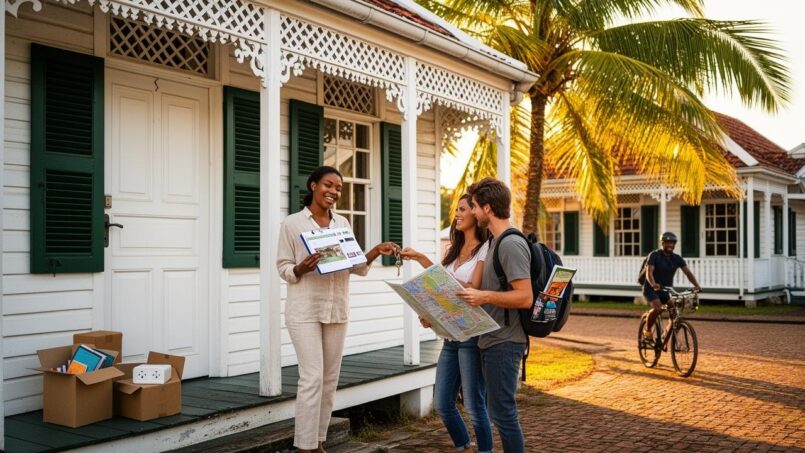
Almost all housing suitable for expats is located in Paramaribo and its immediate suburbs. This is where you’ll find housing, shops, services, international schools, clinics, cafés with wifi, and informal coworking spaces. The historic center, with its wooden colonial houses, white facades, and pitched roofs, is a UNESCO World Heritage site and remains the administrative and tourist heart.
For everyday life, many foreigners prefer to settle a bit further south or west, in more residential and practical neighborhoods. The range of neighborhoods is wide, with very different profiles in terms of both lifestyle and budget.
Overview of Paramaribo’s main neighborhoods
Each area of the city has its own personality. Rather than listing names impersonally, it helps to understand what each name that appears in listings actually means.
The Zorg en Hoop neighborhood is known for its upscale residential character, featuring large houses, parks, and good schools. It’s an ideal choice for families or expats looking for a comfortable environment, while still being a reasonable distance from downtown.
Centrum is the historic and commercial heart: a mix of modern services, old buildings, markets, and administrative offices. Living here means you can do most things on foot, but noise, traffic, and occasionally safety can be more problematic than in quiet residential areas.
Tammenga, along the river and near the Anton de Kom University, offers a greener, more residential environment with a mix of local families, students, and a few expats.
Rainville and Livorno are developing, predominantly residential neighborhoods with rents often more affordable than the most sought-after northern or central areas. You’ll find a growing number of houses and apartments aimed at the local middle class and foreigners.
Blauwgrond is renowned for its Indo-Surinamese food scene and lively nightlife. Those who enjoy dining out and evening entertainment find a good balance here between leisure and housing.
The neighborhoods of Munder and Flora are generally described as quiet, often chosen by families and retirees who prioritize peace and quiet.
On the outer edge, Zanderij is mainly known for its small airport; it’s not the most sought-after area to settle, but it illustrates how the city spreads out in patches, between residential zones, commercial pockets, and more rural sectors.
Housing budget: how much to plan for?
The big advantage of Suriname for an expat paid in hard currency remains the level of rent. Figures vary based on exact location, size, and comfort level, but the order of magnitude is clear.
The average monthly rent for a one-bedroom apartment in downtown Paramaribo, in US dollars.
For families, a three-bedroom home in the city center can easily exceed $1,000 USD per month, especially for modern apartments or well-equipped houses. Outside the urban ring road, you’ll find larger, simpler houses between $400 and $600 USD, which remains very attractive for a household with international income.
The table below gives a snapshot of the monthly price range observed in Paramaribo (in dollars) for different types of housing.
| Type of housing | Location | Average rent (USD/month) | Indicative range (USD) |
|---|---|---|---|
| 1-bedroom apartment | Center | ~380–400 | 295–1,000 |
| 1-bedroom apartment | Suburbs | ~217 | 118–300 |
| 3-bedroom apartment | Center | ~1,075 | 590–2,500 |
| 3-bedroom apartment | Suburbs | ~500–570 | 400–850 |
| Simple family house (large) | Outside city center | 400–600 | varies by area |
| Well-located family house | Desirable center/north | >1,000 | sometimes much more |
These orders of magnitude are consistent with other data expressed in euros, where a one-bedroom in the city center is around €440, a three-bedroom around €900–€930, with variations depending on exact size and standard.
Average square footage of a typical apartment in Cambodia for which monthly basic utilities (electricity, water, trash) amount to $25–$60 USD, excluding heavy air conditioning use.
Overall cost of living and monthly budget
To build a consistent housing budget, you need to fit it within the overall cost of living envelope. Several studies estimate that life in Suriname is about 30–32% cheaper than in France, with rents up to 70% lower than in many Western countries. However, local purchasing power remains very low, with average net salaries around $250–$280 USD per month.
Estimates to calibrate a monthly budget covering the main expense categories.
Average cost of rent for a standard apartment in an urban area.
Budget for groceries and daily meals.
Costs related to travel, including public transit or a personal vehicle.
Allocation for cultural activities, restaurants, and entertainment.
| Profile | Estimated total monthly budget (USD) | Main notes |
|---|---|---|
| Single person (modest lifestyle) | 700–900 | Simple rent, careful spending |
| Single person (comfortable) | 1,400–2,000 | Decent neighborhood, going out, frequent AC |
| Couple | 1,500–2,500 | Apartment or small house, some leisure |
| Family of 4 | 2,100–2,800 | 3-bedroom house, possible private school, a car |
For a single person, living decently is still possible around $900–$1,400 USD by choosing a reasonable home and controlling leisure expenses. For a family of four, a budget between $2,000 and $2,800 USD covers housing, food, transport, basic services, and a bit of leisure.
Where to look for housing: agencies, platforms, and local listings
The easiest way to start your search, especially from afar, is through major booking platforms and local real estate portals. The ideal approach is to first book a short-term furnished stay to scout neighborhoods and then go through viewings and paperwork for a standard monthly lease.
In practice, three channels dominate:
Generalist platforms like Airbnb and Booking.com, which offer everything from studios to villas or small apartments in secure complexes. This is the go-to tool for a first month on the ground, even if the nightly rate is higher (often $50–$80 USD per night for a decent apartment).
Surgoed Makelaardij NV is presented as the main real estate portal in Suriname. It offers a wide range of properties for sale and rent, mainly in Paramaribo but also in other districts. The platform has an advanced search engine that allows filtering by property type (house, apartment, land, commercial building), size, price, etc. To improve the user experience, the company has developed a free mobile app available on the App Store and Google Play. It has also published a real estate magazine titled “House, Home Lifestyle” since 2011.
Expat-oriented agencies and websites focusing on furnished, secure homes, often in the northern neighborhoods or pleasant residential areas. They sometimes offer additional services like property management, maintenance, or even help with administrative procedures.
In addition to portals like Domaza and local agencies (e.g., ThijssenBizz), the Surgoed group stands out with its specialized subsidiaries in construction/renovation (Surgoed Construction & Infra) and property management (Surgoed Happy Home), offering comprehensive support for investors and future homeowners.
Example of a residential project: Altona Vrolijk Thuis
For those considering buying rather than renting, or a construction project, structured subdivisions exist, especially in the neighboring district of Wanica. The Altona Vrolijk Thuis project, backed by a Surinamese pension fund, is a good example.
It is located in the quiet neighborhood of Houttuin (Wanica) and offers 174 building-ready plots. Lots range from about 335 to 523 m², starting at €60 per square meter, with the possibility of 100% financing. Infrastructure is already in place: paved roads, sewage system, and water/electricity connections. This type of project will interest both families looking to build and investors seeking a medium-term base in Suriname.
Safety, neighborhoods, and choosing a location
The question of a neighborhood isn’t just about proximity to shops or the beauty of the house. In Paramaribo, safety is a decisive criterion. Crime perception statistics rate the overall level as “moderate,” with significant concern about burglaries, pickpocketing, and vehicle break-ins. Some areas like Palmentuin (Palm Garden) are known for illegal activities and a lack of police surveillance. In towns like Albina or Moengo, armed robbery is mentioned as a particular issue, as well as along major roads connecting Paramaribo to Albina or Afobakka, and in the Brokopondo district.
When searching for housing, it’s advisable to avoid the cheapest guesthouses and hotels, which are often subject to repeated break-ins, especially in Paramaribo. Instead, prioritize secure residences (with fencing, gates, and sometimes guards or video surveillance), check the lighting in the surrounding area, and ask expats already living there to identify safer sectors.
The perception of safety remains decent during the day, with a “high” rating for walking alone in daylight. The situation is more mixed at night, especially in poorly lit neighborhoods. When choosing a home, factoring in the possibility of returning by taxi or car rather than on foot from restaurants or bars can help balance comfort, budget, and risk.
Local culture, integration, and relationships with landlords
The success of your move depends not only on square meters or monthly price. Local culture plays a major role in relationships with landlords, neighbors, and service providers.
Suriname has great ethnic and cultural diversity. The people are generally welcoming, but an arrogant, bossy, or condescending attitude, especially from a foreigner perceived as well-off, is frowned upon. Light-skinned people may automatically be associated with high purchasing power, which can lead to inflated prices or implicit expectations about their financial capabilities.
Good integration comes from accepting the local way of doing things, learning a few words of Sranan Tongo, and showing genuine curiosity about the country’s different cultures (Hindustani, Javanese, Creole, Maroon, Indigenous, etc.). In a landlord-tenant relationship, this cultural openness, combined with respectful and clear communication, greatly facilitates negotiations and the handling of minor daily issues (repairs, noise, possible late payments).
Negotiating your rent: room to maneuver and strategy
Even though the detailed legal framework mentioned in the texts mainly refers to French law, a few general negotiation principles are perfectly transferable to Suriname. In most markets, a 5–10% reduction on the asking rent is frequently obtained on a rental, provided you are well prepared.
Before renting, it’s crucial to analyze the market. Browse online listings, talk to several agencies, and ask other expats about typical rents. Note that variations of 15–30% can exist for similar properties in the same area, including in Paramaribo, even though data is less abundant than in Europe.
During viewings, it’s useful to list what can serve as leverage: the condition of the home, level of equipment (air conditioning, fitted kitchen, recent electrical system, security), location in the neighborhood, orientation, noise level—especially proximity to noisy areas or busy streets. A very well-maintained, well-furnished apartment in a safe, sought-after neighborhood will have less negotiation room than an older house or a poorly soundproofed apartment.
The main points to discuss with a landlord are the rent amount, lease duration, security deposit amount, and whether certain utilities (internet, gardening, pool maintenance) are included. To find a compromise, you can offer a longer lease in exchange for a slightly reduced rent, which may reassure the landlord. Conversely, accepting a slightly higher rent in exchange for the landlord covering certain repairs can also be a mutually beneficial arrangement.
In the relationship itself, listening and politeness are crucial. A negotiation perceived as aggressive or dismissive is likely to end in a flat refusal. Conversely, explaining your constraints, showing that you have a solid case (income in hard currency, stable work contract or online activity, references from previous landlords), and being flexible on certain points often opens more doors.
Formalizing the lease and securing your situation
The legal texts cited refer mostly to France, but they remind us of universal principles worth keeping in mind when signing a lease abroad.
A written contract is essential. Even if a landlord offers a verbal agreement, it’s better to politely insist on putting everything in writing, if only to clarify expectations on both sides. The lease should specify the identities of the parties, a description of the property, the rental term, the rent, payment terms, the security deposit, how utilities are split, termination rules, and, if possible, a detailed move-in inspection report.
The move-in inspection at key handover is crucial for both tenant and landlord. It should detail the condition of walls, floors, ceilings, appliances, electrical and plumbing fixtures, and be accompanied by dated photos. It is recommended to review it a few days after moving in to note any additional defects, then inform the landlord in writing of these observations.
In case of a rent change, lease extension, or any major alteration (like permission to sublet a room), a written record signed by both parties prevents many misunderstandings. Keeping important emails or messages can also prove valuable in case of later disagreements.
Residency procedures: plan ahead before signing a long lease
One of the major points for a long-term move remains your residency status. Many people first arrive on a simple tourist visit, facilitated by an “entry fee” system paid online (around €50 or USD for up to 90 days, with several categories of travelers exempted, including certain CARICOM nationals or people of Surinamese origin with a specific document).
Beyond 90 days, a stay is no longer considered a simple trip. To remain legally, you must definitely apply for a Temporary Residence Permit (MKV) several months before departure. The procedure requires gathering many documents (civil status records, criminal record extract, medical certificates, proof of resources, contracts), which often need to be legalized and translated into Dutch. Processing the application usually takes about three months.
Once the authorization is obtained, you still need to apply for a temporary visa, then register with the relevant ministry and submit a residence permit application after arrival. In practice, many expats delegate these steps to their employer or a specialized intermediary. The important thing for housing is not to commit to too long a lease without being reasonably confident about the outcome of these procedures.
A short-term visitor can opt for monthly furnished rentals through online platforms. However, a candidate for expatriation with family and children is better off starting the procedures several months before moving and aligning the lease term with the validity of their residence permit.
Expats, digital nomads, and housing styles
The profiles of foreigners looking for housing in Suriname vary. Some are sent by companies in the mining, oil, or international NGO sectors; others come to develop an entrepreneurial project or work remotely for foreign clients. Among them are developers, online accountants, remote therapists, web3 marketing specialists, and consultants.
Digital nomads often seek well-connected furnished apartments in the northern neighborhoods or near downtown. Their criteria include good internet access, a dedicated workspace, and sometimes amenities like a pool or tropical garden to work quietly. Concrete offers illustrate this demand: studios with a garden in the city center, renovated colonial apartments with views of tropical gardens, or duplexes in family neighborhoods like Elisabethshof.
The short duration of stays, the ability to work from anywhere as long as there’s wifi, and a preference for more flexibility often push these profiles toward monthly or quarterly leases rather than year-long commitments. In this case, negotiating a discount based on duration (three or six months prepaid) can be interesting, especially through individual landlords.
Internet connection, electricity, and small practical details
Internet access is a key criterion, especially for online workers. In Paramaribo, many hotels, guesthouses, and apartments offer free wifi. Quality can sometimes be uneven, but fixed internet plans generally run around $25–$30 USD per month for sufficient speed for browsing, video calls, and reasonable streaming.
Outside the capital, electricity and internet are very limited, especially in Amazonian eco-lodges and remote villages where electricity is only available a few hours a day and internet is nonexistent. A sustainable living project in the interior therefore requires a great deal of self-sufficiency and tolerance for disconnection.
The Surinamese electrical grid mainly operates around 110–127 volts at 60 Hz, with some hotels and apartments equipped with 220 V. Outlets may differ from European ones; it’s recommended to bring a universal adapter and check that your devices support dual voltage. Power outages are frequent, including in Paramaribo, so it’s important to regularly charge your phone and computer and keep a headlamp handy.
Investing rather than renting: an emerging but risky market
Even though this article focuses on renting, it’s worth a word on investment, as some expats fairly quickly consider buying a house or apartment, especially if rents represent several hundred dollars a month over the long term.
The typical maximum price for a colonial house or mixed-use building in central Paramaribo, illustrating Suriname’s structuring real estate market.
The gross rental yields shown in some statistics are high (over 20% in the center, around 13% in the suburbs), but they come with risks: vacancy, dependency on a specific segment (e.g., expats from a single company or sector), volatility of the local currency, and tax uncertainties. A $150,000 USD house rented at a target of 7% gross will only generate $10,500 USD in annual rent, which is decent but far from the double-digit promises depending on the level of accepted risk.
For a foreigner, it’s recommended to focus on the most liquid areas, like Paramaribo and its first ring. It’s essential to involve a local notary or lawyer to verify the clarity of land titles and understand property regimes (full ownership, ground lease, customary rights in the interior, etc.). While reputable agencies like Surgoed can provide initial indications, independent legal advice is strongly recommended.
Moving with a family: schools, environment, and services
For a family, choosing housing is even more strategic. It’s no longer just about evaluating rent and fiber, but also proximity to schools (local or international), healthcare facilities, green spaces, and street safety.
Paramaribo concentrates most expat schools and services. Neighborhoods like Zorg en Hoop, Rainville, parts of Paramaribo-Noord, Munder, and Flora are favored by families for their residential environment, quietness, and proximity to schools.
Tuition fees at international schools are predictably much higher than in the local system, with annual ranges potentially exceeding $1,800–$2,000 USD per child for elementary school. These costs add to rents and the rest of the family budget, reinforcing the appeal of reasonable rents outside the city center.
Practical checklist for finding and keeping a good home
When you tie all these elements together, the housing search in Suriname comes down to a series of pragmatic decisions.
First, clarify your residency status and the actual moving timeline. Then, choose a search strategy: short-term furnished rentals via international platforms to explore, then switch to a standard lease through a local agency or a trusted contact.
During viewings, it’s crucial to increase your vigilance on several points: neighborhood safety, condition of the home, quality of the electrical installation, internet access, water quality, and proximity to essential amenities. Asking to see the surroundings at night, if possible, also gives a more realistic picture of the environment.
At negotiation time, rely on market data, show your solvency, propose trade-offs (lease length, partial prepayment, small repairs at your expense), and maintain a courteous but firm stance.
It’s crucial to formalize the lease, document the move-in inspection, and keep important exchanges. In an administrative context that can be slow, building a trusting relationship with the landlord or agent is often key to resolving any problems efficiently.
—
Finding housing in Suriname, especially in Paramaribo, is far from impossible. The market offers good availability, attractive rents, varied neighborhoods, and more and more solutions for remote workers as well as families. In return, it requires preparation, patience, and adaptability to a specific administrative and cultural environment. By factoring these parameters in from the start, you can not only find a place to live but truly feel at home in this unique country on the north coast of South America.
Disclaimer: The information provided on this website is for informational purposes only and does not constitute financial, legal, or professional advice. We encourage you to consult qualified experts before making any investment, real estate, or expatriation decisions. Although we strive to maintain up-to-date and accurate information, we do not guarantee the completeness, accuracy, or timeliness of the proposed content. As investment and expatriation involve risks, we disclaim any liability for potential losses or damages arising from the use of this site. Your use of this site confirms your acceptance of these terms and your understanding of the associated risks.

Cyril Jarnias is an independent expert in international wealth management with over 20 years of experience. As an expatriate himself, he is dedicated to helping individuals and business leaders build, protect, and pass on their wealth with complete peace of mind.
On his website, cyriljarnias.com, he shares his expertise on international real estate, offshore company formation, and expatriation.
Thanks to his expertise, he offers sound advice to optimize his clients' wealth management. Cyril Jarnias is also recognized for his appearances in many prestigious media outlets such as BFM Business, les Français de l’étranger, Le Figaro, Les Echos, and Mieux vivre votre argent, where he shares his knowledge and know-how in wealth management.





