
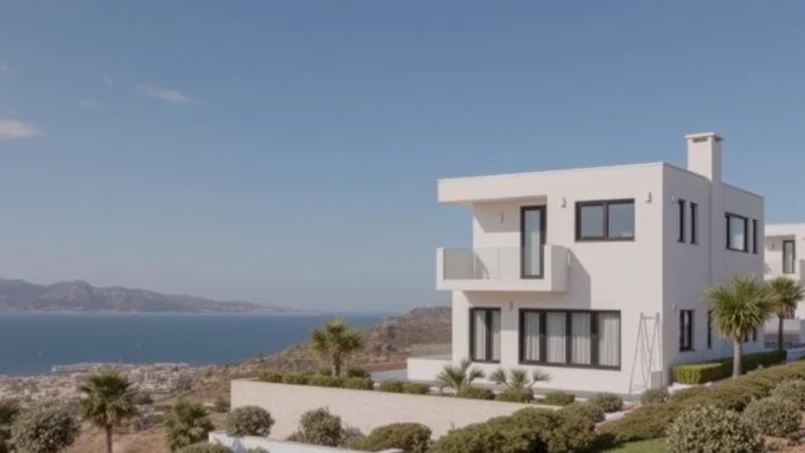
 Published on and written by Cyril Jarnias
Located on the Adriatic coast, about thirty minutes from Tirana and its international airport, Durrës today concentrates a significant portion of Albania’s new real estate story. Long seen as a simple summer seaside resort, the city has become a year-round residential and investment market, fueled by booming tourism, massive infrastructure projects, and surging foreign demand.
For a French-speaking investor, Durrës offers several advantages: still affordable prices, solid rental yields, a pleasant living environment, relatively straightforward purchase procedures for foreigners, and appreciation prospects supported by major projects such as the future Durrës Yachts & Marina and the development of Porto Romano.
This guide provides a detailed overview of the market, prices by neighborhood, yields, the purchase process, and risks not to be underestimated.
A Coastal Market Transformed into a Year-Round Hub
Durrës is Albania’s second city, its main port, and one of its economic centers. Connected to Tirana by a modern highway (about 30 to 40 minutes by road), accessible by rail, and located half an hour from the airport, it combines the advantages of an urban hub and a seaside resort.
For years, the local real estate market relied on a short three-month tourist season. Today, this season extends to six months thanks to cruises, business tourism, events, and digital nomads. This diversification has transformed rental demand into year-round demand, driven by the long-term settlement of residents, expats, and foreign retirees.
Daily life remains that of a medium-sized seaside town (about 115,000 inhabitants), with sandy beaches, a Roman amphitheater, a Venetian tower, a Mediterranean climate, a cost of living lower than in Western Europe, and a level of security considered good, with little violent crime. For an investor, this living environment enhances the appeal of a “lifestyle investment”: buying a property by the sea to enjoy it part of the year and rent it out the rest of the time.
Exceptional Price Dynamics Since 2019
The trajectory of prices illustrates the market’s transformation. Since 2019, values have simply doubled in several segments, particularly on the waterfront and in new developments.
Between 2019 and 2021, recent constructions could still be found at 500–750 €/m² and properties on the first seafront line around 1,300 €/m². In 2022‑2023, sea-view apartments on the front row were already trading at 1,300–1,500 €/m², with upscale residences reaching 2,000 €/m². Today, the bar has risen further.
Average Price Levels
In 2025‑2026, data converges on an average range between 1,200 and 1,800 €/m² for the entire Durrës residential market, with significant variations depending on location, building age, and view.
The observed levels can be summarized as follows:
| Indicator (2026) | Approximate Value |
|---|---|
| Median price per m² | 110,000 ALL ≈ €1,140 |
| Average price per m² | 120,000 ALL ≈ €1,244 |
| Typical Durrës range (apartments) | €1,200 – €1,800/m² |
| Sea-view apartments (new) | €1,500 – €2,000/m² |
| Older apartments Golem (10-15 years) | €600 – €800/m² |
| Typical modern houses/villas | €200,000 – €350,000 (total price) |
| Luxury sea-view villas | up to ~€1.2M |
| Premium for sea / new / amenities (overall) | +20 to +30% depending on features |
In lek, about 80% of properties fall between 70,000 and 160,000 ALL per m². Existing apartments trade around 105,000 ALL/m², while new developments rise to nearly 140,000 ALL/m², a premium of 15 to 30% over the existing stock.
This is the percentage increase in prices from January 2024 to January 2026, one of the sharpest rises in the Balkans.
What Do Buyers Actually Pay?
In practice, final sale prices remain 8 to 12% below listed prices. Negotiation is part of the game, especially since Albanian culture values bargaining. For an investor, this means a property advertised at €1,400/m² can often be closed around €1,250–€1,300/m², provided you do your homework and have a good knowledge of local benchmarks.
Neighborhoods and Micro-Markets: Where to Invest in Durrës?
Durrës is not a homogeneous market. Each area has its price profile, target clientele, and appreciation potential. One of the city’s strengths is offering both ultra-premium waterfront locations and very accessible entry-level sectors.
Overview of the Main Sectors
The table below allows comparison of the main investment zones.
| Neighborhood / Area | Indicative Price per m² (ALL / €) | Positioning and Profile |
|---|---|---|
| Vollga (waterfront, marina) | 170,000–260,000 ALL ≈ €1,800–€2,500 | Most prestigious, high demand, upscale |
| Currila | 160,000–240,000 ALL ≈ €1,600–€2,400 | Waterfront, panoramic views, high-end |
| Plazh – main strip | 120,000–190,000 ALL ≈ €1,200–€1,900 | Popular beach, strong seasonal rental potential |
| Plazh – secondary areas | 90,000–140,000 ALL ≈ €900–€1,400 | “Value” waterfront, good value for money |
| Qendra (city center) | 100,000–150,000 ALL ≈ €1,100–€1,500 | Administrative and commercial center, stable long-term rental |
| Plepa | ≈ €1,300–€1,800/m² | Mix of tourism / residential, near highway |
| Shkëmbi i Kavajës | ≈ €1,200–€1,700/m² | Seaside, highly sought after by tourists |
| Golem | 110,000–170,000 ALL ≈ €1,000–€1,600 | Southern vacation area, family clientele |
| Qerret | ≈ €600–€900/m² | More affordable, a few hundred meters from the sea |
| Lalëz Bay / Hamallaj | 140,000–220,000 ALL ≈ €1,700–€2,700 | Premium complexes, villas, upscale resorts |
| Shkozet | 55,000–90,000 ALL ≈ €700–€1,000 | Industrial/logistics zone, low entry ticket |
| Spitallë | 55,000–95,000 ALL | Accessible suburb, long-term potential |
| Port area / Porto Romano | 85,000–135,000 ALL ≈ €800–€1,500 | Changing neighborhood, spillover effect from new port |
Several families of locations can be distinguished, each suited to a specific investor profile.
High-End Sectors: Vollga, Currila, “Prime” Plazh
Vollga today concentrates the heart of upscale Durrës: a completely redesigned promenade, marina projects, direct views of the bay, and seaside restaurants and cafes. In this sector, new buildings, penthouses, and “ultra-prime” apartments sell between €1,800 and €2,500/m², sometimes more for the most exceptional units (the first phases of the Durrës Marina project started around €1,500–€1,600/m² and now exceed €3,000/m²).
Currila sits slightly higher, offering panoramic views of the Adriatic and a chic residential atmosphere. The area is characterized by contemporary residences, large units, as well as villa and penthouse projects.
On the rental side, these neighborhoods target a high-spending clientele: traveling executives, premium tourists, cruise passengers, and even wealthy residents. For an investor, the challenge is accepting a higher entry ticket in exchange for strong resale liquidity and appreciation potential tied to ongoing urban development projects.
Plazh, Shkëmbi i Kavajës, Plepa: The City’s Seaside DNA
The long strip of Plazh remains the symbol of vacations in Durrës: buildings lined up along the beach, hotels, seasonal restaurants, very dense activity in summer. In the most sought-after part (front row, recent buildings), prices climb between €1,200 and €1,900/m², with high seasonal rents on short-term rental platforms.
Located a bit further south, Shkëmbi i Kavajës has become a very dynamic real estate market. The area attracts investors thanks to its long beaches, numerous restaurants, and recent buildings. Demand is particularly strong from Italy, Poland, Turkey, and neighboring countries. From 2022, prices saw a marked increase, especially for “feet in the water” apartments.
Plepa, finally, combines a tourist and residential vocation. Its proximity to the Tirana-Durrës highway makes it a practical base for long stays. Prices, generally between €1,300 and €1,800/m², remain slightly lower than those in Vollga for a rental yield often between 5 and 7%.
Golem, Qerret, Lalëz Bay: From Affordable Family to Premium Resort
The Golem sector, 10–15 minutes south, has long been the realm of family holiday homes. You’ll find older buildings between €600 and €800/m², as well as new complexes at €1,000–€1,600/m². The area attracts a varied audience: Albanian diaspora, families from Macedonia or Kosovo, retirees from Central Europe, etc.
Discover the advantages of real estate in Qerret, a neighboring commune offering excellent value for money and attractive rental yields.
Softer prices per m², generally between €600 and €900, for close sea access (about 300 m).
Programs like Paradise Residence offering pool, fitness room, green spaces, and underground parking with charging stations.
Promising rental yields, often exceeding 7.5%, thanks to strong rental demand.
At the opposite end of the spectrum, Lalëz Bay and Hamallaj position themselves in the upscale resort niche: villas, serviced residences, private parks. Prices per m² can reach 140,000 to 220,000 ALL (approximately €1,700–€2,700/m²). This is the preferred area for budgets of €500,000 and above, often for villas of 180–400 m².
Shkozet, Spitallë, Peripheral Areas: Low Entry Tickets and Long-Term Bets
For investors looking to enter the market with a tight budget, areas like Shkozet or Spitallë remain affordable, around 55,000–90,000 ALL/m², or €700–€1,000/m². Shkozet is a former industrial area undergoing transformation, with warehouses, logistics spaces, and simple housing. Spitallë, more residential, offers larger spaces at reduced cost.
These zones do not overlook the sea and do not attract tourist clientele. Their appeal is more tied to local demand, infrastructure development (especially related to the new port of Porto Romano), and the prospect of appreciation as prices in central areas rise.
Rental Yields: Between 5% and 10% Depending on Strategy
One of the reasons Durrës attracts so many foreign investors is the combination, still rare in Europe, of reasonable prices and high rental yields.
Available figures provide several benchmarks:
– average gross long-term yield around 5–7% per year;
– gross yield in the city center around 5% and outside the center slightly above 5.5%;
– on seasonal rentals, it’s possible to reach 8–10% gross during the best periods and in the best locations.
Reference Rents
For standard year-round rentals, average rents are around:
| Type of Property (long-term) | Average Monthly Rent (Lek) | Approximate Equivalent in € |
|---|---|---|
| 1 bedroom, city center | ≈ 35,800 Lek | ≈ €380–€390 |
| 1 bedroom, outside center | ≈ 26,900 Lek | ≈ €280–€290 |
| 3 bedrooms, city center | ≈ 51,400 Lek | ≈ €630–€650 |
| 3 bedrooms, outside center | ≈ 36,400 Lek | ≈ €430–€450 |
In practice, there is a wide dispersion depending on the condition of the property, the view, the furniture. Some modern two-bedroom units in the center can reach €600 per month, while older studios rent for less than €300.
The Potential of Short-Term Rentals
It is on seasonal rental platforms that Durrës reveals its full potential. Data from Airbnb and other platforms shows a very favorable situation for hosts:
Median monthly income in US dollars for Airbnb hosts in Croatia, while the top 10% exceed $1,778.
The downside is strong seasonality: demand drops significantly in winter, rates fall, and occupancy rates decrease. A mixed rental strategy (seasonal in summer, medium-term for digital nomads or expats the rest of the year) can help smooth out these fluctuations.
Yields and Cost Structure
Combining the above rents with prices per m² gives typical gross yields between 5 and 8%. A significant portion of investors aim for a net yield of 4 to 7%, after accounting for:
In addition to rent, an owner must anticipate several expenses: rental income tax (15% of net), condo fees (about €10 to €30 per month), property tax (often a few tens of euros per year for an apartment), and possibly management fees if delegated to an agency (which can represent 20 to 30% of gross income for full seasonal rental management).
The availability of professional property management services in Durrës (for vacation rentals, but also long-term leases) particularly makes life easier for foreign investors who do not live locally.
Infrastructure and Major Projects: The Fuel for Appreciation
If Durrës has experienced such real estate acceleration, it is not only thanks to the sun and sea. The city benefits from a plan of public and private investments of a magnitude rarely seen in the region, creating a powerful ripple effect on prices.
Durrës Yachts & Marina: A Multi-Billion Dollar Project
The emblematic project, already widely publicized, is the Durrës Yachts & Marina project, led by developer Eagle Hills (linked to Emirati entrepreneur Mohamed Alabbar) through the company Durrës Marina sha. It involves transforming the current commercial port into a vast yacht marina with a luxury residential district.
A few figures give the scale of the operation:
Summary of the main indicators and investments of the real estate and port project.
Total investment of about €2 billion for a development area of 450 hectares, including 818,000 m² of public land.
Nearly 13,000 apartments planned (including 4,400 in the first phase), over 850 hotel rooms, and 280 yacht berths.
About 93% of the built-up area is dedicated to residential, with the rest split between hotels and retail.
12,000 jobs announced and €3.2 billion in projected revenue over 35 years, of which more than €2.2 billion from apartment sales.
The Albanian state participates at 33% in the project via the Albanian Seaports Development Company.
The first units of the project were marketed as early as 2022, before permits were issued, at prices around €1,500–€1,600/m², then quickly crossed the €3,000/m² mark. Durrës Marina thus illustrates the market’s shift to a new value scale, particularly in the very high-end segment.
New Commercial Port at Porto Romano and Urban Modernization
Alongside the conversion of the historic port into a leisure marina, a new commercial port is to be built in the Porto Romano area, north of the city, for an investment of around €399 million funded by the state. International consortia specialized in maritime works have been pre-selected for the project.
Complementing major projects, the municipality has implemented a modernization plan including the construction of new roads and gardens, installation of sports equipment, rehabilitation of buildings damaged by the 2019 earthquake, reinforcement of unstable terrain, improvement of sewage networks, and creation of underground parking.
An emblematic project is the reconfiguration of the Durrës coastal promenade, with beach widening and the creation of a kind of “green belt” over 2.1 km. The idea: push the sand line back up to 100 m from the promenade, massively plant trees to create a green island, and offer a leisure space for sports, cultural, and festive activities.
A Favorable Macro Context
Nationally, Albania shows GDP growth of around 3.2–3.5%, exploding tourism (over 11 million visitors recently, 15 million expected shortly), and real estate prices still 40–50% lower than in neighboring Mediterranean countries like Croatia or Montenegro. The country is a candidate for the European Union, fueling a narrative of “upcoming accession” that sells very well to investors.
Durrës, thanks to its status as the largest coastal city and main port, is at the forefront to capture these dynamics.
What Your Budget Can Get in Durrës
To get a concrete idea, it is useful to think in terms of total budgets.
Budget of €50,000
With €50,000, a buyer can target:
– A studio or small one-bedroom apartment in older buildings in Golem or Qerret, sometimes a few hundred meters from the sea;
– A property in the outskirts (Shkozet, Spitallë) often requiring renovation.
These products interest investors willing to invest a renovation budget (a few thousand to over €20,000 to completely redo an apartment) in exchange for a very low price per m².
Budget of €100,000
At €100,000, the range of possibilities widens significantly:
– Modern 1–2 bedroom apartments in Plazh, Shkëmbi i Kavajës, or Plepa, often with a balcony and sometimes a lateral sea view;
– Units in serviced residences (pool, concierge, parking) in complexes under construction in Golem or Qerret.
This market segment is highly sought after by foreign investors due to three main advantages: still accessible prices, good resale liquidity, and strong seasonal rental potential.
Budget of €200,000 and Above
From €200,000, you get access to:
– Large 2 to 3 bedroom apartments in premium locations like Vollga or the center, with unobstructed views, high-end finishes, and sometimes immediate proximity to the marina;
– Small houses or modest-sized villas in upscale developments in Golem or on the north coast (Hamallaj, Lalëz Bay).
Above €500,000, the market offers rare pieces: large new apartments with direct sea views in Vollga, penthouses in Currila, villas from 180 to over 400 m² in the most exclusive bays. Some multi-property portfolios are also assembled by investors who aggregate two, three, or four apartments in recent buildings with strong rental potential.
Buying as a Foreigner: Rules, Procedures, Taxes
One of the major attractions of Durrës for foreign investors is the relative simplicity of the Albanian regulatory framework.
Rights of Foreigners
Non-residents can freely purchase:
– Apartments,
– Houses,
– Villas,
– Commercial spaces.
The main restrictions concern agricultural land, which cannot in principle be directly owned by a foreigner beyond a certain surface area, as well as certain plots in the coastal belt when the purchase involves the land itself (which prompts investors to set up an Albanian company – type sh.p.k, equivalent to an LLC – to hold the parcels).
However, buying an apartment or a house without agricultural land remains open, without quotas or special status. Foreigners are taxed at the same rates as Albanian citizens.
Purchase Process: From Offer to Cadastral Register
The typical process for an acquisition in Durrës includes several key steps:
Buying real estate in Albania follows a structured process: 1. Search and selection via agencies (Arka Home Real Estate, AFS Real Estate, etc.) or online platforms (Properstar, Holprop, etc.). 2. Opening a local bank account, essential for transactions exceeding €1,000. 3. Negotiating the price and conditions, with typical discounts of 8 to 12%. 4. Signing a preliminary contract with a deposit of about 10%. 5. Legal due diligence by a local lawyer to verify ownership, mortgages, permits, and cadastral data. 6. Signing the final deed before a public notary, in Albanian. 7. Registering the property with the National Cadastre Agency to obtain the title deed. 8. Paying taxes and fees (transfer tax, notary fees, etc.).
In most cases, the entire procedure is completed within 4 to 8 weeks, provided the seller’s documents are in order.
Total Acquisition Cost: Budget an Extra 3 to 5%
In addition to the negotiated price, the buyer must include a set of fees, relatively moderate by European standards.
| Cost Item (Buyer) | Indicative Level |
|---|---|
| Transfer tax (stamp duty) | 2–3% of property price |
| Notary | 0.5–1% of price (often €150–€450) |
| Registration fees | €80–€100 |
| Lawyer fees (due diligence) | €500–€1,000 |
| Agency commission | 1–2% if paid by buyer (often paid by seller) |
| Municipal fees on new constructions | €3–€10 |
In total, the additional budget is around 3 to 5% of the sale price, excluding any renovation work. For a €100,000 apartment, it is therefore better to plan a margin of €3,000 to €5,000 for transaction costs and, if needed, a renovation budget of €5,000 to over €20,000.
Recurring Taxation and Rental Income
Over time, the owner mainly bears three types of tax charges:
Flat rate of rental income tax in Albania, applicable on net income after deducting expenses.
Upon resale, the capital gain realized is subject to a 15% tax calculated on the difference between the sale price and the acquisition price (plus justified expenses), with some adjustments for long-term holdings.
Financing: Real Possibilities, but Stricter Conditions for Foreigners
Albanian banks offer real estate loans with rates generally between 3.5 and 6% over terms up to 20 years. For loans in euros, starting rates are around 3.7–4%, often indexed to Euribor.
For a foreign investor, lending conditions are more cautious and restrictive than for a resident.
– Personal contribution of at least 50% of the price, compared to 25% for an Albanian citizen;
– Requirement for a complete file (income, bank statements, asset proofs) translated and legalized;
– Mandatory opening of a local bank account.
In practice, a significant portion of foreign purchases are still cash transactions, with investors often preferring to use debt in their home country and mobilize funds in Albania.
Risks Not to Be Ignored
The prevailing euphoria should not obscure the fact that the Durrës market remains an emerging market, with its structural fragilities.
Modest Size and Limited Liquidity
Compared to major European metropolises, Durrës remains a medium-sized city. The stock of available properties, the number of institutional investors, and the depth of the secondary market are incomparable to those of Athens or Barcelona. In the event of a downturn or change in fashion, the time to resell can lengthen – it is not uncommon for an apartment to take nearly a year to find a buyer in certain segments.
Construction Quality and Legal Risks
The legacy of years of sometimes chaotic construction still weighs. It is estimated that several hundred thousand buildings were erected without permits in Albania, and land disputes represent a very large portion of civil cases.
In Durrës, some developments have uneven construction quality, with issues of soundproofing, finishes, or, more seriously, structural compliance with seismic standards. Hence the crucial importance of checking these points.
– Have the property inspected (especially older buildings or those affected by the 2019 earthquake);
– Check property titles, cadastral plans, and permits in detail.
Doubtful practices such as double sales (the same apartment “sold” to two different buyers) have been reported in the past, reinforcing the need to go through a recognized lawyer and notary.
Coastal Environment and Erosion
Proximity to the sea, a major market asset, also comes with technical constraints. Some front-line areas are exposed to erosion phenomena, or have complicated subsoil for the construction of ports and heavy infrastructure. Massive projects like Durrës Marina or the Porto Romano port face criticism regarding their environmental impact, existing soil pollution, and the real capacity of networks (water, sanitation) to absorb the influx of new residents.
Before buying a property on the seafront, it is essential to research the geological stability of the area and review existing coastal protection plans to assess potential risks.
Seasonality and Tourism Evolution
While tourism fuels rising prices and rents, it also makes rental income more volatile. Accommodation demand can be very concentrated over a few months, with a risk of temporary oversupply if too many projects are delivered simultaneously on the same stretch of beach.
Furthermore, the Albanian state is seeking to better regulate short-term rentals (introduction of specific taxation, registration of tourist accommodations). This trend is not unique to Albania; it follows a European trend of regulating Airbnb and the like. Therefore, the possibility of stricter rules in the future must be factored in.
How to Approach the Market: Strategy and Best Practices
Given this context mixing opportunities and risks, several recommendations emerge for a French-speaker considering investing in Durrës.
1. Prioritize Location Quality
Even in a booming city, classic fundamentals still apply. The most resilient properties in a downturn will be:
– Well-located (quality waterfront, proximity to the center or a major axis like the promenade or highway);
– Close to amenities (restaurants, shops, transport, schools for long-term tenants);
– In well-built buildings, with a reputable property manager.
Accepting a slightly higher price per m² in Vollga, Currila, the center, or a good quality Plazh may prove more relevant in the long run than a bargain purchase in a poorly served or poorly built area.
2. Match the Neighborhood to Your Rental Strategy
An “Airbnb” investor targeting short tourist stays will logically prioritize:
– The waterfront (Vollga, Plazh, Shkëmbi i Kavajës, Golem);
– Or the center to attract business travelers and urban tourists.
An investor seeking smoother occupancy, with standard one-year leases and a clientele of families or young professionals, might look instead at:
– Qendra and its surroundings (proximity to administration, schools, services);
– Certain intermediate areas like Iliria, Plepa, or even Lagja nr. 1 and 4 which are gaining momentum.
For long-term capitalization bets, sectors near Porto Romano and some fringes of Spitallë or Shkozet, still undervalued but driven by logistics and industrial projects, could come into consideration.
3. Do Not Underestimate Hidden Costs
Many disappointments stem from poor estimation of:
– Renovation costs (for an older apartment, budget at least €5,000 for cosmetics, and easily €15–20,000 for a complete overhaul of a 60–70 m² unit);
– Management and cleaning fees for short-term rentals;
– Energy improvement work (Albanian regulations tend to impose higher standards, especially regarding solar).
The total – purchase price + transaction costs + renovation – can represent 7 to 25% more than the strict price stated in the deed. Profitability must be calculated on this full cost.
4. Get Professional Help and Diversify Information Sources
The Durrës market remains loosely regulated regarding the profession of real estate agent, and there is no comprehensive national transaction database. It is therefore highly recommended to:
To select an intermediary with confidence, it is advisable to compare the statements and offers of several agencies. Systematically check the references of intermediaries, especially their track record, customer reviews, and membership in established networks. Finally, cross-check price information with reliable third-party sources such as the Bank of Albania, official statistics, or reports from specialized firms.
Tools like documentation packs dedicated to the Albanian market or reports from local bodies (Albanian Real Estate Association, Municipality of Durrës, etc.) can help build a more objective view.
5. See the Properties and the Neighborhood Yourself
Finally, there is no substitute for an on-site visit. Many foreign investors seduced by 3D renderings or online listings discover too late:
– Differences between reality and sales plans;
– An environment that is noisier, denser, or less well-maintained than expected;
– A distance to the sea or center that is much greater than advertised.
One or two weeks on the ground, spent visiting neighborhoods at different times and meeting expats already settled there, remains a very profitable investment before signing a preliminary contract.
Medium and Long-Term Outlook
Projections three or ten years out on real estate are inherently uncertain, but certain underlying trends give a likely direction.
Price Growth: Expected Slowdown, but Continued Appreciation
Serious available forecasts converge on a continued rise, albeit at a more moderate pace than in recent years:
| Forecast Period | Expected Annual Growth (approx.) |
|---|---|
| 2025 (2nd half) | 3–5% |
| 2026–2027 | 3–7% depending on scenarios |
| 2028–2030 | 4–6% |
| 2030–2035 | 3–4% |
The logic is that of a market in a catch-up phase: prices start from historically low levels compared to Mediterranean standards but are gradually approaching a “fair value” zone. Segments that are already very expensive (ultra-luxury, certain premium residences) could experience periods of stabilization, while still affordable sectors (older Golem, Qerret, some central non-sea view areas) could continue to rise faster than average.
Tourism, Digital Nomads, and European Retirees
Tourism fundamentals remain solid: attractive climate, warm sea, low cost of living, improving air connections (new airport in Vlora, proximity to Tirana). Albania’s official strategy aims to move upmarket, attracting more “elite” and less strictly mass tourism, which is accompanied by high-end hotel and residential investments in Durrës.
At the same time, the city is gaining popularity among:
– Digital nomads, attracted by still reasonable rents, good internet connectivity, and a mild climate in the off-season;
– Retirees from Western or Central Europe, who find in Durrës a cost-of-living / quality-of-life compromise superior to what they could get at home.
This “international residential base” strengthens the stability of off-season rental demand, which in part secures long-term yields.
Conclusion: A Promising Market, But One That Requires Seriousness and Selectivity
Investing in real estate in Durrës today means arriving in a market that is already well awakened, whose take-off phase is over, but where the potential remains significant. Prices have risen a lot since 2019, gross yields of 5 to 8% are not exceptional, but they still clearly outperform many more mature Mediterranean destinations.
Major infrastructure projects – Durrës Yachts & Marina, new port, modernization of the coastline, improvement of road and rail links – act as powerful value catalysts. Tourism development, the rise of digital nomads, and the strategy of welcoming foreign investors create a supportive environment.
The market presents risks requiring clear-sightedness: its size is modest, construction quality is variable, and some areas are exposed to environmental issues. Additionally, the legal context is complex, especially regarding land matters, and the recent price increase does not guarantee a future trend.
For a French-speaking investor willing to commit seriously – to travel, to engage a competent local lawyer, to choose a quality location, and to think in terms of full cost – Durrës today offers a rare compromise between profitability, appreciation potential, and personal quality of life. It is precisely this blend, between patrimonial investment and enjoyment of use, that makes this port city one of the most watched markets on the Adriatic coast.
Disclaimer: The information provided on this website is for informational purposes only and does not constitute financial, legal, or professional advice. We encourage you to consult qualified experts before making any investment, real estate, or expatriation decisions. Although we strive to maintain up-to-date and accurate information, we do not guarantee the completeness, accuracy, or timeliness of the proposed content. As investment and expatriation involve risks, we disclaim any liability for potential losses or damages arising from the use of this site. Your use of this site confirms your acceptance of these terms and your understanding of the associated risks.

Cyril Jarnias is an independent expert in international wealth management with over 20 years of experience. As an expatriate himself, he is dedicated to helping individuals and business leaders build, protect, and pass on their wealth with complete peace of mind.
On his website, cyriljarnias.com, he shares his expertise on international real estate, offshore company formation, and expatriation.
Thanks to his expertise, he offers sound advice to optimize his clients' wealth management. Cyril Jarnias is also recognized for his appearances in many prestigious media outlets such as BFM Business, les Français de l’étranger, Le Figaro, Les Echos, and Mieux vivre votre argent, where he shares his knowledge and know-how in wealth management.





