
 Published on and written by Cyril Jarnias
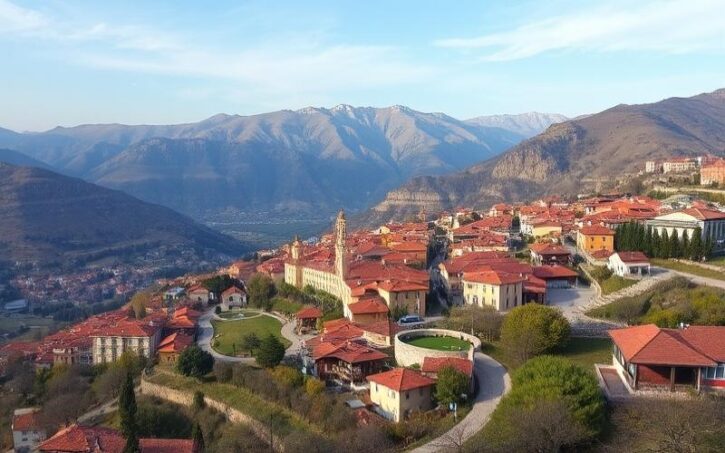
Nestled in the heart of picturesque landscapes, Albania’s artist villages are drawing growing interest as fascinating hubs of creativity that blend tradition and modernity. In recent years, these peaceful havens have attracted not only artists seeking inspiration but also investors curious about the opportunities offered by this unique cultural fusion.
In a country where historical and artistic heritage is preserved, these places are becoming true idea laboratories, transforming small localities into dynamic cultural destinations.
Sustainable Economic Potential?
However, one question remains: do these initiatives represent a mere cultural investment, or do they hold sustainable economic potential to revitalize Albania’s rural regions?
Redefining the Socio-Economic Landscape
Let’s explore together how these artistic enclaves could redefine the country’s socio-economic landscape.
Good to Know:
Albania boasts several renowned artist villages such as Berat, known as the “city of a thousand windows,” and Gjirokastër, a UNESCO World Heritage site.
The Renaissance of Artist Villages in Albania: From Art to Profitable Real Estate
Albania is experiencing a remarkable cultural renaissance that is transforming its traditional villages into dynamic artistic centers. This metamorphosis, far from being merely aesthetic, generates a significant economic impact, particularly on the local real estate market.
The Albanian Artistic Renaissance: A Driver of Economic and Cultural Revitalization
The city of Korça perfectly illustrates this renaissance. Considered the cradle of the Albanian cultural Renaissance, it played a leading role in the national revival during the 19th and 20th centuries. It was in this city that the first Albanian secular school opened in 1887, now the Museum of National Education. This historic hub of thought and artistic creation continues to attract intellectuals, journalists, writers, and musicians, contributing to the region’s economic revitalization.
After the fall of communism in 1991, Korça began a transition to a market economy by leveraging its heritage and developing tourism. The rehabilitation of the historic center, the creation of museums, and the restoration of religious monuments testify to this desire to reconnect with a rich cultural past while making it accessible to foreign visitors.
The restoration project of the National Puppet Theater in Tirana represents another emblematic initiative. Built in 1924 as a military club before becoming the first seat of the Albanian parliament, this historic building has been fully restored with support from the European Union. Beyond architectural preservation, this project stimulates tourism, supports local businesses, and creates opportunities for artists and artisans.
| Key Initiatives | Economic Impact | Cultural Impact |
|---|---|---|
| Restoration of the National Puppet Theater | Stimulating tourism and supporting local businesses | Creating a space fostering creativity and community ties |
| Rehabilitation of Korça’s historic center | Tourism development and property value appreciation | Preservation of architectural and artistic heritage |
| Artist residencies in Tirana | Attracting international cultural investments | Reinterpreting Albanian history through contemporary art |
| Revitalization of Voskopoja | Economic revitalization of a former commercial center | Recognition of a cosmopolitan cultural heritage |
In Voskopoja (formerly Moscopole), we are witnessing the rebirth of a once-thriving place. This cosmopolitan city, which had over 40,000 inhabitants in the 18th century, was known for its wool and carpet production exported internationally. Its history illustrates how a former commercial center can reinvent itself as a cultural destination.
“The European Union has been by our side since the first day of the earthquake, and has created a special program for the reconstruction of places of our cultural heritage. These places, more beautiful than ever, have been returned to citizens and communities.”
The transformation of these villages into attractive artistic destinations is part of a broader vision championed by figures like Edi Rama, former mayor of Tirana and current Prime Minister, himself a painter. This approach, blending heritage preservation and cultural innovation, now attracts international artists, as evidenced by artist residencies in Tirana that allow for revisiting and reinterpreting Albanian history through new forms of expression.
“The new puppet theater is not just a place for shows. It is a place to nurture dreams and convey values through the power of storytelling and art. For the children of Tirana, it is a gateway to the magical world of creativity.”
This cultural renaissance has a direct impact on the real estate market. The restoration of historic buildings, improved infrastructure, and the influx of visitors enhance the value of the built heritage. Formerly neglected neighborhoods are finding new life, attracting investors and new residents drawn by the cultural dynamism.
- Renovation of cultural infrastructure with modern technologies
- Creation of community spaces fostering artistic exchange
- Development of sustainable cultural tourism
- Real estate value appreciation in historic centers
This revitalization through art is part of a trend observable in other countries, but Albania brings its own uniqueness by drawing on a rich historical heritage while embracing modernity. The success of these initiatives demonstrates how investment in culture can become a powerful lever for economic and social development.
Good to Know:
In Albania, artist villages are experiencing a true renaissance, revitalizing both the local art scene and helping to boost the economy through real estate. Thanks to government and private initiatives, villages like Berat and Korçë have become attractive destinations, drawing artists and investors. These places have not only revived cultural interest but have also transformed the local real estate market, making these villages focal points of the regional economy. Artists, through their testimonials, highlight the cultural enrichment and renewed sense of community these projects bring. This phenomenon is part of a broader trend observed in Albania and beyond, stimulating economic and social evolution while respecting cultural roots.
Creative Eco-Villages: A New Breath for Albanian Artistic Communities
Albanian creative eco-villages represent an innovative fusion between environmental sustainability and artistic expression. These intentional communities are organized around ecological principles while fostering the flourishing of arts and local culture.
A creative Albanian eco-village is characterized by energy-efficient habitats, the use of renewable energy, and sustainable resource management. The Tirana Riverside project perfectly illustrates this approach with its ambition to create a zero-carbon neighborhood, self-sufficient in services, integrating 12,000 plants from over 100 different native species. Construction favors simple techniques using local labor, with a moderate cost of around 400 euros per square meter.
These villages also promote the development of sustainable economic activities such as crafts and non-polluting services. Traditional skills, particularly embroidery, are preserved and valued, thus creating a bridge between cultural heritage and contemporary creation.
Ecological and Socio-Cultural Benefits
| Dimension | Advantages |
|---|---|
| Ecological | Reduced footprint, renewable energy, urban forest reducing heat island effect |
| Economic | Sustainable activities, local crafts, moderate construction costs |
| Social | Strengthened social ties, participatory governance, knowledge sharing |
| Cultural | Preservation of traditions, fusion with contemporary art, museums of arts and traditions |
Albanian eco-villages integrate green technologies such as solar panels, geothermal energy, and cogeneration systems that recycle energy from office buildings to heat homes. They also encourage community gardens and orchards where residents can grow their own food.
The village café plays a crucial role as a social hub, facilitating meetings between artists, residents, and travelers. Organized visits and walks around the village allow for a better understanding of the local environment and discovery of neighboring villages via picturesque mountain trails.
Notable Initiatives
- The Tirana Riverside project, designed by SON-Group and Stefano Boeri Architetti, aims to create a mixed-use neighborhood housing 12,000 people and as many plants, with an integrated urban forest
- Museums of arts and traditions preserving Albanian cultural heritage
- Artisan workshops where traditional skills are passed down to new generations
Although the concept of the eco-village is still underdeveloped in Albania (the Global Ecovillage Network lists no eco-village projects in the country), these initiatives draw inspiration from international models like the Findhorn eco-village in Scotland, which today has nearly 500 inhabitants spread over 60 hectares.
These communities serve as laboratories for new forms of social organization based on participatory governance, sharing of knowledge and wealth, and respect for cultural differences. They contribute to the revitalization of rural areas by creating economic opportunities while preserving local cultural identity.
These eco-villages are not just places to live, but spaces for social and artistic experimentation where the sustainable lifestyles of tomorrow are being invented.
Good to Know:
In Albania, creative eco-villages are sustainable communities that combine artistic expression with ecological living, fostering cultural production in harmony with nature. These villages provide infrastructure where artists and artisans develop ecological projects while residing in environmentally friendly habitats. A notable example is the eco-village of Përmet, which has revitalized traditional crafts while attracting visitors and investments, boosting the local economy. Benefits include reducing the carbon footprint of artistic practices and revitalizing often-declining rural areas. Local artists and cultural experts praise these initiatives for their ability to maintain and enrich artistic heritage while offering a new source of income. However, some criticism arises regarding their immediate profitability, with some observers calling these initiatives primarily an economic showcase.
Renovation and Transformation: Farms into Innovative Artistic Spaces
The transformation of historic buildings in Albania into artistic spaces represents a significant movement of cultural reappropriation and economic revitalization. The most emblematic example is “Villa 31,” the former residence of communist dictator Enver Hoxha in Tirana, recently transformed into an innovative artistic space. Inaugurated in January 2025, this villa is now known as “Vila 31 x Art Explora,” becoming a powerful symbol of the country’s post-communist transformation.
This project, carried out in partnership with France, perfectly illustrates Albania’s desire to reconcile with its past while looking toward the future. As Prime Minister Edi Rama noted during the inauguration, the goal is to use this space “to do the things that Enver Hoxha would have hated more than anything,” thus transforming a place once associated with oppression into a center of creative freedom.
Another remarkable example is Bunk’Art 1, a former underground military bunker located in the mountains near Tirana. This shelter, once secret and a symbol of the paranoia of Hoxha’s regime, has been converted into a dynamic museum and cultural space, offering a new perspective on the country’s troubled history.
Architectural and Heritage Challenges
Preserving architectural integrity while adapting these spaces to new uses constitutes a major challenge. The Boulevardi Dësmorët e Kombit, Tirana’s main axis, illustrates this tension between preserving modern architectural heritage and the need to adapt to contemporary needs. Architects must find a delicate balance between respect for history and artistic functionality.
Economic and Social Impact
These transformations generate significant economic benefits, particularly through the development of cultural tourism. Albania, long a secret land for Western travelers, sees these projects as an opportunity to diversify its tourism offering and create jobs in the cultural sector.
The artist residency program in Tirana testifies to this dynamic, with a cultural program designed in collaboration with local stakeholders, thus fostering the integration of these spaces into the social and economic fabric of the region.
Community Perception
The reception of these transformations by local communities is generally positive, although some projects like Villa 31 have “often been the subject of debate.” Prime Minister Rama defended this approach by calling it “the most mature and the most healing in relation to the past,” emphasizing the importance of “making fun of their history, but without erasing it.”
The French ambassador to Albania, Catherine Suard, highlighted that these initiatives place “Tirana in the network of European platforms for contemporary art and artistic creation,” thus marking Albania’s integration into a broader European cultural dialogue.
| Transformed Space | Original Function | New Vocation | Key Partners |
| Villa 31 | Residence of dictator Enver Hoxha | Artistic space “Vila 31 x Art Explora” | France, Art Explora |
| Bunk’Art 1 | Underground military bunker | Museum and cultural space | Local authorities |
| Tirana Tunnels | Military shelters | Exhibition spaces | Cultural institutions |
These transformation initiatives represent much more than simple architectural projects—they embody Albania’s will to transform symbols of its authoritarian past into spaces of creative freedom and cultural exchange, while generating economic opportunities for local communities.
Good to Know:
In Albania, several farms have been transformed into innovative artistic spaces, such as the Kërçova farm, a vibrant center for local and international artists. Architect Endri Bega brilliantly preserved the architectural heritage while integrating modern studios by optimizing available space. However, these projects often must overcome initial resistance from locals, concerned about preserving their cultural heritage. The economic impact is notable, with these artistic spaces attracting growing cultural tourism and boosting the local economy through job creation in the hospitality and restaurant sectors. Local communities, often integrated into the transformation process, are beginning to see these initiatives as valuable economic partners, contributing in turn to revitalizing the village’s cultural identity while providing a platform for artistic talent.
Cultural Investment in Albania: Between Economic Potential and Artistic Preservation
Albania is currently undergoing a significant economic transformation, with projected growth of 3.6% in 2025 and 3.5% in 2026, according to European Commission forecasts. This positive dynamic is notably supported by the development of the tourism and cultural sector, which has become an essential pillar of the national economy.
Albanian tourism shows remarkable performance, with over 10.1 million visitors recorded in 2023, reflecting an impressive growth rate exceeding 53%. This expansion positions Albania as a major player in the Europe-Eurasia region.
Artist Villages: Between Tradition and Innovation
Albanian artist villages represent a perfect example of the symbiosis between cultural preservation and economic development. These creative spaces, often located in rural areas or historic neighborhoods, benefit from growing support from both the government and private investors.
The Albanian government has implemented several grant programs for the rehabilitation of traditional cultural spaces, enabling their transformation into dynamic artistic centers. These initiatives are part of a broader strategy aimed at diversifying the tourism offering beyond classic beach attractions.
Economic Impact of Cultural Investments
The impact of cultural investments on the local economy is considerable and manifests at several levels:
- Creation of direct jobs in the cultural sector
- Development of related economic activities (restaurants, accommodation, crafts)
- Increased territorial attractiveness for international investors
- Appreciation of real estate assets in the areas concerned
| Indicator | 2023 Data | 2025 Projection |
| Contribution of the cultural sector to GDP | 4.2% | 5.7% |
| Jobs generated (direct and indirect) | 42,000 | 58,000 |
| Private investments in the sector | 13.6 billion LEK | 20.1 billion LEK |
This positive dynamic is particularly observed in the regions of Durrës, Vlorë, and Fier, which have recorded significant increases in the value of cultural and tourism projects, signaling a gradual shift in investor interest beyond the capital Tirana.
Challenges and Balances to Maintain
Despite these successes, several challenges persist in maintaining the balance between economic profitability and preserving artistic integrity:
- Real estate pressure in areas with high tourism potential
- Risk of folklorization of traditional artistic expressions
- Need for equitable distribution of economic benefits
- Issues of training and professionalization of local cultural actors
The real estate sector perfectly illustrates these tensions, with prices reaching 2,252 €/m² in Tirana in 2025, ranging between 1,200 € and 3,500 € depending on the neighborhood, thus creating pressure on existing cultural spaces.
Integrated Initiatives and Policies
To address these challenges, several policies and initiatives have been implemented:
- Creation of protected cultural zones in urban plans
- Tax incentives for companies investing in sustainable cultural projects
- Training programs in traditional arts and crafts
- Development of thematic tourism circuits highlighting artist villages
These measures are part of a vision where culture is not just another economic sector, but a vector for sustainable and inclusive development for the entire Albanian territory.
The growth of tourism, which now exceeds pre-pandemic levels, boosts related business sectors and attracts international investors, thus contributing to the 3.5% economic growth target set by the IMF for 2025.
Good to Know:
The Albanian government, in partnership with private investors, plays a central role in supporting artist villages, boosting the local economy by 3.5% in 2022 thanks to cultural enthusiasm. While initiatives such as grants for workshop restoration and the creation of artist residencies are being implemented, the challenge remains to preserve artistic integrity in the face of economic pressure. Villages like Krujë illustrate this delicate balance, having attracted many artists while maintaining their cultural heritage. “Investing in art is investing in our identity,” says Ana Metani, an economist specializing in cultural development. Through these concerted efforts, Albania is committed to integrating art into its sustainable development plan, while offering tax incentives to encourage this strategic sector.
Disclaimer: The information provided on this website is for informational purposes only and does not constitute financial, legal, or professional advice. We encourage you to consult qualified experts before making any investment, real estate, or expatriation decisions. Although we strive to maintain up-to-date and accurate information, we do not guarantee the completeness, accuracy, or timeliness of the proposed content. As investment and expatriation involve risks, we disclaim any liability for potential losses or damages arising from the use of this site. Your use of this site confirms your acceptance of these terms and your understanding of the associated risks.

Cyril Jarnias is an independent expert in international wealth management with over 20 years of experience. As an expatriate himself, he is dedicated to helping individuals and business leaders build, protect, and pass on their wealth with complete peace of mind.
On his website, cyriljarnias.com, he shares his expertise on international real estate, offshore company formation, and expatriation.
Thanks to his expertise, he offers sound advice to optimize his clients' wealth management. Cyril Jarnias is also recognized for his appearances in many prestigious media outlets such as BFM Business, les Français de l’étranger, Le Figaro, Les Echos, and Mieux vivre votre argent, where he shares his knowledge and know-how in wealth management.





