
 Published on and written by Cyril Jarnias
Nestled at the crossroads of Mediterranean and Balkan influences, Albania offers a one-of-a-kind investment landscape, particularly through its authentic villages. As the country continues to open up to tourism and develop its infrastructure, forward-thinking investors are discovering the many advantages of investing in traditional homes and cultural sites that preserve Albanian heritage.
In 2025, this trend is intensifying, bolstered by government incentives and a growing interest in immersive travel experiences. With a market still booming and high return potential, Albania’s authentic villages promise both cultural and economic enrichment.
Showcasing Underestimated Rural Regions in Albania
Albania, with its picturesque landscapes and fertile soils, represents a territory with considerable rural potential that remains largely untapped. Though small in size, this country boasts an impressive variety of natural and cultural resources that form a solid foundation for its future development.
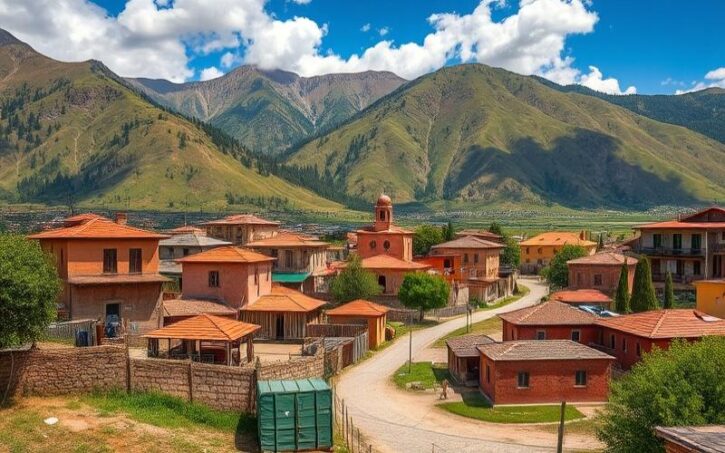
Albanian rural regions are characterized by exceptional biodiversity, ranging from sandy beaches in the north to rocky coasts in the south, along with mountainous areas housing traditional villages. This landscape diversity, coupled with the wealth of archaeological and historical sites, offers significant potential for developing environmentally respectful rural tourism.
The “100 Villages” program launched by Albania’s Ministry of Agriculture and Rural Development illustrates the government’s commitment to these areas. In 2018, this program received financial support of 2.5 million euros, reflecting the political will to enhance Albanian rural heritage.
| Type of Potential | Characteristics | Opportunities |
| Rural Tourism | Varied landscapes, biodiversity, historical sites | Agritourism, cultural tourism, outdoor activities |
| Agriculture | Fertile soils, small farms | Crop diversification, organic farming |
| Cultural Heritage | Traditional villages, artisanal know-how | Preservation and promotion of local traditions |
The Sustainable Rural Development project, co-financed by the Swiss Agency for Development and Cooperation, is actively working with businesses and the Albanian government to boost competitiveness and incomes in rural areas. This project, continuing until 2026 with a financial volume of 11.85 million euros, focuses on three high-potential forms of tourism:
- Outdoor tourism
- Agritourism
- Cultural heritage tourism
The positive impact of these initiatives on the local economy is multifaceted. They not only create jobs in regions often marked by rural exodus but also enhance local products and traditional know-how. Additionally, they contribute to environmental and cultural heritage preservation, aligning with sustainable development principles.
Rural development in Albania is a major issue for the country’s future, especially in light of its European Union accession prospects.
For investors, opportunities are plentiful by 2025. Albania offers a favorable framework for agricultural investments, with many small farms holding strong development potential. The still-emerging rural tourism sector also presents promising prospects, especially given the country’s geographic proximity to European markets.
Efforts to strengthen innovation and knowledge in the rural tourism industry, along with improving the capacities of government and private institutions, are creating an increasingly investment-friendly environment. These initiatives align with Albania’s aspiration to join the European Union, ensuring a positive evolution of the regulatory and economic framework.
By investing in Albanian rural regions, entrepreneurs have the opportunity to contribute to the sustainable development of a country with still largely untapped resources, while benefiting from significant growth potential in future-oriented sectors like sustainable tourism and responsible agriculture.
Good to Know:
Albania’s rural regions hold many untapped treasures worthy of investor attention by 2025, such as the villages of Theth and Valbona, renowned for their natural beauty and rich cultural heritage. By leveraging these assets, one can catalyze local job creation and foster sustainable development beneficial to the regional economy. The Albanian government is already promoting rural development through financial support initiatives and public-private partnerships, with notable successes like the village of Berat, which, thanks to strategic investments in heritage tourism, has seen its popularity and local economy thrive. These examples show that investments in these areas can be profitable, offering a promising path for those seeking to participate in the country’s sustainable economic growth.
Investment Opportunities in Albanian Villages
Albanian villages present considerable economic potential for investors seeking opportunities in authentic emerging markets. Rural Albania, with its biologically diverse mountain and hill ecosystems, offers fertile ground for several promising sectors.
Organic farming is a flagship sector, as exemplified by UKA Farm, a versatile agricultural operation producing organic food without pesticides. This farm perfectly illustrates the growing trend toward sustainable and ecological agriculture in Albania. The villages of Tropoja particularly stand out for their production of distinctive agricultural products that have gained notable market reputations.
Another inspiring example is Fragoland Albania, a small farm in the Fier region entirely dedicated to organic poppy cultivation. This farm represents a true green oasis committed to ecological and sustainable agricultural practices, setting high standards for environmental protection and safe plant cultivation methods.
Agritourism and rural tourism also represent significant investment opportunities. Specially designed tours allow visitors to connect with authentic Albanian life, meet local farmers, and discover their traditions. The village of Poshnjë, near Berat, has developed an agricultural farm that now attracts tourists interested in the Albanian rural experience.
| Investment Sector | Success Examples | Growth Potential |
| Organic Farming | UKA Farm, Fragoland Albania | High, growing demand for organic products |
| Agritourism | Villages of Tropoja, Poshnjë | Very high, global trend of experiential tourism |
| Distinctive Agricultural Production | Products from Tropoja villages | Medium to high, export possibilities |
| Environmental Education | Fragoland Albania initiatives | Medium, growing interest in sustainability |
Beyond these established sectors, Albanian villages offer opportunities for developing environmental education initiatives. Fragoland Albania, for instance, organizes seminars and training to promote sustainable agricultural practices in the region, creating an ecosystem favorable to innovation and green entrepreneurship.
For 2025, analysts predict a significant increase in demand for Albanian organic products on European markets, along with continued growth in authentic rural tourism. Savvy investors will recognize the value of hundreds of native botanical species thriving wild in these regions, offering development possibilities in the pharmaceutical, cosmetic, and food sectors.
- Advantages for investors in Albanian villages:
- Relatively low operational costs
- Wealth of untapped natural resources
- Cultural authenticity as added value
- Potential for integration into European value chains
- Favorable climate for various agricultural crops
Albanian villages represent not only a financial investment opportunity but also a chance to contribute to sustainable development that preserves the environmental and cultural integrity of these unique communities.
Good to Know:
Albanian villages offer unique investment potential, particularly in organic farming and ecotourism, attracting investors through improved infrastructure and tax incentives, as seen in the village of Përmet. Community revitalization initiatives include rehabilitating cultural sites and developing local activities, enhancing the appeal for cultural tourism. European and international funds, such as the IPA (Instrument for Pre-Accession Assistance), are valuable financial levers for rural development, enabling infrastructure improvements and supporting sustainable projects. According to forecasts for 2025, increased interest in sustainability and authenticity could further stimulate investments in these villages, with a greater focus on creating local supply chains and responsible tourism.
Rural Real Estate in Albania: A Profitable Investment
The Albanian rural real estate market is undergoing a significant transformation, though less publicized than the urban boom. With 35.4% of the population still living in rural areas in 2023, these regions represent considerable investment potential.
The growth of the Albanian real estate sector as a whole is remarkable, with an annual growth rate exceeding 15% over the past ten years. This momentum is gradually extending to rural areas, driven by several key factors.
The main appeal of Albanian rural real estate lies in its affordable prices. While the average price per square meter in the city reaches about €2,252 in 2025, rural properties remain significantly more affordable, often 30% to 50% cheaper than their urban counterparts.
The rural exodus, affecting nearly one million Albanians, paradoxically creates opportunities for investors. Many traditional rural properties become available for purchase, often at very competitive prices, while retaining their architectural authenticity.
Profitability Factors
- Growing tourism potential
- Reduced acquisition costs
- Rural infrastructure development
- Diversification of the Albanian real estate market
The Albanian real estate market as a whole is projected for continued growth over the 2025-2031 period, and the rural segment particularly benefits from growing interest in authentic tourism and second homes.
Real Estate Price Comparison (€/m²)
| Zone | Minimum Price | Average Price | Maximum Price |
| Urban (Tirana) | 1,200 | 2,252 | 3,000+ |
| Rural | 500 | 800-1,000 | 1,500 |
The emergence of technologies in the Albanian real estate sector, projected for growth over the 2025-2031 period, also facilitates access to the rural market for international investors, with digital platforms enabling remote property viewing and acquisition.
Investments in Albanian rural real estate align with a broader trend of sustainable development and heritage preservation, attracting an international clientele sensitive to these values and seeking alternatives to saturated Western European markets.
Good to Know:
Rural real estate in Albania represents an attractive investment opportunity thanks to relatively low purchase costs and prospective economic growth, particularly in rural areas. Investor interest has recently increased, fueled by the possibility of tax incentives and development forecasts focused on tourism that boost property profitability. Villages like Dhërmi and Theth well illustrate this phenomenon, transforming investments into levers for local development with tangible economic impact, such as job creation and infrastructure improvement. Albania’s tourism potential, with preserved natural landscapes and authentic culture, also helps stimulate demand for rural stays and outdoor activities, thereby increasing the attractiveness of real estate investments in these regions.
Authenticity and Heritage: A Hidden Treasure for Investors
Albania possesses a rich heritage of authentic villages that are true cultural and historical gems. Preserving this authenticity represents not only a heritage issue but also an opportunity for sustainable and ethical investment.
Albanian villages like Berat and Gjirokaster perfectly illustrate this heritage wealth. Berat, nicknamed “the city of a thousand windows,” with its 2,500-year history and typical white houses seemingly stacked on the mountain, was declared a UNESCO World Heritage site in 2008. Gjirokaster, known as “the city of stone” or “the leaning city,” stands out for its turreted houses (kullë) and 17th-century architecture, its steep cobblestone streets, and its historic Bazaar quarter with a mosque dating from 1557.
Balancing Preservation and Development
| Aspect | Preservation Strategies | Investment Opportunities |
|---|---|---|
| Architecture | Respectful restoration using traditional techniques | Charming accommodations, authentic guesthouses |
| Know-how | Documentation and transmission of artisanal techniques | Artisan workshops, professional training |
| Intangible Heritage | Festivals and cultural events | Experiential tourism, themed tours |
| Infrastructure | Discreet and integrated modernization | Quality tourism services, green technologies |
Success Models and Economic Benefits
Enhancing Albanian heritage generates multiple benefits for local communities:
- Creation of direct jobs in restoration, hospitality, and tourism services
- Revitalization of local crafts and traditional know-how
- Development of quality agricultural sectors linked to local gastronomy
- Infrastructure improvements also benefiting residents
Authenticity is not an obstacle to development, but its very foundation. Villages that have preserved their soul now attract visitors seeking meaningful experiences and visionary investors.
Strategies for Harmonious Development
To maintain the balance between preservation and modernization, several approaches have proven effective:
- Establish strict but adaptable architectural charters
- Involve local communities in development projects
- Prioritize rehabilitation over new construction
- Discreetly integrate modern technologies (energy, communication)
- Train younger generations in revalued traditional trades
Savvy investors recognize in these Albanian villages unique opportunities to create long-term value. Authenticity thus becomes a precious asset, generating sustainable returns financially, socially, and environmentally.
Good to Know:
Investing in Albania’s authentic villages represents a unique opportunity to enhance cultural heritage while contributing to sustainable economic development. Villages such as Berat and Gjirokastër, UNESCO World Heritage sites, have managed to preserve their historical charms, attracting investors interested in respectful cultural and tourism projects. By preserving the architectural and cultural authenticity of these localities through strategies combining conservation and modernization, investors can create long-term value while strengthening the local economy. They thus foster the development of businesses and activities linked to sustainable tourism, generating significant economic benefits for residents. A true hidden treasure, this authenticity attracts those seeking to invest ethically, respecting heritage and promoting the preservation of local traditions.
Disclaimer: The information provided on this website is for informational purposes only and does not constitute financial, legal, or professional advice. We encourage you to consult qualified experts before making any investment, real estate, or expatriation decisions. Although we strive to maintain up-to-date and accurate information, we do not guarantee the completeness, accuracy, or timeliness of the proposed content. As investment and expatriation involve risks, we disclaim any liability for potential losses or damages arising from the use of this site. Your use of this site confirms your acceptance of these terms and your understanding of the associated risks.

Cyril Jarnias is an independent expert in international wealth management with over 20 years of experience. As an expatriate himself, he is dedicated to helping individuals and business leaders build, protect, and pass on their wealth with complete peace of mind.
On his website, cyriljarnias.com, he shares his expertise on international real estate, offshore company formation, and expatriation.
Thanks to his expertise, he offers sound advice to optimize his clients' wealth management. Cyril Jarnias is also recognized for his appearances in many prestigious media outlets such as BFM Business, les Français de l’étranger, Le Figaro, Les Echos, and Mieux vivre votre argent, where he shares his knowledge and know-how in wealth management.





