
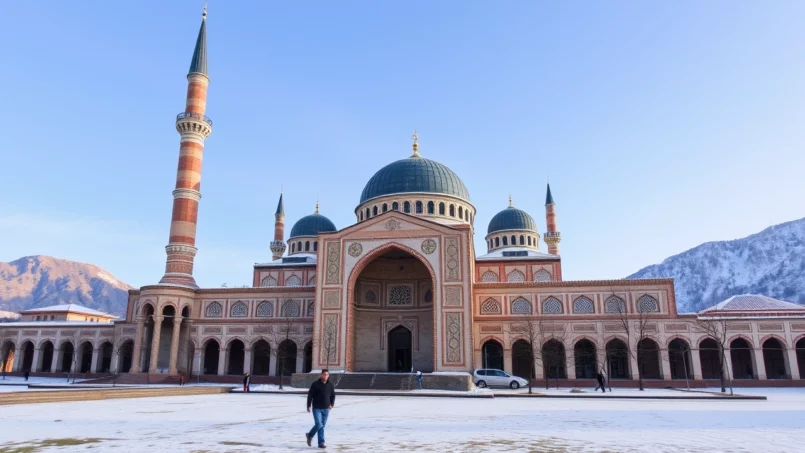
 Published on and written by Cyril Jarnias
Moving to Turkmenistan is unlike any other expatriate experience. With a higher than global average cost of living, a gas-driven economy, tight societal control, and significant administrative constraints, this Central Asian country is both fascinating and bewildering. For an employee sent by their company, a consultant on an infrastructure project, or a diplomat, the key is thorough preparation before arrival and understanding the on-the-ground realities in advance.
This guide provides the latest data on the cost of living, visas, work, housing, health, education, communications, finances, and cultural codes. It helps you assess the feasibility of your expatriation project with your family and anticipate challenges to avoid bad surprises on site.
Understanding the country and its context
Turkmenistan is a Central Asian state, largely covered by the Karakum Desert. Its history spans over 5,000 years and it is home to several UNESCO World Heritage sites, such as Merv or Nisa. The population is about 7.5 million, predominantly Turkmen, with small Uzbek and Russian minorities. The capital, Ashgabat, is home to over a million inhabitants.
The country is an extremely centralized presidential republic, described as an authoritarian dictatorship. Political, media, and digital control is strict, with limited freedom of expression and regulatory changes that can occur abruptly by decree. Although Sunni Islam is the main religion, the state remains officially secular within a deeply conservative society.
Economically, Turkmenistan relies on immense natural gas reserves (fourth largest in the world) and agricultural production focused on cotton and wheat. GDP per capita is around 8,500 to 11,000 dollars depending on sources, but these figures mask inequalities and real purchasing power that is lower than in most Western countries.
For an expatriate, this means an environment where the state is omnipresent, the legal framework is rigid, but where Turkmen people themselves are generally hospitable, warm, and deeply attached to family values and hospitality.
Cost of living: What to really expect?
Contrary to the image one might have of a desert country with little tourism, the cost of living in Turkmenistan is far from low. Available data shows that life here is on average 1.57 times more expensive than the global average, with a high ranking in international cost-of-living indexes (around 23rd out of 197 countries), well above many neighboring Central Asian countries.
Typical budgets for expatriates
Estimates vary depending on lifestyle, city, and whether rent is included. However, some ballpark figures provide a good idea.
| Profile | Average Monthly Expenses (with rent) | Tight Budget (with rent) | Comfortable/Luxury Level (with rent) |
|---|---|---|---|
| Single person | ~3,500 TMT (≈ $1,250) | ~$565.8 | $2,557.5 |
| Couple | ~5,000 TMT (≈ $1,730) | ~$777.04 | $3,636.25 |
| Family of 4 | ~5,800 TMT (≈ $2,435) | ~$1,100.44 | $5,079.5 |
These averages hide significant disparities between the very expensive capital, Ashgabat, and other cities (Turkmenabat, Mary, Balkanabat, Türkmenbaşy, etc.). For example, a single expatriate in Ashgabat can easily see their budget rise to around $1,800 per month, while estimates for the whole country often mention about $1,900–$2,000 for an expatriate.
Turkmenistan is thus ranked as the 23rd most expensive country in the world for cost of living, but only 143rd for quality of life, highlighting an unfavorable cost/comfort ratio if one does not benefit from a solid expatriation package (housing, health insurance, school for children, etc.).
Expense structure
Budget surveys give a clear idea of how local household expenses are distributed, which is also useful for expatriates, even though their consumption levels differ.
| Expense category | Average share of budget | Average monthly amount (TMT) |
|---|---|---|
| Housing (rent) | ~26% | ~1,200 TMT |
| Food (groceries) | ~26% | ~560–700 TMT (single / couple) |
| Transportation | ~8% | ~390 TMT |
| Health | ~9% | ~270 TMT |
| Education | ~6% | ~230 TMT |
| Discretionary spending (leisure, misc.) | ~6% | ~150 TMT |
For an expatriate, these proportions can vary: the housing share is often higher due to higher comfort requirements, while private health and education expenses can weigh heavily, due to the inability to rely on public systems.
Food and dining
Basic food products remain affordable in local currency, but imported goods, good quality alcohol, and dining in “expat-friendly” places quickly drive up the bill. The average food expenses / income ratio is about 26%, which is high.
The manat (TMT) is the currency used to indicate the price benchmarks mentioned in the article.
| Food product or service | Average price (TMT) |
|---|---|
| Simple lunch in business district | 60 TMT |
| Inexpensive meal at a restaurant | 100 TMT |
| Meal for 2 at a mid-range restaurant | 300 TMT |
| Fast-food meal | 30–47.5 TMT |
| 0.5 l of local beer (supermarket) | 9 TMT |
| Bottle of “decent” wine | 150–200 TMT |
| Cappuccino | 10–24 TMT |
| 1 kg of rice | ~3.9 TMT / 1 lb ~8.16 TMT |
| 1 kg of tomatoes | ~1.4 TMT (market data) |
| 1 kg of apples | ~2.5 TMT |
| 12 eggs | 7–22.8 TMT |
| 500 g of chicken breast | ~13 TMT |
| Daily bread for two | 2.5 TMT |
A single person will spend on average around 560 TMT per month on groceries, a couple about 700 TMT. For a family, estimates vary enormously (from a few hundred to several thousand TMT depending on lifestyle), reflecting the difference between a modest local consumption and a more Western lifestyle (imported products, restaurants, etc.).
Housing: a crucial expense
Housing is one of the major challenges of expatriation to Turkmenistan, especially in Ashgabat. The ” Western ” supply is low, quality is often very uneven, and rents are significantly higher than the local market, particularly for expatriates.
Two types of data exist: amounts in TMT (general statistics) and rents in dollars (expatriate testimonies from Ashgabat). The ballpark figures converge, however.
| Type of housing | Average monthly rent |
|---|---|
| Studio (global market) | 440–1,700 TMT |
| 1 bedroom (overall range) | 660–2,600 TMT |
| 2 bedrooms | 870–3,500 TMT |
| 3 bedrooms | 1,000–4,800 TMT |
| 1 bedroom city center (global stat) | ~3,660 TMT |
| 1 bedroom outside center (global stat) | ~2,300 TMT |
| 3 bedrooms city center (global stat) | ~5,800 TMT |
| 3 bedrooms outside center (global stat) | ~4,900 TMT |
| 1 bedroom central Ashgabat (testimonies) | ~$400 |
| 1 bedroom outside central Ashgabat | ~$325 |
| 3 bedrooms central Ashgabat | from ~$680 |
| 3 bedrooms outside central Ashgabat | ~$525 |
| House with garden (4–5 rooms) | ~$600–$1,500 |
| Villa | 2,600–10,000 TMT rent or ~5.8 M TMT purchase |
Several practical points to know:
Most non-diplomatic expatriates live in often run-down local buildings with degraded common areas. A decent apartment (2-3 bedroom) generally costs between $500 and $700 per month, a high price for the quality. Many landlords require a year’s rent in advance, a risky practice in case of disputes. Services (water, electricity, heating, air conditioning) are centrally managed by the building, with outages and activation schedules sometimes unsuitable. In summer, some neighborhoods experience water shortages or limited supply, a crucial point to check before signing any lease.
Basic utilities for an 85 m² apartment (electricity, heating, water, garbage) are around 2,000 TMT per month. High-speed internet (when it works) costs about 280 to 645 TMT depending on the speed, with no guarantee of service quality.
Transportation: cheap but chaotic
The good news is that local transportation is inexpensive in absolute value, even if quality often leaves much to be desired.
| Transport element | Price or key data |
|---|---|
| Local bus ticket (one way) | 0.5 TMT |
| Monthly transport pass | 30 TMT |
| Taxi start (base fare) | 10 TMT |
| Taxi ~1 mile | ~4.83 TMT |
| Taxi waiting 1 hour | 30 TMT |
| Gasoline 1 liter | ~1.5 TMT |
| Transport in average budget | ~8% of expenses, ~390 TMT/month |
Roads are in very poor condition outside the city center, with frequent potholes, livestock crossing the road, and careless pedestrians. Speed is strictly limited (60 km/h in Ashgabat) and monitored by cameras. Driving at night outside major cities is strongly discouraged.
In Turkmenistan, new cars represent a significant investment relative to local salaries. For example, a Toyota Corolla costs about 200,000 TMT and a Volkswagen Golf can range from 150,000 to 400,000 TMT depending on the version. On the other hand, for an expatriate whose contract is covered by their company, the benefits package often includes a company car with a driver.
Salary, savings, and purchasing power
The average local net salary is about 2,325 TMT per month (approximately $700–$750 depending on rates), which only covers 0.4 months of average expenses as estimated by international comparators. In other words, the average local standard of living is significantly lower than that of a typical expatriate.
For residents, the average expenses/income ratio reaches 84% and only 58% report being able to save each month, on average 1,400 TMT. Expatriates, on the other hand, generally receive much higher salaries (German, French, or Anglo-Saxon level), sometimes supplemented by an expatriation allowance, allowing for a decent living, provided the employment contract covers major costs: housing, international school, private health insurance.
In surveys, 63% of residents find the cost of living “manageable” with good budgeting, while 37% consider life too expensive. For a foreigner paying everything out of pocket without benefits, the latter perception is often closer to reality.
Visas, work permits, and residence: a highly regulated process
Turkmenistan is one of the most closed countries in the world from a migration standpoint. Almost all foreigners need a visa. To settle as an expatriate employee, the combination of work visa + work permit is essential.
The central role of the letter of invitation
Almost all visas rely on a Letter of Invitation (LOI) approved by the State Migration Service. This letter is requested:
– by a local travel agency for a tourist visa;
– by the Turkmen employer for a work or business visa.
Without a validated LOI, it is practically impossible to obtain a visa, either from an embassy or on arrival. The LOI approval procedure generally takes 3 to 4 weeks (up to 20 working days) and the letter is then valid for three months.
Main types of visas
For settling as an expatriate, work and business visas are the most important, but there is a fairly wide range.
| Visa type | Main purpose |
|---|---|
| Work visa | Salaried employment, long-term assignments |
| Business visa | Meetings, negotiations, short-term missions |
| Tourist visa | Stays with a guide, classic tourism |
| Transit visa | Passage to another country (without LOI) |
| Family / private visa | Joining a relative residing in Turkmenistan |
| Student, investment, medical, sports, humanitarian, etc. | Specific cases |
Visas can be single or multiple entry, with a duration ranging from 10 days to several months, even a year for some work visas, usually aligned with the duration of the contract.
Work permits: quotas and administrative burden
Working legally in Turkmenistan requires obtaining a work permit, distinct from the visa. It is the local employer’s responsibility to apply to the Ministry of Labor and Social Protection before your arrival. They must demonstrate:
– that no local candidate can fill the position;
– that the quota for foreign workers (often limited to 10% of the workforce) is not exceeded.
A work permit is generally valid for a period of one year and is renewable. It is crucial to note that the administrative processing of the application can extend over several weeks, or even a few months. It is therefore highly recommended to initiate the process well in advance to avoid any unforeseen delays.
Typical process for a salaried expatriate
The sequence is summarized as follows:
The example illustrates the key steps for a foreign worker to obtain a work permit in Turkmenistan. The Turkmen employer initiates the procedure by submitting the permit file to the authorities. After pre-approval, they request a Letter of Invitation from the Migration Service. The worker then submits their visa application (with the Letter of Invitation and required documents) to the competent Turkmen embassy. Once entering the country, they must register with the Migration Service within three working days of arrival. The procedure is finalized by signing the employment contract and completing local formalities, such as registering the address.
Non‑compliance (working without a permit, failure to register, overstaying a visa) exposes one to fines, arrest, expulsion, and a re-entry ban of up to five years. The system is strictly enforced.
Family and long stay
Spouses and minor children can in principle obtain a dependent family visa based on your own visa and work permit. They must also register upon arrival. These visas do not automatically authorize work: a spouse wishing to work must initiate their own work permit procedure.
Obtaining permanent residence remains exceptional. It sometimes depends on marriage to a Turkmen citizen or close family ties. Even after several years of work, permanent residence is not automatic.
Ashgabat and major cities: where to live, how to find housing?
Most expatriates are concentrated in Ashgabat, the political and administrative capital, as well as in a few hubs with significant industrial and energy projects (Balkanabat, Türkmenbaşy, Mary, Turkmenabat).
Ashgabat, marble showcase in a closed country
Ashgabat is a singular city: monumental white marble architecture, golden domes, giant fountain complexes, impeccable parks, and oversized avenues. The city holds several Guinness World Records, including that for the highest density of marble-clad buildings. It is also home to the largest covered observation wheel and a huge amusement park, the “World of Turkmenbashi Tales”.
Behind this spectacular façade, daily reality for an expatriate is more nuanced: a rather expensive city, with sometimes failing infrastructure (water and power cuts, very slow and filtered internet), constant control, and a social life more limited than in Dubai or Almaty.
The rental market from the ground
For housing, the norm for an expatriate is to go through a real estate agency used to working with foreigners. It is almost impossible to find good housing upon arrival alone, without a local network.
A few realities to keep in mind:
Most apartments for foreigners are furnished, but the furniture is often of poor quality. It is often necessary to visit many properties before finding a decent one. The ‘elite’ buildings in the south of the city, with large new 3-bedroom apartments, are highly sought after by diplomats and executives. Secure compounds exist for some diplomatic personnel. Tap water is not always potable, so plan for a filtration system or the purchase of bottled water.
The price of housing is generally considered “expensive for the quality” by most expatriates surveyed, reinforcing the importance of negotiating housing coverage by the employer.
Domestic services
A positive point often highlighted: it is relatively easy to employ domestic help (housekeepers, gardeners, drivers), for salaries around $100 per month per person. These jobs are in the informal sector, without a structured legal framework, but they significantly improve daily comfort of life.
Health: Why medical evacuation must be planned
The health situation is one of the main points of vigilance for an expatriate in Turkmenistan. The public health system, underfunded since the end of the USSR, lacks staff, modern equipment and sometimes even basic medicines. Public hospitals are often overcrowded and hygiene conditions are below Western standards.
Foreigners generally do not have free access to the public health system. Embassies strongly advise against major interventions on site. Although a few recent facilities in Ashgabat offer modern infrastructure in specialties like cardiology, major problems persist: drug shortages, variable quality of medical training, and corruption.
For all these reasons, recommendations converge:
– Mandatorily subscribe to international health insurance covering medical evacuation costs to a third country (Turkey, UAE, Europe, etc.);
– arrive with a sufficient reserve of personal medication for the entire duration of the stay, especially for chronic treatment;
– avoid invasive medical procedures on site as much as possible.
Evacuation costs can easily exceed $70,000 for a transfer to Istanbul or Dubai, making specific coverage non-negotiable in a serious expatriation contract.
Education: limited international options
For families, the school question is crucial. Turkmen public education is free for citizens, but the language of instruction is Turkmen, the educational framework is very controlled, and there is no tradition of welcoming expatriate children in these establishments.
The QSI Ashgabat International School, founded in 1994, is the main option. This private non-profit school accepts students from kindergarten through high school with an international curriculum focused on 21st-century skills. Partially supported by the U.S. Department of State and internationally accredited, it charges high tuition fees, comparable to other Central Asian capitals.
There are also establishments near Turkmenistan (notably in Tashkent, Uzbekistan) for families who might choose a model like “parent expatriate in Turkmenistan, family based abroad”, but this model is not suitable for everyone.
In all cases, the employer must clarify in advance the coverage of tuition fees, as a year in an international school can amount to several tens of thousands of dollars.
Communications and internet: an ultra‑restrictive environment
Digitally, Turkmenistan is one of the most closed and least connected countries in the world. Internet access is limited, expensive, and massively censored.
Access and cost
The network is largely dominated by the state-owned company Turkmen Telecom and its mobile subsidiary Altyn Asyr. Internet penetration is only about 35–45% of the population, with a strong concentration in urban areas. Speeds are extremely low: official consumer offerings range from 1 to 6 Mbps, but real speeds are often lower, with frequent outages and high latency.
The monthly cost in TMT of a 1 Mbps fixed internet plan in Turkmenistan, far exceeding the recommended affordability threshold.
Censorship, surveillance, and VPN
The vast majority of social networks and messaging apps (Facebook, Instagram, X/Twitter, YouTube, WhatsApp, Telegram, Signal, etc.) are blocked. Countless news, NGO, human rights, and independent information sites are also inaccessible. Technical studies show that over 120,000 domains and several billion IP addresses are filtered.
The use of VPNs, Tor, or similar tools is prohibited and constitutes an offense, which can lead to arrests and heavy fines. Some users are forced to sign pledges not to use them again. Although there is a grey market of “tolerated” VPNs sold at high prices, their use carries a real legal risk.
For an expatriate, this implies: adapting to a new culture, dealing with language, finding housing, navigating the health system, establishing a social network, and understanding local laws.
– a near-total absence of free access to social networks;
– a probable surveillance of online and telephone communications;
– great difficulty working remotely if the activities are heavily internet-dependent;
– the necessity to accept a forced “digital diet“.
Before leaving, it’s better to download offline the documents, books, resources, and digital entertainment you will need, and exchange with former expatriates to know the practical solutions permitted at the time.
Banking, money, and financial management
Turkmenistan remains an economy largely dominated by cash. The official currency is the Turkmen manat (TMT). Card payments are rare outside of a few upscale hotels and restaurants in Ashgabat. International ATMs are virtually non-existent.
It is advisable to arrive in Turkmenistan with U.S. dollars in cash, in recent bills and in good condition. These can be exchanged at banks, hotels, or official exchange offices. Euros are more difficult to convert there. The official exchange rate (about 3.5 TMT to 1 USD) coexists with a parallel market unfavorable to the authorities, making conversions tricky. Exchanging money outside legal channels is illegal.
Opening a bank account in TMT or foreign currency is theoretically possible for foreigners, upon presentation of a passport. The system offers public deposit insurance (the law on mandatory deposit guarantee provides for 100% reimbursement of deposited sums in case of problems, through the Central Bank). In practice, bureaucracy, lack of transparency, and lack of experience with foreign clientele make the exercise complex. Many expatriates rely on their home bank and international transfers via providers (like Western Union) for their occasional needs.
Social life, culture, and codes to respect
Living in Turkmenistan means accepting to navigate a very conservative society, where family, honor, and community are paramount, and where the state keeps a permanent eye on the public sphere.
Language and religion
The official language is Turkmen. Russian is commonly spoken in cities, especially in Ashgabat and Türkmenbaşy, and remains the most useful language for an expatriate on a daily basis. English is very little spoken (about 2% of speakers). Learning some basics of Turkmen and, especially, a little Russian, greatly facilitates interactions.
The population is predominantly Sunni Muslim, with an Orthodox minority. However, religious practice is regulated by the state, and the country is officially secular.
Social customs
Greetings are warm but formal. People shake hands with the right hand, inquire about health and family at the beginning of a conversation. It is customary to maintain eye contact, use polite language and honorific titles.
Some basic rules:
Public displays of affection beyond holding hands are frowned upon. Modest dress is expected: shoulders and knees covered for women, and shorts are to be avoided for men. It is customary to remove shoes before entering a mosque or a home. If you are invited to someone’s home, it is an honor; it is polite to bring a small gift (sweets, flowers, a souvenir). Refusing an offer of food or drink is considered rude, and accepting tea, a symbol of hospitality, is particularly important.
Political conversations or criticism of the regime are to be avoided, whether in public, in private, online, or on social media. Legislation severely sanctions defamation, propaganda considered hostile, and critical remarks about the leaders.
Sensitive issues
Male homosexual relations are illegal and punishable by prison. The climate towards the LGBTQ+ community is described as hostile. Any public expression in this regard can have serious consequences. Affected expatriates must be aware of this and adapt their visibility and personal security strategy.
A Turkmen woman suspected of being in a relationship with a foreigner, or considered a prostitute by the authorities, can cause serious problems for the latter, such as a fine or expulsion from the country.
Finally, testimonies mention the existence of an informal curfew around 11 p.m., frequent ID checks, and a strong police presence. Having your passport or at least a copy and your visa on you at all times is essential.
Expatriate community
The country has virtually no formal expatriate clubs. Most exchanges happen through platforms like InterNations, Expat.com or private groups. In Ashgabat, InterNations organizes monthly meetups and themed activities (book clubs, breakfasts, culinary outings), which help break the isolation.
Expatriate testimonies often mention silent weekends, difficulties in forming ties with locals (due to language barriers, cultural differences, and general mistrust), and free time spent in small circles of foreigners. Anticipating this psychological reality is important, especially if coming from an open metropolis.
Safety, legalities, and daily life
Regarding common criminality, Turkmenistan is generally considered rather safe. Violent crimes are rare and mostly related to alcohol or drug trafficking. Expatriates can however be targeted for opportunistic theft, particularly in markets, public transport, or overnight trains.
Standard caution is still advised:
To ensure your safety, it is advisable to avoid displaying valuables in public. Limit nighttime travel, especially using unofficial taxis. Finally, be vigilant of solicitations for sexual services in certain bars and hotels frequented by foreigners.
On the other hand, the main risk is legal and administrative: non‑compliance with registration rules, taking photos of official buildings, political comments online, use of VPNs, a relationship deemed inappropriate with a local citizen… The sanctions can be severe and swift (fines, detention, expulsion).
The country is in an active seismic zone; serious earthquakes have already struck Ashgabat. Embassy emergency plans generally include specific instructions, which are useful to know.
Should you accept an expatriation to Turkmenistan?
For an international employee, Turkmenistan is not an “easy” destination. The cost of living is high relative to the level of service, access to quality healthcare is limited, internet is slow and filtered, legislation is harsh, and society is tightly controlled. Many organizations rank the country among the least free in the world, including digitally.
In return, an assignment in Turkmenistan can offer:
Discover the unique professional and cultural benefits offered by an experience in Turkmenistan.
Benefit from unique professional experience in a very particular and challenging environment.
Enjoy attractive remuneration with packages including housing, school, health, and airfare.
Explore a rich culture: carpets, Akhal-Teke horses, fascinating museums and ancient sites.
Discover spectacular landscapes: the Darvaza gas crater, canyons, and the Karakum Desert.
Before saying yes, it is essential to check point by point:
– housing coverage in a suitable neighborhood;
– international health coverage and evacuation procedures;
– schooling for children, if coming with family;
– leave conditions and rotations to regularly leave the country;
– support for visa, work permit, and registration procedures.
Settling in Turkmenistan as an expatriate is not something to be improvised. However, a project well-supported by the employer, meticulous preparation, and a good understanding of local realities can turn this challenge into a remarkable experience, both personally and professionally.
Disclaimer: The information provided on this website is for informational purposes only and does not constitute financial, legal, or professional advice. We encourage you to consult qualified experts before making any investment, real estate, or expatriation decisions. Although we strive to maintain up-to-date and accurate information, we do not guarantee the completeness, accuracy, or timeliness of the proposed content. As investment and expatriation involve risks, we disclaim any liability for potential losses or damages arising from the use of this site. Your use of this site confirms your acceptance of these terms and your understanding of the associated risks.

Cyril Jarnias is an independent expert in international wealth management with over 20 years of experience. As an expatriate himself, he is dedicated to helping individuals and business leaders build, protect, and pass on their wealth with complete peace of mind.
On his website, cyriljarnias.com, he shares his expertise on international real estate, offshore company formation, and expatriation.
Thanks to his expertise, he offers sound advice to optimize his clients' wealth management. Cyril Jarnias is also recognized for his appearances in many prestigious media outlets such as BFM Business, les Français de l’étranger, Le Figaro, Les Echos, and Mieux vivre votre argent, where he shares his knowledge and know-how in wealth management.





