
 Published on and written by Cyril Jarnias
Exploring student life in Costa Rica holds many surprises, blending academic excellence and stunning nature in a country where the quality of education is internationally recognized. Attracting a growing number of international students, Costa Rica captivates not only with its renowned universities but also with its many accessible scholarships, thereby easing the financial burden for many young people.
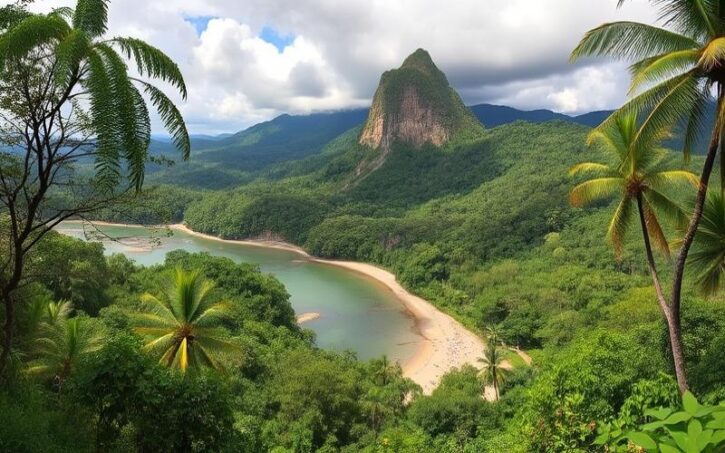
Situated between the Pacific Ocean and the Caribbean Sea, the country offers an exceptional living environment with housing options as diverse as its landscapes, ranging from modern university residences to eco-friendly lodgings nestled in the heart of the jungle.
An immersion in this unique educational adventure promises to reveal incomparable cultural and natural riches while paving the way for new skills and opportunities.
Exploring Student Scholarship Options in Costa Rica
Types of Student Scholarships Available in Costa Rica
| Scholarship Type | Awarding Organization | Examples / Specifics |
|---|---|---|
| Government Scholarships | Government of Costa Rica | Support for disadvantaged students, academic excellence |
| University Scholarships | Public Universities | University of Costa Rica, National University, etc. |
| Private Universities | Programs specific to each institution | |
| International Scholarships | Foreign Organizations | Swiss Scholarships, Canada (PFLA), NSF, etc. |
| Research Scholarships | International Programs | IGERT (NSF), internships, collaborations |
| Complementary Aid | Foundations, NGOs, Companies | Student loans, one-time assistance |
Eligibility Criteria by Scholarship Type
- Government Scholarships:
- Costa Rican residency or nationality
- Disadvantaged socio-economic situation or excellent academic results
- Enrollment in a recognized institution
- Public University Scholarships:
- Academic performance
- Involvement in university or social life
- Sometimes financial criteria
- Private University Scholarships:
- Requirements specific to each university
- Academic record, sometimes an interview
- International Scholarships:
- Generally reserved for graduate studies (master’s, doctorate)
- Relevant research or study project
- Motivation letter, sometimes supervisor recommendation
- Research Scholarships:
- Validated scientific or artistic project
- Collaboration between institutions (e.g., Costa Rica and foreign university)
Application Process
- Identify available scholarships (university websites, government pages, international platforms).
- Check eligibility criteria and prepare an application file (transcripts, certificates, letters of recommendation).
- Write a motivation letter tailored to each scholarship.
- Submit the application within the required deadlines, often via an online platform.
- Wait for a response or, if necessary, attend an interview.
Examples of Popular Scholarships and Benefits
| Scholarship Name | Main Benefits |
|---|---|
| University of Costa Rica Scholarships | Partial or full tuition fee waiver, monthly financial support |
| PFLA Scholarships (Canada) | Funding for study or research stays, logistical support |
| Swiss Excellence Scholarships | Full funding for studies or research, access to Swiss laboratories |
| NSF Programs (USA) | Funding for collaborative research projects, equipment, mobility |
Practical Tips for Finding and Applying for Scholarships
- Start research early, ideally one year before studies begin.
- Use official resources: international relations offices, government websites, specialized platforms.
- Prepare a standard application file (CV, letters, transcripts) adaptable to each scholarship.
- Carefully craft the motivation letter, tailoring it to each call for applications.
- Request letters of recommendation from involved teachers or supervisors.
- Check deadlines and strictly adhere to them.
- Participate in information sessions or webinars organized by institutions.
Alternative Funding Sources and Complementary Aid
- Student loans with preferential rates offered by some local banks.
- Support from private foundations, especially for students from disadvantaged backgrounds.
- One-time aid from certain NGOs for purchasing materials or attending seminars.
- Exchange programs with partial fee exemptions.
- Possibility of student jobs on public and private campuses.
Key Takeaway: The diversity of scholarships in Costa Rica caters to varied profiles, but the success of the application largely depends on the rigor in preparing the file and the relevance of the project presented.
Good to Know:
Scholarships from the Costa Rican government and universities, such as CONAPE and UCR scholarships, often require specific academic criteria, while international organizations like the OAS offer aid with broader criteria; explore online platforms like Becas Costa Rica to discover hidden opportunities.
Understanding the Student Housing System in Costa Rica
Types of Student Housing in Costa Rica
- Private University Residences
- Shared Apartments (Room in a shared apartment)
- Studios or Individual Apartments
- Host Families
- Youth Hostels and Guesthouses
| Type of Accommodation | San José (€ / month) | Heredia (€ / month) | Cartago (€ / month) |
|---|---|---|---|
| Room in Shared Apartment | 200 – 350 | 180 – 320 | 150 – 300 |
| Individual Studio | 350 – 500 | 300 – 450 | 250 – 400 |
| University Residence | Up to ~600 | ~550 | ~500 |
Host Families
Rates start around $375 per month, often with two meals on weekdays and three on weekends, plus weekly cleaning and laundry service.
Advantages: cultural immersion, logistical support upon arrival, friendliness.
Disadvantages: less independence, adapting to family rules.
Average price between €200–€500 depending on the city and comfort level. Utilities (internet, water, electricity) are often included in the rent for newer studios or premium residences.
Advantages: total autonomy, rich student social life.
Disadvantages: more complex administrative procedures; sometimes need to prove financial reliability.
Hostels & Student Guesthouses
Dormitories from €8–€25 per night (approx. €250–€700 per month), private rooms available from €12 per night; breakfast often included.
Services Generally Included in the Rent
- Water
- Electricity
- Internet/WiFi
- Common Area Maintenance
- Access to Equipped Kitchen
Common Administrative Procedures
- Signing a written contract (often required)
- Payment of first month + security deposit (equivalent to one or two months’ rent)
- Presentation of passport and sometimes proof of university enrollment
- For host families/universities: specific form to fill out before arrival
Neighborhoods Popular with Students
San José:
- San Pedro
- Barrio Escalante
Heredia:
- Near Universidad Nacional
Cartago:
- Downtown near university campuses
Ciudad Colón/El Rodeo:
Dynamic region due to international institutions.
Government Initiatives & University Programs
The state encourages international mobility through scholarships and inter-university agreements facilitating access to student housing; however, less than 20% of students directly benefit from an institutional solution. Most universities offer personalized assistance to find suitable housing.
“The family helped me as soon as I arrived: I had a comfortable room with all my meals prepared… You really discover Costa Rican culture.” (Lucía M., Spain)
“I chose a shared apartment near campus: friendly atmosphere but the procedures to sign the lease were longer than expected.” (Alexandre P., France)
“The university housing service directed me to several reliable options; I quickly found a fully equipped studio with internet included.” (Sophie G., Canada)
Good to Know:
Students in Costa Rica often have access to housing support programs, such as university grants to reduce the cost of residences, which generally range from 200 to 400 USD per month. The San Pedro and Sabanilla neighborhoods are popular for their proximity to campuses and usually offer shared apartment options starting at 150 USD, services included; rental procedures require a student ID card or a local guarantor.
Practical Tips for International Students in Costa Rica
Main Universities Hosting International Students in Costa Rica:
| University | Type | Specifics |
|---|---|---|
| Universidad de Costa Rica (UCR) | Public | Academic reputation, campus in San José |
| Latin American University of Science and Technology | Private | Bilingual English-Spanish, highly reputable |
| University of San José | Private | Very high student satisfaction |
| University of Science and Art of Costa Rica | Private | Diversity of programs |
| Federated University of Costa Rica San Judas Tadeo | Private | Varied programs |
International Student Welcome Offices: Most major universities have dedicated services for administrative support, integration, and guidance for foreign students. These offices often provide assistance with visa procedures, orientation organization, and help with housing searches.
Resources and Practical Tips for Housing:
Popular Options:
- University Residences: Often located on or near campus, they offer a secure environment and facilitate integration.
- Shared Apartments: Very common, especially in San José; allow sharing costs and meeting other international or local students.
- Private Rentals: Apartments or studios, more expensive but offering more independence.
Search Tips:
- Check listings on university websites, student Facebook groups, and specialized platforms.
- Prioritize neighborhoods close to campuses or well-served by public transportation.
- Always visit the accommodation before signing a contract.
Tips for Adapting to the Local Cost of Living:
- Prioritize home cooking and local markets (“ferias”) for affordable groceries.
- Use public transportation, inexpensive and well-developed in San José.
- Share housing and internet/electricity subscription costs in shared apartments.
- Take advantage of student discounts in museums, cinemas, and transportation.
Importance of Spanish Proficiency and Available Language Courses:
The majority of university programs are in Spanish, although some private universities offer bilingual or English-language programs.
Spanish courses are offered by most universities, sometimes integrated into the curriculum or as an option.
It is highly recommended to acquire an intermediate level of Spanish to facilitate social and academic integration and daily life.
Scholarships Specifically for International Students:
Some universities and international organizations offer partial or full scholarships, especially for priority fields (sciences, tourism, environment).
It is recommended to check the “scholarships” section of each university and apply as early as possible, as spots are limited.
Administrative Procedures for Obtaining a Student Visa:
- Obtain a letter of acceptance from a Costa Rican university.
- Prepare a file including: criminal record check, birth certificate, financial proof, health insurance, visa application form.
- Submit the application to the Costa Rican consulate in the country of origin.
- Plan ahead, as procedures can be lengthy and demanding.
Tips on Local Culture, Customs, and Integration:
Costa Rican culture is known for its friendliness, tolerance, and “Pura Vida” lifestyle, focused on simplicity and optimism.
Respect relative punctuality (often more flexible than in Europe), politeness, and open-mindedness.
Participate in student activities and associations (sports clubs, music groups, volunteering, excursions) to make friends and integrate quickly.
Get involved in local festivals, traditions, and university events to discover the country’s cultural richness.
Key Takeaway:
For a successful experience in Costa Rica, it is essential to prepare your stay well (procedures, housing, language), be open to the local culture, and take advantage of the many resources offered by universities and student associations.
Good to Know:
Universities such as the Universidad de Costa Rica and TEC offer welcome offices to help international students integrate, while Spanish courses are widely available to facilitate adaptation. To find affordable housing, explore university residence and shared apartment options, and consult student forums that share tips on the cost of living and best practices for administrative procedures.
Disclaimer: The information provided on this website is for informational purposes only and does not constitute financial, legal, or professional advice. We encourage you to consult qualified experts before making any investment, real estate, or expatriation decisions. Although we strive to maintain up-to-date and accurate information, we do not guarantee the completeness, accuracy, or timeliness of the proposed content. As investment and expatriation involve risks, we disclaim any liability for potential losses or damages arising from the use of this site. Your use of this site confirms your acceptance of these terms and your understanding of the associated risks.

Cyril Jarnias is an independent expert in international wealth management with over 20 years of experience. As an expatriate himself, he is dedicated to helping individuals and business leaders build, protect, and pass on their wealth with complete peace of mind.
On his website, cyriljarnias.com, he shares his expertise on international real estate, offshore company formation, and expatriation.
Thanks to his expertise, he offers sound advice to optimize his clients' wealth management. Cyril Jarnias is also recognized for his appearances in many prestigious media outlets such as BFM Business, les Français de l’étranger, Le Figaro, Les Echos, and Mieux vivre votre argent, where he shares his knowledge and know-how in wealth management.





