
 Published on and written by Cyril Jarnias
Moving to Greenland, this gigantic Arctic territory with its spectacular landscapes, is anything but a “standard” relocation. Extreme climate, isolation, high cost of living, specific immigration rules, a culture very different from continental Europe: everything demands thorough preparation of your project. In return, the quality of life, nature, community cohesion, and professional opportunities—particularly in the public, fishing, tourism, and tech sectors—are attracting an increasing number of skilled profiles.
This guide provides the key benchmarks for understanding the country, preparing for arrival, obtaining a residence permit, finding housing, working, managing your budget, integrating, and handling daily life in Greenland.
Understanding Greenland Today
Before discussing administrative procedures or job hunting, it is useful to grasp the political, geographical, and human framework in which you will settle.
Over 80% of Greenland’s surface area, the world’s largest island, is covered by ice.
The population is around 56,000 inhabitants, spread across 18 towns and about fifty small villages scattered along an immense coastline. The capital, Nuuk, is home to roughly 18,000–20,000 residents and serves as the political, cultural, and administrative center. Other medium-sized towns have between 1,000 and 5,000 inhabitants, while some hamlets have only a few dozen people. It is estimated that between 6,000 and 7,000 permanent residents originate from other countries, primarily Denmark.
Greenland’s population is predominantly Inuit, accounting for about 80% of the inhabitants. The official language is Greenlandic (Kalaallisut), spoken daily by the vast majority. Danish holds an important place in administration, healthcare, and higher education. English is primarily used by younger generations, as well as in the tourism and technology sectors.
Economically, the country relies largely on fishing and seafood processing, but also focuses on tourism, a few mining projects, renewable energy (particularly hydropower), and increasingly, digital technologies and Arctic research. A significant annual subsidy block from Denmark represents about half of public revenue.
Climate, Environment, and Lifestyles
Living in Greenland means living in a spectacular but radical Arctic environment, shaping every aspect of daily life.
A Dry, Cold, and Changeable Climate
The climate is generally Arctic. Even during the mildest months, average temperatures rarely exceed 50°F (10°C). In the south and at the heads of certain fjords, temperatures can occasionally rise above 68°F (20°C) in summer, but this remains the exception. The air is very dry, with low humidity, making the cold more bearable than in Northern Europe… while increasing the risks of dehydration and skin dryness.
Winter, from November to March, is long, cold, and dark, with total polar night in the northernmost areas. The typical temperatures mentioned for the cold period give a good idea of what to expect:
| Month (winter) | Typical Temperature Range |
|---|---|
| October | 23°F to 5°F (-5°C to -15°C) |
| November – January | 14°F to -13°F (-10°C to -25°C) |
| February – March | 5°F to -13°F (-15°C to -25°C) |
| April | 23°F to 5°F (-5°C to -15°C) |
Add to this the wind effect, often strong in coastal areas, which significantly increases the feeling of cold. Conversely, the further one moves from the coast and ocean, the colder, drier, and relatively more stable the climate becomes, for example on the ice sheet.
The transition seasons (spring in April–May and autumn in September–October) are short. Summer is characterized by prolonged sunlight: north of the Arctic Circle, the midnight sun is observed, while in Nuuk, located just south, the nights remain very light with a ‘false night’ twilight.
Majestic but Demanding Nature
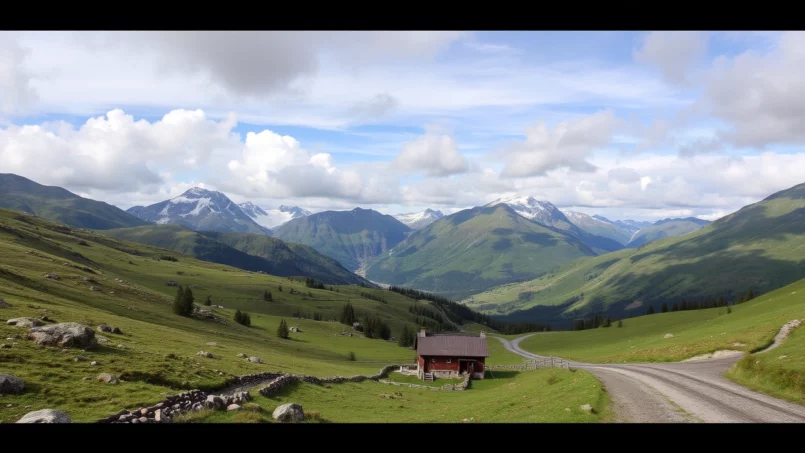
Greenland offers immense fjords, glaciers, tundra, sea ice, mountains, and a coastline dotted with small villages. There are no roads connecting towns: travel is by plane, helicopter, boat, sometimes snowmobile or dogsled depending on region and season. Transportation is highly dependent on weather, meaning a blizzard can delay a flight by a few hours… or two days.
The ice sheet is melting at an accelerated rate, wildlife habitats are changing, and new parasites are appearing, tangibly marking the effects of climate change. Residents are very attached to environmental protection and sustainable hunting and fishing practices.
Quality of Life and Daily Rhythm
The pace of life is slower than in major metropolises. Communities are small, tight-knit, and the connection to nature is omnipresent. Winter invites indoor activities, community, and cultural life, while summer is dedicated to boating, hiking, camping, hunting, or fishing for those who practice.
Larger towns like Nuuk offer modern comfort (well-stocked supermarkets, cafes, swimming pools, gyms, museums, a university, cultural events), but the availability of consumer goods remains limited, and some products arrive by ship at spaced intervals. In villages, you may have to pump water from a communal point, use dry toilets, and shower at the town’s “service house.”
Immigration, Residence and Work Permits
In terms of migration, Greenland follows rules distinct from those of Denmark and, importantly, is not part of the European Union or the Schengen area. This often surprises European nationals who do not enjoy free movement here.
Who Needs a Permit?
Several main scenarios exist:
– Citizens of Denmark, Finland, Iceland, Norway, and Sweden can live and work in Greenland without a visa, residence permit, or work permit. They do not even need a passport to enter; an ID card is sufficient.
– Nationals of the EU/EEA and Switzerland do not benefit from free movement in Greenland. They follow the same rules as other foreigners but are generally exempt from a short-stay visa.
– All other foreigners must, with some exceptions, have a combined residence and work permit to legally settle and work.
Note that a Danish residence permit does not automatically grant the right to reside in Greenland, and vice versa.
Certain categories can, however, work for up to three months without a permit: visiting researchers, lecturers, professional artists or athletes, certain technicians installing or repairing equipment (the “fitter rule”), domestic staff accompanying foreign employers for a short stay, or some mining industry workers as long as the cumulative work duration does not exceed 90 days within a 180-day period.
The Competent Authorities
Permit applications are processed by the Danish Agency for International Recruitment and Integration (SIRI). It decides in close consultation with the Government of Greenland (Naalakkersuisut), which must approve the import of foreign labor in light of local priorities.
The import of foreign labor to Greenland is governed by a specific law (Act No. 27 of October 30, 1992), which establishes the principle of priority for local workers. For certain jobs, obtaining a municipal permit issued by the municipality where the position is located is mandatory. In case of disputes over these decisions, the Greenlandic Ministry of Mineral Resources and Labor can be contacted.
Conditions for Obtaining a Work Permit
For most expatriates, entry to Greenland comes via a concrete job offer. The employer must be registered in Greenland, offer a contract complying with local standards (salary, duration, leave, notice periods), and for many positions, demonstrate that no candidate was found among residents or Nordic/EU nationals.
In practice, the typical requirements are as follows:
– A full-time job offer (generally 40 hours per week).
– Salary conditions aligned with Greenlandic collective agreements.
– Proven qualifications for the position (diplomas, experience).
– A clean criminal record or one without incompatible convictions.
– The ability to support oneself and one’s family without resorting to social assistance.
The application file must include: the GL1 form (for healthcare positions), a copy of the passport, passport photos, the contract or offer letter, diplomas and proof of experience, proof of housing, and a criminal record extract. All documents must be provided in Danish, English, German, Norwegian, or Swedish, or accompanied by a certified translation into one of these languages.
Applications are generally submitted to a Danish diplomatic mission abroad (embassy or visa center). In some countries, you can apply through a Norwegian representation. It is also possible to apply from Greenland or Denmark if staying there legally (e.g., with a valid visa or other title). Biometric data (photo, fingerprints) is often required.
Standard processing takes about three months, and can go up to five if additional information is needed. Some procedures, like those related to the “Health Agreement” for recruiting medical staff, are faster (about one month). The permit is issued as a residence card sent to the address registered in the Greenlandic register (CPR)—so it is crucial that your name is on the mailbox.
Duration, Conditions, and Changing Jobs
The combined residence and work permit is typically granted for a period of up to two years. If the position requires a municipal permit, the validity of the permit aligns with that authorization. In other cases, it follows the contract duration, limited to two years, and cannot exceed the passport expiration date by more than two months.
The work permit is strictly tied to a specific job and employer. Any change of position (even internal), acceptance of a second job, or loss of the initial job requires new authorization. It is imperative to notify SIRI immediately in case of contract termination and to submit a new application before starting any other professional activity.
To extend your stay beyond the permit’s expiration date, you must submit a renewal application before it expires. Submitting on time generally allows you to continue working until a decision is made.
Permit holders must remain financially self-sufficient. Receiving public benefits can lead to withdrawal of the permit. Similarly, abandoning your Greenlandic address or extended stays abroad can invalidate the permit, with thresholds of six months of continuous absence if you have resided for less than two years, and twelve months after two years. Stays in Denmark or the Faroe Islands count as time spent abroad.
Bringing Your Family and Aiming for Permanent Residence
A residence and work permit theoretically allows bringing certain family members: spouse, registered partner, cohabiting partner, and children under 18 still living at home. They must apply for a permit under family reunification. The authority will examine the main applicant’s ability to house and support their family.
After several years of legal residence (often five years continuously), a foreigner can apply for permanent residence. The criteria generally concern length of stay, employment and income stability, integration (including language skills in Greenlandic or Danish), and the absence of a serious criminal record.
Working in Greenland: Sectors, Salaries, and Job Market
The Greenlandic labor market combines a strong public sector presence, constant needs in fishing, health, education, infrastructure, and rapid development in tech and energy transition.
Key Sectors
Among the major fields with opportunities:
Main economic and professional fields offering employment opportunities in the territory.
Traditional pillar of the economy, with jobs on boats, in processing plants, and logistics.
Sustained growth due to cruises, nature stays, hiking, dogsled tours, iceberg and aurora viewing. Need for guides, hotel staff, restaurants, transport.
Wide range of positions in administration, health, education, social services, and municipal technical services.
Housing projects, urban roads, ports, airports, energy structures.
Hydropower already covers over 60% of the country’s electricity, with complementary projects (wind, solar) appearing periodically.
Environment, climate, Arctic sciences, marine resources, linked to institutions like the Greenland Institute of Natural Resources.
Rapidly expanding sector, with a strong focus on digitalization of public services, cybersecurity, cloud computing, and AI applied to Arctic constraints (energy, logistics, connected health).
Focus on Tech: A High-Demand Sector
The technology sector is experiencing marked growth. After representing about 4.9% of GDP in 2022, it was estimated at nearly 15% a few years later, with an explicit goal to increase the digital sector’s contribution to the economy. The government expects the creation of several thousand new jobs in this field.
The most sought-after profiles include: technology specialists, digital marketing experts, and finance professionals.
– Software and full-stack developers.
– Data scientists and data analysts.
– Artificial intelligence and machine learning engineers.
– Cloud specialists (architects, DevOps).
– Cybersecurity analysts.
– UX/UI designers.
– Systems and network engineers.
The number of digits in the projected annual increase for jobs in digital professions like developers and data scientists.
Salary Levels and Working Conditions
Salaries depend heavily on the sector, qualifications, and location, but a few benchmarks emerge from available data.
For the overall active population, the average net monthly salary is around 27,000 DKK, or approximately $4,700 USD. In larger towns like Nuuk, incomes are above the national average, while some rural regions show lower average incomes.
In tech professions, the cited annual ranges are significantly higher than average:
| Type of Tech Position | Indicative Annual Salary (before taxes) |
|---|---|
| Software Engineer | 650,000 to 950,000 DKK |
| Data Scientist | ≈ $132,000 USD |
| DevOps Engineer | $90,000 to $135,000 USD |
| Cloud Architect | $80,000 to $167,000 USD |
| AI Engineer | $80,000 to $120,000 USD |
| Cybersecurity Analyst | 384,500 to 592,600 DKK |
| UX/UI Designer | 450,000 to 650,000 DKK |
The mentioned legal minimum wage is around 126.92 DKK per hour, approximately $18.5 USD. Standard working hours are around 40 hours per week, and the professional culture emphasizes respect for work-life balance.
Also note a tax peculiarity: beyond remuneration, every fully taxable resident is subject to a pay-as-you-earn (PAYE) tax system with effective rates between 42% and 44% depending on the municipality, but with significant allowances and deductions.
Finding a Job: Channels and Practices
In a small country where everyone more or less knows each other, networking and word of mouth play a central role. But several structured channels exist:
Main channels for recruiting in Greenland, adapted to the type of position and legal obligations.
Like suli.gl, where offers for low- or medium-skilled positions often must be posted for at least 14 days.
HireMe.gl, Arctic Jobs, and local media portals to reach a targeted audience.
Particularly effective for skilled positions in tech or research.
Facebook is widely used for local groups and classifieds.
Public employment services and specialized recruitment agencies.
For positions involving relocation from abroad, employers sometimes use specialized agencies or Employer of Record services to facilitate administrative management.
Proficiency in Danish is very frequently required, even Greenlandic for functions in direct contact with the public. In tech and some international activities, English sometimes suffices, but being a completely monolingual English-speaking expatriate clearly limits options, especially outside Nuuk.
Cost of Living, Housing, and Expat Budget
One of the most surprising points for newcomers is the price level. Geographic isolation, dependence on imports, high energy costs, and the small market size make Greenland one of the most expensive countries in the world.
A Cost of Living Well Above Average
International comparisons show that, excluding rent, regular expenses are about 40% higher than in the United States. Another source even estimates that Greenland is overall 41% more expensive than the United States. However, rents remain significantly lower on average than in many major American or European cities.
For illustration:
| Indicator (vs. United States) | Estimated Differential |
|---|---|
| Cost of Living (excluding rent) | +41% approx. |
| Cost of Living (including rent) | +13% approx. |
| Rents | -44% approx. |
| Restaurants | +22 to +40% |
| Groceries | +60 to +75% |
| Transportation | +50% |
| Clothing | Prices ~2.2x |
For a single expatriate, average estimates suggest: Monthly living costs vary by destination, lifestyle, and personal expenses.
– Around 15,700 DKK per month (a little over €2,100 / $2,300) excluding rent.
– Between $2,400 USD per month (frugal lifestyle, rent included) and over $7,700 USD (comfortable or high-end lifestyle).
For a family of four, ranges rise quickly, with estimates exceeding 38,000 DKK per month or close to $9,000 USD rent included for a “medium” comfort level.
Finding Housing: Rents and Options
The housing market is tight in larger towns, especially in Nuuk, where construction struggles to keep up with demand. It is better to plan your search ahead and, if possible, negotiate employer-provided or subsidized housing.
This data provides an indicative estimate of the situation.
| Type of Housing | Indicative Monthly Rent |
|---|---|
| 1 bedroom, city center | ≈ 6,700 DKK |
| 1 bedroom, outside center | ≈ 5,900 DKK |
| 3 bedrooms, city center | ≈ 10,500 DKK |
| 3 bedrooms, outside center | ≈ 10,200 DKK |
Other estimates cite 6,500 to 8,000 DKK for a furnished 915 sq ft (85 m²) apartment depending on the neighborhood. Basic utilities (electricity, heating, water, garbage) for 915–970 sq ft (85–90 m²) can be between 500 and 1,800 DKK per month depending on sources, with heating costs particularly heavy in winter. Unlimited high-speed internet often costs around 1,000 DKK per month.
In small localities, housing options may be limited to a few private houses or shared accommodations, sometimes without running water.
Groceries, Restaurants, and Daily Expenses
Imported foodstuffs—fruits, vegetables, milk, meat—are significantly more expensive than in continental Europe. Fresh produce can be very pricey, and their availability depends on cargo ship arrivals. Conversely, some local products (fish, certain game meats) are more accessible via hunter’s markets (brættet).
Some examples of average prices:
| Product (approx.) | Indicative Price (DKK) |
|---|---|
| Milk 1 L | 12 to 18 DKK |
| Bread (1 day, 2 people) | ≈ 33 DKK |
| Tomatoes 1 kg | ≈ 30 DKK |
| Apples 1 kg | ≈ 60 DKK |
| Local cheese 500 g | ≈ 100 to 112 DKK |
| Local beer 0.5 L (store) | 23 to 40 DKK |
| Decent bottle of wine | 150 to 213 DKK |
At a restaurant, typical prices are:
| Type of Meal/Drink | Indicative Price (DKK) |
|---|---|
| Simple meal, inexpensive restaurant | 120 to 150 DKK |
| Fast-food combo meal | ≈ 100 to 110 DKK |
| Dinner for 2 in a neighborhood pub | ≈ 500 DKK |
| Dinner for 2 in an “expat” Italian restaurant | ≈ 1,200 DKK |
| Draught beer (pint) | 70 to 80 DKK |
| Cappuccino | ≈ 40 DKK |
| Cocktail in a club | ≈ 230 DKK |
Leisure activities are also expensive: movie ticket around 120 to 140 DKK, monthly gym membership around 300 to 360 DKK. Some sports, like tennis, are known to be particularly costly; other facilities like municipal swimming pools (e.g., Malik in Nuuk) remain accessible (about 50 DKK per entry).
Local Transportation
Urban travel is mainly by bus, taxi, and, often, on foot. Nuuk’s bus network is relatively dense, with monthly passes around 520–580 DKK. A single ticket costs around 16–21 DKK.
Taxis remain expensive:
– Base fare around 23 DKK.
– Approximately 64 DKK per mile.
– An airport–city center transfer in Nuuk costs around 150 DKK.
Fuel is less taxed than in continental Europe, with prices around 4.3 to 6.3 DKK per liter depending on sources, but importing, buying, and maintaining a vehicle in an Arctic environment remains costly (a new compact model like a Golf can reach 250,000 DKK).
Tax System: What Expatriates Need to Know
The Greenlandic tax system operates on the pay-as-you-earn (PAYE) principle: the employer withholds tax directly from the salary, then an adjustment is made the following year with the tax assessment notice. It distinguishes full tax residency (for people settling or staying at least six months) and limited residency (for certain income of Greenlandic origin without permanent settlement).
For fully taxable residents, the overall tax rate (state + municipality) is between 42% and 44%, depending on the municipality. The burden is mitigated by standard allowances and an employment tax credit (up to about 15,750 DKK per year). There is no VAT or formal wealth tax, but excise duties apply to alcohol, vehicles, and fuels.
Contributions to a Greenlandic pension scheme are generally deductible, whereas contributions paid to foreign pension products are not deductible in principle—but benefits paid by these foreign plans are then not necessarily taxable locally.
When settling, it is highly recommended to contact Skattestyrelsen (the tax administration) or a specialized advisor to understand your situation well (full or limited tax liability, double taxation treaties, filing obligations).
Healthcare, Insurance, and Access to Care
Greenland has its own public healthcare system, funded by taxes and modeled on the Danish system. It covers registered permanent residents free of charge.
Organization of the Healthcare System
The system is structured around:
– A national hospital, Queen Ingrid’s Hospital in Nuuk, which provides specialized care for the entire country (130 beds, CT scanner, MRI, surgery, maternity, intensive care, etc.).
– Five regional hospitals in Aasiaat, Ilulissat, Sisimiut, Qaqortoq, and Tasiilaq, providing primary care, standard radiology, some lab tests, and some surgery, but without major technical facilities (no CT scanner).
– Urban health centers, often associated with hospitals.
– Health stations in villages, staffed by nurses or medical assistants, linked to town doctors via telemedicine.
Complex medical cases from Greenland are often transferred to Denmark by plane or helicopter, depending on weather. A dedicated air ambulance, capable of carrying two patients on stretchers, is used. These transfers and the choice of destination hospital are decided solely on medical criteria, not the patient’s or their insurance company’s wishes.
For emergencies, the number to call is 112.
Coverage for Expatriates
To benefit from free healthcare, expatriates must be registered as permanent residents. Under this framework, the following are covered:
– Consultations with general practitioners and specialists in the public sector.
– Hospital stays.
– Part of public dental care.
– Prescribed medications.
– Home nursing services.
– Certain medical travel (e.g., transport of pregnant women from villages to a town for childbirth).
Tourists and visitors must pay for their care and medications, often via insurance. Medical transport costs (helicopter, plane) can be very high for non-residents. It is therefore crucial to have good insurance including medical evacuation coverage.
International Health Insurance
For an expatriation project, several scenarios arise:
– If you become a resident, you will be covered by the public system for care in Greenland. Supplementary international insurance is still advisable for coverage abroad (e.g., during trips to Denmark or your home country).
– If you do not (yet) meet residency conditions, robust international health insurance is essential, covering at minimum hospitalization, medical evacuation, and care in neighboring countries.
– For a reconnaissance or short-term stay, travel insurance with medical and repatriation coverage is the absolute minimum.
Specialized insurers offer various levels of coverage (hospitalization, routine care, maternity, dental, optical, mental health, prevention, etc.) with limits ranging from $160,000 USD to several million depending on the plan. It is important to check exclusions (especially pre-existing conditions), deductibles, co-payments, and evacuation coverage.
Gearing Up and Preparing for the Climate
Arriving in Greenland without proper equipment is one of the best ways to turn your adventure into an ordeal. The basic principle is layering, adjustable based on activity and weather, combined with meticulous protection of extremities.
The Three-Layer System
For both upper and lower body, clothing is thought of in three layers:
– Base layer (technical underwear): in merino wool or synthetic fibers, to wick moisture away from the skin. Cotton is to be avoided, as it retains water and cools.
– Mid layer: insulating (fleece, wool, down or synthetic jacket).
– Outer layer: windproof and waterproof, like breathable shell jacket and pants (Gore‑Tex or equivalent).
This system allows adding or removing layers depending on exertion (walking, skiing, dogsledding) and weather variations, which are often rapid.
Essentials by Body Area
For the head, a beanie covering the ears, a balaclava or neck gaiter, and high-performance sunglasses (ideally polarized) are essential. In winter, ski masks protect from wind and snow glare. In summer, a hat can be useful on the rare milder sunny days.
To avoid frostbite and chapping, layering is key: start with thin liner gloves (e.g., merino wool) to preserve dexterity, add a pair of waterproof gloves, and top with thick over-mittens, which are warmer than standard gloves. In extreme cold, using chemical hand warmers can be decisive.
For the torso and legs, several thermal pieces (long underwear, fleece or softshell pants, waterproof over-pants, insulated parka) allow for layering. In town, a well-insulated parka is often enough, but any prolonged outdoor excursion must be planned for.
Feet are a critical area to protect. In winter, wear wool socks (layer a thin and a thick pair) and insulated, waterproof winter boots (like brands Sorel or Baffin). In summer or for hiking, opt for sturdy, waterproof hiking boots. On ice, equip yourself with overboots, gaiters, light crampons, or spiked soles for more safety.
Also think about a daypack (20–30 L with a waist belt), an insulated water bottle (water freezes quickly), high-SPF sunscreen and lip balm, and a rich moisturizing cream against dryness.
For the most extreme activities (expeditions on the ice sheet, isolated trekking), specialized equipment (ice axes, technical crampons, pulks, satellite phone, VHF radio, polar bear protection) is essential and often provided or required by expedition operators.
International Logistics: Bringing Your Belongings
For a complete relocation, volume and cost often require sea freight, supplemented if needed by air freight for urgent packages.
Several international logistics companies offer specific solutions for Greenland, including sea freight (full FCL or shared LCL containers), air freight, and parcel services with consolidation from North America or Europe. They typically rely on major global shipping lines and can also handle customs formalities, such as estimating duties and taxes, preparing export/import documents, and certificates of origin.
Lead times vary from a few days (small express air parcels) to several weeks (sea freight, or longer depending on season and routes). Rates, which vary greatly by weight, volume, and chosen option (express, economy, consolidation), should be carefully compared. As Greenland applies its own customs rules, it is important to inquire in advance about limits and prohibitions (food products, weapons, hazardous materials, etc.) as well as required forms.
Daily Life, Culture, and Integration
Succeeding in your expatriation to Greenland isn’t just about administrative and logistical aspects. Integration also involves understanding social codes, participating in local life, and, as much as possible, learning the language.
Language: Greenlandic, Key to Integration
Even though part of the population speaks Danish and English is common in some circles, especially in Nuuk, mastering a few Greenlandic basics radically changes how you are perceived. Simple greetings like “Aluu” (hello), “Tikilluarit” (welcome), or “Qujanaq” (thank you) are highly appreciated and show your respect.
Greenlandic is a polysynthetic and agglutinative language, very different from Indo‑European languages, with a case system, numerous affixes, and a subject‑object‑verb word order. This may seem intimidating, but many linguists stress its regularity: once you grasp the logic of affixes, progress becomes rewarding.
Several structured resources exist:
Discover a selection of courses, tools, and training to master the Greenlandic language, ranging from free online resources to certified training.
Follow the ‘Learn Greenlandic with Per Langgård’ program, about 500 hours, or the ‘Grønlandsk for voksne’ (Greenlandic for Adults) modules available free online for several years.
Access free textbooks, simplified grammars, a morphemic dictionary, and word analysis tools to deepen your learning.
Opt for in-person courses in Nuuk or paid online tutoring, including exams and obtaining an official certificate.
A regular investment of a few hours per week can, over a year, provide basic vocabulary and a good understanding of the language’s structure, facilitating informal exchanges, reading signs, listening to local radio, and accessing culture.
Social Norms and Humor
Social interactions are based on a few strong principles:
Greenlandic society values independence and group harmony. It is preferable not to offer help spontaneously to avoid being intrusive, but to respond to an explicit request; insisting after a refusal is frowned upon. Communication is indirect: ‘we’ is used to suggest changes, and pointing fingers is avoided. Strong emotions are not expressed in public; it is appropriate to listen and accept silence in response to a factual account of difficult events. Humor, often focused on minor incidents and self-deprecation, is central, while overly intellectual, aggressive, or taboo-related jokes are less common.
In stores, the concept of a “queue” exists but is less rigid than elsewhere. When new checkouts open, people may move to the shortest one, regardless of the exact order of arrival, without causing protests. Complaining loudly would be seen as a lack of self-control.
Traditions and Community Life
Among the customs expatriates are often invited to participate in, the kaffemik holds a special place. It is a large informal reception at someone’s home to celebrate a birthday, confirmation, wedding, achievement… Guests come and go throughout the day, have coffee, cakes, traditional dishes, chat, then make room for the next ones. It is a key moment for building connections.
Hunting and fishing are activities with strong identity value, connecting the community to its territory and wildlife. Expatriates are expected to respect these practices, even if they do not share them or have reservations about certain products like seal or whale meat.
Traditional arts (drum singing and dancing, tupilak carvings, oral storytelling) coexist with a dynamic contemporary music scene and strong engagement for Inuit culture in education and politics.
Dogsled dogs are also part of the heritage, particularly in the north and west. However, it should be remembered that they are not pets in the urban sense, but working animals, often kept in packs outside town.
Life in the Capital, Nuuk
Nuuk concentrates a large part of professional opportunities, services, and infrastructure. The city is compact and easily explored on foot or by bus. The historic center, the colonial harbor, museums (notably the National Museum and the Art Museum), the Katuaq Cultural Center, the Malik swimming pool, cafes, and restaurants offer an urban living environment surprisingly rich for a city of its size.
A new international airport has recently enhanced Nuuk’s connectivity, with links from Copenhagen (usually via Kangerlussuaq) and Reykjavik. Flight delays due to weather remain frequent, encouraging travelers to allow extra time for connections and to take out travel insurance covering delays.
Education, Family, and Children
For expatriate families, the question of schooling is obviously central. Greenland offers a free public education system, with compulsory schooling from ages 6 to 16. It includes about twenty town schools, around sixty village schools, and three upper secondary schools.
There is only one private school in Nuuk and no network of international schools. Instruction is primarily in Greenlandic, with a significant place for Danish and mandatory English learning. For a child speaking neither Greenlandic nor Danish, integration can be a challenge but also an excellent opportunity to become multilingual.
Childcare costs in private facilities (nurseries, kindergartens) are relatively moderate compared to other Nordic countries, with monthly rates of about 4,000 DKK per child for full-time care. The absence of tuition fees in public schools partially offsets the cost of living.
For children’s health, the public healthcare system covers most needs (pediatrics, vaccinations, basic dental care). Parents are advised, however, to take out supplementary coverage for non-covered care or travel abroad.
Mental Preparation: Isolation, Mental Health, and Resilience
One of the often-underestimated realities of life in Greenland is isolation. Even in Nuuk, the feeling of being far from the rest of the world can weigh heavily, especially in winter. Lack of light, the outdoor cold, dependence on air and sea links, the difficulty of seeing family left abroad as often as desired, are all factors of psychological vulnerability.
The country has a very high suicide rate, particularly among young men, illustrating the deep social and psychological tensions this context can generate. For an expatriate, it is therefore crucial to:
To facilitate integration and preserve well-being, it is advisable to quickly create a local social network (via sports clubs, associations, choirs, expat groups, or colleagues). It is also important to maintain regular contact with loved ones abroad using digital tools, while managing the constraints of sometimes costly and limited internet. Establishing routines (sports, cultural activities, outings, language learning) helps structure time, particularly during winter. Finally, in case of prolonged difficulty, do not hesitate to consult available mental health services, even though the supply of psychologists and psychiatrists remains limited compared to demand.
Learning to accept unpredictability (flight canceled due to a storm, items out of stock in stores, administrative setbacks) is also part of adaptation. Patience and flexibility are cardinal virtues in Greenland.
Practical Tips for a Successful Move
Beyond figures and procedures, some key themes emerge for approaching an expatriation project to Greenland with peace of mind.
For a successful installation in Greenland, it is essential to anticipate administrative procedures (permits, housing, schooling). Plan a financial cushion to absorb the cost of living and unexpected expenses. Negotiate your expatriation package to include housing or equipment assistance. Work on your local network before arrival by contacting expatriates and associations. Engage in social life by participating in events and joining clubs. Respect cultural and linguistic codes by learning a few Greenlandic words. Finally, take care of your physical and mental health by adapting to the climate and staying active.
Moving to Greenland as an expatriate is neither a trivial choice nor a “turnkey” experience. It is a demanding project requiring preparation, cultural openness, resilience, and curiosity. Those who accept the challenge, however, discover a warm society, a living environment unique in the world, and the rare opportunity to participate in the development of a territory facing the climatic, identity, and technological challenges of the 21st century head-on.
Disclaimer: The information provided on this website is for informational purposes only and does not constitute financial, legal, or professional advice. We encourage you to consult qualified experts before making any investment, real estate, or expatriation decisions. Although we strive to maintain up-to-date and accurate information, we do not guarantee the completeness, accuracy, or timeliness of the proposed content. As investment and expatriation involve risks, we disclaim any liability for potential losses or damages arising from the use of this site. Your use of this site confirms your acceptance of these terms and your understanding of the associated risks.

Cyril Jarnias is an independent expert in international wealth management with over 20 years of experience. As an expatriate himself, he is dedicated to helping individuals and business leaders build, protect, and pass on their wealth with complete peace of mind.
On his website, cyriljarnias.com, he shares his expertise on international real estate, offshore company formation, and expatriation.
Thanks to his expertise, he offers sound advice to optimize his clients' wealth management. Cyril Jarnias is also recognized for his appearances in many prestigious media outlets such as BFM Business, les Français de l’étranger, Le Figaro, Les Echos, and Mieux vivre votre argent, where he shares his knowledge and know-how in wealth management.





