
 Published on and written by Cyril Jarnias
Settling in Bangladesh means accepting an intense climate, sometimes challenging, but one you can truly get used to with the right strategies. Between scorching heat, record humidity, torrential monsoon, and periods of increased health risks, the weather environment dictates daily life, transportation, food, health… and therefore your expatriate experience.
This article provides a concrete overview of climatic conditions in Bangladesh and offers practical advice for dealing with them daily, especially for expatriates residing in Dhaka.
Understanding Bangladesh’s Climate to Adapt Better
Before discussing equipment, housing, or food, it’s essential to understand what you’ll be facing. The climate isn’t just “hot and humid”: it is structured into distinct seasons, each with its own risks and opportunities.
Bangladesh has a tropical monsoon climate, with near-constant heat, high humidity, and massive rainfall for part of the year. Four main periods are typically distinguished: a hot and dry season, a pre‑monsoon season already very oppressive, the monsoon proper, and then a short, drier and “cooler” season.
The Main Seasons: Heat, Rain, Then Relative Respite
The climatic year can be summarized as follows: a gradual rise in heat, a long peak of hot and humid weather, then a return to more bearable temperatures.
Here is a summary table of seasonal trends (general data, which may vary slightly by region):
| Approximate Period | Season | Main Characteristics |
|---|---|---|
| December – February | Dry “winter” season | Lower temperatures, drier air |
| March – May | Pre‑monsoon | Very hot, rising humidity, frequent thunderstorms |
| June – September | Monsoon | Heavy rains, floods, maximum humidity |
| October – November | Post‑monsoon | Decreasing rains, heat still present |
In practice, the heat is almost constant, but its intensity and especially the relative humidity change drastically, radically altering how it feels.
Extreme Heat and Humidity: The Most Difficult Duo to Live With
During the hot season, especially between April and June, maximum temperatures typically hover around 88 to 95 °F (31 to 35 °C), with minimums rarely below 73 to 79 °F (23 to 26 °C). But that’s only part of the story. The factor that’s truly destabilizing for many expatriates is humidity.
The increase in the heat index in Dhaka since 1980, explaining the feeling of ‘unbearable’ summers.
To better understand risk levels, here is the classification commonly used for the heat index:
| Heat Index (°F) | Risk Level | Possible Effects |
|---|---|---|
| 80–90 | Caution | Discomfort, mild fatigue |
| 90–105 | Extreme Caution | Risk of heat cramps and exhaustion |
| 105–130 | Danger | Increased risk of heat stroke |
| >130 | Extreme Danger | Heat stroke likely, life-threatening danger |
In practice, some days in Dhaka during the humid season clearly fall into the “Danger” zone for people exposed continuously, especially without air conditioning or breaks in the shade.
Heatwaves: An Increasingly Defining Phenomenon
Authorities and researchers now speak of “heatwaves” very precisely. A heatwave is defined as when maximum temperatures exceed 97 °F (36 °C), with a classification into four categories:
| Heatwave Intensity | Maximum Temperature Range |
|---|---|
| Mild | 97 – 100 °F (36 – 37.9 °C) |
| Moderate | 100 – 104 °F (38 – 39.9 °C) |
| Severe | 104 – 107 °F (40 – 41.9 °C) |
| Very Severe | > 108 °F (> 42 °C) |
More recent work, used for alert systems, also defines heatwaves by maximum and minimum values exceeding the 95th percentile for at least three days. This type of episode is associated with an approximately 20% increase in deaths, which clearly shows that extreme heat isn’t just a nuisance: it’s a major health risk.
Heatwaves are particularly frequent in May and can last until September, especially in the absence of pre‑monsoon rains. Their formation is due to dry westerly winds, a subsidence of air at high altitude that prevents cloud formation, and a soil moisture deficit caused by lack of rainfall.
For an expatriate, this means two very concrete things: you must anticipate periods of several days (or even weeks) where the heat barely subsides, even at night, and where fatigue, sleep disturbances, and health problems tend to accumulate.
Monsoon: Rain, Floods, and Health Risks
Another major feature of the local climate: the monsoon. On average, about 80% of annual rainfall occurs during this season. Most regions receive around 80 inches (2000 mm) of rain per year, concentrated between June and September, or even into October depending on the year.
These rains, vital for agriculture and ecosystems, manifest as heavy downpours, often almost daily. For expatriates, this can lead to monstrous traffic jams, flooded roads, power cuts, and increased risks of waterborne diseases. It is essential to prepare for this in daily life.
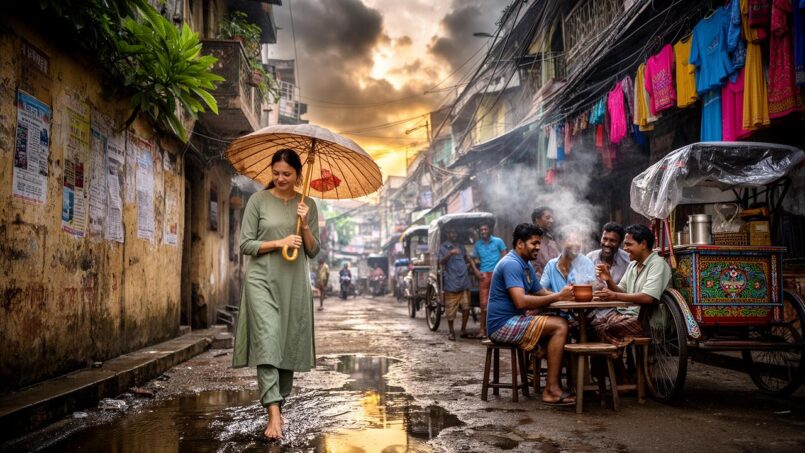
Heavy rains cause rivers to rise, leading to regular flooding and sometimes landslides. Urban areas like Dhaka are particularly vulnerable due to often insufficient drainage systems: some streets literally turn into canals during a downpour.
To adapt, it’s not just about “taking an umbrella”, but about rethinking your work hours, modes of transportation, domestic organization, and hygiene, in order to stay functional even when infrastructure is under pressure.
Climate Impacts on Health: What Every Expatriate Must Know
High heat and humidity aren’t just uncomfortable: they directly affect the heart, the respiratory system, fluid balance, and even mental health. Several studies conducted in Dhaka highlight very concrete effects.
An analysis of more than 340,000 emergency room visits for heart problems in Dhaka between 2014 and 2019 showed that on dry but hot days, the risk of an ER visit for cardiac causes increased by about 4.4%. However, when relative humidity exceeded 82%, the increased risk jumped to nearly 27%. In other words, it’s the combination of heat + humidity that puts the cardiovascular system under the greatest strain.
Periods of intense heat lead to an increase in cases of diarrhea, persistent coughs, respiratory illnesses, and exhaustion. They are also associated with a rise in anxiety and depressive disorders, particularly among the elderly and women, who are more vulnerable to heatstroke. Exposed workers report symptoms ranging from muscle cramps to extreme distress, sometimes described as “the feeling of dying.”
For an expatriate, the good news is that you have greater protective margins than many local workers, especially if you have air‑conditioned housing, international health insurance, and some professional flexibility. But this doesn’t exempt you from taking the heat seriously, even if you consider yourself physically fit.
Organizing Daily Life with the Heat: Hydration, Pace of Life, Clothing
Adapting to Bangladesh’s climate is first and foremost about changing your mindset: instead of seeing the weather as mere background, you must make it a central parameter in organizing your days.
Adjusting Your Schedule to Avoid Peak Heat
In urban areas like Dhaka, the most difficult hours are generally in the late morning and mid‑afternoon, when the air is saturated with humidity and buildings release accumulated heat. If your job allows, it is wise to:
– Prioritize outdoor travel early in the morning or late in the day;
– Schedule physical tasks (sports, errands requiring long walks, field visits) for the beginning of the day;
– Avoid crossing the city in the middle of the afternoon, especially during heatwaves or monsoon with traffic jams and vehicles without air conditioning.
In some sectors, recommendations are emerging to shift work hours to limit exposure to heat peaks. Even if these policies are not yet widespread, nothing stops you from discussing it with your employer or team if it remains compatible with your responsibilities.
Smart Hydration: More Than Just a Water Bottle
In studies of workers exposed to heat, many report spontaneous strategies: drinking more, consuming salty or sweet drinks like lemon, sugar, and water preparations, or rehydration solutions. These reflexes are relevant but should be guided.
A few essential tips to make your life abroad easier and ensure a successful expatriation.
Be curious and accept cultural differences. Adaptation is the key to integrating into a new environment.
Mastering the local language, even partially, significantly improves daily life and social relationships.
Build a local and expatriate network for support, professional opportunities, and experience exchange.
Anticipate and manage administrative procedures (visa, permits, bank, health) to avoid surprises.
Establish a budget adapted to the local cost of living and set aside savings for emergencies or travel.
Take care of your physical and mental health. Keep in touch with loved ones and cultivate your passions.
– Don’t rely on the mere sensation of thirst: under intense heat, thirst is a late indicator. It’s better to set “routines” (for example, drinking a glass every 30 to 45 minutes when you’re outside).
– Alternate water and drinks containing some minerals, especially if you sweat a lot (rehydration solutions, lightly salted water, local drinks like “saline”). Be cautious, however, with drinks that are too sugary; limit them if consumed frequently.
– Avoid alcohol, which promotes dehydration, and very strong coffee in large quantities, especially in the middle of the day.
– Always check water quality: tap water is generally not drinkable without treatment. Prefer sealed bottled water or filtered/boiled water.
In offices, the air is often air‑conditioned and water is filtered. However, power cuts are frequent, especially during thunderstorms and the monsoon. It is therefore advisable to keep a supply of drinking water at home.
Dressing for the Climate: Breathable, Covering, and Culturally Appropriate
The heat and humidity invite light dressing, but the cultural context remains conservative, especially outside very international areas. The solution is to favor clothing that is:
– Made of light natural fabrics (cotton, linen) or breathable technical fabrics;
– Loose‑fitting to allow air to circulate;
– Covering, at least to the knees and shoulders, which also protects from the sun and mosquitoes.
For women, the salwar kameez (loose tunic and light trousers, with a scarf) is both comfortable, suited to the climate, and perceived as respectful of local codes. For men, light trousers and a short‑sleeved shirt or polo work very well. Shorts are generally not worn much by local men, even in strong heat, and are still frowned upon in many public situations.
During the pre‑monsoon and monsoon periods, prefer closed, non‑slip sandals over sneakers, which would stay wet too long. Avoid flip‑flops, which easily splash clothes and offer poor protection from debris in dirty water. For more comfort, keep a pair of dry shoes and spare socks at your workplace.
Managing Heat at Home: Air Conditioning, Ventilation, and Layout
In neighborhoods popular with expatriates like Gulshan, Banani, or Baridhara in Dhaka, many apartments have air conditioning, or at least fans and sometimes generators to compensate for power cuts.
A few financial benchmarks to give you an idea:
| Energy Expense Item (Dhaka) | Indicative Monthly Range (in BDT; ~USD) |
|---|---|
| Electricity, water, gas, waste (915 sq ft / 85 m²) | Approx. 3,000 – 5,500 ৳ (~$30 – $55) |
| High‑speed internet (≥60 Mbps) | Approx. 1,600 – 1,800 ৳ (~$16 – $18) |
| Mobile plan with 10 GB data or more | Approx. 585 – 650 ৳ (~$6 – $6.5) |
Air conditioning naturally increases the electricity bill, but the base cost of utilities remains significantly lower than in many Western countries, allowing many expatriates to maintain an air‑conditioned “refuge,” at least in one or two rooms.
To optimize your comfort without skyrocketing consumption:
– Use air conditioning in a targeted way (at night, during the hottest hours), and supplement with fans to circulate air.
– Take advantage of cooler hours to air out, then close windows and curtains during heat peaks to limit heat entry.
– Equip windows with mosquito nets to be able to ventilate without opening the door to mosquitoes.
Furnished apartments in high‑end neighborhoods often include a refrigerator, washing machine, and sometimes air conditioners and water purifiers. These amenities remain a major asset for coping better with the climate and reducing logistical constraints (drinking water, laundry that doesn’t dry well in the humid season, etc.).
Coping with the Monsoon: Travel, Housing, and Safety
The rainy season profoundly changes the relationship with time and space. In Bangladesh, it is unrealistic to want to live “as usual” during the monsoon, especially in Dhaka where infrastructure is easily overwhelmed.
Anticipating Floods and Power Cuts: An Essential Basic Kit
Bangladeshi authorities regularly emphasize the need to prepare for the rainy season before its arrival. This also applies to expatriates. Minimal preparation can turn a potentially chaotic situation into a manageable inconvenience.
Elements to consider for your home:
For effective protection, it is advisable to check the watertightness of the home (seals, roof, leaks) and ensure gutters drain properly. Protect sensitive electrical appliances with quality surge protectors and UPS (uninterruptible power supplies). Stock up on non‑perishable food, water, emergency lighting (candles or battery‑powered lamps), and a first‑aid kit. Finally, keep important documents in waterproof pouches.
In case of severe flooding, authorities recommend cutting off power at the main circuit breaker to avoid electrocution risks. Even without major flooding, walking in accumulated water on the road is risky: invisible holes, electrical cables, highly contaminated water. Whenever possible, it’s better to postpone a non‑essential trip rather than “try your luck” in 12 inches (30 cm) of muddy water.
Adapting Your Mobility: Between Traffic, Flooded Roads, and Poor Visibility
Bangladesh’s transport system is dense and varied: buses, rickshaws, CNGs (auto‑rickshaws), trains, boats… but it is also extremely vulnerable to weather hazards.
Roads often have unmarked, abrupt shoulders, sometimes degraded pavement, and are shared by a heterogeneous mix of vehicles. During the monsoon, these flaws are magnified by rain and puddles that hide obstacles.
For an expatriate, several reflexes can make a big difference:
For safer travel, avoid inter‑city trips at night (increased risk of accidents and crime, especially in bad weather). Prefer serious carriers (reputable buses, trains in upper class, known ferries) over potentially dangerous cheap options. In the city, prefer the Dhaka Metro on covered routes for its regularity and protection. Always check the condition of vehicles (taxis, CNGs) and decline the ride if they are in poor condition or poorly lit.
The cost of local transport remains moderate for an expatriate, making it easier to opt for options considered safer. For example, a trip of a few kilometers in a CNG is generally still affordable, and a monthly public transport pass costs between 1,650 and 3,000 ৳ (~$16 – $30) depending on the service.
Hygiene and Health During the Rainy Season: Anticipating Infection Risks
The combination of heat + humidity + stagnant water creates an ideal environment for the proliferation of bacteria, fungi, and mosquitoes. Waterborne and vector‑borne diseases (dengue, malaria in some areas, other infections) are particularly monitored during the monsoon.
To reduce risks:
– Avoid as much as possible contact with runoff water, which can be contaminated by sewage;
– Wash your hands frequently, especially before eating and after moving around the city;
– Change clothes and shoes immediately if soaked, to limit skin infections and fungal issues;
– Sleep under a mosquito net, even in air‑conditioned housing, and use appropriate repellents.
Authorities also recommend not drinking tap water without treatment and being especially careful with the food cold chain. During floods, power cuts disrupt food refrigeration, including in some restaurants or small shops.
Eating Safely in a Hot and Humid Environment
Heat and the monsoon don’t just affect your comfort: they also change the way food is stored, prepared, and sold. In Bangladesh, food safety is a major issue, especially for urban populations dependent on street food or low‑cost restaurants.
Understanding Food Safety Issues in Dhaka
Several studies conducted in poor neighborhoods of Dhaka have shown that almost all people who eat out regularly express strong concerns about food safety, particularly regarding freshness, preparation methods, and vendor hygiene. Concerns include:
– The alleged use of chemicals to preserve or color food;
– Dirty utensils and facilities;
– The storage of prepared dishes at room temperature for long hours.
Local consumers adopt empirical strategies to try to ensure food safety, such as favoring known eateries, observing visible cleanliness, and avoiding certain stalls during late hours. However, researchers point out that options are limited for the poorest, who often cannot afford to systematically choose the safest options.
As an expatriate, you have more choices and purchasing power to minimize risks.
Practical Strategies for Expatriates: Where and How to Eat
Bangladesh has a rich and varied cuisine, where rice, vegetables, freshwater fish, and legumes are central. The challenge isn’t finding a balanced diet, but choosing places and practices consistent with climatic constraints.
Some useful guidelines:
For daily meals, favor busy restaurants where dish turnover is rapid, as in a hot climate, a dish left at room temperature promotes bacterial growth. Observe cleanliness indicators like sinks, tables, and staff attire. During the monsoon, be especially cautious with street‑food prepared near flooded or muddy roadsides. Avoid crushed ice and iced drinks if the water source is uncertain. If you hire household staff, discuss good practices with them for cleaning, cooking, food storage, and thoroughly reheating leftovers before consumption.
The cost of restaurant meals remains very low compared to Western standards, often allowing you to opt for safer establishments without blowing your budget. For example:
| Type of Meal in the City | Typical Price Range (Dhaka) |
|---|---|
| Simple meal in a small restaurant | Approx. 150 – 500 ৳ (~$1.5 – $5) |
| Full menu for two in a mid‑range restaurant | Approx. 800 – 3,000 ৳ (~$8 – $30) |
| Typical international fast‑food meal | Approx. 500 – 1,000 ৳ (~$5 – $10) |
This margin gives you the option to avoid overly risky choices, especially on very hot days or after heavy rains, when the cold chain is more easily broken.
Building a Balanced Diet in This Context
Bangladeshi authorities have developed national nutritional guidelines structured around a food pyramid: cereals (including rice) and bread at the base, vegetables and fruits in the second tier, then protein sources (fish, meat, eggs, legumes), dairy, and finally fats and sugars to be consumed in moderation.
Studies show an improvement in the consumption of vegetables, fruits, fish, meat, and eggs since the 2000s. However, many diets remain poorly diversified, with an excess of starches and a lack of fresh produce. Urbanization and globalization also encourage the rise of processed foods, high in fat, sugar, and salt, in urban habits.
For an expatriate, the challenge is the opposite: you have wide access to foods and can easily cover your nutritional needs, but the climate can discourage cooking or shopping frequently, especially during hot hours or in the rain. Some tips for reconciling a healthy diet with climate adaptation:
– Shop earlier in the morning or in the evening, when markets are cooler and trips more bearable.
– Take advantage of local, seasonal vegetables, often more flavorful and less expensive than imported products.
– Cook in reasonable quantities to avoid having to store leftovers too long in a fridge potentially subject to power cuts.
– Drink plenty of water, but limit sugary drinks, which can be tempting in the heat.
Adapting Your Home and Urban Habits to the Climate
Adapting to the climate isn’t just about the outdoors: the layout of your home, the neighborhood chosen, and your travel habits will have a direct impact on your comfort.
Choosing a Neighborhood While Considering Heat and Monsoon
Most expatriates in Dhaka settle in neighborhoods like Gulshan, Banani, Baridhara, or Bashundhara. These areas offer newer housing, often better ventilated, sometimes equipped with generators and security services. This translates to:
– Better management of power cuts, and thus air conditioning;
– Slightly better‑maintained streets, limiting some surface flooding;
– Proximity to well‑stocked shops and private health services.
Rents remain much lower than in many major world capitals, even for a high level of comfort: a one‑bedroom apartment in these neighborhoods can rent for between approximately $200 and $800 per month, and a luxury three‑bedroom between $700 and $1,200 depending on location and amenities.
The table provides an order of magnitude for monthly rents in Dhaka, expressed in local currency.
| Type of Housing | Location | Indicative Monthly Rent Range (৳; ~USD) |
|---|---|---|
| 1‑bedroom apartment | City center | ≈ 6,000 – 25,500 ৳ (~$60 – $255) |
| 1‑bedroom apartment | Outside center | ≈ 3,000 – 20,000 ৳ (~$30 – $200) |
| 3‑bedroom apartment | City center | ≈ 14,500 – 78,000 ৳ (~$145 – $780) |
| 3‑bedroom apartment | Outside center | ≈ 8,000 – 40,000 ৳ (~$80 – $400) |
In very high‑end neighborhoods, some individual houses reach purchase prices comparable to Western markets, but most expatriates opt for the apartment option.
When visiting, in addition to classic criteria (square footage, light, noise), remember to check:
– The presence of functional air conditioning or at least a sufficient number of fans;
– The existence of a generator in the building or neighborhood;
– Any problems with leaks or water seepage on the ground floor;
– The efficiency of drainage systems around the building (are there large puddles after just a shower?).
Managing Basic Services: Water, Electricity, Internet
Water and electricity networks in Bangladesh are constantly improving but remain vulnerable during extreme weather events. The distributed water is generally not drinkable without treatment, and power cuts remain a reality, all the more so during the monsoon and storms.
Most expatriates adopt specific insurance combinations to cover their needs abroad, such as international health insurance coupled with repatriation insurance, or home insurance supplemented by private liability insurance.
– Water filtration (domestic filter, delivered water jugs, sealed mineral water bottles) ;
– Using one or more internet connection sources (fiber + 4G mobile, for example) ;
– Use of generators or portable power banks to cope with outages.
Major mobile operators provide extensive 4G coverage in Dhaka, with plentiful, low‑cost data plans. Installing a fixed internet connection requires a contract in the tenant’s or owner’s name, often accompanied by passport copies and the lease contract.
Again, the relatively moderate cost of services gives you room to multiply safety nets, for example by combining two mobile operators to have a connection hotspot in case of issues with the fixed line.
Maintaining Your Health in a Strained Medical System
Living in a demanding climate mechanically increases the likelihood of needing the healthcare system, if only for gastrointestinal infections, dermatological problems, or heatstroke. However, the Bangladeshi healthcare system, though improving, remains fragile and very unequal depending on the area.
Public, Private, Informal: Knowing Where to Go
The system is structured into several sectors: an under‑resourced public sector, numerous private hospitals often better equipped in large cities, NGOs, and a vast informal sector (pharmacists giving “advice”, undeclared clinics, traditional healers). A large majority of the population consults the informal sector first, posing problems of quality and risks of counterfeit medicines.
For expatriates, it is recommended to prioritize recognized private institutions like Apollo Hospital, Square Hospital, or United Hospital. These hospitals have modern equipment and English‑speaking staff, but care there is expensive, making good health insurance essential. It is advisable to avoid unknown clinics.
Health Insurance and Evacuation: Non‑Negotiable Protection
Healthcare financing relies heavily on direct patient payments, and public infrastructure often doesn’t meet the quality and hygiene standards expected by expatriates. Several international organizations stress the necessity, for any foreigner residing in Bangladesh, to have international health insurance covering at minimum:
– Hospitalization in private clinics;
– Outpatient care for common issues (infectious, dermatological, respiratory, etc.);
– Medical evacuation to another country (India, Thailand, etc.) in case of serious illness or need for complex surgery.
This is the minimum annual budget to plan for serious health insurance for an expatriate in Bangladesh.
Always keep your prescriptions, bills, and medical reports: most insurers require these documents to reimburse or validate a potential evacuation.
Prevention Over Cure: Vaccinations, Hygiene, Monitoring
Before arrival, it’s important to update your basic vaccinations and inquire about recommendations specific to Bangladesh (typhoid fever, hepatitis, possibly vaccines for encephalitis or rabies depending on your living conditions and travel). Once on site:
– Strictly follow food hygiene rules (drinkable water, well‑cooked food, fruit peeled by you);
– Watch for signs of dehydration or heatstroke (headaches, dizziness, nausea, confusion);
– Consult promptly in case of prolonged diarrhea (beyond 72 hours), persistent high fever, or significant respiratory symptoms.
Heat and humidity are also likely to worsen certain chronic conditions (cardiac, respiratory, psychiatric). If this applies to you, discuss in advance with your doctor how to adjust your monitoring and treatment for this new environment.
Psychological Preparation: Climate, Fatigue, and Morale
Finally, the impact of the climate on morale and mental health should not be underestimated. Prolonged episodes of humid heat, difficult nights due to temperature, the limitation of certain outdoor activities, and the general tension that settles in the city during heatwaves can generate irritability, chronic fatigue, sleep disorders, even anxiety.
Studies show a rise in depressive and anxious symptoms during hot periods, with particular vulnerabilities among the elderly and women. For an expatriate, culture shock, distance from family, and the language barrier can amplify these feelings.
Adopting a few habits can help:
To limit isolation and psychological distress during intense heat, it is advisable to establish weekly routines to go out in pleasant conditions (parks in the morning, air‑conditioned cafes, indoor sports). Prioritize coworking spaces or sports clubs to benefit from temperate environments and socialization. Avoid staying indoors for several consecutive days, even in bad weather. Finally, be attentive to signs of psychological distress and don’t hesitate to seek appropriate support (psychologist abroad, online consultations, etc.).
The climate is an objective factor, but the way you plan your daily organization, your outings, your social relationships, and your rest times largely determines your subjective experience.
In Summary: Making the Climate a Parameter, Not an Obstacle
Living in Bangladesh means dealing with almost permanent high heat, often extreme humidity, torrential rains several months a year, and an urban system regularly tested by these conditions. But these constraints can be managed if you integrate them from the start into your housing, insurance, equipment, mobility, and habit choices.
The keys to good adaptation boil down to a few simple principles:
For a successful expatriation in the tropics, it is crucial to anticipate climatic specificities. Plan your activities according to the local calendar to avoid the hottest and most humid hours. Prioritize well‑ventilated or air‑conditioned housing, assessing the risks of power cuts or floods. Adapt your diet and hygiene to the heat and humidity, using your freedom as an expatriate to choose the safest options. Take out appropriate health insurance and familiarize yourself with the local medical system. Finally, plan spaces and times for recharging to preserve your energy and morale in the face of the climate’s impact.
The climate of Bangladesh will not become milder in the coming years; projections rather show a gradual increase in extreme heat episodes. But this does not condemn the expatriate experience. By making the climate an integral parameter of your life project, and not a secondary variable, you can transform an initially challenging environment into a manageable, rich, and even stimulating living framework.
Disclaimer: The information provided on this website is for informational purposes only and does not constitute financial, legal, or professional advice. We encourage you to consult qualified experts before making any investment, real estate, or expatriation decisions. Although we strive to maintain up-to-date and accurate information, we do not guarantee the completeness, accuracy, or timeliness of the proposed content. As investment and expatriation involve risks, we disclaim any liability for potential losses or damages arising from the use of this site. Your use of this site confirms your acceptance of these terms and your understanding of the associated risks.

Cyril Jarnias is an independent expert in international wealth management with over 20 years of experience. As an expatriate himself, he is dedicated to helping individuals and business leaders build, protect, and pass on their wealth with complete peace of mind.
On his website, cyriljarnias.com, he shares his expertise on international real estate, offshore company formation, and expatriation.
Thanks to his expertise, he offers sound advice to optimize his clients' wealth management. Cyril Jarnias is also recognized for his appearances in many prestigious media outlets such as BFM Business, les Français de l’étranger, Le Figaro, Les Echos, and Mieux vivre votre argent, where he shares his knowledge and know-how in wealth management.





