
 Published on and written by Cyril Jarnias
Moving to Bangladesh means immersing yourself in a country where religion shapes the rhythm of daily life, the seasons, and social relationships. For an expatriate, understanding this religious landscape is essential, both to avoid missteps and to fully appreciate the rich local culture. Here, Islam is the majority, but Hinduism, Buddhism, Christianity, and numerous tribal or Sufi traditions also have a very visible presence.
This guide focuses on the practical experience of religious life in Bangladesh as a foreigner encounters it in everyday settings (street, office, transportation, temples, major festivals), without delving into religious theory or spiritual advice.
A Dense Religious Landscape Beyond Statistics
Bangladesh is home to approximately 170 million people. It is one of the most densely populated countries in the world, and nearly every neighborhood and village reveals a place of worship. The big numbers provide a first frame of reference.
Who Practices What?
The most recent available data show a clear dominance of Islam, but also the significant presence of other religions.
| Major Religion | Estimated Share of Population | Approximate Numbers (latest cited census) |
|---|---|---|
| Islam (primarily Sunni) | ~91% | 150+ million |
| Hinduism | ~8% | 13+ million |
| Buddhism | ~0.6% | 1 million |
| Christianity | ~0.3% | 495,000 |
| Other (Sikhs, Bahá’ís, Jews, animists, etc.) | ~0.1% | tens of thousands |
Added to this are one million Rohingya refugees, mostly Muslim, concentrated mainly in the Cox’s Bazar district, as well as a mosaic of indigenous peoples in the Chittagong Hill Tracts (CHT) and northern Bangladesh, often non-Muslim (Buddhist, Hindu, Christian, animist).
For an expatriate, living in Bangladesh means adapting to two distinct social realities. First, the dominant social codes are those of a conservative Muslim nation. Second, as soon as you leave the capital Dhaka or venture into regions like the Chittagong Hill Tracts, you enter different religious and cultural worlds, each with its own rules and social norms that are essential to respect.
Secularism… Under a State Religion
The Bangladeshi constitution is a paradoxical document: it establishes both secularism as a fundamental principle and Islam as the state religion. It proclaims “freedom of religion” and equal status for Hinduism, Buddhism, Christianity, and other faiths, while opening the text with the Islamic phrase Bismillah.
On paper, everyone is free to “profess, practice and propagate” their religion. Proselytism is legal, provided it respects public order and morality. In reality, tensions exist: Hindu, Christian, Buddhist, and Ahmadiyya minorities regularly report violence, discrimination, or pressure.
Pakistani constitution and ground reality
For an expatriate, the basic rule is simple: the country displays formal tolerance, but religion is a sensitive subject. It is best to avoid direct criticism of Islam, religious figures, or rituals, especially in public or online, particularly since there are penal laws regarding “offense to religious feelings” (Penal Code, cybersecurity law).
Islam in Daily Life: Rhythms, Codes, and Implicit Expectations
With more than 90% Muslims, Bangladesh largely operates on the rhythm of Islamic practices, although the degree of devotion varies by individual and region.
The Five Daily Prayers and Friday as the Week’s Pivot
The five daily prayers – Fajr, Dhuhr, Asr, Maghrib, Isha – structure the day. The call to prayer (adhan) rings out from minarets, sometimes at high volume, especially in dense urban areas.
For an expatriate, two times are particularly important:
– Friday prayer (Jumu’ah), which replaces Dhuhr: many offices wind down, men head to mosques, and neighborhoods near major places of worship become gridlocked.
– Maghrib prayer, which marks the breaking of the fast during Ramadan. At that moment, the city literally freezes for a few minutes.
Mosques are everywhere. Some willingly accept non-Muslim visitors during off-peak hours, provided a strict dress code and behavior are observed; others remain closed to foreigners. Always ask permission before entering and avoid visits just before and during prayers.
Ramadan: The Month When Everything Changes
Experiencing your first Ramadan in Bangladesh is a powerful experience, even if you are not Muslim. The entire country seems to recalibrate: shorter work hours, shops opening later, intense traffic just before iftar, and a livelier nightlife than usual.
During Ramadan, expatriates are not required to fast, but should avoid eating, drinking, or smoking openly in public spaces or at work in the presence of fasting colleagues. Some workplaces provide discreet rooms for non-fasters.
In the evening, iftar – the meal breaking the fast – is an event in itself. In a city like Dhaka, specialized markets fill up just before Maghrib. Chawkbazar, in the old city, is one of the most famous, with a profusion of typical dishes:
| Type of Food | Examples of Common Bangladeshi Iftar Items |
|---|---|
| Drinks | Shorbot, juices, milkshakes, lemonades, syrups like Rooh Afza |
| Fried Savories | Piyaju (onion fritters), beguni (fried eggplant), samosas, pakora, dal puri |
| Hearty Dishes | Halim (lentil and meat stew), biryanis, kebabs |
| Various Snacks | Muri (puffed rice), chop (vegetable, egg or meat fritters) |
| Sweets | Jilapi (jalebi), bundia, various mishti, dates |
Many mosques offer communal iftars funded by donations. An expatriate invited to an iftar – with colleagues or at a family’s home – should arrive at the exact time of sunset, not early (hosts are busy in the half-hour before), and not late. A small gift (dates, pastries, fruit) is appreciated but not mandatory. Follow the lead: break the fast first with water and a date, then the actual meal comes after a short prayer.
During Ramadan, the night prayers called *tarawih* gather the faithful in mosques until late at night. This holy month is also marked by a significant surge in generosity, where donations and acts of charity, whether for religious or secular causes, are strongly encouraged and practiced.
Dress, Gestures, and Gender Mixing: The Implicit Rules
In a conservative country, and especially in a majority-Muslim context, modest dress is not a detail. Most misunderstandings between expatriates and locals stem from this, well before any real religious disagreements.
To fit in without abandoning your own style, here are some guidelines.
How to Dress?
For men:
– long pants (neat jeans, chinos) rather than shorts, even in extreme heat;
– t-shirt with short sleeves tolerated in the city, but long-sleeved shirt preferable for mosque or village visits;
– avoid tank tops, torn or very tight clothing;
– for formal meetings, a suit or at least shirt/dress pants; the panjabi (long kurta) is very appreciated during festivals.
For women:
– shoulders and legs covered at all times except at very Westernized parties;
– loose clothing: long dresses, long skirts with a covering top, or salwar kameez (tunic + pants + scarf), very easy to buy locally;
– cleavage, bare backs, skirts above the knee, and tight tops attract not only stares but also, in many cases, harassment;
– a lightweight scarf within reach is a real “Swiss Army knife”: it can cover your head in a mosque, adjust an outfit deemed too open in a rural area, or simply help you blend in more.
Local authorities advise visitors to dress modestly and respect local customs. There are laws that can penalize clothing considered indecent in public spaces.
Gestures to Avoid and Body Language Codes
Several innocent gestures in Europe can be perceived as very rude in Bangladesh:
– showing the sole of your foot to someone or toward a sacred object is a serious affront. Avoid crossing your legs so that the sole faces an interlocutor;
– a thumbs-up can have a vulgar connotation; it’s better to abstain;
– pointing with a finger is frowned upon; use your whole hand instead;
– touching someone’s head, especially a child’s, is culturally sensitive;
– eating or handing an object with your left hand is associated with impurity; always use your right hand to give, receive, or eat with your fingers;
– public displays of affection between men and women (hugging, kissing, even holding hands) are very poorly regarded. On the other hand, seeing two men holding hands is perfectly normal, without romantic connotations.
In some very conservative tribal or rural areas, contact – or even prolonged eye contact – between men and women who are not related may be considered inappropriate. A foreign woman traveling alone in these areas should expect strong curiosity and sometimes intrusive behavior. The looser and more covering the clothing, the easier interactions will be.
Visiting Mosques, Temples, and Monasteries: What to Know
Bangladesh offers a great variety of places of worship: historic mosques, Hindu temples with terracotta facades, Buddhist monasteries (vihara), sometimes tiny churches, and Sufi saint shrines. Expatriates are generally welcome, provided they follow a few simple rules.
In Mosques
Most large mosques accept non-Muslim visitors outside prayer times. There is no uniform national rule: some are very open to tourists, others much more reserved.
Some universal principles apply:
– remove your shoes before entering any area covered with prayer rugs;
– have clean socks (dirty feet in a mosque are seen as an insult);
– clothing covering arms and legs for everyone; women must also cover their hair with a scarf. Some places lend robes or scarves;
– never walk in front of someone who is praying;
– avoid touching copies of the Quran, walking on a prayer rug, or placing objects on it;
– limit photos, especially of people praying, and always ask permission.
On Friday at noon, mosques and the streets around them are packed due to the communal prayer. This is not an appropriate time for a tourist visit.
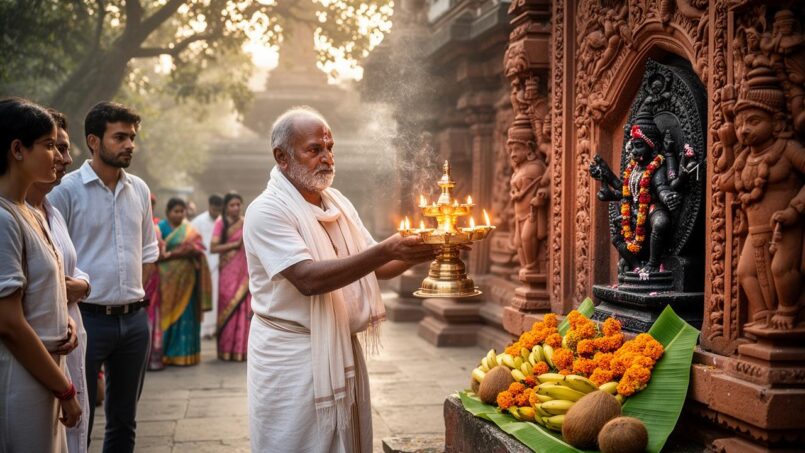
In Hindu Temples
Bangladeshi Hinduism is extremely vibrant, with a multitude of small neighborhood temples and more prestigious sanctuaries like the Dhakeshwari National Temple in Dhaka or the Kantaji Temple, an 18th-century masterpiece.
On a practical level, most temples are easy to visit if you follow a few principles:
– remove your shoes before entering;
– avoid shorts, short skirts, or very tight clothing;
– do not touch statues of deities or ritual objects;
– sit without pointing your feet toward the altar or idols;
– keep your voice low, turn off your phone, avoid selfies in front of deities during worship times.
Ritual life here is very rich: ritual baths, offering deposits (flowers, fruits, incense), recitations of epics like the Ramayana or Mahabharata, processions. Many neighborhood festivities are open to everyone, and it is not uncommon for Muslims to attend major Hindu festivals out of curiosity or friendship.
In Buddhist Monasteries
Buddhism concerns less than 1% of the population, but it is central in the Chittagong Hill Tracts region and in some neighborhoods of Chattogram and Dhaka, where the Barua, a Bengali-speaking Buddhist community, live.
Bangladesh has about a thousand monasteries, offering a diversity of sites, from large historical complexes to small village sanctuaries.
Discover the immense historical complexes like Paharpur, Mainamati, or Shalban Vihara, witnesses to a rich past.
Explore the small local monasteries, called *kyong*, that dot the countryside and villages of the country.
– same basic rules as for a temple or mosque: shoes removed, covered clothing, low voice;
– avoid turning your back to a large Buddha statue to pose for a photo;
– generally walk around stupas in a clockwise direction.
Major festivals, especially Buddha Purnima (commemorating the Buddha’s birth and enlightenment), feature beautiful lantern processions, open to respectful visitors.
In Churches and Minority Places of Worship
Christians represent a very small minority (0.3%), concentrated mainly in certain cities and among indigenous peoples (Garo, Santal, Khasi, etc.). Services are generally open and conducted in a mix of Bengali, tribal languages, and sometimes English. Again, proper attire and a discreet attitude are sufficient.
You will also find Bahá’í centers, a few Sikh gurdwaras, and Sufi shrines heavily frequented by a mixed public (Muslims and sometimes Hindus). Many expatriates appreciate these Sufi sites, which are more informal, where people come to listen to devotional music, make a wish, or share a meal.
Major Festivals: When Religion Takes Over the Streets
Bangladesh has a particularly packed festival calendar: Islamic, Hindu, Buddhist, Christian festivals, as well as secular celebrations like Bengali New Year or national commemoration days. For an expatriate, this means frequent public holidays, monstrous traffic jams – and numerous opportunities to observe society up close.
Major Muslim Festivals
Several major celebrations mark the Islamic year.
| Key Muslim Festival | Distinctive Feature in Bangladesh |
|---|---|
| Ramadan | Month of fasting, daily life profoundly reorganized |
| Eid al‑Fitr | End of Ramadan, mass prayers, gift exchanges, visits |
| Eid al‑Adha | Ritual animal sacrifice, distribution of meat to the poor |
| Mawlid | Prophet’s birthday, processions and sermons |
| Shab‑e‑Barat | Night of forgiveness, cemetery visits, night prayers |
| Ashura | Strong commemoration especially among Shia (mourning processions) |
During Eid al‑Adha, expatriates are often struck by the visible scale of animal sacrifices in the streets or makeshift slaughterhouses, and by the logistics of distributing the meat (one share for the family, one for relatives, one for the poor). It is best to avoid scheduling business meetings on these days and to anticipate extended public holidays.
The Central Role of Durga Puja among Hindus
Durga Puja is the major Hindu festival in Bangladesh, far more visible than Diwali. For five days, tens of thousands of temporary structures (pandals or mandaps) are erected across the country to house statues of the goddess Durga triumphing over the demon Mahishasura.
Between 2021 and 2023, approximately 33,000 mandaps were declared nationwide, illustrating the density of this phenomenon.
Durga Puja is not just a religious ceremony. It is also a huge street festival, with:
– crowds in new clothes parading all night to visit the most spectacular pandals;
– musical performances, traditional theater, dance;
– a strong economic impact: artisans, decorators, electricians, musicians, and restaurateurs benefit from a peak in demand.
Many local Muslims participate informally, helping with decorations or joining the crowds for fun. Former Prime Minister Sheikh Hasina has described Durga Puja as a “universal festival,” not limited to Hindus.
For an expatriate, this is one of the best times to experience Bengali society at large. Just dress decently, follow the flow, greet with “Nomoshkar” or “Shubho Puja,” and respect the quieter prayer moments inside the mandaps.
Other Hindu, Buddhist, and Christian Festivals
Alongside Durga Puja, other festivals shape the lives of minorities:
In Bangladesh, religious festivals give rise to various public expressions. Hindu festivals like Holi (festival of colors), Janmashtami (Krishna’s birth), Kali Puja, Saraswati Puja, and Rathayatra involve processions, color throwing, ritual river baths, and village fairs. Buddha Purnima, especially celebrated in the Chittagong Hill Tracts (CHT), features lanterns and ceremonies in monasteries. Christian festivals like Christmas and Easter, mainly observed by urban communities, are celebrated with night services and small processions.
The state has chosen to grant public holidays for the main festivals of the four major religions, officially to show equal treatment.
Secular Festivals with Strong Identity Charge
Alongside strictly religious festivals, certain dates are experienced with an almost sacred dimension:
– Pohela Boishakh, the Bengali New Year (mid-April), is a powerful moment of cultural affirmation, featuring Dhaka’s grand artistic procession (Mangal Shobhajatra), inscribed on UNESCO’s Intangible Cultural Heritage list;
– International Mother Language Day, February 21, commemorates students killed for the recognition of Bengali in 1952 and involves solemn vigils at the Shaheed Minar (martyrs’ monument);
– Independence Day (March 26) and Victory Day (December 16) feature parades, flags, and patriotic speeches.
An expatriate who shows interest in these moments – by learning a few words of Bengali, attending ceremonies – sends a strong signal of respect for local identity, far beyond the purely religious dimension.
Social Practices Intertwined with Religion
In Bangladesh, religion, social customs, and hierarchy overlap. It is hard to draw a clear line between what stems from faith and what stems from culture.
Visiting a Family: A Codified Ritual
Being invited to someone’s home, whether Muslim, Hindu, or Christian, always follows the same pattern:
When invited to a home, it is customary to remove your shoes before entering. You will be led to a guest room; wandering into other rooms without an invitation is frowned upon. The host will invariably offer you a drink (tea, juice) and something to eat, even just a biscuit. A categorical refusal can be seen as an affront: it is better to accept a small amount while thanking them. Conversation often begins with personal topics like family, children, or your home country, before moving to more serious subjects.
Tea almost serves as a social sacrament: it is drunk very sweet, often with milk, and consistently refusing it cuts short many bonds.
Hierarchy, Respect, and “Face”
Respect for elders and authority figures is central. This translates into:
– very marked forms of politeness;
– standing up to greet a superior or an elderly person;
– a strong avoidance of direct conflict in public, especially on matters of religion or politics.
In a professional context, it is common for colleagues to verbally agree (“yes,” “inshallah”) to a proposal, not out of genuine agreement, but to avoid direct confrontation. This is even truer when the interlocutor is perceived as dominant (age, hierarchical position, wealth, foreign status).
On religious subjects, this logic is multiplied tenfold. An expatriate must absolutely avoid:
– criticizing Islam, the Prophet, the Quran, or any religious figure;
– joking about religion, women, or sexuality in a way that could be considered blasphemous;
– engaging in impromptu theological debates.
On the other hand, asking sincere questions, after establishing a trusting relationship, is generally very well received.
Tensions and Violence: What an Expatriate Should Know
Even though Bangladesh cultivates an official discourse of “interfaith conviviality,” the reality is more mixed for minorities. Human rights organizations regularly document violence, destruction of temples, and pressure.
The Case of Hindu and Buddhist Minorities
Hindus, who made up more than 20% of the population in the 1940s, now stand at around 8%. Several factors explain this decline: ongoing migration to India, discrimination, and repeated episodes of violence.
NGO reports mention thousands of incidents targeting Hindus each year: murders, forced disappearances, evictions, rapes, vandalism of hundreds of temples and statues. Buddhists in the CHT have also suffered spectacular attacks, such as in Ramu in 2012, where several dozen monasteries and homes were burned following a blasphemy rumor on social media.
For an expatriate, the tensions present in the country generally do not translate into direct daily insecurity. However, they form the constant backdrop of local life. This leads to two practical implications to keep in mind.
– avoid casually sharing, commenting on, or “liking” sensitive content on social media (blasphemy rumors on Facebook have triggered deadly riots);
– do not get directly involved in local disputes related to religion or land, even out of empathy for a neighbor or employee: this goes far beyond the scope of an expatriate stay.
There are also mob lynchings based on rumors (blasphemy, child abduction, etc.), sometimes fatal. These remain rare on a national scale, but they demonstrate a capacity for very rapid escalation of tension in the event of a rumor.
State Reactions and Dialogue Initiatives
The state deploys additional security forces during major festivals considered sensitive: Durga Puja, Diwali, Christmas, Easter, Buddha Purnima. “Interfaith dialogue” programs have been established before certain elections, bringing together Muslim, Hindu, Buddhist, and Christian leaders around messages against rumor and hate speech.
Videos have circulated showing Muslim students protecting Hindu temples and Christian churches during recent political unrest in Bangladesh. This example illustrates that Bangladeshi society is not monolithic and that, alongside radical Islamist currents, a large part of the population values peaceful coexistence between different religious communities.
For an expatriate, the right attitude is to quietly support these dialogue initiatives (by attending interfaith cultural events, inviting colleagues of different faiths to social gatherings), without acting as a moralizer.
Practical Tips for Expatriates: Useful Habits to Adopt
From this overview, we can summarize some concrete reflexes that greatly ease life in Bangladesh.
Adapting to Religious Rhythms
– 1. Treat Friday as a special day: avoid scheduling important meetings during the noon prayer time, especially with very devout contacts. 2. During Ramadan:
– adjust schedules: prioritize morning meetings, avoid late afternoons when fatigue and irritability may be higher;
– do not organize festive events with alcohol around sunset;
– respect iftar: don’t plan anything serious during that time slot. 3. Around major festivals (Eid, Durga Puja, Pohela Boishakh): anticipate colleagues’ absences, service closures, and saturated transportation.
In Relationships
– Use local greetings: “As-salamu alaykum” with Muslims, “Nomoshkar” with Hindus. The expected response is “Wa alaykum as-salam” or “Nomoshkar” in return;
– show interest in everyone’s traditions (“How is Durga Puja celebrated in your village?”, “What does Eid al-Adha mean to you?”);
– avoid disparaging comparisons (“Back home, religion is more…”);
– learning a few basic Bengali words is extremely appreciated and opens many doors.
In Consumption Practices
– Respect religious dietary restrictions: no pork or alcohol in the vast majority of local restaurants. Only offer alcohol in clearly appropriate contexts (very international settings, licensed premises);
– at the table, use your right hand if eating with your fingers, and respect hospitality customs (taste what is offered, without wasting);
– during Ramadan, discreetly adapt your public consumption.
Managing Your Own Religious Visibility
Expatriates of any faith are free to practice, but some caution is warranted:
Avoid active proselytism toward Bangladeshi colleagues or contacts. Although the right to “propagate” one’s faith exists legally, conversion is a socially very sensitive topic. If you belong to a religious minority (Christian, Hindu, non-believer), you can mention it in a context of trust, but there’s no need to make it the center of all interactions. Online, refrain from posting content critical of the local religion, even in a foreign language: cases of “blasphemy” initiated on Facebook have already turned violent.
In Conclusion: Observe, Listen, Adjust
Living in Bangladesh means coming to terms with a very visible religiosity: calls to prayer, processions, festival flags, marked dress codes, political debates steeped in religious references. For an expatriate, it can be disorienting at times, but it is also a rare opportunity to understand from within how a modern society can be, at once, constitutionally secular and deeply devout.
To experience local hospitality and spirituality, adopt modest attire, respect prayer times, avoid any mockery, and show respectful curiosity. Locals are often happy to explain rituals, altars, or traditions like the iftar meal.
The key, ultimately, lies less in mastering all dogmas than in deciphering social signals: who leads the prayer, who prepares the offerings, who steps aside in separate male/female lines, how a family juggles its religious duties with daily life. By observing these gestures – more than by reading theories – the expatriate will find their place in Bangladesh, without renouncing who they are, but by blending harmoniously into this fabric of practices where the religious and the everyday merge.
Disclaimer: The information provided on this website is for informational purposes only and does not constitute financial, legal, or professional advice. We encourage you to consult qualified experts before making any investment, real estate, or expatriation decisions. Although we strive to maintain up-to-date and accurate information, we do not guarantee the completeness, accuracy, or timeliness of the proposed content. As investment and expatriation involve risks, we disclaim any liability for potential losses or damages arising from the use of this site. Your use of this site confirms your acceptance of these terms and your understanding of the associated risks.

Cyril Jarnias is an independent expert in international wealth management with over 20 years of experience. As an expatriate himself, he is dedicated to helping individuals and business leaders build, protect, and pass on their wealth with complete peace of mind.
On his website, cyriljarnias.com, he shares his expertise on international real estate, offshore company formation, and expatriation.
Thanks to his expertise, he offers sound advice to optimize his clients' wealth management. Cyril Jarnias is also recognized for his appearances in many prestigious media outlets such as BFM Business, les Français de l’étranger, Le Figaro, Les Echos, and Mieux vivre votre argent, where he shares his knowledge and know-how in wealth management.





