
 Published on and written by Cyril Jarnias
Settling in Botswana means accepting entry into a land of sun, dust, wide-open spaces, and… contrasts. The climate is both simple to understand and disorienting to live with daily: two main seasons, very little water, sometimes extreme temperature swings between day and night, humidity that varies completely, and a water resource as precious as it is scarce. For an expat, a successful move therefore requires a genuine climate adaptation strategy, touching on hydration, housing, clothing, health, travel, and even the administrative paperwork to prepare.
This guide explains how to adapt your home, work, travel, and healthcare based on precise climate data and proven local practices in Botswana.
Understanding Botswana’s Semi-Arid Climate
Botswana is classified as a semi-arid country, sometimes described as semi-desert or subtropical semi-arid. Most of the territory sits on the sand of the Kalahari, with an average elevation around 1,000 meters, which amplifies the thermal contrasts between day and night. Rainfall is low, very uneven from one region to another, and extremely erratic from year to year.
You won’t really find the four temperate seasons, but rather two major periods: a dry season and a rainy season, each punctuated by transition periods. For an expat used to a European oceanic or continental climate, it’s crucial to relearn the annual calendar.
The Main Seasons: Dry vs. Wet, Hot vs. Cold
The dry season generally runs from April/May to October/November. This is the local winter, marked by very dry air, pleasant to even hot days, and cold, sometimes freezing nights. The rainy season, often called the “green season,” covers the period from October/November to March/April. It corresponds to the austral summer: sometimes oppressive heat, thunderstorms, rising humidity, explosive vegetation… and mosquitoes.
The table provided offers a simplified overview of the seasons and their main climatic characteristics for the entire national territory. It allows you to quickly visualize typical seasonal variations, such as temperatures, precipitation, or weather phenomena associated with each period of the year.
| Approximate Period | Season / Description | Typical Temperatures (Day) | Typical Temperatures (Night) | Rain & Humidity |
|---|---|---|---|---|
| Nov. – Mar/Apr | Summer / Rainy season | 25–35°C, peaks > 40°C | 20–25°C | Thunderstorms, localized showers, humid air |
| April | Transition to dry | 27–31°C | 10–17°C | Rain sharply decreasing |
| May – Aug | Dry winter | 20–25°C | 0–10°C, sometimes ≤ 0°C | Clear sky, very dry air, large diurnal ranges |
| Sept. – Oct. | Shoulder season, hottest period | 30–40°C, records > 40°C | 12–20°C | Little or no rain, wind, dust |
Behind these averages lie strong regional disparities: the north (Okavango, Chobe) is wetter and receives more rain, while the southwest (Kalahari, Tsabong) is significantly drier and can be very cold at night in winter.
Gaborone as a Daily Barometer
The capital gives a good idea of what awaits you in many of the country’s towns. Gaborone has an average annual temperature of about 21°C, with nearly 485 mm of rain per year and over 3,400 hours of sunshine. Summers are hot and stormy, winters bright and dry, but cool to cold at night. The monthly data clearly shows this gradual shift throughout the year.
| Month | Avg. Max (°C) | Avg. Min (°C) | Avg. Rain (mm) | Avg. Humidity (%) |
|---|---|---|---|---|
| January | 32–33 | 19–20 | 74–145 | 53–58 |
| February | 31–32 | 17–19 | 46–82 | 55–58 |
| March | 30–31 | 17–18 | 34–81 | 55–59 |
| April | 28–28.5 | 13–14 | 17–44 | 55–59 |
| May | 25.5–26 | 8–9 | 1–11 | 45–53 |
| June | 23–23.5 | 4–5 | 2–8 | 44–50 |
| July | 23 | 4–5 | 0–3 | 39–50 |
| August | 26 | 7–8 | 0–2 | 31–39 |
| September | 30 | 12–13 | 1–18 | 28–39 |
| October | 32–32.5 | 16–17 | 16–40 | 33–39 |
| November | 32–33 | 17–18 | 33–69 | 39–58 |
| December | 32–33 | 19 | 48–82 | 53–58 |
This table illustrates three realities that expats often underestimate: the intensity of the heat from October to February, the harshness of nighttime cold in June-July, and the significance of thunderstorms, concentrated over a few months but violent enough to affect roads, infrastructure, and access to certain areas.
Strong Sun, Unpredictable Rain, Wind, and Dust
Botswana is estimated to enjoy about 300 days of sunshine per year. This maximum sunshine goes hand in hand with a UV index that reaches 11 in Gaborone from January to April, and then in October-December. In other words, even in winter, the sun burns quickly, especially at altitude and on light-colored surfaces (salt pans, sandy areas, water surfaces).
Rainfall, from November to March, takes the form of localized, brutal downpours, creating strong spatial variability. This situation generates a dual risk: drought on a national scale and local flooding, particularly in plains and urban areas. Conversely, the period from September to November is often windy and dusty, with possible sandstorms in the Kalahari.
Understanding this climatic backdrop is essential for organizing your daily life: working hours, neighborhood choice, house type, sports schedules, children’s health, everything is linked.
Hydration and Health: Learning to Live in Dry Heat
In a semi-arid climate, heat isn’t just about comfort; it’s a health issue. New arrivals very often underestimate the combined impact of temperature, solar radiation, low humidity, and travel-related dehydration. The first weeks in Botswana are a critical time when you must consciously change your habits.
Drink More Than “Usual”
With dry, windy air and common summer temperatures above 30°C, the body loses water without you realizing it. You sweat and evaporate a lot, but the sweat dries quickly, which tricks your perception. Local recommendations speak of a daily intake above three liters of fluids, not just pure water. On very hot days, or with physical activity, you easily reach four to five liters.
This hydration should be spread throughout the day, in small frequent amounts rather than large spaced-out gulps. Long-haul flights to reach Botswana worsen dehydration, as cabin air is particularly dry. Arriving already “dry” in a hot country increases the risk of feeling unwell in the first few days.
Reverse osmosis purified water can lack essential minerals for good hydration. Additionally, alcohol and highly caffeinated drinks worsen dehydration. To compensate, prioritize water, diluted juices, oral rehydration solutions, or lightly salted drinks.
Recognizing and Preventing Dehydration and Heat Stroke
In the first few weeks, your body isn’t yet acclimatized. The risks of dehydration, heat exhaustion, and even heat stroke are higher. The signs to know are clear: mild but persistent headaches, unusual fatigue, weakness, dizziness, nausea, possible vomiting, muscle cramps. Many people also report irritability or difficulty concentrating.
Prevention involves simple reflexes: drink before you’re thirsty, moderately salt your food, use oral rehydration sachets in case of heavy sweating or diarrhea, or take salt tablets if a doctor has advised it. Mixing water with a little juice or mineral salts helps retain water in the body. Keeping a metal water bottle (steel or aluminum) with you at all times is almost indispensable for expats; avoid leaving it in direct sunlight in the car, where the interior temperature rises very quickly.
Sun, UV, and Daily Protection
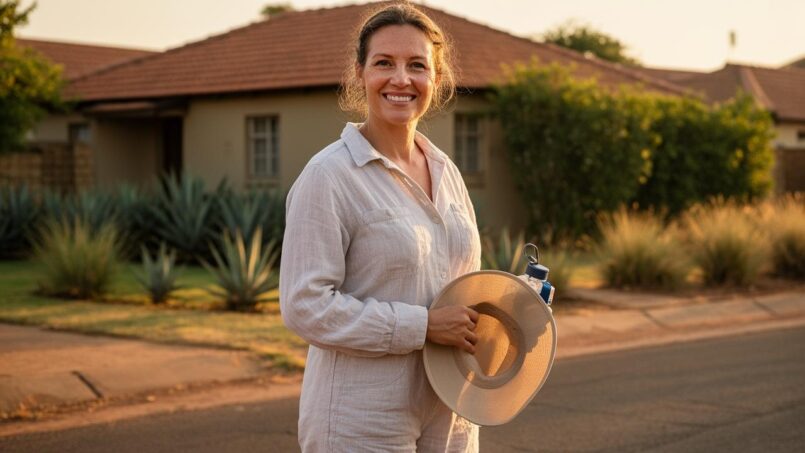
With a UV index often extreme, severe sunburn can occur in less than thirty minutes in the middle of the day. Sun protection is not optional, even in winter. A high-factor cream (SPF 50+), reapplied every three to four hours, covering face, neck, ears, hands, and the back of the neck, is the minimum. A wide-brimmed hat offers better protection than a simple cap; good quality sunglasses, filtering UV rays, are essential, especially near water surfaces (Okavango Delta, Chobe) or highly reflective salt pans.
Adapted clothing and accessories are essential to protect against solar radiation while maintaining thermal comfort.
Opt for lightweight long sleeves and tightly woven but breathable fabrics to limit direct radiation on the skin.
Use scarves, buffs, or wraps around the neck and nape. They can be dampened for evaporative cooling.
Mosquitoes, Malaria, and Other Rainy Season Risks
When discussing climate and health in Botswana, malaria comes to the forefront. The risk is highly regionalized: the north (Okavango, Chobe, Zambezi border) remains affected, especially during and after the rains, while major southern cities like Gaborone are in a low-risk zone. But this risk geography must be integrated into your life plan: frequent trips north, work assignments near wetlands, family safari vacations, etc.
The rainy season, from November to April, sees mosquito populations explode, particularly Anopheles arabiensis, the main malaria vector in the country. These mosquitoes are most active at dusk, dawn, and during the night. Botswana’s health authorities, with support from the World Health Organization and other partners, conduct indoor residual spraying (IRS) campaigns and distribute insecticide-treated mosquito nets, but travelers and expats remain responsible for their own protection.
This is the number of recommended layers of protection to effectively guard against mosquito bites.
Beyond malaria, the rainy season also increases the risk of waterborne diseases such as cholera, typhoid, or certain hepatitis linked to contaminated water, especially during urban flooding. The defense lies in strict hygiene: boiled, treated, or bottled water; regular hand washing; fruits and vegetables thoroughly washed with clean water; complete cooking of food, especially in more remote areas.
Nighttime Cold, Dust, and Respiratory Illnesses
Paradoxically, Botswana’s dry winter worries new arrivals less… yet it can also be problematic. Houses, often poorly or not insulated, can be colder inside than the outside air at dawn. In Gaborone, average lows hover around 4–5°C in June-July, but recorded extremes have dropped to -7.6°C, and frost is common, especially in the Kalahari.
This cold, combined with very dry air, irritates the respiratory tract, especially in asthmatic or sensitive individuals. Dust storms at the end of the dry season add a layer of particles that worsen problems for children, the elderly, or expats already vulnerable. Having warm bedding (thick duvets), suitable sleepwear, a hat, and a scarf for mornings may seem excessive given daytime temperatures, but it makes all the difference.
Living Smartly: Adapting Your Home for Both Heat and Cold
Choosing and furnishing your home in Botswana must never be done without climatic consideration. Common architecture, materials used, lack of insulation, and energy management directly affect your thermal comfort, electricity bills, and even your health.
Poorly Insulated Houses and Two Extremes to Manage
Most homes are neither perfectly insulated nor hermetically sealed, posing a dual challenge. In summer, heat builds up in roofs and walls, while in winter, nighttime cold easily penetrates rooms. Indoor temperature swings can become significant, especially in single-story houses exposed to direct sun.
It is advisable to visit the property at different times of the day (early morning and late afternoon) to assess thermal and acoustic comfort. Check for the presence and proper functioning of air conditioning, ceiling fans, as well as the condition of joinery (air leaks, mosquito screens, window seals).
Incorporating Simple Bioclimatic Principles
Even without converting your house into a passive architecture prototype, you can apply principles inspired by bioclimatic approaches that have proven effective in other hot, dry regions: limit direct radiation on facades and roofs, insulate what can be insulated, and promote controlled ventilation.
Adaptations accessible to an expat tenant are numerous. Installing thick curtains or reflective blinds on north- and west-facing windows reduces overheating in the afternoon. Shade sails or vegetated pergolas on terraces soften the sun and allow for more tempered outdoor spaces. Painting the roof or exposed surfaces with light reflective paint can lower the indoor temperature by a few degrees, as shown in studies where whitened metal roofs lower it by an average of one degree compared to untreated roofs.
Roof insulation is a very effective lever for limiting heat in summer and heat loss in winter. Work in arid countries has shown indoor temperature reductions of up to 8°C. Even partial, this solution improves thermal comfort and reduces dependence on air conditioning, as observed in projects in Botswana.
Playing with Air: Natural and Mechanical Ventilation
In a dry climate, ventilation is a valuable ally. Winter mornings and summer nights are often cooler: opening wide to ventilate and cool the house’s thermal mass, then closing and shading during the day, helps smooth out extremes. Installing ceiling fans, very common in Botswana, increases air speed around the body; this simple increase in convection allows you to tolerate higher temperatures with less need for air conditioning.
Air conditioners are an essential comfort for most expats, especially during the hot season from October to March. But they should be used wisely: setting the thermostat a few degrees below the outdoor temperature, rather than creating a “fridge,” costs less, is less taxing on the body, and limits condensation. Also plan for backup solutions for power outages, more frequent during storms: battery-operated fans, well-ventilated rooms, and use of pools or public air-conditioned spaces (shopping malls) as temporary refuges during heatwaves.
Safety, Energy, and Equipment to Check
Beyond comfort, climate affects the safety and reliability of installations. Violent storms and grid fluctuations make electrical surges relatively common. Having power strips with surge protection for electronic devices (computers, televisions, internet boxes) is a simple and inexpensive precaution.
During the move-in inspection, it is wise to test the water heater (which will be precious in winter), water pressure, alarm systems, as well as gutters and rainwater drainage. In some urban areas, seasonal flooding can be worsened by insufficient drains; a garden or entrance that regularly floods complicates daily life and damages landscaping.
Dressing for Botswana: Heat, Sun, Dust, and Modesty
In a country where the same day can start at 5°C and reach over 25°C, not to mention the harsh sun, your wardrobe should be thought of as a system of modular layers rather than a stock of single-purpose clothing. The cultural dimension adds another constraint: the society, welcoming but conservative, values modest and neat attire in cities and villages.
Key Clothing Principles
The keyword is “layers.” You need to be able to easily add or remove layers throughout the day or season. Preferred fabrics are natural fibers like cotton and linen, which breathe well, as well as merino wool for warm but lightweight base layers. Technical, breathable, quick-drying fabrics usefully complete the range for outdoor activities.
Favor neutral and earthy tones (beige, khaki, brown, olive, rust, deep blue) which attract less heat, show less dirt, and make wildlife viewing easier. Avoid black and dark blue (attract tsetse flies), white (quickly turns gray), and bright colors (unsuited to the bush and traditional settings).
An important detail for newcomers: camouflage or military-style clothing is prohibited for civilians in Botswana. It’s best to avoid it entirely, even if this style is common in other safari countries.
Modesty in Town, Relaxation in the Bush
In major cities like Gaborone or Francistown, the dominant style is neat casual, sometimes more formal in offices and government buildings. Very tight clothing, excessively short skirts, low-cut tops, or bare midriffs can be poorly received, especially outside private leisure venues. In villages and traditional spaces like the kgotla (customary court), the code is even clearer: women should wear skirts or dresses covering the knees, shoulders covered, while men are expected in trousers and a proper shirt.
In safari camps or lodges, the atmosphere is relaxed and attire prioritizes comfort and protection. For dinners, a simple “smart-casual” style (collared shirt, chinos, sundress…) is sufficient. Swimwear is reserved for the pool or water activities; it is very frowned upon to walk around in a bikini in public spaces of a city or village.
Footwear and Accessories Adapted to the Terrain
In Botswana, you walk on sand, dust, mud, gravel, and hard ground. Stiletto heels are almost useless, even dangerous. A pair of comfortable closed-toe shoes, like sturdy sneakers or low hiking boots, is the foundation. They should already be “broken in” to avoid blisters, especially if you plan long days in the field or on safari.
For the rainy season, choose water-resistant or quick-drying shoes. Closed sandals are useful around the lodge, while flip-flops suffice for the shower or pool. It is advisable to bring your own shoes, as large sizes are hard to find locally.
Essential accessories include a wide-brimmed hat, capable of protecting face, neck, and ears; a good pair of sunglasses with high UV protection; scarves or buffs for dust and sun; a discreet belt or bum bag to keep your documents safe; and of course a sturdy water bottle.
Working, Getting Around, and Organizing Your Days with the Weather
Beyond clothing and housing, the climate structures the rhythm of daily life in Botswana, particularly in professional activities, commuting, and leisure. Expats who insist on replicating their “European office schedule” often end up exhausted, even sick.
Adapting Your Schedule to the Thermometer
In summer, the hottest part of the day is generally between noon and mid-afternoon. In many professions, it’s more efficient to concentrate the most physically or mentally demanding tasks early in the morning and late in the day, and reserve the central hours for indoor or less intensive activities. Students, teachers, and office workers benefit from starting early, taking a real break mid-day, then resuming later if necessary.
Air-conditioned large stores, like the modern malls in Gaborone (Game City Mall, Riverwalk, Fairgrounds group shopping centers), then become welcome refuges to escape the heat, do shopping, or even work in an air-conditioned café with a good internet connection.
In winter, early morning departures for meetings or travel on unpaved roads can be made uncomfortable by cold, window fog, or frost. Therefore, it’s essential to incorporate these constraints into your daily organization to allow extra time and ensure a safe, comfortable journey.
Driving with Climate and Wildlife in Mind
Botswana’s main road network is in fairly good condition, but distances are long, gas stations are few outside major routes, and secondary roads can become muddy, sandy, or impassable during the rainy season. Night driving is discouraged, even prohibited in parks, due to domestic animals (cows, goats, dogs) and wildlife crossing unexpectedly, as well as the lack of street lighting and fatigue.
During rainy months, some sections are regularly flooded or damaged, especially near rivers or on so-called “black cotton soil,” which becomes extremely slippery and sticky. Bush tracks often require a 4×4 vehicle and a good knowledge of water levels, especially around the Okavango Delta, where annual floods, paradoxically arriving during the dry season (June to October), can submerge entire roads.
Monitor tire pressure, especially during long trips on hot asphalt, to prevent blowout risks. Also plan your fuel stops in advance, as some regions may lack gas stations for several hundred kilometers.
Public Transport, Taxis, and Daily Mobility
In cities, mobility relies on a network of minibuses (“combis”) and taxis. Combis, very cheap, are mainly used by locals; they operate on a cash basis and follow semi-fixed routes, but aren’t necessarily comfortable during the hottest hours or peak times. For expats, taxis booked by phone through known companies or, where they exist, ride-hailing apps offer a safer and more comfortable option, especially at night.
Walking in Gaborone or other cities is possible for short distances, especially in center areas (Main Mall, administrative districts), but the combination of heat, strong sun, and distances sometimes greater than expected makes a car almost indispensable for an expat family.
Water: A Resource to Integrate into Your Lifestyle
You can’t talk about adapting to Botswana’s climate without addressing the issue of water. In a country where annual evaporation exceeds precipitation, where 80% of supply relies on groundwater, and where demand is growing faster than the resource, water is both a fragile common good and a daily parameter of household life.
Think “Water Sobriety” at the Household Level
For an expat coming from countries where water flows freely, realizing that network losses are around 35% and that cuts or rationing are possible in some cities changes how you consume. Authorities encourage a gradual reduction in consumption per person, on the order of 1 to 2% per year, to avoid a structural deficit between supply and demand within the next decade.
At the household level, simple repeated actions can achieve significant water savings: immediately repair leaks and dripping faucets, favor five-minute showers over baths (saving several hundred liters per week), turn off water while brushing teeth or shaving, only run the washing machine or dishwasher when full, and collect rinse water for watering plants when possible.
Garden watering should favor local plants or those adapted to the climate, which consume far less water than species imported from humid climates. Expats landscaping a house with a garden can draw inspiration from xeriscaping practices, using native species and mulches to limit watering.
Water Quality and Health Safety
In cities, tap water is treated and generally considered potable, but many residents, locals and expats alike, prefer to filter or buy bottled water, either out of habit or caution regarding quality variations or taste. In rural areas, the situation is more mixed: borehole water isn’t always safe, and there’s an increased risk of contamination, especially after heavy rains or in intensive livestock areas.
Years of heavy rain increase the risk of contamination of water networks from sewage overflows, leading to a resurgence of waterborne diseases (diarrhea, dysentery, hepatitis A). For expats, especially with children, it is advisable to filter or boil water, at least during the first few months, even in urban areas.
Water and Housing: Anticipating Shortages
Government projects for north-south water transfer, major dams, and artificial aquifer recharge strategies reflect an active national policy, but at the household level, the main risk remains occasional cuts, especially during works or drought episodes. Keeping a reserve of drinking water at home (containers or packs) is a habit to adopt; it’s also a basic rule for car trips, especially in the hot season or over long distances.
Formalities, Health, and Insurance: The Other Side of Adaptation
Climate is rarely mentioned when it comes to visas, residence permits, or health coverage, yet everything is connected. The semi-arid context, the presence of vector-borne diseases, and the low population density outside major cities make it imperative to take the administrative and medical preparation of your expatriation very seriously.
Permits, Paperwork, and Climate Impact
For a stay of several months or years, Botswana regulations require obtaining a Residence Permit and, for salaried activity, a separate Work Permit. These procedures are carried out at the ministry responsible for nationality and immigration, with fees of around 1,500 pula and the provision of a set of documents: photos, certified copies of passport, birth and marriage certificates, medical certificates, proof of resources, etc.
For your trip, bring your vaccination records, medical files, prescriptions for chronic treatments, and an international insurance certificate. Health coverage including medical evacuation is essential, as some regions are far from hospitals. Risks include local diseases (malaria, bilharzia, snake bites), more frequent road accidents on weather-affected roads, and health problems aggravated by heat (respiratory, cardiovascular).
Healthcare System, First Aid Kit, and Prevention
Botswana has good quality medical facilities, especially in major cities and some regional centers. But distances are great, and response times in rural areas can be long, especially during the rainy season when roads are cut off. Having a complete home first aid kit is therefore essential: painkillers, antipyretics, antiseptics, bandages, anti-itch cream, antidiarrheals, rehydration salts, usual treatments, and even standby antibiotics prescribed in advance by your doctor.
For exploring very remote areas (e.g., camping in the Kalahari, self-drive safaris), it’s essential to plan a satellite communication device, acquire basic first aid training, and understand protocols for snake bites, suspected malaria, or accidents.
Leisure, Safaris, and Social Life: Enjoying Without Burning Out
The major appeal of Botswana for many expats lies in its landscapes and wildlife: the Okavango Delta, the Makgadikgadi Salt Pans, Chobe and its elephants, the Central Kalahari Game Reserve with its black-maned lions. But this pleasure must be balanced with strict respect for the climate and seasons.
Choosing the Right Time for Safaris
The months from April to October are generally considered the most favorable for tourism, both for the weather (dry season, bearable temperatures, little rain) and for wildlife viewing, concentrated around water sources. The dry winter offers sunny days and cold nights; camps often provide hot water bottles, extra blankets, and ponchos for early morning game drives in open vehicles.
From November to March, the “green season” offers lush landscapes, antelope births, the return of migratory birds, and spectacular thunderstorms. However, dense vegetation can make animal viewing more difficult, many tracks become muddy or impassable, and mosquitoes are abundant in some areas. For expats, it’s advisable to plan major road trips and bush stays considering these constraints, especially when traveling with children.
Integrating into Social Life… on Local Time
The heat also influences how people socialize. Outdoor terraces, bars, and gardens are popular in the evening when the temperature drops. In Gaborone, certain places have become meeting points for expats and locals: pubs, restaurants with patios, sports clubs. Popular activities like football, netball, dancing, or camping are often organized early in the morning or late in the day to avoid the hottest hours.
Participating in local activities while respecting dress codes and culture allows you to learn from residents how to live with the climate: observe what times they go out, how they hydrate, what clothes they wear, and how they shelter from the sun. Adaptation comes through this observation and imitation of these local strategies.
Towards Sustainable Adaptation: Thinking Long Term
Finally, adapting to Botswana’s climate isn’t just about surviving the first summer or winter; it’s also about recognizing that this climate itself is changing. Available data shows an average temperature increase of about 2°C since the 1960s, especially in summer, and a trend toward decreasing rainfall in the north, while the frequency of extreme events (prolonged droughts, intense rains, heat waves) is increasing.
For an expat on a mission of a few years, it’s essential to realize that climatic conditions are evolving rapidly, with the country’s increased vulnerability to drought, floods, and water stress. Adopting water- and energy-conscious behaviors, choosing better-adapted housing, supporting local resilience solutions (like bioclimatic architecture, urban greening, and rainwater harvesting), and staying informed of prevention messages from meteorological and health services are crucial actions for living in Botswana responsibly.
In summary, success in an expatriation to Botswana doesn’t rest solely on a good work contract, a pleasant house, or a school for the children. It depends equally on your ability to make the climate an ally rather than an adversary: by respecting its rhythms, anticipating its excesses, adjusting your lifestyle habits, and drawing inspiration from the strategies already in place among the locals. Those who succeed discover that this country, demanding but generous, offers a unique living environment, provided you fully adapt to it.
Disclaimer: The information provided on this website is for informational purposes only and does not constitute financial, legal, or professional advice. We encourage you to consult qualified experts before making any investment, real estate, or expatriation decisions. Although we strive to maintain up-to-date and accurate information, we do not guarantee the completeness, accuracy, or timeliness of the proposed content. As investment and expatriation involve risks, we disclaim any liability for potential losses or damages arising from the use of this site. Your use of this site confirms your acceptance of these terms and your understanding of the associated risks.

Cyril Jarnias is an independent expert in international wealth management with over 20 years of experience. As an expatriate himself, he is dedicated to helping individuals and business leaders build, protect, and pass on their wealth with complete peace of mind.
On his website, cyriljarnias.com, he shares his expertise on international real estate, offshore company formation, and expatriation.
Thanks to his expertise, he offers sound advice to optimize his clients' wealth management. Cyril Jarnias is also recognized for his appearances in many prestigious media outlets such as BFM Business, les Français de l’étranger, Le Figaro, Les Echos, and Mieux vivre votre argent, where he shares his knowledge and know-how in wealth management.





