
 Published on and written by Cyril Jarnias
Moving to Botswana is attracting more and more expatriates seeking a stable, relatively safe, and financially accessible country. But beyond the “affordable country” label, what does daily life really cost for a foreign employee, a digital nomad, or a family with children in an international school? By drawing on numerous comparative studies (Mercer, Numbeo, specialized agencies, banks, and tax firms), a fairly accurate picture of the required budget can be painted.
Botswana is generally an inexpensive country, far from Western metropolitan prices. However, certain expenses like high-end housing and private schooling can be costly. To manage their budget, an expatriate must find a balance between their comfort level, location, and type of consumption (local or imported).
A generally cheap country… but with nuances
In global rankings, Botswana clearly appears as an affordable destination. Its cost of living index is around 30.1, placing it 162nd out of 197 countries, well below the global average. The country is even about 1.85 times cheaper than the international average.
Gaborone ranks 215th out of 226 cities in the 2024 Mercer Cost of Living ranking, placing it among the least expensive capitals.
Converting the data into dollars paints a very telling picture: for a single person, the average monthly cost, including housing, hovers around $618 US dollars, and for a family of four, about $1,518. Excluding rent, the figures drop to about $398 for a single person and $1,171 for a family. These amounts remain very competitive compared to Western Europe, Japan, or North America.
Botswana is slightly more expensive than some of its neighbors like Zambia, Zimbabwe, or Namibia for several expense items. However, it remains significantly less costly overall than major South African cities such as Johannesburg or Cape Town.
To grasp the orders of magnitude, we can compare the average monthly cost for a single person in a few reference countries.
| Country / City | Average Monthly Cost for 1 Person (housing included, USD) |
|---|---|
| Botswana (country average) | 618 |
| Gaborone | 668 |
| France | 1,728 |
| United Kingdom | 2,423 |
| Japan | 1,130 |
| South Africa | 1,016 |
| Zambia | 762 |
These gaps explain why Botswana is gradually being seen as an interesting alternative to South Africa for some expatriates, particularly British ones: a lower cost of living, a relatively stable currency (the pula), a calmer atmosphere, while still being a five-hour drive or one-hour flight from Johannesburg for major commercial or medical infrastructure needs.
Salaries and purchasing power: a gap between expatriates and locals
The country’s salary structure is a key element for understanding expatriates’ daily lives. The average net salary after tax hovers around 11,500 to 12,000 pula per month, roughly $380. According to some analyses, this average salary covers only 0.6 months of expenses at the country’s average cost of living, showing that local purchasing power remains limited.
For qualified expatriates, contracts offered are typically between 20,000 and 40,000 pula monthly (approximately $1,500 to $3,000). These offers often come with substantial benefits, such as partial or full housing coverage, private health insurance, a company car, and a contribution to international school fees for children.
Salary ranges in certain sectors illustrate this gap.
| Sector / position | Typical Monthly Salary (BWP) |
|---|---|
| Geological Engineer (mining) | 20,000 – 35,000 |
| Lodge Manager (tourism) | 15,000 – 25,000 |
| Financial Analyst (banking) | 18,000 – 30,000 |
| Medical Specialist | 25,000 – 45,000 |
| International School Teacher | 12,000 – 22,000 |
| Senior IT Developer | 15,000 – 28,000 |
In major cities like Gaborone or Francistown, where competition for talent is stronger and the cost of living is slightly higher, salary scales tend to be at the upper end of these ranges.
This gap between local salaries and expatriate compensation means that with a well-negotiated contract, a foreigner can live in high comfort for a relatively modest cost. Conversely, a freelancer or digital nomad paid at Western rates can find in Botswana a good compromise between low expenses and decent quality of life, especially if they adopt a more local lifestyle.
Housing: a key budget item, but still affordable
Housing is almost always the largest budget item for an expatriate in Botswana, even though it remains cheap compared to capitals like London, Berlin, or Paris. Some comparisons estimate that Botswana rents are about 80% lower than Berlin’s and 65% lower than London’s for properties of equivalent quality.
In Gaborone, rents vary greatly depending on the neighborhood, standard, and whether the housing is furnished or not. In sought-after neighborhoods like Extension 9 or Phakalane Golf Estate, prices rise quickly, especially for large family homes.
The most frequently observed ranges in the capital can be summarized.
| Type of Housing / Area | Typical Monthly Rent (BWP) | Approximate Equivalent (USD) |
|---|---|---|
| Studio or 1-bedroom city center, furnished | 7,000 – 10,000 | 500 – 720 |
| 1 bedroom outside center | 3,500 – 5,000 | 250 – 360 |
| 2 bedrooms in decent complex | 4,500 – 7,000 | 325 – 500 |
| 3-bedroom standard house (Gaborone) | 6,000 – 12,000 | 435 – 870 |
| Family house in Phakalane Golf Estate | 15,000 – 30,000 | 1,080 – 2,150 |
| Room in shared housing | 2,500 – 4,000 | 180 – 290 |
In other cities, rents drop significantly. In Francistown, for example, a family house typically rents for between 3,500 and 7,000 pula per month. In Maun, the tourism hub for the Okavango, a one-bedroom apartment is around 3,000 to 5,000 pula, and a standalone house between 4,000 and 8,000 pula.
Overview of monthly rent ranges for different expatriate profiles in Gaborone, Botswana.
A budget of 3,500 to 5,000 pula is enough for a decent apartment on the outskirts. For a very comfortable furnished home in a central area, plan for 7,000 to 10,000 pula.
For a family seeking a sought-after neighborhood with a garden and enhanced security, a budget of 10,000 to 20,000 pula per month is common and can exceed this amount in very high-end residences.
These trends are reflected in the “typical” budgets compiled by various specialized websites. An example of a monthly budget for a single person in Gaborone includes:
– rent for a 1-bedroom in the city center around 5,500 pula,
– about 800 pula for utilities (water, electricity, internet),
– 2,500 pula for groceries,
– 1,200 pula for restaurants,
– 600 to 1,500 pula for transportation,
– 800 to 1,000 pula for leisure and miscellaneous expenses.
The estimated monthly cost of living for an individual in Botswana, in local currency (pula).
For expatriates considering buying property, prices remain, here again, quite moderate compared to Western markets. A standard family home in a good Gaborone neighborhood commonly sells for between 800,000 and 2,000,000 pula, with high-end properties exceeding 3 million. Interest rates for 20-year loans are around 9 to 10%, but banks often require significant down payments from non-residents, on the order of 30 to 40%, plus about 1 to 2% in legal fees and transfer duties.
Utilities, water, electricity, internet: reasonable costs
Basic utilities – electricity, water, waste collection – remain a relatively light expense in an expatriate budget, provided one doesn’t live in a gigantic villa with permanent air conditioning. For an apartment of about 85 m², the typical monthly bill is between 600 and 1,000 pula, or between about $40 and $70. Several comparisons put the “typical” monthly bill at a little over 800 to 900 pula for a large apartment, which remains well below what is common in Western countries.
Electricity is billed through a prepaid system managed by the Botswana Power Corporation. Kilowatt-hours are purchased in advance, either at an agency, via distributors (gas stations, shopping centers), or mobile apps. For a single person, the monthly expense is often around 200 pula, while a family can spend between 300 and 400 pula during periods of high usage, like in winter with electric heating.
Water is also quite cheap. For an average household, the monthly bill rarely exceeds 50 to 100 pula. Some leases include water in the rent-covered utilities, further simplifying management.
The monthly cost in pula for an unlimited internet connection of about 60 Mbps in Botswana.
Mobile plans with calls and at least 10 GB of mobile data are mostly priced between 250 and 600 pula depending on the operator and data volume, with an average cost around 330 to 380 pula. For reasonable usage, a single expatriate can budget 400 pula for monthly communications (mobile and possibly some extra data), a family 800 pula.
Food in Botswana: as much local as international choice
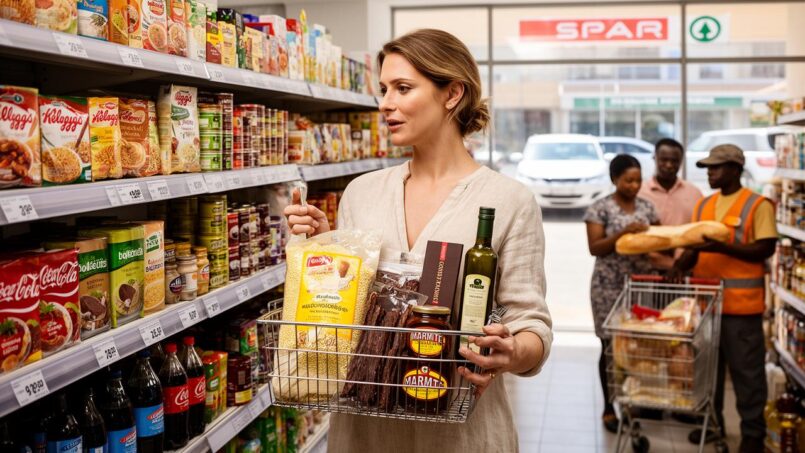
For food, the cost difference between local products and imported ones is very pronounced. Generally, supermarket shopping is noticeably cheaper than in Europe or North America, but some imported items – European cheeses, wines, cold cuts, brand-name cosmetics – can cost two to three times more than in their country of origin.
Overview of average prices for a common basket of goods, expressed in Pula (BWP).
A dozen eggs costs on average about 30 Pula.
A loaf of white bread costs about 10 to 11 Pula.
A kilo of rice costs about twenty Pula.
A kilo of boneless chicken costs about 70 Pula.
A kilo of beef costs around 70 to 75 Pula.
A liter of milk: 18 to 36 Pula. Local cheese is much more affordable than imported.
Fresh fruits and vegetables are also accessible: a kilo of apples costs around twenty pula, bananas and oranges a bit less, tomatoes, potatoes, and onions between 20 and 25 pula per kilo. For reasonable local consumption, the grocery budget for a single person most often fluctuates between 2,000 and 3,000 pula per month. Estimates of monthly food expenses for one person give ranges between 1,800 and 2,400 pula, the equivalent of $130 to $180 depending on habits (home cooking, raw products vs. processed foods).
This is the price in pula for a fast-food meal at a major chain in Botswana, about $6.
Drinks on a terrace or in bars remain affordable: a local beer at a bar costs around 25 to 30 pula, a glass of wine in a restaurant between 30 and 60 pula, a cappuccino in a cafe around 30 pula. In a realistic monthly budget, an expatriate who goes out to eat two or three times a week and has a few drinks can easily allocate 1,000 to 2,000 pula per month to outings, without excess.
Transportation: the car remains king, but buses and taxis are cheap
Botswana is typically a country designed for cars. Distances are significant, intercity roads are relatively good, but the public transport network remains limited, especially outside Gaborone and major routes. Therefore, most long-term expatriates opt for a personal car or a company vehicle.
An average individual spends nearly 1,500 pula per month on fuel and vehicle maintenance in Botswana.
Buying a new vehicle represents a significant investment, but lower than what is found in Europe for similar models. A compact model like a Volkswagen Golf is often sold for between 250,000 and 300,000 pula, an intermediate model like a Toyota Corolla around 220,000 to 250,000 pula. To reduce the bill, many expatriates turn to recent used cars or benefit from a car included in their package.
The price of a single minibus (combi) ticket for urban travel in Botswana.
New ride-hailing apps, inspired by Uber or Bolt, are beginning to develop in major cities and offer generally more transparent rates. For a monthly budget, we can consider that a person who mainly uses public transport and occasionally taxis spends 400 to 800 pula per month, while a daily driver rather allocates 1,500 to 2,500 pula to the transport category, depending on the number of vehicles and possible intercity trips.
Health: private insurance, a cost not to be underestimated
On paper, Botswana has a universal healthcare system for its citizens, largely funded by mining revenues. Almost all medical facilities belong to the public sector, and the vast majority of the population lives within five miles of a care center. But for an expatriate, the question of quality and accessibility of care is different.
Public health services are often overcrowded, with long wait times and less modern equipment than in the West or South Africa. Consequently, for significant care, most foreigners go to private clinics, mainly located in Gaborone or Francistown. It is crucial to note that fees there are high, and proof of insurance or immediate payment is almost always required.
Available figures indicate that a private medical consultation costs on average around $17 to $34 depending on the source, a short visit to a general practitioner being billed about 279 pula. Some budget analyses recommend planning around $60 per month for consultations and routine care, plus $45 for prescription medication and $50 for basic health coverage.
In practice, most companies offering expatriate contracts include local or international private health insurance. This coverage includes at minimum hospitalization, specialized medicine, and emergency evacuations to South Africa if needed. For a self-employed expatriate or retiree, it is highly advisable to take out a specific international insurance. This should cover Botswana and neighboring countries, include hospitalization and repatriation, and offer a sufficiently high reimbursement ceiling.
Cost estimates for serious international health insurance hover around 3,500 pula per month for an adult, about $250 to $260, and 9,000 pula for a family of four. In a monthly budget, this item quickly becomes a major element, especially if the employer does not cover it. It is an element that must be integrated into any cost of living calculation for Botswana.
Schooling: one of the heaviest expenses for families
For expatriates with children, schooling is usually the largest expense item after housing, or even the top expense when the company does not cover school fees. The Botswana public system is free for citizens, but does not always meet the expectations of foreign families in terms of pedagogy, language of instruction, or international programs. The majority therefore turn to private English-language schools and international institutions.
The average annual cost for an international primary school is about 50,000 to 55,000 pula.
Aggregated data give the following orders of magnitude.
| Type of Institution | Typical Fees (BWP) | Comment |
|---|---|---|
| Private nursery / preschool (per month) | 1,900 – 2,500 | 120 – 180 USD approx. |
| International primary school (per year) | 43,000 – 90,000 and more | Depending on school and program |
| High-end IB / Cambridge (per year) | 70,000 – 100,000+ | Very selective schools |
In addition, there is a series of ancillary fees: registration and development fees (sometimes 8,000 to over 20,000 pula upon entry), uniforms (1,000 to 2,000 pula), school transport (500 to 1,500 pula per month), textbooks, and extracurricular activities. For a family with two children in a good international school, a monthly budget close to 13,000 pula is commonly cited, about $950. This is a crucial element in expatriation package negotiations: without employer assistance, this expense weighs extremely heavily on the budget.
In terms of leisure, Botswana offers an interesting cost/quality ratio. A subscription to a modern gym costs about 400 to 500 pula per month, which is a little less than $30 to $35. An evening cinema ticket costs around 70 to 100 pula. Dining out, already discussed, allows for a regular social life without blowing the budget.
A brand-name jean like Levi’s costs about 600 pula in Botswana, a price slightly higher than in Europe or South Africa.
For various daily expenses – hair salon, hygiene products, minor medical care – prices are generally lower than in Western Europe. A simple haircut costs about 60 pula, a tube of toothpaste about thirty pula, a box of cold medicine around 150 pula.
A single expatriate living an active but reasonable life can allocate about 1,000 pula per month to leisure (cinema, outings, small sports equipment), 500 to 800 pula to a gym membership, and a few hundred extra pula for occasional clothing or accessory purchases. On the scale of an overall budget, this item remains easily manageable.
Taxation and banking framework: a relatively favorable environment
Even though taxation is not strictly speaking a “cost of living” in the classic sense, it directly influences what the expatriate keeps after their taxes are paid. Botswana applies a progressive income tax, with a scale for residents ranging from 0% to 25%, or even up to 26.5% in some recent grids, beyond a certain threshold.
Residents benefit from a tax-free bracket for annual incomes up to about 36,000 to 48,000 pula. Beyond that, marginal tax rates are 5%, 12.5%, 18.75%, and 25%. Non-residents are subject to a similar scale but without the tax-free bracket. For employees, tax is withheld at source via the PAYE system, managed by the Botswana Unified Revenue Service.
Expatriates should know that most elements of compensation are considered taxable: basic salary, bonuses, benefits in kind, housing, vehicle. On the other hand, certain allowances – notably part of end-of-contract gratuities, contractually covered flight tickets, some medical expenses – may benefit from partial exemptions. The country has concluded double taxation treaties with several states, including the United Kingdom, which facilitates the tax life of expatriates from these countries.
Opening an account with a major local bank (FNBB, Stanbic, Standard Chartered, Absa Botswana) requires a passport, a work permit, proof of local address, and sometimes a letter from the employer. The procedure takes a few days, with moderate account maintenance fees (30 to 60 BWP/month). Transferring funds abroad is relatively easy, as there is no strict exchange control, subject to the usual international transfer fees.
How much to plan for, concretely, depending on your profile?
The numerous data points converge on a few useful orders of magnitude for an expatriate preparing their budget.
For a single person in Gaborone, living comfortably without excess, in a decent apartment, cooking regularly but eating out at restaurants several times a week, comparators estimate that a total monthly budget between $1,000 and $1,500 is sufficient, excluding schooling (which does not concern this profile) and excluding savings. An average structure might look like this:
An estimate of monthly expenses for an expatriate living in Botswana, in Pula (BWP). Price ranges reflect variations according to lifestyle and location.
Monthly rent for a one-bedroom apartment: between 4,000 and 7,000 Pula.
Utilities (electricity, water) and internet: 800 to 1,200 Pula.
Monthly groceries and meals: budget of 2,000 to 3,000 Pula.
Fuel or public transport (combis, taxis): 500 to 1,500 Pula.
Mobile plan and extra internet: 300 to 500 Pula.
Leisure, sports: 1,000 to 2,000 Pula. Health insurance (if not provided): 3,000 to 3,500 Pula.
One quickly reaches 12,000 to 15,000 pula per month, which corresponds well to the indicated range of $800 to $1,200 depending on lifestyle.
Total monthly cost in pula for a family of four in Gaborone, including housing, international schooling, and other essential expenses.
– rent for a 3-bedroom house: 10,000 to 15,000 pula,
– utilities + internet: 1,500 to 2,500 pula,
– food: 5,000 to 6,000 pula,
– schooling for 2 children in international school: about 13,000 pula,
– transport for 2 vehicles: 2,500 pula,
– family health insurance: 9,000 pula,
– leisure, restaurants, children’s activities, domestic help, miscellaneous: 4,000 to 6,000 pula.
This type of budget shows the crucial importance of employer coverage for housing and/or schooling for expatriates with families. Without these benefits, Botswana remains a relatively affordable country, but the family bill then approaches that of some Southern European countries, especially if one chooses high-end schools.
An attractive cost of living but requiring trade-offs
Ultimately, Botswana offers expatriates a financially attractive environment: overall low cost of living, currency considered stable, cheap housing and food, routine services more affordable than in the West, moderate taxation. At the same time, certain items – private healthcare, international schooling, niche imports – can quickly absorb a large part of the budget if aiming for a very Western standard of living.
For a foreign employee with a good contract in key sectors (mining, finance, ICT, high-end tourism, healthcare, international education), the country allows for comfortable living, traveling in the region, and saving. For a self-employed person or digital nomad paid at European or North American rates, it offers a good compromise between low cost of living, relative security, common use of English, and sufficient infrastructure for remote work, at least in major cities.
The key to a successful move essentially depends on three elements: negotiating a good package (housing, health, school), adopting a consumption pattern in line with the local market (limiting imported products), and anticipating a safety margin for unexpected events (health, travel, price increases). Under these conditions, the cost of living in Botswana remains one of the country’s major assets for expatriates who choose to settle there for a few years.
Disclaimer: The information provided on this website is for informational purposes only and does not constitute financial, legal, or professional advice. We encourage you to consult qualified experts before making any investment, real estate, or expatriation decisions. Although we strive to maintain up-to-date and accurate information, we do not guarantee the completeness, accuracy, or timeliness of the proposed content. As investment and expatriation involve risks, we disclaim any liability for potential losses or damages arising from the use of this site. Your use of this site confirms your acceptance of these terms and your understanding of the associated risks.

Cyril Jarnias is an independent expert in international wealth management with over 20 years of experience. As an expatriate himself, he is dedicated to helping individuals and business leaders build, protect, and pass on their wealth with complete peace of mind.
On his website, cyriljarnias.com, he shares his expertise on international real estate, offshore company formation, and expatriation.
Thanks to his expertise, he offers sound advice to optimize his clients' wealth management. Cyril Jarnias is also recognized for his appearances in many prestigious media outlets such as BFM Business, les Français de l’étranger, Le Figaro, Les Echos, and Mieux vivre votre argent, where he shares his knowledge and know-how in wealth management.





