
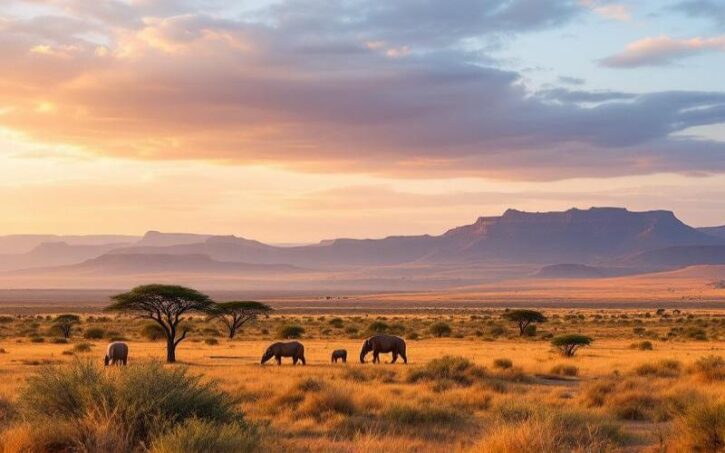
 Published on and written by Cyril Jarnias
Between savanna, deserts, and growing cities, Botswana is much more than a safari destination. It’s also a sports country, where soccer, running, volleyball nets, and boxing rings shape daily life. Whether you’re a passing traveler, an expatriate, or a resident, you can practice a wide variety of disciplines, from football to traditional sports, including padel, rugby, or swimming.
This article offers a comprehensive overview of the most popular sports to play in Botswana, based on existing structures, major participation trends, clubs and facilities, as well as the social and cultural dimension of sport in the country.
A surprisingly dense sports landscape
Botswana has built a highly structured sports ecosystem over the past few decades. The Botswana National Sport Commission (BNSC), the Botswana National Olympic Committee (BNOC), and the Ministry of Youth, Sport and Culture (MYSC) oversee the entire sector. More than 30 national federations and several school federations oversee the practice of disciplines ranging from football to cricket, including swimming, judo, and tennis.
Authorities have integrated sports into school curricula for grassroots development. Multi-sport school competitions are organized, including athletics, soccer, volleyball, netball, softball, basketball, badminton, and table tennis. At the same time, the country has equipped itself with modern facilities (stadiums, sports complexes, training centers) and free outdoor gyms accessible to the community.
However, the system is not without challenges. Lack of funding remains a major obstacle to maintaining facilities and implementing quality coaching programs, especially in rural areas and for youth out of school or with disabilities. Despite these limitations, sports participation is increasing, driven by a few “locomotive” disciplines.
Football: the king of sports in Botswana
It’s impossible to talk about sport in Botswana without starting with football. The round ball is described as the “undisputed king” and a true national passion. It’s played everywhere: in dusty village alleys, on school fields, in urban stadiums, or in the modern arenas of the Botswana Premier League.
Botswana football is organized by the Botswana Football Association (BFA), a FIFA member since the late 1970s. Its main championship, the Botswana Premier League, follows a classic format: a season of 30 matches per team played home and away, with a points system (3 for a win, 1 for a draw). The champion qualifies for the African Champions League. Historic clubs such as Township Rollers, Gaborone United, Botswana Defence Force XI, and Jwaneng Galaxy regularly dominate.
Playing football as an amateur
From a participation standpoint, Botswana offers several entry points. In Gaborone, Francistown, or Maun, many community clubs and corporate teams welcome amateurs for evening or weekend training sessions. The First Divisions North and South operate as pioneering regional leagues, with many semi-professional teams where you can progress.
For young people, football is omnipresent in school curricula and inter-school competitions. National tournaments, such as the Orange Youth Cup or the Botswana Games (multi-sport for under-19s), allow the best talents identified in schools to compete against other regions.
Botswana regularly participates in qualifying rounds for three major competitions: the World Cup, the Africa Cup of Nations, and the COSAFA Cup.
A highly structured football: numerical overview
To measure the intensity of football participation and interest in Botswana, just look at a few indicators related to the men’s national team.
| Indicator | Key Value |
|---|---|
| Year team was founded | 1966 |
| Nickname | The Zebras |
| FIFA ranking (recent) | 137–144 (around 1080–1060 points) |
| Matches played (all competitions) | 349 |
| Overall record | 92 wins, 103 draws, 154 losses |
| Goals scored / conceded | 283 / 447 (difference of -164) |
| AFCON appearances | 2 (2012, 2025) |
| Best COSAFA Cup result | Runner-up (2016, 2019) |
For a foreign player or a passing fan, attending a league match in Gaborone or Francistown is an ideal opportunity to grasp the scale of this passion. But football is just one entry point into Botswana sports.
Athletics is the other major sports showcase for the country. The rise of sprinters like Amantle Montsho, Nijel Amos, and Letsile Tebogo has taken Botswana to a new level on the world stage. The 400m or 200m finals are followed religiously, and international successes fuel a collective imagination that encourages participation.
A system structured around tracks
The Botswana Athletics Association (BAA), founded in the early 1970s, oversees athletics development. The stadiums in Gaborone (National Stadium) and Francistown (Obed Itani Chilume Stadium) are accredited by World Athletics and host both football and athletics competitions. Other complexes, such as those in Lobatse or Maun, with tracks, complete the network.
The country hosts a Continental Tour meeting and the World Athletics Relays 2026, a key Olympic qualification event. These competitions boost local participation and solidify Botswana’s image as an athletic nation.
Beyond elite level, running is experiencing a real “social” boom. Many clubs – like the Gaborone Striders – gather several times a week for sessions ranging from easy 5–10 km to long runs, including speed work. Employers create their own corporate running clubs, and the race calendar is getting denser with marathons and half-marathons in various cities: Diacore Gaborone Marathon, marathons in Francistown, Maun, Phikwe, among others.
Despite its generally flat terrain, Botswana offers areas with varied routes, especially near Ramotswa and in the Francistown region. These paths, along roads and rivers, are ideal for building endurance. Running there is motivated by health goals, a strong sense of camaraderie, and pride in representing the country at local competitions.
The great figures who inspire practice
The achievements of Botswana athletes contribute greatly to this dynamism. Olympic and world medals, especially in the 400m and 800m, fuel the dreams of young runners. The example of Letsile Tebogo, who went from barefoot training in his village to an Olympic gold medal in the 200m, highlights the power of local structures (schools, clubs, BAA) when supported by a culture of effort and respect.
For those who simply want to run, the reality is more accessible: any urban park, neighborhood road, or trail near cities becomes an open-air stadium. Informal groups are multiplying, and even tourists are encouraged to join fun runs or trail runs, sometimes combined with cultural or tourist activities like visiting museums or nature reserves.
Netball: the flagship sport for women
If football dominates among men, netball holds a central place among women. It is considered the most popular women’s sport in the country, widely practiced in schools and communities.
A particularly dense school network
The strength of Botswana netball lies in its early establishment. Girls discover this sport from primary school, where it is part of the curriculum. It is reported that every primary school has a netball court. Unlike some neighboring countries that concentrate play in occasional tournaments, Botswana has chosen structured leagues for the youngest, allowing regular and progressive participation.
This approach makes it easier to identify talent, who can then join club teams or be integrated into junior selections. The Botswana Netball Association, founded in the 1970s, coordinates this system and oversees national competitions.
Botswana Netball Association
From the schoolyard to the international stage
Botswana‘s presence among the top twenty netball nations in the world in the mid-2010s shows that this model is bearing fruit. The women’s national team, primarily fed by former school players, regularly competes against Africa’s elite and received a major spotlight when the country hosted the Netball World Youth Cup in 2017.
Netball offers players a space for socialization, cohesion, and empowerment, while evolving toward greater mixité and professionalization.
For players, netball is much more than a competitive sport. It offers a space for socialization, cohesion, and empowerment.
Men have long been confined to roles as referees, coaches, or administrators, but the trend is toward more mixed forms.
The netball world is seeing increased professionalization of female coaching.
Playing netball daily
For a young girl or woman living in Botswana, opportunities to play netball are plentiful: school training, neighborhood leagues, affiliated clubs, regional tournaments. The facilities are simple – a court, posts, sometimes modest stands – but the intensity of the matches, the speed of play, and the fervor of the crowd more than compensate for the lack of large arenas.
For a female visitor or expatriate, joining a local club or taking part in informal sessions is an excellent way to integrate and discover from the inside an important part of Botswana’s sports culture.
Volleyball, basketball, handball: team sports on the rise
Beyond football and netball, other team sports are gaining ground.
Volleyball is described as a sport “on the rise”, appreciated for its accessibility and group dynamics. Courts can be found in schools, sports complexes, and even in some multipurpose outdoor spaces. The Botswana Volleyball Federation organizes championships and training camps, supporting the progress of men’s and women’s teams, which achieve good performances at the regional level.
Basketball is especially popular among urban youth. Local leagues are taking shape, and the national team competes in regional competitions. Daily practice is supported by outdoor courts in schools or community centers, though indoor facilities are less common than for football.
Handball, softball, and men’s netball (in mixed or club team formats) round out the ball sports landscape. They are very present in school and university competitions, making them interesting options for young people seeking variety.
Rugby: a growing sport supported by an ambitious project
Rugby in Botswana was long seen as a sport for expatriates and minorities, but the situation is changing rapidly. The Botswana Rugby Union (BRU), a member of Rugby Africa and World Rugby, has adopted a strategic plan to expand participation across the country, from schools to universities and rural communities.
An organized and proactive system
The BRU operates on a largely volunteer basis, with an executive committee and a network of men’s and women’s clubs. Despite limited financial resources, the Union makes significant efforts to train educators, referees, and coaches, relying on camps, workshops, and talent identification programs. It is also committed to developing women’s rugby, creating 10-a-side and 7-a-side leagues, with the ambition of eventually establishing a 15-a-side women’s championship.
Rugby is developing in Botswana thanks to structured programs. The Debswana Re Ba Bona Ha program, supported by a private partner, brings rugby into schools by organizing local youth tournaments. Meanwhile, the Botswana Tertiary Student Sports Association allows university teams, both men’s and women’s, to compete annually in regional games in South Africa.
Playing rugby in Botswana
For a player, the entry point is most often through clubs affiliated with the BRU. The Botswana Men’s Super League brings together teams like BDF Cheetahs, BIUST Buffalos, BU Ryders, Great North, or Hogs Blue. On the women’s side, the Women’s 10’s League includes several teams, such as BDF Cheetahs Women or Savage Women. A calendar of 7-a-side rugby tournaments complements the offering and allows beginners to find their place more quickly.
The Union has introduced rugby to the deaf community in Francistown. This initiative aims to use a structured contact sport to foster self-esteem and social integration for participants.
A continental ambition
Despite a still modest world ranking, the national team aims for better competitiveness in the Rugby Africa Cup and 7-a-side tournaments, with the prospect, in the long term, of getting closer to qualification for competitions like the Challenger Series. The 2025–2028 strategy provides for targeted investment in training, high-performance structures, media promotion, and governance, which should benefit all players, from schoolchildren to established club players.
Cricket, tennis, basketball, bridge: discreet but real diversity
Botswana is not limited to a few majority sports. Other disciplines, sometimes brought in by expatriates, have become firmly established and offer varied opportunities for those who want to practice something different.
Introduced by South African and Indian communities, cricket has become widely popular in Botswana. The Botswana Cricket Association runs a development program in more than 100 schools, reaching thousands of children. The country is climbing the African hierarchy with T20 performances, and its men’s national team, the “Baggy Blues,” holds T20I status. To start, it is recommended to join a club or take part in introductory sessions organized in schools or sports complexes.
Tennis enjoys a long tradition, with a structured junior program supported by the Botswana Tennis Association, the BNSC, and the International Federation. The country regularly ranks among the best African nations in junior categories, and you can play on courts located in some private clubs, schools, or municipal sports centers.
Basketball, meanwhile, feeds off international media influence and finds fertile ground in urban centers. Local leagues, university tournaments, and outdoor courts offer plenty of opportunities to play for fun or in competition.
Finally, bridge, a codified card game, has a very active federation with several hundred members. It is one of those “mind sports” showing that sport in Botswana does not stop at physically demanding disciplines and also opens up to sports of the mind and strategy.
Boxing and combat sports: tradition, pride, and opportunities
Boxing holds a special place in Botswana’s sports imagination. It is associated with values of resilience, discipline, and courage. The country has built a notable record at the African Games, African Championships, and Commonwealth Games, often thanks to medals in the lighter weight categories.
This tradition translates into the presence of many boxing clubs, especially in urban centers. Young people find in modest gyms equipped with bags, gloves, jump ropes, and a ring, a space for structure. Practice is not reserved for high-level athletes: more and more people are taking up boxing for fitness, taking advantage of sessions combining cardio, strength training, and technical work.
International events hosted locally – Olympic qualification tournaments, African competitions – help maintain a high-level dynamic and inspire amateur practitioners.
Swimming, fitness, yoga, padel: new urban habits
With rapid urbanization and the emergence of a middle class, Botswana’s major cities have seen a multiplication of more “lifestyle” forms of practice.
Gyms, functional training, and wellness sports
In Gaborone, Francistown, or Maun, shopping centers and business districts host modern fitness centers. They feature weight training areas (dumbbells, free bars, squat racks, adjustable benches), functional training spaces (kettlebells, Bulgarian bags, slam balls), cardio areas (treadmills, stationary bikes, rowers, Wattbikes), and studios for group classes like aerobics, yoga, Pilates, or indoor cycling.
Access to fitness equipment is not limited to paying members. Cities like Francistown offer free outdoor gyms in public spaces, equipped with bars, simple strength machines, and stretching areas. These facilities allow residents to engage in daily physical activity regardless of their budget.
Swimming is practiced in municipal pools, sports complexes, or certain hotels and universities. It remains less accessible than football or running due to the cost of infrastructure, but it is gaining popularity, especially since the country made its Olympic debut in swimming recently and is focusing on diversifying disciplines.
The discreet rise of padel
Among the sports booming worldwide, padel is beginning to carve out a place in Botswana. In Gaborone, the Gamecity Padel complex, located in a large shopping center, offers indoor courts for singles and doubles, changing rooms, rest areas, and refreshments. It is an example of how the capital is embracing new international sports trends.
Padel is an alternative to tennis, ideal for city dwellers. Technical but accessible to beginners, it offers fast, friendly matches that are easy to organize after work or on weekends.
Simplified comparison of emerging urban practices
To get a clear view of these urban disciplines, they can be compared according to a few criteria.
| Sport / activity | Typical practice location | Dominant practitioner profile | Main advantage |
|---|---|---|---|
| Fitness / weight training | Private gyms, outdoor gyms | Young professionals, office workers | Overall fitness improvement |
| Yoga / Pilates | Studios, fitness clubs | Urban adults, mostly women | Well-being, stress management |
| Padel | Specialized center like Gamecity Padel | Urban, middle class, expats | Social sport, easy to learn |
| Swimming | Municipal pools, hotels, universities | Families, young athletes | Cardio work without joint impact |
| Indoor cycling | Gyms (ride classes) | Intense cardio enthusiasts | Structured group training |
For a traveler, these activities offer a simple way to stay in shape while discovering another side of Botswana, far from the exclusive image of bush and safaris.
Sports, inclusion, and disability: a work in progress
Botswana, like many countries, has realized that sport must be accessible to all, including people with disabilities. Facilities like the Integrated Sport Facilities (ISFs) in Maun, Masunga, Molepolole, or Serowe include accessibility features (ramps, dedicated parking, adapted restrooms) to facilitate the participation of diverse audiences.
Para-sport initiatives offer adapted activities for people with disabilities. Supported by international organizations, this approach considers sports practice as a fundamental right and a powerful vector of social inclusion.
Recommendations emphasize the role that private companies, NGOs, and the state must play in funding and supporting these programs. For a resident or visitor concerned with these issues, Botswana is gradually becoming a place where it is possible to practice, coach, or support adapted sports, even if many improvements are still needed to achieve true universal accessibility.
Traditional sports: the other face of play in Botswana
Alongside modern sports, Botswana has a rich playful heritage, driven by the Botswana Traditional Sports and Games Confederation (BTSGC). This officially recognized body has set itself the mission of preserving, promoting, and developing traditional games, considered an integral part of cultural identity.
A mosaic of games and disciplines
Among these practices, for example:
Diketo, a dexterity game for girls, develops coordination and agility by manipulating pebbles. Morabaraba is a two-player strategy game similar to alignment games. Mhele, often compared to chess, combines tactical thinking and verbal interaction. Bogwera is a form of traditional wrestling associated with initiation rites. Other games include Kwiri (moving target), Black Mampatile (hide-and-seek), Mantlwane (house game), Suna Baby (similar to dodgeball), and Koi (singing jump rope).
The challenge for the BTSGC is to get these practices recognized as real sports and not just as folkloric pastimes. The organization advocates for their inclusion in school curricula, documentation in specialized books, and recognition at continental and international events.
A still fragile but meaningful practice
Statistics show that children play outdoors much less than before, modernity and screens having eroded the time devoted to traditional games. Local voices are calling for reintroducing these activities into physical education classes or leisure clubs, to maintain the intergenerational bond and preserve an important part of Botswana’s culture.
Attending a tournament like the African Traditional Games Competition, held every January 1st in Senete, is a way to discover a unique cultural facet. Some games require only a drawing on the ground and a few pebbles, making them very accessible.
Stadiums, complexes, and clubs: where to actually practice?
To understand where and how to practice popular sports in Botswana, it is useful to look at the map of major facilities. The country has equipped itself with a network of stadiums and complexes spread across various cities and villages.
| Facility | City / Area | Approximate Capacity | Main Sports Played |
|---|---|---|---|
| National Stadium | Gaborone | 20,000–22,000 | Football, athletics, major events |
| Obed Itani Chilume Stadium | Francistown | 26,000 | Football, athletics |
| Lobatse Sports Complex | Lobatse | 22,000 | Football, other team sports |
| Maun Sports Complex | Maun | 6,600 | Football, netball, volleyball, athletics |
| Complexes in Molepolole, Serowe… | Several cities | ~6,600 | Multiple field sports |
| Integrated Sport Facilities (ISF) | Maun, Masunga… | 4,000–6,000 (stands) | Football, softball, netball, volleyball |
| Gamecity Padel | Gaborone | Padel courts | Recreational and competitive padel |
In addition, there are university gyms (like at the University of Botswana or Tlokweng College of Education), private gyms, and more modest facilities in schools and villages. For a practitioner, the best strategy is often to get in touch with local clubs, identified through the federations (football, athletics, rugby, volleyball, cricket, etc.) or through the BNSC, which compiles this information.
Popular sports are not limited to training fields. Botswana has made hosting sports events a full-fledged economic and tourism lever. The Toyota Kalahari Botswana 1000 Desert Race, the Diacore Gaborone Marathon, the Makgadikgadi Epic, and the Jwaneng Spring Cycle Race attract thousands of participants and spectators, filling hotels, lodges, and campsites, generating income for local communities, and offering practitioners unforgettable sports experiences.
The government is combining sport and tourism to double the number of visitors and diversify the economy. Promoting popular sports (football, running, netball, volleyball, fitness, traditional games) and international events aims to build an image of a young, dynamic country, blending everyday sports activities with tourist experiences like safaris.
Conclusion: a country where everyone can find their sport
The popular sports to practice in Botswana reflect the diversity of the country itself. Football and athletics reign supreme, accompanied by netball among women, rugby, volleyball, boxing, cricket, basketball, tennis, padel, and a multitude of fitness activities booming in cities. Traditional games, on the other hand, remind us that sport is not just about federated competitions, but also about culture, memory, and social connection.
Botswana is presented as a vast open-air playground, where residents and visitors can practice many activities (ball, racket, running, boxing, jump rope, board games). The country has made sport a key element of its national identity and future development, a collective energy that permeates society.
Disclaimer: The information provided on this website is for informational purposes only and does not constitute financial, legal, or professional advice. We encourage you to consult qualified experts before making any investment, real estate, or expatriation decisions. Although we strive to maintain up-to-date and accurate information, we do not guarantee the completeness, accuracy, or timeliness of the proposed content. As investment and expatriation involve risks, we disclaim any liability for potential losses or damages arising from the use of this site. Your use of this site confirms your acceptance of these terms and your understanding of the associated risks.

Cyril Jarnias is an independent expert in international wealth management with over 20 years of experience. As an expatriate himself, he is dedicated to helping individuals and business leaders build, protect, and pass on their wealth with complete peace of mind.
On his website, cyriljarnias.com, he shares his expertise on international real estate, offshore company formation, and expatriation.
Thanks to his expertise, he offers sound advice to optimize his clients' wealth management. Cyril Jarnias is also recognized for his appearances in many prestigious media outlets such as BFM Business, les Français de l’étranger, Le Figaro, Les Echos, and Mieux vivre votre argent, where he shares his knowledge and know-how in wealth management.





