
 Published on and written by Cyril Jarnias
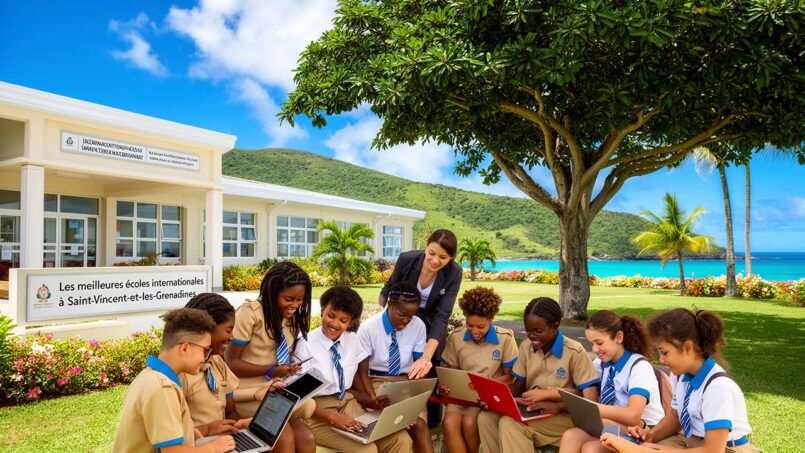
Saint Vincent and the Grenadines is attracting a growing number of expatriate families, mobile professionals, and Vincentians returning home after studying abroad. They all share the same concern: finding an international-level education for their children while remaining in a modestly-sized archipelago.
In a country where the public network is dominant, international schools are rare and very diverse. To make an informed choice, it is essential to understand the local legal framework, the different statuses, fee levels, and international accreditation systems that guarantee the quality of education, beyond simple brochures or campus photos.
This article provides an in-depth overview of the best international school options in Saint Vincent and the Grenadines, based on the country’s educational context and the major international frameworks (CIS, NEASC, ASIC, IB, BSO, etc.) used by the world’s most robust schools.
An Educational System Dominated by the Public Sector, with a Niche for International Education
Before looking at international schools per se, it is essential to understand the educational landscape of Saint Vincent and the Grenadines. The country is governed by the Education Act of 2006, which regulates the entire system, from early childhood to tertiary education. This law distinguishes three main categories of institutions: public schools, “assisted” private schools, and fully independent private schools.
Total number of students enrolled in primary and secondary education, with 89% in public primary and 70% in public secondary.
School is free and compulsory from ages 4 to 16. Primary lasts seven years (ages 5–11), followed by lower secondary (ages 12–14) and then upper secondary (ages 15–16). The language of instruction is English, which already simplifies the integration of English-speaking children or those following international curricula.
In this context, international schools position themselves as complements to the national system, offering either entirely foreign curricula (Cambridge, IB, North American programs) or international sections integrated into already established institutions.
What Family Profiles Do Local International Schools Target?
In Saint Vincent and the Grenadines, the profile of families interested in an international education is fairly typical:
The archipelago’s international schools primarily attract four family profiles. Firstly, expatriates settled for professional reasons (regional organizations, NGOs, companies), who seek curriculum continuity for their children (IB, Cambridge, American programs). Secondly, Vincentian families considering higher education abroad (UK, North America, Europe, or selective regional universities) and wishing to maximize admission chances. Thirdly, parents drawn to active pedagogies, multilingualism, and international exposure offered by these schools. Finally, mixed families (one foreign parent, one Vincentian parent), for whom the school serves as a bridge between several cultures.
The challenge, therefore, is not only academic level, but the “transferability” of the diploma, international recognition, and the school’s ability to prepare students for major universities or future mobility.
OneSchool Global St Vincent Campus: A Global Network in a Small Country
Among the few schools explicitly identified as international is the OneSchool Global St Vincent Campus, located on Glen Main Road in Kingstown. This campus is part of a global network of over 120 locations across 20 countries, including New York, Paris, Sydney, Rome, Auckland, Copenhagen, Los Angeles, and San Francisco.
Belonging to an international network like OneSchool Global transforms the educational model of a modestly-sized island. Although the tuition fees for the St Vincent campus are not public (requiring direct contact with the school), the organization’s DNA is based on a highly structured and interconnected approach. This model allows for efficient circulation of innovative pedagogical practices within the network and frequent use of common digital tools, providing resources and consistency that go beyond the local framework.
This type of campus offers several advantages:
– Homogeneous internal standards from one country to another.
– A strongly English-speaking environment, but with an international culture fostered by links with other campuses.
– Potential continuity for children who may move to another country where the network is present.
In the Vincentian context, where the private sector represents only 11% of primary enrollment but rises to 29% at the secondary level, this type of campus clearly targets a niche: families willing to pay significant fees (often in the high range of $5,000 to $10,000 USD per year for an international school) in exchange for training highly aligned with globe-trotting standards.
The Local Legal Framework: What It Means for International Schools
The Education Act of 2006 defines what a private school is: an institution created, managed, and funded by an individual, organization, or foundation, without state aid. To exist, any private school must obtain prior authorization from the Ministry of Education and National Reconciliation.
This regulation does not specifically target international schools, but it applies to them as well. A few key points:
Creating a private school requires an initial three-year permit, which is renewable. The ministry can inspect the premises during school hours to verify compliance with standards. Non-compliance with the regulatory framework (operating without a permit or serious non-conformity) can lead to the withdrawal of the permit, obliging the state to then place the students in the public system.
All schools, including private and international ones, are also required to comply with safety and construction standards (Safety School Act, OECS Building Code 2015) and health requirements (WASH). Private sector teachers must also meet the same qualification criteria as in the public sector: be of legal age, have satisfied Caribbean examination criteria, etc.
In other words, a serious international school in Saint Vincent and the Grenadines must both comply with local requirements and align with international frameworks if it truly wants to meet the expectations of expatriate families.
Understanding Accreditations: The True Quality Benchmark
The word “international” is not protected. A school can call itself international without being accredited by any recognized body. For a parent, the key question is therefore: who accredits the school and based on what standards?
Several major global organizations play a central role in recognizing international schools. They are not specific to Saint Vincent and the Grenadines, but they serve as an analytical grid for evaluating the country’s institutions.
Here is a summary table of the main organizations mentioned in the research:
| Organization / Program | Type of Role | Key Points for Parents |
|---|---|---|
| CIS (Council of International Schools) | Accreditation of international schools | Strong emphasis on child protection, pedagogical quality, governance, and parental involvement |
| NEASC | Accreditation of high schools and international schools | Standards on learning, organization, safety, finances, boarding |
| ASIC | Accreditation of educational institutions (global) | Comprehensive review: premises, safety, teaching, management, marketing |
| ACS WASC | Accreditation (primarily America/Asia-Pacific) | Cycle of self-evaluation, visits, 6-year improvement plan |
| BSO (British Schools Overseas) | Accreditation of “British” schools abroad | Standards equivalent to English independent schools, triennial inspections |
| IB (International Baccalaureate Organization) | Authorization for programs (PYP, MYP, DP, CP) | International study program, worldwide university recognition |
Identifying the presence of these logos on a school’s website or documents in Saint Vincent and the Grenadines is a decisive first filter. A school without any external accreditation is not necessarily bad, but it does not offer the same level of guarantee and transparency.
CIS: The Accreditation That Puts Parents at the Heart of the Game
The Council of International Schools (CIS) offers a particularly in-depth accreditation framework, structured into domains covering mission, governance, teaching quality, student well-being, and safety. A key point for families: CIS dedicates an entire domain to partnerships with families and the community.
In this model, parents are not just consumers: they are recognized as essential partners of the school. CIS requires institutions to have:
Mechanisms and actions to ensure effective and transparent collaboration between the school and families
Clear and regular communication with parents to maintain a constant connection.
Implementation of feedback mechanisms (surveys, meetings, committees) to gather opinions.
Concrete involvement of families in monitoring student learning and well-being.
Explicit association of parents with the culture of safety and child protection (policy, procedures, responsibilities).
For an international school in Saint Vincent and the Grenadines, CIS accreditation means:
– Recognition by Ministries of Education and universities worldwide.
– A formal commitment to a process of continuous improvement, with visits from external expert teams.
– A framework oriented towards developing socially responsible learning communities.
NEASC and WASC: North American Rigor
The New England Association of Schools and Colleges (NEASC) and the Accrediting Commission for Schools WASC (Western Association of Schools and Colleges) are two of the major North American accreditation agencies.
NEASC imposes mandatory Foundation Standards, covering:
– The Learning Structure (curriculum, pedagogy).
– School Organization.
– Health, Safety, and Security.
– Finances, Facilities, and Resources.
– Ethics and Governance.
– Boarding Programs, where applicable.
Schools accredited by NEASC must produce annual reports and undergo a comprehensive review with a site visit every four to five years.
WASC, for its part, operates on a six-year cycle for schools obtaining maximum accreditation, with detailed self-study, an intermediate visit, and a whole-school action plan. These processes require time, internal audits, and a genuine capacity for self-reflection.
For a parent in Saint Vincent and the Grenadines, the presence of NEASC or WASC among a school’s accreditations is an indicator of seriousness: the institution is aligned with standards comparable to those of good North American high schools.
ASIC: A Global Look at Safety, Governance, and Marketing
The Accreditation Service for International Schools, Colleges and Universities (ASIC) is an independent agency specializing in the accreditation of educational institutions worldwide. Its approach is distinguished by a breakdown into eight major “areas of activity”:
| ASIC Area | Examples of Elements Evaluated |
|---|---|
| Premises, Health and Safety | Building ownership, planning compliance, hygiene, safety |
| Governance, Management, Resources | Leadership structure, staff qualifications and recruitment |
| Teaching and Learning | Teacher qualifications, pedagogical methods |
| Course Organization | Relevance of programs, schedules, supervision |
| Quality Assurance and Improvement | Annual reviews, feedback from students and staff |
| Student Welfare | Support systems, advisory services |
| Qualifications and Certifications | Reality and recognition of awarded qualifications |
| Marketing and Recruitment | Truthfulness of information, commercial ethics |
ASIC is not limited to pedagogical content: it also verifies the sincerity of promises made to families, the legitimacy of awarded diplomas, and compliance with local laws. In an environment where private offerings can be very heterogeneous, this is a valuable safeguard.
IB, Cambridge, and Other International Programs
Some of the best international schools worldwide – and, potentially, in Saint Vincent and the Grenadines – are based on structured programs like the International Baccalaureate (IB) or Cambridge International curricula (IGCSE, A Level).
The IB offers four programs:
The International Baccalaureate Organization offers four distinct educational programs, each designed for a specific age group and aiming to develop balanced, open-minded, and confident learners.
Designed for young children, this program lays the foundation for academic, social, and emotional development.
Designed for middle school students, it encourages learners to make practical connections between their studies and the real world.
A demanding program for ages 16–19, leading to a qualification recognized for university entrance.
Combines a solid academic foundation with career-related studies, preparing students for their future careers.
The IB Diploma Programme, in particular, is a two-year program recognized worldwide by universities. It requires students to:
– Follow six subjects distributed across disciplinary groups (languages, humanities, experimental sciences, mathematics, arts).
– Study three of these subjects at an advanced level (Higher Level).
– Follow a core curriculum: Theory of Knowledge (TOK), an Extended Essay, and CAS (Creativity, Action, Service) activities.
The final exams are external and standardized, and schools must obtain authorization to call themselves an “IB World School.” This authorization is separate from CIS or NEASC accreditation, but it also signals high standards, with audits, visits, and specific training for teachers.
The Cambridge International curricula (IGCSE, AS, A Level), offer a path closer to British standards: subject-based exams recognized by many universities, particularly in Europe and the Commonwealth.
For a school in Saint Vincent and the Grenadines, offering the IB or Cambridge, while being accredited by CIS, NEASC, WASC or others, constitutes a true label of quality and international recognition.
Cost and Value: How Much Does an International School Cost in Saint Vincent and the Grenadines?
Available data shows that, for the country as a whole, annual tuition fees are generally distributed as follows:
| Type of Institution | Estimated Annual Fees (USD) |
|---|---|
| Public Primary School | 0 (free tuition, ancillary costs borne by parents) |
| Public Secondary School | 0 (free tuition, ancillary costs) |
| Private Primary School | 1,500 – 3,000 |
| Private Secondary School | 2,500 – 5,000 |
| International School | 5,000 – 10,000 |
International schools are therefore clearly in the most expensive segment. To these fees are often added:
– Uniforms (50–100 USD).
– Textbooks and supplies, if not covered by the school.
– School transport or bus fees.
– Possibly fee-paying extracurricular activities.
Does the extra cost translate into real added value?
For families
The answer depends heavily on:
– The robustness of the accreditations.
– The quality of the teaching staff (international experience, IB/Cambridge training, diversity of profiles).
– Exit outcomes (university placement, success in IB, Cambridge, or Caribbean exams).
– The quality of infrastructure and support services (guidance, well-being, pedagogical differentiation).
Teachers: Why International Qualifications Matter So Much
An international school is never better than its teachers. Research data reminds us that in the best institutions:
– Teachers have strong subject-specific degrees (often a master’s), plus a recognized teaching certification.
– In schools with multiple programs (Canadian, Cambridge, IB), teachers are specifically trained in each of these curricula.
– Staff are often very international, including teachers from Europe, North America, Australia, etc.
– In IB schools, the heads of school must themselves have undergone the relevant training to manage the programs.
Globally, the quality of teacher training is correlated with the quality of education. In Saint Vincent and the Grenadines, a private school employing a large number of underqualified teachers, poorly positioned in the national pay scale, or without continuous professional development will struggle to claim the status of “best international school.”
For families, it is therefore useful to ask:
– The proportion of teachers holding a university degree related to their subject.
– The teaching certifications held (e.g., British QTS, IB certifications, Cambridge training).
– The opportunities for continuous professional development offered to teachers.
– The stability of the teaching staff (turnover rate).
How Parents Can Structure Their Questions
When visiting or contacting an international school in Saint Vincent and the Grenadines, it is useful to have in mind some specific questions, directly inspired by the best practices of accreditation bodies:
– 1. Status and Recognition
– Which organizations is the school accredited by (CIS, NEASC, WASC, ASIC, BSO, IB, Cambridge)?
– When did the last accreditation or external evaluation visit take place?
– How has the school implemented the recommendations received?
The institution follows a mixed curriculum by level (primary, middle, high school), which may include the Caribbean program, IB, Cambridge, or the American program. Final exam pass rates (CXC, IGCSE, A Levels, IB) are available for recent years. After their schooling, graduates pursue studies mainly at SVGCC, UWI, or foreign universities.
– 3. Teachers and Pedagogy
– What are the minimum qualifications required for teachers?
– Have the IB/Cambridge teachers received the corresponding official training?
– How does the school organize continuous professional development for teaching staff?
The school must detail its child protection policies and incident management procedures, specify the availability of a counseling or psychosocial support service for students, and explain its procedure for handling cases of bullying or violence.
– 5. Relations with Parents
– How are parents informed about their child’s academic progress and well-being?
– Are there parent councils, regular meetings, satisfaction surveys?
– How does the school integrate families into its community (events, workshops, meetings)?
Clear, structured, and documented answers to these questions are often the best indicator that a school truly deserves its place among “the best international schools in Saint Vincent and the Grenadines.”
Towards a Denser International Ecosystem?
For now, the number of explicitly international schools in the country, like OneSchool Global St Vincent Campus, remains limited. But several trends suggest this segment could develop:
– The increase in the number of study abroad programs linked to Saint Vincent and the Grenadines.
– The presence of regional and international universities (UWI, UTT, medical universities) that attract a foreign student population.
– Growing interest in international baccalaureates (IB, Cambridge) among Caribbean middle and upper classes.
In some countries, there is a gradual integration of international tracks (like IB or Cambridge) within existing schools, through the creation of new schools or international sections. This trend could develop in the region.
For these developments to truly benefit students, two conditions are essential:
– A local regulatory framework applied with seriousness, especially regarding teacher qualifications and premises safety.
– A strong anchoring in major international accreditation networks, which impose transparency, regular audits, and continuous improvement.
By Way of Conclusion: A Choice Both Local and Global
Choosing among the best international schools in Saint Vincent and the Grenadines involves navigating between very concrete constraints (location, budget, available grade levels) and more strategic considerations (type of diploma, international mobility, university ambitions).
The archipelago has a relatively structured public system, moderate university costs, and a range of varied tertiary institutions. International schools occupy a niche position, but with significant potential impact for families aiming for global horizons.
By relying on:
Key legal, statistical, and normative elements for understanding and evaluating international educational systems.
Legal foundation governing the organization and obligations of the education system.
Analysis of school participation statistics and identification of challenges specific to the local context.
Reference frameworks of major agencies (CIS, NEASC, ASIC, WASC, BSO) for institutional quality assurance.
Structure and philosophy of curricula recognized worldwide, such as the IB (International Baccalaureate) and Cambridge.
parents can transform a choice that seems intuitive or emotional into an informed and well-argued decision.
In Saint Vincent and the Grenadines, even more than elsewhere, the best international school for a child will be the one that succeeds in combining three dimensions: global recognition, pedagogical quality, and fidelity to the Vincentian context, with its assets, constraints, and rich Caribbean culture.
Disclaimer: The information provided on this website is for informational purposes only and does not constitute financial, legal, or professional advice. We encourage you to consult qualified experts before making any investment, real estate, or expatriation decisions. Although we strive to maintain up-to-date and accurate information, we do not guarantee the completeness, accuracy, or timeliness of the proposed content. As investment and expatriation involve risks, we disclaim any liability for potential losses or damages arising from the use of this site. Your use of this site confirms your acceptance of these terms and your understanding of the associated risks.

Cyril Jarnias is an independent expert in international wealth management with over 20 years of experience. As an expatriate himself, he is dedicated to helping individuals and business leaders build, protect, and pass on their wealth with complete peace of mind.
On his website, cyriljarnias.com, he shares his expertise on international real estate, offshore company formation, and expatriation.
Thanks to his expertise, he offers sound advice to optimize his clients' wealth management. Cyril Jarnias is also recognized for his appearances in many prestigious media outlets such as BFM Business, les Français de l’étranger, Le Figaro, Les Echos, and Mieux vivre votre argent, where he shares his knowledge and know-how in wealth management.





