
 Published on and written by Cyril Jarnias
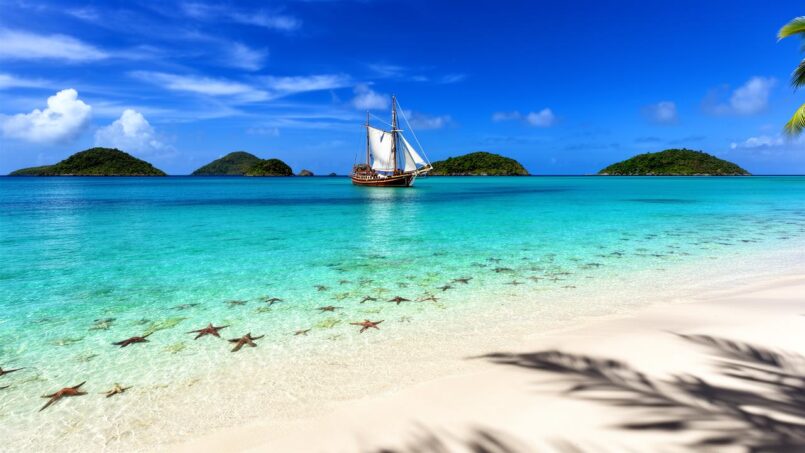
South of the Caribbean Sea, the must-see tourist attractions in Saint Vincent and the Grenadines unfold like a string of volcanic beaches, turquoise lagoons, and barely inhabited small islands. The archipelago comprises 32 islands and islets, including one large main island, Saint Vincent, and a string of tropical jewels that make up the Grenadines. Between volcanic landscapes, rainforests, fishing villages, and luxury hotels perched on spits of white sand, the destination remains surprisingly unspoiled by mass tourism.
To grasp the essence of Saint Vincent and the Grenadines, the local approach by sea is essential. Locals use a variety of vessels daily—water taxis, ferries, cruise catamarans, and small shuttles—to navigate between bays, deserted islets, and protected marine parks. This maritime immersion reveals the country’s authenticity: bustling markets in Kingstown, driftwood beach bars, traditional village festivals, local fishing yoles, and corals visible just below the surface.
Saint Vincent, the Volcanic Island with Black Sand Beaches and Waterfalls
The main island, Saint Vincent, immediately surprises with its contrasts. Here, you won’t find long, immaculate postcard-perfect beaches, but sheltered coves of black or golden sand, wedged between basalt cliffs, tropical rainforests, and fossilized lava flows. This is also where a portion of the historical sites, botanical gardens, and major hiking trails are concentrated.
Kingstown and the Highlands: A Cultural Gateway
Kingstown, the capital, is often the first point of contact with the country. Nicknamed “the city of arches,” it features colonial facades, stone arcades, imposing churches, and a bustling market where vegetable, fish, spice, and tropical fruit vendors mingle. The Bay Street waterfront, with its historic warehouses, still evokes the era of the sugar trade.
A few minutes’ drive away, two historical sites overlook the bay.
Fort Charlotte, built over 200 meters above sea level on Berkshire Hill, watches over Kingstown. The former British fortress could house up to 600 people and had around thirty artillery pieces, aimed not at the sea but inland, for fear of revolt by the indigenous populations and enslaved people. The fort successively served as a leper colony and a women’s prison. Today, it’s the panoramic view of the south coast and the Grenadines, along with the wall frescoes tracing the history of the Garifuna (Black Caribs), that make the climb worthwhile.
A little further on, the St. Vincent Botanical Gardens are one of the classic highlights of a visit. Founded in 1765, they are considered the oldest botanical garden in the Western Hemisphere. Across about twenty acres, roughly a mile from the city center, visitors wander among giant palm trees, rare tropical species, medicinal plants, exotic flowers, and breadfruit trees descended from the saplings brought from Tahiti by Captain Bligh in the 18th century. At the heart of the site, the Nicholas Wildlife Aviary runs a conservation program for the St. Vincent parrot, an emblematic endemic species that can be observed up close.
The Caribbean Coast Beaches: Black Sand, Calm, and Local Immersion
The leeward coast (west, Caribbean Sea side) is home to the most pleasant beaches for swimming. The water is calmer here than on the Atlantic coast, which is whipped by trade winds and often dangerous waves.
Several beaches stand out on the main island.
Mt. Wynne, Buccament, Questelle’s, and the Southern Coves
Mt. Wynne Beach, about 11 miles from Kingstown, is a long beach of volcanic black sand, known for being clean and ideal for snorkeling. The seabed is rich in tropical fish, and the atmosphere is calmer than on beaches near large hotels. It’s a frequent stop on leeward (west side) tours.
Buccament Bay Beach, about twenty minutes northwest of the capital, perfectly illustrates the contrast between dark sand and clear water. The beach is small, but the waters are particularly clear and tranquil, perfect for swimming. You’ll find lounge chairs, umbrellas, gazebos, small local restaurants, and beach vendors, making it an easy spot for a full-day outing.
Not far from there, Questelle’s Bay Beach, near Camden Park, is a free public beach with sand mixing black and brown. Simpler in terms of amenities, it attracts snorkeling and stand-up paddleboarding (SUP) enthusiasts who come to enjoy the sheltered bay. Parking is easy, offering immersion in a very local atmosphere.
In the south of the island, Indian Bay Beach contrasts with the dark tones of the volcanic beaches: its sand mixes white and black, in a setting of a small cove beside calm, transparent waters suitable for swimming and snorkeling. It has restrooms and changing rooms, making it a comfortable option, very popular with locals on weekends.
Even closer to Kingstown, Villa Beach, just a ten-minute drive away, is one of the most convenient beaches for a quick swim or a waterfront lunch. There are many restaurants and cafes, a wide choice of water sports, and the sea is generally safe. However, it can get very busy on cruise ship days.
A bit further north on the Caribbean coast, Richmond Beach, accessible via the Leeward Highway, offers a wilder setting and a peaceful atmosphere instead. It’s a good place for a relaxing swim, chatting with locals, and observing rural life.
Paradise Beach, near Coulls Hill, offers brown sand, direct access from the road, on-site parking, and very little traffic. However, it has practically no services; therefore, it is essential to bring your own water and food.
The small coves of Kearton’s Bay and Peter’s Hope, both with volcanic black sand, complete the series of often deserted inlets where you can stop while traveling up or down the coast.
To visualize the main beaches accessible on the main island, a table allows for a quick comparison of their characteristics.
| Beach | Sand Type | Sea (Side) | Main Assets | Notable Amenities |
|---|---|---|---|---|
| Mt. Wynne | Volcanic Black | Caribbean (west) | Cleanliness, quality snorkeling | Few facilities |
| Buccament Bay | Black | Caribbean (west) | Calm waters, beachside ambiance | Lounge chairs, umbrellas, restaurants, vendors |
| Questelle’s Bay | Black / Brown | Caribbean (west) | Free public beach, SUP, snorkeling | Parking, limited services |
| Indian Bay | Mixed black/white | South | Calm water, postcard scenery, very popular | Restrooms, changing rooms |
| Villa Beach | Light sand | South | Proximity to Kingstown, many leisure activities | Restaurants, cafes, water sports |
| Richmond | Black | Caribbean (west) | Tranquility, local immersion | Very few services |
| Paradise Beach | Brown | Caribbean (west) | Direct access, parking on the sand | Almost no services |
| Kearton’s & Peter’s Hope | Volcanic Black | Caribbean (west) | Secluded coves, authentic feel | No structured facilities |
A “False Lagoon” with White Sand: Cumberland Beach Recreation Park
On the northwest coast, Cumberland Beach Recreation Park appears as an anomaly: its white sand was imported to give this coconut-fringed cove the look of a Grenadines lagoon. Located about 21 miles from Kingstown, it’s one of Saint Vincent’s best-kept secrets. You can swim, snorkel, and even hike in the surrounding countryside.
The site has showers, restrooms, and even laundry services, an unexpected luxury in this postcard setting. Regulars mention the presence of a certain “Cas,” a local character who gladly helps visitors.
Windward Beaches and Parks: The Tamed Atlantic
On the Atlantic side, the sea is rougher, the surf stronger, and caution is advised for swimming. But some facilities still allow you to enjoy the coastline.
Near Argyle Airport, Rawacou Recreation Park was designed to tame the ocean. A natural breakwater forms a sheltered pool where you can swim safely, while outside waves crash against the rocks. The park combines black sand beaches, picnic tables, vast lawns, and offers a spectacular panorama of the east coast.
Further north, Dark View Falls Beach, near the eponymous famous waterfalls, offers golden sand and clear waters ideal for swimming and snorkeling. It’s easy to combine a river swim under the falls and an ocean swim on the same day.
Waterfalls and Volcanoes: Saint Vincent’s Wild Side
The interior of Saint Vincent is dominated by the active volcano La Soufrière, which rises to about 1,234 meters. Hikers take the La Soufrière Cross Country Trail, a roughly 15-kilometer trail crossing the island from one side to the other, or shorter versions on the windward or leeward sides. Allow generally four to five hours round trip to the crater, passing granite cliffs, deep valleys, and gorges, with open views of the sea and coastal villages. The volcano has had several major eruptions, including a recent one in 2021, reminding us that this magnificent landscape is still alive.
The 3.5 km trail through the primary and secondary forest of the Buccament Valley Parrot Reserve, accessible from 9 a.m. to 5 p.m. and suitable for all levels, leads to a viewing platform to observe the St. Vincent parrot and other tropical birds in their natural habitat.
Regarding waterfalls, Dark View Falls is arguably the most iconic site. Two spectacular waterfalls, one above the other, cascade from a height of about 70 to 100 feet into natural pools. Access is via a bamboo bridge crossing a branch of the Richmond River, then a very short shaded trail. On-site, gazebos, viewing platforms, restrooms, changing rooms, and picnic areas allow for an easy visit of several hours. A little extra effort leads to the second fall, more difficult to access but even wilder.
A bit more isolated, the Falls of Baleine drop about 60 feet into a freshwater pool in the northwest of the island. They are accessible only by boat, after a journey of about twenty miles from the main cruise port, which naturally limits visitors.
In the northeast, the Owia Salt Pond, a natural pool formed by volcanic rocks meeting the Atlantic, offers a swim in saltwater in a sort of open-air pool, protected from the swell by rocky barriers. Managed by the national parks authority, the site provides showers, tables and benches, barbecue areas, and a gazebo. It is open daily from 9 a.m. to 6 p.m.
All these natural sites show that the must-see tourist attractions in Saint Vincent and the Grenadines are not limited to the beach: they blend geology, biodiversity, history, and daily life.
Young Island, the White Escape a Stone’s Throw from Saint Vincent
Just off the south coast of Saint Vincent, Young Island appears as a luxurious parenthesis. This small, triangular private island is accessible by a few-minute boat ride from Arnos Vale. It is home to the Young Island Resort and, above all, the only true white sand beach in the immediate vicinity of the main island.
The shore is equipped with lounge chairs, umbrellas, showers, changing rooms, and restrooms. Several water sports are offered: jet skiing, catamaran trips, kayaking, and snorkeling. Visitors can enjoy the beach, have lunch at the island’s restaurant, then take the shuttle back to Saint Vincent. It’s an easy way to sample the atmosphere of the Grenadines without really leaving the “big island.”
Bequia: Caribbean Charm, Golden Beaches, and Maritime Culture
The second largest island in the Grenadines, Bequia (pronounced “Beck-way”), concentrates much of what makes the archipelago charming, in an intimate format: seven square miles of green hills, fishing villages, golden sand beaches, deep bays, and a seafaring culture. From Kingstown, a ferry reaches Port Elizabeth in about 45 minutes to an hour, several times a day.
Princess Margaret, Lower Bay, and Friendship: The Winning Trio
On Bequia, three beaches consistently top the rankings.
Princess Margaret Beach, right next to Port Elizabeth, is a long curve of golden sand lined with wooded hills. The turquoise and generally calm water is perfect for swimming, snorkeling, and lounging. Access is by water taxi, car, or after a short walk on a somewhat steep coastal path. Beach bars like Jack’s Beach Bar handle cocktails and plates of grilled fish, while some basic facilities (restrooms, picnic tables) complete the picture.
Lower Bay Beach is the only beach mentioned offering both fine sand, tranquil waters, and full family-friendly amenities.
On the other side of the island, Friendship Bay Beach stretches for about a mile of particularly soft white sand, facing the moderated swell. The waters are surprisingly calm here, making it one of the best spots on the island for peaceful snorkeling. Restaurants, showers, restrooms, and picnic tables are available, particularly around the Bequia Beach Hotel, whose beach bar is also open to non-guests.
To quickly compare these three stars of the Northern Grenadines, it’s useful to put them side by side.
| Beach (Bequia) | Sand Type | Major Assets | Access and Services |
|---|---|---|---|
| Princess Margaret | Golden | Swimming, snorkeling, lively vibe | Water taxi, coastal path, bars and restaurants |
| Lower Bay | Fine, light | Sunrise/sunset views, clear sea | Road, restrooms, shower, picnic |
| Friendship Bay | White, very fine | Very calm waters, snorkeling, peaceful atmosphere | Road, hotel, bar, restrooms, tables |
An Island of Sailors, Turtles, and Trails
Bequia is not just about its beaches. The island cultivates a long tradition of shipbuilding, piracy, and seafaring. Admiralty Bay, a vast deep bay at the foot of Port Elizabeth, is a natural anchorage bustling with sailboats, fishermen, and water taxis. The Hamilton Battery, an 18th-century defensive structure perched above the bay, recalls this maritime past and offers an unbeatable view of the harbor.
Discover the unique naval and cultural history of Bequia Island through its dedicated museums.
Explore model boats, maritime artifacts, and archives on island life, diving into the heart of local naval culture.
Extend your discovery with another collection dedicated to maritime heritage, gathering artifacts and accounts of the island’s history.
This small museum tells the history of whaling, a local practice under indigenous rights status, a controversial but constitutive part of Bequia’s identity.
On the east coast, the Old Hegg Turtle Sanctuary, founded by a former fisherman, rescues and protects hawksbill turtles. The visit, costing a few dollars, helps understand conservation challenges in a region where the sea feeds everyone.
The hills are not to be outdone: Mount Pleasant is an accessible hiking objective taking two to three hours round trip, with a trail passing through traditional residential neighborhoods and tropical scrub before reaching one of the best viewpoints in the Grenadines. Snorkeling, diving around reefs like the famous Devil’s Table, renting scooters or taxis to explore sugarcane plantations and small villages complete a program easily extendable over several days.
Bequia is also an excellent starting point for excursions to other islands: Mustique, the Tobago Cays, or even Canouan and Mayreau. Several operators offer sailboats, catamarans, or speedboats departing from Port Elizabeth.
Mustique and Macaroni Beach: Discreet Luxury on a Private Island
Mustique holds a special place among the must-see tourist attractions in Saint Vincent and the Grenadines. This small private island is renowned for its billionaire villas, celebrity residences, but also for the untouched beauty of its beaches.
Among them, Macaroni Beach is often cited as one of the most beautiful in the world. Located on the east coast of the island, facing the Atlantic, it’s a long ribbon of brilliant white sand, bordered by electric blue water and hills covered in vegetation. Despite the island’s reputation, the beach retains a nearly wild aspect, with few visible structures.
Since Mustique is a private island, access is restricted. One way to visit is to join a full-day excursion offered by the catamaran Sandy Toes departing from Bequia. The day includes about an hour of sailing, a swimming and snorkeling session in Britannia Bay, free time to visit the famous Basil’s Bar (a stilted bar) or take a jeep tour of the island with a guide, before returning in the late afternoon.
For those staying on the island, Macaroni Beach merely summarizes the promise of Mustique: riders on coastal trails, almost deserted coves, sea turtles in certain bays, chic boutiques like the Pink House Boutiques, and iconic bars.
Canouan, Mayreau, Union Island: The Middle Grenadines
Further south of Bequia and Mustique, the islands of Canouan, Mayreau, and Union Island form a key trio for those sailing toward the Tobago Cays.
Canouan: Verdant Hills and Postcard Beach
Canouan, a hilly island of about three square miles, is known for its preserved nature, but also for its upscale establishments, including a five-star resort and a championship golf course designed for an international clientele. Godahl Beach, at the foot of the Mandarin Oriental, is a perfect arc of white sand facing translucent sea.
Further north, Mahaut Bay Beach, at the tip of the island, is an isolated cove accessible only by sea. No amenities, no restrooms, but a raw setting, ideal for a daytime stop at anchor, with mask and snorkel.
Mayreau and Salt Whistle Bay: Between the Caribbean Sea and Atlantic
Mayreau is the smallest inhabited island in the Grenadines, with about 300 residents. At its northern tip, Salt Whistle Bay is one of the absolute postcards of the archipelago: a strip of white sand over two and a half miles long, garnished with palm trees and shaded areas, separates the Caribbean Sea on one side from the Atlantic on the other. Just a few meters in width are enough to go from an oil-smooth turquoise sea to a more swelling ocean.
Access to the island is only by boat, either from the nearby Tobago Cays or via the MV Barracuda ferry from Kingstown (journey of about three hours). On-site, you’ll find a few beach bars and restaurants, basking in a typically relaxed Caribbean atmosphere.
At the top of the island, the Catholic church with its stone bell tower overlooks the bay and offers one of the most beautiful panoramas of the Tobago Cays.
Union Island: Gateway to the Tobago Cays
Union Island, further south, serves as a logistical hub for excursions to the Tobago Cays Marine Park. The small town of Clifton Harbour concentrates shops, restaurants, markets, bank counters, and bars, including the famous Happy Island, an artificial micro-island built from conch shells in the middle of the bay.
Two remarkable beaches stand out: Big Sand Beach, offering a spectacular gradient of blues facing neighboring islands and Happy Island, and especially Chatham Bay Beach. The latter is a large crescent-shaped bay on the west coast, sheltered and relatively isolated. It features fine white sand, turquoise, and clear water. The presence of a few beach restaurants and bars creates a festive atmosphere without excess. It can be accessed by a trail from inland or directly by sea.
Sparrow’s Beach Bar, sitting on the sand of Big Sand, illustrates the island’s vibe well: lounge chairs, daybeds, plates of smoked fish or grilled lobster, and a gradual transition from chill bar to seafood restaurant in the evening. Nearby, the Snack Shack on Main Street in Clifton, built from recycled elements, sells paninis and fresh fruit juices, while the street livens up to the rhythm of Saturday night parties.
Tobago Cays Marine Park: The Turquoise Blue Heart of the Archipelago
It’s hard to talk about the must-see tourist attractions in Saint Vincent and the Grenadines without mentioning the Tobago Cays. This protected marine park, often described as the country’s ecological jewel, is composed of five small uninhabited islands – Petit Rameau, Petit Bateau, Baradal, Jamesby, and Petit Tabac – four of which are encircled by a four-kilometer coral arc, Horseshoe Reef.
The whole forms a shallow lagoon, dotted with corals, underwater meadows, and sandbanks. It is a crucial nesting and feeding site for sea turtles and a major coral ecosystem on a Caribbean scale.
How to Access the Tobago Cays
The park is accessible only by sea. The nearest departure points are Union Island, Mayreau, and Canouan, but excursions also depart from Bequia or even Saint Vincent for the day or longer. You can get there:
– by water taxi from Union Island (often from Ashton or the Anchorage Yacht Club),
– on a full-day catamaran or sailboat excursion from various islands,
– by private or charter yacht,
– or as part of a cruise itinerary.
Once there, boats use mooring buoys or drop anchor in designated areas. Park rangers come on board to collect entrance fees.
The table below summarizes some practical parameters of the park.
| Element | Detail |
|---|---|
| Composition | 5 uninhabited islands + parts of Mayreau & 3 islets |
| Main Islands | Petit Rameau, Petit Bateau, Baradal, Jamesby, Petit Tabac |
| Coral Barrier | Horseshoe Reef (approx. 4 km) |
| Access | Only by boat (taxis, charters, yachts) |
| Entrance Fee | About 15 XCD per person for 24 h (protected area) |
| Objective | Protecting reefs, turtles, mangroves |
| Main Activities | Snorkeling, swimming, turtle watching, picnicking, sailing |
| Services to Bring Yourself | Water, picnic, cash (cards rarely accepted) |
The paid entrance contributes to funding park management, maintenance of mooring buoys, and environmental monitoring.
What You Actually Experience in the Tobago Cays
On-site, the main activity happens with mask and snorkel on. Around Baradal, a marked marine trail allows easy observation of green turtles grazing on seagrass, sometimes just a few meters from the beach. The corals of Horseshoe Reef shelter a profusion of tropical fish, rays, and sometimes small sharks harmless to humans.
With its trail of a few minutes from one coast to the other, offers a striking view of Petit Tabac, an isolated islet located outside the barrier, known for having served as a setting for an episode of Pirates of the Caribbean. Access is generally only via water taxis, which often have to stop offshore due to shallow reefs; you reach the shore on foot in the water.
Petit Bateau
Jamesby, a small dome of vegetation, gives a feeling of the end of the world: the depth increases abruptly at the edge of the coral reef, marking the transition between lagoon and Atlantic. It’s one of the points where you truly grasp the site’s isolation.
Days in the park are often organized around a beach barbecue, prepared by one of the local captains, with grilled lobster, fish, and side dishes. Vendors in small boats offer t-shirts, souvenirs, and drinks, but essential needs (water, sunscreen, cash in EC dollars) must be anticipated. Bank cards are not king here.
At night, for those sleeping on board, the Tobago Cays offer stunning sunsets and a starry sky free of light pollution.
Mopion, Petit Tabac, Jamesby: The T&Cs of the “End of the World”
Around the Tobago Cays, a whole constellation of micro-islands fuels the myth of the “sandbank with a single parasol.”
Mopion is a tiny uninhabited sandbar, located between Union Island and Petit St. Vincent in the Grenadines. It is famous for its single thatched shelter and its reef good for snorkeling. Accessible only by boat from Saint Vincent or neighboring islands, it requires visitors to bring their own provisions, such as water and food. Its isolated nature makes it an intentional destination, not a place you arrive at by chance.
Petit Tabac, integrated into the Tobago Cays Marine Park but located outside Horseshoe Reef, is a bit larger but just as isolated. The route to get there, through coral heads, explains why most large catamarans don’t systematically add it to their itinerary: it’s rather the small water taxis that sneak in.
Jamesby, already mentioned, completes this trio of islets that give visitors the impression of being literally at the edge of the inhabited world.
Palm Island, Petit St. Vincent, and the Other Private Islands
Among the must-see tourist attractions in Saint Vincent and the Grenadines, private islands also hold a special place. Access may be more or less restricted, but some open portions of their beaches or restaurants to day visitors.
Palm Island is an emblematic example. This little paradise of 135 acres houses an adults-only, all-inclusive resort with five white sand beaches. One of them overlooks the channel separating Palm Island from Union Island. Outside visitors can, for example, come for lunch at the Sunset Grill, a waterfront restaurant open to the public at midday, and then enjoy the adjacent beach. The rest of the island, with its trails, coves, and accommodations, is reserved for guests.
Petit St. Vincent is a 115-acre private island operating as an ultra-exclusive retreat, with only 22 accommodations, a large staff, and a Jean-Michel Cousteau dive center. The island and its resort can be privatized, but rates are very high, making it inaccessible and often only glimpsed from afar by most travelers.
Closer to the heart of the archipelago, Young Island, already mentioned, and a few other island properties complete the picture of a country where the notion of a “private beach” coexists with a largely public right of access on most beaches of the main island.
Organizing Travel Between Sites
Visiting the must-see tourist attractions in Saint Vincent and the Grenadines means dealing with a mosaic of transportation options. If staying on Saint Vincent, colorful local buses, taxis, and rental cars allow you to connect Kingstown to leeward beaches (Mt. Wynne, Buccament, Dark View Falls, Richmond) or windward parks (Rawacou, Owia Salt Pond, La Soufrière).
To explore the Grenadines, favor ferries, speedboats, small planes, or private shuttles. Connections between Saint Vincent and Bequia are frequent (several times a day), allowing for a day trip. For islands further south like Canouan, Mayreau, or Union, rotations are often reduced, sometimes to a single daily departure. It is therefore crucial to organize your accommodation and excursion bookings according to available sailing days.
Charter companies (crewed sailboats, catamarans for rent) offer another mode of exploration: sleeping in a different bay each night, waking up to a new crescent of sand, stopping en route to dive on a reef or land on an island for the day. It’s also the most natural way to combine Saint Vincent, Bequia, Mustique, Canouan, Mayreau, the Tobago Cays, Union Island, and possibly some border islands of Grenada in the same trip.
Why These Sites Are Truly Unmissable
Throughout this journey, a common thread emerges. What makes the must-see tourist attractions in Saint Vincent and the Grenadines so unique isn’t just the raw beauty of the landscapes – black sand beaches against volcanic backdrops, turquoise lagoons teeming with turtles, cinematic islets – but the constant interweaving of nature, culture, and local life.
In Saint Vincent, swimming at Dark View Falls offers a lesson in geology in a volcanic national park. The Botanical Gardens go beyond a simple plant collection to tell the story of colonial agriculture and conservation. On Bequia, beaches like Princess Margaret fit into a landscape where shipyards and turtle sanctuaries illustrate the omnipresence of the sea in local life.
Further south, the Tobago Cays show what a well-managed marine park can be in an area highly coveted by nautical tourism: mooring buoys to limit impact on the seabed, entrance fees reinvested in environmental monitoring, a presence of rangers who coexist with beach barbecues and international charters.
The islands of the Grenadines, including private islands like Young Island, Palm Island, Petit St. Vincent, and Mustique, illustrate a specificity of the archipelago: the peaceful coexistence of very different lifestyles in a restricted maritime space. You find both authentic fishing villages and five-star luxury resorts, without one making the other disappear.
For those who take the time to linger, the unmissable tourist attractions in Saint Vincent and the Grenadines thus outline much more than a string of beautiful swimming spots: an archipelago of places where landscapes, memory, and daily life resonate with each other, at the crossroads of an still authentic Caribbean and the most absolute dreams of tropical lagoons.
Disclaimer: The information provided on this website is for informational purposes only and does not constitute financial, legal, or professional advice. We encourage you to consult qualified experts before making any investment, real estate, or expatriation decisions. Although we strive to maintain up-to-date and accurate information, we do not guarantee the completeness, accuracy, or timeliness of the proposed content. As investment and expatriation involve risks, we disclaim any liability for potential losses or damages arising from the use of this site. Your use of this site confirms your acceptance of these terms and your understanding of the associated risks.

Cyril Jarnias is an independent expert in international wealth management with over 20 years of experience. As an expatriate himself, he is dedicated to helping individuals and business leaders build, protect, and pass on their wealth with complete peace of mind.
On his website, cyriljarnias.com, he shares his expertise on international real estate, offshore company formation, and expatriation.
Thanks to his expertise, he offers sound advice to optimize his clients' wealth management. Cyril Jarnias is also recognized for his appearances in many prestigious media outlets such as BFM Business, les Français de l’étranger, Le Figaro, Les Echos, and Mieux vivre votre argent, where he shares his knowledge and know-how in wealth management.





