
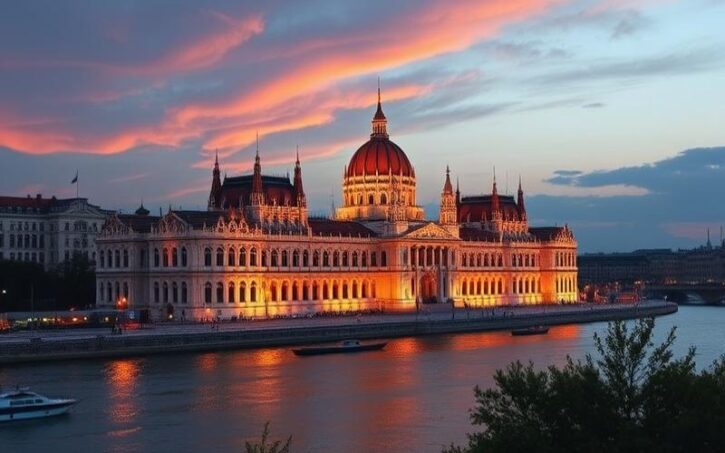
 Published on and written by Cyril Jarnias
Far from being a common destination for French expatriates, Hungary nonetheless attracts a growing community eager to settle there for various reasons, whether it’s the mysterious allure of Budapest or the pastoral charm of the surrounding countryside.
But where exactly do these French citizens seeking new adventures choose to live? Dive into a fascinating exploration of geographic preferences and motivations that lead these citizens to settle in this cultural crossroads in the heart of Central Europe, revealing unexpected and sometimes surprising trends about their anchor points and aspirations.
Mapping French Expatriates in Hungary
The French expatriate community in Hungary is primarily concentrated in a few major cities, with a marked preference for Budapest, the capital, as well as certain university towns or those with strong economic activity.
| City/Region | Attractiveness Factors | Relative Community Size* |
| Budapest | Jobs (international companies, startups), rich cultural life, French schools, consular services, dynamic real estate, strong French community presence | Majority (over half of French expatriates in Hungary) |
| Debrecen | Reputable university, research and healthcare hubs, low cost of living | Smaller community, but growing among youth and students |
| Szeged, Pécs | Universities, milder climate, student life | Modest presence, mainly young adults |
| Border Regions (West) | Proximity to Austria and Germany, cross-border economic opportunities | Low, mainly long-established families |
*Precise numerical data by city is not publicly available, but trends are confirmed by testimonials and consular reports.
Main Attractiveness Factors:
- Job Opportunities: French people settle in Budapest for positions in international companies, NGOs, European institutions, as well as in digital and tourism sectors. The cost of living and real estate prices are attractive for young professionals and investors.
- Quality of Life: Safety, cultural offerings, efficient transportation, pleasant environment (green spaces, Danube). Families appreciate the presence of the Gustave Eiffel French School and other international institutions.
- French Community: Mutual aid networks, associations, regular events (Fête de la Musique, July 14th celebrations, expatriate clubs), easier access to certain French products through specialty stores.
- Services and Institutions: Presence of the French Embassy, consulate, French educational institutions and healthcare facilities with French-speaking staff.
Recent Statistics:
- The total number of French citizens registered in the Registry of French Nationals Residing Abroad in 2024 is 1,741,942 (all countries combined).
- For Hungary, estimates vary, but the French community is believed to be around 2,000 to 3,500 people, with the majority residing in Budapest. Precise figures vary based on voluntary registration in the registry.
- The age structure is balanced: approximately 23% are under 18, 10% between 18 and 25, 22% between 26 and 40, 29% between 41 and 60, and 16% over 60.
Preference Differences:
- Young Expatriates: Prefer Budapest and university towns for employment, studies, and nightlife. Attracted by economic dynamism, housing access, and presence of other expatriates.
- Families: Settle mainly in Budapest for French schooling, safety, medical infrastructure and proximity to mutual aid networks. Some families choose the capital’s outskirts for better quality of life (green spaces, larger homes).
Demographic Evolution:
- After a period of stability, the French community has experienced a slight resurgence since 2023, particularly due to Hungary’s economic attractiveness and the opening of new services for expatriates.
- The proportion of families remains stable, with a slight increase in young professionals and students attracted by Hungarian universities and moderate-cost living.
Visual Summary of Main Attractions and Limitations:
| Aspect | Assets for French Expatriates | Encountered Limitations |
| Cost of Living | Affordable, high purchasing power | Low local salaries |
| Real Estate | Attractive prices, easy purchasing | Rising downtown rents |
| Cultural Life | Rich, diverse activities | Language barrier |
| French Community | Active networks, mutual aid, events | Risk of insularity |
| French Services | Schools, consulates, associations | Limited access to certain products |
| Quality of Life | Safety, healthcare, transportation, leisure | Cold winters, cultural adaptation |
Key Takeaways:
- Budapest remains the premier destination for French expatriates of all profiles.
- Young people prefer major university cities, while families seek stability and access to French services.
- The community is evolving slowly but surely, with a growing share of youth and investors, in the context of Hungary’s renewed attractiveness.
Good to Know:
French expatriates in Hungary are mainly concentrated in Budapest, attracted by numerous job opportunities in sectors like finance and technology. The Hungarian capital also appeals with its quality of life, rich cultural history and the presence of a French school, making it a preferred choice for families. French communities also form in cities like Pécs and Szeged, though in smaller numbers, thanks to universities and a more accessible cost of living. In 2022, the French population in Hungary numbered approximately 3,000 expatriates, with a notable increase among young professionals, who often prefer Budapest’s modern neighborhoods for their dynamism and proximity to local startups. Comparatively, families and older expatriates tend to favor quieter, more residential areas, illustrating the diversity of preferences within this community.
Most Popular Neighborhoods Among French Speakers
Many French-speaking expatriates in Budapest prefer the Buda neighborhoods, particularly the 2nd, 2A and 12th districts. This preference is explained by the proximity to the French Lycée, facilitating daily life for families with school-aged children. These residential neighborhoods offer a calm environment, beautiful houses with gardens, quality shops and green spaces, meeting French families’ expectations for comfort and safety.
Main French-Speaking Neighborhoods in Budapest and Their Assets:
| Neighborhood | Assets for French Speakers | Reasons for Choice |
| 2nd, 2A, 12th districts (Buda) | Proximity to French Lycée, residential setting, green spaces | Easy school access, family-friendly environment |
| District V (Belváros) | Cultural life, shops, restaurants | Urban living, downtown proximity |
| Angyalföld (13th district) | Transport access, near train station | Mobility, temporary housing or transit |
Other Major Hungarian Cities with French-Speaking Communities:
Preferred neighborhoods in these cities are generally located near universities, cultural institutions (French alliances, cultural centers) and economic hubs, offering a framework conducive to integration and social life.
Needs of French Expatriates and Local Responses:
Expatriate Testimonials and Anecdotes:
“We chose to live in Buda so our children could walk to the French Lycée. The neighborhood is very green and friendly, we quickly met other French-speaking families there.”
“In Debrecen, the French community often gathers at the Alliance Française. There are many events that really facilitate integration.”
“Living near downtown Budapest allows us to enjoy cultural life, while maintaining easy access to school thanks to the bus service organized by the French Lycée.”
In summary: French-speaking expatriates mostly settle in neighborhoods offering a balance between school proximity, quality of life, access to amenities and presence of active social networks, thereby facilitating their integration and that of their families.
Good to Know:
In Budapest, the Újbuda and Budaörs neighborhoods are particularly popular among French speakers due to their proximity to the Gustave Eiffel French Lycée and multiple French-speaking cultural activities, such as movie nights organized by the French Institute. The French community also gathers in neighborhoods like Terézváros where professional opportunities abound, particularly in international companies. Outside Budapest, Győr and Szeged are popular destinations thanks to industries offering positions for French speakers. One expatriate shared that they chose Győr because of the active expatriate network that regularly organizes meetings and friendly activities, providing valuable help for easier integration. Amenities like grocery stores offering French products and simplified administrative services meet the specific needs of expatriates, thus creating a welcoming and familiar environment in Hungary.
The Importance of French Networks and Communities
French networks and communities play a central role in the integration of expatriates in Hungary, particularly in Budapest, the main reception hub. These structures facilitate adaptation, maintaining social connections and access to key resources for newcomers.
Main Initiatives of French Associations:
- Organization of welcome and orientation sessions for new expatriates (administrative information, housing, health, schooling).
- Implementation of mentoring programs between established and new arrivals for personalized support.
- Language workshops to facilitate Hungarian learning and improve French for bilingual children.
- Professional integration assistance through CV workshops, job fairs and networking.
Cultural and Social Events:
- Celebration of July 14th National Day, Beaujolais Nouveau evenings, Christmas markets, French film screenings.
- Organization of coffee meetings, book clubs, cooking workshops, and exhibitions to encourage Franco-Hungarian cultural exchanges.
- Collaboration with local institutions (Alliances Françaises, French lycées, cultural institutes) to promote French language and culture.
Statistics and Community Participation:
| Indicator | Value or Testimonial |
| Percentage registered over 5 years | 63.3% |
| New registrants (less than one year) | 9.6% |
| Female/male distribution | 50.18% women (2024) |
| Participation in clubs/associations | Majority among families with children |
| Testimonials | “The association’s events allowed me to meet other parents and facilitate my children’s schooling.” |
| Influence on settlement choice | Families prefer Budapest for active community life, singles sometimes opt for other university cities. |
Impact on Professional Life:
- French networks provide job opportunities through targeted job postings and connections with Franco-Hungarian companies.
- Professional clubs (France-Hungary Chamber of Commerce, alumni networks) organize conferences, career development workshops and mentoring sessions.
- Community support facilitates access to positions in sectors where French proficiency is an asset (education, international companies, tourism, gastronomy).
Role in Cultural Preservation and Exchange:
- Associations work to preserve French cultural identity (French classes, traditional celebrations).
- Mixed events promote mutual discovery and harmonious integration into Hungarian society.
Summary of Effects:
- Expatriates active in these networks report faster integration and a strengthened sense of belonging.
- Associational offerings strongly influence settlement choices, particularly for families or professional profiles seeking support.
- These communities contribute to animating local life and creating lasting bridges between French and Hungarian people.
French networks and associations are therefore essential for supporting, integrating and energizing the expatriate community in Hungary, both socially and professionally.
Good to Know:
French networks and communities play a key role in the integration of expatriates in Hungary, with associations like the Union of French Citizens Abroad (UFE) organizing cultural and social events, such as language workshops and gastronomic evenings, to preserve French culture while promoting exchange with Hungarians. A study reveals that 60% of French expatriates participate in these activities, often influencing their choice to settle mainly in Budapest and its surroundings. These networks also facilitate access to professional opportunities, particularly in technology and education sectors, through dedicated online groups that disseminate job offers and advise on career development. Testimonials highlight the positive impact of these communities, both on the sense of belonging and professional integration, helping newcomers navigate this new environment more easily.

Cyril Jarnias is an independent expert in international wealth management with over 20 years of experience. As an expatriate himself, he is dedicated to helping individuals and business leaders build, protect, and pass on their wealth with complete peace of mind.
On his website, cyriljarnias.com, he shares his expertise on international real estate, offshore company formation, and expatriation.
Thanks to his expertise, he offers sound advice to optimize his clients' wealth management. Cyril Jarnias is also recognized for his appearances in many prestigious media outlets such as BFM Business, les Français de l’étranger, Le Figaro, Les Echos, and Mieux vivre votre argent, where he shares his knowledge and know-how in wealth management.





