
 Published on and written by Cyril Jarnias
Located in the heart of Zala county in western Hungary, Zalaegerszeg currently ticks almost all the boxes of a city that is “undervalued” relative to its potential. A regional capital and the country’s 18th largest city by population, it combines a still affordable real estate market, a transforming industrial fabric, massive infrastructure programs, and a highly sought-after natural environment. The result: the city is now considered a top candidate for real estate investment, whether for long-term rental, tourist rental, or as an asset-hold investment with a 5–10 year horizon.
A Macro and Demographic Context to Understand Well
Before looking at neighborhoods and yields, one must situate Zalaegerszeg within the Hungarian context, encompassing economic, real estate, and demographic factors.
Hungary is emerging from a cycle of spectacular price increases: since 2010, residential values have risen by about 260% nationwide. Between 2024 and 2025, prices rose by about 30% across the country, with average increases of 15–20% (up to 25% in Budapest). The real estate price index, published by the Hungarian National Bank (MNB) and Eurostat, still showed an annual increase of over 12% in early 2025, although the market has since begun to stabilize.
Between 2023 and February 2024, real estate prices in Zalaegerszeg surged by 17%.
A City with Declining Population… but Economic Repositioning
Demographically, the picture is more nuanced. Zalaegerszeg’s population is in a long-term decline: from 128,093 inhabitants in 1975 to approximately 54,400 inhabitants in 2022 according to the census, a drop of over 58% in forty years. Density fell from 1,281 inhabitants/km² in 1975 to 536 inhabitants/km² in 2015. Projections up to 2100 anticipate a continued decline (towards 43,447 inhabitants) and significant aging (projected median age of 48).
For an investor, this is not necessarily a deal-breaker, but it requires long-term thinking: purely demographic demand is structurally under pressure, which encourages targeting segments supported by drivers other than birth rate (local economy, skilled jobs, tourism, student influx, etc.).
The city has transformed into a dynamic ecosystem combining industry, R&D, and higher education. The arrival of major groups like Rheinmetall and Flex, along with the development of the ZalaZONE automotive testing center, is profoundly reshaping the local job and real estate market.
Cost of Living, Salaries, and Local Purchasing Power
Another key point for a rental investment: the purchasing power of residents. The cost of living in Zalaegerszeg remains moderate on a European scale:
| Indicator | Estimated Amount |
|---|---|
| Monthly cost of living for 1 person (excluding rent) | $477 |
| Monthly cost of living for 1 person (including rent) | $845 |
| Monthly cost of living for family of 4 (excluding rent) | $1,496 |
| Monthly cost of living for family of 4 (including rent) | $1,976 |
| Median net monthly salary | $736 |
With a median net salary of about $736, a resident can cover about 0.9 months of expenses including rent. This serves as a reminder that this is not a very high-income market: rents must remain proportional, which mechanically limits expected gross yields if targeting only local demand. Conversely, this cost moderation opens an interesting angle for foreign or highly skilled investors comparing living standards to nearby Austria or Germany.
A Local Real Estate Market Still Affordable but Under Strong Pressure
Detailed data on Zalaegerszeg shows a market that is still relatively inexpensive, but one that is waking up quickly.
Price Levels: A Significant Discount Compared to the Rest of Hungary
Several indicators show that residential properties in Zalaegerszeg are significantly cheaper than in the rest of the country:
| Price Indicator | Zalaegerszeg | Comparison |
|---|---|---|
| Average home price | 30.2 M HUF | 101.5% of Q1 2024 |
| Average price per m² (older stock) | 522,000 HUF/m² | 113.3% of Q1 2024 |
| Discount vs. national average | –36% | |
| Discount vs. Zala county average | –26% | |
| Observed average price 2023–Feb. 2024 | 567,000 HUF/m² | ≈ €1,454 |
This is far from the levels of Budapest, where average prices hover around 1.2 million HUF/m² (and more in the Buda hills). This 30–40% discount compared to the capital, combined with recent upward momentum, positions Zalaegerszeg as a “value” market on a national scale.
Listings confirm this range, with 40–80 m² apartments in the city center offered between 26 and 45 million HUF, and family houses between 27 and 85 million HUF depending on size, condition, and location.
Rapid Price Increases, Driven by Jobs and ZalaZONE
The triggering factor for this market awakening is not demographic but economic. The ZalaZONE automotive testing center, described as Europe’s most modern complex for connected and autonomous mobility, has created an influx of engineers, technicians, and service providers. Around it, massive industrial investments have followed: Flex (NEXT GEN MOBILITY) with its 35 billion HUF, Rheinmetall, Europtec (6 billion HUF, 100 jobs), DTI Hungary, Techno-World System, etc.
Economic investments planned for 2025, valued at nearly 62 billion HUF and creating over 400 jobs, are generating strong pressure on housing demand, especially for skilled profiles.
This explains the +17% annual increases and the rapid shift in the average purchase price: according to data, buyers in Zalaegerszeg today pay an average of 32.2 million HUF for homes of about 78 m², which is 33% more than in 2020. For new builds, the price per m² jumped by 53% between 2020 and 2022.
Local Volatility: The Case of the “–51%” Over Six Months
One figure may be surprising: a 51% drop in the average price was observed over six months in a recent period. This type of sharp variation usually stems from a change in stock composition (e.g., a massive influx of cheap small units, a temporary retreat of high-end properties, or a correction after a surge).
A price variation in a modest-sized real estate market can be heavily influenced by a few atypical transactions (luxury projects or dilapidated properties), without reflecting a structural collapse. For the investor, it is essential to prioritize a micro-localized and qualitative analysis of assets, rather than relying solely on quarterly statistical averages.
Neighborhood Focus: Center, Zrínyi, Landorhegy, and Vineyards
The quality of a real estate investment in Zalaegerszeg heavily depends on the neighborhood targeted. Three major residential sectors stand out, along with suburban vineyards and the northern industrial zone.
City Center: Historic Heart, Rental Yield, and Liquidity
The city center concentrates administrative functions, shops, services, and major facilities (theater, basilica, Saint Raphael Hospital, Zala Plaza cinema, Zala Plaza shopping mall, and chains like TESCO, ALDI, LIDL, KFC, Burger King, McDonald’s). It benefits from excellent public transport access and most services are within walking distance.
The past few years have seen the delivery of several new residences right in the center, which has driven prices upward. You can find apartments of 40 to 80 m², often renovated, listed between 30 and 45 million HUF. One listing illustrates this segment well: a 67 m², 2-room apartment in very good condition right in the center for 35.999 million HUF, or an 80 m² with garage for 44 million HUF.
The area is particularly suited for long-term rental for office employees, service sector managers, and medical professionals. It is also suitable for short-term rental via platforms like Airbnb, which largely dominate the local supply.
Zrínyi Neighborhood: Dynamic Development and Family Target
The Zrínyi neighborhood, more recent, is characterized by rapidly expanding urban development. Many residential programs have been launched there in recent years, accompanied by infrastructure modernization and a notable improvement in the transport network. Proximity to health and educational facilities makes it a highly sought-after area for young couples and families with children.
The growth of employment in commerce and finance strengthens the demand for contemporary housing, well-insulated, often in newer condominiums. For an investor, Zrínyi offers an interesting compromise between prices still below the center and appreciation potential, with generally stable tenants.
Landorhegy: Quiet, Greenery, and Single-Family Homes
Landorhegy is the more residential and green face of Zalaegerszeg. A peripheral neighborhood, mostly composed of single-family homes on large plots, it attracts households seeking tranquility, a garden, and proximity to nature, while remaining within a reasonable distance from the center.
Prices, though rising, remain more affordable than in the hyper-center. Bus service is limited, making a car almost essential. This area is suitable for an asset-hold investment (primary residence or family home) as well as medium-term rentals for local families.
Vineyards and Hills: Charming Residences and Tourist Potential
On the outskirts, the vineyard hills offer a completely different profile: hilly landscapes, panoramic city views, a very quiet environment. Many Hungarian and foreign families have chosen this area as their primary residence, enjoying a rural-style living environment while remaining less than 10 minutes by car from the center and major commercial zones (STOP-SHOP, TESCO, ALDI, LIDL, Müller, Praktiker, etc.).
Details on access conditions and available amenities on site
Access via winding mountain roads, sometimes single-lane with passing areas. Mixed surface: partially asphalted and partially gravel.
Access roads are plowed in winter to ensure continued traffic flow.
Has essential services: city water, internet, television, and waste collection.
Sanitation may still rely on individual storage systems (septic tanks, etc.).
An emblematic example of this segment is property CM053‑B, about 6–8 km from the center of Zalaegerszeg, consisting of a main building with 180 m² of living space on a 7,700 m² plot, complemented by several parcels totaling over 26,000 m², including vineyard, new tiny house, and buildable land with panoramic views. Price: €139,500, representing a very competitive price per m² considering the total built area (about 250 m² across three buildings) and the land.
This type of property is particularly suited :
– to a characterful second home,
– to seasonal rental targeting a foreign clientele (nature and wine enthusiasts, remote workers),
– or even to a small agro-touristic project (bed and breakfast, micro-cottage, tiny house rental).
Rental Market: Long-Term, Short-Term, and Tenant Profiles
Investing in Zalaegerszeg implies choosing a rental strategy consistent with real demand. Available data allows for a fairly precise picture of the current market, especially for short-term rentals.
Long-Term Rental: Reasonable Rents, Stable Demand
Average rents give a first idea of potential yields:
| Type of housing (entire city) | Average monthly rent |
|---|---|
| 1 bedroom, 40 m² city center | $292 |
| 1 bedroom “budget”, 40 m² | $252 |
| 3 bedrooms, 80 m² city center | $447 |
Compared to acquisition prices, these rent levels often result in gross yields of around 4.5–5.5%, comparable to the Hungarian average (national gross yield around 5.06% in 2025), but of course to be adjusted case by case.
Demand for long-term rentals comes mainly from three major groups on a Hungarian scale:
– Students, who represent about 30–35% of active tenants,
– Young professionals early in their careers (35–40%),
– Expatriates and employees on assignment (20–25%).
In Zalaegerszeg, the presence of a technological industrial fabric (ZalaZONE, Rheinmetall, Flex, etc.) and a strengthening of vocational training (dual training workshops, technikums) suggests that the last two profiles – skilled young professionals and technical expatriates – will become increasingly important.
Observation on Zalaegerszeg’s economic development
Tourist and Short-Term Rental: A Market Dominated by Airbnb
The short-term rental supply in Zalaegerszeg is still modest in absolute volume (31 listings recorded), but its profile is instructive for an investor targeting this niche.
| Airbnb / Short-Term Indicator | Value |
|---|---|
| Total number of listings | 31 |
| Airbnb-only share | 97% |
| Airbnb + Vrbo share | 3% |
| Housing size: 1 bedroom | 71% of listings |
| Housing size: 2 bedrooms | 19% |
| Housing size: 4 bedrooms | 6% |
| Housing size: 5+ bedrooms | 3% |
| Rental type: Entire home | 65% |
| Rental type: Private room | 35% |
Several specificities can be noted:
– A predominance of small units (1 bedroom): logical for targeting couples and solo travelers,
– A majority of entire-home rentals, which suits an international clientele well.
In terms of performance, indicators show a rather positive trend:
| Performance Indicator (5 years) | Variation |
|---|---|
| Average occupancy rate | +3% |
| Average revenue | +3% |
| Average daily rate | –3% |
| Rental demand index | 86 |
| Revenue growth index | 85 |
| Seasonality index | 87 |
| Regulation index | 56 |
Demand, revenue, and seasonality are progressing, while daily rates are declining slightly, a sign of a more competitive market but still far from the saturation of major tourist capitals. 45% of listings are available for more than 270 nights per year, confirming a positioning more towards “long stay” than purely tourist rental.
This is the percentage of listings that require a minimum stay of 30 nights, orienting the market towards medium-term furnished rentals.
Strategy Example: A Two-Room Apartment Downtown for Corporate Tenants
A concrete scenario: acquisition of a recent 40–50 m², 1 bedroom apartment, right in the center, for 32–35 million HUF. Rented for $290–320/month to an engineer or manager from a company in the Northern Industrial Park or ZalaZONE, yields a gross yield of around 4.5–5% on a long-term basis. By switching to 1 to 3-month rentals for a professional clientele (consultants, trainers, technicians on assignment), it is possible to potentially increase the yield slightly while smoothing out seasonality.
Infrastructure, Mobility, and Quality of Life: The Hidden Lever of Appreciation
One of Zalaegerszeg’s major assets, often underestimated, lies in the massive investments in infrastructure and mobility, which always end up being reflected in real estate values.
Transport Infrastructure: Bypasses, Railway Lines, and Bike Paths
On the road front, the southern ring road project (between Alsóerdő and Zalabesenyő) is emblematic. It includes roadway modernization, replacement of drinking water pipes, construction of amphibian crossings near the Aranyoslapi spring, and tree planting. The goal is to streamline traffic, relieve congestion in central neighborhoods, and better connect industrial zones.
A “turbo roundabout” near Tesco and the renovation of multiple thoroughfares (Ebergényi, Nagycsárda, Falumúzeum, etc.) complement this network. New parking spaces have already been created, notably near the hospital (100 spaces) and in the Baross liget area (50 spaces), with a planned multi-story parking garage in the long term.
Investment in Hungarian forints for the delta railway connection aimed at creating a metropolitan logistics terminal connected to European corridors.
Soft mobility is not forgotten: a Sustainable Urban Mobility Plan (SUMP) has existed since 2016, with sections on on-demand transport (“Zerge”), bike paths (extension to Teskánd, route through Parkerdei), and a strong emphasis on emission reduction and safety.
Energy, Geothermal, and “Green” Policy
On the energy front, Zalaegerszeg displays ambitions rarely seen in a city of this size. A vast geothermal research program started in 2025. Goal: by 2035, cover up to 40% of the city’s energy needs through geothermal energy, first supplying the Northern Industrial Park and ZalaZONE, then the hospital, municipal buildings, and finally large housing complexes via a district heating network.
Drilling is planned from 2026 on the northern aquifer, alongside the modernization of the eastern and western drinking water bases. Meanwhile, the city and its companies (Zalavíz, Z AAVZ) are deploying photovoltaic panels on the roofs of public facilities (swimming pool, schools, nurseries, etc.) and on some unused sites.
These investments reduce environmental impact and contribute to stabilizing operating costs in the long term. For a landlord, this allows for better management of energy costs for tenants, thus improving the sustainability of rents.
Urban Programs: Greening, Renovation, and Building Renewal
Several structuring programs deserve mention:
– Zöld Zalaegerszeg (“Green Zalaegerszeg”): Tree planting campaign (over 11,000 young trees in five years), creation of green spaces, green waste management, encouragement of soft mobility.
– Egészséges Egerszeg (“Healthy Egerszeg”): Promotion of events and infrastructure related to health, physical activity, and well-being.
– Károly Kovács Program: Modernization of roads, sidewalks, parking lots, public spaces.
Many emblematic buildings are undergoing renovations: former officers’ clubs, cultural houses, school buildings (Zrínyi Miklós Gimnázium, Csány László Technikum, etc.), former industrial sites converted into upscale residences (the “Zallure” project on a former textile site). These conversions have a dual impact: they regenerate degraded blocks and they introduce high-end products to the market that are likely to raise the benchmark.
Regulatory and Tax Environment: What Foreign Investors Need to Know
Investing in Zalaegerszeg is first and foremost investing in Hungary. National rules therefore fully apply, with a few points for non-residents to watch out for.
Acquisition: Permissions, Lawyer, and Land Registry
Citizens of the EU/EEA/Switzerland can freely purchase residential property in Hungary, without quotas for foreigners in buildings. For nationals from outside the EU/EEA (post-Brexit UK, USA, etc.), an acquisition permit is required, issued by the local administration where the property is located. Key points to remember:
– submission of an application prepared by a Hungarian lawyer,
– administrative fee of about 65,000 HUF (€130–160),
– processing time generally between 2 and 4 weeks (legal maximum 45 days),
– possible rejection on grounds of public order, municipal interest, or criminal record.
Legal fees for a real estate transaction in Hungary typically range from 0.5% to 1.5% of the purchase price.
Registration with the Land Registry is the step that truly confers ownership; signing the deed is not enough. The procedure generally takes 1 to 2 months.
Taxation on Purchase and Resale
Upon purchase, the investor will mainly pay:
– a 4% transfer duty on the market value (for existing properties),
– possibly VAT (5% or 27% depending on the nature of the project) for new builds, generally included in the price,
– notary/lawyer fees and land registry fees (a few dozen euros).
Exceptions exist (first purchase, exchanges, acquisitions within certain value limits), but the 4% remains the rule.
Upon resale, the real estate capital gain is subject to a 15% tax. However, only a portion of the gain is taxable depending on the holding period. The longer the property is held, the less is paid:
| Property holding period | Taxable portion of capital gain |
|---|---|
| < 1 year | 100% |
| 1–2 years | 90% |
| 2–3 years | 60–70% (depending on sources) |
| 3–4 years | 30–50% |
| ≥ 5 years | 0% |
Beyond five years, the capital gain is no longer taxed. This is a crucial point for the strategy in Zalaegerszeg: given the current growth phase, the recommended holding horizon (5–10 years) aligns perfectly with this tax regime.
Rental and Income Taxation
Rental income is taxed at a flat rate of 15%. The owner can choose between:
To declare your rental income, you have two options: deduct your actual expenses (like repair costs or loan interest) by providing proof, or apply a flat 10% deduction from the total amount of rent received.
It is important to add the standard charges (energy, water, internet, waste collection) which are in principle borne by the tenant, but can influence rent negotiations.
At the local level, some Hungarian municipalities apply an annual tax on buildings or land, calculated per m² or as a percentage of value. The maximum permitted rates are respectively 1,100 HUF/m² (or 3.6% of adjusted value) for buildings and 200 HUF/m² (or 3% of adjusted value) for land. Note that properties used exclusively as a residence are often exempt, but this depends on municipal regulations.
Case Study: The CM053‑B Vineyard Property, an Example of a Hybrid Investment
The large vineyard property located on the heights of Zalaegerszeg, offered at €139,500, provides a good case study to illustrate possible trade-offs.
Physically, it is a main house renovated in 2023, with:
– 180 m² of living space (large 45 m² living room, 2 bedrooms, equipped kitchen, bathroom),
– full 120 m² basement partially below ground, opening to the garden,
– main plot of over 6,000 m² with pines and fruit trees,
– additional buildable plots, vineyard, new tiny house,
– total area of over 2.6 hectares.
Recent work includes thermal insulation (10 cm Dryvit), new paint, and double-glazed windows with integrated shutters. The home is equipped with wood heating (stove and fireplace). It has city water and a spring, electricity, and the possibility of gas and internet connection.
In terms of use, the listing presents it as ideal for a vacation home. But an investor could consider several scenarios:
1. High-end seasonal rental: By banking on charm, panoramic views, and space, it is possible to target an international clientele, with stays of one to two weeks. The land area would allow for installing other micro-units (chalets, tiny houses) to diversify the offering.
The property is perfect for a “countryside-city” lifestyle, with fiber optic internet (if available) and proximity to Zalaegerszeg just a 10-minute drive away, a highly sought-after asset since the pandemic.
3. Agro-tourism project: By enhancing the vineyard, fruit trees, and “terroir” ambiance, one can imagine wine-tasting workshops, wellness stays, etc.
From a tax perspective, holding this type of property for a long period (5 years or more) would allow benefiting from an exemption on capital gains upon resale, while capitalizing on the region’s general upward trend.
Strengths and Risks: How to Position an Investment in Zalaegerszeg
To judge the merit of investing in Zalaegerszeg, one must carefully weigh the favorable factors and the points of caution.
Structural Strengths
Several elements clearly work in the city’s favor:
– Significant price discount compared to Budapest and major cities, with catch-up potential.
– Powerful economic engines: ZalaZONE, automotive industry, defense, logistics, Northern Industrial Park.
– Flow of skilled jobs attracting solvent profiles, often demanding modern, well-located housing.
– Massive infrastructure programs (bypasses, railway, logistics, geothermal, urban renewal) that enhance mid-term attractiveness.
– Quality of life: natural environment, proximity to forests and hills, medium-sized city ambiance, controlled costs.
– More flexible rental regulations than in Budapest for now, especially for medium/long-term rentals.
Risks and Uncertainties
On the other hand, several risks deserve consideration:
Several factors could weigh on demand and prices in the medium term: a declining and aging demographic, a market overall considered expensive with a possible correction, local dependence on a few major investors, and still high interest rates limiting credit access.
Recommended Horizon and Strategy
Aggregating these elements, market analyses on Hungary converge on a conclusion: buying today is generally relevant, but only with a long-term (5–10 year) holding perspective, with rigorous selection of location and financing method.
In Zalaegerszeg, this translates into several possible approaches:
– Aim for medium-sized apartments (40–80 m²) in the city center or in booming neighborhoods (Zrínyi), to capture rental demand from skilled young professionals and managers from local industries;
– Target single-family homes in Landorhegy or the hills for a personal residential project or a family rental product (secure long-term rental);
– Explore opportunities in the vineyards for hybrid second home / seasonal rental projects, with high use value.
A key element remains liquidity upon resale: well-located and correctly priced homes in promising segments sell in Hungary within a few weeks. This trend is found in Zalaegerszeg for “mainstream” products: well-maintained city center apartments, modern houses in sought-after neighborhoods, recent residences near employment hubs.
Conclusion: Zalaegerszeg, a Second-Tier City with First-Rate Potential
In summary, investing in real estate in Zalaegerszeg amounts to betting on a medium-sized city in western Hungary that ticks four essential boxes:
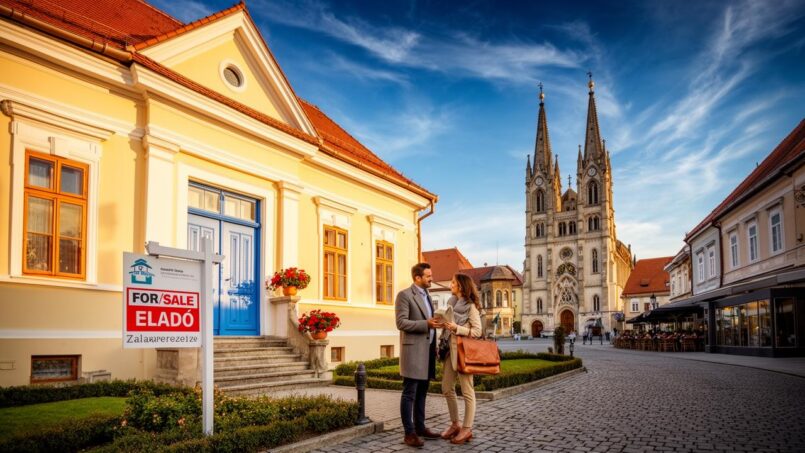
Overview of the main factors making Zalaegerszeg an attractive city for real estate investment, combining economic dynamism and quality of life.
A significant discount compared to major cities, with a catch-up dynamic already underway (17% increase in one year).
Driven by automotive, defense, logistics, and innovation, with massive investments and hundreds of new skilled jobs.
Modernization of infrastructure, greening, sustainable mobility, and heritage renovation for enhanced residential attractiveness.
Simpler than in many Western European countries, with total capital gains exemption after five years of ownership.
The less visible side of the picture – declining demography, an overall high Hungarian market, dependence on certain industrial projects – however implies the need to remain selective and patient. Zalaegerszeg is not a market for short-term speculation; it is more of a playing field for investors capable of holding their position over a full cycle, from 5 to 10 years, capitalizing on the city’s upgrading and its growing role in the “Danube West.”
For an investor accepting a medium-term horizon and surrounding themselves with local professionals (lawyer, real estate agent, advisors), Zalaegerszeg presents an attractive risk/return ratio, hard to find in saturated metropolises. In the Hungarian context where real estate (single-family homes and apartments) remains a preferred form of savings, the capital of Zala county asserts itself as one of the most interesting bets in regional Hungary.
A wealth management project or a question? Contact us now to speak with a wealth management expert.
Disclaimer: The information provided on this website is for informational purposes only and does not constitute financial, legal, or professional advice. We encourage you to consult qualified experts before making any investment, real estate, or expatriation decisions. Although we strive to maintain up-to-date and accurate information, we do not guarantee the completeness, accuracy, or timeliness of the proposed content. As investment and expatriation involve risks, we disclaim any liability for potential losses or damages arising from the use of this site. Your use of this site confirms your acceptance of these terms and your understanding of the associated risks.

Cyril Jarnias is an independent expert in international wealth management with over 20 years of experience. As an expatriate himself, he is dedicated to helping individuals and business leaders build, protect, and pass on their wealth with complete peace of mind.
On his website, cyriljarnias.com, he shares his expertise on international real estate, offshore company formation, and expatriation.
Thanks to his expertise, he offers sound advice to optimize his clients' wealth management. Cyril Jarnias is also recognized for his appearances in many prestigious media outlets such as BFM Business, les Français de l’étranger, Le Figaro, Les Echos, and Mieux vivre votre argent, where he shares his knowledge and know-how in wealth management.





