
 Published on and written by Cyril Jarnias
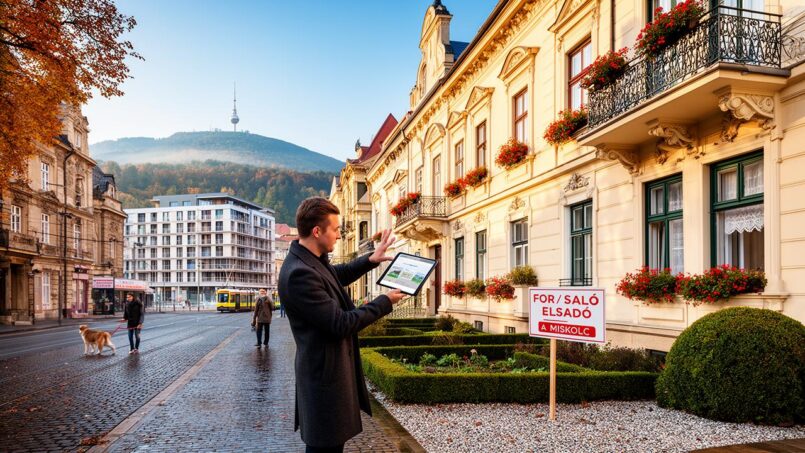
Long associated with its steelmaking past, Miskolc is changing its face. Hungary’s fourth-largest city, nestled against the Bükk Mountains and known for its cave baths in Miskolctapolca, is gradually becoming a serious playground for real estate investors. Low prices, high yields, a transforming economy, massive urban projects: all the ingredients of a “yield + capital appreciation” market are in place, but without the overheating and extreme competition of Budapest.
This article provides a comprehensive analysis of the Miskolc real estate market, based on the latest Hungarian and regional data. It details the concrete implications for a foreign investor looking to place funds in this city.
Miskolc: An Industrial City Reinventing Itself
Miskolc occupies a strategic position in northeastern Hungary. It is one of the country’s largest urban centers, with a dense industrial fabric, a major university campus, and rare natural assets for a city of this size.
The city aims to become a nature-centered urban hub, connected to the Bükk massif, by betting on a mix of digital (data, AI), clean industry, and tourism under the label “Miskolc – City of Bükk Mountains.”
In the background, a key element for an investor: this strategy is not theoretical. Very concrete projects are funded by European and national funds, particularly in industrial parks, transport infrastructure, and urban renovation. These dynamics have a direct impact on rental demand, prices, and the appreciation potential of properties.
One of the Most Affordable Markets in the European Union
Miskolc is regularly cited as one of the most accessible real estate markets in the EU. This accessibility is not only due to local income levels, but especially to the massive price gap with Budapest and major European capitals.
The internal gap within the country is telling: in central Budapest districts, apartment prices easily exceed €4,000 per square meter. In Miskolc, even the best-located properties rarely exceed €1,500 per square meter. Detailed data confirm this order-of-magnitude difference.
Price Levels and Main Segments
Price ranges observed in Miskolc are structured by property type.
| Property Type | Indicative Prices in Miskolc |
|---|---|
| Panel apartments (prefab) | Approx. €800–1,300 / m² depending on district and condition |
| Renovated apartments in city center (Belváros) | Approx. €1,400–1,800 / m² |
| Single-family houses | Approx. €100,000–200,000 (some properties < €90,000) |
| High-end (prime, rare cases) | Rarely above €1,500 / m² |
Official data in forints confirm this price scale. Analysis of the most expensive streets shows averages around 400,000–530,000 HUF/m², roughly up to €1,300–1,370 per square meter. On the cheapest streets, prices sometimes drop to around 100,000–150,000 HUF/m², i.e., about €260–390/m², which remains exceptionally low by EU standards.
Examples of Streets and Average Prices
| Street / Square in Miskolc | Average Price (HUF/m²) | Approx. (€/m²) |
|---|---|---|
| Knézich Károly utca | 529,000 | ~1,373 |
| Dóczy József utca | 490,000 | ~1,272 |
| Városház tér | 453,000 | ~1,176 |
| Dayka Gábor utca | 446,000 | ~1,142 |
| Arany János tér | 436,000 | ~1,131 |
| Görömbölyi út | 406,000 | ~1,054 |
| Aulich Lajos utca | 386,000 | ~1,002 |
| Szent László utca | 384,000 | ~996 |
| Áfonyás utca | 207,000 | ~537 |
| Papszer utca | 184,000 | ~477 |
For an investor coming from markets where the simple entry ticket frequently exceeds €250,000–300,000, the possibility of buying a functional, well-located apartment for €50,000–120,000 completely changes the equation.
Surprisingly Varied Housing Stock
Contrary to the sometimes narrow image of a city of concrete high-rises, Miskolc offers a very wide range of properties, especially on the secondary market.
The city of Miskolc presents a varied housing panorama: 19th-century townhouses, Art Nouveau apartments along Andrássy Avenue, large prefabricated panel complexes in the Avasi lakótelep and Diósgyőr districts, historic cave dwellings on the Avas hillside, and modern lofts converted from old warehouses near Tiszai station. For these conversions, the focus is on preserving elements like exposed brick and steel columns while creating large windows offering views of the Bükk foothills.
Large housing estates like Avasi lakótelep or Szirma offer buildings with wide balconies, common green courtyards, and a very stable tenant base: workers, employees, students. Nearby, former industrial sites around Diósgyőr are being transformed into loft-style housing, taking advantage of views of nature.
For an investor, this spectrum allows positioning on different risk and return profiles: from a small student studio in a panel with high cash flow, to a family house with a garden in a quiet residential area, to a tourist property in Miskolctapolca.
Rental Yields: Numbers That Speak
The main advantage of Miskolc for an investor remains the combination of low prices + decent rents, which translates into high gross yields.
Consolidated data indicate, for classic long-term rentals, monthly rents generally between €300 and €600 for one- to two-bedroom apartments. Relative to very affordable purchase prices, gross yields typically range between 6% and 8%, with cases going significantly higher.
Some Concrete Profitability Examples
| Investment Scenario | Purchase Price | Rental Income | Estimated Gross Yield |
|---|---|---|---|
| 1 bedroom in Avas (panel) | €48,000 | €360/month | 9% |
| 2 bedroom new in city center (Belváros) | €120,000 | €700/month | ~7% |
| Single-family house with garden (family) | €95,000 | €600/month | ~7.6% |
| Guesthouse in Miskolctapolca (tourist) | €170,000 | €80/night at 60% occ. | ~10.2% |
On the ground, these figures are corroborated by observed rents in forints. A one-bedroom apartment in the city center rents for around 135,000 HUF per month (range 120,000–160,000 HUF). On the outskirts, the median is just above 100,000 HUF. For three bedrooms, rents in the city go up to around 225,000 HUF (about €580–€600) and slightly less outside the center.
Median Rents in Miskolc (Long-Term)
| Property Type | Zone | Median Rent (HUF/month) | Range (HUF) |
|---|---|---|---|
| 1-bedroom apartment | Center | 135,000 | 120,000–160,000 |
| 1-bedroom apartment | Outside center | 104,286 | 80,000–130,000 |
| 3-bedroom apartment | Center | 225,000 | 180,000–250,000 |
| 3-bedroom apartment | Outside center | 190,000 | 150,000–220,000 |
Yield analyses for all of Hungary generally consider a gross yield of 5 to 7% on long-term rentals as already “optimal” for an investor. In Miskolc, realistic scenarios often exceed these levels, especially in the panel and student segments, or in tourist areas where short-term rentals can achieve 8–12% gross.
Who Rents in Miskolc? Diverse and Sustainable Demand
One of Miskolc’s great strengths is the diversity of its rental demand, well beyond just the student base.
The presence of the University of Miskolc, the main university hub in northern Hungary, generates structural demand for affordable and often furnished housing near the campus or along transport routes. The peak rental season occurs at the end of August during student housing searches. During this period, well-located properties can be rented out within days, with temporary rent increases of 20 to 30% possible around university areas.
On the other side, the economic base has diversified. Alongside traditional industry, there are now activities in automotive (subcontracting), logistics, IT, automation, and services. Multinational companies employ thousands of people, while industrial parks (Mechatronics Industrial Park, Miskolc South Technology Park, eastern industrial zones) are developing thanks to massive investments in infrastructure: roads, access routes, public lighting, water and drainage networks.
This dynamic attracts a diverse population, including young professionals and families, looking for medium- or long-term rentals.
Finally, there is the tourism component: Miskolctapolca and its cave baths, Lillafüred and its palace hotel, the Bükk mountains and trails. The flow of visitors supports the development of guesthouses, rooms, small hotels, and short-term rental units with comfortable occupancy rates.
Neighborhoods to Target for Investment
Miskolc is obviously not a homogeneous market. Yields, liquidity, and tenant profiles vary significantly by district. Four areas stand out as priorities for an investor.
Belváros: The Nerve Center
The city center, Belváros, concentrates much of the cultural, commercial, and administrative life. You’ll find old buildings, historically styled buildings, but also new projects and major renovations.
Demand is high: students, office employees, young professionals, but also some tourists who prefer an urban base. Proximity to transport, shops, the national theater, museums, and services makes it a fairly safe bet. Renovated, well-laid-out apartments here reach the highest price levels in Miskolc, but rents follow, keeping yields around 6–7%, sometimes higher on small units.
Avas and Avasi lakótelep: The Kingdom of Profitable Panels
Avas, with its vast expanse of panel blocks, is one of the largest housing estates of its kind in Hungary. It’s the classic ground for the cash-flow hunter: low purchase prices, deep demand, often limited vacancy.
These 1970s–1980s housing units, popular with workers and students for their affordable rent and good transport access, offer attractive yields. The example of an apartment bought for €48,000 and rented for €360/month, a gross yield of 9%, is a perfect illustration. Targeted modernization (kitchen, bathroom, insulation) significantly increases attractiveness without excessively weighing on the budget.
Real estate investor
Diósgyőr: Between History, Nature, and Affordable Prices
Further west, Diósgyőr combines historic heritage (the medieval castle, walking areas), parks, children’s playgrounds, and a family atmosphere. Housing is generally more affordable than in the center, with a green environment appreciated by households.
An area offering purchase opportunities at reasonable prices, in a peaceful setting close to tourist sites, with real appreciation potential.
Panel complexes and more modest houses.
Zone in an emerging residential phase, allowing purchases at very reasonable levels.
Peaceful surroundings and proximity to tourist sites.
Real medium-term appreciation potential, supported by the municipal policy of rehabilitation and enhancement.
Miskolctapolca: The Thermal Hub for Short-Term Rentals
Miskolctapolca, a full-fledged thermal district, revolves around its famous Cave Bath and a set of wellness hotels. The clientele is primarily tourist, domestic and international, attracted by treatments, relaxation weekends, and quick access to the Bükk National Park.
Properties here are more expensive than the city average, with a more upscale housing stock. In return, short-term rental income can be very high. The example of the guesthouse bought for €170,000 and generating over 10% gross yield illustrates the power of this model, provided you accept more active management (tenant turnover, seasonality, marketing).
Other Interesting Areas
Szirma, a quiet residential district, appeals to those seeking a more village-like environment, with houses and small guesthouses, while still being within reach of the city and the M3 motorway. The areas around Tiszai station, undergoing transformation, offer some opportunities in converted buildings. Lillafüred, further out, remains the territory of romantic projects, hotels, or nature lodges.
Where Does Miskolc Stand in the National Dynamic?
To understand Miskolc’s potential, you also need to place it within the overall Hungarian real estate market. Since 2015, prices have soared: in ten years, values have more than tripled nationally. In 2025, indices still show an annual increase of about 15% across the country, with stronger rises in major cities.
Annual increase in real estate prices in Hungary in the first quarter of 2025, well above wage growth.
In this context, Budapest has emerged as an extremely tight market, with average prices exceeding 1.3 million HUF/m², and over 1.7 million in prime districts. Some analyses even estimate that the capital shows levels nearly 20% higher than what economic fundamentals would justify. Interest rates, state subsidies, and a lack of new supply have fueled a local mini-bubble.
The average price per square meter for existing properties in Miskolc increased by about 14 to 15% between early 2024 and early 2025.
For an investor, this means two things. First, the catch-up movement has begun, but from a low base. Second, the price gap with Budapest remains so large that the long-term upside potential is still considerable, especially if the city succeeds in its economic transition and confirms its role as a regional hub.
A Legal Framework Relatively Open to Foreigners
Legally, Hungary has one of the most open regimes in Europe for the acquisition of real estate by foreigners. EU and EEA nationals buy in practice like locals for all non-agricultural properties. Non-European nationals must in principle apply for administrative authorization to purchase a home, but the procedure is clearly defined.
The acquisition of real estate by foreigners in Hungary is governed by Law LXXVIII of 1993 and a 2014 decree. In Miskolc, applications are processed by the Borsod-Abaúj-Zemplén County Government Office. Many exemptions exist, including for EU/EEA citizens, Swiss nationals, dual citizens holding European or Hungarian citizenship, as well as in inheritance cases or for refugees.
For non-Europeans, the procedure requires a file including the sales contract, recent property extract, ID documents, criminal record, proof of payment of the administrative fee (about 50,000–65,000 HUF per property), and possibly documents on local professional activity. Processing time is around 30–45 days. The administration checks in particular for any harm to public interests or money laundering risks.
In Hungary, ownership of a property is legally acquired and secured only upon its official registration in the Land Registry. Neither the signing of the sales contract nor the payment of a deposit confers this status. This final registration must be carried out by a local lawyer or notary, whose involvement is therefore mandatory for drafting and filing the deeds. Their fees typically represent between 0.5% and 1% of the acquisition price.
For an investor in Miskolc, this imposes discipline: start each project with a meticulous check of the tulajdoni lap (land title), and never send money before confirmation by the lawyer that all information matches reality (owner, charges, mortgages, land type, etc.).
Taxation: A Rather Favorable Framework
Hungary is among the EU countries offering relatively attractive taxation for real estate, particularly in terms of rental income tax and capital gains.
Rental income is taxed at a 15% personal income tax rate. The taxable base can be calculated under two options: either by declaring a flat 90% of rents (with 10% of expenses deducted without receipts), or by deducting actual documented expenses (maintenance, fees, interest, etc.). The choice of option is irrevocable for all independent income for the year.
Companies, for their part, are subject to a corporate income tax of 9%, one of the lowest in the EU, with possible deduction of operating expenses and depreciation.
Upon resale, capital gains for individuals are taxed at 15%. However, a progressive discount applies based on holding period: 100% of the gain is taxable in the 1st year, 90% in the 2nd, 60% in the 3rd, 30% in the 4th, and 0% from the 5th year onward. Thus, for a medium- to long-term investor, holding a property for more than five years completely eliminates this tax.
The purchase itself incurs a transfer tax of 4% on the property value (standard rate), with certain adjustments for very large transactions. Notary, lawyer, and registration fees generally bring closing costs to around 6–8% of the price for the buyer.
Locally, the municipality may also apply certain annual land or building taxes, within nationally set caps, but there is no nationwide general property tax on all properties, as is the case in many Western European countries.
Financing: More Complex Terrain for Non-Residents
In theory, Hungary allows foreigners, including non-residents, to take out real estate loans. In practice, access to credit remains difficult for a foreign investor without local income or permanent residence. Hungarian banks are cautious, often requiring a large down payment, a local address, and a stable professional situation in the country.
Usual loan-to-value ratios for individuals are around 60–70%, sometimes higher for new builds. Subsidized loan programs, such as the family program or the new “Otthon Start” loan at 3%, are primarily reserved for residents integrated into the Hungarian social security system, thus excluding most non-resident foreign investors.
Faced with these constraints, many investors choose either cash financing or leverage obtained in their home country (mortgage on another property, line of credit, etc.). The advantage of Miskolc here is that entry tickets remain manageable without resorting to excessive debt.
Risks Specific to Miskolc and the Hungarian Market
Investing in Miskolc is not a risk-free bet. Beyond general real estate uncertainties, several points deserve special attention.
On the macro level, Hungary is coming out of a phase of rapid price increases, supported by public subsidies and a still-high interest rate environment. The National Bank maintains a base rate around 6.5%, with standard real estate loans often at 7–9%. A temporary slowdown and price corrections were observed in 2025, particularly in intermediate segments.
The currency, the forint, is more volatile than the euro or dollar, introducing exchange rate risk: a flow of HUF rents converted into euros can lose or gain purchasing power depending on currency movements. This aspect must be integrated into real yield projections.
At Miskolc‘s level, dependence on certain industrial sectors and major employers poses a cyclical risk. A factory closure or a marked production slowdown in the region could affect housing demand. However, the diversification strategy (industry, services, AI, tourism, university) is precisely aimed at reducing this vulnerability.
On the micro level, the main risks concern the deteriorated condition of buildings (damp, insulation, obsolete networks) in large housing estates and old stock, as well as the financial health of condominiums. Insufficient renovation funds, hidden debts, or unbudgeted major works, such as costly facade repairs, can seriously jeopardize an investment’s profitability.
Finally, informal practices (partial price declaration to reduce tax, promises of dubious “tax discounts”, requests for deposit payment before legal verification) persist. However, tax authorities and registries are stricter than ten years ago. Accepting an illegal arrangement exposes you to penalties, even the nullification of property rights.
Why Enter the Miskolc Market Now?
Despite these risks, several factors argue for entering the Miskolc market in the short to medium term.
Prices remain low by European and even Hungarian standards, while the city is at an advanced stage of transformation. Major industrial infrastructure projects, such as the expansion of industrial parks and the creation of a vast economic zone to the east, are funded and partially completed. “Smart city” programs are underway, with intelligent transport systems, video surveillance, real-time passenger information, and greening initiatives like planting 10,000 trees.
Rental demand is supported by the university, industrial employment, and health tourism. The best yields are found in renovated apartments in good neighborhoods, small units near transport or campus, and properties in thermal areas. These segments offer stronger upside than in Budapest.
Nationally, projections point to a cumulative real estate price increase of around 22 to 34% over five years, or an average of 4 to 6% per year, with standout zones above that average. Miskolc, as a large provincial city in a catch-up phase, has a good chance of being among the outperforming markets, especially if the city succeeds in capturing a portion of the region’s colossal investments (like those flowing to Debrecen and its car plant).
The Hungarian real estate market, after several years of euphoria, is now in a normalization phase. The current period is characterized by a buyer’s market, where negotiations of 4 to 8% on prices are common in cities like Miskolc or Debrecen. This contrasts with the previous environment, marked by bidding wars and sales consistently above asking prices.
For a patient investor, willing to conduct rigorous due diligence and rely on local professionals, Miskolc thus offers a rare positioning: a European market still undervalued, with high rental yields, reasonably solid appreciation prospects, and a relatively stable legal framework.
In Summary
Investing in real estate in Miskolc means betting on a large city in transition, at the border between the former industrial bastion and the future hub of services, technology, and tourism. It means taking advantage of purchase prices that remain among the lowest in Europe, for rental yields that often exceed analysts’ “optimal” standards, while exposing yourself to long-term appreciation potential driven by modernization, public and private investment, and catch-up with Budapest.
Investing in Hungary requires a thorough understanding of the local legal and tax framework, including purchase and permit procedures for foreigners, the central role of the land registry, taxation of rents and capital gains, as well as the specifics of condominiums and the housing stock. It also requires accepting the peculiarities of a market in an emerging currency, characterized by exchange rate risks and more pronounced economic cycles.
But for those who can read these parameters and carefully structure their project, Miskolc can become, in a diversified European portfolio, one of those second-tier markets that offer, over ten or fifteen years, the best yield/appreciation combination.
A wealth project or a question? Contact us now to speak with a wealth management expert.
Disclaimer: The information provided on this website is for informational purposes only and does not constitute financial, legal, or professional advice. We encourage you to consult qualified experts before making any investment, real estate, or expatriation decisions. Although we strive to maintain up-to-date and accurate information, we do not guarantee the completeness, accuracy, or timeliness of the proposed content. As investment and expatriation involve risks, we disclaim any liability for potential losses or damages arising from the use of this site. Your use of this site confirms your acceptance of these terms and your understanding of the associated risks.

Cyril Jarnias is an independent expert in international wealth management with over 20 years of experience. As an expatriate himself, he is dedicated to helping individuals and business leaders build, protect, and pass on their wealth with complete peace of mind.
On his website, cyriljarnias.com, he shares his expertise on international real estate, offshore company formation, and expatriation.
Thanks to his expertise, he offers sound advice to optimize his clients' wealth management. Cyril Jarnias is also recognized for his appearances in many prestigious media outlets such as BFM Business, les Français de l’étranger, Le Figaro, Les Echos, and Mieux vivre votre argent, where he shares his knowledge and know-how in wealth management.





