
 Published on and written by Cyril Jarnias
Acquiring a Hotel in Picturesque Liechtenstein
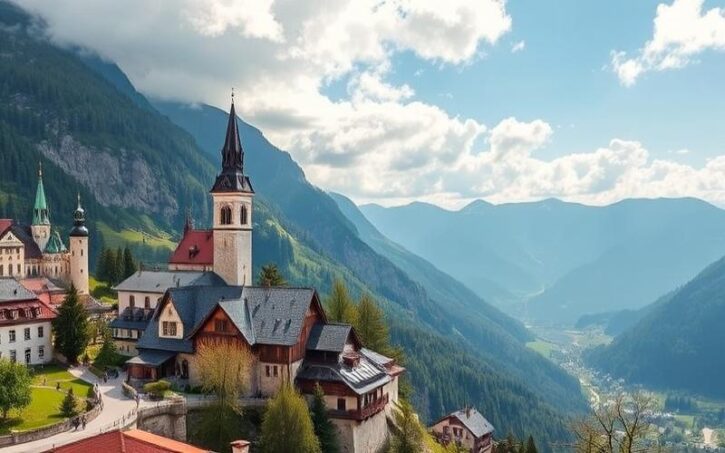
Acquiring a hotel in picturesque Liechtenstein represents a unique opportunity to combine investment and quality of life in one of Europe’s most prosperous and charming countries. Nestled between Switzerland and Austria, Liechtenstein attracts visitors with its breathtaking alpine landscapes and rich cultural history, offering unprecedented potential for the hotel industry.
Good to know:
Liechtenstein is a highly prosperous country with a stable economy, making it an attractive destination for real estate investors.
However, this tiny but powerful country has specific economic and legal characteristics that are crucial to understand before embarking on such an endeavor. This comprehensive guide provides you with a detailed checklist, exploring the steps to follow, from administrative procedures to financial considerations, to ensure your project of buying a hotel in this exclusive destination is successful.
Overview of the Hotel Real Estate Market in Liechtenstein
The hotel real estate market in Liechtenstein features a compact structure and a stable environment, with prices generally lower than those in Switzerland, but showing moderate growth in recent years. This stability is explained by the strong legal certainty, low public debt levels, and favorable economic dynamics of the country.
| Indicator | Value/Observation |
| Price Growth | Moderate increase |
| Residential Occupancy Rate | ~95% |
| Office Vacancy Rate | 19.2% (Q3 2023) |
Current Trends:
- Strong demand for establishments integrating multifunctional spaces (accommodation, coworking, dining).
- Rise of lifestyle and eco-responsible hotels meeting the expectations of a demanding international clientele.
- Focus on continuous service improvement and renovations to move upmarket.
Factors Influencing Supply and Demand:
- Liechtenstein’s tax attractiveness for international investors.
- Economic and political stability reinforcing confidence in the hotel sector.
- Shift in demand towards hybrid hotel/office/residential concepts in some peripheral municipalities.
Attractive Geographic Areas:
Purchase opportunities are mainly concentrated:
- In close proximity to administrative and financial centers, such as Vaduz or Schaan, where international companies, banking institutions, and public administrations are located.
- In some dynamic peripheral municipalities, thanks to the emergence of mixed-use real estate projects suited to a diverse clientele.
Notable recent examples:
Several transactions involving mixed-use or hotel properties have been recorded near the administrative center in recent quarters. These operations demonstrate a growing interest in assets offering flexibility of use.
Relevant Economic Indicators:
- The high residential occupancy rate (~95%) reflects constant pressure on the overall real estate supply.
- Tourism growth remains strong despite an uncertain international context; this directly benefits the hotel sector through sustained high average daily rate (ADR) and revenue per available room (RevPAR).
Influential Economic Factors:
- Local macroeconomic stability
- Low unemployment
- High purchasing power
Impact of Government Policies:
The regulatory framework in Liechtenstein is favorable to real estate investments while remaining selective. Authorities encourage projects that add tourist value or meet strict environmental standards. The controlled openness towards foreign investors also helps preserve the local fabric while stimulating specialized segments like high-end or eco-responsible hospitality.
The combination of institutional stability, sectoral innovation (lifestyle/eco-responsible hotels), targeted public support, and strategic location makes Liechtenstein a confidential but attractive market for hotel real estate today.
Good to know:
The hotel real estate market in Liechtenstein, although small in size compared to its European neighbors, shows stable growth, supported by a resilient economy and high-end tourism. Demand is mainly concentrated in the Vaduz region and Balzers, where supply remains limited, leading to increased competition for attractive properties. Recently, notable transactions have included the acquisition of small boutique hotels, often converted into luxury establishments to attract an international clientele. Recent performance has proven solid, with high occupancy rates and attractive financial returns. Government policies favor foreign investment, but strict urban planning regulations can influence the availability of real estate projects. Additionally, the focus on sustainable tourism offers buyers the opportunity to position themselves in a sector undergoing ecological transformation.
Key Steps of Due Diligence for Buying a Hotel in Liechtenstein
Assessment of Permits and Regulatory Compliance
- Verify that the hotel has all the required hotel operating licenses, including local and sector-specific authorizations.
- Confirm compliance with urban planning, safety (fire, accessibility), health, and environmental standards in force in Liechtenstein.
- For a foreign investor, three years of prior residence is required before purchasing real estate. Opening a company (usually an LLC) is mandatory to manage the hotel establishment.
Financial Analysis
List of items to examine:
- Financial statements for the last three to five years
- Profitability: profit margins, average occupancy rate
- Level and structure of existing debts
- Operating expenses compared to local hotel sector ratios
Summary table:
| Financial Element | To Verify |
|---|---|
| Revenue | Annual trend |
| Net Income | Stability / growth |
| Debts | Amounts & maturities |
| Fixed/Variable Costs | Sector comparison |
Physical Inspection of the Property
Key points to check during the technical visit:
- Main building structure: foundations, roof, facades
- Technical installations: heating/air conditioning, plumbing, electricity
- Common areas (reception, restaurant), rooms and suites
- Compliance with current standards; budget estimate for necessary work
Practical tip:
Hire an independent local expert to carry out a complete diagnosis.
Verification of Existing Contracts
To systematically review:
- Commercial or emphyteutic leases on the land or ancillary premises
- Strategic supplier contracts (laundry, catering)
- Commitments with staff: individual/collective contracts
- Software or technology licenses specific to hospitality
Study of Competition in the Local Market
Recommended analysis points:
- Direct identification of competitors in the same range
- Comparative analysis of prices/services/offerings
- Average occupancy rate by hotel category in Liechtenstein
Useful resource:
Local chambers of commerce and specialized agencies can provide updated sector studies.
Legal and Tax Implications
Main regulatory/tax points:
- Mandatory notarial formalities during real estate or corporate transfer
- Corporate income tax applied according to the Liechtenstein tax regime; possibility of benefiting from specific tax advantages, particularly through certain local corporate structures
- VAT applicable on hotel services; reporting obligation
Practical tip:
Seek a specialized local lawyer to validate all legal aspects related to the chosen legal structure, as well as an accountant familiar with local tax laws.
Good to know:
When buying a hotel in Liechtenstein, it is crucial to follow several key steps to ensure thorough due diligence. First, ensure the hotel complies with all local regulations, particularly by obtaining the necessary operating licenses. A thorough financial analysis is essential, examining past financial statements, profitability, and existing debts. It is also important to physically inspect the property to assess the condition of the infrastructure and identify any renovation needs. Verify all existing contracts, including leases, supplier agreements, and staff commitments, to avoid any unpleasant surprises. Study the local competition to strategically position the hotel in the Liechtenstein market. In terms of taxation, fully understand the obligations and potential benefits, such as corporate income tax and possible tax advantages. Engaging local experts, such as specialized lawyers or accountants, can be a valuable asset in navigating this complex process.
Analysis of Tourism Statistics and Trends in Liechtenstein
In 2022, Liechtenstein welcomed approximately 101,000 international visitors, making it the least visited country in Europe. This figure represents a slight increase compared to pre-pandemic years, but remains modest compared to other European microstates like Monaco, which received more than three times as many visitors on a much smaller area.
Statistics and Hotel Capacity:
- Annual number of visitors (2022): 101,000
- Recorded accommodation capacity (2019):
- 33 hotel establishments
- 63 vacation apartments
- 2 campsites
- 1 youth hostel
- A few mountain refuges
| Year | Tourist Arrivals |
|---|---|
| 2020 | ~58,400 |
| 2022 | ~101,000 |
Main Nationalities of Tourists:
Although precise data by nationality is not detailed for recent years in the available results, the majority of tourists generally come from neighboring countries:
- Switzerland
- Austria
- Germany
Geographic proximity and ease of access explain this high proportion.
Tourist Seasons:
Liechtenstein experiences two main periods of influx:
- High season: Summer (hiking, nature tourism), winter (alpine sports)
- Low season: Spring and autumn
Emerging Tourism Trends in Liechtenstein:
The following trends are shaping the local tourism offering:
- Growth of cultural tourism around the princely heritage and museums.
- Development of sports tourism with a marked appeal for hiking, mountain biking, and skiing.
- Growing interest in ecological tourism thanks to preserved landscapes, alpine wildlife, and marked trails.
“The limited but growing number of visitors is turning towards authentic experiences focused on nature or local history.”
Factors Influencing Tourism Growth:
List of key factors:
- Efficient road infrastructure easily connecting Vaduz to major neighboring cities.
- Limited hotel offering sometimes restricting capacity during seasonal peaks.
| Factor | Impact |
|---|---|
| Accessibility | Good |
| Hotel Capacity | Structural limitation |
| Promotion | Low international visibility |
The potential impact of tourism development on the hotel market is significant. A sustained increase in tourist flow would quickly accentuate the need for modern and diversified accommodation.
Forecasts & Opportunities for Investors:
According to recent sector analyses, a gradual recovery is expected across post-pandemic Europe. For a hotel investor in Liechtenstein:
- Undersaturated market with opportunities for innovation in high-end or eco-responsible accommodation.
- Potential around slow tourism (extended stays focused on nature/culture).
- Increased demand during occasional sporting or cultural events.
Main challenges:
- Small size of the local market limiting certain economies of scale.
- Pronounced seasonality requiring operational flexibility.
⎯⎯⎯⎯
For any hotel project in Liechtenstein, it is therefore advisable to focus on regional authenticity as well as diversification adapted to a moderate but high-quality flow.
Good to know:
In 2022, Liechtenstein welcomed approximately 90,000 visitors, with a majority of tourists coming from Switzerland, Austria, and Germany. Summer months see increased traffic, particularly for outdoor tourism like hiking and cycling, while winter attracts winter sports enthusiasts to the Alps. Cultural tourism, especially around museums and local events, is expanding rapidly. Recent infrastructure improvements, including upgraded roads and accommodations, support this growth. However, hotel capacities remain limited, creating an opportunity for investors. Forecasts indicate a 5% annual increase in visit rates, stimulating the hotel market, although the high cost of living and the country’s small size may pose challenges for sustained development.
Disclaimer: The information provided on this website is for informational purposes only and does not constitute financial, legal, or professional advice. We encourage you to consult qualified experts before making any investment, real estate, or expatriation decisions. Although we strive to maintain up-to-date and accurate information, we do not guarantee the completeness, accuracy, or timeliness of the proposed content. As investment and expatriation involve risks, we disclaim any liability for potential losses or damages arising from the use of this site. Your use of this site confirms your acceptance of these terms and your understanding of the associated risks.

Cyril Jarnias is an independent expert in international wealth management with over 20 years of experience. As an expatriate himself, he is dedicated to helping individuals and business leaders build, protect, and pass on their wealth with complete peace of mind.
On his website, cyriljarnias.com, he shares his expertise on international real estate, offshore company formation, and expatriation.
Thanks to his expertise, he offers sound advice to optimize his clients' wealth management. Cyril Jarnias is also recognized for his appearances in many prestigious media outlets such as BFM Business, les Français de l’étranger, Le Figaro, Les Echos, and Mieux vivre votre argent, where he shares his knowledge and know-how in wealth management.





