
 Published on and written by Cyril Jarnias
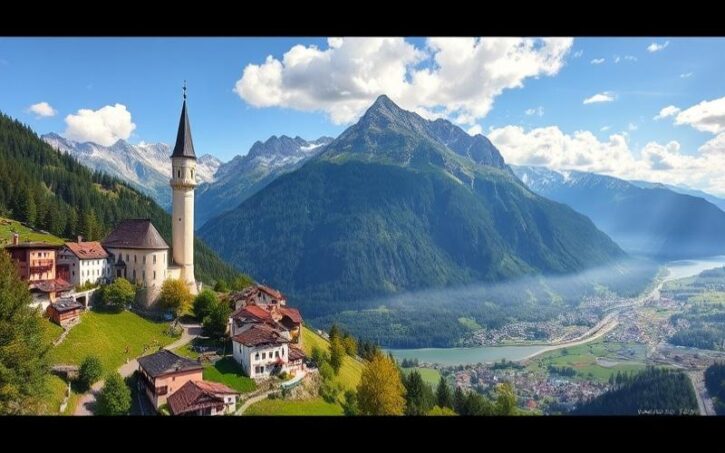
Nestled between Switzerland and Austria, Liechtenstein is a principality with breathtaking alpine landscapes
Renovating a property in this green setting can be a fascinating yet complex undertaking, requiring precise knowledge of local regulations and traditional techniques.
By embracing the natural and cultural riches of this region, it is crucial to adopt a harmonious approach that respects the unique style of the buildings while integrating elements of modern design to create an exceptional living space.
Good to know:
Liechtenstein has strict renovation rules to preserve its unique architectural heritage.
Whether you have acquired a rustic chalet or a more contemporary home, this guide will walk you through the essential steps, from legal considerations to material selection, to transform your renovation project into a true alpine gem.
Increasing the value of your property in Liechtenstein through renovation
Assessing the current condition of a property before any renovation is a crucial step. This evaluation helps identify structural defects, value enhancement potential, and regulatory or technical constraints that could impact the feasibility of planned projects.
Types of renovations that typically add the most value
- Kitchen and bathroom modernization: These spaces are often key in real estate valuation, as they strongly influence the overall impression of the property during a resale or rental.
- Energy efficiency improvements: Installing triple-glazed windows, effective insulation, or an environmentally friendly heating system meets growing ecological expectations while reducing energy costs.
- Adding extra spaces: Creating an additional bedroom, finishing an attic, or converting a basement directly increases the living area and thus the property’s value.
- Functional transformation of existing rooms: Adapting open spaces to meet the growing demand for remote work (home office) or creating built-in storage.
| Type of Intervention | Value Increase Potential | Complexity / Regulation |
|---|---|---|
| Kitchen/bathroom modernization | High | Medium |
| Thermal insulation/green solutions | High | High |
| Extension/addition of room | Very high | Very high |
| Functional transformation | Medium | Low to medium |
Current real estate market trends in Liechtenstein show that the sector remains very closed, with few available listings and strong domestic demand. Property acquisition is subject to strict restrictions for non-residents: you must reside there for at least three years and obtain several specific permits. Transactions mainly involve those already permanently settled in the country. This context further accentuates the interest in carefully renovated properties, especially those offering increased energy efficiency and interior modularity.
Local regulations
Local regulations require that each project strictly adhere to the municipal building code and the local zoning plan. Procedures include:
- Prior submission to municipal authorities
- Mandatory obtaining of a permit issued by the competent office (ABI), after simultaneous consultation with several bodies
- Regular inspections during and after work by the municipal fire service
- Compliant connection to public networks
Choosing contractors
The choice of contractors should be based on these essential criteria:
Prioritize:
- Companies with proven local experience
- Professionals holding at least:
- A university degree in engineering/construction
- Official registration as a local architect/engineer
- An appropriate certification recognized by the authorities
To ensure budget/deadline compliance:
Practical tips:
- Request several detailed quotes
- Favor those offering regular follow-up with interim reporting
- Systematically check recent local references
“A successful project always begins with a thorough analysis followed by a rigorous selection of qualified local stakeholders. This not only helps avoid any administrative delays but also any costly technical setbacks.”
Good to know:
Before starting renovation work in Liechtenstein, it is essential to carefully assess the current condition of your property to target improvements that add the most value, such as kitchen and bathroom modernization. Investing in energy efficiency with eco-friendly systems, and adding extra spaces or transforming existing rooms can significantly increase your property’s value. With the local real estate market being dynamic, with growing demand for modern and sustainable constructions, it is crucial to follow trends to guide your renovation choices. Additionally, comply with local building regulations, which can influence project planning. To optimize return on investment and ensure deadlines and budget are met, carefully select your contractors and project managers, verifying their references and experience on similar projects.
Key steps for a successful renovation
The success of a property renovation in Liechtenstein relies on precise planning, compliance with local regulations, and the enhancement of architectural heritage.
Importance of detailed planning
- A thorough assessment of the property’s current condition helps detect existing structural or heritage constraints.
- Clearly defining objectives (expansion, energy improvement, historical restoration) guides the choice of suitable techniques and materials.
- A realistic budget and a preliminary schedule must be established upfront to anticipate unforeseen events.
Legal requirements and local permits
- Any renovation must comply with the Land Acquisition Act as well as strict urban planning and construction regulations.
- Obtaining a building permit in advance is mandatory. Procedures vary depending on the owner’s status (resident or non-resident), sometimes requiring additional government authorization for non-residents who have resided in the country for more than three years.
- The professions involved (architect, project manager) must have locally recognized specialized training and hold an official professional license.
| Project Owner Status | Required Conditions | Access to Renovation |
|---|---|---|
| Permanent resident | Prior authorization + work permit | Yes |
| Non-resident | Residence permit + 3 years presence + government authorization + work permit | Very limited |
Environmental impact
Any intervention must include an environmental assessment: responsible waste management, choice of sustainable materials, compliance with current energy standards.
Ensuring the reliability of local service providers
- Select exclusively architects/contractors holding a valid local license.
- Verify their specialized diplomas recognized by the National Economic Bureau; require proof of recent similar past experiences (minimum two years after training).
- Request references from previous projects in the region.
Typical renovation process
- Selective demolition or careful dismantling according to heritage requirements
- Reconstruction/modernization in strict compliance with the issued permit
- Regular monitoring by a locally approved project manager
- Mandatory interim inspections before any structural stage
- Final acceptance with technical quality control and administrative compliance
Budget & tax tips
The tax framework may include certain incentives for energy renovations or heritage preservation: inquire with municipal authorities about available one-time subsidies for thermal insulation or modern solar installations.
- Ensure all applicable taxes are included in the initial estimate to avoid any subsequent overruns.
Preserving tradition & authenticity while innovating sustainably
“Combining local artisans specialized in traditional know-how with a contemporary architect often allows:
- Preserving historical facades,
- Discreetly integrating modern equipment,
- And thus sustainably enhancing both the aesthetic and market value of the renovated property.”
Key points:
- Favor natural materials sourced from the territory;
- Preserve original decorative elements whenever possible;
- Consider interior modularity to meet future needs without altering the initial character;
- Respect the overall harmony with the surrounding neighborhood while innovating in terms of energy performance.
Well-executed, such an approach guarantees technical longevity and optimal financial appreciation at the heart of Liechtenstein.
Good to know:
To successfully renovate a property in Liechtenstein, rigorous planning is crucial; start by accurately assessing the property’s current condition and defining your renovation goals. Ensure you comply with local legal requirements and obtain all necessary permits to avoid costly delays. Consider the potential environmental impact and opt for eco-friendly solutions. Hire qualified local contractors and architects, verifying their references and past experience to guarantee quality work. Renovation steps often include demolition, reconstruction, and final inspection; maintain strict budget and schedule tracking. Take into account tax implications and explore available subsidies to reduce costs. Finally, blend tradition and modernity by integrating sustainable elements that enhance the authenticity of the place, while adding a contemporary touch.
Optimizing your budget and financing for renovation
Estimating renovation costs in Liechtenstein requires a rigorous approach, as the local market has significant specificities.
- Price per square meter: Maintenance and renovation costs for an older property can reach several hundred euros per square meter over ten years, depending on the condition of the home and the work required.
- Prices vary greatly depending on location: in Vaduz, the average price per m² ranges between €5,000 and €12,000, while in other towns in the country, it is generally lower but remains high for the region.
| Type of Expense | Indicative Range (€ /m²) | Comments |
|---|---|---|
| Maintenance/renovation | Several hundred over 10 years | Depending on age and scope of work |
| Property purchase | 5,000 – 12,000 (Vaduz) | Lower prices outside Vaduz |
| Materials | Dependent on European market | High variability |
| Labor | Higher than in Central Europe | Skilled labor in demand |
- Labor: Skilled labor is more expensive than in Central Europe due to low local unemployment and high demand.
- Materials: The cost largely depends on European imports. Anticipate variability due to currency or logistical fluctuations.
Practical tips for estimation
- Systematically request several detailed quotes from local craftsmen.
- Include a specific line item in your initial budget for contingencies (generally recommended at 10 to 20% of the total estimated amount).
Financing options available in Liechtenstein
List of common solutions:
- Standard mortgage or renovation-specific loan
- One-time government subsidies (mainly focused on energy improvement)
- Possible tax benefits for renovations targeting energy efficiency
For older properties:
Aid is mainly accessible if you undertake work involving insulation or replacing outdated equipment with energy-efficient installations.
For new builds:
Easier access to specific loans and energy subsidies; reduced ancillary costs.
Planning an emergency budget
It is essential to include an additional financial reserve to cover potential unforeseen extra costs related in particular to:
- The discovery of hidden defects after the start of the project
- A sudden increase in material prices
- Any unanticipated regulatory requirement
The standard recommendation is therefore:
Total budget = Initial estimate + (10% to 20% reserve)
Potential impact of Liechtenstein regulations
Local rules often impose strict compliance with:
- Recent energy standards (enhanced thermal insulation, efficient heating system installation…)
This can lead to:
- A mandatory extra cost during major renovation or complete transformation;
- An administrative obligation that sometimes delays certain projects — include this additional time in your budget planning.
Concrete strategies to save without sacrificing quality
- Systematically compare multiple supplier/craftsman offers before any contractual commitment
- Favor off-peak periods to carry out your work to obtain better labor rates
- Opt, when possible, for the reuse/partial valorization of existing elements rather than complete replacement
- Plan each phase precisely, limit late modifications that generate technical/logistical extra costs
- Favor certified efficient materials over unnecessary high-end ones: good value for money always trumps visual prestige
Good to know:
To estimate renovation costs in Liechtenstein, it is crucial to compare material and labor prices considering local fluctuations; for example, wood and craftsmanship may be more expensive than elsewhere. Homeowners can consider mortgages specifically dedicated to renovations or explore available government subsidies. An emergency budget is essential to cover unforeseen extra costs, often caused by local regulatory constraints. Planning effectively, such as buying materials during sales or hiring craftsmen during off-peak periods, can yield substantial savings without compromising work quality.
⚠️ Good technical anticipation combined with regular monitoring of tax schemes/subsidies often allows for significant financial gain during a real estate operation in Liechtenstein.
Choosing the right materials for a sustainable renovation
For a sustainable renovation in Liechtenstein, it is essential to choose materials wisely, favoring those that are ecological, local, renewable, or recycled.
Ecological and local materials available in the region:
- Local wood: natural material, hygienic, thermal and acoustic insulator, can last up to 100 years if well maintained.
- Cork: derived from the bark of cork oaks, recyclable and antistatic.
- Fine stoneware and local natural stones: durable, easy to maintain, and suitable for people with allergies.
- Ecological Green Vinyl: suitable for wet rooms with low emission of harmful substances.
These materials offer a wide choice for flooring or other uses in renovation.
Advantages of renewable and recycled materials for sustainable renovation:
- Significant reduction of the carbon footprint due to their low impact on natural resources.
- Improved indoor quality by limiting harmful volatile organic compounds (VOCs).
- Increased durability with products often more resistant to wear (e.g., oiled wood or cork).
- Contribution to the circular economy through resource reuse (e.g., carpets made from recycled fibers).
Local regulations concerning sustainable materials in Liechtenstein:
Liechtenstein strongly encourages the use of energy-efficient materials in the building sector. Regulations emphasize:
- The use of high-performance insulation,
- Low-emissivity windows,
- Sustainable roofing systems,
with the aim of improving the overall energy efficiency of buildings while reducing their polluting emissions. These standards are part of a national policy aimed at mitigating climate change.
| Theme | Key Details |
|---|---|
| Preferred materials | Local wood, cork, fine stoneware |
| Regulatory objectives | Enhanced energy efficiency |
| Technical standards | High-performance insulation; low-emission windows |
| Initiatives | Public campaigns to raise awareness of sustainable practices |
Local suppliers or artisans specialized in these ecological materials:
Although few are explicitly named here, several suppliers like HORNBACH Luxembourg offer a wide range of ecological products suitable near Liechtenstein. Furthermore:
- Artisans specialized in local wood,
- Cork specialists,
are present locally to support each customized project according to environmental criteria.
The growing importance given to energy efficiency, illustrated by examples such as the Active Energy Building in Vaduz — which produces more energy than it consumes thanks notably to geothermal and solar energy — demonstrates how much these choices have a positive impact both environmentally and functionally.
Finally,
possible incentives in Liechtenstein include:
- Financial aid related to renovations incorporating green technologies,
- Government campaigns promoting responsible construction,
thus fostering a strong commitment towards a sustainably built future.
Favoring local materials also significantly reduces the carbon footprint associated with transport.
Choosing certified low-emission products guarantees better indoor air quality.
Integrating energy efficiency + intelligent use of resources = central pillar of a successful renovation in Liechtenstein.
Good to know:
For a sustainable renovation in Liechtenstein, favor ecological and local materials like FSC-certified wood from neighboring forests or natural clay. Renewable and recycled materials, such as sheep’s wool insulation or recycled terracotta bricks, offer many advantages by reducing the carbon footprint. Subscribing to local regulations is essential, as they encourage the use of sustainable materials and energy efficiency, and often include tax incentives. Collaborate with local suppliers or artisans specialized in ecological materials, such as Ökohof Allgäu, to find solutions suited to your project. Finally, optimizing thermal insulation aims not only to meet eco-energy standards but also to improve your comfort while minimizing environmental impact.
Disclaimer: The information provided on this website is for informational purposes only and does not constitute financial, legal, or professional advice. We encourage you to consult qualified experts before making any investment, real estate, or expatriation decisions. Although we strive to maintain up-to-date and accurate information, we do not guarantee the completeness, accuracy, or timeliness of the proposed content. As investment and expatriation involve risks, we disclaim any liability for potential losses or damages arising from the use of this site. Your use of this site confirms your acceptance of these terms and your understanding of the associated risks.

Cyril Jarnias is an independent expert in international wealth management with over 20 years of experience. As an expatriate himself, he is dedicated to helping individuals and business leaders build, protect, and pass on their wealth with complete peace of mind.
On his website, cyriljarnias.com, he shares his expertise on international real estate, offshore company formation, and expatriation.
Thanks to his expertise, he offers sound advice to optimize his clients' wealth management. Cyril Jarnias is also recognized for his appearances in many prestigious media outlets such as BFM Business, les Français de l’étranger, Le Figaro, Les Echos, and Mieux vivre votre argent, where he shares his knowledge and know-how in wealth management.





