
 Published on and written by Cyril Jarnias
Investing in Student Residences in Liechtenstein: An Opportunity to Seize
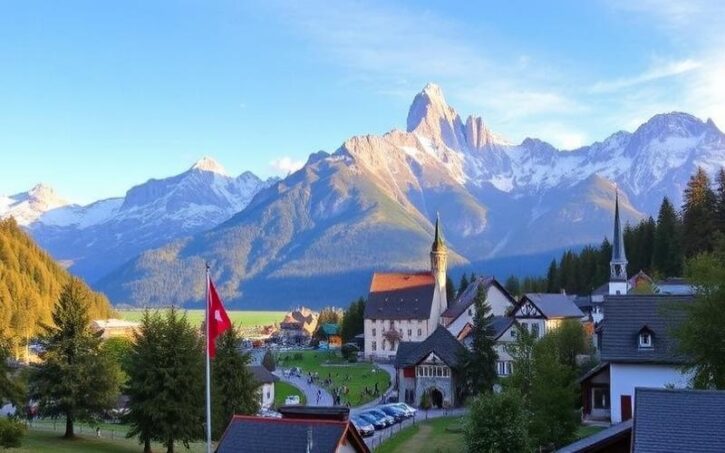
Nestled in the heart of the Alps, the small principality of Liechtenstein is increasingly attracting the attention of real estate investors, particularly in the student residence sector. This previously underestimated market now offers intriguing prospects thanks to the continuous increase in the number of international students drawn by its renowned universities and the country’s exceptional quality of life.
A Thriving Center of Academic Excellence
As Liechtenstein strengthens its reputation as a center of academic excellence, student residences are becoming a strategic asset to capitalize on this momentum.
Good to Know:
Liechtenstein is home to several renowned university institutions that attract students from around the world, creating a constant demand for quality student housing.
Profitability of Student Residences: A Comparative Analysis
But the question remains: is investing in this sector truly profitable compared to other real estate opportunities in the region?
Analysis of the Student Housing Market in Liechtenstein
The student housing market in Liechtenstein is heavily influenced by several economic, structural, and social factors.
Major Economic Factors:
- Country Size:
- Liechtenstein, with a small population and limited area, has a reduced housing stock. This structural scarcity puts pressure on the supply of student housing.
- Stable Economic Environment:
- The country’s political and economic stability attracts not only local but also international students. This fosters continuous investment in the student housing sector, notably through innovative projects like co-living spaces.
- Education Policies:
- Public policies encourage international mobility and the development of specialized higher education programs, which supports a constant demand for housing suited to student needs.
Current Trends in the Student Housing Market:
| Indicator | Value/Observation |
|---|---|
| Occupancy Rate | Close to 100% in university hubs |
| Average Cost per Square Meter | Precise data missing; upward trend |
| Monthly Price for a Student Room (Regional Example) | Approximately €398 in February 2025 (European reference) |
- Demand remains very strong against a limited supply, creating near-full occupancy of student residences throughout the academic year.
- The average cost of student housing is rising steadily due to the combined effect of scarcity and moderate inflation.
International Student Mobility:
- Liechtenstein’s growing attractiveness to foreign students intensifies pressure on the rental market. These international flows stimulate the development of flexible offerings such as:
- Shared apartments
- Co-living spaces with shared services
In Liechtenstein, co-living is booming… meeting the need for affordable housing… This concept particularly attracts young professionals and expatriates.
Role of University Institutions and Educational Organizations:
Local universities play a driving role:
- They contract with private developers or public entities to develop or renovate their residential stock.
- They are also successfully experimenting with the “co-living” model, often in partnership with innovative real estate startups or local associative structures that offer:
- Multifunctional housing
- Integration of community spaces (coworking/wellness)
- Easy access to urban centers
Initiatives such as Urban Nexus offer multifunctional spaces… making them attractive to a new generation.
Coordinated actions between universities and local authorities thus allow:
- Gradually increasing the overall supply,
- Maintaining a high occupancy rate,
- Quickly adapting the residential typology to the changing student demographics.
Summary List – Key Factors Impacting the Market in Liechtenstein:
- Land scarcity due to the small national size
- Growing demand driven by international mobility
- Upward pressure on prices per m²
- Rapid rise of co-living adapted to young adults
- Proactive strategies by local educational institutions
The current dynamism thus rests on both a solid macroeconomic foundation and institutional agility in the face of new student lifestyles.
Good to Know:
In Liechtenstein, the analysis of the student housing market reveals a unique dynamic influenced by the country’s small size, its stable economic environment, and encouraging educational policies. In 2023, the occupancy rate for student housing in the principality hovered around 95%, reflecting strong demand attributed not only to the local student population but also to growing international mobility fostered by renowned academic institutions. The average cost per square meter for student housing is 7,000 CHF, a figure driven by a market with a limited supply of new construction. Although small, the influence of local universities and educational organizations on residence development is notable, particularly with initiatives aimed at increasing the student housing stock to meet growing demand, ensuring a stable and profitable investment potential in this sector.
The Yield of University Residences: A Financial Asset
University residences in Liechtenstein represent a particularly attractive investment opportunity thanks to several favorable economic, regulatory, and tax factors.
Key Factors of Yield
- High Occupancy Rates
The student rental market in Liechtenstein is characterized by constant demand, linked to the limited capacity of local universities and the international attractiveness of certain programs. Occupancy rates frequently exceed 95%, ensuring a stable income stream for owners. - Competitive Average Rents
Monthly rents for a room in a university residence range from around 600 to 900 Swiss francs depending on location and level of service. This range allows for an attractive annual gross yield in the local context where land pressure is controlled.
| Indicator | Typical Value |
|---|---|
| Occupancy Rate | >95% |
| Monthly Rent (Room) | 600–900 CHF |
| Estimated Gross Yield | ~4–6% |
Trends in the Student Rental Market
The steady growth in the number of international students, combined with public policies favoring access to higher education, supports the stability of this real estate segment. At the same time, supply remains moderate to ensure good quality and avoid saturation of the existing stock.
Tax Advantages and Favorable Regulations
- Favorable Taxation
Liechtenstein generally applies moderate tax rates on real estate income compared to other European countries. Some investments also benefit from flat or reduced taxation on rental yields. - Incentive Regulations
The regulatory framework encourages energy renovation and sustainable development in the residential sector. Deductions or credits are available for projects that meet new energy standards. - Administrative Simplicity
The stable administrative environment significantly reduces investment risks while allowing for easier management of student real estate assets.
“The asset provides an annual return of 4% (‘notional tax’). This return is taxed at the flat rate… since reduced to 25%.”
Portfolio Diversification
Investing in university residences allows:
- Diversifying one’s real estate portfolio with an asset that is weakly correlated to the traditional residential market,
- Benefiting from a regular rental income stream ensured by student demand,
- Increasing resilience to classic economic cycles thanks to the counter-cyclical nature of student housing.
Economic Stability of Liechtenstein
The internationally recognized financial and macroeconomic strength strongly limits the systemic risk associated with real estate investments. This stability translates into:
- Low price volatility
- A robust banking environment
- Optimal legal security
These elements therefore make university residences in Liechtenstein a high-performing vehicle both financially and securely for any investor seeking stable returns, portfolio diversification, and controlled minimization of structural risks.
Good to Know:
University residences in Liechtenstein prove to be a particularly lucrative investment thanks to several key factors, notably an occupancy rate generally exceeding 95% due to constant demand from local and international students. Average rents amount to around 500 to 700 CHF per month, ensuring a stable income stream for investors. In addition, the student rental market benefits from Liechtenstein’s economic stability, which minimizes investment risks. Tax advantages, such as specific deductions for real estate used for student rental purposes, and favorable regulations significantly increase financial returns. Investing in university residences also allows for diversifying one’s real estate portfolio, adding a layer of security against economic fluctuations.
Liechtenstein is attracting more and more Erasmus students, notably thanks to its strategic position in the heart of Europe, its economic stability, and the quality of its higher education institutions. The country, although small (about 40,000 inhabitants), benefits from its proximity to Switzerland, Austria, and Germany. This fosters university and cultural exchanges.
Main Reasons for Liechtenstein’s Growing Success with Erasmus Students:
- Excellent quality of life and secure environment
- High-performing education system with close ties to the Swiss and Austrian markets
- Multilingualism facilitating integration for international students
- Small size making it quick to build a social network
| Aspect | Economic Advantages | Cultural Advantages |
|---|---|---|
| Cost | Sharing rent in a tight rental market | Easier access to central housing |
| Daily Life | Reduction of current expenses (energy, internet) | Immersion in an international community |
| Networking | Pooling of expenses | Intercultural discovery |
Economically, shared accommodation allows students to cope with the high rents observed mainly in Schaan (the largest city) or Vaduz (capital). Culturally, it promotes rapid integration through daily sharing with other young people from around the world.
Recent Statistics on Student Mobility
The total number of non-permanent students exceeded 950 at the end of 2023. Among them, a significant portion are part of the Erasmus program, although the exact figure is not publicly detailed. Nevertheless, a slight annual increase in the total number of registered foreign residents is observed (+5% between 2010 and 2015).
Recent Evolution:
| Academic Year | Registered International Students |
|---|---|
| 2020/21 | 1,213 |
| 2021/22 | 1,227 |
| 2022/23 | 1,200 |
Demand for shared accommodation follows this steady progression.
Cities Where the Trend is Notable:
- Schaan: Largest urban student center.
- Vaduz: Administrative capital with several institutions.
- Balzers, Triesenberg, Eschen: Secondary cities where these offerings are gradually developing.
The impact on the local real estate market translates into:
- Increased pressure on available small units.
- Growing interest from local or cross-border investors wishing to offer housing suited to specific needs (furnished rooms in shared accommodations).
The high proportion of foreigners in the population (one-third) also helps to energize this real estate segment focused on temporary or semi-permanent accommodation.
Future Prospects for Investors:
- Likely increase in demand linked to the maintenance or even expected rise in the Erasmus flow.
- Higher profitability compared to a standard individual lease thanks to the subdivision into separately rented rooms.
Summary List of Opportunities:
- Conversion of family apartments into modern shared accommodations;
- Creation of local platforms dedicated exclusively to student housing;
- Development in all municipalities with academic institutions or connected via fast public transport to Schaan/Vaduz;
- Possible diversification via seasonal rentals during university off-peak periods.
The continued development of European programs and Liechtenstein’s growing attractiveness should guarantee a dynamic market for those wishing to invest in this specific sector.
Good to Know:
Liechtenstein has become an increasingly popular destination for Erasmus students, due to the quality of its higher education and its advantageous geographical location in Central Europe. The trend of Erasmus shared accommodations in the country has clearly intensified, offering students interesting economic opportunities through shared rents, while fostering cultural and linguistic immersion. Between 2020 and 2023, the number of Erasmus students increased by 25%, particularly influencing the cities of Vaduz and Balzers, where demand for shared accommodations has energized the local real estate market. This buzz offers investors a lucrative entry opportunity into the student housing sector in Liechtenstein, supporting the rigidities of the real estate market while meeting a growing demand for modern, well-located shared housing.
Disclaimer: The information provided on this website is for informational purposes only and does not constitute financial, legal, or professional advice. We encourage you to consult qualified experts before making any investment, real estate, or expatriation decisions. Although we strive to maintain up-to-date and accurate information, we do not guarantee the completeness, accuracy, or timeliness of the proposed content. As investment and expatriation involve risks, we disclaim any liability for potential losses or damages arising from the use of this site. Your use of this site confirms your acceptance of these terms and your understanding of the associated risks.

Cyril Jarnias is an independent expert in international wealth management with over 20 years of experience. As an expatriate himself, he is dedicated to helping individuals and business leaders build, protect, and pass on their wealth with complete peace of mind.
On his website, cyriljarnias.com, he shares his expertise on international real estate, offshore company formation, and expatriation.
Thanks to his expertise, he offers sound advice to optimize his clients' wealth management. Cyril Jarnias is also recognized for his appearances in many prestigious media outlets such as BFM Business, les Français de l’étranger, Le Figaro, Les Echos, and Mieux vivre votre argent, where he shares his knowledge and know-how in wealth management.





