
 Published on and written by Cyril Jarnias
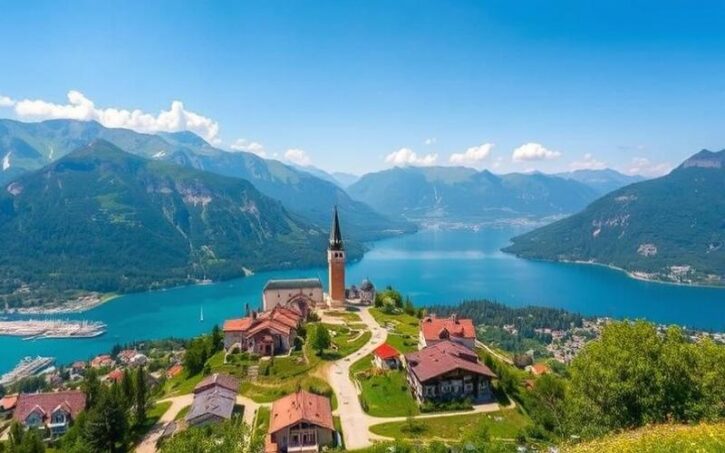
The country of Liechtenstein, although one of the smallest European states, is full of unexpected cultural treasures, notably through its artist villages that attract a growing number of creatives and curious visitors.
These unique artistic communities, often born from the initiative of enthusiasts eager to transform simple villages into vibrant cultural centers, now raise an intriguing question: are they primarily an investment in local culture or do they represent an economically profitable model for the country?
By exploring the various aspects of this dynamic, this article attempts to decipher how these villages influence not only Liechtenstein’s cultural landscape but also its tourist and economic appeal.
The Artistic and Real Estate Community in Liechtenstein
The collaboration between the artistic community and real estate developers in Liechtenstein manifests through initiatives that enhance both cultural heritage and architectural innovation. This synergy aims to develop artist villages, where contemporary creation, preservation of traditional buildings, and economic appeal intertwine.
Examples of Recent Projects:
| Project / Initiative | Actors Involved | Main Objective |
|---|---|---|
| Liechtenstein Triennial | Visarte Liechtenstein, Kunstraum Engländerbau, Kunstmuseum Liechtenstein | Platform for local and international contemporary artists |
| Restoration of an old farm into an ecological complex (Planken) | Local community, private investors | Sustainable development combining artistic accommodation and ecology |
The Liechtenstein Triennial is a striking example of this dynamic. Organized every three years in partnership with the country’s major cultural institutions, it offers a showcase for both local and international artists. The event fosters creative exchange while exploring new uses for urban or rural space through temporary or permanent artistic interventions.
Another illustrative project is the transformation of old farms in authentic villages such as Planken into ecological complexes integrating artist studios and community spaces. These operations are often carried out with the support of investors sensitive to cultural enhancement as well as the tax opportunity offered by the Liechtenstein framework.
Impacts on the Local Art Scene and Real Estate Market:
- Strengthened Art Scene
Collaborations allow artists to have suitable spaces to create, exhibit, or reside temporarily within the villages themselves. - Increased Attractiveness
The blend of preserved rural authenticity and active cultural life attracts not only creators but also an international audience as well as investors seeking heritage value. - Real Estate Enhancement
The active presence of the cultural sector directly contributes to enhancing the image—and therefore the value—of the local real estate stock.
Challenges Faced by Artistic Actors:
- Difficulty in ensuring sustainable financial accessibility in the face of increased real estate speculation.
- Constant need for dialogue between economic imperatives (profitability) driven by some private developers and community aspirations focused on cultural preservation.
- Need for stable funding to ensure the regular operation of spaces dedicated to artistic practices.
“We see not only more artists arriving in our village but also more curious visitors each year during events like the Triennial; this boosts our businesses while forcing us to think together about the future architectural face of the place,” explains a resident involved in a local committee dedicated to cultural development.
A partner gallerist testifies: “Collaborating with real estate developers has allowed not only a respectful renovation but also opening up to a new audience that comes as much for the aesthetic experience as to discover this exceptional corner of the Upper Rhine.”
These dynamics therefore demonstrate a gradual co-construction where cultural, economic, and social interests balance around the renewed concept of the Liechtenstein artist village.
Good to Know:
In Liechtenstein, the collaboration between the artistic community and real estate developers has given rise to artist villages such as Nendeln and Ruggell, where art intertwines with real estate development. These initiatives aim to create dynamic cultural centers, attracting talent and stimulating investments. Projects like ArtHub Nendeln illustrate this model, where artist studios and exhibition spaces are combined with innovative residences to attract an international clientele. However, integrating art into real estate development must juggle the specific needs of creators, such as the right to an accessible workspace. According to a resident of Ruggell, “these villages strengthen the cultural fabric, but we must ensure that artistic authenticity is not sacrificed for economic return.” The challenge remains to maintain a balance between artistic aspirations and real estate profitability, a crucial task for maximizing Liechtenstein’s cultural and economic reach.
Renovating a Farm into an Art Center: A Bold Gamble
Potential Challenges and Obstacles When Renovating a Farm into an Art Center in Liechtenstein:
- Strict urban planning regulations aimed at preserving the rural character, particularly local heritage protections that impose major constraints during any transformation of a historic building.
- Lengthy administrative procedures, especially for listed buildings or those with high heritage value, sometimes involving multiple levels of authorization.
- Need to obtain specific permits, particularly for foreign investors wishing to acquire or transform a property in these protected areas.
- Technical challenges related to heritage preservation, such as integrating contemporary requirements (accessibility, energy efficiency) while respecting the architectural and historical authenticity of the building.
“The renovation or rehabilitation of a historic farm not only allows for the preservation of an important part… but also comes with strict urban planning regulations aimed at preserving the rural character (local heritage protections)…”
Issues Related to Preserving Local Heritage:
- Maintaining the traditional architectural character while adapting the spaces to contemporary artistic needs
- Arbitrating between faithful restoration and the insertion of modern elements necessary for the center’s operation
- Raising awareness among the local population and gaining their support for the project
| Issues | Constraints |
|---|---|
| Preserving local identity | Respecting old materials |
| Modernizing for hosting | Discreet integration of modern technologies |
| Enhancing the site | Limiting structural modifications |
Potential Cultural Impact:
Creation of an artistic hub capable of energizing the local cultural scene through:
- Regular organization of exhibitions, residencies, and workshops open to local and international artists
- Increased involvement of the population in a renewed cultural offering (cultural participation)
- Strengthening the community spirit around the renovated heritage
Such a place also becomes an attractive factor for outside visitors, thus contributing to making Liechtenstein known as a cultural destination.
Expected Effects on the Local Economy:
List of positive spin-offs:
- Notable increase in tourist traffic outside the traditional season
- Indirect development of local businesses (cafés, accommodations, artisans)
- Possible creation of direct jobs (cultural mediators, managers) and indirect ones
Economic Viability & Funding Opportunities:
Potential sources:
- Public subsidies dedicated to safeguarding cultural heritage or regional development
- Partnerships with private foundations sensitive to artistic issues
- International sponsorship (notably through dedicated European programs)
- Own revenue from paid admissions, event rentals, or workshops
| Financial Source | Advantages | Limitations |
|---|---|---|
| Public subsidies | Structuring support | Competitive process |
| Private foundations/sponsorship | Flexibility | Often project-dependent |
| Revenue-generating activities | Gradual autonomy | Initial dependence |
The expected financial returns rely on a sustainable increase in attendance as well as a gradual diversification towards various ancillary profitable activities.
Comparable Successful Examples:
Non-exhaustive list:
- Fondation Louis Vuitton (France): Bold architectural conversion that energized an entire Parisian neighborhood through an international artistic program.
- Revitalization of the Liechtenstein Garden Palace: Exemplary transformation that preserved historical values while widely opening its renovated gardens to the public. This project allowed for significant tourist revaluation and strengthened the regional cultural image.
- European villages converted into art centers (e.g., Saint-Paul-de-Vence – France; Künstlerdorf Worpswede – Germany), which became local economic drivers through cultural tourism.
“…the revitalization saved this historic park, which has become a green oasis appreciated by its visitors…”
Transforming a historic Liechtenstein farm into an art center therefore presents as many challenges as strong opportunities to sustainably strengthen both local and national influence.
Good to Know:
Renovating a farm into an art center in Liechtenstein is a notable challenge, particularly due to strict regulations regarding the preservation of local heritage, often requiring costly architectural compromises to safeguard the authenticity of the buildings. This type of project could revitalize and energize the local art scene by attracting artists and visitors, while stimulating the economy through the organization of cultural events and job creation. Funding can be considered via European cultural subsidies and public-private partnerships. Successful examples such as the village of Künstlerdorf Schöppingen in Germany show that with a good economic model, the project can be profitable and have a significant cultural impact. However, ensuring long-term financial viability requires rigorous management and diversification of resources, including the establishment of paid workshops and temporary exhibitions.
Creative Eco-Villages: A Model for Liechtenstein’s Future
The integration of creative eco-villages in Liechtenstein represents a strategic lever for the country’s future, combining ecological preservation and artistic dynamism. Although Liechtenstein does not yet have a dedicated eco-village project specifically for creativity, its agricultural and environmental policies already lay solid foundations for such development. The country actively encourages organic farming (28% of farms), the conservation of local biodiversity, and ecological compensation zones, thus preserving natural habitats while limiting human impact on the environment.
A creative eco-village in Liechtenstein could build on these initiatives by going further: it would offer infrastructure built with local or recycled materials, powered by renewable energy (solar, hydroelectricity), integrating responsible water and waste management. These practices would ensure not only a minimal carbon footprint but also strengthen local resilience in the face of climate challenges.
Expected Benefits of a Creative Eco-Village:
| Aspect | Advantages |
|---|---|
| Ecological | Biodiversity protection, CO₂ reduction, energy autonomy |
| Artistic & Cultural | Workshops open to local/international artists, collaborative exhibition spaces |
| Social | Intergenerational sharing of traditional and innovative know-how |
| Economic | Increased tourist appeal through an original cultural offering; job creation linked to green culture |
By offering spaces dedicated to creativity, these villages would foster multidisciplinary artist residencies: shared workshops for visual artists or musicians in an inspiring environment close to nature. The interaction between permanent residents and visitors would nourish both social innovation and cultural production.
Inspiring International Examples:
- Findhorn (Scotland): famous for its ecological houses heated by renewable energy, its giant community organic garden, and its regular artistic programming.
- EcoVillage at Ithaca (USA): energy-autonomous passive houses combined with an open cultural center.
- Suderbyn Ecovillage (Sweden): complete circular economy with a complementary local currency fostering artistic exchanges.
- Vanuatu: villages merging traditional ecological practices (bio-based materials) with collective spaces dedicated to the performing arts.
Major Challenges Identified:
- Land acceptability in a restricted territory
- High initial funding due to innovative infrastructure
- Need for strong participatory governance
Potential Solutions:
- Public/private support via green subsidies or European funds
- Cooperative model including residents-artists-social investors
- Gradual integration into existing urban plans in partnership with local cultural institutions
Adopting this model would allow Liechtenstein not only to preserve its ecological integrity but also to sustainably enrich its cultural landscape, while offering a profitable economic alternative thanks to the growing international appeal of responsible artistic tourism.
Good to Know:
In Liechtenstein, initiatives to develop creative eco-villages are emerging as a promising model for the future, marrying sustainable development and cultural enrichment. These villages can serve as spaces dedicated to artistic creation while preserving the country’s ecological integrity through environmentally friendly practices. By drawing inspiration from successful projects in countries like Sweden or Germany, where eco-villages attract artists and visitors, Liechtenstein could minimize its carbon footprint while diversifying its economy. These projects have the potential to put the country on the world map as a cultural destination, offering a profitable investment and meeting growing expectations for a sustainable lifestyle. However, their implementation will require overcoming logistical and societal challenges, such as integrating modern infrastructure while respecting local traditions, a task that could be facilitated by government support and attractive tax incentives.
Disclaimer: The information provided on this website is for informational purposes only and does not constitute financial, legal, or professional advice. We encourage you to consult qualified experts before making any investment, real estate, or expatriation decisions. Although we strive to maintain up-to-date and accurate information, we do not guarantee the completeness, accuracy, or timeliness of the proposed content. As investment and expatriation involve risks, we disclaim any liability for potential losses or damages arising from the use of this site. Your use of this site confirms your acceptance of these terms and your understanding of the associated risks.

Cyril Jarnias is an independent expert in international wealth management with over 20 years of experience. As an expatriate himself, he is dedicated to helping individuals and business leaders build, protect, and pass on their wealth with complete peace of mind.
On his website, cyriljarnias.com, he shares his expertise on international real estate, offshore company formation, and expatriation.
Thanks to his expertise, he offers sound advice to optimize his clients' wealth management. Cyril Jarnias is also recognized for his appearances in many prestigious media outlets such as BFM Business, les Français de l’étranger, Le Figaro, Les Echos, and Mieux vivre votre argent, where he shares his knowledge and know-how in wealth management.





