
 Published on and written by Cyril Jarnias
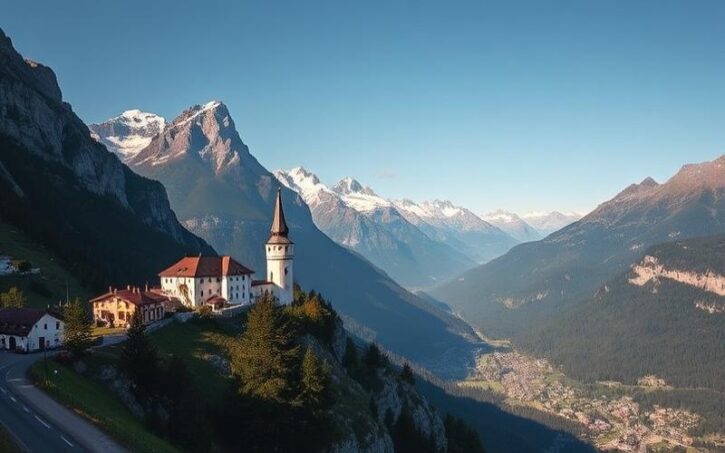
Nestled between Switzerland and Austria, the Principality of Liechtenstein is quietly transforming into a laboratory for innovative urban development. While this micro-state is often celebrated for its picturesque Alpine landscapes and economic stability, Liechtenstein is now poised to write a new chapter in its history by taking futuristic paths in urban planning.
With bold projects aimed at harmonizing tradition and modernity, the country is preparing to deploy a range of strategies focused on sustainability and improving the quality of life for its citizens. This forward-thinking approach could well position Liechtenstein as a model of resilience and innovation for other small nations around the world.
Urban Transformations: The Future of Liechtenstein
Recent urban transformations in Liechtenstein reflect a clear commitment to modernizing infrastructure while preserving quality of life and sustainability. Several recent and upcoming projects illustrate this dynamic, particularly in major towns like Vaduz, Schaan, and Ruggell.
| Project / Initiative | Sector | Potential Impact |
|---|---|---|
| Smart Traffic Management | Urban Mobility | Reduced congestion, lower pollutant emissions |
| Smart Waste Collection | Urban Management | Increased efficiency, reduced operational costs |
| “Sustainable City” Initiative | Participatory Urban Planning | Better adaptation to local needs, citizen involvement |
Infrastructure modernization involves integrating digital technologies in transportation (smart systems to ease traffic), energy (accelerated solar deployment), and waste management (sensors to optimize collection routes). These innovations contribute to more efficient management of public resources while addressing current environmental challenges.
Residential expansion focuses primarily on controlled densification around existing urban hubs to avoid urban sprawl. New neighborhoods prioritize functional diversity: accessible housing, integrated green spaces, and proximity to essential services. On the commercial side, areas like the KOKON campus in Ruggell exemplify this shift toward multifunctional spaces where innovative companies and community services coexist.
In terms of sustainable development and smart city innovation:
- Widespread integration of renewable energy in public buildings
- Active promotion of multimodal transportation
- Implementation of precise indicators to track economic and environmental impact
“Participatory urban planning not only allows each project to be tailored to the local context but also accelerates its acceptance by the population,” notes an expert from the Liechtenstein Institute for Strategic Development.
Local officials emphasize the importance of dialogue with civil society to ensure that every transformation effectively meets expectations regarding quality of life. Cooperation between the public sector, private sector, and residents thus aligns fully with current global trends: cities more resilient to climate change, a focus on energy efficiency from the urban design stage, and rapid adoption of connected solutions to improve daily life without compromising heritage or the natural environment.
Among the challenges mentioned are:
- Maintaining a balance between controlled population growth and landscape preservation
- The constant need to innovate without losing social cohesion
Opportunities are numerous: enhanced attractiveness to foreign investors through exemplary urban planning; potential creation of new skilled jobs related to green energy or smart cities; tangible improvement in collective well-being thanks to a built environment rethought around the citizen.
Good to know:
Liechtenstein is transforming with ambitious urban projects aimed at enhancing quality of life while boosting the local economy. Recent initiatives include modernizing infrastructure in Vaduz and expanding residential neighborhoods in Eschen, designed to accommodate a growing population. In these developments, special attention is paid to sustainability, with the integration of smart technologies in public transport and optimization of energy efficiency in new buildings. Experts note that these changes align with global urbanization trends, positioning Liechtenstein as an example of ecological modernity. Furthermore, according to local officials, integrating local businesses and urban green spaces is crucial to maintaining the balance between development and quality of life, while fostering increased economic dynamism.
Flagship Projects Redefining the Territory
Key Urban Development Projects in Liechtenstein:
- Modernization of the road network connecting Schaan, Vaduz, and Balzers
Objective: Strengthen accessibility between major urban hubs and support daily mobility for residents and cross-border workers.
Territorial redefinition: Better connectivity, reduced travel time, increased property values along modernized routes. - Targeted improvements to intercity public transport
Objective: Facilitate eco-friendly travel between towns to support moderate population growth.
Territorial impact: Limiting urban sprawl, encouraging densification around strategic stops. - Controlled urbanization near industrial hubs (especially in Schaan)
Objective: Accommodate new residents without compromising quality of life or overburdening existing infrastructure.
Expected transformation: Creation of modern residential spaces close to jobs and services. - Deployment of exemplary sustainable buildings (e.g., active energy building in Vaduz)
Objective: Achieve energy self-sufficiency through renewable energy and advanced technologies.
Expected Impacts on the Territory
| Area | Expected Impact |
|---|---|
| Infrastructure | Optimized road networks, strengthened public transport, modernized public facilities |
| Quality of Life | Increased access to services/jobs, integrated urban green spaces, healthier environment |
| Economy | Enhanced attractiveness for investors & international companies, support for the real estate sector |
Innovative or Sustainable Aspects Serving as a Model
- Systematic integration of green spaces in all new neighborhoods
- Ecological construction with extensive use of local/recycled materials
- Energy-autonomous buildings using solar/thermal/geothermal heat pumps
- Soft mobility encouraged through public transport/bicycle network integration
“Liechtenstein promotes a healthier and more sustainable environment for its residents by integrating green spaces and green technologies into its urban planning.”
Major Contributions from Involved Stakeholders
- Government: Strategic urban planning; public funding; defining sustainable standards.
- Private Entrepreneurs: Investment in modern housing; technological innovation.
- Local Community: Participation in public consultations on master plans; citizen initiatives for urban biodiversity.
Potential Challenges Identified
- Preserving the balance between rapid economic development and maintaining high environmental quality.
- Limiting real estate speculation despite strong international attractiveness.
- Managing demographic pressure while preserving local architectural identity.
Good to know:
In Liechtenstein, several innovative urban development projects are underway, including the sustainable expansion of the Schaan city center, aimed at modernizing infrastructure while reducing the carbon footprint. This project, in collaboration with the government and local entrepreneurs, promises to improve mobility through eco-friendly public transport. Meanwhile, the development of the smart residential district in Vaduz aims to transform quality of life with energy-positive buildings and revitalized green spaces. Economically, these initiatives could attract investment while strengthening local community involvement in urban planning. However, resource management and preserving the natural landscape will remain crucial challenges to overcome, requiring close cooperation between public authorities and the private sector. These projects are positioned as potential models for other regions seeking to reconcile urbanization and sustainability.
Repercussions on the Local Real Estate Market
Upcoming urban development projects in Liechtenstein are expected to have notable repercussions on the local real estate market, in a context marked by measured urbanization and strong preservation of natural spaces.
Current Market Trends and Growth Forecasts:
- Liechtenstein has an urban structure characterized by the small size of its municipalities, with a predominance of single-family homes and low-rise residential buildings. Urbanization remains limited, with only 14.62% of the population living in urban areas in 2023.
- Population growth remains moderate. Major urban centers like Vaduz and Schaan concentrate real estate activity without causing a massive phenomenon of urban sprawl, thanks to strict zoning laws.
- New projects prioritize the integration of green spaces and harmonization between built development and the natural environment.
Expected Impacts on Real Estate Prices:
| Influencing Factor | Potential Effect on Prices |
|---|---|
| New developments | Moderate increase |
| Restrictive zoning | Upward pressure |
| Land preservation | Limited supply |
The voluntary limitation of available land for construction maintains upward pressure on prices, particularly in areas close to administrative or economic centers.
Potential Effects on Supply, Demand, and Investors:
- Restricted supply: The strong political will to preserve agricultural and forest land curbs the expansion of the housing stock.
- Sustained demand: Economic attractiveness (low taxation, stability) attracts local investors as well as foreigners looking to diversify their assets or benefit from the favorable regulatory framework.
- Foreign investors: They could benefit more from new high-end or eco-friendly projects; however, access remains regulated to avoid excessive speculation.
Implications for Local Communities:
- Positive points:
- Gradual deployment of modern infrastructure (sustainable energy, soft mobility).
- Increased integration of sustainable principles in every major urban project.
- Risks or challenges:
- Homeownership accessibility may deteriorate for some local households facing continuous price increases.
- Possible changes in socio-economic composition: risk that some neighborhoods become more exclusive if housing renewal is not accompanied by affordable options suitable for local families.
“Urban planning incorporates green spaces and aims to harmonise development with the environment. This includes the preservation… Urban sprawl is minimal due to strict zoning laws and a focus on preserving agricultural and forest land…”
In summary:
- Likely maintenance of tight supply against robust demand
- Gradual but controlled increase in property values
- Increased selectivity for foreign buyers/investors
- Possible gradual exclusion of lower-income households without compensatory measures
Good to know:
Upcoming urban development projects in Liechtenstein are expected to stimulate the local real estate market with a predicted increase in prices due to heightened demand from both local and foreign investors attracted by new modern infrastructure and better services. While these initiatives may create interesting opportunities for investors, they risk putting pressure on homeownership accessibility for residents, especially if supply does not keep pace with demand. Local communities could thus see a change in the socio-economic composition of certain neighborhoods, with a risk of exacerbating inequalities if no accompanying measures are implemented. Furthermore, current trends indicate a relative stagnation in the stock of available properties, which could increase competition and push prices up, reducing access to homeownership for middle- or low-income local households.
The central challenge remains balancing international attractiveness, controlled sustainable development, and maintaining favorable conditions for the country's long-term residents.
Promising Investments in Urban Development
Urban development projects in Liechtenstein are unfolding in a unique context, marked by the small size of the territory, a dispersed population, and a strong commitment to sustainability. The main areas involved are concentrated along the Rhine Valley, particularly around the municipalities of Vaduz and Schaan, which constitute the country’s major urban hubs. However, each municipality has significant autonomy to plan its development while respecting strict regulations aimed at limiting urban sprawl and preserving agricultural or forest land.
Main Investment Sectors:
- Transport infrastructure: renovation and modernization of existing roadways, promotion of soft mobility (bike paths, inter-municipal public transport).
- Sustainable housing: construction or renovation according to high energy standards with integrated green spaces.
- Green technologies: adoption of innovative solutions for energy efficiency (passive buildings), smart grids, and sustainable resource management.
- Cultural/educational initiatives: creation or modernization of public facilities (modern municipal libraries in Vaduz), multipurpose community spaces fostering social cohesion.
Recent or Ongoing Concrete Examples
| Project | Objective | Location | Timeline | Estimated Budget |
|---|---|---|---|---|
| Regional Energy Master Plan | Reduce carbon footprint through smart infrastructure | Entire country | 2024–2028 | Not disclosed |
| Urban Cool Island Pilot Project | Adapt the city to climate warming | Vaduz/Schaan | 2025–2027 | Public/private partnerships |
| Soft Mobility Network Modernization | Encourage non-motorized travel | Rhine Valley | 2025–2030 | Co-financing by Confederation |
Partnerships between the public and private sectors are essential to secure funding and also to foster innovation. Institutes such as the Liechtenstein Institute for Strategic Development assist cities and companies in designing master plans that integrate applied science, advanced engineering, and innovative economic models. These collaborations also enable rapid adaptation to global climate requirements through the accelerated deployment of regenerative infrastructure.
At the international level, several trends strongly influence local choices:
- Carbon neutrality as a non-negotiable standard
- Increased consideration of urban heat island issues
- Systematic development of multifunctional “green” neighborhoods
- Digital integration (Smart City) in all new projects
Expected outcomes are multiple:
- Direct creation of skilled jobs during construction phases, then sustainability through maintenance/operation.
- Measurable improvement in living environment by limiting noise/air pollution.
- Significant reduction in residential carbon footprint through widespread energy efficiency.
However, several challenges remain:
- Strong regulatory constraints limiting excessive densification but sometimes slowing architectural innovation.
- Significant initial funding needs while some green infrastructure generates delayed return on investment.
- Absolute necessity of strong community support so that each project fits harmoniously into its local fabric.
“The personalized approach remains our strength,” notes an expert involved in several regional pilot programs. “Each project relies on a close alliance between visionary local authorities and entrepreneurs capable of quickly providing technical expertise.”
According to a municipal official: “Success will depend as much on popular support as on our collective ability to anticipate climate upheavals without sacrificing our cultural identity or environmental quality.”
Good to know:
Urban development projects in Liechtenstein are mainly concentrated in the Rhine Valley, with a focus on modernized transport infrastructure and sustainable housing, supported by innovative green technologies. Among ongoing initiatives, the Schaan train station renovation project, aimed at improving accessibility while integrating sustainable energy solutions, is planned for 2025 with a budget of 50 million euros. Additionally, new low-carbon residential neighborhoods are planned in Vaduz, strengthening public-private partnership dynamics, essential for attracting funding and overcoming regulatory challenges. Inspired by global trends, Liechtenstein is adopting greener and more resilient urbanization, anticipating socio-economic benefits such as job creation and improved quality of life. The projects aim to reduce the country’s carbon footprint, although experts note the challenges of community approval and funding that remain to be overcome. A concrete example is urban planning expert Hans Meier, who emphasizes the importance of integrated urban planning to reconcile growth and sustainability.
Disclaimer: The information provided on this website is for informational purposes only and does not constitute financial, legal, or professional advice. We encourage you to consult qualified experts before making any investment, real estate, or expatriation decisions. Although we strive to maintain up-to-date and accurate information, we do not guarantee the completeness, accuracy, or timeliness of the proposed content. As investment and expatriation involve risks, we disclaim any liability for potential losses or damages arising from the use of this site. Your use of this site confirms your acceptance of these terms and your understanding of the associated risks.

Cyril Jarnias is an independent expert in international wealth management with over 20 years of experience. As an expatriate himself, he is dedicated to helping individuals and business leaders build, protect, and pass on their wealth with complete peace of mind.
On his website, cyriljarnias.com, he shares his expertise on international real estate, offshore company formation, and expatriation.
Thanks to his expertise, he offers sound advice to optimize his clients' wealth management. Cyril Jarnias is also recognized for his appearances in many prestigious media outlets such as BFM Business, les Français de l’étranger, Le Figaro, Les Echos, and Mieux vivre votre argent, where he shares his knowledge and know-how in wealth management.





