
 Published on and written by Cyril Jarnias
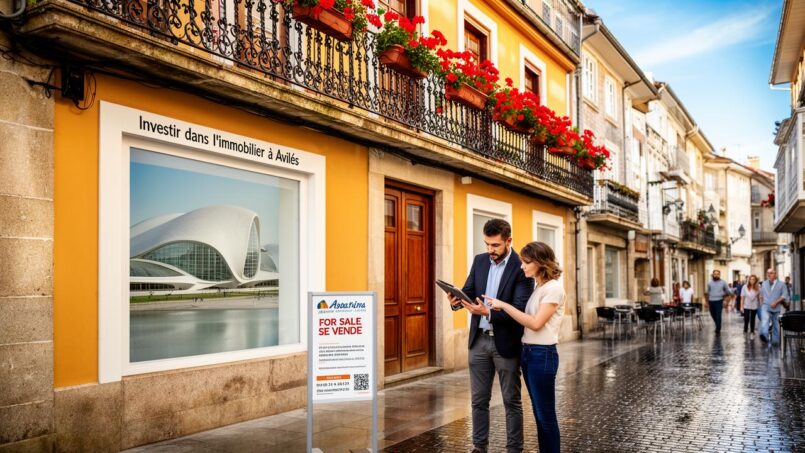
Avilés has long carried the image of a small industrial town in crisis, stuck between its port and factories. However, recent figures tell a completely different story. The real estate market is accelerating there, prices are rising fast but remain affordable, rents are following the same trajectory, and gross yields are around 5 to 6%. Against the backdrop of the Spanish economic recovery and a regional boom in Asturias, investing in real estate in Avilés is becoming a serious option for investors looking for yield without paying Madrid, Barcelona, or Costa del Sol prices.
A Local Market Heating Up in a Supportive National Context
To understand what is happening in Avilés, we must first place the city within the broader Spanish context. At the country level, real estate is experiencing a robust expansion cycle. Residential prices have seen 42 consecutive quarters of increase through 2025, with national growth of 12.8% in 2025 and still positive forecasts for 2026, generally between +5% and +7% according to major banks and analysis firms.
Spain has been suffering from a deficit estimated at 600,000 homes since 2021, while the country only delivers about 100,000 per year.
In this context, real estate investment surpassed €18.4 billion in 2025, up +31% year-on-year, and is expected to grow another 5 to 10% in 2026. Capital is primarily targeting residential, but also hotels, logistics, and new segments like healthcare or data centers. Buyers themselves are becoming more strategic, better informed, with a long-term approach.
Within this landscape, Asturias stands out. While some ultra-high-profile coastal markets flirt with overvaluation, this northwestern region is among the country’s most dynamic markets, while still far from the price peaks of the Mediterranean.
Asturias Booming, Avilés Catching Up
The provincial data is telling. In 2024, real estate transactions in Asturias jumped by 12% compared to the previous year, above the Spanish average and even the European average. In the third quarter of 2024, 4,207 sales were recorded in the province, and forecasts were for a further increase of about 10% by 2025. In the first eight months of 2025, home sales in Asturias increased by 16% year-on-year, while housing starts rose by over 32% in the first half of the year.
Within the context of regional growth, the municipality of Avilés recorded a 10% increase in its real estate sales. This pace is slower than that of Gijón (+15%) but higher than Oviedo (+8%). Its market, although gaining volume, remains more accessible than its more expensive coastal neighbors, with price per m² lower than Llanes (€3,066/m²) or Gijón (€2,979/m²).
Avilés, from Steel Town to Residential and Tourist Destination
For a long time, Avilés’s economy was dominated by heavy industry, structured around its natural port on the Ría and giants like Ensidesa. Deindustrialization, partial factory closures, pollution, and an aging productive base put the city in difficulty. The population has declined by about 9% since 2013, a loss of over 7,000 inhabitants, to stand at 77,791 residents today.
Since the late 1990s, Avilés has undertaken a profound transformation to diversify its economy and redevelop its urban space. This strategy includes converting industrial brownfields, improving the environmental quality of the estuary, developing iconic cultural infrastructures like the Niemeyer Center, and promoting niche cultural tourism. Efforts also focus on improving the hotel and commercial offerings, as well as renovating old neighborhoods.
The result: Avilés is now cited as an example of the successful conversion of an old industrial city. After three decades of demographic decline, signs of stabilization are being observed. For an investor, this means an urban environment that has already absorbed its major crisis and is now capitalizing on a new image, more focused on culture, services, and a certain art of living, but with prices still far from having integrated all this potential.
Real Estate Prices in Avilés: A Market in Full Acceleration
Price figures confirm this catching up. At the municipal level, the average asking price for homes for sale reached €1,543/m² in July 2025, up 14.47% year-on-year (€1,348/m² in July 2024). Over the previous two years, the low point was €1,279/m² in September 2023, illustrating the strength of the rebound.
On the rental side, the progression is of the same order. In July 2025, the average asking rent rose to €8.21/m² per month, a +13.71% increase compared to July 2024 (€7.22/m²). The peak in the recent period was even slightly higher in December 2024, at €8.24/m².
The local real estate market is showing double-digit growth in both sales and rentals. However, its prices remain significantly lower than the Spanish average for major cities, which is expected to exceed €2,600/m² by the end of 2025.
The following table summarizes this recent evolution of average prices in Avilés.
| Indicator | Most Recent Value | Annual Change | 2-Year Low | 2-Year High |
|---|---|---|---|---|
| Avg. Sales Price (Jul. 2025) | €1,543/m² | +14.47% | €1,279/m² (09/2023) | €1,543/m² (07/2025) |
| Avg. Rent (Jul. 2025) | €8.21/m²/month | +13.71% | €6.90/m² (09/2023) | €8.24/m² (12/2024) |
These average values mask strong nuances depending on the type of property. Data from the EV Data Warehouse (Engel & Völkers) shows that apartments and houses have seen rapid increases.
For apartments, the average price per square meter evolves as follows:
| Year | Apt. Price (€/m²) | Annual Change |
|---|---|---|
| 2022 | 1,510.18 | — |
| 2023 | 1,532.76 | +1.50% |
| 2024 | 1,664.44 | +8.59% |
| 2025 | 1,841.72 (est.) | +10.65% |
For single-family homes, the trajectory is comparable:
| Year | House Price (€/m²) | Annual Change |
|---|---|---|
| 2022 | 1,364.72 | — |
| 2023 | 1,412.56 | +3.51% |
| 2024 | 1,548.25 | +9.61% |
| 2025 | 1,712.75 (est.) | +10.62% |
As we can see, since 2023, Avilés has entered a phase of accelerated price increases, at a pace higher than the average of previous years. For an investor, this validates both the idea of a market in catch-up mode and the need to enter early if one wants to still benefit from reasonable prices.
A Market Divided by Neighborhoods: Where to Invest in Avilés?
One of Avilés’s assets is the significant price disparity between neighborhoods, which allows for deploying very different investment strategies depending on budget and target tenant profile.
In July 2025, data by zone clearly showed this hierarchy.
Comparison of Main Neighborhoods
| Neighborhood | Sales Price (€/m²) | Rent (€/m²/month) |
|---|---|---|
| Centro | 1,746 | 8.78 |
| El Carbayedo-El Quirinal | 1,738 | 8.17 |
| La Magdalena-Versalles | 1,588 | 8.10 |
| Jardín de Cantos-El Nodo | 1,404 | 7.52 |
| Villalegre-La Luz | 1,208 | 7.91 |
| Llaranes | 1,104 | 6.94 |
The Historic and Commercial Center concentrates the highest values, both for purchase and rent. This is logical: it offers services, cultural life, shops, more refined architecture, and better accessibility. It is also a recommended area for tourist rentals like Airbnb, as confirmed by short-term market analyses.
For a rental or property investment in Avilés, consider the price hierarchy by neighborhood. El Carbayedo-El Quirinal positions itself just behind the Centro, with similar sales prices but slightly more affordable rents. The areas of La Magdalena-Versalles and Jardín de Cantos-El Nodo represent an interesting compromise, offering intermediate market values between the center and peripheral neighborhoods.
Conversely, Llaranes shows the lowest prices, both for sale and rent. It’s a natural playground for yield strategies, provided locations and building quality are well selected. Villalegre-La Luz remains affordable to buy but with relatively strong rents, which can mechanically improve the gross yield.
More recent data confirms these trends. In February 2026, the Centro was around €1,984/m² (+20.4% year-on-year), El Carbayedo-El Quirinal at €1,834/m² (+6.9%), while the El Pozón – Villalegre – La Luz zone climbed to €1,137/m² with an annual increase of over 23%. These figures show that some historically cheaper neighborhoods are quickly catching up, which is typical of markets in a revaluation phase.
Rental Yields: Avilés in the Good Spanish Average
For an investor, the key question remains yield. According to aggregated data, the average gross rental yield in Avilés is around 5.44%, a figure consistent with Spanish averages for secondary cities, often between 5.5% and 7% for residential. Nationally, a gross yield of about 6% is now considered “good” for a classic long-term rental property.
Analysis by housing typology in Avilés allows us to further refine the picture.
A first dataset provides the following elements:
| Apartment Type | Avg. Sales Price | Avg. Monthly Rent | Gross Yield |
|---|---|---|---|
| 1 Bedroom | €127,130 | €650 | 6.14% |
| 2 Bedrooms | €160,000 | €710 | 5.33% |
| 3 Bedrooms | €153,500 | €630 | 4.93% |
| 4+ Bedrooms | €210,000 | €930 | 5.29% |
An alternative source proposes slightly different price and rent levels, but with comparable orders of magnitude:
| Apartment Type | Avg. Sales Price | Avg. Monthly Rent | Gross Yield |
|---|---|---|---|
| 1 Bedroom | €125,000 | €550 | 5.28% |
| 2 Bedrooms | €146,000 | €720 | 5.92% |
| 3 Bedrooms | €152,000 | €600 | 4.74% |
| 4+ Bedrooms | €215,000 | €1,000 | 5.58% |
We find a well-known constant in Spain: smaller units (studios, 1-bed, 2-bed) tend to offer the best yields, as they are affordable to buy and in high demand for rent. In Avilés, 1 and 2-bedroom apartments seem particularly interesting, with yields between 5.3% and a little over 6% depending on the case.
Distribution of homes available for rent by number of rooms, reflecting the market structure.
Represent about 29% of rental listings, suitable for students or single young professionals.
Make up about 29% of offers, matching the demand from couples or young professionals.
Account for about 29% of listings, meeting the needs of small families.
Represent only 12% of the rental market, less common in listings.
Finally, data indicates that, outside the city center, the price-to-rent ratio gives a gross yield of about 6.8%, with a theoretical payback of just under 15 years (price-to-rent ratio of 14.71). This is a positive signal for investors looking for a good compromise between yield and risk, especially when comparing these figures to those of major Spanish metropolises where yields can drop to 3–4% in the most upscale neighborhoods.
Tourist Rentals: A Niche but Profitable Market
Beyond long-term rentals, Avilés also presents a short-term rental segment that, while not a giant like Barcelona or Malaga, is starting to structure itself. According to an analysis covering the period October 2024 – September 2025, the city has about 111 active Airbnb-type listings, in a regulatory environment described as “heavily regulated”, with likely licensing requirements and a compliance rate of about 56%.
The performance figures are instructive. Over the year, median listings generate about $1,168 in monthly revenue, with a median daily rate around $109 and an occupancy rate of about 34%. The top 10% of properties exceed $2,449 per month, with over 75% occupancy and an average daily price above $200. The high season (June, July, August) shows average revenues of $2,363, an occupancy rate of about 50%, and an ADR around $154.
In short, for an investor able to obtain a license and position their property in the top tier (central location, careful decoration, good management), seasonal rentals can generate gross revenues well above long-term rentals, at the cost of more intensive management and a regulatory context to monitor. Neighborhoods recommended for this type of investment logically include the Centro Histórico, areas near the marina, and the most frequented urban parks.
A Market Already Attracting International Buyers
Even if Avilés does not yet have the same international notoriety as the major hubs of the Costa Blanca or Andalusia, the presence of foreign buyers is already significant. They represent about 10% of local real estate transactions, a non-negligible level for a city of this size.
Foreign buyers now represent nearly 20% of real estate sales in Spain, more than double the share in 2006.
The abolition of the Golden Visa program in 2025 did not slow this movement, as this mechanism represented an anecdotal volume compared to total foreign purchases. In the very high-end segment, above €2.5 million, over 60% of transactions are made by foreigners, mostly in cash.
For Avilés, this trend translates mainly into opportunities in mid- and high-end segments at moderate prices, especially for profiles seeking the quality of life in northern Spain, a summer climate milder than the Mediterranean, and much lower entry tickets than in Barcelona, San Sebastián, or on the Portuguese coasts.
New Construction vs. Resale: Which Strategy for Avilés?
As everywhere in Spain, investors looking at Avilés face the classic choice between new homes and resale properties. Nationally, new homes trade at an average premium of about 40 to 50% compared to older ones, with even more pronounced gaps for houses than for apartments.
Number of transactions involving second-hand real estate properties in Avilés in 2023.
The arguments in favor of new builds relate mainly to energy efficiency, builder warranties (up to 10 years on the structure), modern layouts, and residential amenities. In Spain, more and more banks are offering “green mortgages” with preferential interest rates for properties with an energy certificate rating of A or B.
In a context of high construction costs and labor shortages, older properties already renovated in established neighborhoods offer good rental yields and sell or rent quickly, as demand for ‘major renovations’ is decreasing. An investor can always create value through effective renovation, but this requires dedicating time and capital.
In Avilés, where price per square meter remains modest compared to other coastal cities, the most pragmatic strategy for most investors is often to target 1 to 3-bedroom apartments in well-located existing buildings, refresh them smartly, and put them up for long-term rent, or even mixed (medium-term / seasonal) rent, rather than embarking on a new development project that is rarely available.
What Do Tenants and Buyers Expect in Avilés?
The trends observed at the national level are reflected in the preferences of occupants in Avilés. Buyers and tenants alike are increasingly emphasizing quality over mere square footage: a good layout, a clear separation between day and night spaces, proper lighting, and durable materials often take precedence over a few extra square meters.
Outdoor spaces (balcony, terrace, small garden), even modest ones, represent a major asset since the pandemic. The flexibility of spaces, with the possibility of setting up a home office area for remote work, has also become decisive, especially with the rise of digital nomad visas and a younger audience accustomed to hybrid work.
Energy efficiency and monthly expenses are now central criteria. A well-insulated property with a good Energy Performance Certificate (EPC) rents and sells more easily and may allow for preferential financing rates. Conversely, highly energy-consuming homes (class F or G) suffer a discount on sale and require costly work, the price of which must be factored into the investment analysis from the start.
Finally, proximity to services remains a key criterion: schools, transport, medical centers, local shops. Typical listings in Avilés thus highlight being a 10-minute walk from the train station, proximity to a health center or neighborhood schools, all arguments that, beyond marketing, genuinely affect the ability to rent quickly at a good price.
Financing an Investment in Avilés: Conditions and Structures
For a non-resident buyer, access to credit in Spain remains relatively straightforward, within a mature and regulated banking framework. Major banks like Santander, BBVA, CaixaBank, or Sabadell willingly finance real estate acquisitions, including for international profiles, but with stricter conditions than for residents.
Percentage of financing (Loan-to-Value) generally accessible to a non-resident for the purchase of a property in Spain.
The financing application requires a classic set of documents: identification, proof of income (payslips, tax returns), bank statements, documents related to other debts, and, on the property side, a valuation report (tasación) by a licensed appraiser. Banks pay particular attention to the debt-to-income ratio, aiming for the monthly payment not to exceed about 30 to 35% of net income.
Alternative solutions also exist, notably through real estate crowdfunding platforms or structures using property-holding companies (SCIs) or commercial companies, but for an individual investor targeting a €120,000 to €200,000 apartment in Avilés, the classic bank loan remains the simplest and least costly financing route.
Rental Taxation: What an Investor Must Anticipate
Investing in real estate in Avilés also means dealing with Spanish taxation, which clearly distinguishes between residents and non-residents. A non-resident investor who rents out their property must declare their rental income via form Modelo 210 and pay the Non-Resident Income Tax (IRNR).
The tax rate on rental income depends on the owner’s tax residence. If they are resident in the EU or EEA, the tax is 19% on net income (rent minus deductible expenses). If they are established outside the EU/EEA (e.g., UK, USA), the rate is 24% on gross income, with no possible deductions. This difference strongly impacts net profitability and must be anticipated in calculations.
If it is a classic long-term rental without para-hotel services, there is no VAT to charge. However, for tourist rentals with hotel-type services (daily cleaning, breakfast, room service), the owner must charge VAT, generally at 10%, and file the corresponding declarations.
Finally, even in the absence of rental, holding a property in Spain by a non-resident generates a “deemed income tax”, calculated on a percentage (1.1% to 2%) of the property’s cadastral value and taxed at the same IRNR rate. In all cases, the IBI (local property tax), calculated on this same cadastral basis, is due annually.
How to Position Yourself in the Avilés Market in 2026?
With activity still 17% below the 2007 peak at the Asturias scale, but transaction growth above the Spanish average, Avilés is in an interesting zone of the cycle: already in clear recovery, but not yet saturated. Demographic growth prospects remain cautious, but the economic transformation, urban upgrading, and job stabilization linked to new company profiles (innovation, services) argue for continued residential demand.
Prices, which have risen sharply over the last 2 to 3 years, nevertheless remain competitive. With a price per square meter around €1,500 to €1,700 depending on sources and neighborhoods, Avilés still costs much less than many Spanish coastal markets, while offering a living environment sought after by some national residents: temperate climate, green landscapes, proximity to the sea, moderate density.
For an investor, three approaches are clearly emerging.
Gross yields of the rental investment strategy targeting the city center and its adjacent neighborhoods.
The second bets on catching-up neighborhoods like Villalegre-La Luz or certain well-connected peripheral areas, where price per square meter is lower but rents are close to those in more central sectors. This is often where the best yields are found, at the cost of finer building selection and particular attention to neighborhood rental demand (transport, services, image).
The third strategy is to opt for seasonal or mixed rentals, capitalizing on the still limited supply of Airbnb in Avilés and a qualitative positioning. This approach requires an in-depth study of local regulations on tourist rentals, obtaining a license if required, and professional management. For a well-located property, for example in the Centro Histórico or near the waterfront and cultural facilities, it can generate gross turnover higher than that of a classic annual lease.
In any case, investing in real estate in Avilés requires the same discipline as anywhere else in Spain: carefully verify the property’s legal status, analyze the energy certificate, be assisted by an independent lawyer accustomed to foreign clients, and prepare financing (or cash payment capacity) before starting negotiations.
Avilés will not become the new Marbella or the new San Sebastián overnight. But that is precisely what makes it an interesting market today: a city already transformed, still under the radar, where price, rent, and volume curves are all pointing upwards, without prices having yet reached prohibitive levels. For the patient investor seeking decent profitability, moderate risk, and real long-term upside potential, Avilés clearly deserves to be on the short list of destinations to study seriously.
Disclaimer: The information provided on this website is for informational purposes only and does not constitute financial, legal, or professional advice. We encourage you to consult qualified experts before making any investment, real estate, or expatriation decisions. Although we strive to maintain up-to-date and accurate information, we do not guarantee the completeness, accuracy, or timeliness of the proposed content. As investment and expatriation involve risks, we disclaim any liability for potential losses or damages arising from the use of this site. Your use of this site confirms your acceptance of these terms and your understanding of the associated risks.

Cyril Jarnias is an independent expert in international wealth management with over 20 years of experience. As an expatriate himself, he is dedicated to helping individuals and business leaders build, protect, and pass on their wealth with complete peace of mind.
On his website, cyriljarnias.com, he shares his expertise on international real estate, offshore company formation, and expatriation.
Thanks to his expertise, he offers sound advice to optimize his clients' wealth management. Cyril Jarnias is also recognized for his appearances in many prestigious media outlets such as BFM Business, les Français de l’étranger, Le Figaro, Les Echos, and Mieux vivre votre argent, where he shares his knowledge and know-how in wealth management.





