
 Published on and written by Cyril Jarnias
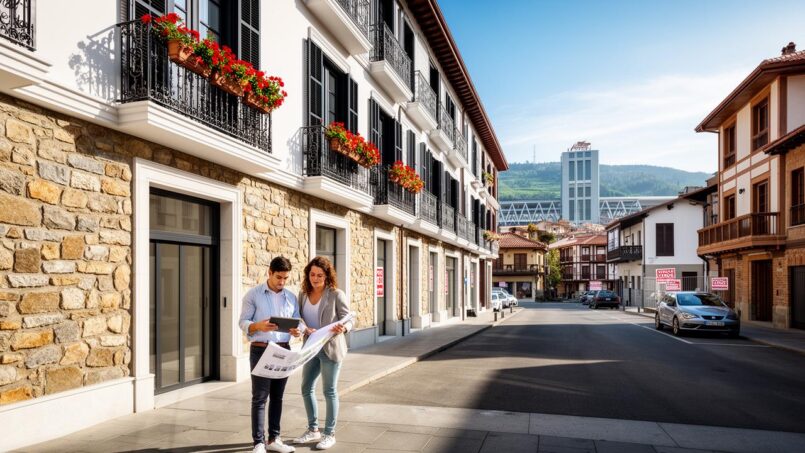
Investing in Real Estate in Barakaldo is no longer an exotic bet reserved for connoisseurs of the left bank of the Bilbao estuary. A former steel town undergoing rapid transformation, the second most populous municipality in Biscay and integrated into the Bilbao metropolitan area, Barakaldo today concentrates several trends of direct interest to investors: tight housing supply, sustained price increases, rental yields above the provincial average, major urban projects along the ria, and a very proactive public housing policy.
In the dynamic Spanish economic context, with insufficient residential supply and a pressured rental market, Barakaldo presents itself as a more affordable sub-market than Bilbao, offering interesting prospects for capital gains and returns.
A Local Market Driven by Basque and Spanish Dynamics
To understand Barakaldo’s appeal, one must first place the city within its economic and real estate environment.
Spain is experiencing a phase of solid expansion: GDP growth outpaces that of the eurozone, driven by domestic demand and a robust labor market. Interest rates, after peaking around 4%, have eased to around 2% and are expected to remain stable, supporting real estate credit. The country is consolidating its status as a European stronghold for investment, with over €18.4 billion placed in real estate in 2025, up 31% year-on-year, and a further increase of 5 to 10% or more expected.
Estimated housing deficit nationwide since 2021, illustrating a widespread residential shortage.
The Basque Country is among the most expensive regions in Spain, with average residential prices between €3,000 and €3,400/m² and an annual increase of 5.4% to 8.9%. The province of Biscay, where Barakaldo is located, shows an average of around €3,296/m² and growth of 8.2%. The region also suffers from a supply deficit, particularly in new construction, which appreciates faster than existing homes.
Located only 8 km from Bilbao and well connected by transport, Barakaldo benefits from metropolitan infrastructure (BEC, shopping areas, hospitals) and attracts growing residential demand by offering a more affordable alternative with an equivalent level of services.
Demographic Profile and Industrial Heritage: A City in Advanced Redevelopment
With approximately 101,500 inhabitants, Barakaldo is the second most populous municipality in Biscay and the fourth in the Basque Country. Its population exceeded 100,000 residents as early as the 1990s, then declined to around 95,000 in the early 2000s, before gradually rising again. This relative stability makes it a less volatile market than some ultra-tourist coastal destinations, with a solid local demand base.
Long centered on steelmaking and heavy industry with major players such as Altos Hornos de Vizcaya, Fesa-Fertiberia, and Babcock & Wilcox, the city of Barakaldo suffered a violent industrial shock in the 1980s-1990s. The redevelopment involved the gradual closure of factories, dismantling of brownfield sites, and reclamation of vast tracts of land along the ria.
This transformation is now highly visible in the urban landscape. Several former industrial sites have been converted into modern residential neighborhoods, shopping centers, parks, and cultural or sports facilities. The Urban-Galindo operation, launched in the late 1990s, epitomizes this shift: recovery of more than 600,000 m² of steelworks land to create housing, offices, green spaces, and facilities. For an investor, this means two things:
– a growing supply of modern, well-connected housing attractive to demanding urban clientele;
– potential for appreciation linked to the continuation of rehabilitation operations and the upscaling of these redeveloped neighborhoods.
Prices, Rents, and Yields: Where Does Barakaldo Stand Today?
The most recent data confirm that Barakaldo’s real estate market is clearly trending upward, while remaining slightly below the provincial average, opening an interesting entry window.
In November 2025, the average asking price in the municipality reached €3,141/m², an increase of 17.91% year-on-year.
On the rental market, the average asking rent was, in November 2025, €13.75/m² per month, up 8.01% year-on-year (€12.73/m² a year earlier). The recent low is around €12.15/m² (February 2024), and the peak again in November 2025. Rent growth thus follows the national upward trend but more moderately than purchase prices, which has slightly compressed gross yields… without eliminating them.
Average rental yield in Barakaldo, close to the Spanish average and higher than that of Biscay.
Prices and Yields: Barakaldo vs. Biscay
To place Barakaldo within its immediate environment, we can summarize some key data at the provincial level.
| Indicator | Barakaldo | Province of Biscay |
|---|---|---|
| Average sale price (approx.) | ~€3,141/m² (11/2025) | >€3,100/m², trend +1.9% |
| Average rent (approx.) | €13.75/m² (11/2025) | €1,290/month |
| Average rental yield | 6.33% | 6.02% |
| Average annual rental income | €14.3k | €15.5k |
| Estimated self-financing period | ~? (not specified) | 17.8 years (provincial average) |
Even though Barakaldo’s prices are about 1.34% below the provincial average, rents offer a slightly better yield, making it an interesting market for those seeking a good compromise between cash flow and appreciation potential.
A Largely Tight Market with Shortages in Certain Segments
One element stands out clearly from the data: the market is “tight,” particularly in certain price ranges. For example, it is noted that in Barakaldo, all properties listed below €300,000 have been sold, reflecting strong absorption of affordable supply.
The combination of several factors explains this tightness:
The local real estate market is influenced by several structural trends: a shortage of new housing supply at both Spanish and Basque levels, continuously rising construction costs, increased attractiveness of the Bilbao metropolitan area for students, young professionals, and highly skilled workers, as well as local policies focused on neighborhood revitalization and quality of life improvements, which specifically enhance Barakaldo’s residential appeal.
In this context, the stock of available properties remains limited, and selling times are shortening for well-located and correctly priced properties, especially family apartments with 2 to 3 bedrooms and homes near the metro.
Highly Contrasting Prices by Barakaldo Neighborhood
One of the major assets of Barakaldo for an investor is the diversity of its neighborhoods, with significant price differences, allowing for different strategies depending on risk profile and budget.
Price Overview by Area (Sale and Rent)
Data from November 2025 provide a precise snapshot of price levels by sector.
| Zone / Neighborhood | Sale Price €/m² | Rent €/m²/month |
|---|---|---|
| Done Bikendi | 3,344 | 13.65 |
| Bagatza-Beurko-Desertu | 3,267 | 14.28 |
| Arteagabeitia-Zuhatzu | 3,236 | 15.15 |
| Centro-Zaballa-Arrontegi | 3,088 | 13.53 |
| Gurutzeta | 2,962 | 13.74 |
| Lutxana-Burtzeña-Llano | 2,822 | 11.91 |
| Retuerto-Kareaga-Regato-Gorostiza | 2,758 | 13.80 |
First, we observe that the price gap between the most expensive neighborhood (Done Bikendi, €3,344/m²) and the most affordable (Retuerto-Kareaga-Regato-Gorostiza, €2,758/m²) exceeds 20%. Rents, however, do not always follow the same order: Arteagabeitia-Zuhatzu clearly dominates for rentals (€15.15/m²), while Lutxana-Burtzeña-Llano is the lowest (€11.91/m²).
For an investor, the disparity in real estate markets between neighborhoods creates arbitrage opportunities. Some sectors show a more favorable rent-to-price ratio than others, resulting in potentially higher gross rental yields. Analyzing this ratio helps target the most profitable areas for investment.
Focus on Gurutzeta: A Sub-Market on the Rise
The Gurutzeta neighborhood particularly illustrates the current upward dynamic. In January 2026, the average asking price reached €3,066/m², an increase of 32.04% compared to March 2025 (€2,322/m²). Between the low point of April 2025 (€2,298/m²) and this level, the appreciation is spectacular.
On the rental side, the average rent was €14.26/m² in January 2026, up more than 15% compared to March 2025 (€12.38/m²). The neighborhood had even experienced a peak of €14.45/m² as early as April 2024, indicating strong tension, occasionally partially resolved by seasonal adjustments.
The evolution of the Gurutzeta neighborhood is driven by public investments (transport, public spaces), the arrival of new developments, and a spillover effect from already expensive areas. For an investor, it presents strong capital gain potential, provided entry at the right price to avoid buying at the peak of a speculative wave.
Seasonal Comparison: July vs. November
Data from July 2025, compared to November, also show that some neighborhoods rise faster than others.
| Zone | Sale €/m² (07/2025) | Sale €/m² (11/2025) | Rent €/m² (07/2025) | Rent €/m² (11/2025) |
|---|---|---|---|---|
| Done Bikendi | 3,204 | 3,344 | 12.41 | 13.65 |
| Arteagabeitia-Zuhatzu | 3,096 | 3,236 | 15.44 | 15.15 |
| Lutxana-Burtzeña-Llano | 2,440 | 2,822 | 11.59 | 11.91 |
| Centro-Zaballa-Arrontegi | 2,880 | 3,088 | 12.35 | 13.53 |
We particularly see that Lutxana-Burtzeña-Llano experienced a very strong increase in sale prices in just a few months (from €2,440 to €2,822/m²), while remaining the most accessible zone. This is typically a neighborhood to consider for “value” strategies focused on catching up, provided a fine analysis of the urban environment (presence of redevelopment projects like the Lutxana-Burtzeña business park, improved access, etc.).
Housing Stock Typology: Wood vs. Concrete, Old vs. New
The Barakaldo market has a fairly specific characteristic: the still significant presence of buildings with wooden structures, generally older, which trade below more recent concrete constructions. For an investor, this translates into a clear trade-off between:
– wood, often cheaper per square meter but likely to require more renovation work (insulation, bringing up to code, structural reinforcement);
– concrete, more expensive but more sought after by part of the demand, especially households looking for modern comfort and better energy performance.
Average purchase price of an apartment in euros per square meter according to Engel & Völkers data.
This differential reflects two realities: on one hand, the strong demand for well-located urban apartments, often more compatible with metropolitan life and renting; on the other hand, a certain volatility in the house segment, sometimes more outlying or requiring major work, but which can offer strong value potential for those who know how to select them.
Neighborhoods and Lifestyles: Where to Buy Based on Your Investment Profile?
The diversity of neighborhoods in Barakaldo allows targeting different audiences: families, young professionals, students, more “bohemian” profiles, etc. This segmentation is crucial for adapting your rental strategy.
Retuerto, in the north of the city, is described as a quiet, green residential neighborhood, rich in sports facilities (Retuerto sports center) and local shops. It is typically an environment suitable for families and tenants seeking tranquility, which argues for apartments with 3 or more bedrooms, with a long-term holding vision and relatively low tenant turnover.
A central neighborhood combining dynamic nightlife, green spaces, and rental appeal for young professionals.
San Vicente stands out for its wide range of bars and very lively nightlife in the heart of the city center.
The neighborhood features a large green space, Parque de los Hermanos, dedicated to outdoor activities.
The sector primarily targets young professionals and urban profiles seeking to be ‘in the center of everything’.
1-2 bedroom apartments, often well renovated and including a balcony or terrace.
These properties generate very good rental demand, especially for furnished rentals.
Lutxana, to the east, is an older neighborhood, with a marked architectural heritage and a more bohemian atmosphere. The presence of the Clara Campoamor cultural center and many parks (Lutxana Park) contributes to its appeal. It is an ideal playground for creative renovation strategies: buying renovation properties at contained prices, adding value through work, and repositioning on a rental market seeking character homes.
The Las Cruces area offers a peaceful living environment with large green spaces such as Tellaetxe Park. It is ideal for staff at Cruces Hospital, for families seeking a quiet but well-served environment, and for those wanting a good compromise between urban life and proximity to nature.
Beyond these examples, other central neighborhoods like Bagatza‑Beurko‑Desertu or Rontegui‑Pormetxeta show high prices per square meter (e.g., Bulevar de Beurko or Altos Hornos de Vizcaya Hiribidea above €4,300/m²), reflecting their status as local “prime” sectors. They may suit strategies more focused on capital preservation and long-term appreciation than immediate yield.
New Builds, Large Urban Operations, and Ongoing Programs
Barakaldo’s appeal does not rest solely on its existing housing stock. The city is at the heart of several major development projects, particularly in the areas resulting from industrial redevelopment along the ria.
The Urban‑Galindo operation, managed by the public company Bilbao Ría 2000, has already enabled the construction of a large number of homes, as well as commercial buildings, sports facilities, and extensive green spaces. A second phase is in preparation with the creation of a second riverside park along the estuary; a call for ideas has been launched for its development.
A mixed-use urban project on 2.3 hectares, integrating housing, economic activities, sports facilities, and public spaces, benefiting from excellent transport links.
Approximately 18,400 m² of housing (150 units) and 26,700 m² of plots dedicated to economic activities.
Renovation and construction of facilities including a 6,000-seat stadium and a 1,000-seat synthetic turf football field.
Creation of 24,000 m² of public spaces to enliven the neighborhood.
Served by two metro stations, a rail connection, and a planned tram line to Bilbao.
Several private developers are active in these rapidly transforming sectors. An emblematic example is the “Barakaldo Urban” program on Altos Hornos Avenue, in the heart of Urban Galindo East. This residence offers 2 to 4-bedroom apartments with terraces, heated pool, gym, gardens, common areas like a “txoko” (Basque-style social room), and includes parking space(s) and storage room in the price. The homes are presented as being located on “the best plot in Barakaldo,” on the front line of the ria and facing the future Zamalanda park, minutes on foot from the center.
A dozen new real estate developments are planned or under delivery in the Cruces area between 2024 and 2028.
For the investor, new construction in Barakaldo offers several advantages: modern comfort, high rental appeal, low maintenance costs in the short term, better energy compliance, and often a position in the most buoyant sectors (ria front, proximity to parks and transport). However, one must factor in the price premium for new construction, which at the national level exceeds 50% compared to existing homes, and analyze whether the rental yield remains compatible with one’s objectives.
Public Policies, Youth, and Urban Agenda: Favorable Signals for Rental Demand
The municipality of Barakaldo has embarked, through its Urban Agenda and its adaptation to sustainable development goals, on a range of projects aimed at:
– revitalizing existing neighborhoods and limiting urban sprawl;
– ensuring access to housing, especially for vulnerable groups and young people;
– rehabilitating areas degraded by industry;
– developing urban innovation (“Pormetxeta Living Lab” project, “Smart City Plan”, open innovation program “Retos Barakaldo”);
– strengthening the supply of public rental housing in cooperation with the Basque region (via entities like ALOKABIDE or the urban planning company ERETZA).
The city deploys a comprehensive strategy to improve access to housing and attract young talent.
Detailed analysis of the existing stock, mediation to stimulate private rental supply, and agreements with the Basque government to increase the stock of social or moderately priced housing.
Consideration of co-living, creation of business incubators, training and emancipation support, opening of a STEAM room, and facilitated access to sports and cultural facilities.
In the medium term, these policies have two important effects for the investor:
– they stabilize and renew the base of potential tenants (young professionals, students, modest families);
– they contribute to the urban valorization of certain neighborhoods, supporting prices in the long term.
Unlike purely tourist cities dependent on seasonal flows, Barakaldo positions itself as a primary residence city, with a diversified local economy (commerce, advanced industry, services, major international exhibition via the BEC). This strengthens the resilience of its rental market, even in the event of a downturn in the tourism cycle.
Regional Comparison: Barakaldo vs. Other Biscay Towns
Within the province of Biscay, several municipalities show varying yields and rental incomes. Towns like Gorliz or Lekeitio achieve yields above 10% or more, but often in smaller, highly touristy and more volatile markets. Localities such as Santurtzi, Sondika, or Ermua also present good yields, sometimes above 7 or 8%.
Barakaldo stands out with a solid average yield (6.33%), close to the national average, but especially with:
– a significant market volume (over 100,000 inhabitants);
– full integration into the Bilbao metropolitan area;
– a combination of economic activities (commerce, industry, services) that limits dependence on a single sector.
For an investor who prioritizes cash flow stability and future liquidity of the property, this critical mass and diversification constitute an advantage over small coastal towns with high seasonality.
Taxation and Costs: What an Investor in Barakaldo Should Anticipate
Investing in real estate in Barakaldo, as everywhere in Spain, involves integrating relatively high acquisition and holding taxes compared to other countries, but well-established.
At purchase, an investor typically pays: the purchase price, notary fees, taxes, and commissions.
– Transfer Tax (ITP) for an existing property, the rate of which is set by the autonomous community (in the Basque Country, it is usually around 6-10% depending on context, although exact percentages vary by region);
– or VAT (10% for standard residential) plus stamp duty (AJD) for a new property sold by a developer;
– notary, land registry, and legal fees which, added to taxes, place the overall “entry cost” around 10.5 to 20% of the price, depending on the case.
During property ownership, the owner must meet certain financial and administrative obligations each year, such as paying property tax, homeowners’ association fees where applicable, and home insurance premiums.
– IBI (municipal property tax), calculated on the cadastral value, with rates generally below 1.1% for residential;
– if applicable, wealth tax, depending on overall asset level and tax residence region;
– taxes on rental income, under income tax (IRPF for residents, IRNR for non-residents).
A European non-resident is taxed at 19% on net rental income, after deducting allowable expenses (loan interest, fees, works, etc.). A non-EU non-resident may be subject to a rate of 24% on gross income, although recent developments suggest the possibility of deducting expenses for all.
Upon resale, capital gains are taxed at progressive rates (19 to 28% for residents, 19% for non-residents). The seller also bears the “plusvalía municipal“, a local tax on the increase in land value, the rate of which depends on the holding period and municipal rules. If there is no actual gain, an exemption is possible.
The investor must therefore approach Barakaldo within a Spanish tax framework that is relatively sophisticated but stable, where the gross yield of 6 to 7% transforms, once expenses and taxes are deducted, into a net yield of around 4% on average, which remains competitive for a developed eurozone market.
Risks to Monitor: Tight Market, Regulation, and Building Quality
Not everything is free from risks, however. A few cautionary points should be considered before investing in Barakaldo.
Market tightness translates into rapid price increases, especially in certain neighborhoods (Gurutzeta, ria front, areas near the metro). Entering too late or overpaying for a property that has already appreciated significantly can substantially reduce the potential for capital gains. It is therefore essential to compare square meter prices with historical data and recent transactions.
Regulations are evolving, with debates on rent controls and tenant protection. Even in Barakaldo, an investor must anticipate the possibility of rent caps or stricter eviction rules for non-paying tenants, especially in the event of political change.
Building quality, particularly in older buildings with wooden structures, requires thorough technical diagnostics: structure, insulation, electrical and gas installations, dampness, compliance of surfaces with cadastral data. Anomalies can weigh heavily on finances if not identified upfront.
Finally, investing in pre-construction new builds requires rigorous verification of the developer’s financial strength, obtaining permits, land ownership, and the existence of sufficient guarantees for sums paid before delivery. The appeal of very attractive programs (pool, gym, ria views) should not make one forget these fundamental checks.
Possible Investment Strategies in Barakaldo
Depending on one’s profile, an investor can consider different approaches in the city.
A “city center and ria front” strategy relies on acquiring quality apartments in sectors like Centro‑Zaballa‑Arrontegi, Bagatza‑Beurko‑Desertu, or Urban‑Galindo, at prices averaging between €3,000 and €3,300/m², with rents around €13 to €15/m². This type of investment targets a solvent clientele, often with permanent contracts, who value proximity to transport, shops, and cultural facilities. The yield will be solid but not maximal; in return, resale liquidity and price resilience are generally better.
A ‘value’ investment strategy involves targeting neighborhoods undergoing revitalization, such as Lutxana-Burtzeña-Llano or certain parts of Retuerto-Kareaga. In these sectors, acquisition prices remain lower. Medium-term appreciation is driven by urban projects (creation of business zones, improved transport). Buying renovation properties allows combining capital gains from work with attractive rental yield.
A strategy oriented towards “new residential and young households” can leverage the major new developments along the ria or near large parks (Serralta, Zamalanda, Galindo). The entry ticket is higher, but the products are tailored to modern demand (terraces, energy performance, parking, common services), highly prized by young couples and upper-middle-class families. The gross yield may be slightly lower than that of an existing purchased property, but the property appreciation and lower vacancy often compensate for this gap.
For investors with significant capital, large houses or duplexes over 150-180 m², sometimes with terraces of 30 m² or more and parking, represent a niche. They target well-off local clientele or expatriates, with rents that can exceed €1,700 to €2,000 per month. However, the resale market for this type of property is narrower and less liquid.
Conclusion: Barakaldo, a Solid “Second Line” of the Bilbao Metropolis
Investing in real estate in Barakaldo means betting on a city that has already completed much of its post-industrial transition, but whose potential is not yet fully reflected in prices. The municipality benefits from the economic vitality of the Bilbao metropolis, the structural housing shortage in the Basque Country, competitive rental yields, and an ambitious urban agenda combining rehabilitation, park creation, innovation, and support for young people.
Nearly 18% annual increase in real estate asking prices between November 2024 and November 2025.
In a Spanish landscape where major capitals and the most famous coastal destinations already show very high valuations, Barakaldo presents itself as a second-tier metropolitan alternative, more affordable, yet with solid fundamentals and relatively contained risk thanks to the predominance of resident occupants rather than purely speculative investors.
For an investor willing to work finely on neighborhood selection, incorporate the structural specificities of local building stock, and navigate Spanish taxation, the city offers a rare combination of economic anchoring, appreciation prospects, and recurring rental income. In other words, a market to seriously consider in a real estate diversification strategy in Southern Europe.
Disclaimer: The information provided on this website is for informational purposes only and does not constitute financial, legal, or professional advice. We encourage you to consult qualified experts before making any investment, real estate, or expatriation decisions. Although we strive to maintain up-to-date and accurate information, we do not guarantee the completeness, accuracy, or timeliness of the proposed content. As investment and expatriation involve risks, we disclaim any liability for potential losses or damages arising from the use of this site. Your use of this site confirms your acceptance of these terms and your understanding of the associated risks.

Cyril Jarnias is an independent expert in international wealth management with over 20 years of experience. As an expatriate himself, he is dedicated to helping individuals and business leaders build, protect, and pass on their wealth with complete peace of mind.
On his website, cyriljarnias.com, he shares his expertise on international real estate, offshore company formation, and expatriation.
Thanks to his expertise, he offers sound advice to optimize his clients' wealth management. Cyril Jarnias is also recognized for his appearances in many prestigious media outlets such as BFM Business, les Français de l’étranger, Le Figaro, Les Echos, and Mieux vivre votre argent, where he shares his knowledge and know-how in wealth management.





