
 Published on and written by Cyril Jarnias
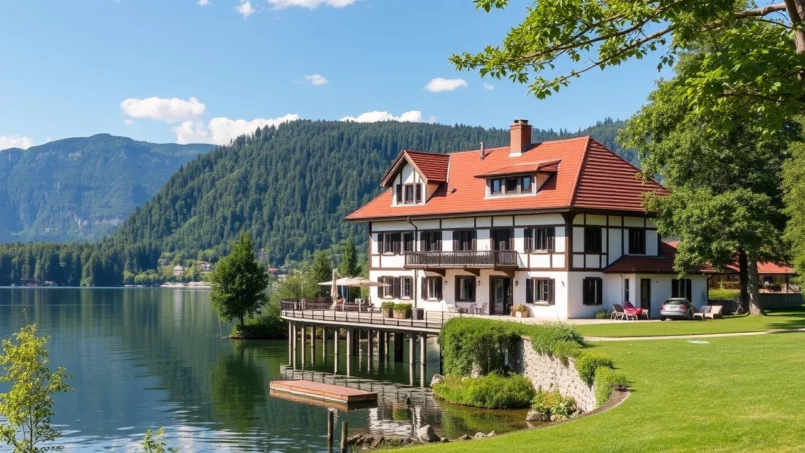
Nestled about ten kilometers northwest of Bern, on the Bern-Biel axis and along the shores of Moossee, the municipality of Munchenbuchsee ticks a lot of boxes for real estate investors: quick access to the federal capital, a solid residential market, clear taxation, ambitious infrastructure projects, and controlled development potential. Far from the hustle and bustle of major cities yet perfectly connected, this locality in the Bern agglomeration offers a rare compromise between asset security and yield prospects.
Since the merger with Diemerswil in 2023, the municipality’s area and population have increased, confirming positive demographic dynamics. After a significant correction in 2024-2025, prices per square meter have started to rise again, creating an interesting window of opportunity for buyers with a long-term vision.
To understand why and how to invest in real estate in Munchenbuchsee, several dimensions must be considered: local market structure, prices and property types, demographic profile, tax conditions and the Swiss regulatory framework, not forgetting the major energy and mobility projects already reshaping the municipality’s future.
Munchenbuchsee, a strategic residential municipality in the Bern agglomeration
Munchenbuchsee belongs to the administrative district of Bern-Mittelland, in the canton of Bern. With an area of approximately 8.8 to 11.7 km² depending on statistical definitions (figures vary by reference year and the integration of Diemerswil), the municipality presents a typically suburban face: a main village, recent residential neighborhoods (Allmend, Waldegg, Neumatt, Weier, Laubberg, Riedli), the locality of Hofwil, all structured by good rail and road connections.
Percentage of Munchenbuchsee’s territory occupied by agricultural land, according to a recent snapshot.
Transport Links: A Central Asset for Property Value
In terms of transportation, the municipality is particularly well-endowed, which is a determining factor for property valuation and rental stability. The Munchenbuchsee train station, located at an altitude of about 554 meters, is on the SBB line between Biel/Bienne and Bern, served by S-Bahn lines S3 and S31, with half-hourly trains to the capital and Belp. The train journey to Bern takes around 12 minutes, with the first departure early in the morning and connections until after midnight.
The municipality is well-connected by public transport, with regional bus lines (36, 898, M1, M10) to Bern and the surrounding area, and by road, about 10 minutes from downtown Bern with quick access to the A6 motorway.
For an investor, this combination of frequent trains, buses, and efficient motorway access means two things: a rental demand driven by commuters to Bern and Biel, and good resilience of property asset value, even in an economic downturn.
Demographics and Population Structure: A Foundation for Rental Demand
The strength of a residential investment is first measured by the depth of local demand. From this perspective, Munchenbuchsee shows several favorable signals.
Growth and Resident Profile
The municipality has a little over 10,000 inhabitants. The 2020 census reported 10,233 residents, 2023 data speaks of 10,426 people, and consolidated 2024 figures indicate a total of 10,696 inhabitants (5,206 men, 5,490 women). In the medium term, the population grew by 5.6% between 2000 and 2010, with an average annual change rate 2020–2023 nearly stable (-0.02% per year), indicating more a stabilization at a high level than worrying stagnation.
In 2023, the age structure shows an average age of 44, with:
| Age Group (2024) | Number | Approximate Share |
|---|---|---|
| 0–17 years | 1,928 | ~18% |
| 18–64 years | 6,350 | ~59% |
| 65 years and over | 2,418 | ~23% |
This balanced demographic pyramid, with a significant young base, a majority active core, and a quarter seniors, translates into a mosaic of housing needs: small apartments for young professionals and students, 3.5–4.5 room units for families, accessible and well-connected housing for the elderly.
The proportion of foreigners in Münchenbuchsee has increased significantly, from 13.8% in 2010 to 20.7% in 2023, illustrating the municipality’s attractiveness to diverse profiles, often renters. In 2000, only 20.3% of residents were born there, compared to 44.3% in the rest of the canton of Bern, 17.2% in another Swiss canton, and 14.6% abroad. This dynamic of welcoming new residents is typical of municipalities well-connected to a major employment hub like Bern.
Density and Household Size
With approximately 889.9 inhabitants per km² (2023 figure) and over 4,651 households in 2017, Munchenbuchsee displays an intermediate urban density: high enough to support a range of services (schools, shops, leisure) and an active rental market, but far from the extreme pressure of large cities.
The municipality’s demographic data shows a balanced and stable distribution between small and large households. As early as 2000, there were 1,250 single-person households and 216 households of five or more people. This diversity is confirmed in 2023 by the presence of approximately 4,744 families. For a real estate investor, this mix is an asset as it allows risk diversification by targeting several housing types (studios, 1-bedroom, large apartments, or family houses) to meet varied demand.
Munchenbuchsee Real Estate Prices: A Correction Followed by a Rebound
Recent data shows that the Munchenbuchsee real estate market is going through a pivotal phase: after a clear drop in prices per square meter, an upturn is visible in early 2026. For an investor, this movement can signify a window of opportunity, provided the numbers are read correctly.
Price Level per Square Meter
Estimates from market surveys (Lookmove, updated February 2026) show the following status:
| Property Type / Period | Dec. 2025 (CHF/m²) | Feb. 2026 (CHF/m²) |
|---|---|---|
| All properties combined | 8,226 | 8,879–8,904 |
| Apartments | 7,495 | 8,301 |
| Houses | 8,957 | 9,508 |
Over twelve months to the end of 2025, average prices per m² in Munchenbuchsee fell by about 20.5%. In detail, apartments corrected by about -15.2% over one year (with a marked drop of -12.2% in the last three months of 2025), while houses saw their prices fall by -24.5% over one year, despite a slight +1.3% over six months.
Perspectives on price correction and signs of recovery between late 2025 and early 2026.
An increase of approximately 8% in the overall average price is observed between December 2025 and February 2026.
This rebound suggests the market’s most pronounced correction phase is likely over.
The market is returning to a price level more aligned with real demand and current financing conditions.
Medians confirm this hierarchy:
| Indicator | Value (CHF/m²) |
|---|---|
| Median all properties | 7,867 |
| Median apartments | 6,875 |
| Median houses | 9,103 |
Value Ranges by Segment
Quintile distributions allow for a more refined reading and identification of interesting ranges for an investor.
For apartments:
| Apartment Segment | Price (CHF/m²) |
|---|---|
| 20% cheapest | < 5,692 |
| 60% mid-range | 5,692 – 9,353 |
| 20% most expensive | > 9,353 |
For houses:
| House Segment | Price (CHF/m²) |
|---|---|
| 20% cheapest | < 5,500 |
| 60% mid-range | 5,500 – 7,924 |
| 20% most expensive | > 7,924 |
In other words, an investor targeting the “core” of the residential market in Munchenbuchsee will generally be around 6,000 to 9,000 CHF/m² depending on the property type, with opportunities below 6,000 CHF/m² for assets needing renovation or located further from the best spots.
Price per m² by Housing Size
The detailed prices by number of rooms show significant variations, especially for large houses, often reflecting particular situations (exceptional properties, renovation needs, specific locations).
For houses:
| House Size (rooms) | Average Price (CHF/m²) |
|---|---|
| 4–4.5 rooms | 8,023 |
| 5–5.5 rooms | 13,124 |
| 6–6.5 rooms | 7,815 |
| 7 rooms and more | 5,044 |
For apartments:
| Apartment Size (rooms) | Average Price (CHF/m²) |
|---|---|
| 2–2.5 rooms | 8,708 |
| 3–3.5 rooms | 7,969 |
| 4–4.5 rooms | 8,478 |
| 5–5.5 rooms | 8,430 |
| More than 6 rooms | 4,979 |
We observe often higher valuation for 4–5 room units, highly sought after by families, while very large apartments or houses can be listed at a lower price/m², the high overall price limiting demand. For an investor, this argues rather for medium-sized units (3.5–4.5 rooms) in condominiums initially, possibly complemented by small 2.5 room units for singles and couples without children.
Rental Market: Low Vacancy, Solid Demand, but Modest Swiss Yields
Even though we do not have a quantified rental vacancy rate for Munchenbuchsee in 2025, several indicators at the municipal and national levels give an idea.
In 2011, the vacancy rate in the municipality was only 1.17%, which was already low. At the Swiss level, vacancy fell to 1% in 2025 (after five consecutive years of decline), confirming widespread housing pressure. In this context, a well-connected municipality like Munchenbuchsee, within commuting distance of Bern, is very likely to maintain a low vacancy rate, favoring rental security.
Number of jobs present in the municipality in 2017, primarily in the tertiary sector.
In comparison, Switzerland shows average gross rental yields around 2.9–3% for residential, significantly lower than the 3–5% commonly observed in Germany. It is therefore reasonable to consider that gross yields in Munchenbuchsee fall within this national range, with slightly higher potential for properties acquired below the market average (e.g., under 6,000–6,500 CHF/m²).
Examples of Properties and Promising Types in Munchenbuchsee
The local market offers a wide range of properties: modern condominiums, family apartments in buildings from the 1970s–1990s, large units in historic village houses, rental buildings, and even exceptional properties with mixed potential.
Modern, Well-Connected Condominiums
Several examples illustrate the most interesting type for a patrimonial investor:
– a contemporary 5.5 room unit of 140 m², built in 2015 in a quiet neighborhood near Höllwald, with elevator, indoor parking space, private laundry room, versatile rooms, and quick access to the train station and A6;
– a 4.5 room unit of 93 m² near the center, on the 3rd floor, with a south-facing balcony (enclosed by sliding glass), indoor parking space, cellar, and shared laundry room;
– a 5.5 room unit of approximately 143–148 m² on a high floor, with fireplace, balcony with open view over greenery, building with 16 units, pellet heating installed in 2020, recent double glazing.
Properties that combine recent construction/renovation, an elevator, parking, proximity to shops and transport, and a view or green environment support rents and resale value. They attract solvent tenants (dual-income couples, upper-middle-class families, seniors) and help limit rental vacancy periods.
Character Properties and Large Surface Areas
Munchenbuchsee also holds genuine patrimonial pieces, such as an 18th-century ensemble adjacent to Golfpark Moossee, on a plot of over 3,300 m², with more than 760 m² of usable space, a historic banquet hall, wooded garden, terraces, double garages, and spacious cellars. This type of property lends itself to hybrid concepts: restoration, events, chic coworking, senior co-living, intergenerational housing, liberal professions.
The transformation of a large historic village house into large apartments, like a 9.5 room duplex of 340 m², represents a niche investment. It requires a high budget and a specific strategy (restructuring, division, coliving, or prestige offices). Although the initial gross yield may be moderate, the potential for capital appreciation is real with appropriate positioning.
Rental Buildings and Development Projects
A sustainable rental building of 560 m² at Grundweg 4, with a mix of 2, 3, 4, and 5 room apartments, garages, and outdoor spaces, illustrates the classic profile of an institutional investment: diversification of housing types, good occupancy, low tenant turnover. Located in a sought-after residential area, this type of asset guarantees a relatively stable rental stream, with little vacancy.
Even more interesting for a developer or professional investor, a large plot encumbered by a building lease right (4,333 m², right valid until 2081, annual fee of 129,000 CHF) is offered in a mixed residential and commercial zone (height up to 3 floors, gross floor area index of 1.1, meaning possible floor space of 4,766 m²). A feasibility study envisions 34 dwellings (2.5–4.5 rooms) with shared underground parking. This type of operation requires development know-how, but Munchenbuchsee offers a rare potential for creating new housing in an already well-equipped urban fabric here.
Taxation: Understanding the Bernese and Municipal Environment
The attractiveness of a real estate investment in Switzerland also depends heavily on taxation, particularly wealth taxes, property taxes, and taxes on real estate gains. In the canton of Bern, the system is relatively clear but requires careful calculations.
Property Tax and Wealth Tax
Munchenbuchsee levies a property tax of 1.2 ‰ (1.2 per thousand) on the official value of the property. Concretely, for a home valued at 800,000 CHF, this represents about 960 CHF per year. The cantonal ceiling is set at 1.5 ‰, placing Munchenbuchsee in the upper half of Bernese municipalities, without being extreme.
The effective annual wealth tax rate, expressed as a percentage of net wealth, depends on total assets and the municipality of residence.
Mortgage debts are deductible from the taxable base, significantly reducing the burden for a highly leveraged investor. As an indication, a Bernese example shows that net wealth of 1,000,000 CHF can lead to a wealth tax of approximately 3,900 to 4,350 CHF depending on the municipality, or 0.39–0.44%.
Tax on Real Estate Gains
Upon resale, the canton of Bern subjects real estate capital gains to a specific, progressive tax highly sensitive to the holding period. The taxable gain corresponds to the sale price minus all acquisition and investment costs (purchase price, notary fees, transfer taxes, agent commissions, value-enhancing work).
Percentage reduction in the tax on real estate gain after 15 years of ownership in the canton of Bern.
For an investor in Munchenbuchsee, the challenge is therefore clear: adopt a long holding horizon to amortize the weight of the gain tax, and carefully document all investments made to deduct them from the gross gain.
Rental Income, Imputed Rental Value, and Individual Taxation
As everywhere in Switzerland, rental income is subject to income tax, but it can be offset by mortgage interest and maintenance costs. When the owner occupies their home, a theoretical “imputed rental value” is added to their taxable income, a mechanism much debated politically but still in force.
In practice, for a property worth 1,000,000 CHF fully paid, combined property and wealth taxes can represent on the order of 2,000 to 5,000 CHF per year, depending on the canton, municipality, the taxpayer’s personal parameters, and the imputed rental value. In an investment setup financed 75% by mortgage, the net burden is significantly reduced, but sensitivity to rising interest rates increases.
Financing: Swiss Requirements for Investment Properties
Swiss financing rules are stricter for a pure investment property than for a primary residence. This obviously applies to Munchenbuchsee.
The main principles are as follows:
To finance an income property, the minimum down payment is 25% of the market value, limiting the mortgage to 75%. The debt must be amortized down to 65% of the property’s value within 10 years. Generally, the 2nd pillar (pension) and 3a (private pension) cannot be used, except in cases of partial habitation. Financial capacity is assessed with a stress-test interest rate of 5%, including amortization and charges.
Banks, insurance companies, pension funds, and investment foundations may offer different rates. For gross yields below 4%, some lenders require over 30% equity. In a context where Swiss net yields often land around 2% for residential, the investor must be prepared to prioritize asset security and inflation indexing over generous immediate cash flow.
Infrastructure Projects and Planning: Levers for Valuation
One of Munchenbuchsee’s strengths over the next ten to fifteen years lies in ongoing public and para-public investments, particularly in energy, roads, and urban planning.
District Heating Network: Greening and Energy Security
The company Energie Münchenbuchsee AG is investing heavily in a district heating network, with an extension from the village center to the Unterdorf area and towards the Hofwil Gymnasium. Approximately 1,600 linear meters of pipes are to be laid, alongside the renovation of drinking water pipes and electrical networks.
Another project, led by STRABAG Verkehrswegebau Bern, aims to install around 3 km of new district heating pipes in the Unterdorf area, in about fifteen stages, with delivery expected by end of 2025. The result: a more ecological heat supply, fully renovated roadways (new pavement), and a reinforced image of a municipality focused on energy transition.
For property owners, connection to an efficient, decarbonized district heating network is an increasingly important commercial argument. In Switzerland, buyers and tenants strongly value building energy efficiency. This can translate into slightly higher rents and better liquidity of the property upon sale.
Town Center Redevelopment: Fluidity, Safety, Quality of Stay
The “Sanierung Zentrumsbereich Münchenbuchsee” project plans the requalification of the central node Bernstrasse/Oberdorfstrasse/Bielstrasse, known as the “Bären-Knoten”. The canton of Bern and the municipality have undertaken an in-depth planning process since 2017, with studies, consultation workshops, and a public consultation of the plans from 2025 to 2026.
The main measures include:
– installation of a mini-roundabout at the central intersection to improve traffic flow;
– introduction of a 30 km/h speed limit in the center;
– creation of a central island on Bernstrasse to facilitate pedestrian crossings;
– reduction and reorganization of roadway widths (Oberdorfstrasse to 6 m), while maintaining longitudinal parking;
– significant work on greening, “depaving,” and standardizing curbs;
– consideration of bus lines, cycle routes (national route no. 64, Sachplan Veloverkehr), and hiking trails.
This type of project, costing around 4.5 million francs, has a direct effect on residential attractiveness by improving safety and quality of life.
Zoning Plan Revision: Qualitative Densification Rather Than Expansion
The revision of the local development plan “OPR 2017+” sets the main axes for the spatial development of Munchenbuchsee up to 2040. The municipality clearly states its strategy: no massive creation of new building zones, but qualitative densification within existing perimeters, with priority on strengthening the center, functional mix (housing, services, small shops), and preserving the “village charm” in historical sectors.
A moderate demographic growth of 600–700 additional inhabitants in 10–15 years is anticipated, or about 6–7%. This will translate mainly into urban renewal projects and redevelopment of brownfield sites or large plots in mixed zones, like the plot under a building lease right mentioned earlier.
For a medium- and long-term investor, this framework is reassuring: pressure on developed land should remain strong, favoring the valuation of well-located properties; but new supply will remain controlled, avoiding a risk of overbuilding on the periphery. Development projects, if well designed, can benefit from this context of relative scarcity.
Comparison with the Swiss Market: Yield, Risk, and Stability
Integrated into the Swiss real estate market, Munchenbuchsee presents a typical profile of a suburban municipality in a canton with average taxation: modest but stable gross yields, strong legal security, low vacancy, reasonable long-term appreciation prospects.
At the national level, the total value of the Swiss real estate market is expected to reach about 7.7 trillion US dollars by 2029, with an average annual growth of about 3.5%. Residential dominates, driven by persistent demand for rental housing in major centers and their surroundings, a structural supply deficit in attractive areas, and growing interest for sustainable and energy-efficient buildings.
Reference gross yields for residential buildings in Switzerland are 4 to 5% in less pressured areas.
The counterpart to this security is clear: for an investor seeking pure yield, the Swiss market – and Munchenbuchsee in particular – does not offer the same margins as an opportunistic investment in a secondary German city. On the other hand, for a patrimonial investor, concerned with diversification, inflation protection, and long-term stability, the combination of Swiss legal security, the canton of Bern’s healthy economy, and Munchenbuchsee’s location in the orbit of the federal capital is a strong argument.
Risks and Points of Vigilance for the Investor
Investing in Munchenbuchsee is not just about buying a 4.5 room apartment near the station and waiting for the value to rise. Several risks must be taken into account.
Concentration risk is the first: immobilizing a significant portion of one’s assets in a single building or a single large apartment mechanically increases exposure to a local shock (change in neighborhood zoning, deterioration of a neighboring building, unfavorable evolution of access). Diversification through several medium-sized units is often preferable.
The risk of rental vacancy, although statistically low in Switzerland and in Munchenbuchsee, is higher for large dwellings (5 rooms and more) and poorly maintained or energy-obsolete properties. It is therefore essential to budget for energy renovations (insulation, heating, windows), especially as Swiss regulatory pressure on building energy performance continues to increase.
Interest rate risk is another element to watch: a sustained rise in mortgage rates can erode the financial flexibility of an over-indebted investor. This is why Swiss banks calculate “affordability” at a theoretical rate of 5% and require relatively fast amortization to 65%.
Finally, taxation on real estate gains in the canton of Bern encourages thinking in long cycles. An investor who sells after 3 or 4 years risks seeing a non-negligible part of their capital gain go to taxes. Conversely, after 15–20 years, the holding period reduction significantly lowers the taxable base.
Conclusion: Why Munchenbuchsee Deserves a Place in a Real Estate Portfolio
Putting all these puzzle pieces together, Munchenbuchsee appears as a municipality of strong interest for the real estate investor who prioritizes long-term solidity and macro-economic coherence over short-term speculation.
The fundamentals are there: moderate but steady demographic growth, a well-educated active population, a significant share of foreigners, exemplary rail and road connection to the federal capital, a quality offer of schools and leisure (sports centers, Hofwil, Moossee, Buchsiwald), a mix of jobs, and historically low vacancy.
Current prices per square meter are around 8,000 to 9,000 CHF on average, offering more accessible entry than in many municipalities around Lake Zurich or Geneva.
Taxation, certainly not negligible (property tax at 1.2 ‰, wealth tax, and real estate gains tax), remains manageable within a long-term holding framework and with well-structured financing.
The infrastructure projects (district heating networks, town center redevelopment, OPR 2017+ urban planning) demonstrate anticipation of mobility, energy, and quality of life challenges. These factors support residential demand and limit the risk of asset depreciation.
For a private investor, the most relevant targets will likely be: shares of established companies, index funds, rental real estate, and government bonds.
– apartments of 3.5 to 4.5 rooms near the center or station, in well-maintained buildings, with elevator and parking;
– possibly small 2.5 room units aimed at young professionals, offering a slightly more favorable price/m² ratio;
– for more professional profiles, medium-sized rental buildings or development projects on the rare available large plots.
Provided Munchenbuchsee is approached with a clear strategy – long horizon, strict selection of locations, attention to energy efficiency and management quality – investing in real estate in this municipality can constitute a solid, discreet but effective piece in a well-built Swiss patrimonial portfolio.
Disclaimer: The information provided on this website is for informational purposes only and does not constitute financial, legal, or professional advice. We encourage you to consult qualified experts before making any investment, real estate, or expatriation decisions. Although we strive to maintain up-to-date and accurate information, we do not guarantee the completeness, accuracy, or timeliness of the proposed content. As investment and expatriation involve risks, we disclaim any liability for potential losses or damages arising from the use of this site. Your use of this site confirms your acceptance of these terms and your understanding of the associated risks.

Cyril Jarnias is an independent expert in international wealth management with over 20 years of experience. As an expatriate himself, he is dedicated to helping individuals and business leaders build, protect, and pass on their wealth with complete peace of mind.
On his website, cyriljarnias.com, he shares his expertise on international real estate, offshore company formation, and expatriation.
Thanks to his expertise, he offers sound advice to optimize his clients' wealth management. Cyril Jarnias is also recognized for his appearances in many prestigious media outlets such as BFM Business, les Français de l’étranger, Le Figaro, Les Echos, and Mieux vivre votre argent, where he shares his knowledge and know-how in wealth management.





