
 Published on and written by Cyril Jarnias
Nestled between the Aar River and the Gurten hill, just minutes from downtown Bern, Wabern boasts a combination of assets rarely found together in one Swiss location: authentic village atmosphere, ever-present nature, a dense transport network, and a clear public strategy for qualitative densification around the train station. For a real estate investor, this mix of living environment and urban dynamism creates a market that is both already expensive and still promising.
This article provides a comprehensive analysis of real estate investment in Wabern, for primary residence or rental, based on statistical data and ongoing development projects.
A strategic village at the gates of Bern
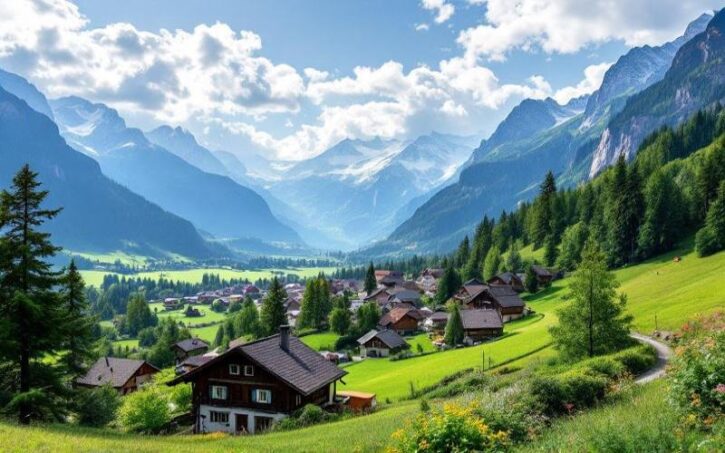
Situated at the foot of the Gurten and a short bike ride from the Eichholz beach on the Aar River, Wabern offers a quintessentially Swiss setting: ever-present greenery, hiking trails, bike paths, an outdoor pool, community associations, and village festivals, all within a very communal atmosphere. It is far from an anonymous suburban neighborhood.
Administratively, the village of Wabern (postal code 3084) belongs to the municipality of Köniz in the canton of Bern. However, on the real estate market, it is considered a residential sub-market of the federal capital. This position allows it to benefit from proximity to Bern’s job market while retaining its distinct village identity and character.
This position as a “strategic village at the gates of Bern” makes Wabern a typical “capital ring” market: demand is fueled by workers employed in the city, without however reaching the price peaks of central Bern or the hyper-centers of Zurich and Geneva. The result is a tight market, structurally driven by a housing shortage in attractive urban areas and by public policies that bet on inward densification rather than urban sprawl.
Accessibility and transport: a key argument for tenants and owners alike
For an investor, the quality of transport links is one of the first filters to apply to a market. On this point, Wabern ticks practically all the boxes.
Tram line 9 connects Wabern directly to downtown Bern in about twelve minutes. In addition, Wabern station is integrated into the Bern S-Bahn network. Between 2018 and 2020, the railway operator BLS even doubled the track between Kehrsatz Nord and Frischingweg and modernized Wabern station: platforms extended to 220 m, improved accessibility, upgraded technical equipment. The goal is clear: to absorb increasing commuter traffic without sacrificing comfort.
The project is not limited to a simple tram line extension. It includes a complete restructuring of the Seftigenstrasse axis, with the creation of bicycle lanes, safer pedestrian crossings, the establishment of a 30 km/h zone in the village center, and a new stop at Bächtelenpark. It thus treats soft mobility and public space quality as foundational investments.
This combination of high-frequency tram, modernized S-Bahn, and urban planning oriented towards pedestrians and cyclists is a central asset for the valuation of residential properties. For an owner-occupier, it guarantees short daily commutes. For a landlord, it is a powerful argument to attract young professionals and couples working in Bern but wanting to live in a greener setting.
An expensive market but still slightly below the Swiss average
Despite its village image, Wabern clearly belongs to the expensive part of the Swiss real estate market. The figures show, however, that price levels remain slightly below the national average, which statistically leaves some room for growth.
Price levels: Wabern vs. Switzerland
The table below summarizes the order of magnitude for 2025, for all property types combined and then by category:
| Area / Property Type | Average Price per m² (CHF) |
|---|---|
| Switzerland – overall | 9,132 |
| Switzerland – apartments | 7,822 |
| Switzerland – houses | 10,442 |
| Wabern 3084 – overall | 8,356 |
| Wabern – apartments | 7,281 |
| Wabern – houses | 9,431 |
It can be observed that Wabern sits one notch below the national average, both for apartments and houses. Yet, the locality already ranks around 940th among the most expensive in Switzerland, placing it in the top third of the ranking. In other words, a location premium is already factored in, but without reaching the peaks of Zurich, Geneva, or the most sought-after alpine resorts.
Estimated average price for apartments in 2025, up 4.7% year-on-year.
Price evolution and investment horizon
In the longer term, the trajectory is clearly upward. Over a quarter of a century, houses have practically doubled in value (nearly +94%), while apartments have gained around 80–85%. At the Swiss level, the recent period from 2019 to 2024 is characterized by a widespread increase of around 25 to 30%, reflecting a persistent imbalance between insufficient housing supply and sustained population growth.
Projections indicate a fundamental upward trend for property prices, with average annual increases of 2 to 4% expected in the coming years, provided immigration, employment, and interest rate conditions remain favorable. Specific corrections, such as the 8 to 15% drops observed over one year for some apartments in Wabern or the declines of around 5% for houses, must be interpreted within this overall framework of long-term growth.
For an investor, this argues in favor of a 10 to 20-year horizon: the challenge is not to perfectly “time” the entry point, but to select solid locations and attractive properties for tenants, in an environment where land scarcity and Bern’s dynamics act as powerful drivers.
Understanding price structure: apartment size and typology
The Wabern market shows a very clear segmentation by apartment size. Overall, the smaller the property, the higher the price per m², reflecting strong demand for compact spaces from young households and singles.
A concrete example illustrates this phenomenon: a 50 m² apartment is estimated at around 439,231 CHF, or approximately 8,785 CHF/m², while a 90 m² unit is valued at around 646,866 CHF, or approximately 7,187 CHF/m². The price per m² gap thus reaches about 23% in favor of the small apartment.
The median prices per m² by room category are distributed as follows:
| Apartment Type | Median Price per m² (CHF) |
|---|---|
| Studio | 5,820 |
| 2–2.5 rooms | 6,575 |
| 3–3.5 rooms | 8,000 to 9,482 |
| 4–4.5 rooms | 8,113 |
| 5–5.5 rooms | 6,140 |
| 6 rooms and more | 8,029 to 9,032 |
This table reveals two essential elements for an investment strategy: 3–4 room units sell for a higher price per m² than 5-room units, proof of very strong demand pressure on compact family-sized surfaces and on homes suitable for couples without children. Conversely, large apartments lose some of their appeal in terms of unit prices, even though they will target more of a wealth-preservation clientele.
Analysis of the distribution of property values, structured into three distinct blocks.
Segment representing the bottom third of apartments, characterized by the most affordable prices on the market.
Central segment comprising the majority of transactions, reflecting the average value and main market trend.
Segment representing the top third of the market, comprising apartments with the highest prices and features.
| Apartment Segment | Price per m² Range (CHF) |
|---|---|
| 20% cheapest | < 6,025 |
| 60% “heart of the market” | 6,025 – 8,443 |
| 20% most expensive (excluding premium streets) | > 8,443 |
In other words, a majority of properties are in a relatively narrow corridor, with a high-end fringe – particularly on certain streets – that stands out clearly.
Houses: entry ticket beyond a million
In the house segment, the picture is even clearer: a single-family house in Wabern easily crosses the symbolic threshold of one million francs. The order of magnitude by number of rooms is around the following amounts:
| House by Number of Rooms | Indicative Average Price (CHF) |
|---|---|
| 4 rooms | ~ 1.1 million |
| 5 rooms | ~ 1.3 million |
| 6 rooms | ~ 1.7 million |
| 7 rooms</td | ~ 2.0 million |
| 8 rooms | ~ 2.1 million |
In price per m², houses average around 9,431 CHF/m², with segmentation similar to that of apartments: a central “soft middle” and clearly differentiated extremes. For houses, the 20% cheapest are below 6,110 CHF/m², the intermediate 60% range between 6,110 and 12,647 CHF/m², and the top quintile soars above 12,647 CHF/m², especially on the most sought-after streets or for large villas.
This price universe, combined with the fact that this segment is more sensitive to interest rate cycles, encourages rental investors to exercise some caution regarding houses: they are often wealth-preservation investments for owner-occupancy or for a very targeted clientele, rather than standard yield products.
Real estate market analysis
Micro-location: streets that outperform the market
As in many tight markets, the average does not tell the whole story. In Wabern, certain streets stand out clearly and show prices per m² well above municipal averages, sometimes more than 2,000 CHF above.
Premium addresses
Available data points particularly to the following addresses:
| Street / Sector | Indicative Price per m² (CHF) |
|---|---|
| Mattenweg | ~ 12,248 |
| Looserstrasse | ~ 12,215 |
| Alpenstrasse | ~ 10,570 |
| Eichholzstrasse | ~ 10,364 |
| Viktoriastrasse | ~ 10,310 |
| Bächtelenweg | ~ 10,229 |
| Maygutstrasse | ~ 10,158 |
| Eigenheimstrasse | ~ 10,016 |
| Parkstrasse | ~ 10,007 |
| Gurtenbrauerei (site) | ~ 9,776 |
| Strandweg | ~ 9,619 |
Mattenweg and Looserstrasse stand out particularly, exceeding 12,000 CHF/m². These micro-locations often combine several advantages: open views, proximity to the Aar River, quick access to the tram or station, high-end residential environment.
For an investor, acquiring a 4–5 room house or a large apartment there clearly aims at a wealth-preservation investment: more modest gross rental yield, but a high probability of preserving and increasing value in the long term. In this type of segment, the objective is closer to building transmissible wealth than purely seeking cash flow.
Rental market: high rents, minimal vacancy
On the rental side, Wabern is in the upper range of the Köniz and Greater Bern market. This relative expensiveness is, however, very well absorbed by demand, resulting in extremely low vacancy rates at the municipal level: less than 0.3% of vacant housing, and virtually zero for large apartments of six rooms or more.
Rent levels by typology
The average monthly rents recorded are distributed as follows:
| Type of Housing | Average Monthly Rent (CHF) |
|---|---|
| Studio | ~ 849 |
| 2 rooms | ~ 1,446 |
| 3 rooms | ~ 1,938 |
| 4 rooms | ~ 2,421 |
| 5 rooms | ~ 2,911 |
| House 4 rooms | ~ 3,266 |
| House 5 rooms | ~ 3,439 |
| House 6 rooms | ~ 3,756 |
| House 7 rooms | ~ 4,219 |
| House 8 rooms | ~ 4,561 |
For comparison, the median rent for an apartment in the municipality of Köniz is around 1,615 CHF, with a quarter of rented housing at 1,366 CHF or less and three quarters at 1,970 CHF or less. Wabern is therefore clearly in the upper quartile of this spectrum, confirming its high-end positioning.
Rental yields: between Swiss stability and occasional opportunities
In terms of yields, Switzerland is generally characterized by moderate gross rates – often between 2.9% and 3.5% – offset by great macroeconomic stability and low price volatility. Wabern is no exception, even if some very specific segments can perform better.
For a 3-room apartment purchased for 765,000 CHF and rented for 1,938 CHF per month, the gross annual income is 23,256 CHF, representing a yield of about 3%. In another case, a property purchased for 928,000 CHF with an annual rent of 23,556 CHF generates a gross yield of about 2.5%.
For older existing apartments in good locations, some studies mention gross yields that can climb beyond 7%. These cases remain the exception, however, often linked to historically low acquisition prices or comparable markets bearing the same name.
Regardless of the configuration, maintenance costs, taxes, and management fees typically reduce the yield by 1.5 to 2 percentage points. The net performance is therefore around 1 to 2% in standard cases, and can be higher in opportunistic cases. The overall investment performance corresponds to the sum of the rental yield and capital appreciation over time.
A wave of urban projects reconfiguring value
One of the most structuring elements for the future real estate market in Wabern is the scale of ongoing or planned development projects. The authorities of Köniz and the canton of Bern have identified the development potential of the area, particularly around the train station and former industrial sites, and are betting on inward densification coupled with a requirement for urban quality.
“Areal Station Wabern”: densification around the station
The perimeter named “Areal Station Wabern” is the core of this strategy. Developed in several stages since 2013, the planning there pursues several objectives: increase building density around the station, substantially improve pedestrian and bicycle paths, integrate shops and services on the ground floor, and create a true urban neighborhood with a high quality of life.
The process relies on three levels: a master plan, a development and accessibility concept, and then a revision of construction regulations (baurechtliche Grundordnung). The latter became legally binding in June 2024, paving the way for the implementation of detailed development plans (Überbauungsordnungen) for various sub-zones.
For investors, the area around Wabern station is evolving from a functional hub into a mixed, dense neighborhood, with new housing, local services, and redesigned public spaces. Properties located within or immediately adjacent to this perimeter can benefit from a revaluation effect, leading to above-average appreciation.
Brewery conversions: Gurten and “Quellfrisch”
Another strong focus: the transformation of former brewery sites into residential and commercial neighborhoods. The Gurten brewery is being converted by the company Steiner. The project includes 99 apartments (including duplexes) and 2 studios, along with 99 underground parking spaces. Not far away, the “Quellfrisch” development, also on a former brewery site, has already added about 100 new homes and over 15,000 m² of commercial space.
Converting industrial brownfields into high-end new housing plays a dual role: it introduces attractive supply for an affluent clientele and contributes to the general revaluation of the area. For an investor, entering early allows capturing part of the future added value, despite a gross rental yield that is often lower than that of older properties.
Morillon neighborhood and district heating network
The “Morillon” neighborhood project illustrates the desire to reconcile urban growth and energy transition. This new neighborhood, which is ultimately to house around 2,000 inhabitants, will notably host the production center for a major district heating network linking Bern and Wabern.
Managed by Energie Wasser Bern with the support of the municipality of Köniz, this network is intended to replace a large number of oil and gas heating systems with a solution that is at least 80% renewable, utilizing heat available at the Schönau pumping station. The goal is to heat up to 5,000 homes in the long term.
Administrative procedures and permit applications for the first sections – particularly around Kirchstrasse, Waldblickstrasse, Werkstrasse, Quellenweg, Looserstrasse, and part of Dorfstrasse – are underway. The phasing is coordinated with the redesign of Seftigenstrasse and the extension of the Kleinwabern tram, avoiding multiple successive construction sites.
For the real estate market, connection to this network offers two main advantages: it reduces exposure to fluctuations in fossil fuel prices and is a powerful commercial argument for attracting tenants and buyers concerned about their carbon footprint. In Switzerland, energy-efficient buildings already command premiums on prices and rents, an advantage Wabern can also claim.
VOBERNOVA and other targeted developments
The VOBERNOVA project, located at 6 Mattenweg, illustrates the emergence of smaller-scale programs that are extremely well positioned. Led by Immo‑Baukonzept Murten GmbH, it comprises two small condominium buildings for a total of 12 apartments, divided into 3.5 and 4.5 rooms. The location, in a villa neighborhood, a few minutes’ walk from the future Bächtelenpark tram stop and an ALDI supermarket, and a short bike ride from Eichholz beach and the shops in Wabern center (Coop, post office, drugstore, Migros “Chly Wabere”, Denner), perfectly illustrates the logic of “qualitative densification”.
The fact that about half of the apartments were reserved even before the official sales launch shows how quickly this type of product finds takers. For an investor, this kind of operation represents a bet on location and architectural quality rather than on immediate high yield. The cost of an underground parking space – around 45,000 CHF – also reminds us of the price level in this segment.
Which type of property to target according to your investor profile?
Investing in real estate in Wabern can cover very different realities depending on whether it is for owner-occupancy, to generate rental income, or to build long-term wealth. The same municipality indeed offers niches for each profile, provided you target correctly.
For a rental investor
The core target, in terms of rental demand, is clearly on small and medium-sized units: studios, 2–2.5 room, and 3–3.5 room apartments. These concentrate the demand from young professionals, couples without children, and singles working in Bern. Their price per m² is higher, but they offer in return excellent liquidity and very low vacancy risks.
With this in mind, the investor will generally prioritize:
Search profile for a rental investment in Zurich, targeting properties meeting precise criteria for location, typology, and potential.
Search for a 2 to 3 room apartment, ideally located in immediate proximity to tram line 9 or an S-Bahn station for strong rental appeal.
Targeting a well-placed older building offering an above-average gross yield, accepting a need for medium-term renovation.
Openness to an apartment in a well-connected new development (e.g., VOBERNOVA), with a lower gross yield but strong future appreciation prospects.
The target gross yield will often be between 3 and 4%, more for riskier products or those needing work, less for prime properties. Below this level, the investment logic becomes primarily wealth-preservation oriented.
For a primary residence buyer
For a household looking to settle long-term in Wabern, the criteria grid changes. Priorities focus on quiet, proximity to schools, shops, public transport, and natural spaces. In this case, 4–5 room apartments, or even 4–5 room houses on streets like Alpenstrasse, Parkstrasse, or near Mattenweg, represent good compromises: the price per m² is generally a bit softer than for 3-room units, for more comfortable space.
Despite a high entry ticket (often around or above a million francs), an investment horizon of 15 to 20 years mitigates short-term fluctuations. Success relies on the ability to withstand periods of higher interest rates and on proper financing sizing (down payment, amortization, duration).
For a wealth-preservation investor in the high-end segment
Finally, a third profile primarily targets premium addresses and exceptional properties: large villas with views, luxury apartments in recent developments on Mattenweg, Looserstrasse, Alpenstrasse, or on the site of the former brewery. Gross yield is not the main driver of this type of strategy. The challenge is to place significant capital in a quality real asset, well-located, likely to appreciate over the years while offering pleasurable use (primary or secondary residence) or targeted rental.
In this framework, the investor will willingly accept gross yields below the 3% mark in exchange for a perceived low risk, limited exposure to macroeconomic shocks, and relatively good resale liquidity in a market structurally imbalanced in favor of sellers.
Taxation, entry costs, and the Swiss framework
As everywhere in Switzerland, buying a property in Wabern involves considering not only the purchase price, but also a set of taxes, notary fees, land registry costs and, in the longer term, income and wealth taxation.
In the canton of Bern, the buyer should generally expect:
– a property transfer tax generally between 1 and 3% of the price, with a specific mechanism for primary residences;
– notary fees for the authentication of the deed, on the order of 0.5%;
– land registry registration fees, often also around 0.5%.
Total entry costs when purchasing a property represent 3 to 6% of the sale price.
During ownership, several tax elements come into play:
– taxation of the property’s fiscal value in wealth calculation;
– taxation of imputed rental value (for owner-occupiers), slated for abolition but still in force before the implementation of the reform voted in 2025;
– taxation of rents received for rented properties, after deduction of allowable expenses (mortgage interest, maintenance, management fees, building insurance);
– a potential annual real estate tax specific to the canton, set as a percentage of the taxable value.
A real estate gains tax applies upon resale, with rates that decrease sharply the longer the holding period. To reduce the taxable base, it is essential to carefully keep all invoices for work and expenses related to the acquisition of the property.
The reform accepted in 2025, which provides for the abolition of the imputed rental value for primary and secondary residences and stricter limits on mortgage interest and maintenance deductions for owner-occupiers, will further shuffle the cards slightly. For an investor in Wabern, the essential is to build from the start a financial plan incorporating a safety margin for tax charges and interest rates, to remain comfortable even in the event of a lasting increase in the cost of money.
An overall supportive but highly regulated Swiss context
The Swiss real estate market as a whole remains heavily regulated and protected. The Lex Koller and Lex Weber laws strongly regulate acquisition by non-resident foreigners and limit the multiplication of second homes, particularly in tourist municipalities. Wabern being neither a ski resort nor an alpine tourist zone, it does not fall into the category of municipalities where non-residents can easily buy a vacation home.
Access is primarily reserved for Swiss citizens and holders of a C permit. EU/EFTA nationals residing with a B permit can also access it, but only for the purchase of their primary residence. For non-residents seeking a pure rental investment, the Swiss legal framework is generally very restrictive.
On the macroeconomic front, Switzerland stands out for its great stability, low unemployment, positive net immigration, and a historically accommodative monetary policy. The combination of insufficient annual housing production (about 41,000 new homes for a population growth of 80,000 to 100,000 people per year) and a stable institutional environment creates a solid basis for regular price increases, barring a crisis scenario combining a sharp rise in interest rates, rising unemployment, and a drop in immigration.
Investing in real estate in Wabern: summary and key points
Aggregating all these elements, Wabern appears as a “major small market” in the Swiss real estate landscape, that is, a modest-sized but strategic location where many ingredients favorable to long-term investment are concentrated.
The village benefits from an exceptional natural environment and excellent accessibility to Bern. It is characterized by a strong social fabric and carries out significant urban and energy projects, such as densification near the station, conversion of brownfields into mixed neighborhoods, tram extension, and a renewable district heating network. The land market is constrained by geography and by the political priority given to inner development.
Prices are already high, without being disconnected from Swiss averages, which leaves reasonable room for future progression, especially over a 15–20-year horizon. Gross rental yields remain in line with Swiss standards – around 3% for classic products – with the possibility of doing better in certain niches of well-located existing small apartments.
For a patient investor, the essential is to clearly define their strategy:
For a rental investment, prioritize well-connected 2–3 room apartments, benefiting from constant rental demand. For a primary residence, target 4–5 room apartments or family houses, combining quality of life and proximity to the city. Finally, for long-term wealth preservation and capital appreciation, look towards prestigious streets or emblematic new developments.
In all cases, investing in real estate in Wabern amounts to betting on the continuation of Bern’s dynamic, on the progressive upscaling of the village, and on the capacity of public infrastructure to maintain a high quality of life. On the Swiss scale, Wabern thus offers a rare compromise between nature, urbanity, and investment security, which explains why the market there is simultaneously tight, sought-after, and, for now, still slightly below the national average in terms of price per square meter.
Disclaimer: The information provided on this website is for informational purposes only and does not constitute financial, legal, or professional advice. We encourage you to consult qualified experts before making any investment, real estate, or expatriation decisions. Although we strive to maintain up-to-date and accurate information, we do not guarantee the completeness, accuracy, or timeliness of the proposed content. As investment and expatriation involve risks, we disclaim any liability for potential losses or damages arising from the use of this site. Your use of this site confirms your acceptance of these terms and your understanding of the associated risks.

Cyril Jarnias is an independent expert in international wealth management with over 20 years of experience. As an expatriate himself, he is dedicated to helping individuals and business leaders build, protect, and pass on their wealth with complete peace of mind.
On his website, cyriljarnias.com, he shares his expertise on international real estate, offshore company formation, and expatriation.
Thanks to his expertise, he offers sound advice to optimize his clients' wealth management. Cyril Jarnias is also recognized for his appearances in many prestigious media outlets such as BFM Business, les Français de l’étranger, Le Figaro, Les Echos, and Mieux vivre votre argent, where he shares his knowledge and know-how in wealth management.





