
 Published on and written by Cyril Jarnias
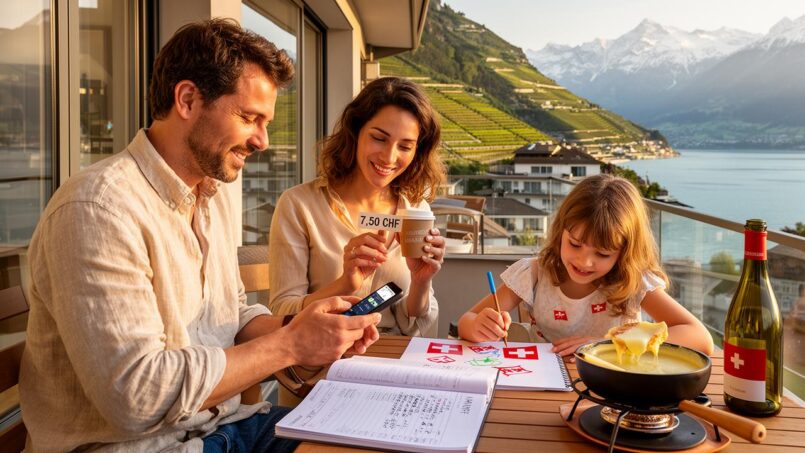
Settling in Switzerland fascinates many French people. High salaries, postcard-perfect mountains, spotless cities, trains that arrive to the minute… But behind the image of an ideal country, the daily reality for French expats is more nuanced: a very high cost of living, sometimes slow integration, a tight housing market, and meticulous administrative procedures.
Based on data and expat testimonials, this content details the budget needed, salary targets, housing options, children’s schooling, and keys to feeling at home in Switzerland.
One of the most expensive countries in the world, but also among the best places to live
International rankings are clear: Switzerland is among the most expensive countries to live in, but also among those with the highest quality of life.
In Switzerland, the cost of living is on average nearly 64% higher than in the United States.
At the same time, quality of life indices rank Switzerland at the top of the table. In the Numbeo Index, the country lands in the global top 5 with a quality of life score above 200, compared to about 170 for France depending on the dataset. The sub‑indices are revealing: very high purchasing power, safety, low pollution, good healthcare infrastructure, efficient public transport, and an exceptional natural environment.
These two realities — sky‑high costs and rare life comfort — form the framework in which French expats build their daily lives.
How much do you need to live in Switzerland? Typical budgets and differences between cities
Required budgets vary widely depending on the city, type of housing, and lifestyle. But several sources converge on fairly consistent indicative ranges for a “comfortable” life:
| Profile | Recommended monthly budget (CHF) | Comments |
|---|---|---|
| Single person | 4,000 – 5,500 | Excluding extravagant spending; includes rent, insurance, transport, food, moderate leisure |
| Couple without children | 5,500 – 8,000 | Depending on the city and rent level |
| Family with 2 children | 8,000 – 12,000 | Before high childcare costs or private/international school fees |
Other general estimates (excluding rent) put the cost of living at about 1,400 CHF per month for a single person and around 5,000 to 6,700 CHF for a family of four, which shows just how much housing weighs on the budget.
A concrete example in Zurich
An example monthly budget for a young professional in Zurich illustrates the typical expense structure:
| Expense item | Indicative monthly amount (CHF) |
|---|---|
| Rent | 2,000 |
| Health insurance | 400 |
| Utilities / internet / mobile | 200 |
| Food + going out | 800 |
| Public transport | 100 |
| Miscellaneous (sports, clothing, leisure, gifts…) | 400 |
| Total | 3,900 |
This total of about 3,900 CHF corresponds to a decent but not luxurious standard of living in the country’s largest city.
Expats can reduce their bill by 20 to 40% by settling in cities like Basel, Bern, Lausanne, or Lucerne instead of Zurich or Geneva, mainly due to lower rents.
Swiss salaries: what is a job offer really worth for a French person?
If prices are high, salaries are equally so. Switzerland boasts some of the highest pay in the world. The median full‑time gross salary is around 6,800 to 7,000 CHF per month, i.e., over 80,000 CHF per year. In major economic centers (Zurich, Basel, Lake Geneva region), medians often exceed 7,000 CHF, with sectors like finance, pharma, and tech where six‑figure incomes (100,000 CHF and above) are common starting at the intermediate level.
For a French expat, an annual gross salary of about 90,000 CHF or more in Zurich ensures a standard of living comparable to or better than that of a well‑paid executive in a major EU city. Below 70,000 CHF, many feel the pinch, especially after paying rent and health insurance.
Salary surveys indicate an average net salary of around 5,900 CHF per month after taxes for the entire working population, but this figure masks large disparities depending on the canton, sector, and family situation. In Zurich, for instance, a single person wanting to be truly comfortable should aim for a net monthly income of 5,500 to 7,000 CHF, which corresponds to gross salaries often above 90,000 CHF per year.
Median salary comparison by region
| Region / city | Median monthly gross salary (CHF) | Key sectors |
|---|---|---|
| Basel / Northwestern Switzerland | ~7,400 | Pharma, chemicals, services |
| Zurich | ~7,000 | Finance, tech, services |
| Lake Geneva (Geneva, Lausanne) | ~6,750 | Finance, NGOs, trading, research |
| Bern (Mittelland area) | ~6,400 | Administration, services |
| Central Switzerland | ~6,600 | Industry, services |
| Eastern Switzerland | ~6,450 | Industry, export |
| Ticino | ~5,300 | Services, tourism |
Note: these figures are medians; in highly skilled professions, it is not uncommon to well exceed 120,000 CHF annually.
Housing: tight market, astronomical rents, and bulletproof applications
For most French expats, the most painful expense is housing. Rent often eats up 30 to 40% of the total budget.
In major cities, a simple one‑bedroom apartment (often called a 2.5‑room) rents readily for between 2,000 and 2,500 CHF per month in Zurich or Geneva. For two bedrooms, the bill rises to 3,000–4,000 CHF.
Recent rental indices give the following ranges for major cities:
| City | Studio / 1 bedroom (CHF/month) | 2 bedrooms (CHF/month) | 3 bedrooms (CHF/month) |
|---|---|---|---|
| Zurich (city center) | 2,100 – 2,800 | 3,000 – 3,800 | 3,800 – 5,000 |
| Geneva (city center) | 1,900 – 2,600 | 2,700 – 3,500 | 3,400 – 4,500 |
| Basel (city center) | 1,600 – 2,200 | 2,300 – 3,000 | 2,900 – 3,800 |
It is possible to reduce the bill a bit by moving away from the city center (Winterthur for Zurich, Lausanne metropolitan area, etc.), where a 2.5‑room apartment can be found between 1,500 and 2,000 CHF. But the trade‑off comes in commuting times.
A highly codified apartment search
Testimonials converge: the market is both expensive, competitive, and very structured. A French woman who has been living there for four years says she was “lucky” to find a good apartment quickly at a fair price. Her advice: arrive at viewings with a bulletproof application already prepared. The documents typically required are:
To rent an apartment in Switzerland, provide these documents: copy of your employment contract or last three Swiss pay slips, copy of your ID or residence permit, a recent certificate from the municipal office stating no debt enforcement proceedings, proof of liability insurance, and sometimes references with a cover letter.
The impression from French accounts is one of extreme rigor: viewings organized “to the millimeter,” formal agencies, lines of applicants, and the need for an impeccable dossier. One expat even speaks of “military precision” in the organization of viewings.
In addition, the security deposit required at lease signing is heavy: 2 to 3 months’ rent in cash or in a blocked account, easily 4,000 to 6,000 CHF to advance for a small apartment. Added to that are utilities (Nebenkosten), often 150 to 300 CHF per month on top of the “net” rent.
A room in a shared apartment costs between 800 and 1,200 CHF per month, which reduces the initial financial pressure, especially for young people or those arriving alone.
Buying: an uphill battle for expats
Some French people then take the plunge into home buying, especially when they plan for the long term. The account of a couple living in Geneva illustrates common obstacles: minimum down payment of 20% of the price, part of which must be in cash, using the second pillar (occupational pension plan) to supplement the down payment, stricter bank requirements for those without a C permit, and applications checked down to the smallest detail.
They recount having to go through a local broker familiar with banks’ requirements for foreigners, and stress the importance of starting the process very early.
Another expat sums up the general feeling: access to homeownership is “both complex and very competitive,” to the point that some greatly expand their search area or accept major compromises.
Food, going out, transport: the cost of daily life
Once the roof is paid for, the rest of the budget is largely absorbed by food, insurance, and transportation, again with amounts far higher than in France.
Food: a shopping basket 20 to 30% more expensive than in the rest of Europe
Food prices are regularly cited as 20 to 30% higher than in other major European cities. Zurich and Basel are mentioned as the most expensive in the country for groceries.
Estimates for grocery budgets vary, but the main lines are as follows:
| Profile | Monthly grocery budget (CHF) | Remarks |
|---|---|---|
| Adult shopping at “standard” supermarkets | 400 – 600 | Migros/Coop, fresh produce, few restaurants |
| Adult relying more on discount stores | 300 – 450 | Discounters for basics, home cooking |
| Family of 4 | 1,500 – 2,000+ | Depending on habits (organic, meat, prepared meals, etc.) |
The bill climbs even higher as soon as you eat out frequently. A simple lunch menu, including a drink, is around 20 to 30 CHF in a business district. A fast‑food hamburger meal easily exceeds 15 CHF.
For a relaxed dinner with a friend at a standard restaurant, expats cite bills of 50 to 80 CHF per person, sometimes more in big cities. Some say that by going out “a few times a week,” they unknowingly reach 1,000 to 2,000 CHF in restaurant spending per month.
The price of a coffee in Zurich can exceed 5 CHF, while a draft beer costs between 7 and 9 CHF.
Health insurance: a non‑negotiable expense not covered by the employer
Unlike in France, basic health insurance is mandatory but entirely private, and above all individual. The employer does not pay it: every resident must insure themselves within three months of arrival.
The system is very specific:
– basic insurance standardized by law, but sold by multiple private insurers,
– fixed monthly premiums (they do not depend on income but on the canton, age, and chosen deductible),
– an annual deductible of 300 to 2,500 CHF borne by the insured, then a capped co‑payment.
In practice, average premiums are around 350 to 500 CHF per month per adult, sometimes more with supplementary options. Some sources group the range between 300 and 600 CHF, depending on the canton and deductible.
“extremely efficient” care and a feeling of being “truly taken care of”
Expats
Transport, utilities, and communications
Public transport is one of the strong points of daily life. A monthly city pass typically costs between 70 and 120 CHF depending on zones. In Zurich, expat budgets cite about 100 CHF per month. For those who travel a lot across the country, the general season ticket (GA) allows unlimited travel on most trains and buses for about 3,860 CHF per year for an adult.
Utilities (electricity, heating, water, garbage collection, etc.) for a medium‑sized apartment are most often between 100 and 200 CHF per month, plus internet connection (40 to 80 CHF) and a mobile plan (30 to 70 CHF). For a single person, it is realistic to budget 200 to 400 CHF monthly for the whole “electricity + water + internet + phone” package.
Leisure budgets reported by expats — gym membership, outings, clothing, haircuts, streaming services — often run around 300 to 500 CHF monthly. A gym membership typically costs between 60 and 120 CHF per month.
Taxation: high complexity, but moderate pressure in many cantons
For a French person, Swiss taxation is bewildering in its complexity… and sometimes seductive in its rates.
Three levels of taxation are combined: federal, cantonal, and municipal. The scale is progressive at the federal level and in most cantons, but the differences between cantons are massive: some regions like Zug or Schwyz offer very low rates for high incomes, while Geneva or Vaud tax more heavily — yet generally remain below French levels for comparable income.
For holders of B or L permits, tax is generally withheld at source by the employer, including federal, cantonal, and municipal shares. Above 120,000 CHF in annual income, a full tax return is mandatory.
Examples of effective rates for a single person with 100,000 CHF in annual gross income show orders of magnitude: around 12–15% in Zug or Schwyz, about 21–24% in Zurich, around 25–30% in Lausanne or Geneva.
For French cross‑border workers, bilateral agreements add another layer of complexity, with specific systems depending on the canton of employment. Geneva, for example, applies withholding tax in Switzerland, then a tax credit system on the French side.
Schooling, childcare, and exploding costs for families
For French families with children, the question of school and childcare weighs very heavily in the financial and organizational equation.
Public school: free but highly cantonal
Public school is free and compulsory roughly from ages 4 to 15, although the exact duration of each cycle depends on the canton. The Constitution gives almost all educational authority to the cantons, which means quite different systems depending on whether you live in Geneva, Vaud, Fribourg, or Zurich.
Most Swiss children continue their studies beyond age 15, either in a gymnasium leading to the Matura (equivalent to the baccalaureate) or in a vocational track called “dual” combining apprenticeships and theoretical courses. These programs remain largely free.
Instruction is in the language of the region (French, German, Italian, or Romansh). In the canton of Vaud, for example, all children — even those without stable legal status — are accepted into public school, with intensive French classes or courses for non‑French speakers.
In some bilingual cantons like Fribourg, the language of instruction varies by municipality. German‑speaking municipalities are increasingly welcoming French‑speaking families attracted by lower rents, forcing schools to massively develop German as a second language, incurring a significant cost.
Cross‑border families and tightening in Geneva
An important point for French people living on the French side but working in Geneva: the canton has decided that starting in 2026, it will no longer accept students residing in France into its public schools. The message is clear: “Go to school where you live.” More than 2,500 students affected will have to be schooled on the French side starting that fall.
For cross‑border families who relied on Geneva’s public schools, this is a real upheaval, and a strong signal about capacity and funding issues in the school system.
Private and international schools: a very expensive luxury
Many expats, especially those who move frequently from country to country or who want a bilingual (French/English) education, turn to private and international schools, particularly in Geneva and Lausanne.
Geneva is one of the most expensive places in Europe for international education, with tuition fees reaching very high ranges.
| Level | Indicative annual fees in Geneva (CHF) |
|---|---|
| Pre‑school / early childhood | 20,000 – 32,000 |
| Primary (Years 3–6) | 28,000 – 38,000 |
| Middle school (Years 7–9) | 32,000 – 42,000 |
| High school IB / Matura / A‑Levels | 38,000 – 52,000 |
Added to these amounts are a registration fee of several thousand francs (often between 5,000 and 10,000 CHF), an annual building levy (1,500–4,000 CHF), plus uniforms, ski trips, external exams, school transport, meals, etc. For boarding schools, some establishments add another 35,000 to 60,000 CHF per year for full board.
For French families, there are sometimes subsidies from the Agence pour l’enseignement français à l’étranger (AEFE) in accredited institutions, with need‑based scholarships.
Childcare: potentially the number one expense
Before compulsory school age, childcare for young children is largely private or handled by municipalities, with costs that are often extremely high. Full‑time daycare can easily cost 1,800 to 2,500 CHF per month per child, depending on the city and level of subsidy.
Several cost‑of‑living analyses highlight that, for a family with two young children, childcare can exceed housing and become the primary expense, especially if neither parent works for a large company or international organization that offers substantial assistance.
Quality of life: safety, nature, and top‑notch public services
If, despite these crazy costs, thousands of French people still want to settle in Switzerland, it’s because there are very real compensations. International surveys of expats show a very high level of satisfaction with quality of life, to the point that the country was named “best country for expat quality of life” by a major InterNations survey three years in a row.
The strengths mentioned by French people already living there are recurring.
Safety and family serenity
Safety consistently stands out as a major asset. Parents recount the peace of mind they feel letting their children play outside until late, or walk home from school alone. The crime rate is low, violence rare, and public spaces well‑maintained and lit.
About one in five people feels somewhat isolated, mainly due to social connection rather than objective safety
Healthcare system and infrastructure
Expats describe a highly efficient healthcare system with some of the shortest waiting times in Europe, state‑of‑the‑art equipment, and care perceived as very professional. International rankings regularly place Switzerland in the global top 10 for healthcare performance, with a life expectancy higher than France’s and very low rates of avoidable mortality.
Switzerland’s public transport network received a score of 9.6 out of 10 in an expat survey.
Environment, cleanliness, and access to nature
The impression of cleanliness often shocks new arrivals: spotless sidewalks, well‑maintained green spaces, swimmable lakes, clean trains. One testimonial describes a real “positive shock” upon arrival, between beautiful landscapes, regional diversity, and extreme care for public spaces.
For outdoor enthusiasts, it’s a paradise: hiking, skiing, cycling, water sports, everything is within reach. Several expats explain that they have started living by the rhythm of the seasons, with a life more oriented toward nature than what they knew in France.
Integration: “no culture shock, but a slow cultural drip‑feed”
Beyond the numbers, what strikes you when reading French expat accounts is the contrast between enthusiasm for the living environment and the acknowledgment of an integration that is sometimes slow, even painful at the start.
One person, who has already lived in four countries, describes Switzerland as “the hardest to tame,” not because of a brutal shock but due to a kind of “drip‑feed culture.” At the office, colleagues are polite but reserved, invitations for a drink are rare, and Sunday can feel deafeningly silent when you don’t know anyone yet.
Statistics confirm this feeling: in some cities, more than half of expats say their main friends are… other expats. In Zurich, nearly two‑thirds say their social circle is mostly made up of foreigners; in Basel, more than half. Nationally, surveys show that 41% of expats find it difficult to make Swiss friends.
For French people living in French‑speaking Switzerland, language initially seems like a non‑issue: everyone speaks French. But very quickly, nuances appear: specific numbers (“septante,” “nonante”), local expressions, formal politeness, importance of punctuality, initial reserve in interactions.
Several accounts show that “small linguistic codes” are markers of integration. A French woman in Lausanne adopted “nonante” instead of “quatre‑vingt‑dix” to blend in better, and felt a more favorable response after using local turns of phrase.
In German‑speaking Switzerland, the barrier is more direct: the local dialect (Schwyzerdütsch) dominates daily life, and standard German is not always sufficient socially. Many French‑speaking expats acknowledge that not speaking German severely limits local contact opportunities, even though English is widely used at work.
Studies on integration also emphasize that mastering a national language remains a key lever: a university study in Geneva showed that French speakers who also speak German earn on average 10 to 20% more than those who remain strictly monolingual.
Swiss people “closed off”… until the day you’re invited
A theme recurs in many accounts: the perception of a certain distance, even Swiss coldness, which nevertheless gives way as soon as you cross the threshold of intimacy.
A French man explains that he perceived his neighbors as very distant until he invited them for coffee. He sums it up: “Everything relaxed instantly.” Once integrated into a circle, relationships become loyal, stable, and deep, but gaining access to that circle takes time.
Advice from former expats circulates widely:
– say “yes to everything” at first: invitations, after‑work drinks, WhatsApp groups,
– don’t judge by the quality of an event, but bet on repeated contact,
– accept that friendships form on the 10th or 15th meeting, not the first,
– stop constantly comparing with France: “joy is different here, not lesser,” says one expat.
Clubs (Vereine), associations, and sports: the most effective gateways
Many emphasize the central role of local associations — the famous Vereine — as the cornerstone of social life. Soccer clubs, choirs, Alpine Club sections, card clubs, shooting or rowing societies: this is where the local population is “in social mode by default.”
A common piece of advice: choose a club, go every week, and get involved. According to some, after three months of regular participation, you may have built more connections there than in a year of simple office life.
Expert advice
Team sports also play a big role. One expat recounts that his true Swiss friends came when he joined a local sports club, and that everything else — language classes, expat after‑works — was just “networking” in comparison.
Feeling of isolation: a reality for some groups
Studies by the University of Zurich highlight another side of the coin: one‑fifth of the population says they feel at least partially socially excluded, and about 3% feel “not at all integrated.” Among the most affected groups are expats, young people, retirees, and some speakers of minority languages like Romansh.
In some mountain regions of French‑speaking Switzerland or Ticino, the feeling of isolation is more pronounced. Conversely, major German‑speaking cities like Zurich or St. Gallen seem somewhat more inclusive, probably due to a dense network of associations and greater familiarity with diversity.
French expat journeys: motivations, disappointments, and anchors
Individual stories give flesh to these broad trends.
A French man born in the border area recounts coming primarily for the salary, then eventually deciding to settle in Switzerland after a career opportunity. He emphasizes that many compatriots come initially for work, without really having “chosen” the country — a choice that consolidates, or not, over the years.
A woman from Brittany who has lived in Vionnaz since 2019 explains that she always had the idea of leaving in mind and “jumped without hesitating” when an opportunity arose with her company. Her move went well, but she highlights the “administrative surprises” and the need to understand local customs and practices.
A very smooth arrival, but it still took adaptation and “truly immersing” in the ways to feel at home. The extraordinarily multicultural aspect particularly appeals to French people, who are sensitive to this European openness.
Expat in Lausanne
From the illusion of “eternal vacation” to real life
One striking account speaks of an initial illusion: believing that living in Switzerland would be like “a vacation that never ends.” The illusion faded after three weeks. Between the shock of prices, the rigor of administrative procedures (residence permit, health insurance, taxes), knowing no one, and deserted Sunday afternoons, reality hits quickly.
Expats generally feel a sense of belonging to Switzerland between the 8th and 18th month, provided they have invested socially, culturally, and emotionally.
Family life, school, and “expat bubbles”
In some tax‑friendly municipalities like Feusisberg, real “parallel worlds” form: foreign families, often very wealthy, whose children attend private international schools, with strong ties to local life. A French father, a financier, admits he hasn’t gotten involved in regional associations. He understands, he says, that residents may sometimes feel “overrun,” but believes integration must remain a personal effort.
Local authorities sometimes try to correct this trend by organizing welcome drinks, tax information services, small symbolic gifts. In some cantons, integration is even established as a legal duty, with subsidized language programs, courses on daily life codes, or even language requirements for obtaining certain permits.
Should you still try the adventure as a French person?
For a French person considering living in Switzerland, the question is therefore not whether the country is “better” or “worse,” but whether it matches their priorities, given the trade‑offs to be made.
The main takeaways from the data and testimonials are as follows:
Financially, the country remains very attractive for skilled profiles. Purchasing power can exceed that of France or Luxembourg if the initial salary is well negotiated, despite the high costs of rent and health insurance. In return, the pressure of the cost of living requires careful management, especially for families with children in private school or needing full‑time childcare. The quality of infrastructure (health, transport, schools, environment) and daily safety are decisive arguments, particularly for parents. However, social integration is a medium‑term project: it requires stepping out of the French‑speaking and expat bubble, learning a national language, and investing time in local networks.
French expats who say they “succeed” in their move are those who, beyond the numbers, have managed to build routines, friendships, and landmarks in their neighborhood, their club, their children’s school. They then describe a country where you work a lot, where you pay a lot, but where you gain in tranquility, safety, and space for yourself and your family.
First take care of your life. The finances will follow.
Advice from a long‑settled French expat
An estate planning project or a question? Contact us now to speak with a wealth management expert.
Disclaimer: The information provided on this website is for informational purposes only and does not constitute financial, legal, or professional advice. We encourage you to consult qualified experts before making any investment, real estate, or expatriation decisions. Although we strive to maintain up-to-date and accurate information, we do not guarantee the completeness, accuracy, or timeliness of the proposed content. As investment and expatriation involve risks, we disclaim any liability for potential losses or damages arising from the use of this site. Your use of this site confirms your acceptance of these terms and your understanding of the associated risks.

Cyril Jarnias is an independent expert in international wealth management with over 20 years of experience. As an expatriate himself, he is dedicated to helping individuals and business leaders build, protect, and pass on their wealth with complete peace of mind.
On his website, cyriljarnias.com, he shares his expertise on international real estate, offshore company formation, and expatriation.
Thanks to his expertise, he offers sound advice to optimize his clients' wealth management. Cyril Jarnias is also recognized for his appearances in many prestigious media outlets such as BFM Business, les Français de l’étranger, Le Figaro, Les Echos, and Mieux vivre votre argent, where he shares his knowledge and know-how in wealth management.





