
 Published on and written by Cyril Jarnias
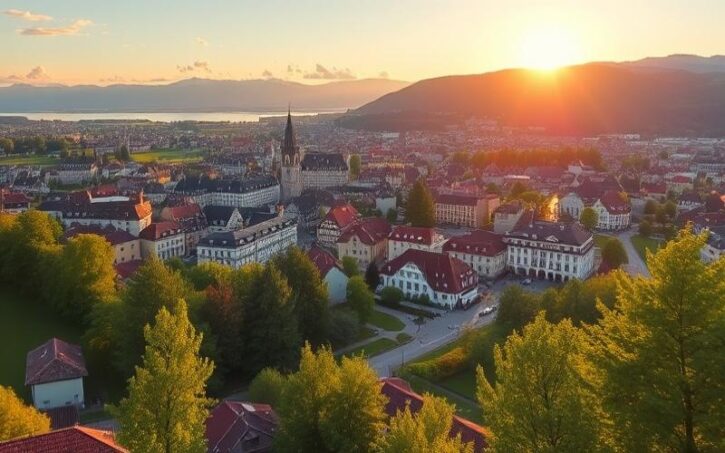
Nestled between the Aare River and the Gurten, just minutes from downtown Bern, investing in real estate in Wabern is attracting a growing number of eligible Swiss and foreign investors. This former “leisure suburb” has transformed into a true residential sub-market, driven by excellent accessibility, a very green setting, and prices that are still below those of the old town or the most sought-after neighborhoods of the federal capital.
Behind its tranquil village appearance, Wabern features a sophisticated real estate market, characteristic of Switzerland: housing shortage, historically low mortgage rates, price stability, and modest but regular rental yields. It represents a more accessible investment opportunity than Zurich or Geneva, with appreciation potential.
Wabern in the Swiss Real Estate Ecosystem
Investing in real estate in Wabern does not happen in a vacuum: prices, yields, and risks are largely determined by the national and cantonal context.
Switzerland is going through a phase of moderate but steady residential price increases. Nationwide, values have increased by approximately 25 to 30% between 2019 and 2024, and forecasts still predict an annual increase of 3 to 4%, at least until 2026. Demand structurally exceeds supply: barely 41,000 new housing units were delivered in 2024, while the population grows by 80,000 to 100,000 people per year, mainly through net immigration.
The average price per square meter for apartments in Bern ranges between 9,800 and 11,900 CHF.
Regarding yield, Switzerland stands out with a gross average around 3% in the 3rd quarter of 2025, slightly down from the beginning of the year. In the canton of Bern, apartments generate a typical gross yield close to 3%, with examples of 1-bedroom units purchased for about 524,300 € with a monthly rent of 1,500 € (i.e., 3.43% gross yield) and 2 to 3-bedroom units around 2.8 to 2.9%.
Wabern, part of the municipality of Köniz but integrated into the Bern employment basin, fits within this logic, with a positioning that combines:
– price per m² below downtown Bern;
– rents supported by strong rental demand;
– gross yields slightly higher than those in ultra-central neighborhoods.
A Statistical Portrait of the Real Estate Market in Wabern
From a strictly residential point of view, investing in real estate in Wabern relies on an already mature, yet still transforming, market. Recent data provides a very concrete overview of price levels.
General Price Levels in Wabern
In 2025, the average price per square meter for all properties in Wabern (3084) was around 7,260 CHF, up about 4.7% year-on-year. Another dataset, focused on September 2025, indicates a higher average price of 8,356 CHF/m², with a breakdown between apartments and houses.
| Indicator (Wabern 3084) | Indicative Value |
|---|---|
| Average price per m² (all properties, 2025) | 7,260 CHF |
| Average price per m² (Sept. 2025) | 8,356 CHF |
| Average price per m² – apartments | 7,281 CHF |
| Average price per m² – houses | 9,431 CHF |
| Median price per m² | 9,994 CHF |
| Median total asking price | 1,266,427 CHF |
| Range for 80% of properties (total price) | 629,231 – 2,545,597 CHF |
These figures show two essential elements for the investor:
Wabern sits slightly below the national average price (about 9,100 CHF/m²) but remains well above rural regions, confirming its status as a sought-after urban sub-market. The price dispersion is significant, ranging from 600,000 CHF to over 2.5 million, reflecting the diversity of the offer between older buildings, villas, and new projects.
Value Distribution by Property Type
To invest in real estate in Wabern in a sophisticated way, it is useful to analyze the distribution of prices per square meter depending on whether it’s an apartment or a house.
A first statistical series gives the following brackets:
| Segment – Apartments | Price per m² |
|---|---|
| 20% cheapest | < 6,025 CHF/m² |
| 60% “middle of the market” | 6,025 – 8,443 CHF/m² |
| 20% most expensive | > 8,443 CHF/m² |
| Segment – Houses | Price per m² |
|---|---|
| 20% cheapest | < 6,110 CHF/m² |
| 60% “middle of the market” | 6,110 – 12,647 CHF/m² |
| 20% most expensive | > 12,647 CHF/m² |
Another, more recent and slightly higher, database suggests for apartments a “middle of the market” between 6,377 and 9,482 CHF/m², with a median of 8,113 CHF/m²; and for houses, a core market between 7,360 and 13,235 CHF/m², with a median of 10,717 CHF/m².
In Wabern, houses command a clear premium compared to apartments. This difference is particularly pronounced in the segment of 6 to 6.5-room dwellings, where the median price per square meter exceeds 13,000 CHF, illustrating the higher valuation of the individual property market in this locality.
Price by Number of Rooms: What is the Entry Ticket?
Medians by dwelling typology allow for calibrating one’s budget when considering investing in real estate in Wabern.
| Apartment Type (Wabern) | Median price per m² |
|---|---|
| Studio | 5,820 CHF/m² |
| 2–2.5 rooms | 6,575 CHF/m² |
| 3–3.5 rooms | 9,482 CHF/m² |
| 4–4.5 rooms | 8,113 CHF/m² |
| 5–5.5 rooms | 6,140 CHF/m² |
| 6+ rooms | 8,029 CHF/m² |
| House Type (Wabern) | Median price per m² |
|---|---|
| 4–4.5 rooms | 9,172 CHF/m² |
| 5–5.5 rooms | 8,453 CHF/m² |
| 6–6.5 rooms | 13,235 CHF/m² |
| 7+ rooms | 8,293 CHF/m² |
Converted to indicative average total prices, we get the following magnitudes:
| Property Type | Indicative Average Price |
|---|---|
| Studio | 169,000 CHF |
| 2-room apartment | 493,000 CHF |
| 3-room apartment | 765,000 CHF |
| 4-room apartment | 1.1 M CHF |
| 5-room apartment | 1.3 M CHF |
| 4-room house | 1.1 M CHF |
| 5-room house | 1.3 M CHF |
| 6-room house | 1.7 M CHF |
| 7-room house | 2.0 M CHF |
| 8-room house | 2.1 M CHF |
This is very close to the “standard Swiss ticket”: a typical single-family home costs around 900,000 CHF nationally, with the majority of residential transactions between 500,000 and 1.5 million. Wabern positions itself rather in the upper range of this bracket, consistent with its role as an upscale suburb of Bern.
Examples of High-Value Micro-Locations
Internal disparities within Wabern are notable. Some streets exhibit price per square meter values worthy of the best Bernese neighborhoods:
| Street in Wabern | Indicative Price per m² |
|---|---|
| Alpenstrasse | 10,570 CHF/m² |
| Eichholzstrasse | 10,364 CHF/m² |
| Viktoriastrasse | 10,310 CHF/m² |
| Bächtelenweg | 10,229 CHF/m² |
| Maygutstrasse | 10,158 CHF/m² |
| Eigenheimstrasse | 10,016 CHF/m² |
| Parkstrasse | 10,007 CHF/m² |
| Gurtenbrauerei | 9,776 CHF/m² |
| Strandweg | 9,619 CHF/m² |
These addresses typically combine immediate proximity to transportation, a high-quality residential environment, and good access to recreational spaces (Aare River, Eichholz beach, Gurten).
Price Dynamics: Growth, Apparent Volatility, and Long-Term Horizon
Long-term data is clear: over 25 years, the price per m² of houses in Wabern has almost doubled (+94.4%), and those of apartments have increased by nearly 85%. Investing in real estate in Wabern has thus proven profitable over time, even accounting for some periods of stagnation.
Annual increase in house prices according to one source, contrasting with an 8.2% decline for apartments.
Rather than seeing a sharp downturn, one should read:
– the effect of samples of relatively few transactions at the scale of a single postal code;
– the strong influence of new projects or sales of high-end villas, which can pull certain averages upwards;
– the sensitivity of statistics to changes in the mix of properties sold (more small apartments one year, more large houses the next…).
In practice, these fluctuations do not contradict the central Swiss scenario: a moderate increase in residential prices, expected between 2 and 4% per year depending on the segment, supported by the housing shortage and low interest rates.
Rental Market in Wabern: Rents, Yields, and Demand
The other pillar for investing in real estate in Wabern is obviously rental income. Again, the picture must be read in connection with the Bernese market and national trends.
Typical Rent Levels
The average rents by property type in Wabern are in the upper range of the canton of Bern, while still being below Zurich or Geneva.
| Property Type | Average Monthly Rent (Wabern) |
|---|---|
| Studio | 849 CHF |
| 2-room apartment | 1,446 CHF |
| 3-room apartment | 1,938 CHF |
| 4-room apartment | 2,421 CHF |
| 5-room apartment | 2,911 CHF |
| 4-room house | 3,266 CHF |
| 5-room house | 3,439 CHF |
| 6-room house | 3,756 CHF |
| 7-room house | 4,219 CHF |
| 8-room house | 4,561 CHF |
A concrete example of a rental listing in Wabern confirms these magnitudes: 1-room apartments up to 23 m² are offered starting at 1,450 CHF, 2.5-room apartments (up to 80 m²) from 2,500 CHF, and 3.5-room apartments (up to 110 m²) from 2,800 CHF. These figures are consistent with the market tightness and the “premium periphery” positioning.
Gross Yields: What Can an Investor Expect?
Gross yield is simply calculated by dividing the annual rent by the purchase price. Let’s take two plausible scenarios for investing in real estate in Wabern:
Overview of rental properties with their purchase price and annual rental income.
Purchased for 765,000 CHF, rented for 1,950 CHF/month (23,400 CHF/year).
Purchased for 1.1 million CHF, rented for 3,300 CHF/month (39,600 CHF/year).
Thus we get:
– apartment gross yield ≈ 23,400 / 765,000 ≈ 3.06%;
– house gross yield ≈ 39,600 / 1,100,000 ≈ 3.6%.
These levels are consistent with the canton of Bern averages (around 2.8 to 3% for apartments, slightly more for some houses) and slightly above the national average (2.92%). However, it must be recalled that:
– net yields in Switzerland are 1.5 to 2 points lower than gross yields, once maintenance costs, insurance, taxes, and vacancy are factored in;
– Swiss cities offer low yields compared to markets like the UK (nearly 7% on average) but compensate with a stability of prices and rents that is almost unique.
For an investor primarily seeking income, the Wabern market does not allow for significant capital gains. It is more of a defensive asset, characterized by moderate yield and reduced volatility. Its integration is relevant within a long-term wealth management strategy.
Rental Demand and Vacancy Risk
Nationally, the rental vacancy rate is around 1%, with cities like Zurich nearing 0.07%. Bern remains around 1 to 1.5%. Wabern, combining:
– quick access to the city center (tram 9 to the main station and old town in about 12 minutes);
– proximity to the Gurten and the Aare (Eichholz beach);
– new residential offerings (like the VOBERNOVA project);
benefits from high rental absorption. The village is even cited in analyses as a “Higher-Yield Zone” of the Bern region, with gross yields of 3.2 to 3.6% and very fluid demand, notably from:– young professionals working in Bern;
– families looking for a compromise between nature, good schools, and accessibility;
– international profiles employed by organizations or companies in the region.
The risk of prolonged vacancy is therefore low as long as the property is correctly positioned in terms of price and quality.
Concrete Example: VOBERNOVA, the New Generation of Housing
To concretely measure what investing in real estate in Wabern means today, the new VOBERNOVA project at Mattenweg 6 is a textbook case.
This development of 12 apartments (3.5 and 4.5 rooms) is located in a sought-after villa neighborhood, a few minutes’ walk from the future Bächtelenpark tram stop and an ALDI supermarket. The center of Wabern (Coop, post office, pharmacy) or Eichholz beach are reachable in five minutes by bike; a Migros (“Chly Wabere”) and a Denner complete the local commercial offerings.
The apartments are characterized by:
The price of an underground parking space in these apartments.
Notably: about half of the units were already reserved even before the official sales launch, which illustrates the strength of demand for well-located new properties in Wabern. For an investor, this type of project generally offers:
– a high rental value (modern standard, good energy efficiency);
– reduced maintenance in the first few years;
– additional appreciation potential as the neighborhood densifies around the new tram station.
Acquisition Costs and Taxation: The Specific Case of the Canton of Bern
Investing in real estate in Wabern also means dealing with Bernese taxation, which is heavier than in some other cantons on transactions.
On a purchase in the canton of Bern, the buyer bears:
– a real estate transfer tax of 1.8% on the portion of the price exceeding 800,000 CHF for primary residence use;
– land registry fees that can reach 0.5% of the price;
– notary fees in the order of 0.5% as well.
For a property worth 1 million francs in Wabern, the typical bill looks like this:
| Cost Item (purchase at 1,000,000 CHF) | Indicative Amount |
|---|---|
| Transfer tax (1.8% on 200,000 CHF) | 3,600 CHF |
| Land registry (0.5% for buyer) | 2,500 CHF |
| Notary fee (0.5%) | 5,000 CHF |
| Mortgage deed setup (80% at ~0.2%) | approx. 2,000 CHF |
| Total ancillary costs for buyer | approx. 13,100 CHF |
In practice, the allocation of some costs (notary, land registry, transfer tax) is negotiated in the sales deed, but it is prudent to budget up to 5% of the price to absorb all ancillary costs, especially when accounting for a potential real estate agent commission or specialized advice.
Unlike Zurich where transfer taxes are often absent and notary/registry fees are around 0.1%, entry into the Bern real estate market is significantly more expensive. This difference in initial costs is an essential element to factor into the profitability calculation, especially for an investment in Wabern.
Taxation During Ownership: Rental Income, Wealth Tax, Imputed Rental Value
Once you are an owner, you are subject to the three-tier Swiss taxation: Confederation, canton (Bern), and commune (Köniz). Several items impact net profitability.
Rental income is taxed as ordinary income at these three levels. In return, the owner can deduct:
– interest on debts (mortgage);
– costs of maintenance and renovations that preserve value (painting, bathroom modernization, appliance repairs, gardening…);
– administration and management fees;
– building insurance premiums.
Costs related to the acquisition of a property (transfer taxes, notary fees, land registry fees) are not deductible from annual taxable income. However, they can be deducted from the capital gain to reduce the tax due when the property is sold.
For a primary residence, the owner is in principle taxed on an imputed rental value (theoretical rent), against which mortgage interest and maintenance can be deducted. A reform voted in 2025, however, plans to abolish this imputed rental value for primary and secondary residences, in exchange for a strong reduction in the deductions for private interest and maintenance. The implementation date remains to be specified, but this will change the way to optimize the taxation of an investment in Wabern.
Net value of a real estate property used as the basis for wealth tax calculation in Switzerland, potentially leading to an annual bill of 300 to 3,000 CHF depending on the canton.
Finally, about half of the cantons, including Bern, levy an annual property tax (real estate tax), typically between 0.02 and 0.3% of the taxable value. Overall, for a property worth one million in Wabern, annual taxes related to ownership (imputed rental value, wealth tax, property tax) often fall within a range of 2,000 to 5,000 CHF.
Financing: Swiss Standards and Available Tools
Investing in real estate in Wabern requires dealing with particularly prudent Swiss financing rules.
Banks generally require: collateral, personal equity, proof of income, a good credit history, and information on the financial project.
– at least 20% equity, sometimes more (25–35%) for riskier profiles or secondary residences;
– borrowing capacity calculated not at the market rate (currently very low) but on a theoretical rate around 5%, to test the borrower’s resilience in case of rising rates;
– that the housing cost (theoretical interest, amortization, charges) does not exceed about one-third of gross income.
The range of financing products is very wide:
Discover our complete range of mortgage products designed to adapt to your real estate project and your borrower profile.
Security and predictability with a guaranteed interest rate for a term of 2 to 20 years. Ideal for planning your long-term budget.
Flexibility with a variable rate linked to SARON. An option suited for falling markets or if you plan an early repayment.
Dedicated financing for the construction, renovation, or modernization of your property. Realize your improvement projects.
Diversify interest rate risk by combining a fixed-rate portion and a SARON-linked portion. The best of both worlds.
Players such as UBS, Münchener Hypothekenbank, pension funds via platforms like “key4 mortgages”, but also public institutions like KfW (for German owners investing via energy efficiency programs) can intervene depending on the case. “Green” solutions dedicated to high energy performance projects further expand the possibilities for financing under favorable conditions.
For an investor, the challenge is twofold:
– optimize the cost of capital, taking advantage of a historically low interest rate environment;
– maintain a safety margin (cash reserves, reasonable debt-to-equity ratio) to absorb potential interest rate hikes or periods of rental vacancy.
Structural Strengths of Wabern for Investment
Beyond the numbers, investing in real estate in Wabern is based on a series of very solid fundamentals.
Geographic Location and Quality of Life
Wabern combines immediate proximity to Bern with an almost “countryside” environment:
– at the foot of the Gurten, with a funicular and vast walking areas;
– on the banks of the Aare, with Eichholz beach, a popular spot in summer;
– quick access to the city (tram 9, modernized BLS stations);
– a complete commercial offering at the neighborhood scale (Coop, Migros, Denner, Aldi, pharmacy, post office).
This combination of urban employment and proximity to nature attracts families and professionals in particular. In a context where households are highly sensitive to quality of life, this balance strongly influences real estate demand and contributes to price stability.
Transport Infrastructure and Structuring Projects
The modernization of Wabern station on the Bern–Belp–Thun line, led by BLS Netz AG, is an example of an infrastructure project that strengthens the area’s attractiveness. The work involved:
– replacing the old central platform with two 220-meter side platforms;
– completely reconfiguring passenger pathways;
– modernizing electrical and telecom installations (power supply, technical cabinets, fiber optics, ambient lighting).
Long-term value premium generated by proximity to efficient transport infrastructure, as observed in Switzerland.
Local Demographics and Employment Basin
Demographically, German Wabern (Hesse) and Wabern bei Bern are two different entities; for real estate investment in Wabern in the Bernese sense, it is primarily the Bern basin that matters: university, hospitals, federal administrations, international organizations. This economic base translates into:
– stable incomes (administrative salaries around 70,000 to 130,000 CHF);
– sustained rental demand, including from international households;
– less sensitivity to the most violent economic cycles.
Combined with a housing stock largely composed of 3–5 room properties, this structure guarantees a very broad demand base, both for rental and home ownership.
Risks and Challenges: What to Anticipate
No investment is risk-free, and investing in real estate in Wabern is no exception. Several areas require particular attention.
Interest Rate and Affordability Risk
The most monitored scenario at the national level remains a marked and sustained increase in mortgage rates. A sharp rise could:
– reduce the purchasing power of a significant portion of households;
– force some highly indebted owners to sell under unfavorable conditions;
– lead to a price correction estimated between 5 and 15% over 2 to 4 years according to experts.
For now, the Swiss National Bank maintains a policy rate close to 0%, with long-term mortgages around 1.5–2%, but caution is warranted over a decade-long horizon.
Modest Yields and Entry Taxation
The risk/return profile of Wabern is very different from that of more “aggressive” markets:
Gross yields are around 3 to 3.6%, but one must consider non-negligible entry costs (3 to 5% of the price, including a cantonal transfer tax of 1.8%) as well as annual taxation including imputed rental value, wealth tax, and property tax.
Over a short horizon, these parameters significantly erode net profitability. The investment only makes full sense in the long term, thanks to price stability and a capital gains tax that decreases strongly with the holding period.
Regulation and Tenant Protection
Swiss tenancy law (Code of Obligations) largely protects tenants. For an investor, this implies:
– limited room for maneuver to increase rents, apart from indexations linked to the reference rate or proven investments;
– regulated procedures in case of termination or dispute.
In Switzerland, some cities are strengthening regulations on seasonal rentals to protect the traditional rental stock. Even in Wabern, which is not a hyper-touristic center, one must anticipate a regulatory framework that is overall more restrictive for speculative investment strategies.
Niche Market for Resale
Finally, unlike Zurich or Geneva, the Wabern market remains a niche within the Bernese ecosystem. New or well-located properties generally sell within reasonable timeframes, but:
– the base of potential buyers is more limited;
– some very particular products (very high-end villas, atypical layouts) may require more time or price adjustments.
For an investor, this argues in favor of “liquid” properties: 3–4 room apartments or standard-sized family homes, in the most sought-after micro-locations.
How to Position Yourself Intelligently in Wabern?
From this overview, several guidelines emerge for investing in real estate in Wabern in a relevant way.
The investor focused on regular yield will rather favor:
– medium-sized apartments (3–4 rooms), close to tram stops and the modernized station;
– properties in recent or energy-renovated buildings, to limit maintenance expenses and benefit from increased appeal to tenants.
One who aims primarily for capital appreciation could look at:
To maximize capital gains potential, focus on two types of properties: 4–5 room houses located in already prestigious streets (like Alpenstrasse, Parkstrasse or near Mattenweg), and new apartments in launch-phase projects, like VOBERNOVA. These benefit both from the new-build premium and the potential for appreciation linked to the future densification of the neighborhood.
In any case, three principles remain essential:
– finely calibrate the financing structure (proportion of equity, fixed-rate/SARON mix, term) by integrating stress scenarios on interest rates;
– build a cash cushion of at least 1 to 2 years of expenses (interest, maintenance, taxes) to deal with unforeseen events (work, vacancy, tax reforms);
– rely on a local team (bank, notary, possibly property manager, tax advisor) who masters the specificities of the canton of Bern.
Conclusion: Wabern, a Central Piece of a Swiss Wealth Strategy
Between the price surge in Zurich, the tight yields of hyper-centers, and uncertainties in some secondary markets, investing in real estate in Wabern appears as a solid compromise: a well-connected Bernese sub-market, with a sought-after living environment, offering prices still slightly below the national average and rental yields among the most attractive in the Bern region.
The investor who accepts gross yields in the order of 3 to 3.5%, in exchange for strong visibility on demand, limited volatility, and very secure property rights, will find in Wabern a coherent anchor for a long-term strategy. The continuous modernization of infrastructure, new residential projects, and the enduring tightness of the Swiss rental market argue for a continuation of appreciation, albeit moderate yet robust.
Real Estate Investment Analysis
In a country where ownership is rare (about 36% of households) and where construction constraints curb any explosion of supply, positioning oneself in “premium peripheral” pockets like Wabern, in the shadow of the federal capital, amounts to betting on a rare asset, supported by demographic, economic, and urban fundamentals that are difficult to reproduce elsewhere.
Disclaimer: The information provided on this website is for informational purposes only and does not constitute financial, legal, or professional advice. We encourage you to consult qualified experts before making any investment, real estate, or expatriation decisions. Although we strive to maintain up-to-date and accurate information, we do not guarantee the completeness, accuracy, or timeliness of the proposed content. As investment and expatriation involve risks, we disclaim any liability for potential losses or damages arising from the use of this site. Your use of this site confirms your acceptance of these terms and your understanding of the associated risks.

Cyril Jarnias is an independent expert in international wealth management with over 20 years of experience. As an expatriate himself, he is dedicated to helping individuals and business leaders build, protect, and pass on their wealth with complete peace of mind.
On his website, cyriljarnias.com, he shares his expertise on international real estate, offshore company formation, and expatriation.
Thanks to his expertise, he offers sound advice to optimize his clients' wealth management. Cyril Jarnias is also recognized for his appearances in many prestigious media outlets such as BFM Business, les Français de l’étranger, Le Figaro, Les Echos, and Mieux vivre votre argent, where he shares his knowledge and know-how in wealth management.





