
 Published on and written by Cyril Jarnias
Starting a business in Turkmenistan is no standard expat project. The country is rich in natural gas, infrastructure projects, and grand development plans, but its business environment is among the world’s most closed and opaque. Between a heavily state-controlled economy, currency exchange controls, endemic corruption, almost locked-down internet access, and a judiciary dependent on the executive branch, each step requires meticulous preparation, strong local support, and… a great deal of patience.
This guide, based on legal texts and practical experience, is designed for expatriates looking to create a company or establish a presence for a foreign entity in Turkmenistan.
Understanding the Playing Field: Economic and Political Portrait
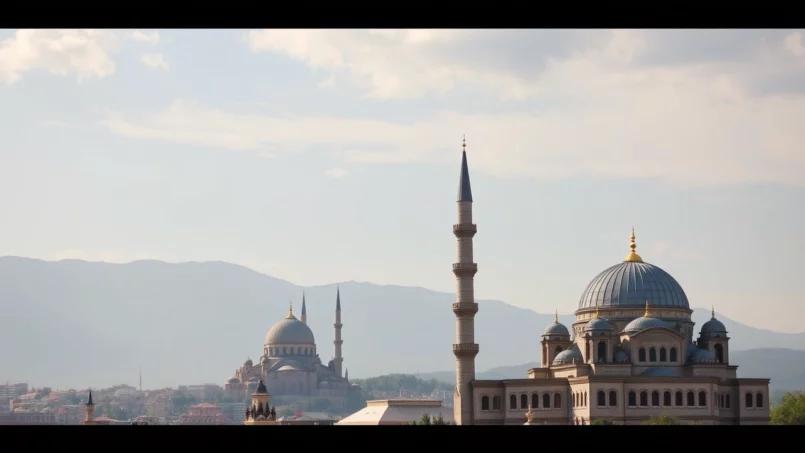
Turkmenistan is a presidential republic in Central Asia, bordering Afghanistan, Iran, Kazakhstan, Uzbekistan, and the Caspian Sea. The capital, Ashgabat, concentrates a large part of economic and political activity, with its white marble buildings, wide avenues, and highly controlled atmosphere.
The country’s economy relies heavily on exports of natural gas, oil, and cotton, with China as the main partner. Despite high official growth figures, international institutions warn of a complete lack of data transparency, distorted exchange rates, and a deep economic crisis, worsened by falling energy prices, poor harvests, and strict currency controls.
Almost all strategic sectors remain under state control. Banking, energy, a significant part of foreign trade, and infrastructure are dominated by state-owned enterprises or officially “private” players that are completely aligned with state programs.
Several indicators summarize the difficulty of the context:
| Indicator | Situation in Turkmenistan |
|---|---|
| Corruption Perception Index (TI) | Ranked among the world’s most corrupt countries |
| Index of Economic Freedom (Heritage) | Ranked near the bottom (largely closed economy) |
| Internet | Censored, very slow, very expensive, many foreign websites blocked |
| Rule of Law | Judiciary not independent, heavily politicized decisions |
For an expatriate, this means any entrepreneurial project runs up against three unavoidable realities: centralized decision-making, the power of politico-administrative networks, and omnipresent economic controls, particularly over currency and foreign trade.
Legal Framework and Key Laws to Know
The legal system is based on civil law tradition. Business activities are governed by a set of specific laws, including:
– The Civil Code of Turkmenistan
– The Law “On Enterprises”
– The Law “On Entrepreneurship”
– The Law “On Foreign Investments” and the Law “On Investment Activity”
– The Tax Code and the Customs Code
– The Law “On State Regulation of Foreign Economic Relations”
The Law on Foreign Investments and the Law on Investment Activity define the fundamental principles: the definition of foreign investment, investor rights, guarantees against unfavorable changes in legislation, the possibility to open foreign currency accounts, and repatriation of post-tax profits.
In practice, numerous convergent sources indicate that these guarantees are constantly neutralized by decrees, informal controls, the absence of an independent judiciary, and especially extremely strict currency exchange controls.
The country is a signatory to the New York Convention on the Recognition and Enforcement of Foreign Arbitral Awards, which theoretically allows for international arbitration provisions in contracts. But the risk of non-enforcement or administrative obstruction remains high.
Which Legal Forms for a Foreign Entrepreneur?
Turkmenistan offers several possible structures, each with its degree of fiscal, regulatory, and political exposure. Expatriates and foreign companies primarily turn to five forms.
Limited Liability Company / Economic Society (ES)
The most commonly used form by foreign investors resembles an LLC: the “Economic Society”, comparable to a Limited Liability Company. It constitutes a separate legal entity from its founders.
The minimum legal capital is relatively modest (5,000 manat, equivalent to approximately $1,430 USD based on the tax base), but in practice, authorities often require a contribution of $100,000 to $200,000 USD to consider the project “serious.” Half of the capital must be paid up initially, the balance within one year of registration.
This is the standard vehicle for:
– standard commercial operations (production, B2B services, etc.)
– joint activities with non-state local partners
– medium-sized projects outside ultra-strategic sectors.
Joint-Stock Company (JSC)
The Joint-Stock Company is mainly used for large projects, especially when there are many shareholders or a quasi-public dimension.
– Minimum capital: 10,000 manat
– Can be open (shares publicly traded) or closed (limited circle of holders, up to 50).
The Joint-Stock Company (JSC) involves heavier governance than other corporate forms. However, this status is often required for certain structures involving the state or for large-scale projects, such as building major factories or large infrastructure.
Joint Enterprise / Joint Venture
In practice, “almost all” significant foreign businesses in Turkmenistan operate via a joint venture, often with a state agency or state-owned enterprise as a partner.
– Minimum capital often modeled on that of LLCs (5,000 manat), but much higher in practice.
– Each founder must hold at least 10% of the capital.
– Joint-venture agreements are negotiated case-by-case, subject to approval by the Cabinet of Ministers, then formalized by presidential decree.
This form is common in:
– hydrocarbons (exploration, refining, petrochemicals)
– large construction and infrastructure projects
– certain strategic agro-industrial projects.
Branch of a Foreign Company
A branch allows a foreign company to conduct commercial activity directly without creating a separate local company. It does not have its own legal personality.
The conditions are strict:
– The parent company must have been operating for at least five years
– It must have capital of at least $1 million USD
– The branch is subject to accreditation (3 to 6-month procedure)
– The branch director must be a Turkmen citizen
– The branch is taxed at the full corporate profit tax rate of 20%, higher than the standard rate for local companies.
This structure is mainly used by large groups already engaged via public or oil contracts, wishing to have an administrative and operational foothold to execute a specific contract.
Representative Office
A representative office is a structure without direct commercial purpose, without legal personality, used for:
– market prospecting
– maintaining institutional links
– monitoring projects or contracts negotiated from abroad.
It cannot officially engage in revenue-generating activity. It remains, however, a widely used tool for developing a network, understanding the terrain, dialoguing with administrations, and positioning for future markets.
Comparative Overview of Common Structures
| Legal Form | Legal Entity | Commercial Activity Allowed | Profit Tax | Capital / Key Requirements |
|---|---|---|---|---|
| Economic Society (LLC) | Yes | Yes | 8% (standard) | Min. 5,000 TMT, often $100–200k USD in practice |
| Joint-Stock Company (JSC) | Yes | Yes | 8% (standard) | Min. 10,000 TMT |
| Joint Venture (JE/JV) | Yes | Yes | 8% or 20% depending on status | Min. 5,000 TMT, frequent local partner |
| Branch of Foreign Company | No | Yes | 20% | Parent co.: $1M USD, 5 years history, Turkmen director |
| Representative Office | No | No (no revenue) | N/A | Non-commercial purpose, accreditation |
Registration Process: Delays, Opacity, and Formalities
Company registration is managed primarily by the Ministry of Finance and Economy (often referred to as the “State Commission” or “State Committee”), in liaison with:
– The State Tax Service
– The State Statistics Committee
– The Chamber of Commerce and Industry
– Municipal authorities (especially for premises lease and zoning).
The observed timeline for a standard company ranges from two and a half to six months. For a branch, the procedure can take three to six months. Decisions are made case-by-case, without real standardization, which increases subjectivity and the risk of blockage.
Among the unavoidable steps are: preliminary research, developing a plan, implementation, and results evaluation.
The process includes: choosing a legal address that is properly zoned for the intended use; preparing constitutive documents (articles of association, founding agreement, business plan) and founders’ identification documents; depositing the minimum capital into a temporary bank account; submitting the file to the competent ministry and its circulation through various services; obtaining a Tax Identification Number (TIN); statistical registration and enrollment with the Chamber of Commerce; and finally, creation of the company’s official seal, the design of which must be validated by the police, taking about two weeks.
Founders do not necessarily need to be present if a power of attorney is provided. However, the presence of the General Director is generally required for opening bank accounts.
Choosing a Company Name: Rules and Constraints
Turkmenistan strictly regulates company naming:
The chosen name must be unique and not confusingly similar to an existing company. The use of the words “Turkmenistan” and “Ashgabat/Ashkhabad” is generally prohibited. Forms using the prefix “Turkmen-” can sometimes be negotiated case-by-case. Any complex name must be translated into Turkmen. A company with foreign capital may include the nationality of its founders in its name.
Name availability verification and its approval are integral parts of the administrative journey and can extend deadlines in case of refusal.
Capital, Contributions, and Financial Requirements
Share capital can be contributed in cash (manat or foreign currency), but also in kind (machinery, equipment, real estate, rights, and other assets evaluable in money). For LLCs, the rule is clear: 50% of the capital must be paid up at startup, the rest within the year.
The number ‘Several’ indicates an unspecified but limited quantity, serving as a numerical reference point for introducing specific data.
| Form / Activity | Minimum Legal Capital | Practical Specifics |
|---|---|---|
| Economic Society (LLC) | 5,000 TMT | Authorities often require $100–200k USD |
| Joint Venture | 5,000 TMT | Each partner ≥ 10% |
| JSC | 10,000 TMT | Higher capital often imposed in practice |
| Sole Proprietorship | 1,250 TMT | Unlimited liability |
| Branch | 0 for the branch, but $1M USD for the parent company | 5-year history required |
Legislation on foreign investments provides for customs advantages: goods contributed as capital or intended for the fixed assets of a branch may be exempt from customs duties, under certain conditions. If these goods are sold within three years of import, duties become payable.
Taxation: Attractive Rates on Paper, Very Heavy Constraints in Practice
On paper, corporate taxation appears rather moderate, especially compared to other jurisdictions. In practice, it adds to a multiplicity of ancillary taxes, formal and informal controls, and, most importantly, the central issue of the manat’s convertibility.
Corporate Tax and VAT
The main rates are as follows:
| Tax / Contribution | Standard Rate / Notes |
|---|---|
| Profit Tax (local companies) | 8% for most non-state LLCs/JSCs |
| Profit Tax (branches) | 20% |
| Profit Tax (state enterprises, hydrocarbon sector) | 20% |
| Profit Tax (private SMEs) | 2% under certain preferential regimes |
| VAT | 15% (standard rate) |
| Dividend Tax | 15% for companies (JSC, ES, JV) |
| Personal Income Tax | 10% (withheld at source on salaries) |
| Employer Pension Contribution | 20% of gross salary, +3.5% for high-risk professions |
Certain activities (hydrocarbon extraction, subsoil) benefit from specific regimes, with customs exemptions for equipment and tax arrangements negotiated in contracts.
Companies must declare and pay profit tax on a quarterly basis (with annual adjustment), and VAT is declared and settled monthly.
Withholding Taxes and Tax Treaties
Non-residents without a permanent establishment generally face a withholding tax of 15% on many types of income (dividends, interest, royalties, technical services). Double taxation avoidance treaties signed with 39 countries (including Germany, Switzerland, the United Kingdom, Turkey, etc., though France is not explicitly mentioned) can reduce these rates.
For an expatriate investor or executive, it is crucial to structure shareholding and financial flows (dividends, management fees, service contracts) in compliance with local regulations. This structuring must also anticipate the major risk of the practical impossibility of converting profits into foreign currency and repatriating them out of the country.
Currency Controls: The Central Lock
On a macroeconomic level, the heaviest constraint for a foreign entrepreneur remains the extremely strict currency controls:
The manat is the only legal tender for domestic transactions. Conversion into foreign currency (dollar, euro) is rationed and subject to state authorization, which prioritizes strategic sectors like food and agriculture. A black market for currency exchange, with a rate well above the official rate, is omnipresent but severely repressed. Transfers of dividends and profits abroad frequently face refusals or indefinite delays.
Documented cases show that some foreign companies have been unable to repatriate their profits for five years or more, despite the formal guarantees of the foreign investment law.
Labor, Management, and Foreign Staff Quotas
Turkmen legislation gives absolute priority to local employment. For foreign-owned companies, the general rule is:
– At least 90% of the workforce must be Turkmen citizens (outside the hydrocarbon sector)
– In oil and gas, the maximum quota for foreigners is about 30%
– Any recruitment of a foreigner (including a general director) requires a specific license from the committee responsible for controlling the invitation of foreign workers.
For a branch in Turkmenistan, the law requires the director to be a Turkmen national. This director is the legal representative of the structure before the authorities, is authorized to open bank accounts, and to sign all important official and contractual documents.
For an expatriate, this implies: adapting to a new culture, managing distance from family and friends, job searching in the new market, understanding local laws and regulations, and learning a new language.
– anticipating the lack of local profiles fluent in English, management, or international compliance standards
– planning for a sustained training program to build a strong local team
– accepting that the presence of foreign executives is limited, costly in formalities, and subject to administrative arbitrariness.
Visa, Work Permit, and Residence: A Heavily Regulated Path
Working legally in Turkmenistan requires a double authorization:
– an appropriate visa (business, work, investment, etc.)
– a work permit, requested by the employer and granted restrictively.
Reserving a visa for Turkmenistan requires a letter of invitation validated by the State Migration Service. For any stay exceeding three business days, local registration with this service is mandatory, followed by de-registration before departure. Failure to comply with these formalities can result in fines, expulsion, and a re-entry ban of up to five years.
Work visas are in principle issued for one year, renewable, but everything depends on the project, the local sponsor, and the political climate. Spouses and minor children can obtain family visas, without the right to work.
For investors who create and own 100% of a locally registered company, the foreign investment law provides for the possibility of obtaining permanent residence rights, again subject to administrative discretion.
Telecoms, Internet, and Communication with Abroad
Fixed and mobile telephony, as well as internet access, are provided almost exclusively by state operators (Turkmentelecom and its mobile subsidiary Altyn Asyr, including the TMCell brand).
Key points to integrate into an establishment strategy:
Internet in Turkmenistan is among the slowest and most expensive in the world, especially for foreign companies. It is subject to heavy censorship: many professional websites, media, social networks, and messaging services are blocked. Using a VPN, although widespread among expatriates, is officially prohibited and regularly targeted. Most online services require registration with a passport and visa.
For a foreign company, this translates into high operational costs to maintain a reliable digital link with headquarters, the need to redundant means of communication (fixed lines, satellite connections, offline procedures), and increased vigilance on the confidentiality of exchanges, as communications may be monitored.
Banking and Finance: Opening an Account, but at What Price?
The banking system is dominated by state banks, with a few commercial joint-stock banks and only one bank with notable foreign participation (Turkmen Turkish Commercial Bank).
Companies can open accounts in manat, dollar, or euro, but:
– Any foreign currency operation is strictly regulated
– International transfers require authorizations and detailed justification
– Bank cards are rarely accepted in the country, outside a few hotels in Ashgabat
– ATMs are rare and often short of cash.
For an expatriate investor, the local bank account is not the problem in itself; it’s the limitations on converting and withdrawing funds that constitute the real knot.
Expatriate Investor
Banks generally require:
– The company’s constitutive documents (articles of association, registration certificate), legalized and translated into Turkmen
– The director’s appointment decision, the signature of which must be notarized
– Proof of local address and the official seal
– Internal forms, often in Turkmen or Russian.
It is common to use specialized firms (local or international) to optimize bank selection, prepare the file, and accompany meetings.
Corruption, Opacity, and Legal Security: How to Manage the Risk?
International reports are unanimous: corruption is systemic and pervasive at all levels, from “small” facilitation payments to commissions related to public tenders.
Several structuring elements characterize the landscape:
– Anti-corruption laws exist but their enforcement is hampered by weak institutions
– The state publishes neither a detailed budget nor reliable figures, which masks the poor governance of gas revenues
– Public tenders (including partial privatizations, large projects, concessions) generally take place behind closed doors, based on political rather than economic criteria
– There is no truly independent anti-corruption authority.
Expatriates subject to extraterritorial legislation (U.S. FCPA, UK Bribery Act) must reconcile their strict compliance obligations with local business practices where rent-seeking behavior is sometimes the norm.
The only realistic approach is to: accept reality as it is and act accordingly.
– Clearly refuse bribes and “commissions” while accepting a slower administrative pace
– Meticulously document every interaction and payment
– Rely on recognized local law firms (e.g., Nexia TurkmenExpert, Altyn Kanun, or other lists provided by embassies)
– Integrate the risk of regulatory arbitrariness into the investment strategy (depreciation period, exit scenarios, limitation of non-recoverable fixed assets).
Sectoral Opportunities: Where is Turkmenistan Seeking Partners?
Despite the obstacles, the country needs capital, technology, and foreign know-how in several areas. The stated priorities are relatively clear.
Energy, Hydrocarbons, and Petrochemicals
Turkmenistan has the world’s fourth-largest natural gas reserves. The bulk of current foreign direct investment is concentrated in this sector, via specific agreements governed by the Law on Hydrocarbon Resources.
Areas of interest include:
– Development and modernization of gas and oil fields
– Pipeline construction (projects like TAPI to Afghanistan, Pakistan, and India, extension of links to China or Azerbaijan)
– Petrochemicals and chemicals (urea, ammonia, polymer plants)
– Methane emission reduction and energy efficiency.
Entry conditions are highly political and require discussions at the highest state level, often with presidential approval.
Agriculture and Agro-Industry
Agriculture still represents a significant share of employment. Cotton (widely exported) and wheat (consumed locally) dominate, but low productivity, soil salinization, and dependence on irrigation open the door to:
Discover our areas of expertise for modernizing and optimizing farms and processing units.
Implementation of innovative irrigation technologies for rational and efficient water use.
Deployment of integrated solutions: sensors, drainage systems, and management tools for optimal water use.
Support for value-added production projects: flours, oils, dairy products, juices, confectionery, and other processed goods.
The state maintains very tight control over the cotton and grain sectors, reducing the margin for independent private initiatives, but offering possibilities for targeted partnerships.
Construction, Materials, and Infrastructure
Long-term development plans (up to 2052 for some programs) aim to transform the country into a regional energy and logistics hub. This involves:
– Construction of highways, bridges, railway lines
– Development of the Avaza national tourist zone on the Caspian Sea
– Construction of power plants, factories, and warehouses.
Percentage of artificially inflated costs in the construction sector, used to finance informal circuits.
Transport, Logistics, and ICT
The country invests in: education, healthcare, infrastructure, and the environment.
– Multimodal transport corridors (agreements with Azerbaijan, Georgia, Romania to link the Caspian to the Black Sea)
– The port of Turkmenbashi and Ashgabat International Airport
– A gradual strengthening of the power grid and regional interconnections.
Logistics management technologies, freight tracking, route optimization have potential, even if access to internet and data centralization remain major obstacles.
As for ICT in the broad sense, internet access is currently too restricted to envisage a true consumer-oriented digital economy. However, custom solutions for institutional clients (internal network security, industrial control systems, business software localized in Russian/Turkmen) can find demand.
Real Estate, Land, and Premises: The Property Question
All land belongs to the state. Foreigners cannot own it, but they can:
– Lease land long-term for non-agricultural use (offices, factories, shops)
– Acquire residential or commercial buildings (without the land)
– Use land in special economic or tourist zones (like Avaza), via specific contracts and authorizations.
The Law on Foreign Investments allows, in certain free zones, leasing land for the project’s depreciation period. This lease benefits from exemptions on rent, registration fees, and certain local taxes.
For an expatriate entrepreneur, it is strategic to:
– Carefully verify the zoning of the premises (office, retail, storage, etc.) with municipal authorities
– Contractually secure the lease duration and termination conditions
– Ensure the legal traceability of the owner or public lessor.
Expat Entrepreneur Daily Life: Cost, Security, Quality of Life
Ashgabat is often described as very safe, clean, and surprisingly expensive. The cost of living for a foreigner, including housing, transportation, meals, and private services, is at the high end of the regional scale.
Some rough estimates for a company executive:
| Expense Item | Indicative Level for an Expat in Ashgabat |
|---|---|
| Rent for 1-bedroom apartment downtown | $700 to $1,000 USD / month |
| Rent for 3-bedroom apartment downtown | $1,500 to $1,800 USD / month or more |
| Monthly expat budget (with rent) | $1,800 to $2,000 USD (excluding international school fees) |
| Fixed-line Internet | $70 to $100 USD / month for modest speed |
| International School | Tens of thousands of USD per year |
Physical security is considered good, with low street crime, but freedom of expression, information flow, and assembly are very limited. Expatriates move mainly in a closed circle (business community, diplomats, NGOs) and must get used to an environment where everything is heavily politicized.
Managing an Establishment Project: A Pragmatic Approach
For an expatriate seriously considering creating a company in Turkmenistan, the approach must be radically different from that used in open market economies.
Some structuring reflexes are essential:
To succeed in the Turkmen market, it is essential to only engage with a project clearly linked to a state need or a major local client, particularly in the energy, construction, agro-industry, or certain technical services sectors. Avoid basing your strategy on domestic consumer demand, which is very limited, unless targeting a well-identified local niche or the expatriate community. Integrate from the start the assumption that profits will largely need to be reinvested locally, due to the difficulty in converting them. Negotiate, where possible, solid contractual guarantees: international arbitration, tax stability clauses, dispute resolution mechanisms, and compensation arrangements in case of unilateral termination by the state. Finally, multiply support by using an experienced Turkmen law firm, tax advisors, a foreign chamber of commerce present in the region, and your diplomatic networks.
Finally, for an individual entrepreneur or a small group, it is realistic to consider that this market is not a “standard” destination for international development, but rather a special case reserved for very targeted, capital-intensive, large-scale, or geopolitically strategic projects.
In Conclusion: An Extreme Niche Destination for Seasoned Expatriates
Creating a business in Turkmenistan as an expatriate is not simply changing continents; it is entering a state-driven economic ecosystem, where every license, every bank transfer, every major contract passes—directly or indirectly—through the top of the political pyramid.
The laws on foreign investment, the relatively low tax rates, and official openness rhetoric can give the illusion of a favorable environment. The reality, documented by international institutions and companies already present, is quite different: paralyzing currency controls, endemic corruption, legal insecurity, unpredictable bureaucracy, and extremely limited access to information.
For the expatriate entrepreneur, Turkmenistan should not be considered as a promising new frontier to conquer, but as a hyper-niche market, reserved for players capable of adapting to its specificities.
– Tolerating a very high level of political and financial risk
– Investing time and resources to build a relationship of trust with the authorities
– Bringing technology, know-how, or financing that the country cannot obtain elsewhere.
Only under these conditions, and by surrounding oneself with experienced local legal and tax experts, can starting a business in Turkmenistan make strategic sense in an expatriate’s or international group’s trajectory. Otherwise, it is better to consider this country as a remote partner—via specific contracts or one-off projects—rather than as a permanent location for one’s company.
Disclaimer: The information provided on this website is for informational purposes only and does not constitute financial, legal, or professional advice. We encourage you to consult qualified experts before making any investment, real estate, or expatriation decisions. Although we strive to maintain up-to-date and accurate information, we do not guarantee the completeness, accuracy, or timeliness of the proposed content. As investment and expatriation involve risks, we disclaim any liability for potential losses or damages arising from the use of this site. Your use of this site confirms your acceptance of these terms and your understanding of the associated risks.

Cyril Jarnias is an independent expert in international wealth management with over 20 years of experience. As an expatriate himself, he is dedicated to helping individuals and business leaders build, protect, and pass on their wealth with complete peace of mind.
On his website, cyriljarnias.com, he shares his expertise on international real estate, offshore company formation, and expatriation.
Thanks to his expertise, he offers sound advice to optimize his clients' wealth management. Cyril Jarnias is also recognized for his appearances in many prestigious media outlets such as BFM Business, les Français de l’étranger, Le Figaro, Les Echos, and Mieux vivre votre argent, where he shares his knowledge and know-how in wealth management.





