
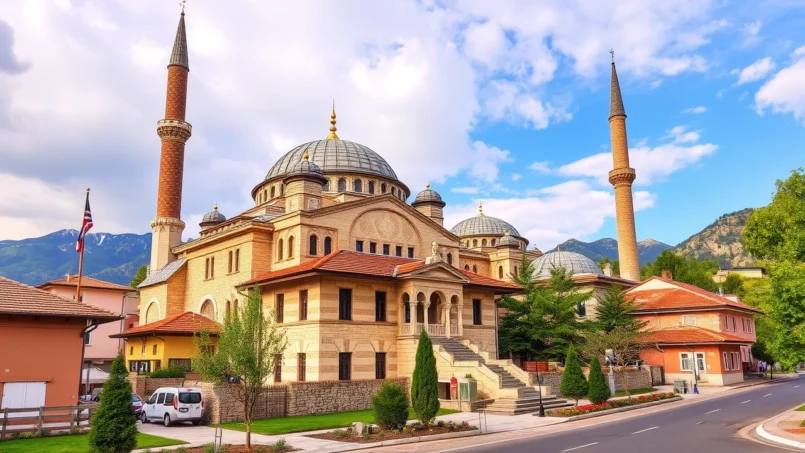
 Published on and written by Cyril Jarnias
Turkmenistan remains one of the most opaque real estate markets on the planet, but also one of the most unique. Ultra-centralized economy, massive dependence on gas, exchange controls, a very particular legal framework for foreign investors: at first glance, nothing encourages placing one’s money there. However, price, rental, and yield figures show that a very real market exists, driven by the capital Ashgabat and a few developing urban centers. For an expatriate willing to accept a high level of risk and to work with solid advice, this country can constitute a very specific diversification.
This guide is specifically designed for expatriates and foreign investors considering the acquisition or management of real estate in Turkmenistan. It is based on available data, the foreign investment law, as well as an analysis of the country’s current economic, legal, and fiscal context.
Understanding the Real Estate Market in Turkmenistan
The first challenge, even before discussing contracts or taxation, is to understand the scale of the Turkmen market and its fundamental mechanisms, which are very different from those of more open markets.
The country is gradually emerging from a long phase of real estate boom largely driven by the state. For years, the authorities have multiplied monumental construction sites: new neighborhoods in Ashgabat, marble buildings, the new city of Arkadag, road infrastructure. In this context, residential property prices soared, particularly in the capital.
The price per square meter for luxury residential towers in Turkmenistan in the mid-2010s.
The Ministry of Construction acknowledged at the time that at least one-fifth of the population lived in housing that was too small or dilapidated, illustrating a structural deficit in quality supply. This combination of shortage, regular demolition of entire neighborhoods by the authorities, and the absence of a comprehensive legal framework has fueled sustained pressure on prices.
Key Price / Rent / Income Indicators
The scarce consolidated market data, from platforms like Numbeo or Properstar, provide a quantified overview of the relationships between prices, rents, wages, and credit. Even though these figures must be handled with caution in such a non-transparent country, they show a clear trend: residential real estate is expensive relative to local incomes, and the use of credit places an extremely heavy burden on households.
Here is a summary of the main indicators for Turkmenistan:
| Indicator | Average Value |
|---|---|
| Price to Income Ratio | 29.21 |
| Mortgage as % of Income | 304.20 % |
| Loan Affordability Index | 0.33 |
| Price to Rent Ratio City Center | 22.06 |
| Price to Rent Ratio Outside Center | 19.33 |
| Gross Rental Yield City Center | 4.53 % |
| Gross Rental Yield Outside Center | 5.17 % |
| Mortgage Interest Rate (20 yr, fixed) | 8.50 % (5–12 %) |
| Average Monthly Net Salary | 2,325.00 |
A price to income ratio above 29 illustrates a market objectively inaccessible for the local population when purchasing a primary residence. The fact that monthly loan payments would theoretically represent more than three times the average income highlights a simple reality: the majority of transactions are done either in cash or through specific financing mechanisms (employers, public institutions), with traditional bank loans remaining difficult to access.
For an expatriate or foreign investor, rents and prices per square meter in Ashgabat may seem high compared to emerging markets, but remain lower than those of many European capitals. Gross yields are relatively modest (around 4.5% in the city center, 5% in the suburbs). This market does not offer easy cash flow, but relies on a bet regarding the scarcity of quality products in a complex regulatory environment.
Rent Levels and Price per Square Meter
The ranges observed for rents and purchase prices confirm this diagnosis: Turkmen real estate sits in an intermediate zone, neither bargain-basement nor comparable to major global hubs, but heavy relative to local incomes.
| Property Type | Location | Average Monthly Rent | Observed Range |
|---|---|---|---|
| 1-bedroom Apartment | City Center | 3,660.00 | 2,500.00 – 7,000.00 |
| 1-bedroom Apartment | Outside Center | 2,300.00 | 1,000.00 – 5,000.00 |
| 3-bedroom Apartment | City Center | 5,800.00 | 3,000.00 – 10,000.00 |
| 3-bedroom Apartment | Outside Center | 4,900.00 | 2,000.00 – 9,000.00 |
On the purchase side, the gap between center and periphery is significant:
| Location | Average Price per m² | Observed Range |
|---|---|---|
| City Center | 16,666.67 | 10,000.00 – 25,000.00 |
| Outside Center | 10,500.00 | 8,500.00 – 12,000.00 |
Even without specifying the currency, the price structure shows that central locations, especially in Ashgabat, command a significant premium. The gross rental yield, higher outside the center (5.17%) than in the hyper-center (4.53%), suggests that expatriates looking for profitability will favor less prestigious but more balanced neighborhoods in terms of price/rent ratio.
Demand Driven by Urban Demographics and Qualitative Shortage
Beyond the numbers, three drivers structure residential demand:
The rapid urbanization of Ashgabat, the capital of Turkmenistan, illustrates this dynamic. The city concentrates a growing share of the national population and economic activity, attracting in particular young households, civil servants, and managers from the hydrocarbon sector. This concentration fuels constant demand for new housing, stimulating the construction sector and shaping urban development.
Second, the quality of the existing housing stock. Between poorly maintained Soviet-era buildings and new luxury towers, there is a complete lack of “intermediate” housing meeting modern standards (insulation, reliable elevators, common areas, parking). The growing desire for residences with pools, gyms, or landscaped gardens testifies to this aspiration for better comfort.
Finally, the chronic deficit of decent housing. Official data indicate that more than 20% of inhabitants live in overcrowded apartments or in dilapidated buildings. This maintains sustained pressure for new construction and renovations, even though the authorities keep control over the pace and type of authorized projects.
Legal Framework: What Turkmen Law Allows (and Prohibits) for Foreigners
Entering the Turkmen real estate market involves delving into a very specific legal framework, dominated by one key idea: the state controls everything, especially land, but it accepts the presence of foreign investors under conditions and grants them, on paper, extensive protections.
The Foreign Investment Law: Structure and Objectives
The central text is the “Law of Turkmenistan on Foreign Investments”. Initially adopted in 1992, it was completely revised in 2008 and amended in 2019. It defines the legal, economic, and organizational foundation for foreign investments in the country.
The stated objective is classic: to attract capital, technology, management skills, and material resources to support the transition to a market economy and diversify beyond hydrocarbons. But this ambition fits within an authoritarian political system and a highly planned economy, resulting in a hybrid framework: favorable on paper, but controlled in practice.
The law defines “foreign investment” very broadly: contributions in currency, movable and immovable property (buildings, equipment), securities (shares, bonds, other securities), receivables, intellectual property rights (patents, trademarks, know-how), rights to exploit natural resources, provision of services, and any other asset permitted by legislation.
A “foreign investor” can be a foreign legal entity (including international organizations or states), a foreign natural person (citizen or stateless person), or even a Turkmen citizen permanently residing abroad.
Land Ownership and Real Estate Ownership: A Crucial Distinction
For an expatriate, the first subtlety to grasp is the strict separation between land ownership and building ownership. The Constitution and domestic law establish a fundamental principle: land belongs to the state. Therefore, investors, whether local or foreign, do not acquire land in full ownership, but usage rights or limited real rights over the constructions.
Concretely, a foreigner can legally hold: real estate property, financial securities, or investments in companies.
– buildings and structures (housing, offices, warehouses, hotels, etc.);
– usage, lease, or concession rights on land, within the framework defined by law;
– shares or stocks in Turkmen companies that themselves hold rights to buildings and land.
To develop or operate a real estate asset, the foreign investor must generally create a company with foreign participation (joint venture or subsidiary). This structure is recognized as such when the share held by the non-resident investor reaches at least 20% of the charter capital on average over a calendar year. Once established, this company can purchase buildings, obtain rights to land, and sign long-term leases.
Permitted Forms of Investment in Real Estate
The law lists several modes of intervention open to foreign investors. In the real estate field, this includes in particular:
– participation in the capital of existing Turkmen companies (including construction companies, developers, or local real estate companies);
– creation of companies wholly owned by foreigners, which can be granted rights to land and construct or acquire buildings;
– acquisition of operating companies, including their real estate assets;
– direct purchase of real estate (houses, apartments, buildings for residential or commercial use), subject to specific restrictions (sensitive zones, national security, etc.);
– granting loans to Turkmen companies, with real collateral on buildings or equipment;
– participation in public-private partnership (PPP) projects with a real estate component (hospital, hotel complex, infrastructure, etc.).
To this are added interventions in “free economic zones” or special economic zones, where the law provides for a more favorable regime regarding taxation, customs, and administrative control, although, in practice, no fully operational zone is currently in service.
Procedure for Creating an Entity with Foreign Participation
An expatriate who wishes to invest in a structured manner will benefit from creating a Turkmen company with foreign participation. The procedure follows precise formalities:
The founders must submit an application for registration to the competent authority, accompanied by a series of documents: investment authorization (if applicable), joint venture creation agreement, articles of association, document attesting to the foreign investor’s solvency.
The documents must be provided in the official language and in the original language, with notarized legalization. The administration cannot require other documents than those provided by law and must decide within two weeks (registration or reasoned refusal).
Once the entity is registered in the State Register of Enterprises, it acquires legal personality. Any substantial modification of the articles of association or the investment agreement is subject to re-registration and takes effect only after approval.
The charter capital of a company in Turkmenistan, expressed in manats, must be effectively paid up by the founders. If less than 50% of the declared capital has been contributed after one year, the company risks having its bank accounts blocked and forced liquidation.
Guarantees and Protections Offered to Foreign Investors
Formally, Turkmen legislation was designed to reassure foreign investors. It contains a battery of guarantees that, if fully applied, would make the framework very protective.
The law first proclaims a national treatment regime: foreign investments and related economic activities cannot be subject to treatment less favorable than that accorded to Turkmen investors or entities. In other words, no official discrimination to the detriment of foreign capital.
It then establishes a stabilization clause. If legislative changes after the registration of an investment worsen the legal situation of the investor, the latter can request that the law in force at the time of registration continue to apply for ten years. For “priority investment projects” approved by the Cabinet, the period can be set according to the investment payback period.
The provisions also protect against nationalization and requisition. Outright nationalization is excluded. Requisition is only possible in exceptional circumstances (natural disaster, epidemic, serious accident) and must result in immediate compensation, in currency, transferable abroad and reflecting the market value of the asset. If the circumstances cease, the investor can request the return of the remaining asset, subject to returning the compensation minus any loss in value.
The freedom to transfer income and capital is also a key element. After payment of taxes and duties, the investor can freely send abroad profits, dividends, interest, proceeds from sale, as well as gains from compensation for expropriation. The law explicitly provides for the possibility of opening accounts in manats and foreign currency, and of purchasing foreign currency on the domestic market.
Finally, the law prohibits public authorities from interfering in the lawful economic activity of investors. Administrative acts contrary to the investment law and infringing on an investor’s rights can be declared null and void, and the state is liable for damages caused by illegal actions of its agents.
Arbitration and Dispute Resolution
Disputes between foreign investors and Turkmen public or private entities can be submitted either to national courts or to arbitration, if the parties agree. The law mentions in particular the Arbitration Court of Turkmenistan as a competent forum, while leaving open the possibility of resorting to another arbitration tribunal if a written agreement exists.
In the ICSID case ARB/10/24, a Turkish construction company initiated proceedings against the Turkmen state. The tribunal had to interpret a clause in the bilateral investment treaty requiring prior recourse to local courts. It deemed this requirement inappropriate under the circumstances of the case, then examined the merits. Ultimately, all of the investor’s claims were dismissed and it was ordered to reimburse part of the state’s defense costs.
This episode illustrates two realities: on the one hand, the possibility of taking a dispute to international arbitration, notably thanks to bilateral investment protection treaties; on the other, the difficulty of enforcing one’s rights against a strongly interventionist state, in a context where the internal judiciary is largely subordinate to the executive.
Internal Framework: Ownership, “Propiska”, and Fragility of Rights
Beyond investment law, the issue of property rights in Turkmenistan cannot be separated from the practice of “propiska”, the system of compulsory residence registration historically used to control population distribution. Registration at a specific address conditioned access to employment, social benefits, healthcare, and education.
This logic of control had direct effects on housing: living without official permission with a relative exposed the latter to sanctions that could go as far as loss of social rights. Security forces used the threat of withdrawal of “propiska” to deter complaints against their abuses. This system, criticized by the Council of Europe since 2001 in the name of freedom of movement, fosters an environment where the right to housing remains fragile and where the demolition of neighborhoods, followed by forced displacements, is not exceptional.
Analysts accuse the authorities of taking advantage of this weakness of protections to carry out demolitions and expropriations with little or no compensation, linked to corruption. For a foreign investor, this means that the formal guarantees of the law must be assessed in light of sometimes arbitrary administrative practices and a very unbalanced power dynamic.
Taxation, Local Taxes, and International Treaties
The appeal of a real estate investment is not measured solely by the rent collected: it also depends on the tax treatment in the country where the asset is located and in the investor’s country of residence. Turkmenistan has a relatively simple tax system in its broad principles, but supplemented by important double taxation treaties, notably with France and Switzerland.
Internal Taxation Applicable to Real Estate and Income
The Turkmen tax system consists of direct taxes (income tax, corporate tax, property tax) and indirect taxes (VAT, customs duties, excise taxes).
For an investor holding assets through a company, the key elements are as follows:
Overview of the main taxes applicable to companies, including specific rates for certain activities and provisions for foreign companies.
The standard profit tax rate is 25% for most companies.
Banks are taxed at 30%, and certain brokerage or intermediary activities at 35%.
Annual tax of 1% applied to the value of assets held in the country.
Dividends and interest on bonds (excluding public debt) are taxed at 15%.
In some cases, a rate of 15% may apply, withheld at source.
Natural persons, residents or not, are taxed at a flat rate of 10% on all their income, including rents and capital gains on real estate. Employers are required to withhold this tax at source on salaries. Residents are taxed on their worldwide income, non-residents only on Turkmen-source income.
Social security contributions are heavy for the employer: contribution of 20% on total remuneration, plus an additional 3.5%, while employees contribute 2%. A specific contribution for urban/rural improvement is also levied.
For real estate investors, the standard VAT of 15% may come into play when purchasing new constructions or certain services related to operation (management, works), depending on the seller’s status and the nature of the transaction. However, there is no proper transfer tax or stamp duty, although customs duties, excise taxes, and administrative fees (registration fees, authorizations) may be added.
Tax Treaties and Elimination of Double Taxation
For a French or Swiss expatriate, the existence of bilateral treaties with Turkmenistan is a determining factor. These agreements aim to avoid the double taxation of income and assets and to combat tax fraud.
With France, a specific agreement signed in 2012 in Ashgabat stipulates that: the two countries will collaborate in various areas such as energy and infrastructure.
– real estate income (rents) and capital gains on immovable property are taxable in the state where the property is located;
– France grants its residents a tax credit corresponding to the tax paid in Turkmenistan, at least equal to 10% of the gross amount of dividends and interest received from that country;
– non-discrimination is guaranteed: a French national cannot be subject in Turkmenistan to heavier taxation than that applied to a Turkmen national in a comparable situation;
– a mutual agreement procedure and information exchange mechanism is in place between administrations.
Furthermore, France decided to continue applying to Turkmenistan the old treaty signed in 1985 with the USSR, via a 1994 agreement establishing legal continuity. This complex web of texts, however, allows a French resident investing in Turkmenistan to neutralize double taxation on their real estate income: the source country taxes first, then France credits the tax paid locally.
A tax treaty between France and Switzerland, signed in 2012 and entered into force in 2013, governs withholding taxes on dividends, interest, and royalties. It also provides for mechanisms for the exchange of tax information between the two countries.
Customs Duties and Benefits for Investors
A point often overlooked by real estate investors but important for construction or renovation projects is the treatment of imports of equipment and materials. Turkmen law indeed provides for substantial exemptions:
Goods imported by a foreign investor as a contribution to the capital of a Turkmen company (or as fixed assets of a branch) are exempt from customs duties and import taxes. This exemption extends to equipment intended for the company’s own material needs. However, if these goods are resold within three years, duties and penalties become payable.
In free economic zones, additional benefits apply: exemption from consular fees and registration fees, no exchange fees on contracts, removal of certain land rents and contributions to extra-budgetary funds, free certification of imported equipment for projects in these zones.
These mechanisms can make a significant difference in the overall cost of a real estate project (hotel, upscale residence, office complex), provided it is structured as a registered foreign investment and, ideally, benefits from priority project status.
Financing, Credit, and Monetary Realities
Even though figures for average mortgage interest rates exist, relying on local credit to finance a real estate project in Turkmenistan remains, in practice, very complicated for a foreigner.
The Cost of Credit and Its Sustainability
Available data indicate an average interest rate around 8.5% per annum for a 20-year fixed-rate mortgage, with a range from 5% to 12% depending on the institution and profile. In themselves, these rates would not be aberrant for an emerging market. The problem comes from the gap with incomes: with a “mortgage as a percentage of income” ratio exceeding 300%, resorting to loans is, de facto, out of reach for the majority of households.
To maintain sustainable debt, it is recommended that a loan’s monthly payment not exceed about one-third to one-half of monthly income. In the current context, a simple average between real estate prices and salaries shows that even loans spread over 20 years could weigh heavily on an average household’s budget. This reality also explains why some companies or administrations buy new apartments to resell them later to their employees with more favorable financing conditions.
For an expatriate, the consequence is twofold: on the one hand, they will, theoretically, have an easier time obtaining local credit if they have high and stable income, but they must assess country risk, currency stability, and the legal security of collateral; on the other hand, they will be competing in a market mainly with cash buyers (or quasi-cash), which can limit credit bubbles but also reduce market liquidity.
Exchange Controls, Black Market, and Fund Transfers
Turkmenistan maintains particularly strict exchange controls. The official exchange rate has been administratively fixed at 3.50 manats to the dollar since 2015, while a vast parallel market has developed, where the dollar trades at much higher levels. Estimates indicate a rate around 29–30 manats per dollar in early 2021, then close to 40 manats a few months later.
A significant gap between the official exchange rate and the real rate of the manat exposes foreign investors to a major risk. Local income converted at the official rate does not reflect its real economic value. Conversely, importing currency at this rate may seem advantageous, but it implies depending on a system where access to the foreign exchange market, convertible amounts, and transfer times are subject to the discretionary approval of the authorities, on a case-by-case basis.
On paper, the law guarantees convertibility and free transfer of profits. In practice, several observers report that repatriation of income can encounter administrative obstacles, prolonged delays, and sometimes implicit restrictions linked to the economic situation. Official foreign exchange reserves, substantial (equivalent to 19 months of imports), are not enough to erase this risk.
In this context, many foreign investors would favor a scheme where financing is provided in foreign currency from abroad (and not in manats) and where at least a portion of outgoing flows (fees, imported purchases, dividends) can be settled directly in foreign currency, to limit exposure to exchange controls and variations in the parallel rate.
Political, Economic, and Legal Risks: A Reality to Accept
Investing in real estate in Turkmenistan means agreeing to operate in one of the riskiest environments in the world for foreign direct investment. All governance, economic freedom, and transparency indicators confirm this: the country ranks at the bottom of the economic freedom index, corruption is judged very high, the separation of powers is almost non-existent, and the economy is excessively dependent on gas.
The concentration of power in the hands of the president and his inner circle, the absence of real parliamentary or judicial checks and balances, and the practice of generalized censorship increase uncertainty about the application of laws, even protective ones in theory.
Specifics of Real Estate Risk
In the real estate sector, several forms of risk accumulate:
Although the Constitution guarantees the inviolability of private property and prohibits confiscation without compensation, massive demolitions of neighborhoods for infrastructure or prestige projects are common. The crucial issue is not the legal existence of compensation, but its effective reality, its amount, and the timing of its payment.
Dependence on arbitrary administrative decisions also plays a key role. Licenses, building permits, land use authorizations, transaction registration: all these steps are managed by a bureaucracy subject to often opaque logics, where access to information, stability of rules, and equal treatment are not guaranteed.
Risks related to exchange controls add to those already mentioned: impossibility or difficulty in purchasing foreign currency, obstacles to capital outflow, distortion between internal prices and real economic signals.
Finally, the risk of international litigation must be considered. The case of the ICSID arbitration mentioned earlier illustrates that an investor, even supported by a bilateral investment protection treaty, can see all their claims dismissed. Initiating this type of procedure is long, costly, and uncertain.
A Macroeconomic Environment Under Pressure
Even if the country officially reports positive GDP growth, around 2 to 3% after the health crisis, its economic situation remains fragile. Hydrocarbon exports represent almost all foreign currency earnings and public revenue, making the economy extremely sensitive to gas and oil price cycles.
The effort to diversify the economy (petrochemicals, agribusiness, infrastructure, tourism) remains modest compared to the dominance of the energy sector. Soviet-era infrastructure, notably water and irrigation networks, is degraded. Major public projects (the new city of Arkadag, the Ashgabat–Turkmenabat highway, railway lines, modernization of the Karakum Canal) are launched, but their economic profitability is uncertain.
For a real estate investor, this translates into an environment where the long-term fundamentals are questionable: if gas revenues decline or if global prices deteriorate, the state might be tempted to further tighten control over financial flows, increase certain property taxes, or prioritize its own programs to the detriment of private interests.
How to Concretely Structure a Real Estate Project as an Expatriate
Considering these elements, an expatriate who still wishes to invest in real estate in Turkmenistan would do well to adopt a cautious, structured, and realistic approach.
A possible strategy is to target assets that are simple to understand (apartments, small mixed-use buildings, housing for expatriate employees) in central urban areas or near economic hubs. Gross yields will then be around 4 to 5%, which is not spectacular but can be acceptable for the purpose of very specific geographic diversification.
It is often wise to use a company with foreign participation to hold assets. This vehicle can allow access to advantageous tax regimes (such as a reduced profit tax rate or a temporary exemption from taxes on reinvested profits), benefit from customs exemptions for equipment, and organize contractual relations with the authorities (leases, concessions, PPPs) on a more professional basis.
Managing exchange rate risk must be central to the reflection: it will be necessary to determine the portion of flows that can be captured or spent in foreign currency (payment for services, import of equipment, repayment of debts contracted abroad) and the portion that will remain in manats, with a local reinvestment strategy to limit losses linked to potential delays in transfers.
The support of local experts – lawyers, tax specialists, consulting firms accustomed to foreign cases – is essential. They will help verify property titles, analyze land rights, decipher a neighborhood’s situation regarding urban planning or infrastructure projects, anticipate registration requirements, and negotiate contractual clauses that maximize the protections provided by the foreign investment law (legal stability, arbitration, guarantee of compensation).
To manage political and legal risks, one must resort to external instruments: political risk insurance from specialized agencies, coverage against the impossibility of transferring currency, securing flows via service export agreements, and voluntarily limiting total financial exposure to the country. In an uncertain environment, the basic rule is to only invest what one is prepared to never fully recover.
—
Investing in real estate in Turkmenistan is neither simple nor easy. The country combines characteristics rarely found to this degree: authoritarian regime, rentier economy, exchange controls, weak rule of law, statistical opacity, but also potential growth linked to immense gas reserves, structural housing needs, and a stated desire to attract foreign capital. For an expatriate who understands and accepts these paradoxes, the market can offer a very particular exposure, provided it is approached with extreme caution, solid professional support, and a clearly defined investment horizon.
Disclaimer: The information provided on this website is for informational purposes only and does not constitute financial, legal, or professional advice. We encourage you to consult qualified experts before making any investment, real estate, or expatriation decisions. Although we strive to maintain up-to-date and accurate information, we do not guarantee the completeness, accuracy, or timeliness of the proposed content. As investment and expatriation involve risks, we disclaim any liability for potential losses or damages arising from the use of this site. Your use of this site confirms your acceptance of these terms and your understanding of the associated risks.

Cyril Jarnias is an independent expert in international wealth management with over 20 years of experience. As an expatriate himself, he is dedicated to helping individuals and business leaders build, protect, and pass on their wealth with complete peace of mind.
On his website, cyriljarnias.com, he shares his expertise on international real estate, offshore company formation, and expatriation.
Thanks to his expertise, he offers sound advice to optimize his clients' wealth management. Cyril Jarnias is also recognized for his appearances in many prestigious media outlets such as BFM Business, les Français de l’étranger, Le Figaro, Les Echos, and Mieux vivre votre argent, where he shares his knowledge and know-how in wealth management.





