
 Published on and written by Cyril Jarnias
Relocating to Turkmenistan remains a unique experience in the expatriation landscape. A country rich in natural gas but very closed, with a non-transparent economy, it combines modest salaries, administratively controlled official prices, an omnipresent parallel market, and a surprisingly high cost of living for the region. For an expat, understanding this combination of figures, administrative constraints, and daily realities is essential before signing a contract.
This article details the necessary budget for an expat, presenting numerical data, comparing it with neighboring countries, and identifying the most significant expense categories.
An energy-rich country… and expensive for the region
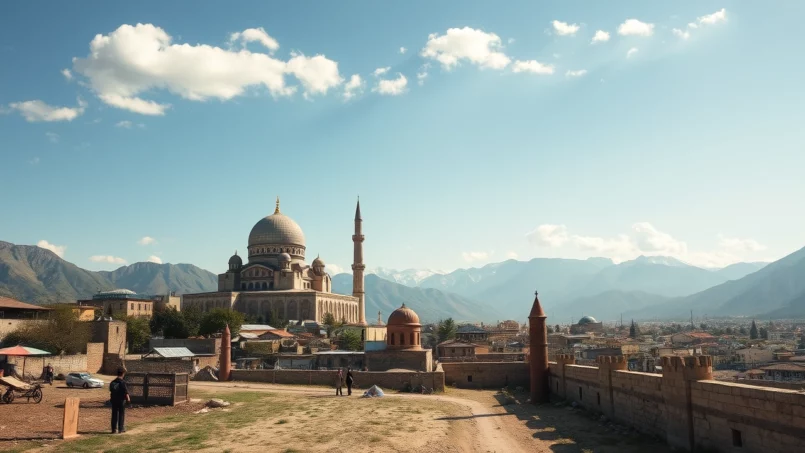
Turkmenistan, in Central Asia, borders Iran, Afghanistan, Uzbekistan, and Kazakhstan, with a long coastline on the Caspian Sea. Its economy relies heavily on the export of natural gas and oil, to the point where hydrocarbons represent about a quarter of the GDP. Despite this wealth, the population—a little over 6 to 7.5 million inhabitants according to sources—lives with fairly low average incomes and in a context of tight control over prices and statistics.
The average salary in Turkmenistan covers only 0.4 months of typical expenses, which is roughly twelve days of living at the average standard.
In regional comparison, the situation is equally telling. Turkmenistan is approximately 165% more expensive than Uzbekistan, 3.7 times more expensive than Kyrgyzstan, and much more costly than India. Conversely, the country remains significantly cheaper than the United States for certain expenses, but noticeably more expensive than the global average.
Currency, exchange rates, and real purchasing power
The official currency is the Turkmen manat (TMT). On paper, the official exchange rate is about 3.5 TMT for 1 US dollar, a rate fixed since 2019. On the unofficial market, reality is quite different: the rate fluctuates around 26–26.5 TMT for 1 dollar. This duality distorts almost all conversions and muddles the perception of real costs for an expat paid in foreign currency.
For international comparisons, amounts are often presented in dollars or manats without specifying the conversion rate used, which complicates interpretation. However, one constant emerges: at the global level, prices are estimated to be about 1.57 times the world average.
The table below summarizes some global cost of living benchmarks:
| Household profile | Estimated monthly cost (USD) | Includes rent? |
|---|---|---|
| Single person – high estimate | 1,793 | Yes |
| Single person – multi-city average | 1,250 | Yes |
| Single person – excluding rent | 750–902 | No |
| Couple – multi-city average | 1,732 | Yes |
| Family of four – high estimate | 4,130 | Yes |
| Family of four – multi-city average | 2,435 | Yes |
| Family of four – excluding rent | 1,785–2,638 | No |
In manats, some sources estimate that a single person spends around 11,280 TMT per month, and a family of four about 24,129 TMT, but these figures should be interpreted with caution, as they are based on partial data.
Salaries, incomes, and the gap with the cost of living
To judge a country’s real “expensiveness,” it is not enough to know prices: they must be weighed against incomes. On this point, Turkmenistan presents a stark contrast.
Available data indicates:
– average annual salary around 62,460 TMT;
– median annual salary around 64,560 TMT;
– average monthly net salary after taxes around 2,325 TMT (approximately 748 USD at the official rate);
– some reports give an average monthly net of 715–748 USD.
The average expat’s salary covers only 0.4 months of the average Turkmen’s typical monthly expenses.
For comparison, average monthly salaries in a few countries:
| Country | Approx. average monthly salary (USD) |
|---|---|
| Turkmenistan | 200–400 (estimates) |
| Uzbekistan | ~230 |
| Kazakhstan | ~570 |
| Russia | ~670 |
| China | ~950 |
| United States | ~3,500 |
Expatriates are generally not aligned with the local average, especially in energy, construction, aviation, finance, or international projects, where compensation rises:
– experienced oil and gas engineer: 1,500 to 4,000+ USD per month;
– management or top management: 2,000 to 5,000+ USD per month;
– some IT or finance positions offer salaries in TMT that, converted at a realistic rate, far exceed local remuneration.
But these high salaries concern a minority. For most residents, including some foreigners paid in manats, the equation remains tight, especially in the capital.
Ashgabat: a capital more expensive than many average European cities
Ashgabat concentrates the majority of expatriates and well-paid positions. It is also the most expensive city in the country, with a cost of living estimated at around 1,833 USD per month for a single person (including rent) and over 4,200 USD for a family of four. Excluding rent, a single person’s life there is estimated at about 940 USD per month.
According to international comparisons, Ashgabat, the capital of Turkmenistan, has a higher cost of living than cities like León in Mexico, Algiers in Algeria, Astana in Kazakhstan, or Tashkent in Uzbekistan. Its level is similar to that of European cities such as Alicante in Spain or Mannheim in Germany. However, Ashgabat remains slightly cheaper than Marseille in France or Brussels in Belgium.
For an expat, Ashgabat thus acts as a concentration of all additional costs: housing intended for foreigners, international schools, private healthcare, imports, administrative restrictions. Other major cities (Turkmenabat, Dasoguz, Mary) show slightly lower costs, but the gap remains moderate.
Housing: the biggest expense line
For an expat, housing is very often the number one expense. Statistics and listings converge: rents in Ashgabat are high, especially for properties “to international standards.”
In manats, observed average rents are as follows:
| Type of housing | Average monthly rent (TMT) | Range (TMT) |
|---|---|---|
| 1 bedroom, city center | 3,660–3,950 | 2,500 to 7,000 |
| 1 bedroom, outside center | 2,300–2,625 | 1,000 to 5,000 |
| 3 bedrooms, city center | ~5,800–6,250 | 3,000 to 10,000 |
| 3 bedrooms, outside center | ~4,900–5,625 | 2,000 to 9,000 |
| 85 m² furnished in “expensive” area | 8,000 | — |
| 85 m² furnished in “normal” area | 5,000 | — |
Converted into dollars at the official rate, these figures sometimes seem absurd compared to average salaries. What matters, for an expat paid in foreign currency, is mainly the actual cost negotiated in the contract: some landlords clearly target foreign clientele, with listings in dollars around 500–700 USD for a decent 2–3 room apartment, or even 400 USD for a one-bedroom in the city, a level often considered “minimum” in quality.
Field experiences describe a divided rental market. On one hand, there are modern, renovated, and equipped apartments (air conditioning, full kitchen, sometimes a garden), mainly rented to diplomats or foreign executives. On the other, there are many older buildings with shabby stairwells and decoration sometimes considered ‘kitschy’ by expats, but which remain more financially accessible.
Specific administrative rules must be added: rental contracts must be declared to tax and municipal authorities, and the immigration police verify that occupants match the people named on the lease. Having an undeclared guest may require justification. From a practical standpoint, many expats recommend going through reliable local contacts or agencies accustomed to the needs of foreigners.
The real estate market is very expensive relative to local incomes, with prices in city centers often exceeding 1,200–1,500 TMT per square meter. Purchase represents a multiple that can exceed 100 times the average monthly salary. Furthermore, foreigners cannot own land, and transactions require government authorizations, involving significant legal risks. In practice, purchasing remains a very minority option for expatriates.
Utilities and services: legacy of subsidies, end of free services
Turkmenistan has long been known for its almost free public services: subsidized water, gas, electricity, even free within certain limits, since the 1990s. A presidential decree confirmed these benefits until 2030… before the government ultimately decided to gradually phase out this free provision starting in 2019, in a logic of “developing market relations.”
Today, rates remain very low for citizens, especially by international standards, but foreigners, investors, and companies often pay different amounts, sometimes in dollars. For a foreign resident with a residence permit, “residential” rates in manat remain attractive.
Some public pricing benchmarks (excluding black market and specific contracts):
| Service / Resource | Indicative price |
|---|---|
| Electricity – citizens beyond quotas | 2.5 TMT / 100 kWh (approx. 0.007 USD / kWh) |
| Electricity – foreign residents | 2.17 TMT / 100 kWh |
| Electricity – foreign entities | 3.58 USD / 100 kWh |
| Natural gas – residents after ceilings | 20 TMT / 1,000 m³ |
| Natural gas – foreign companies | 50 USD / 1,000 m³ |
| Water – beyond free volume | 50 tenges / m³ |
| Heating (urban) | 10 tenges / m² of heated surface / month |
| Housing (housing fee) | 50 tenges / m² of surface / month |
| Sewage disposal | 40 tenges / person / month |
| Landline telephone – monthly subscription | 1 TMT (VAT included) |
Regarding total bills, estimates for an apartment of about 85 m² are around 2,000 TMT per month in “basic utilities” (electricity, water, heating, garbage), although some readings for small dwellings show much lower sums, on the order of 40–70 USD.
For an expatriate with quality housing, a typical breakdown could be: a double-flow mechanical ventilation system (MVHR), ensuring constant air renewal and pollutant filtration, adapted to the comfort and energy efficiency standards of the host country.
– 40–80 USD per month for electricity, water, and heating (more if intensive air conditioning in summer);
– about 100 USD per month for decent fixed Internet access (“60 Mbps+” offers are billed around 645 TMT, or about 100 USD at the official rate, with strong variations);
– between 100 and 230 TMT for a mobile plan with data, often limited and subject to strong access restrictions (VPN almost essential).
Even if these amounts seem reasonable on the scale of an expat paid in foreign currency, they weigh heavily for a local employee paid in manat at the average salary.
Food and restaurants: expensive basket, especially for imported products
Another major budget item: food. Statistics indicate that a single person spends on average around 560 TMT per month on groceries, a couple about 700 TMT, and a family up to several thousand manats depending on lifestyle. In dollars, some estimators suggest about 754 USD for food per month for a single person and nearly 1,916 USD for a family, high figures but consistent with the country’s overall ranking.
Basic products remain relatively affordable for someone paid in foreign currency, but significantly more expensive than in neighboring countries. On average, food products are about 36% more expensive than in Uzbekistan and four times more expensive than in Kyrgyzstan.
Some benchmark prices in manats:
| Product | Average price (TMT) |
|---|---|
| Milk (1 L) | ~16 (range 11–20) |
| White bread (approx. 450 g–1 lb) | ~5.3 |
| Rice (1 lb) | ~8.2 |
| Eggs (12) | ~22 |
| Local cheese (1 lb) | ~63.5 |
| Chicken fillet (1 lb) | ~25.5 |
| Beef (1 lb) | ~30.8 |
| Tomatoes (1 lb) | ~4.8 |
| Potatoes (1 lb) | ~3 |
| Local beer (0.5 L, store) | ~16.5 |
| Mid-range wine (bottle) | ~150 |
In restaurants, bills remain moderate for an expat, but high for a local:
Overview of average prices for food and drinks in different types of establishments, to help you budget for your stay.
In a small restaurant: about 100 TMT.
In a business district: about 60 TMT.
In a mid-range restaurant: 300 TMT on average. Can reach 1,200 TMT in more upscale establishments.
A draft pint: around 18 TMT.
About 24 TMT in standard cafés. Around 10 TMT in some more affordable neighborhoods.
In dollars, this translates to a lunch for around twenty dollars, a dinner for two around 80–85 USD in a good restaurant, and hot or alcoholic beverages at prices comparable to some European cities.
For an expat accustomed to Western standards, it is possible to eat well, especially if they accept shopping at local markets for fruits and vegetables. On the other hand, imported products, foreign wines, or certain international brands can quickly increase the bill.
Transportation: cheap but impractical
Transportation is, in absolute value, one of the few truly cheap expenses. A city bus ticket costs about 0.50 TMT (around 0.14 USD), and a monthly public transport pass is around 30 TMT (8–9 USD). Buses are the main urban transport network, especially in Ashgabat. They are frequent but often crowded, and practically non-existent or very irregular in rural areas.
Taxis remain affordable for an expat:
– starting fare around 10 TMT,
– about 4.8 TMT per mile,
– a typical city ride between 10 and 20 TMT,
– a trip from Ashgabat airport to the city center billed around 45 TMT, when everything goes according to “official” rates.
It is recommended to negotiate the fare with the driver before departure if the taxi is not equipped with a meter. For a standard city ride, the price should generally not exceed the equivalent of 2 to 5 USD. For a longer trip to remote destinations, the cost can rise to several hundred manats.
Fuel is also very cheap by European standards: gasoline is around 1.5 TMT per liter, or about 0.43 USD.
On the other hand, getting around by rental car is much more complicated. Major international rental companies are not present, self-driving is discouraged, and it is almost always simpler to rent a vehicle with a driver, at a rate starting around 50 USD per day. Checkpoints, signage in Turkmen, variable road quality outside Ashgabat, and the absence of services like Uber make the driving experience unappealing for a newcomer.
Health: low local quality, high cost of acceptable solutions
Medically, Turkmenistan has an underfunded centralized public system, with a glaring lack of modern equipment and reliable medicines. Public hospitals suffer from frequent shortages (syringes, anesthetics, antibiotics), overcrowding, a deficit of well-trained staff, and a level of care considered below Western standards.
For expatriates, access to the public health system is largely theoretical. In practice, they must resort to private clinics, which are few, and consider medical evacuation abroad (e.g., to Turkey, Russia, or Uzbekistan) in case of a serious problem. A basic consultation in the city can cost between 10 and 20 USD, but any somewhat serious medical procedure can become very expensive, especially due to the differential pricing applied to foreigners compared to locals.
Typical costs:
– visit to a private doctor: around 60 TMT in some reports, but up to 100–120 USD in others for more complex consultations;
– common medicines: box of antibiotics around 85 TMT, cold medicine around 100 TMT.
The cost of an emergency medical evacuation can reach up to 250,000 USD, underscoring the importance of international health insurance for expatriates.
It is generally recommended for foreigners:
– to subscribe to international health insurance covering hospitalization, routine care, and evacuation;
– to bring a reserve of personal medications (including prescriptions) for the duration of the stay, given shortages and uncertain quality of some local generics;
– to seek treatment abroad for major procedures, high-risk maternity, or significant dental care.
Education: international comes at a price
For expat families, schooling is a decisive expense item. The Turkmen public system, which emphasizes the Turkmen language and very specific content (including the central place of an ideological work in the curriculum), is not suited for children who must follow an international path.
International schools fill this gap, but their fees are very high relative to local incomes. Numerical data indicates:
An international primary school in Ashgabat can charge around 90,000 TMT in annual tuition fees.
More broadly in Central Asia, annual tuition ranges in international institutions oscillate between 8,000 and over 30,000 USD, with additional fees (transport, uniform, exams, activities) potentially adding several thousand dollars per year.
For an expat household, this means: new challenges related to adaptation in a different environment, challenges in housing, employment, and social integration, as well as an openness to new cultures and ways of life.
– to plan a very significant school budget, sometimes comparable to rent;
– to examine the expatriation “package” carefully: coverage of school fees by the employer, at least in part, for the project to remain viable;
– to also anticipate secondary costs (school bus, meals, uniforms, supplies, outings).
Visas, registration, and administrative costs
Living in Turkmenistan as an expat involves a specific administrative process, which also has a non-negligible financial cost.
Access to the country relies on a Letter of Invitation (LOI), essential for almost all visas. Obtaining this LOI through a local company or agency itself costs money:
– the State Migration service charges about 50 USD to the inviting party for the LOI;
– companies that handle the procedure often charge an additional 100 to 150 USD in fees;
– the processing time generally varies from 2 to 4 weeks.
The visas themselves are payable, with pricing by duration and type:
| Visa type | Indicative fees (USD) |
|---|---|
| Single entry 10-day visa | 20 |
| Single entry 20-day visa | 30 |
| Single entry 1-month visa | 40 |
| Additional month (single entry) | 30 / month |
| Multiple entry 1-month visa | 60 |
| Additional month (multiple) | 40 / month |
| 5-day transit single entry | 20 |
| 5-day transit double entry | 40 |
Fees vary by nationality, and visas on arrival at Ashgabat airport can be more expensive (an additional fee of about 50 USD is mentioned).
Upon arrival, all travelers must pay a migration tax of about 10–14 USD (sometimes including an administrative fee of 4 USD) and nearly 2 USD in bank fees. Furthermore, any stay exceeding three working days requires registration with the Migration Service. Failure to comply is punishable by a fine, detention, or even expulsion with a possible re-entry ban of up to five years.
For tourists, another major cost is the obligation to go through an accredited travel agency: independent travel is prohibited. “All-inclusive” packages (guide, driver, accommodation, meals) are often between 120 and 250 USD per day, making the country a surprisingly expensive destination for simple tourism.
Regional comparisons: an expensive island in Central Asia
Various international comparisons highlight the paradoxical nature of Turkmenistan: low per capita income, not very open economic structures, but high consumer prices for many goods and services.
Compared to Uzbekistan:
– the cost of living, including rent, is about 6.3% higher;
– excluding rent, Turkmenistan is noticeably more expensive (+17.1%), despite salaries on average 45% higher;
– food products are 36% more expensive there, weighing heavily on the daily budget;
– transportation is, paradoxically, slightly cheaper in Turkmenistan, while rents are a bit more affordable on the Uzbek side.
The cost of living in Turkmenistan is estimated to be about 81% higher than in India.
Compared to Kyrgyzstan, another low-income Central Asian country, Turkmenistan appears 3.7 times more expensive overall, with food and restaurant prices multiplied by four, and housing almost eight times more costly.
These comparisons highlight a point: for an expat paid in strong currency, Turkmenistan can remain “manageable” provided they have a good package. For a local employee or a foreigner paid at the national level, however, the relative cost is particularly heavy.
Insurance, savings, and financial maneuvering room
Household surveys indicate that on average, residents spend about 84% of their monthly income, with very high ratios for housing, food, and transportation. Many of them resort to credit, with about one third of the population having debt (personal loan, auto, credit card, mortgage), and repayments that can exceed 50–60% of income for some.
For expatriates, the situation is different, but the underlying message remains valid: it is easy to underestimate certain items (rent, school, health, visas, insurance) and end up with a much tighter budget than expected.
Data on savings habits show that: consumers are increasingly tending to save for financial emergencies and retirement. Furthermore, it is observed that younger generations prefer online investments and savings apps. Finally, the frequency of automatic transfers to savings accounts has increased significantly.
Despite constraints, a significant portion of residents manage to put money aside, with varied investment vehicles.
On average, 19% of income is saved by residents who manage to put money aside.
Vehicles mainly include bank savings, gold, real estate investment, and emergency funds.
For an expat, the key is to negotiate, before departure:
– a net salary in foreign currency that accounts for a cost of living ranked very high in the world;
– housing coverage (or a housing allowance);
– children’s schooling in an international school;
– international health insurance with evacuation;
– regular return air tickets and logistical support (visa, registration, temporary housing upon arrival).
Without these elements, the gap between a local salary in manat and the real cost of living for an expat can make the experience very difficult.
In practice: how much to budget?
By combining various sources, we can outline orders of magnitude for an expat who does not have company-provided housing but receives a salary in foreign currency.
For a single person wanting a reasonable “international” level of comfort in Ashgabat:
– rent: 500 to 800 USD for a decent 1–2 bedroom apartment, plus possibly 50–100 USD for utilities and Internet;
– food: 300 to 500 USD depending on whether you cook at home or eat out often;
– transportation: 30 to 80 USD (buses, regular taxis);
– telecommunications: 80 to 120 USD (fixed Internet + mobile);
– leisure, sports, cafes, outings: 100 to 200 USD;
– international health insurance: variable, but easily several hundred dollars per month for solid coverage with evacuation.
A realistic minimum monthly budget for an expatriate in Costa Rica, including serious health insurance, exceeds this amount in US dollars.
For a family with two children, costs multiply:
– rent for a 3-bedroom or small house: often 1,000 to 1,800 USD depending on location and standard;
– food: 700 to 1,500 USD;
– international schooling: from 15,000 to over 25,000 USD per child per year in some cases, or over 2,000 USD per month for two children;
– transportation, leisure, health, miscellaneous expenses: several hundred additional dollars.
With these parameters, a family expat position generally requires a corporate package, otherwise a rapid financial imbalance ensues.
Conclusion: an expat position to approach as an investment project
The cost of living in Turkmenistan for expatriates is not just the sum of prices listed in tables. It is the result of an opaque economic system, a dual real estate market, a fragile health sector, and a very particular administrative framework.
For a young professional on a comfortable assignment in the energy or major infrastructure sector, the mission can be financially interesting, provided they obtain:
Discover the main benefits offered with this position, designed to ensure your comfort and safety as well as that of your family.
A salary in foreign currency consistent with a country ranked among the most expensive in the world, guaranteeing a high standard of living.
Your accommodation is fully funded, freeing you from this major concern.
Your children’s tuition fees are fully funded.
Benefit from high-level health insurance and medical evacuation service.
For an expat paid on the local scale, at the average Turkmen salary, the same figures become, on the contrary, a source of permanent tension between costs and income.
Preparing for a move to Turkmenistan requires meticulous analysis. It is crucial to examine package offers in detail, compare them with the cost of living, and anticipate hidden costs (visas, registration, medical travel, or trips abroad for care or procedures). It must also be taken into account that available statistics imperfectly reflect the country’s reality, marked by the presence of parallel markets, partial subsidies, and restrictions on access to information.
For the well-prepared expat, this meticulous preparation transforms a potentially financially risky position into a controlled opportunity. For someone who leaves without having done it, the cost of living in Turkmenistan could quickly become the bad surprise of their contract.
Disclaimer: The information provided on this website is for informational purposes only and does not constitute financial, legal, or professional advice. We encourage you to consult qualified experts before making any investment, real estate, or expatriation decisions. Although we strive to maintain up-to-date and accurate information, we do not guarantee the completeness, accuracy, or timeliness of the proposed content. As investment and expatriation involve risks, we disclaim any liability for potential losses or damages arising from the use of this site. Your use of this site confirms your acceptance of these terms and your understanding of the associated risks.

Cyril Jarnias is an independent expert in international wealth management with over 20 years of experience. As an expatriate himself, he is dedicated to helping individuals and business leaders build, protect, and pass on their wealth with complete peace of mind.
On his website, cyriljarnias.com, he shares his expertise on international real estate, offshore company formation, and expatriation.
Thanks to his expertise, he offers sound advice to optimize his clients' wealth management. Cyril Jarnias is also recognized for his appearances in many prestigious media outlets such as BFM Business, les Français de l’étranger, Le Figaro, Les Echos, and Mieux vivre votre argent, where he shares his knowledge and know-how in wealth management.





