
 Published on and written by Cyril Jarnias
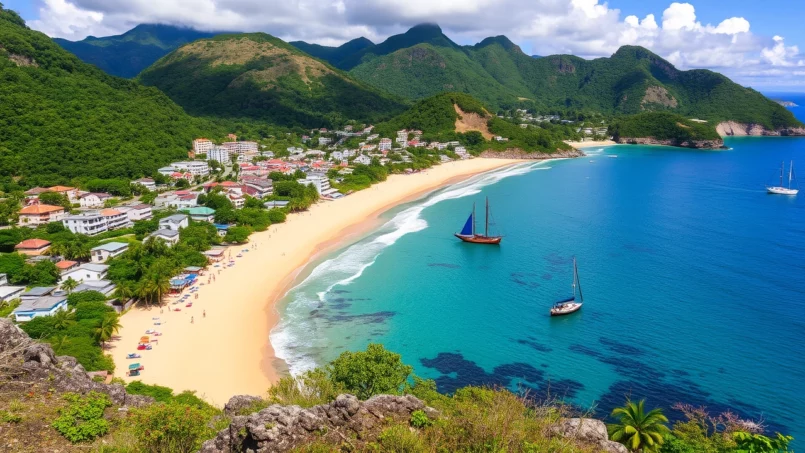
Moving to Saint Vincent and the Grenadines means choosing a 32-island archipelago in the heart of the Lesser Antilles, with its black or white sand beaches, its active volcano La Soufrière, and a Caribbean atmosphere still far from mass tourism. But behind the postcard image, an expatriation project requires real preparation: budget, visas, health, housing, taxes, cultural integration, remote work, or retirement… Everything must be planned.
This guide provides the main practical references, key figures, and local specifics to prepare for a move with full knowledge of the facts. It also addresses the country’s limitations, particularly in the medical field, for a realistic approach.
Understanding the Country Before You Go
Saint Vincent and the Grenadines is a state of approximately 389 km², with just over 100,000 inhabitants. The main island, Saint Vincent, concentrates the majority of the population and services, including the capital Kingstown. The rest of the territory is divided among the northern Grenadines, with highly sought-after islands like Bequia, Mustique, Canouan, or Union Island.
Saint Vincent and the Grenadines is a parliamentary democracy under a constitutional monarchy, a member of the Commonwealth, CARICOM, and OECS. The official language is English, which facilitates settlement for French speakers who master the language. In daily life, a Vincentian Creole is also widely spoken.
The currency is the Eastern Caribbean dollar (XCD), pegged to the US dollar at a fixed rate of approximately 2.7 XCD to 1 USD. This stable parity facilitates budget planning and comparison with income in euros or dollars.
Climate, Environment, and Natural Risks
The climate is tropical with generally stable temperatures, around 24 to 27°C year-round. The dry season roughly extends from December to April, the wet season from May to November. The July-November period also corresponds to the hurricane season, as the archipelago is located in the affected Atlantic zone.
The main island, of volcanic origin, is home to La Soufrière, an active volcano that experienced major eruptions in 1979 and an explosive phase in 2021 requiring the evacuation of tens of thousands of people. Any long-term settlement must factor this risk into insurance, housing choice, and emergency plans.
The beaches on Saint Vincent are generally black sand, while those in the Grenadines are mostly white sand, which also influences the tourist offerings and the type of beachside lifestyle depending on the chosen island.
Cost of Living: What to Expect in Practice
It is often said that Saint Vincent and the Grenadines is “cheaper than the global average.” This is true in absolute terms: the archipelago is about 1.16 times less expensive than the global average and ranks around 96th out of 197 countries by standard of living. But this overall view masks important nuances, especially between Saint Vincent and the more touristy Grenadines.
In US dollars, synthetic estimates give the following orders of magnitude for a standard lifestyle (rent included):
| Household Profile | Average Monthly Cost (USD) | Average Annual Cost (USD) |
|---|---|---|
| Single person | 2,122 | 25,464 |
| Couple | 2,977.6 | 35,731.2 |
| Family of four | 4,150.1 | 49,801.2 |
These figures remain averages: a frugal lifestyle can go down to around 1,000–1,900 USD monthly depending on household size, while a high or “luxury” comfort level quickly rises to around 4,000 to over 8,000 USD per month.
Differences Between Saint Vincent and the Grenadines
Living in the Grenadines – especially on Bequia, Mustique, or Canouan – is generally more expensive than on the main island. For these islands, examples include:
| Location / Household | Average Monthly Cost (USD, rent included) |
|---|---|
| Single person in the Grenadines | 2,317 |
| Couple in the Grenadines | 3,197.3 |
| Family of four in the Grenadines | 4,467.3 |
Kingstown, the capital, also presents a surcharge of about 15% compared to the national average.
Average Salary and Purchasing Power
The average net salary after tax is, according to sources, around 1,245–1,300 USD per month, with an estimate of 3,125 XCD. An interesting statistic indicates that this average income covers about 1.3 months of standard expenses, meaning that an expatriate arriving with an international salary or remote income generally finds themselves in a more comfortable position than the local average.
Saint Vincent and the Grenadines is a financially accessible destination for digital nomads and retirees with a foreign pension, provided they avoid the most luxurious areas and lifestyles.
Housing: Neighborhoods, Types of Accommodation, and Rents
The housing offering ranges from a simple apartment in Kingstown to a spectacular villa with a pool in the Grenadines. For an expatriate, the main trade-off is between access to services, island tranquility, and budget.
Where to Live When You Arrive
In and around Kingstown, several neighborhoods are regularly cited as attractive for foreigners: Cane Garden, Villa, Ratho Mill, Arnos Vale, Sion Hill, Edinboro, New Montrose, Paul’s Avenue, Fair Hall, or Fountain. There you can find a range of apartments, small houses, sometimes with sea views, and reasonable access to shops, the main hospital, and schools.
Other options include the coastal towns of Layou and Barrouallie or the islands of Bequia, Mustique, Canouan, and Union Island, which particularly attract affluent residents, retirees, or digital nomads in search of a spectacular setting.
Many expatriates initially opt for a furnished rental on platforms like Airbnb or Booking. This temporary solution allows them to settle quickly while taking the time to identify the neighborhood that best suits their lifestyle before making a more permanent housing choice.
Rent Levels and Real Estate Purchase
Rents vary enormously depending on the size of the accommodation, its location, and its standard. However, price ranges are fairly clear.
In local currency:
| Type of Accommodation | Average Monthly Rent (XCD) | Indicative Range (XCD) |
|---|---|---|
| 1 bedroom in city center | 1,100 | 800 – 1,500 |
| 1 bedroom outside center | 800 | 650 – 950 |
| 3 bedrooms in city center | 4,233 | 1,800 – 8,400 |
| 3 bedrooms outside center | 1,566.7 | 1,400 – 1,800 |
Converted to dollars, you find common monthly rents between 400 and 1,400 USD for a primary residence, with higher prices in the Grenadines (often 550 to 1,700 USD per month).
For purchase, prices remain relatively low compared to other better-known Caribbean islands:
| Type of Property | Average Price (USD / m²) |
|---|---|
| Apartment in city center | ~710 |
| House / accommodation in suburbs | ~616 |
However, purchase by a foreigner requires an Alien Land Holding License, a license for foreign landholders that can cost up to 10% of the property value, with a processing time often around 14 weeks. A 5% stamp duty applies to transactions, and the annual property tax is calculated at 5% of the assessed rental value.
Although real estate contracts are considered safe, using a local lawyer is essential. Their expertise is crucial for obtaining the license, verifying the title deed, and carrying out procedures at the cadastre.
Temporary Accommodation and Long-Term Rentals
The archipelago has a very wide range of short-term rentals (villas, apartments, cottages, guesthouses), with over 400 properties listed on major platforms. For an exploratory stay or the first few months, you can find:
– studios or 1 bedroom around 70–250 USD per month (very low figures sometimes linked to modest accommodations or promotional rates),
– more standard apartments between 200 and 600 USD monthly,
– well-located villas or family homes, often over 800–1,000 USD per month.
In the Grenadines, high-end villas are more often rented weekly, with rates that can exceed 3,000, 5,000, or even over 10,000 USD per week for exceptional properties, while the private island Petit Saint Vincent can be rented in its entirety for over 160,000 USD per week.
Visas, Stay, Work Permits, and Residence
One of the strengths of Saint Vincent and the Grenadines for expatriates is the relative flexibility of entry for many passports.
Entry and Short-Term Stays
Many nationalities – notably American, British, several European and CARICOM countries – can enter visa-free for an initial tourist stay of one month, or even six months for some (CARICOM, United Kingdom, United States, Schengen Area). Nationals of OECS member states can stay without a time limit provided they have sufficient resources.
In all cases, a passport valid for at least six months after entry and proof of planned departure (return or onward ticket) are required. The right to stay is formalized by an entry stamp.
Fee in Eastern Caribbean dollars for a monthly extension of stay in Saint Vincent and the Grenadines.
Residence and Work Permits
To stay year-round and, especially, work legally on-site, several steps are required:
To settle permanently in Saint Vincent and the Grenadines, a residence permit (temporary or permanent) is mandatory. Obtaining it requires a complete file including a police record certificate, proof of financial resources, a medical certificate, and payment of an annual fee. It is important to note that this right of residence is distinct from the right to work. To work, a specific work permit is required, granted on the basis of a job offer from a local employer. CARICOM citizens holding a CSME certificate benefit from a simplified procedure: they can work for six months while awaiting the issuance of an upgraded local certificate.
An interesting point for prospective property owners: holders of an Alien Land Holding License may be exempt from annual residence permit fees, making it an indirect lever for settlement.
The country does not offer a “golden visa” or a formal residence by investment program, although significant investments in local businesses can facilitate a residence application through classic channels.
Sensitive Points to Know
The legal framework provides for severe penalties for undeclared work or overstaying. Furthermore, the archipelago still criminalizes consensual same-sex sexual relations and offers no anti-discrimination protection related to sexual orientation, an element that some expatriates will need to factor into their personal risk analysis.
Taxation: Income Tax, VAT, Local Taxes
The tax system of Saint Vincent and the Grenadines is generally described as favorable for individuals and businesses alike: no capital gains tax, no inheritance tax on land, and a rather moderate direct tax regime.
Income Tax and Social Charges
Tax residents (presence for at least 183 days in a year or primary home in the country) are taxed on their worldwide income. Taxation is progressive, with brackets ranging from 0% up to 40% according to some sources, while other official documents indicate a recently reduced cap around 28–30% with increased basic allowances.
In practice, an expatriate employee will be subject to the Pay-As-You-Earn (PAYE) system, with an obligation for an annual declaration.
Percentage of total assessable salary contributed by employers and employees to the Saint Vincent and the Grenadines national insurance system.
VAT, Consumption Taxes, and Various Taxes
A 16% VAT applies to most goods and services, with a reduced rate (11%) for certain tourist sectors like accommodation, marinas, or shipyards. Some product categories may be exempt or zero-rated, notably in social or sectoral measures.
Additionally:
Overview of the main applicable taxes and duties in the archipelago.
A 5% tax is applied to airline tickets for flights departing from Saint Vincent and the Grenadines.
A 5% tax is levied on insurance premiums.
A tax of 8 XCD per night per room is due by visitors.
Duties are calculated according to the CARICOM Common External Tariff.
An annual tax, calculated on the market value, is due. It is low for individual residences.
A transfer duty of about 5% is applied to real estate transactions. Foreign buyers must obtain an Alien Land Holding License.
There is no capital gains tax, no wealth tax, and no inheritance tax on land. Expatriate retirees or digital nomads, taxed primarily in their country of origin, should nevertheless carefully check tax treaties and the definition of tax residence with a specialized advisor.
Health: System Limitations and Essential Insurance
This is likely the most critical point of any move to Saint Vincent and the Grenadines. The country has a mixed public-private healthcare system, but capacity remains limited and cannot handle serious conditions in a manner comparable to Europe or North America.
Local Healthcare Offerings
The bulk of hospital services are concentrated in Kingstown, around the Milton Cato Memorial Hospital (MCMH), the main public referral hospital, also called Kingstown General Hospital. In addition, there are about forty local health centers and a few district hospitals for primary care.
Private medicine exists through a few private clinics, notably the Modern Medical and Diagnostic Center and the Arnos Vale Medical Center, which offer consultations, basic exams, and minor procedures. Three private hospitals complete the offering.
This is the medical density, i.e., the number of doctors per 1,000 inhabitants, in the territory.
There is no hyperbaric chamber in the archipelago: divers suffering from decompression sickness must be transported abroad.
Costs, Insurance, and Medical Evacuation
Public healthcare provides basic coverage, but access to higher quality, faster, or more specialized services requires going private, at a cost often high by local standards. Payment in cash at the time of service is the norm.
For an expatriate, a robust international health insurance coverage is not an option, but an obligation. It must absolutely include:
– coverage for private care,
– emergency medical evacuation costs to a neighboring country,
– medical repatriation if necessary,
– a high coverage limit (at least 100,000 USD recommended for major hospitalizations).
Several major international insurers operate in this segment (Allianz Care, AXA, Bupa, Cigna, VUMI, etc.), with customizable plans. It is prudent to:
For a smooth expatriation, it is crucial to compile a complete medical file including test results, prescriptions, and medical history. Also plan for several months’ supply of your personal medication, checking beforehand its legality and availability in the host country. Upon arrival, identify a primary care doctor and locate the appropriate facility for medical emergencies.
Health Risks and Daily Safety
The main threats are of a tropical nature: mosquitoes transmitting dengue, chikungunya, or Zika; intense sun; greatly increased risks of dehydration. Tap water is generally safe to drink on Saint Vincent, but caution is advised in some Grenadine islands.
The country is considered generally safe, with a moderate crime level. The most frequent incidents for foreigners remain pickpocketing and petty theft, especially in crowded areas. Violent crimes targeting visitors are rare, but basic precautions apply: avoid isolated areas at night, do not display valuables, remain attentive in crowds.
Working, Starting a Business, or Teleworking
The economy relies largely on tourism and agriculture (with banana remaining a flagship crop). A small offshore financial services sector has developed, with international banks and registered agent services, under the supervision of the Financial Services Authority and the regional central bank (ECCB).
For an expatriate, local salaried job opportunities are relatively limited, concentrated in:
– hotels and tourism management,
– sustainable agriculture and nature conservation projects,
– maritime services,
– embryonic tech/IT,
– education or healthcare for highly qualified profiles.
Internships and volunteer missions in various fields like tourism, marine biology, coastal ecosystem management, events, communication, or photography can constitute a first professional experience or an entry point into these sectors.
In practice, many foreigners live here as digital nomads or freelancers, drawing income from abroad. Major towns and some tourist islands have often satisfactory internet connections (median speeds up to 163 Mbps in cities), although rural or very remote areas may experience slowness.
Coliving spaces are emerging as an interesting solution for remote workers, combining furnished accommodation, community, and adequate digital infrastructure.
Banking, Money, and Transfers
The local banking system works for both residents and non-residents, with the possibility of opening accounts online with some institutions, without necessarily traveling. Banks primarily operate in Eastern Caribbean dollars, but multi-currency accounts in USD, EUR, GBP, etc., exist.
Banking confidentiality is protected by law, although the country applies international anti-money laundering standards and information exchange (CRS). To open an account, an expatriate must generally provide:
– a valid passport,
– proof of address,
– a bank reference letter,
– proof of resources or source of funds.
For activities considered high-risk (certain offshore sectors, sensitive countries), processing times and requirements become stricter. For an expatriate employee or self-employed person with declared income, opening an account generally remains feasible, provided you start the process well in advance.
Children’s Education and Higher Studies
For families, the school question is central. Primary and secondary public education is compulsory and free. The country has several secondary schools and a community college (SVG Community College). There are also several international medical schools, like All Saints University School of Medicine or Trinity School of Medicine, which host students from around the world.
For expatriate children, the offering of international curricula is more limited than in Antigua or Barbados. However, solutions exist, such as an international school integrated into a global network. This school prioritizes self-directed learning and offers distance learning for higher grades.
Tuition fees in these structures are significant for the local standard of living but comparable to other international schools in the region, offset by small class sizes, good infrastructure, and varied extracurricular activities.
For higher education, young people can look to locally recognized medical schools or pursue studies abroad (United States, Canada, United Kingdom, Europe, other Caribbean islands with university campuses). Many Caribbean or North American programs offer scholarships or loan solutions to students from Saint Vincent and the Grenadines.
Daily Life: Transport, Shopping, Leisure, Integration
Once the administrative and logistical aspects are settled, you must consider daily life.
Getting Around
Driving is on the left, on often narrow, winding roads, with fragile shoulders and poorly marked speed bumps. Main roads follow the coast, as the center of the island is too mountainous. Police enforce traffic rules fairly loosely, which requires new arrivals to be extra cautious.
Public transportation consists of private minibuses, inexpensive and relatively frequent on main routes, complemented by taxis. Ferries regularly connect the islands. On small islands, water taxis supplement the offering, but not all always meet Western safety standards.
For international travel, Argyle International Airport, opened in 2017, replaced the former cramped airport and now allows more direct connections with North America and Europe, although many connections still go through Barbados, Saint Lucia, or Grenada. A departure tax is collected when leaving the country.
Shopping and Managing Your Daily Budget
Kingstown concentrates the majority of shops and markets. Local fresh produce (fruits, vegetables, fish) remains very affordable, especially at markets. On the other hand, anything imported, especially processed foods, wine, certain cheeses, or electronic equipment, quickly becomes expensive.
Some benchmarks in local currency:
| Product / Service | Average Price (XCD) |
|---|---|
| Simple meal at an inexpensive restaurant | ~20 |
| Simple lunch menu in a business center | ~13 |
| Dinner for two at a local pub | ~96 |
| Fast food combo meal (e.g., McDonald’s) | 15–30 |
| Local draught beer (bar) | 5–11 |
| Cappuccino | ~12.3 |
For groceries:
| Product | Average Price (XCD) |
|---|---|
| 1 L of milk | 5–5.5 |
| Bread for 2 people (daily) | 4 |
| 12 eggs | ~12 |
| 500 g of local cheese | ~18 |
| 1 kg of apples | ~21 |
| 1 kg of tomatoes | ~9 |
| 1.5 L bottle of water | ~8.7 |
| Mid-range bottle of wine | ~31–40 |
| Pack of 20 Marlboro cigarettes | 12 |
Electricity, water, gas, and internet bills vary greatly depending on consumption, location, and type of housing. As an order of magnitude, for a standard household, you often see:
| Expense Item | Monthly Range (USD) |
|---|---|
| Electricity | 55 – 210 |
| Water | 13 – 27 |
| High-speed internet | 65 – 140 |
| Gas / heating | 10 – 30 |
| Mobile plan with data | 30 – 85 |
Overall, a well-managed budget remains reasonable, but gaps widen quickly with high electricity consumption (air conditioning), frequent purchases of imported goods, or frequent outings.
Leisure, Nature, and Culture
Beyond the beach image, daily life is characterized by a tranquil, “slow”, typically Caribbean atmosphere. Activities revolve largely around the sea: sailing, yachting, diving, snorkeling, deep-sea fishing, kayaking, kitesurfing, windsurfing. Hiking in rainforests, climbing La Soufrière, birdwatching, or observing sea turtles are among the classics.
The capital of Saint Vincent and the Grenadines offers vibrant nightlife with bars, clubs, and beach parties, as well as a rich historical heritage including forts and old cathedrals. Don’t miss its botanical garden, founded in the 18th century and considered one of the oldest in the Western Hemisphere.
Nightlife remains modest, concentrated in the capital and certain tourist spots. Fans of hyper-urbanity will quickly be frustrated; nature lovers, on the contrary, will find a privileged playground.
Cultural Integration: Succeeding in Your Adaptation
Vincentians (or “Vincies“) are generally known to be warm and welcoming. However, successfully integrating requires a minimum of strategy:
– take the time to understand local codes, notably hierarchical relationships, very present religious practices (Protestant majority, strong Christian practice), ways to approach sensitive topics;
– make an effort to participate in community life: local festivals, sporting events, religious or cultural gatherings;
– develop spoken English and familiarize yourself with Vincentian Creole to grasp jokes, innuendos, and references;
– do not confine yourself to the expatriate microcosm, at the risk of missing the reality of the country.
Psychologically, settling often follows a “U” curve: initial euphoria, cultural shock, adaptation, then maturity. Anticipating these phases, taking care of your mental health (physical activity, routines, regular contact with family back home), and accepting vulnerability in the face of new experiences are keys to success.
Conclusion: Which Profiles is the Archipelago Suitable For?
Saint Vincent and the Grenadines is not a “one-size-fits-all” destination. The archipelago is particularly suitable for:
– remote workers and freelancers with stable income in hard currency, seeking a sparsely populated natural setting and a tranquil life;
– retirees willing to accept limited healthcare offerings in exchange for a reasonable cost of living and a preserved environment;
– families who appreciate small school structures and a slower pace of life, while ensuring medium-term medical and educational backup plans;
– savvy real estate investors, aware of administrative constraints (land license, delays, building permits) and climatic risks (hurricanes, eruptions).
For quick access to cutting-edge medicine, a nearby major metropolis, intense nightlife, or a dynamic local job market, it is better to look to other, more developed Caribbean islands.
The major asset of Saint Vincent and the Grenadines remains this fragile balance between authenticity, still manageable cost of living, political stability, English language, and exceptional natural environment. With rigorous preparation – detailed budget, international health insurance, residence and tax strategy, thoughtful housing choice – the archipelago can become, for certain profiles, much more than a vacation backdrop: a true place to live.
Disclaimer: The information provided on this website is for informational purposes only and does not constitute financial, legal, or professional advice. We encourage you to consult qualified experts before making any investment, real estate, or expatriation decisions. Although we strive to maintain up-to-date and accurate information, we do not guarantee the completeness, accuracy, or timeliness of the proposed content. As investment and expatriation involve risks, we disclaim any liability for potential losses or damages arising from the use of this site. Your use of this site confirms your acceptance of these terms and your understanding of the associated risks.

Cyril Jarnias is an independent expert in international wealth management with over 20 years of experience. As an expatriate himself, he is dedicated to helping individuals and business leaders build, protect, and pass on their wealth with complete peace of mind.
On his website, cyriljarnias.com, he shares his expertise on international real estate, offshore company formation, and expatriation.
Thanks to his expertise, he offers sound advice to optimize his clients' wealth management. Cyril Jarnias is also recognized for his appearances in many prestigious media outlets such as BFM Business, les Français de l’étranger, Le Figaro, Les Echos, and Mieux vivre votre argent, where he shares his knowledge and know-how in wealth management.





