
 Published on and written by Cyril Jarnias
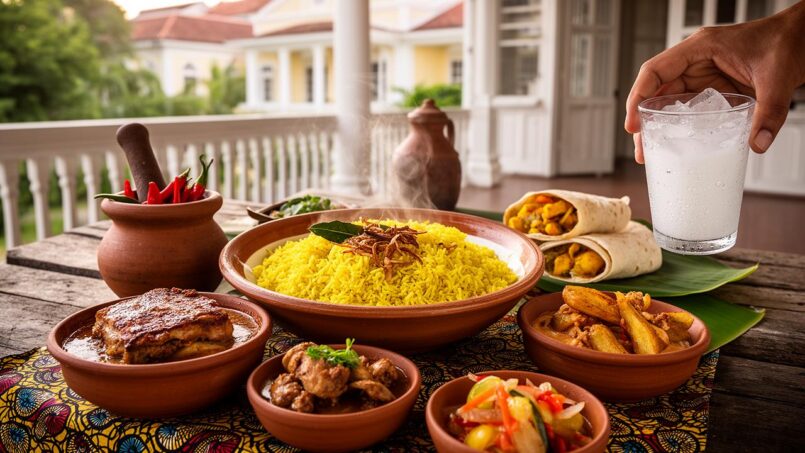
Discovering a country through its food is arguably the most direct way to enter its culture. In Suriname, this idea holds particularly true. Here, each plate tells centuries of history: Indigenous peoples, slavery, plantations, Indian, Javanese, and Chinese migrations, Jewish, Portuguese, Creole, and Dutch influences… All of this has ended up in the pots, woks, and wood-fired ovens. The result: one of the most mixed and surprising cuisines on the South American continent.
For an expatriate, Suriname’s culinary richness is an opportunity to embrace. It’s useful to know the best places to eat without overspending, the must-try dishes, and how to navigate the different types of eateries (market stalls, warungs, roti shops, and more upscale restaurants). Respecting local table manners, which are very important in Surinamese culture, is also essential for good integration.
This guide offers a comprehensive deep dive into the country’s gastronomy, designed for those who will live there rather than for a simple tourist trip.
Understanding Suriname’s “Mixed Cuisine”
Before talking about addresses or prices, you need to grasp the context. Suriname is a tiny country on the northeastern coast of South America, but it is one of the most culturally diverse in the region. This diversity is visible everywhere, but especially on the plate.
The foundation of local cuisine comes from Indigenous peoples (Arawak, Carib, Wayana, Warao, Trio) who were present millennia before colonization. Their diet relied on cultivating cassava, corn, and roots, supplemented by hunting and fishing. They developed specific culinary techniques like cooking in banana leaves, preparing spicy broths, and making cassava bread.
Then came European colonists (English then Dutch), who established sugar, coffee, cocoa, and cotton plantations and imported slaves from West Africa. The slaves adapted their culinary habits using resources from the forest and plantations: thus were born dishes like heri heri or large bean and rice stews.
After the abolition of slavery, contract laborers from British India, Java (a Dutch colony), and China, as well as Sephardic Jews from Portugal and Spain, each brought their spices, preparations, and rituals, permanently influencing local cuisine, as exemplified by the festive dish *pom*.
Post-slavery culinary history
Today, the population is a mix of Hindustani, Creoles, Javanese, Maroons, Chinese, Europeans, and Indigenous peoples. In practice, this means you can order Javanese saoto soep, accompanied by Indian roti, Chinese-style moksi meti, and finish with a Creole cassava cake — all in the same city, sometimes on the same street, or even from the same caterer.
For an expatriate, this is a wonderful introduction: instead of choosing “one” cuisine, you navigate between several traditions, often gathered in the same market.
Paramaribo, the Gourmet Epicenter
Paramaribo, the capital, is the best place to get acquainted with local gastronomy. Its UNESCO-listed wooden colonial houses sit alongside mosques, synagogues, Hindu temples, and churches, but also markets, roti shops, Javanese warungs, Chinese snack bars, and fusion restaurants.
The markets, in particular, are the heartbeat of this culinary culture.
Markets: Essential First Steps
The Central Market along the Waterkant is the largest and oldest. Open from 6 a.m. to 4 p.m., Monday through Saturday, it concentrates everything: river fish, tropical vegetables, herbs, Madame Jeanette peppers, pomtajer roots, cassava, exotic fruits… Not to mention the stalls where you can eat on the spot, drink a non-alcoholic fermented ginger drink or sugarcane juice, and watch the crowd.
The Kwatta Sunday Market, open Wednesdays and Sunday mornings, offers a variety of local products like fruits, vegetables, game, and smoked fish, as well as Javanese dishes from its small stalls.
On Sunday mornings, Javanese, Chinese, or mixed markets complete the picture: at Sana Budaya, the largest Indonesian market, you’ll find vegetables, fruits, and Javanese specialties; in front of Chinese supermarkets like Soeng Ngie and Co., stalls sell bao, roast duck, sausages, dim sum, and Asian vegetables.
To efficiently explore markets and street food, book a ‘food tour’ with an operator like Jenny Tours or Pejego Tours. A guide will accompany you, explain the origins of the dishes and preparation techniques, and help you taste specialties you might not dare order on your own.
Daily Budget: How Much Does Eating Out Cost?
For an expatriate settling in, the question of budget comes up quickly. Good news: in Suriname, eating well without breaking the bank is entirely possible, especially if you favor places frequented by locals.
Some benchmarks (average data in USD and SRD):
| Type of meal / drink | Average price (USD) | Average price (SRD) |
|---|---|---|
| Simple meal in a cheap small restaurant | 6.8 to 8.5 | ~254 to 381 |
| Business lunch menu with drink | — | ~335 |
| Street food (bara, roti, quick snack) | — | 20 to 50 |
| Meal at a local eethuisje / warung | — | 50 to 100 |
| Mid-range restaurant | — | 150 to 200 |
| Fine dining dinner | — | 250+ |
| Fast food combo like McDonald’s | ~10.7 to 11.4 | ~394 to 434 |
| Cappuccino (neighborhood café) | ~2.7 | ~100 |
| Local draft beer (0.5 L) | ~3.3 | ~106 to 127 |
In practice, an expatriate who eats out often and targets local spots can reasonably budget:
| Monthly food scenario (excluding alcohol) | Recommended budget per person |
|---|---|
| Minimum “tight” | ~295 USD / month |
| Comfortable, with regular restaurants | 350–450 USD / month |
Staple products are generally cheaper than in North America or Europe: bread, local beer, or fast food menus cost significantly less, even if some imported items like cheese or tomatoes may be a bit more expensive.
Must-Try Dishes
The complete list of Surinamese specialties would fill a cookbook. To start, it’s better to focus on a few pillars that you’ll find everywhere, from markets to family tables.
Roti and Indo-Surinamese Cuisine
Roti is probably the emblem of Indo-Surinamese cuisine. It’s a soft flatbread, often enriched with split pea or potato flour, served with a curry of chicken, duck (roti doks), mutton, or simply vegetables, always accompanied by potatoes, long beans (kousenband), sometimes squash.
It’s traditionally eaten with the fingers of the right hand, tearing off a piece of flatbread to scoop up the curry. Roti shops like Joy’s Roti Shop in Paramaribo or more modest establishments in residential areas also serve vegetarian or vegan versions.
For an expatriate, the broodje bakkeljauw (small sandwich filled with spicy salted cod) or bara — a savory lentil fritter — are ideal gateways to Indo-Surinamese street food. They are often found for between 5 and 10 SRD each, unbeatable for a filling snack.
Javanese: Saoto, Nasi, Bami, Satay
The Javanese community has deeply marked the culinary offerings of Paramaribo. The warungs lined up along certain streets serve the great Indonesian classics reinterpreted in Suriname.
The price in SRD for a bowl of saoto soup, the emblematic soup of Surinamese cuisine.
In heavily Javanese neighborhoods like Blauwgrond, some stalls specialize in saoto or satay, prepared on site from dawn. For an expatriate, going there early on a Sunday morning after a market visit is an excellent habit to adopt.
Creole and Afro-Surinamese: Dishes of Memory
Creole and Maroon cuisine (descendants of Maroon slaves) often tells stories of survival, resistance, but also celebration.
Discover the characteristics and cultural significance of this traditional dish.
A combination of cassava, sweet potato, green banana, plantain, and egg, accompanied by salted fish and sometimes peanut sauce.
Symbolically linked to the end of slavery, traditionally eaten during the commemoration of abolition.
Very filling, it remains popular for breakfast or lunch, especially in the interior of the country.
Pom is another star, essential at birthdays and big occasions. This hearty gratin combines chicken marinated with citrus and spices, and a layer of grated pomtajer (a tuber similar to taro). It is baked in the oven until a golden crust forms, and served with rice and salads. In the diaspora, it is even made into a sandwich (broodje pom). In Suriname, you can find it at caterers, in markets, or on restaurant menus.
Another classic: bruine bonen met rijst (spiced brown beans with rice), sometimes garnished with sausage, smoked meat, or chicken. It is both a daily dish and an unofficial “national dish”, as it combines beans, rice, and meat into a filling plate.
Soups also hold a major place: cassava soup with dried fish and local spinach, pinda soep (peanut soup) with poultry and plantain, thick split pea or brown bean potages. They warm up rainy evenings on the coast or cool nights in the heart of the forest.
Chinese Influences: Moksi Meti, Tjauw Min, Loempia
Very present in retail, the Chinese community has also brought its flavors. Moksi meti (“mixed meat”) combines different pieces of roast pork and chicken in Cantonese style, sometimes marinated in wine or rum, served over rice or noodles. Tjauw min is simply a local chow mein, stir-fried noodles with meat and crunchy vegetables.
Loempia (fried spring rolls) and dim sum are found at stalls in Chinese markets on Sunday mornings, often alongside roast duck, fried fish balls, and steamed bao. For the palate of an expatriate already familiar with Chinese cuisine, these are reassuring references, with a Surinamese twist.
Sweets and Desserts
The influences continue on the sweet side: coconut cassava cakes (bojo), rice puddings, Indian jalebi in stalls, small cornstarch cookies, festive black cakes, not to mention sugary drinks that are almost desserts, like Javanese dawet (coconut, rose, lemongrass, colorful jellies) or freshly blended fruit juices (soursop, passion fruit, mango, papaya).
At a market, it’s common to finish your meal standing up with a glass of sugarcane juice, a shaved ice with syrup, or a glass of highly fragrant fermented ginger drink.
Where to Eat: From Street Food to Vegetarian Restaurants
For an expatriate, the appeal of Suriname is the ability to constantly vary between several registers, depending on mood, budget, and dietary requirements.
Street Food, Warungs, Roti Shops: The Local Staple
Javanese warungs and Creole eethuisjes are the everyday canteens of Surinamese people. You get generous plates for 50 to 100 SRD, often less than 10 USD. The dishes revolve around rice, noodles, chicken, a broth, or a bean dish.
Roti shops play the same role for Indo-Surinamese cuisine: roti with chicken, duck, vegetarian, fried snacks (bara, phulauri), cold drinks. For just a few dozen SRD, you leave full.
In working-class neighborhoods or near the Waterkant, Surinamese barbecue stalls offer grilled chicken, skewers, spicy sausages, often served with fries topped with mayonnaise and ketchup, and an Indonesian-inspired peanut sauce.
More Structured Restaurants
Several addresses in Paramaribo claim a “fusion” or more refined approach to local cuisine. Examples include hotel restaurants like those at the Torarica Resort or Royal Torarica, where breakfast buffets mix international products and Surinamese classics. These places let you taste pom, saoto, grilled fish or meat, local desserts, in a more formal setting.
The city offers a variety of specialized restaurants (Mexican, Indian, Italian, international cuisine) often frequented by expatriates. Prices are higher, especially if ingredients are imported, but remain relatively affordable compared to major Western capitals.
A Growing Vegetarian and Vegan Scene
The pleasant surprise for many newcomers: it is entirely possible to be vegetarian or vegan in Suriname. On one hand, thanks to Hindu and Javanese heritage, which have long incorporated many vegetables, legumes, tofu, and tempeh; on the other hand, because the global plant-based trend has pushed restaurants and hotels to adapt their menus.
In Paramaribo, several establishments illustrate the diversification of plant-based offerings. **Greenz Restaurant** offers creative cuisine focused on vegetables, grains, and legumes, with raw food options. **Eettent Paul** specializes in entirely plant-based Surinamese street food, adapting classics like bara, roti, and pom. Finally, places like **Deli ’66**, **Hello Kitty Express**, or alternative fast-food outlets like **Comidas Rápidas – Mr. Frikipan** broaden access with wraps, salads, and veggie burgers.
In the interior or smaller towns (Moengo, Albina, Nickerie, Lelydorp, Brownsweg…), you can also find specialized or plant-based tables, such as Vegan Surinamese Cuisine in Moengo or Eat Green in Brownsweg. These are valuable references for expatriates living outside Paramaribo.
For supplies, several supermarket chains — Kirpalani’s, Fernandes Super Store, Green’s Supermarket, Tropical Center, Hakrinbank Supermarkt — have sections for vegetarian/vegan products: plant-based milks, tofu, meat alternatives, grains, and seeds. Health food stores like Wellkidz or Tjin’s Salina complete the offering.
Cooking Workshops: Learning to Cook Surinamese
Nothing helps you integrate more than learning to prepare the country’s dishes. In Paramaribo, workshops specifically designed for visitors and expatriates are developing.
Surinamese and Javanese Cooking Workshops
An operator like Purity Tours & Services offers, for example, a Surinamese Cuisine Cooking Workshop and a Javanese Cuisine Cooking Workshop. These sessions take place in small groups (maximum six people), last about five hours, and are led by a chef who speaks English or Dutch. Transport from several hotels is usually included.
These workshops allow you to learn how to cook local dishes by following a chef’s instructions. You will handle typical ingredients like Madame Jeanette pepper, pomtajer, masala, or ketjap, and learn techniques such as wok cooking, simmering, or frying. The experience concludes with a shared meal. Some workshops take place at a local’s home, offering an authentic glimpse into daily life.
Another important point: these classes are often adaptable to specific diets, including vegan. Participants have reported fully vegan menus in these workshops, which is reassuring for newcomers with dietary restrictions.
Budget-wise, these workshops are around 107 CAD per adult, which is comparable to personalized cooking classes in other countries (40 to 200 USD depending on format). It’s not the cheapest option for a meal, but an excellent investment to later reproduce the dishes at home and save money daily.
Cost of Living, Markets, and Home Cooking
In the long run, most expatriates end up cooking a good portion of their meals at home. In Suriname, this is economically logical and culturally enriching.
Shopping: Markets vs. Supermarkets
Central markets like those in Paramaribo or Kwatta offer the best quality-to-price ratio for everything fresh: vegetables, fruits, fish, herbs. Prices vary by season, but generally, you can buy a kilo of bananas for a few SRD, local rice for less than 10 SRD per kilo, roots (sweet potato, cassava) at very reasonable rates.
For staple products:
| Product | Average price (USD) | Average price (SRD) approximate |
|---|---|---|
| White bread (500 g) | ~1.25 | ~46 |
| Milk (1 L) | ~1.7 | ~64 |
| Rice (1 kg) | ~1.4 | ~52 |
| Eggs (12) | ~3.2 | ~120–172 |
| Chicken (1 kg) | ~5.2 | ~194 |
| Beef (1 kg) | ~10 | ~371 |
| Local cheese (1 kg) | ~12.4 | ~458 |
Large supermarkets complement this with everything imported: dairy products, pasta, cereals, “Western” condiments, frozen foods. Some items, especially European ones, can be significantly more expensive than in their country of origin due to import costs.
The good strategy for an expatriate is often to combine:
– fresh products from the market (to discover local diversity);
– staple products and imported specialties from the supermarket.
Halal, Religious and Nutritional Constraints
All major cities in the country have halal grocery stores and restaurants. A company like Suri To Go claims, for example, 100% halal cuisine for its dishes and sandwiches. Apps like Mustakshif allow you to scan barcodes to check the halal status of industrial products, which is useful in supermarkets with a very varied offering.
For travelers with specific diets (allergies, veganism, gluten-free…), it is advisable to learn key phrases in Dutch or Sranan Tongo to communicate your needs, to favor adapted restaurants listed on platforms like HappyCow, and to inform accommodations in advance to facilitate organization.
Table Culture: Codes to Know for Integration
In Suriname, food is much more than a biological need: it is the most natural way to show hospitality, strengthen bonds, and celebrate.
Dinner Invitation: What Is Expected
Being invited to eat at someone’s home is a sign of trust. Completely refusing to eat or drink can be interpreted as a rejection. It is therefore recommended, even if you are not very hungry, to accept a small portion.
Bringing a small gift (chocolates, flowers, a bottle of wine, a souvenir from your home country) is a gesture that is greatly appreciated. At the entrance of the house, removing your shoes is generally in order, unless the host indicates otherwise.
At the table, seats of honor are reserved for the oldest people or distinguished guests. It is polite to wait for the host or hostess to start eating before you begin. It is customary to wish ‘eet smakelijk’ (enjoy your meal). Depending on the family’s religion, the meal may be preceded by a prayer.
Eating with Your Hands, But Not Just Any Way
Many dishes are traditionally eaten with the fingers: roti, some curries, street snacks. The rule: you only use the right hand, as the left is considered impure in several local cultures. You wash your hands before and after, sometimes at a small sink nearby or with a dedicated basin.
If you are uncomfortable, using a fork and spoon is perfectly acceptable, but the spoon is often considered the main utensil, with the knife being less present on the everyday table.
Finishing your plate is a sign of respect for the work of the person who cooked, especially if they clearly prepared “too much” to anticipate guests. It is better to ask for small portions initially and then have seconds, rather than leaving a half-full plate.
Politeness, Conversation, and Cultural Diversity
Surinamese society is very proud of its coexistence between religions and ethnicities. Symbols like the neighboring mosque and synagogue in Paramaribo testify to this. Openly criticizing a community, a religious practice, or a culinary tradition is frowned upon.
At the table, favor a calm tone and avoid aggressiveness, outbursts, or harsh criticism. Although discussions can be lively, it is frowned upon to constantly interrupt or monopolize the conversation. To build rapport, show genuine interest in your hosts’ family origins, the dishes served, and the important festivals that mark their lives, such as Holi Phagwa, Eid, Diwali, Keti Koti, Maroon Day, or Srefidensi.
Tipping and the Bill
Tipping is not mandatory, but in Paramaribo restaurants, rounding up the bill or leaving about 10% is considered courteous. In warungs, roti shops, or market stalls, it is not expected, though leaving a few extra SRD is always appreciated.
Festivals and Gastronomy: The Best Times to Taste Everything
The Surinamese calendar is filled with religious and cultural festivals where food plays a central role. For an expatriate, these moments combine conviviality, discovery of traditional dishes, and cultural immersion.
The Surinamese calendar is punctuated by cultural and gastronomic events reflecting its diversity. Holi Phagwa (March) is a major Hindu festival of colors with sweets like jalebi and mithai. Keti Koti (July 1) commemorates the abolition of slavery and features dishes like heri heri. Other celebrations like Diwali, Eid, Chinese New Year, Maroon Day, and Indigenous Peoples Day are opportunities to discover the specific cuisines of each community. Explicitly gastronomic events, such as vegetarian festivals, duck curry competitions, or local beer and pom festivals, complement this offering throughout the year.
Setting your expatriate life rhythm to this calendar allows you not only to understand the cultural seasons, but also to taste recipes sometimes absent from restaurant menus the rest of the year.
Practical Tips for Eating Well When Settling In
At the end of this overview, a few simple habits can transform the culinary experience in Suriname for an expatriate:
Start with Paramaribo’s markets, especially the Central Market and the Kwatta Market, going early in the morning to avoid the heat and crowds. Observing what locals order at food stalls and aligning with their choices is rarely a bad idea.
From the first weeks on site, set a regular rhythm to discover local culinary diversity: visit a different Javanese warung each Saturday, try a new roti shop each week, and taste an unknown Creole dish every two weeks. The country’s gastronomic richness makes this exploration almost endless.
Take at least one local cooking workshop, Surinamese or Javanese, to master the basic techniques and learn how to handle chilies, roots, and sauces. This then makes bulk shopping at the market easier and lightens the monthly budget.
Join online groups — for example, vegetarian/vegan communities in Suriname, expat groups — to exchange addresses, recipes, and sourcing tips.
Don’t hesitate to frequent small neighborhood eateries, even if they don’t look like much: they often serve the most authentic versions of local cuisine at unbeatable prices.
Finally, accept the invitation when a colleague, neighbor, or shopkeeper offers a family meal. It is there, more than in any guide or restaurant, that you truly understand how gastronomy structures life in Suriname: as a common language between different cultures, a neutral ground where everyone brings their spices, memories, and stories.
For an expatriate, learning this language through the mouth, nose, and hands is undoubtedly the fastest way to feel at home in Suriname.
Disclaimer: The information provided on this website is for informational purposes only and does not constitute financial, legal, or professional advice. We encourage you to consult qualified experts before making any investment, real estate, or expatriation decisions. Although we strive to maintain up-to-date and accurate information, we do not guarantee the completeness, accuracy, or timeliness of the proposed content. As investment and expatriation involve risks, we disclaim any liability for potential losses or damages arising from the use of this site. Your use of this site confirms your acceptance of these terms and your understanding of the associated risks.

Cyril Jarnias is an independent expert in international wealth management with over 20 years of experience. As an expatriate himself, he is dedicated to helping individuals and business leaders build, protect, and pass on their wealth with complete peace of mind.
On his website, cyriljarnias.com, he shares his expertise on international real estate, offshore company formation, and expatriation.
Thanks to his expertise, he offers sound advice to optimize his clients' wealth management. Cyril Jarnias is also recognized for his appearances in many prestigious media outlets such as BFM Business, les Français de l’étranger, Le Figaro, Les Echos, and Mieux vivre votre argent, where he shares his knowledge and know-how in wealth management.





