
 Published on and written by Cyril Jarnias
Settling in St. Kitts and Nevis means gaining an office with a sea view, but also a seat at the table in one of the most fascinating kitchens in the Caribbean. For an expat, understanding local gastronomy is not just a gourmet pleasure: it’s a key to integration, a shortcut to the culture, history, and social codes of the archipelago.
The cuisine of St. Kitts and Nevis is a blend of Caribbean, African, British, Indian, and Creole influences, reflecting the country’s history (slave trade, plantations, arrival of Indians). For a deeper culinary immersion, this guide offers cooking classes, food tours, visits to markets and farms, as well as hidden gems—ideal for a stay of several months or years.
Understanding local cuisine to better integrate
The Federation of St. Kitts and Nevis is a two-island state in the Lesser Antilles, nestled between the Atlantic Ocean and the Caribbean Sea. About 55,000 residents, lush nature, beaches, but above all a surprisingly rich culinary culture for such a small territory. English is the official language, but you’ll hear Kittitian and Nevisian Creole everywhere, a mix of English, French, and African influences. In this language, the word “water” can actually refer to… a stew, as in “goat water.”
Caribbean cuisine, though perceived as simple in its techniques (stews, grilling), is the result of impressive blending. It combines African, European (French, British, Spanish), Indian, Amerindian influences, along with Asian and Moroccan touches. This mix yields a robust, highly aromatic, and colorful gastronomy where ingredients like Scotch bonnet pepper, thyme, ginger, garlic, nutmeg, and cinnamon are ubiquitous.
Eating here is also a social and identity-driven act. Meals bring families together, cement religious festivals and carnivals, and structure Sundays and holidays. For an expat, learning to love a “cook-up,” a plate of saltfish, or a bowl of goat water means accepting to enter the country’s intimacy.
The key milestones of the Kittitian and Nevisian table
Before diving into a cooking class or a snack tour, it’s useful to identify a few pillars of local gastronomy. They come up in conversations, menus, and historical stories you’ll hear at the market or on a food tour.
Iconic dishes you absolutely need to know
Two preparations vie for the heart of the country: one is the official national dish, the other remains the sentimental symbol of an entire island.
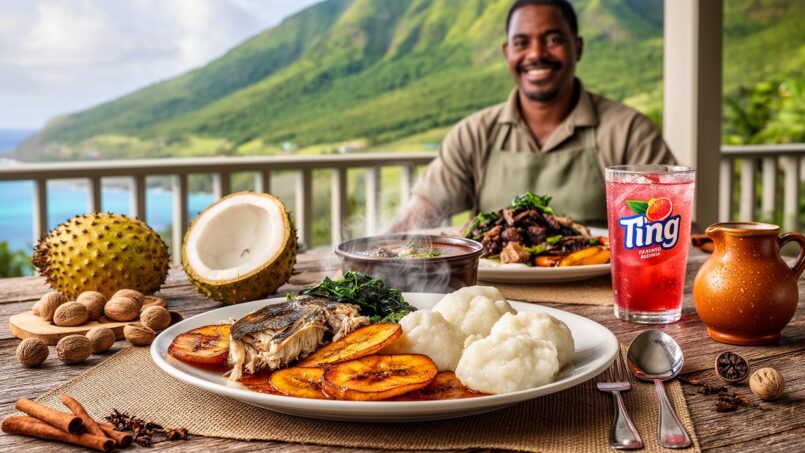
The recognized national dish brings together saltfish (salted cod simmered), coconut dumplings, seasoned breadfruit, and spiced plantains. It extends the history of cod imported to feed slaves and sailors, but gives it nobility with the aroma of coconut and tubers.
The other big star, especially on Nevis, remains goat water, a goat stew that many consider the true signature of the archipelago. Former national dish before being dethroned by saltfish in 2003, it is now a Nevisian emblem.
The “cook-up” (or pelau) is a one-pot complete meal based on rice, pigeon peas, assorted meat, vegetables, and coconut milk. The cuisine also incorporates Jamaican jerk chicken, Indian rotis stuffed with curry, and various fried foods like fish cakes or saltfish fritters, typical of street stalls.
To clarify these must-haves, here is a summary table:
| Local Specialty | Brief Description | Main Cultural Role |
|---|---|---|
| Stewed saltfish & coconut dumplings | Salt cod simmered with spiced plantains, breadfruit, and coconut dumplings | Official national dish, colonial heritage |
| Goat water | Highly aromatic goat stew with papaya, breadfruit, vegetables, spices, and pepper | Nevis identity dish, former national dish |
| Cook-up / Pelau | One-pot meal of rice, peas, meat, vegetables, coconut milk, sometimes pigtail or saltfish | Everyday “one-dish meal,” symbol of conviviality |
| Johnny cakes | Fried or baked bread, plain or slightly sweet | Side for breakfast, stews, and saltfish |
| Conch fritters / fish cakes | Fritters made with conch or saltfish, onions, pepper, herbs | Beach bar and street stall classic |
| Black pudding | Blood sausage made with pork blood, rice, thyme, pepper | British heritage, served at festive breakfasts |
| Roti | Unleavened flatbread filled with curry meat or vegetables | Indian heritage, very common snack |
For an expat, these dishes are entry points into the archipelago’s historical narrative: sugar, slavery, cod trade, arrival of Indian workers, cultural resistance.
Basic ingredients and market products
The list of local products matches the fertility of the islands. You’ll find over forty varieties of mangoes, papayas, guavas, pineapple, soursop, tamarind, guinep, various tropical apples, and bitter oranges. Vegetables and tubers—yams, sweet potatoes, cassava, breadfruit, plantains, pigeon peas, okra, callaloo—are at the heart of so-called “provisions” dishes, hearty sides that easily replace plain white rice.
The sea rounds out this abundance: spiny lobster, conch, wahoo, mahi-mahi, red snapper, grouper, tuna, crabs, and rock fish. Fish is often grilled, fried, or made into “brown stew” or soup (conch water, fish soup).
On the seasoning side, the aromatic base revolves around thyme, garlic, onion, Scotch bonnet pepper, ginger, cilantro, chives, cinnamon, cloves, nutmeg. The famous “browning sauce,” made by caramelizing sugar, is used to color and flavor stews like goat water or oxtail stew.
A table helps visualize this pantry:
| Category | Typical Products |
|---|---|
| Land proteins | Goat, chicken, pork (including pigtail), beef, offal, pork blood (for black pudding) |
| Seafood | Lobster, conch, red snapper, mahi-mahi, wahoo, tuna, crabs, saltfish (salted cod) |
| Tubers & starches | Breadfruit, sweet potatoes, yams, cassava, plantains, green bananas, corn, rice |
| Vegetables & greens | Okra, callaloo, pigeon peas, beans, tomatoes, onions, bell peppers, Scotch bonnet peppers |
| Tropical fruits | Mangoes (≥ 40 varieties, 44 on Nevis), papayas, guavas, soursop, pineapple, tamarind, guinep |
| Fats / milk | Coconut milk, vegetable oil, butter, margarine |
| Spices & herbs | Thyme, ginger, garlic, cinnamon, cloves, nutmeg, marjoram, bay leaf, parsley |
For the expat who cooks at home, visiting markets quickly becomes more meaningful than a simple trip to the supermarket: wider variety of tropical products, direct contact with growers, often better prices on fruits and vegetables, and the chance to learn recipes along the way in conversation.
Cooking classes and food tours: learning “from the inside”
Cooking classes and gourmet tours are an excellent way to move from being a simple customer to an insider. In St. Kitts and Nevis, several structured experiences allow newcomers to understand techniques, ingredients, and cultural codes while sharing a meal.
Cooking like a local: guided experiences
On the island of St. Kitts, the “Cook Like a Local” experience offers a very comprehensive package: cooking class, lunch, and transport in an air-conditioned vehicle, with pickup from Basseterre or Frigate Bay. Participants leave with printed or digital recipes, making it easy to recreate the dishes at home. The session lasts about 3.5 hours, operates as a private group, must be booked in advance, with immediate confirmation and free cancellation up to 24 hours before. It’s wheelchair and stroller accessible, highly rated by visitors (5.0/5 on several reviews), and often marked as “likely to sell out.”
The Fairview Great House & Botanical Garden, a restored 18th-century plantation, offers a culinary workshop. This historic site combines discovery of colonial architecture, botanical gardens, and local cuisine, with a view of the Caribbean Sea and the island of Nevis.
The culinary experience offered there lasts about 3.5 hours, includes a full four-course meal plus dessert, homemade refreshments, recipes, and round-trip transfers (often around $70.50 USD per person). It is open to children aged 8 and up and operates with a minimum of 4 and a maximum of 26 participants. Dietary restrictions must be noted at the time of booking, which reassures expats with special diets (vegetarian, allergies, intolerances).
Here is a useful comparison table for choosing your first workshop:
| Culinary Experience | Approx. Duration | Price from | Transport included | Special Features |
|---|---|---|---|---|
| Cook Like a Local (St Kitts) | 3 h 30 | ~$100 USD | Yes (air-conditioned vehicle) | Private group, wheelchair accessible, recipes provided |
| Fairview Great House Cooking Experience | 3 h 30 | ~$70.50 USD | Yes round-trip (often optional with fee) | 18th-century colonial house, 4 courses + dessert, children ≥ 8 |
| Fairview Rum Shots (rum tasting) | 2 h 30 | ~$52 USD | Variable | Tasting of Caribbean rums (up to 6) |
Beyond these “classic” formats, more immersive experiences exist.
Cooking at the farm or at a local’s home
“Cooking with Ras Iroy” is one of the most original culinary offerings on St. Kitts. Led by a Rastafarian chef on a permaculture farm, it starts with harvesting and picking ingredients on-site: vegetables, herbs, tropical fruits. Participants learn to identify plants and use them in 100% plant-based cooking. The final meal is vegan, structured around products like jackfruit, local vegetables, roots, and medicinal herbs. For an expat curious about sustainable practices and plant-based eating, it’s an excellent way to discover the ecological dimension of local cuisine.
Officially launched in 2015, the company earned a TripAdvisor Certificate of Excellence in its first year. Nicole, along with her husband Adam and their daughters Emily and Zoe, runs workshops that are as much cultural encounters as technical classes.
Nicole’s Table, family business
Sessions begin with a trip to the sinks and distribution of aprons, then everyone gets to chopping, marinating, simmering under Nicole’s guidance. The atmosphere is punctuated with anecdotes about childhood in the islands, about the often vivid names Caribbean people give their dishes, and about how local cuisine is lived daily. The final tasting is accompanied by a rum tasting from different Caribbean linguistic areas (French, English, Spanish), allowing an understanding of the breadth of rum culture in the region.
Food tours and gourmet excursions
Several tours combine walks, history, and tastings. The “Basseterre Bites and Sips Culinary Excursion” explores the capital through its snacks, fruit juices, and signature dishes. Another format, the “Village Food Tour,” offers a walk of about 400 meters through a small village, punctuated by multiple food stops. You taste meat, fish, vegetarian and vegan dishes, desserts, and local drinks. This type of tour is particularly suitable for newly arrived expats, who gain a first overview of the culinary landscape without having to guess what to order at each restaurant.
Other excursions add an extra dimension:
– “Island History & Rum Tasting” blends historical narrative (slavery, sugar, independence) with rum tasting, often up to six different references.
– “Beach Break and Rumtini Workshop” combines lounging on a beach with a cocktail-making workshop using rum.
– “Fairview Rum Shots” focuses on the history and tasting of Caribbean rums, often in the setting of the Fairview Great House.
For expats who appreciate liquid culture, these experiences are like an accelerated course on the place of rum in the archipelago’s economy, festivities, and daily life.
Bars, restaurants, and street food: where to eat like a local
Immersing yourself in local gastronomy involves not only private kitchens and farms but also small neighborhood restaurants, beach bars, and street stalls. In St. Kitts and Nevis, the range goes from a humble eatery on Bay Road to fine dining tables nestled in former plantations.
Basseterre and Frigate Bay: everyday gourmet life on St. Kitts
In Basseterre, El Fredo’s, on Bay Road, is often described as a beacon of authentic Kittitian cuisine. A small family establishment, open dining room overlooking the bay, moderate prices, menu that changes with the catch and the chef’s mood. You’ll eat garlic conch, whole snapper, pigtail soups, spiced pork, served with salad, fried plantains, and sweet potato. Open during the day on weekdays, it’s ideal for understanding what “local lunch” means away from hotel buffets.
Nearby, Mrs Moore’s Eat to Live Snackette embodies the best of Basseterre street food. You can enjoy curried conch, stewed turkey wings, fried fish, and especially Johnny cakes reputed to be among the best on the island. The kiosk also offers homemade fruit juices (passion fruit, guava, lemonade) and rum punches. It is very popular and often crowded at lunchtime.
In the evening, the Frigate Bay area—especially “The Strip”—becomes the nerve center. Beach bars like Boozies on the Beach or Cathy’s Ocean View serve lobster, oxtail, rice & peas, plantains, chicken curry, conch fritters, and other classics. Higher up in the hills, Marshall’s, with its view of the Caribbean Sea and Nevis, offers a mix of local produce and international influences. You’ll find conch chowder, surf and turf, mixed grill, and a strong focus on cocktails.
For an expat, these places offer a double advantage: they are frequented by both tourists and locals, making it easier to mix circles, and their menus feature local specialties alongside more international options, reassuring for a smooth transition.
Beaches and villages: another way to eat the island
Moving away from the capital, the culinary landscape becomes denser. On Cockleshell Beach, Reggae Beach Bar and Grill has become an institution. Lobster, conch fritters, BBQ shrimp, burgers for the classics, a large cocktail menu (house rum punch, margaritas, piña coladas), and lounge chairs available. During events like the “Lobster Fest,” you understand how lobster shapes the Caribbean culinary imagination.
On South Friars Bay, the Shipwreck Beach Bar and Grill offers a calmer atmosphere and hearty dishes like grilled fish, BBQ chicken, and fish tacos, served with plantains, salad, rice, and beans. The spot is ideal for watching the sunset while sipping a rum punch.
On the Dieppe Bay side, Sprat Net Bar & Grill has earned a solid reputation: rustic structure, wooden tables, calypso music, barbecue fueled by the day’s catch brought in by fishermen and grilled over pepper wood. You’ll enjoy fish, shellfish, ribs, chicken wings, often at large shared tables. Local beer (Carib, Stag, Skol) and rum punch accompany these feasts at reasonable prices. Evenings with live music or karaoke also make it an important social spot.
On Pinney’s Beach in Nevis, the bars Weekendz Bar and Grill and Sunshine’s Beach Bar and Grill carry on the tradition of friendly seaside establishments. At Sunshine’s, it’s recommended to try the famous Killer Bee cocktail, as well as the ribs and seafood platters, which are highly regarded specialties.
Street food, markets, and “liming”
To grasp cuisine closest to daily life, you need to go down to street level. At Independence Square, in the heart of Basseterre, stalls multiply: patties filled with meat or fish, jerk chicken, steaming goat water served in styrofoam bowls, rotis, fishcakes, soursop or tamarind drinks. This spot, once a slave market square, is now a place of sociability and music. In the evening, it’s not uncommon to see groups spontaneously playing calypso or reggae while families eat and chat.
The concept of “liming”—spending time chatting, drinking, snacking, without a specific purpose—is central to local culture. Sharing a plate of cook-up on a sidewalk, a bag of hot Johnny cakes, or a container of conch fritters with friends is a way of belonging to the landscape. For the expat, accepting an invitation to “lime” around a barbecue or a stew is a symbolic step toward integration.
Markets, supermarkets, and food logistics for expats
Understanding where and how to get products is an important part of settling in. In St. Kitts and Nevis, the offering combines large North American-style supermarkets and lively markets where much of the culture unfolds.
Basseterre markets and short supply chains
The big public market in Basseterre is the food hub of the capital. Open daily and especially lively on Saturdays, it brings together fruit and vegetable vendors (mangoes, pineapple, soursop, tamarind, spinach, various roots), fish and seafood stalls (snapper, mahi-mahi, conch, lobster, crabs), spice stands (nutmeg, pepper, cinnamon, allspice), and drinks (coconut water, soursop juice, tamarind punch). Another farmers’ market, near the port, operates in the morning, while the Farmers’ Cooperative Market on the outskirts of Basseterre focuses on organic and local produce: fruits, vegetables, herbs, spices, jams, chutneys, homemade sauces.
For expats, visiting markets early (from 7 a.m.) ensures the best selection. Chatting with vendors helps learn local names, preparation methods (e.g., for breadfruit or callaloo), and fruit seasons. Joining groups like “St. Kitts and Nevis Farmers Market” on Facebook facilitates contact with small producers.
The Old Road Town market, more modest, offers a more intimate version of this experience, with artisan breads, pastries, jams, and pepper sauces. At Black Rocks, on the northeast coast, the small market along the volcanic formations offers fruits, snacks, and souvenirs with an ocean view.
Supermarkets, prices, and supply strategies
On the big-box side, the archipelago has several chains:
Main supermarkets on the island, offering a wide range of food and non-food items, with various services like delis, pharmacies, or loyalty programs.
Locations in Camps and Bird Rock. Sometimes open 24/7. Offers a deli and non-food section.
Several outlets: Bird Rock Road, Sugar Bay Club, Royal Plaza at Frigate Bay. Appreciated for variety of offerings and loyalty programs.
Located on Wellington Road in the Horsford complex. Includes a pharmacy and deli.
C&C Superfoods (Cash & Carry) at King’s Pavilion, Island Market Supermarket at Frigate Bay, and Island Food Camps.
These stores offer packaged goods, frozen items, household products, drinks, cheeses, imported meats, cereals, sauces, etc. Fresh red meat can be scarcer and more expensive. Some expats prefer the market for fruits and vegetables and reserve supermarkets for items hard to find elsewhere (gluten-free products, specific cereals, foreign snacks).
There are also delivery services like Caribbean Grocery Shopping, linked to Valu Mart IGA, which deliver groceries to your door—convenient for those without a car or bearings yet. Loyalty points programs at Rams or IGA can reduce the bill over time.
A common strategy for long-term residents is to ship a “barrel” from their home country containing toiletries, specific snacks, and basic equipment via freight companies like Tropical Shipping. This method can be economical for items that are very expensive or unavailable locally, but it requires good logistical planning.
Another table helps visualize the options:
| Type of outlet | Main advantages | Points to watch |
|---|---|---|
| Basseterre Public Market | Fresh, local, variety of fruits/vegetables/fish, cultural immersion | Go early, manage heat, cash payment |
| Farmers’ Cooperative Market | Organic products, homemade jams and sauces, direct contact | Limited opening hours |
| Supermarkets (Rams, Best Buy, IGA…) | Wide selection, imported products, extended hours | High prices on imported items, variable quality between stores |
| Street stalls & food trucks | Ready-to-eat meals, cheap, very local | Variable hygiene, avoid leaving drinks unattended |
Practical shopping tips
Prices vary widely: a bag of sweet potatoes or plantains will be cheap, a box of American cereal much more expensive. Check whether the price is in Eastern Caribbean dollars or US dollars to avoid misunderstandings. There is generally no sales tax added at supermarket checkout for food, but services (restaurants, hotels) often apply a 10% to 15% service charge.
Banks and ATMs dispense EC dollars; most large stores accept credit cards. Small markets and stalls prefer cash.
Reusable bags are welcome, and regulations prohibit camouflage clothing and accessories—an important detail for those receiving parcels from abroad.
Eating in St. Kitts and Nevis also means navigating a system of implicit codes. They are not binding, but respecting them greatly eases integration.
It is customary to be offered a drink (tea or a cold beverage) when visiting someone’s home. You remove your shoes before entering a private house. Greetings usually begin with ‘Good morning/afternoon/evening’ with a handshake, sometimes a hug or a kiss between close friends. During meals, it is polite to wait for the host to start eating and to leave a small amount of food on your plate to indicate you are full and satisfied.
Dress follows a certain modesty: outside the beach, very revealing clothing is frowned upon, especially in religious or administrative spaces. Sundays, a day of worship for many, often call for formal attire, and many people then gather for a long family meal.
Meals are conducive to conversations about family, work, sports, or music. However, topics like politics or finances are more sensitive in public and should be approached with caution, especially during a first meeting.
For an expat, participating in a Sunday meal, a neighborhood barbecue, or a lime around a big pot of goat water helps understand the place of cuisine in the social fabric: it marks festivals (Carnival Sugar Mas, Culturama, Emancipation Day), religious events (Easter, Christmas), as well as simple holidays like Labour Day, where the parade in Basseterre often ends with a family picnic.
Festivals and culinary events: a calendar to savor
The cultural life of the federation is punctuated by events where food is not just a backdrop but a central protagonist.
At Sugar Mas, the big national carnival, street stalls—rotis, jerk chicken, grilled meats, coconut sweets, sorrel or mauby drinks—fuel the festive nights and parades. On Nevis, Culturama, a twelve-day festival celebrating African and Caribbean heritage, features numerous kaiso shows, parades, craft fairs, and… traditional food stalls.
A festival entirely dedicated to showcasing the dozens of mango varieties on the island, through culinary and fun experiences.
Participate in cooking classes, children’s workshops, and ‘mango tours’ to explore all facets of the fruit.
Discover how chefs use mango in chutney, meat sauce, dessert, ice cream, or cocktails.
Attend a mixology competition and enjoy tastings to sample the different varieties.
The Restaurant Week in St. Kitts and Nevis, often in July, highlights a local ingredient each year (coconut has been a past theme). Participating restaurants create fixed-price menus around that ingredient, and satellite events—chef demonstrations, grill competitions, charity dinners—round out the program. For an expat, this is a fantastic entry point to try several venues without blowing the budget.
More targeted festivals like the Calabash Seafood Festival in Dieppe Bay (dedicated to seafood) or the Coconut Festival on St. Kitts (centered on all possible uses of coconut in cooking and crafts) add further layers to this calendar.
Drinks, rums, and food safety
Drinks are an integral part of the gastronomic landscape. Rum punch, the absolute signature, mixes rum, lime juice, two other fruit juices, and often a few dashes of bitters. It is found everywhere, from Sunshine’s Beach Bar & Grill to Sprat Net, from Frigate Bay beach bars to more upscale tables. Local rums like Brinley Gold or Cane Spirit Rothschild (CSR) are enjoyed neat, as ti-punch, or in cocktails. Brinley offers vanilla, coffee, coconut, and mango flavors; CSR, a clear cane spirit, pairs very well with Ting grapefruit soda.
The most common beer is Carib, often alongside Skol and Stag. The offering also includes freshly pressed fruit juices (soursop, guava, star fruit, mango), as well as mauby (a drink made from bark, sometimes fermented) and Irish moss (sea moss drink), which is sweet and spiced.
On safety, it is recommended to stick to bottled water, although filtered water in hotels and good restaurants is generally safe. Health authorities and travel guides advise not leaving your drinks unattended nor accepting glasses from complete strangers, and to be wary of potentially contaminated food or drinks. In seawater, avoid swallowing large amounts, especially in areas suspected of pollution, as a basic precaution.
From exploration to appropriation: building your expat kitchen
As weeks go by, many expats evolve from being “restaurant testers” to hybrid cooks, blending local techniques with their own habits. The cooking classes and recipes from workshops (“Cook Like a Local,” Fairview, Nicole’s Table, Cooking with Ras Iroy) then become a foundation for experimenting at home.
To recreate traditional dishes like saltfish and coconut dumplings, Sunday cook-up, curried goat, or pigeon pea stew with coconut milk, adopt tips learned at the market: use breadfruit like a potato, roast plantains in the oven instead of frying, incorporate tamarind into a marinade, and lightly caramelize some sugar to make homemade browning.
Little by little, the refrigerator fills more with sorrel, soursop, callaloo than with imported lettuce. You learn to measure Scotch bonnet, to make your own tamarind balls, to use local rum in a coconut bread pudding, as some island restaurants do.
Adopting local products reduces costs compared to expensive imports, supports local farmers and fishermen, and strengthens the connection to the territory. This practice also eases social integration: offering a homemade dish with local inspiration or a dessert made from local ingredients at events is a strong sign of putting down roots.
In this small state where cuisine tells both the pain of history and the joy of celebration, where goat water coexists with coconut dumplings and steaming conch fritters, the expat who takes the time to taste, learn, and cook finds much more than flavors: they find their place.
Disclaimer: The information provided on this website is for informational purposes only and does not constitute financial, legal, or professional advice. We encourage you to consult qualified experts before making any investment, real estate, or expatriation decisions. Although we strive to maintain up-to-date and accurate information, we do not guarantee the completeness, accuracy, or timeliness of the proposed content. As investment and expatriation involve risks, we disclaim any liability for potential losses or damages arising from the use of this site. Your use of this site confirms your acceptance of these terms and your understanding of the associated risks.

Cyril Jarnias is an independent expert in international wealth management with over 20 years of experience. As an expatriate himself, he is dedicated to helping individuals and business leaders build, protect, and pass on their wealth with complete peace of mind.
On his website, cyriljarnias.com, he shares his expertise on international real estate, offshore company formation, and expatriation.
Thanks to his expertise, he offers sound advice to optimize his clients' wealth management. Cyril Jarnias is also recognized for his appearances in many prestigious media outlets such as BFM Business, les Français de l’étranger, Le Figaro, Les Echos, and Mieux vivre votre argent, where he shares his knowledge and know-how in wealth management.





