
 Published on and written by Cyril Jarnias
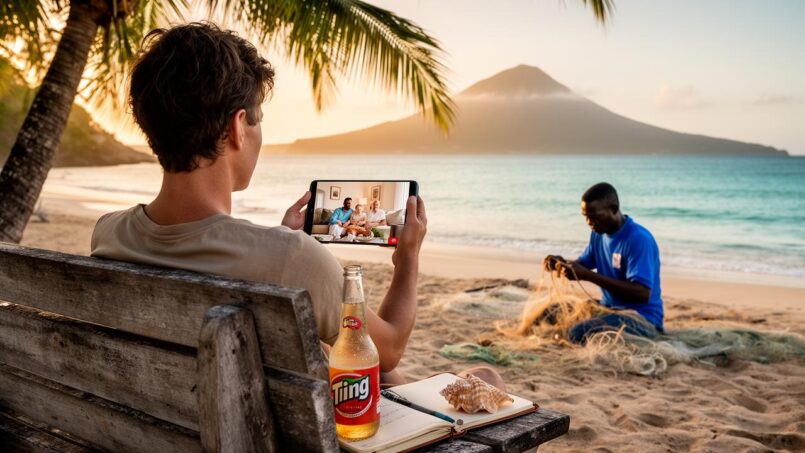
Settling in St. Kitts and Nevis often means realizing a postcard dream: turquoise waters, golden or volcanic black sand beaches, mountains covered in tropical rainforest, coves where you spot turtles, a warm atmosphere, and the rhythm of “island time”. Yet, even in paradise, homesickness almost always finds its way in.
Good to know:
Studies show that between 20% and 90% of expatriates experience significant homesickness during their first year abroad, and up to 70% of former expats have gone through it. So it’s completely normal to feel nostalgic for familiar things from your home country.
This article offers practical advice, tailored to the very specific context of St. Kitts and Nevis, to help you understand, ease, and turn homesickness into a driver for integration rather than a roadblock.
Understanding What Lies Behind Homesickness
Homesickness is not an illness or a personal failure. Psychologists define it as an adjustment difficulty related to separation from a familiar environment. It combines several dimensions: attachment to loved ones, the need to control one’s environment, a sense of security, and habits from daily routines. When all of that is disrupted, the body reacts.
What You Might Feel When Arriving in a Small Island Federation
In St. Kitts and Nevis, several typical island features often amplify this shock: limited territory, small population (about 55,000 people), the feeling of “knowing everything very quickly,” a tourism-driven economy, a cost of living sometimes higher than expected, slow bureaucracy, and that occasionally suffocating sensation of not being able to “hit the road” to get away for a few days.
Research on island contexts even mentions “island fever” or “rock fever”: the feeling of going in circles, of not being able to escape easily, which intensifies homesickness. Added to this are the classic symptoms:
Research on Island Contexts
– Emotional (sadness, irritability, nostalgia, feeling like you don’t belong)
– Physical (fatigue, sleep disturbances, muscle tension, headaches or stomachaches)
– Behavioral (tendency to withdraw, stay home, scroll through social media from your home country for hours, decreased concentration at work).
3
Expatriates are up to three times more likely to feel trapped or depressed compared to their baseline state.
Keep two essential things in mind: feeling this way is almost universal, and adjustment often follows stages (honeymoon, disillusionment, adjustment, integration). How you feel in month three is not how you’ll feel in month twelve.
Making Your Home a Sanctuary… Without Cutting Ties to the Island
In a country where many rentals are furnished for tourism or for students at the medical and veterinary universities, you can quickly feel like you’re living in a “transient” apartment. Yet research shows that a personalized environment reduces adjustment stress by up to 38%. Transforming your living space into a personal anchor becomes a key strategy against homesickness.
Setting Up Your Bearings in a Very Caribbean Setting
In St. Kitts and Nevis, many expats settle in Frigate Bay, on the Southeast Peninsula, or around Basseterre. Others choose Charlestown, Pinney’s Beach, or quieter areas on Nevis. Wherever you are, the logic is the same: you need to “tame” the space.
Example:
To create a sense of home when settling abroad, it’s helpful to introduce strong personal items like photos, books, a favorite rug, or travel souvenirs. A concrete example is expats who combine a family heirloom bedspread with local crafts, such as baskets bought in Nevis or fabrics from Caribelle Batik at Romney Manor. This mix of the old ‘home’ and the discovery of ‘here’ helps build a new, rooted identity.
Lighting plays an important role. Homes are often bathed in intense sunlight; in the evening, replacing harsh fluorescent lights or ceiling fixtures with warm accent lamps or string lights instantly creates a more reassuring atmosphere, conducive to calm when nostalgia sets in.
The senses are powerful allies: cooking, smells, sounds. Local cuisine – “goat water,” “cook-up,” grilled fish, aromatic herbs – can coexist with the smells of your family recipes. Cooking a dish from home while listening to music from your country, then later sharing a “rum and Ting” on the beach, is about building a bridge between two worlds rather than cutting ties with one or the other.
Organizing Your Space to Limit the Feeling of Chaos
Arriving in a new country strongly disrupts routines, which increases stress hormones. We know that structured routines reduce this stress by up to 40% during cultural transitions. Spend your first weekends making two rooms truly functional: the bedroom (sleep, privacy, recovery) and a pleasant living area.
Tip:
For a comfortable stay, invest in a good mattress or mattress topper if the provided bed is basic. If you work remotely, plan for an ergonomic desk, knowing that internet infrastructure is good around Basseterre, Frigate Bay, and near major resorts, attracting many digital nomads. To personalize the space, add plants for a touch of life. Finally, unpack your boxes quickly after moving to avoid living in a temporary ‘base camp’ for months.
You can also create a “memory corner”: a small space with photos of your loved ones, a few postcards, a meaningful object. Rather than scattering them everywhere, this corner becomes both a refuge and a gentle reminder of your story.
Example of an “Anti-Homesickness Kit” for the Apartment
| Element | Role in Well-Being | Adaptation to St. Kitts and Nevis |
|---|---|---|
| Photos & Souvenirs | Reminder of emotional network, sense of continuity | Dedicated corner on a shelf or wall |
| Familiar Textiles | Comfort, warmth, reassuring touch | Light throw blanket, bed linens, cushion covers |
| Soft Lighting | Calming, supports sleep-wake rhythm | Bedside lamps, string lights, ambient lamps |
| Scents & Music | Activation of positive memories, feeling of “home” | Candles, incense, playlists from your country, recipes to cook |
| Plants | Connection to nature, air quality, sense of life | Easy-care tropical plants (watch out for full sun) |
| Workspace | Structuring the day, separating work/personal | Desk facing a window, comfortable chair |
Routines, Rituals, and “Island Time”: Finding Your Own Rhythm
The contrast between often frantic Western life and the deliberate slowness of St. Kitts and Nevis is one of the major sources of destabilization. “Island time” means more flexible schedules, longer procedures, prioritizing relationships over raw efficiency. What makes local life charming can become extremely frustrating for a newcomer.
Structuring Your Days to Regain Control
Research on cultural adaptation shows that clear routines speed up adjustment and shorten the disillusionment phase. Creating your own daily skeleton allows you to regain a sense of control without denying the local culture.
For example, you can establish:
Daily Rituals for a Successful Immersion
Adopt these grounding habits to balance work, well-being, and discovery during your stay in St. Kitts and Nevis.
Morning Ritual
Start the day with coffee on the balcony overlooking the sea or mountains, followed by a few minutes of meditation and reading the news.
Physical Activity
Reserve a slot for running at South Friars Beach, swimming at Pinney’s Beach, a yoga class at Imagine Yoga, or a round of golf at the Royal St. Kitts Golf Club or the Four Seasons Nevis.
Weekly Exploration
Dedicate time each week to a hike on Mount Liamuiga, a visit to Brimstone Hill, a ferry trip to Charlestown, or a tour of the Eco-Park or the Nevis Botanical Garden.
Evening Story
Keep a journal of your discoveries, both positive and negative, to record and reflect on your experiences.
This framework anchors you in a mastered time, even if the worker who was supposed to install your hurricane shutters doesn’t show up on time or if an administrative procedure takes two weeks longer than expected.
Dealing with Bureaucratic Slowness Without Burning Out
New arrivals quickly discover that visas, residence permits, Alien Landholding Licenses, utility connections, importing goods, or health procedures can drag on. Anticipation becomes a mental health tool: plan generously, accept that “everything takes longer”, break down procedures so they don’t consume all your days.
Attention:
To prevent administrative tasks from taking over all your time and mental space, incorporate them into a specific weekly routine, like a dedicated morning, and pair it with pleasant moments, for example, lunch in Basseterre followed by a walk in Independence Square.
Building a Network on Two Islands Where Everyone Knows Everyone
The feeling of isolation is a major driver of homesickness. Data shows that expats who get involved early in clubs and associations adapt up to 50% faster. In a small federation like St. Kitts and Nevis, not integrating quickly means ending up in a very narrow bubble – sometimes limited to your neighborhood, university, or resort.
Playing the Local Hotspots Card
Local society values community and tradition. The extended family is central, religious practice is important for a good portion of the population, and cricket is almost a religion. The beach bars on “The Strip” in Frigate Bay, restaurants in Basseterre, churches, sports clubs, and environmental volunteer opportunities are all gateways.
In St. Kitts and Nevis, social life is structured notably around: family, religious communities, recreational activities, and cultural festivals.
– Frigate Bay and its dual Caribbean/Atlantic beaches, with bars like Shipwreck Beach Bar, Boozies on the Beach, Mr. X’s Shiggidy Shack, or Vybz Beach Bar
– Basseterre (markets, cafés, St. Kitts Eco-Park, Warner Park Stadium for cricket)
– Charlestown and Nevis beaches (Pinney’s, Oualie, Bath Village) for a quieter vibe.
Accepting invitations, even when the temptation is to stay home watching shows from back home, is a key strategy. Studies show that social withdrawal and repeatedly refusing invitations sustain homesickness and increase the likelihood of depression.
Leaning on Existing Communities
The federation hosts a significant international community: students from medical and veterinary universities, retirees, citizenship-by-investment holders, remote workers. Informal groups exist; some meet regularly for barbecues, hikes, paddle tennis, or boat outings.
Good to know:
To ease your settlement, use Facebook groups (like ‘Expats in St Kitts & Nevis’), international forums, the InterNations platform, or local friend-finding apps. These tools are especially useful during the first few months to identify physical meeting spots.
Possible Integration Spaces and What They Offer
| Space / Activity | Benefit for Integration | Concrete Example in St. Kitts and Nevis |
|---|---|---|
| Clubs and Associations | Meet locals, create habits, share interests | Cricket club, environmental associations, senior clubs |
| Places of Worship | Community support, regular rituals, mutual aid network | Protestant and Anglican churches, evangelical communities |
| Bars and Restaurants Frequented by Locals | Learn social codes, practice small talk | Bars on the Strip in Frigate Bay, restaurants in Basseterre or Charlestown |
| Sports & Leisure | Boost morale, strengthen physical health, build bonds | Hiking, diving, yoga, golf, inter-island swim races |
| Volunteering | Sense of purpose, cultural immersion, intergenerational encounters | Nature projects, animal rescue, cultural events |
| Cultural Events and Festivals | Connect to collective memory, local annual rhythm | Sugar Mas, Culturama, St. Kitts Music Festival, Nevis Mango Fest |
The trap: staying only among expats – especially if they, like you, are in a doubtful phase – can turn nostalgia into a closed circle. The goal isn’t to deny your peers but to create a balance between an international network and local anchoring.
Embracing Creole Culture and Everyday Differences
The culture of St. Kitts and Nevis is a complex mix of African, European, and Caribbean heritages. The population is predominantly of African descent, English is the official language, but an English-based Creole is widely spoken, with its own expressions, humor, and nuances. Confronting this can be intimidating, especially when you don’t yet grasp all the subtleties.
Observe, Learn, Participate Without Overdoing It
One of the best antidotes to homesickness is not remaining a spectator. Attending major cultural events – Sugar Mas in St. Kitts from December to early January, Culturama in Nevis around August 1st, the St. Kitts Music Festival, the Nevis to St. Kitts Cross-Channel Swim, Restaurant Week, seasonal farmers’ markets – lets you feel the pulse of the country.
The festivals, with their parades, calypso and soca music, Moko-Jumbies on stilts, and masquerade dancers in flamboyant costumes, embody social codes you can’t grasp from a resort lounge chair.
Alongside this, small daily things ease integration: learning a few Creole expressions, inquiring about the importance of cricket, respecting politeness norms (greeting people, taking time to chat), accepting a drink or snack offered to you, and limiting public displays of affection, which are very subdued in local culture.
Navigating Differences Without Self-Flagellation
Homesickness is often fueled by negative comparisons: “back home, it’s faster,” “back home, hospitals are better equipped,” “there are more leisure options there”… These remarks may be factually true (the federation has modest healthcare infrastructure, few movie theaters, limited shopping options), but dwelling on them breeds frustration and bitterness.
Tip:
A useful exercise for expats is to keep a double journal. In one column, write down what you miss from home. In the other, list everything your new country, like St. Kitts and Nevis, offers that you didn’t have before. This could include volcanic landscapes, evenings watching the sunset over Cockleshell Bay, relative tranquility, the absence of significant noise pollution, the ability to swim year-round, or the generally warm welcome. This practice doesn’t erase the longing, but it reintroduces nuance and gratitude into your experience.
Staying Connected to Your Home Country… Without Staying There Mentally
Digital tools allow near-constant contact with family and friends. This is both a blessing and a trap. Research shows that, paradoxically, unregulated daily contact with your home country can slow adaptation by about 25%.
Building a Balanced “Connection Plan”
Living in St. Kitts and Nevis often involves manageable time differences with Europe and North America, but they still require some organization. Rather than responding to every request on the fly, it’s healthier to co-create a rhythm.
For example, you can:
Stay Connected with Loved Ones
Concrete ideas for maintaining long-distance ties, balancing quality of interaction with respect for everyone’s time.
Weekly Video Call
Set a fixed weekly slot for a family video call, a regular appointment not to be missed.
Reasonable Voice Messages
Agree on a reasonable number of voice messages to exchange during the week, for updates without being intrusive.
Monthly Personal Newsletter
Offer friends a monthly letter recounting your discoveries: a hike on Nevis Peak, a ride on the Scenic Railway, snorkeling at Monkey Shoals, or a night at Carnival.
Postcards and Surprises
Send real postcards or small local surprises (respecting customs rules) for a tangible keepsake.
The idea is twofold: reassure your loved ones about your state, include them in your new life, but without turning your evenings into instant messaging marathons that prevent you from living in the present on the island.
Celebrating Rituals from a Distance
Holidays, birthdays, weddings, births, funerals… are often peak homesickness moments. Studies indicate that the lack of shared rituals can delay adjustment by up to 30%. Yet you will rarely be physically present for everything.
Tip:
Several strategies help make these moments bearable. It’s recommended to put them into practice to better navigate tough periods.
– Join live via video conference when possible
– Create your own ritual on the island at the same time (light a candle, write an unsent letter, cook the family dessert, go to a beach that soothes you)
– Plan, when feasible, a trip back home for a key event and announce it to your loved ones in advance.
The most important thing is to avoid silent isolation: telling your loved ones that you are sad not to be there, but that this expatriation matters to you, also helps them understand that it’s not a rejection.
Using Nature, Culture, and the Environment as Resources
One of the great strengths of St. Kitts and Nevis is the environment. Forests, coral reefs, volcanic peaks, varied beaches, no monster traffic jams… all powerful levers to lighten the mind.
Go Out, Even When You Don’t Feel Like It
Homesickness often comes with low energy, a desire to stay indoors. Yet regular physical activity, even moderate, is one of the best-documented natural antidepressants. In St. Kitts and Nevis, options abound:
Example:
To illustrate the diversity of available activities, one can mention: walking the trails of the Central Forest Reserve National Park, strolling through Basseterre from Port Zante to Independence Square to observe daily life, diving or snorkeling on reefs like the Black Coral Reef or at Sandy Point Marine Park, as well as water sports like kayaking, paddleboarding, sailing, or golf and morning swimming.
Simply frequenting the same beaches, cafés, or trails regularly creates familiar faces, a sense of “neighborhood” even in a country that isn’t yours.
Treat Yourself to Micro-Adventures to Break the Nostalgic Rut
When nostalgia feels heavy, it can be tempting to fight it with digital distractions. Instead, investing in local experiences has a double impact: enriching the feeling of being “at home here” and carving out memories that, over time, gradually blend with those from your home country.
A few examples:
Attention:
For a full experience, plan a ferry ride to Nevis to visit Charlestown and the Museum of Nevis History, swim at Bath Village or Oualie Beach. Explore the Brimstone Hill Fortress, taking time to appreciate its history. Sign up for a boat excursion with an operator like Blue Water Safaris and, if the chance arises, participate in the Nevis to St. Kitts cross-channel swim as a swimmer or volunteer.
Each micro-adventure pushes back a little the feeling of being in a “temporary” place, and gives the impression of writing a new chapter rather than living in a parenthesis.
When Homesickness Settles In: Knowing How to Ask for Help
It’s important to distinguish normal nostalgia – variable, but still allowing room for pleasure, curiosity, work – from a state that becomes chronic, with lasting sadness, loss of pleasure, dark thoughts, isolation, marked sleep or appetite disturbances, and major difficulty functioning.
The mental health system in St. Kitts and Nevis remains modest, but it exists and is being strengthened.
Available Resources in the Federation
The federation has adopted a national mental health strategy, aiming to reduce stigma, expand community-based services, and increase awareness campaigns. Several bodies play a role: the St. Kitts Mental Health Association (founded in 2007), a psychosocial committee attached to the Ministry of Health, partnerships with the Pan American Health Organization, and a project to strengthen services in cooperation with Taiwan.
On the ground, services are offered in several ways:
– Community health centers (17 total in the federation, including 11 in St. Kitts and 6 in Nevis)
– Weekly mental health clinics at several primary care centers
– Consultations at Joseph N. France Hospital in Basseterre and Alexandra Hospital in Nevis
– A dedicated day treatment center for rehabilitation (Dr. Arthur W. L. Lake Mental Health Day Treatment Centre)
– A limited number of psychologists and psychiatrists, but they are present, with occasional home visits.
For more targeted help, private practices exist, such as St. Kitts Counseling Services in Frigate Bay/Bird Rock, founded by a clinical psychologist using validated approaches (cognitive behavioral therapy, trauma-focused therapy, mindfulness, couples therapy…). Some private insurance plans cover all or part of the consultations.
Helplines and Emergency Support
The federation has set up several helplines, including a national mental health number available 24/7, as well as lines dedicated to young people or victims of gender-based violence. These services offer free, confidential listening, initial support, and referral to local services.
Good to know:
International teletherapy platforms allow you to consult psychologists who speak your native language, provided the internet connection is sufficient. This option is especially valuable for expats, as it addresses homesickness and offers the possibility of expressing yourself in a language that is emotionally more comfortable.
The essential thing is to see asking for help as a sign of maturity, not weakness. Regional data reminds us that a large majority of people with mental health issues receive no help at all; breaking this cycle starts with individual actions.
Balancing Professional Ambitions, Island Constraints, and Personal Well-Being
St. Kitts and Nevis attracts many profiles: tourism employees, teachers, healthcare professionals, students, remote workers taking advantage of good connectivity and no income tax, entrepreneurs drawn by the tax regime and the citizenship-by-investment program.
But behind the sun sometimes lurk overload, professional isolation, difficulty adapting to a work culture where relationships and hierarchy weigh more than tight deadlines. All of this interacts with homesickness.
Understanding the Work Culture to Reduce Friction
Local professional culture combines Caribbean warmth with marked respect for hierarchy. Decisions are often made centrally, communication can be indirect to avoid confrontation, and the importance given to human connection can slow down processes you’d like to be faster.
Good to know:
For an expat, cultural differences can amplify homesickness. It’s advisable to take time to decode these codes, observe interactions among colleagues and superiors, ask questions, and work on your flexibility to reduce this gap and facilitate integration.
For entrepreneurs or freelancers, the federation’s digital ecosystem (good connectivity in urban areas, ICT development), absence of income tax, digital marketing consulting services, and a TikTok panel dedicated to the country offer opportunities for online or hybrid activity. But the cost of dedicated connections, sometimes questionable reliability of networks, and regulatory constraints require a learning curve. Here again, connecting with local networks – chambers of commerce, professional associations, Global Entrepreneurship Week, farmers’ markets, events like Energy Month or Carnival – helps avoid facing these obstacles alone.
Avoiding Work Becoming Your Only Identity
A common trap for expats is to throw themselves entirely into work to avoid facing social emptiness or nostalgia. In the short term, this can numb homesickness. In the medium term, this imbalance triggers burnout, weakens mental health, and reinforces the feeling of alienation (“I’m only here for the job”).
Good to know:
To preserve your mental balance, it’s essential to set time limits, allow yourself leisure time, and cultivate at least one non-work activity. This could include a sport, volunteering, language classes, or participating in a festival.
Preparing for What Comes Next: Return, Extension, Second Island
Homesickness isn’t just about the first few months. It sometimes resurfaces as deadlines approach: end of contract, residence permit renewal, decision to apply for citizenship, or even… the idea of changing islands (moving from St. Kitts to Nevis or vice versa).
Anticipating Long-Term Choices Without Pressure
The federation’s residence and citizenship options are varied: student visas, work permits, residency for retirees or property owners, naturalization after 14 years, citizenship by investment without residency requirements. Depending on your profile, you might be tempted to settle long-term, alternate between the federation and your home country, or leave.
Good to know:
Homesickness can temporarily darken your perception of a place, making everything seem negative during a disillusionment phase. This feeling generally improves after a few months once the adjustment period passes. Conversely, initial euphoria can mask deep incompatibilities with the location, which only become apparent after some time.
The best strategy often involves: carefully evaluating the available options and choosing the one with the most long-term benefits.
Tip:
After an expatriation, give yourself time before making any major decision like a hasty return or a significant property purchase. It’s crucial to seek varied opinions while staying true to your own values and needs. Integrate your emotions, such as homesickness, into your thinking, but don’t let these feelings dictate your choices entirely.
Accepting That “Going Home” Can Also Hurt
Many expats discover upon returning a phenomenon similar to homesickness, in reverse: reverse culture shock. You can feel like a stranger at home, out of sync with loved ones, nostalgic for island life. The symptoms can resemble those experienced upon arrival in St. Kitts and Nevis: irritability, sadness, feeling like you don’t belong anywhere.
Knowing this exists helps you be less afraid of it. And while you’re still in St. Kitts and Nevis, this perspective can help you savor the good sides of your current life more, even when homesickness tugs at your heart.
As a Guiding Thread: Treat Yourself with Kindness
The temptation, when you’re struggling to adapt, is to judge yourself: “I wasn’t ready,” “I’m too fragile,” “Everyone else seems to be having a blast except me.” Yet research on cultural adaptation and self-compassion shows the opposite: the more you accept that difficulty is normal, the more you talk to yourself like a friend rather than a tormentor, the deeper the adjustment goes.
In St. Kitts and Nevis, you have both an objectively privileged environment and real challenges: small territory, tightly-knit community culture, sometimes high costs, public services still being structured, a climate with hurricane season, limited mental health infrastructure.
Good to know:
Managing homesickness in St. Kitts and Nevis doesn’t mean choosing between renouncing your home country or cutting yourself off from the island. It’s about learning to inhabit an in-between: staying connected to your roots while allowing the island the possibility of becoming, over time, a true place to live and not just a parenthesis. This approach takes into account your personal needs, resources, fragilities, and desires.
Taking the time to personalize your space, establish routines, explore both islands, gradually immerse yourself in the culture, cultivate a diverse network, use the available mental health resources, and wisely dose your contact with the home country: these gestures won’t make homesickness disappear overnight. But they will make it manageable, until one day, perhaps, you find yourself feeling homesick… for St. Kitts and Nevis when you are far away.

Cyril Jarnias is an independent expert in international wealth management with over 20 years of experience. As an expatriate himself, he is dedicated to helping individuals and business leaders build, protect, and pass on their wealth with complete peace of mind.
On his website, cyriljarnias.com, he shares his expertise on international real estate, offshore company formation, and expatriation.
Thanks to his expertise, he offers sound advice to optimize his clients' wealth management. Cyril Jarnias is also recognized for his appearances in many prestigious media outlets such as BFM Business, les Français de l’étranger, Le Figaro, Les Echos, and Mieux vivre votre argent, where he shares his knowledge and know-how in wealth management.





