
 Published on and written by Cyril Jarnias
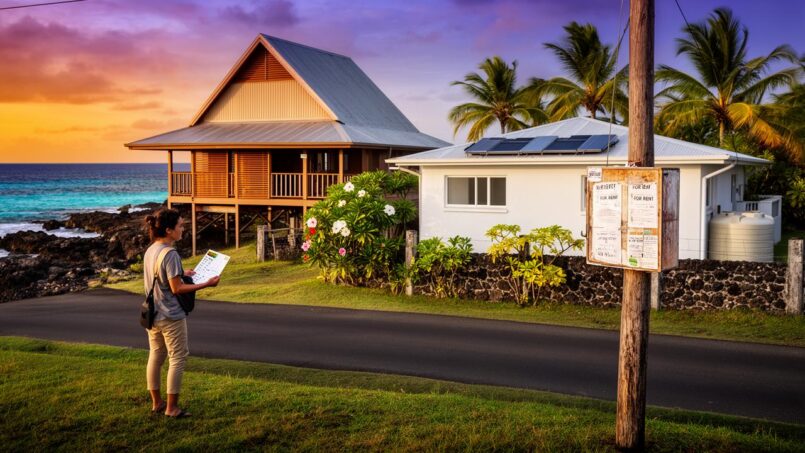
Unpacking your bags in Niue, whether for a few weeks’ vacation or a longer-term life project, is not something to be taken lightly. The island is tiny, accommodation capacity is limited, and entry rules are very specific, especially regarding lodging. However, with a bit of method, it is possible to find accommodation that truly fits your budget, travel style, and life plans.
This article details the essential steps to finding accommodation on the island of Niue. It covers where to search, the types of lodging available, recommended villages to settle in, the real costs to expect, and pitfalls to avoid. It also provides tips for integrating well into this very community-oriented island society.
Understanding the Accommodation Context in Niue
Niue is a very small Pacific island nation, often nicknamed “the Rock of Polynesia.” The permanent population hovers around 1,700 inhabitants, spread across 14 villages which also function as municipalities and electoral districts. The administrative, economic, and tourist heart is Alofi, the capital.
The first thing to understand even before talking about booking: accommodation is a condition for entry onto the island. All travelers must present a confirmed accommodation reservation for the entire duration of their stay. Wild camping, couchsurfing, and any form of informal lodging are prohibited. Without proof of lodging, you can simply be denied boarding or entry upon arrival.
The island’s accommodation inventory is very limited, with only about thirty properties, mostly small family-run units rather than large hotels. The supply is spread across the entire territory and not concentrated in an urban center. Each village or area has its own character, with specific advantages and disadvantages (proximity to a beach, presence of caves, access to shops, degree of isolation, etc.), which requires carefully choosing your location based on your priorities.
Finally, even though the island has long been presented as the world’s first “Wi-Fi Nation,” the internet remains limited, sometimes slow, and far from the free and unlimited standards of many countries. In other words: in Niue, finding a place to stay also means choosing your access (or lack thereof) to the network.
The Main Families of Available Accommodation
The accommodation offering in Niue is varied in type but limited in volume. We’re not talking about apartment skyscrapers or large hotel complexes. The bulk of the market is divided between a few main categories that meet distinct needs.
Resorts and Hotel Complexes
Niue has only one true resort: the Scenic Matavai Resort, located in Tamakautoga on the southwest coast. It’s the only “vacation hotel” in the classic sense, with a pool, bar, restaurant, and panoramic ocean views. Nearby, Scenic Matavai Apartments & Villa complements the offering with more self-contained units.
This type of lodging is primarily aimed at travelers seeking “turnkey” comfort: on-site dining, services, the ability to enjoy the pool without having to cook every day. For those who don’t want to complicate their life too much, or for a first stay, it’s a reassuring option.
Independent Houses, Villas, and Bungalows
The backbone of accommodation in Niue is independent lodging: villas, vacation homes, bungalows, cottages, renovated former family homes. Many are built or renovated with local limestone (the famous Niuean limestone houses), which brings real charm and excellent thermal insulation.
Typical examples include:
– cliffside villas like Anaiki Motel (northwest coast),
– cottages in small villages like Namukulu Cottages,
– independent houses with sea views like Lau’s Getaway on the southwest coast,
– “retreat in the forest” style villas like Stone Villas, built from limestone and partly powered by solar panels, with a private car included.
These accommodations are almost systematically on a “self-catering” basis, meaning with a kitchen or kitchenette, allowing you to manage your own meals.
Motels, Lodges, and Small Properties
Niue also has several small motels and lodges, often run by local families, such as:
– Damiana’s Holiday Motel (near Avatele),
– Anaiki Motel (Makefu),
– NIC’s Bungalows (Tamakautoga),
– Tuaga Lodge (Alofi),
– Kololi’s Motel / Guesthouse, etc.
These properties sit between a hotel and a house rental: often independent rooms or studios, sometimes with a kitchenette, sometimes with shared spaces. They are an excellent option for travelers who want a certain level of service without the price or formality of a resort.
Guesthouses, Fales, and B&Bs
Another important category: guesthouses and fales (traditional or similar houses). These mainly offer rooms, sometimes dormitories, with shared spaces like the kitchen or living room.
Some names often come up in recommendations:
– Peleni’s Guesthouse in Alofi,
– Heleni Jessop’s Fatahega, also in Alofi, known for its shared kitchen,
– Vinnie’s Guesthouse in Alofi South,
– Aleki Guesthouse, Yolos Accommodation, Kaina Kaute in and around Alofi.
These accommodations are very popular with solo travelers, couples on a tight budget, or those seeking more direct contact with daily Niuean life. You chat in the kitchen, talk with the owners, get advice on which caves to visit and tide times.
Vacation Rentals and Long-Term Stays
Finally, many houses or units are offered on vacation rental platforms for stays of several weeks or months. Airbnb and Vrbo are explicitly mentioned as channels used for properties in Alofi (Anakulē, David’s Fale, Tiny Grove, Tropical Rainforest Retreat / Spatzy’s Fale, etc.) or in coastal villages.
For plans to stay one to several months, some accommodations show monthly rates or accept negotiating a reduced price beyond a certain duration. This then becomes less about “tourism” and more about semi-settlement, with all the implications for budget, transport, potential schooling for children, and integration into the community.
Summary Table of Accommodation Types
| Accommodation Type | Main Advantages | Typical Disadvantages | Ideal Profile |
|---|---|---|---|
| Resort (Scenic Matavai) | Full services, pool, restaurant, sea views | More expensive, less intimate | Short stay, comfort, first trip |
| Independent House / Villa | Space, privacy, equipped kitchen, possible sea view | Requires car, logistical management | Families, groups, long stay |
| Motel / Lodge | Good comfort/price ratio, small size | Limited services, sometimes restricted Internet | Couples, comfortable small budgets |
| Guesthouse / Fale / B&B | Friendly atmosphere, local immersion | Bathroom or kitchen sometimes shared | Solo, quiet backpackers |
| Monthly / Long-term Rental | Discounted rate, “like home” | Very small market, requires negotiation | Nomads, remote workers, expats |
Where to Stay: Zoom on Key Villages and Areas
On a 261 km² island, “where to stay” doesn’t mean the same thing as in a large metropolis. Yet, each village has a different vibe and advantages. To find accommodation suited to your desires, you need to understand the island’s social geography.
Alofi: The Living Heart of Niue
Alofi is both the capital, the only “town” in the broad sense, and the main service hub. It is divided into Alofi North and Alofi South, which together form the administrative and commercial center.
You’ll find there:
– the international airport (Hanan Airport),
– the main supermarket (Swanson),
– the market (Niue Makete) where families sell their surplus produce,
– the wharf, the hospital, the main administrative offices,
– the Visitor Information Centre,
– a good portion of the accommodation offerings (Tuaga Lodge, Taloa Heights, Peleni’s Guesthouse, Yolos Accommodation, Joema Place, etc.).
For a first stay, it is advisable to lodge in Alofi. You are in the heart of everything, close to shops, restaurants, and several coastal track departures. It is also the central location for practical information: car rental, tour bookings, and any procedures with Immigration in case of extension.
Southwest Coast: Beaches, Swimming, and Resort
The area from Avatele to Tamakautoga is the most beach-oriented. You’ll find there:
– Avatele, highly appreciated for its beach, swimming, and snorkeling,
– Tamakautoga, where the Scenic Matavai Resort is located, as well as NIC’s Bungalows,
– several upscale or romantic addresses like Lau’s Getaway or Breeze.
This is the ideal sector for those who want to wake up to ocean views, enjoy the beach, go diving or snorkeling just minutes from their lodging. In return, you’re a bit further from the main shops (count on about a ten-minute drive to Alofi), making a car almost essential.
Northwest Coast: Caves, Natural Pools, and Tranquility
Heading north, you pass through villages like Makefu, Tuapa, Namukulu, and Toi. This area is known for its caves, natural pools, and more secluded vibe.
Explore the villages of Makefu and Namukulu, their characteristic accommodations, and their remarkable natural sites.
Close to the spectacular Avaiki and Palaha caves. Stay in accommodations like Lolani’s Retreat or Anaiki Motel, often offering magnificent sea views from the cliffs.
A village of few residents, home to the highly regarded Namukulu Cottages and swimming spots like the Limu Pools.
For those wanting a peaceful stay, away from it all, with easy access to swimming spots and caves, this northwest coast is particularly attractive.
East Coast: Isolation, Forest, and Culture
The east coast, which notably includes the villages of Liku and Lakepa, is the wildest and most isolated. Liku is on the northern edge of the Huvalu Forest Conservation Area, a vast protected forest zone. There is no accommodation in Liku itself, which says a lot about the deliberately limited level of development.
In Lakepa, for an authentic immersion off the beaten path, opt for accommodations like Taoke Fales or Lialagi Units. The latter are set in a former school building and offer a strong experience at the heart of village life.
This coast clearly appeals to travelers who aren’t afraid of a bit of isolation, appreciate forest walks, and discovering culture in villages less focused on tourism.
Hakupu and the Southeast: Gateway to the Forests
Hakupu, on the southeast coast, is the second-largest village on the island. It is known as the southern gateway to the Huvalu Forest Conservation Area, with attractions like Anapala Chasm and the Anapala Sea Track trails. Lalopine Rockhouse, a renovated limestone villa with Wi-Fi, well illustrates this type of retreat halfway between sea and nature.
Hakupu suits those who want to stay close to a lively community while having easy access to hiking trails and swimming sites in the chasms (gorges).
Comparative Table of Areas for Staying
| Area / Villages | Main Advantages | Limitations | For Whom? |
|---|---|---|---|
| Alofi (North & South) | Shops, services, market, airport, central location | Fewer beaches | First stay, remote work, practical living |
| Southwest (Avatele, Tamakautoga) | Beaches, snorkeling, resort, beach vibe | Dependence on car | Beach vacation, families, couples |
| Northwest (Makefu, Tuapa, Namukulu) | Caves, natural pools, quiet, views | Relative remoteness | Nature lovers, seeking tranquility |
| East (Lakepa, near Huvalu) | Isolation, village immersion, forest | Few services | Experienced travelers, seeking authenticity |
| Southeast (Hakupu) | Access to forest and chasms, active village | Fewer shops | Hikers, slightly longer stay |
How to Search for and Book Accommodation in Niue
The accommodation offering in Niue is not always fully visible on major international platforms. Many properties don’t have sophisticated websites, sometimes not even a consistent online presence. To succeed in your search, you need to combine several approaches.
Online Platforms and Booking Sites
Several international services explicitly mention accommodations in Niue:
– Airbnb and Vrbo: they list a portion of the houses, villas, bungalows, and studios (Anakulē in Alofi North, Tiny Grove in Paliati/Alofi, Tropical Rainforest Retreat, Open Studio Units “Feo” and “Paala”, etc.).
– Booking.com, Expedia, Trip.com: useful for more “hotel-like” properties (Scenic Matavai Resort, Scenic Matavai Apartments & Villa, Anaiki Motel, Damiana’s Holiday Motel, etc.).
You can thus quickly get an idea of nightly prices, available amenities, and recent reviews. Labels like “Superhost” or “Guest favorite” also give an indication of reliability.
Local Agencies and Platforms
For Niue, it is recommended not to rely solely on big sites and to use local players who aggregate offers from Niuean owners.
To book accommodation owned by a Niue resident, the NIUE Rentals platform acts as a concierge by facilitating direct communication and often offers packages combining accommodation and car rental. Other local services, like Heahea Rentals, also have partnerships with lodges and can offer discounts on these combined packages.
This local channel is particularly relevant for negotiating rates for several weeks or months and for obtaining practical information that isn’t listed online.
Direct Booking with Accommodations
Many motels, guesthouses, or vacation homes are managed directly by families, with the phone or email as the main booking tool. Some hosts prefer to limit intermediaries to avoid platform commissions.
The typical process:
To find accommodation in Niue, start with word of mouth, consult a guide, the Niue Tourism website, or do an initial search on Airbnb. Once a place is spotted, ask for the host’s email or phone number. Then communicate directly with them to check availability, discuss your needs (length of stay, Wi-Fi access, car rental, kitchen equipment, etc.), and, if possible, negotiate a rate suited to a long-term stay.
This approach requires a bit more time and sometimes flexibility on response times, but it allows for more personalized agreements.
The Importance of Booking Early
Between July and September, which corresponds to the driest season and many school holidays in New Zealand, the island gets booked up quickly. Given the overall low capacity (only about thirty properties), it is recommended to book several months in advance for this period, especially for families or groups.
Outside peak seasons, the pressure is lower, but it’s still prudent to have at least a firm booking covering the entire stay, if only to comply with entry requirements.
How Much Does It Cost: Accommodation Budget and Cost of Living
One might think a small, isolated island is necessarily inexpensive. In reality, the cost of living in Niue is rather high, mainly due to the importation of most consumer goods. Regarding accommodation, the nightly price range is wide but relatively consistent with other Pacific islands.
Nightly Price Ranges
Available market data on various Niue accommodations shows a significant price dispersion but allows for rough estimates.
– For entry-level and mid-range accommodations (simple studios, cottages, comfortable guesthouses), prices are regularly found around 150 to 300 NZD per night.
– For upscale villas, very well-located houses (spectacular sea views, large terrace, careful design, etc.), or the resort in high season, prices easily rise to 300 to 600 NZD per night, or even more on certain dates.
Weekly stay rates are observed.
– 840–1,500 NZD per week for simple to comfortable units,
– 2,200–2,800 NZD for well-located villas or large houses,
– over 4,800–5,300 NZD for premium properties for seven nights.
These figures are not an official grid but give a concrete idea of what a week-long stay for a family or small group entails.
Estimated Monthly Cost of Living
For those considering staying a month or more, you need to think in terms of a monthly budget. Several cost of living assessments for Alofi and all of Niue allow estimating:
– for a single person, a total monthly budget (accommodation included) of about 1,300 to 2,500 USD, depending on comfort level (from “tight” mode to “comfortable/luxury” level),
– for a couple, between 1,950 and 3,600 USD approximately,
– for a family of 3 or 4 people, around 2,800 to 5,200 USD.
The cost ranges include rent, food, utilities, communications, and daily expenses. They confirm that a long-term stay in Niue represents a financially demanding project.
Indicative Table of Monthly Expenses (Accommodation + Living Costs)
| Profile | “Tight” Budget (USD/month) | “Standard” Budget (USD/month) | “Comfortable” Budget (USD/month) |
|---|---|---|---|
| Single person | ≈ 1,400 | ≈ 2,000 | ≈ 5,000 |
| Couple | ≈ 2,000 | ≈ 2,700–3,000 | ≈ 7,400 |
| Family (2 adults + 2 children) | ≈ 2,800 | ≈ 4,000 | ≈ 10,500 |
These amounts give a rough idea, but each project is different: choice of accommodation, frequency of eating out, use of a rental car, etc.
Managing the Food Budget Thanks to Accommodations with Kitchens
Food prices on the island can be surprising: chicken, eggs, some imported vegetables reach high prices. On the other hand, local products (seasonal vegetables, fruit, some fish) bought at the Alofi market or directly from families help reduce the bill.
This is where the choice of accommodation type becomes strategic: lodging with a well-equipped kitchen (stove, oven, refrigerator, utensils) allows you to limit meals at restaurants, which quickly become expensive over a month. For a long stay, systematically prioritizing “self-catering” accommodations is a concrete way to control your budget.
Internet, Wi-Fi, and Phones: A Crucial Criterion for Choosing Your Accommodation
Niue is known for having aimed to provide Wi-Fi to the entire island. In practice, reality is more nuanced: the connection exists, but it is paid for in most cases, sometimes throttled, and sensitive to bad weather. For a traveler who works remotely or heavily depends on the internet, the choice of accommodation must take this dimension very seriously.
What You Need to Know Before Booking
– International roaming does not work in Niue: no foreign operator has a roaming agreement with Telecom Niue. Your phone, with your usual SIM card, will not pick up the local network.
– The sole telephone and ADSL operator is Telecom Niue, a public company.
– Accommodations are broadly divided into three categories regarding internet:
– those offering free but limited Wi-Fi (in volume or time, e.g., one hour per day or a few GB for the stay),
– those providing a prepaid Telecom Niue modem or setup, to be topped up at your expense,
– those with no access: you then have to rely on a local SIM card and/or public hotspots.
Some accommodations offer free (limited) Wi-Fi: Scenic Matavai Resort, Scenic Matavai Apartments & Villa, Lau’s Getaway, Breeze, NIC’s Bungalows, Yolos Accommodation, Peleni’s Guesthouse, Kololi’s Motel, and Tuaga Lodge. Others have modems for purchasing prepaid ADSL plans: Anaiki Motel, Namukulu Cottages, Stone Villas, Damiana’s Holiday Motel, Taloa Heights, Taoke Fales, Aleki Guesthouse, and Tuaga Lodge.
Solutions for Staying Connected
Several options are available to you:
1. Choose accommodation with included Wi-Fi For light use (emails, messaging, social media, occasional video calls), this is the simplest solution. However, you’ll have to accept volume or speed limitations and possible outages in bad weather.
2. Use Kaniu and Telecom Niue hotspots Kaniu, a local Wi-Fi network, offers access points in many villages, with “visitor bundles” (e.g., 5 GB valid for 15 days for about 25 NZD). Hanan Airport also has a free hotspot, but it gets saturated quickly when planes arrive. This is handy as a supplement but not comfortable as the sole solution.
For a reliable and steady connection in Niue, get a Telecom Niue SIM card. You can purchase it at the airport on flight days or at the Telecom Niue office in Alofi. Before purchasing, ensure your phone is compatible with local frequencies, especially band 28 (700 MHz) for 4G/LTE. You’ll then need to subscribe to a prepaid data plan. If your device is not compatible, Telecom Niue also offers 4G MiFi router rentals to connect multiple devices.
4. Prepaid ADSL via the accommodation Some lodgings have an ADSL modem associated with Telecom Niue prepaid plans (2 to 75 GB, with possible unlimited nighttime options). This solution works well for long stays in one place.
When Internet Guides the Choice of Village
A digital nomad or remote worker would do well to prioritize:
– Alofi, where coverage is better, Telecom and Kaniu offices are accessible, and most accommodations are better equipped,
– accommodations explicitly presented as suitable for remote work, with good Wi-Fi connection and workspace (which often appears clearly in Airbnb listings or on booking sites).
Conversely, a stay in more remote areas, like some parts of the east coast or very sparsely populated villages, can result in outages and very irregular speeds.
Transport and Car: Inseparable from Accommodation
Niue is surrounded by cliffs, with access to the sea via marked paths. To explore, the notion of “doing everything on foot” from one village quickly becomes illusory. Hence this recurring advice: a rental car is almost essential.
Prices and Organization of Rental
Prices noted for car rental in Niue indicate:
– about 45 NZD per day for a manual vehicle, unlimited mileage,
– around 65 NZD per day for an automatic,
– sometimes up to 85 NZD per day for certain automatic models.
Some accommodations, like cottages or villas, include a vehicle in the nightly rate or offer a discount through a partner. This represents a significant financial advantage, as car rental is often a major expense for a long stay.
When searching for accommodation, it is therefore wise to always ask: “Is a car included or offered at a special rate?”
Choosing Your Accommodation Based on Mobility
– Without a car, it becomes very difficult to stay outside Alofi while enjoying the island.
– With a car, coastal villages (Avatele, Tamakautoga, Makefu, Namukulu, Hakupu, Lakepa…) all become feasible, as no distance is really long on the island.
It is often practical to combine:
– a few days in Alofi, for initial errands, shopping, adjustment,
– then a stay in a coastal village, once familiar with the routes.
Long Stays: Visas, Permits, and the Reality of the Rental Market
Many dream of settling in Niue for several months or even years. Between the calm, safety (crime is almost non-existent), and community atmosphere, the idea is appealing. But administratively and in terms of real estate, the reality is strict.
Entry and Stay Rules
Upon arrival, most visitors get a 30-day stay permit. To go beyond:
– you must request an extension from the Immigration Office in Alofi,
– beyond 60 days, a specific medical certificate, completed by a doctor in your home country and validated by Niue health services, is required,
– to work, a work permit and a residence permit are necessary,
– permanent residence is only conceivable after several years of presence and remains subject to government assessment.
To rent accommodation medium or long term (6 months to 1 year), it is imperative to be in order regarding immigration. Authorities check that expats are not improperly taking jobs meant for Niueans and verify their willingness for social integration.
A Tiny and Informal Rental Market
The number of properties available for genuine long-term rental (months or years) is very small. Most properties are:
– either occupied by Niuean families,
– or operated as vacation rentals, more profitable on a nightly or weekly basis than a standard monthly rent.
Consequently, many long-term accommodation solutions are found through the local network:
– word of mouth in villages,
– exchanges with shopkeepers, pastors, associations,
– going through the Visitor Information Centre or agencies like NIUE Rentals, which know which family homes might be available outside tourist circuits.
A strategy often recommended is to:
For a successful property purchase abroad, start with an exploratory stay of 1 to 2 months in tourist accommodation. Use this time to meet people, understand local customs, and spot any available second homes. This will allow you to later negotiate, in a second phase, a longer and more economical rental agreement with an owner before making a final commitment.
Negotiating Rent: Possible, but with Respect
The classic rules of rent negotiation still apply:
– discuss rates before signing anything,
– base your request on price comparisons for accommodations of similar size and location,
– highlight your reliability: stable income, respect for property, long-term project, etc.
But in Niue, human relationships and respect for the community matter even more than elsewhere. The owner is often also your neighbor, your contact at the market, sometimes a relative of some public employee. Approaching the rent question with courtesy, without aggression, taking into account their own costs (maintenance, taxes, repairs) helps build a lasting relationship rather than just a contract.
Local Culture and Village Life: The Other Side of Accommodation
Living or staying in Niue is not just about renting a roof. It’s about fitting in, even temporarily, into a small, very close-knit society, deeply marked by language and traditions.
Language, Customs, and Integration
The official languages are English and Niuean (Vagahau Niue), the latter considered endangered by UNESCO. Making the effort to learn a few words – “Fakaalofa atu” to greet, “Fakaaue” to thank – is a particularly appreciated gesture.
The concept of faka Niue encompasses all local values and practices: respect for elders, village solidarity, modesty in dress, importance of family and church. The cultural heritage is designated by the name Taoga Niue.
A few key points to keep in mind when renting accommodation in a village:
Sunday is a sacred day dedicated to worship and family; avoid noisy or ostentatious activities near churches during services. Dress modestly in villages (shoulders and thighs covered) and do not walk through Alofi in a swimsuit. It is also customary to greet people you pass on the road with a wave.
Respect for Land and Property
Whether for a simple stay or a long-term project, a golden rule: all land belongs to someone. There is no “vacant” land free for occupation. To pick, cut, or install anything, you must ask for permission.
Some areas are marked by a fono (taboo), signaled by knotted coconut leaves. In these places, it is forbidden to harvest anything or cross without caution. To avoid any incident, it is essential to talk with your neighbors, your landlord, or village council members to know precisely what is allowed or prohibited.
Building Good Neighborly Relations
A respectful tenant is quickly noticed and appreciated in a society of this size. Concretely:
– inform your landlord of any problem in the accommodation,
– avoid noise disturbances, especially in the evening,
– offering occasional help (e.g., for a community activity) is often very well received,
– participating in local life (market, fairs, village festivals, church services) facilitates integration.
These gestures, seemingly modest, can make a difference the day you need a service, a contact, or even new accommodation.
Practical Tips for Choosing Your Accommodation in Niue Well
To conclude, some concrete lines of thought to help sort through accommodation options.
Clarify Your Traveler or Resident Profile
– First visit, 1 to 2 weeks: aim for Alofi or the southwest coast (near the resort), with Wi-Fi and a car easily available.
– Family vacation: prioritize a house or bungalow with a kitchen, multiple bedrooms, near a swimming spot (Avatele, Tamakautoga, Namukulu).
– Remote work / Nomadism: target accommodations in Alofi or very close by, with good Wi-Fi attested by recent reviews, and possibly agreements with Telecom Niue for ADSL or 4G plans.
– Long-term settlement project: start with an exploratory stay in tourist accommodation, then build connections and look for more permanent housing via the local network.
Always Check a Few Key Points
When choosing:
Before booking accommodation in Niue, it is crucial to ask for details about the internet connection (type, limits, approximate speed, stability in bad weather) and to confirm the presence of an equipped kitchen if you plan to cook. Verify the actual driving distance to Alofi, the airport, and main shops, and inquire about the car: is it included, recommended, or available at a preferential rate? For cliffside accommodations, ask about exposure to wind and sea spray, which can impact comfort and maintenance. Finally, know about the immediate surroundings: potential noise (bar, Saturday night spot, roads), neighbors, and presence of a church.
Arm Yourself with Patience and Flexibility
Niue is not a large, over-equipped resort town full of offers and promotions. The trade-off for its calm and authenticity is a small accommodation market, sometimes opaque from afar, often based on trust and personal relationships.
Accepting:
– sometimes slow responses,
– somewhat rustic booking procedures (bank transfer, email exchange, manual confirmation),
– simple but well-maintained accommodations, rather than standardized “resorts,”
is part of the experience. In return, many visitors highlight the warm welcome of Niuean hosts and the feeling of being part of village life for a while.
—
Finding accommodation in Niue therefore requires more preparation than a classic city stay, but this preparation is largely rewarded by the quality of the experience. By understanding the geography of the villages, using the right channels (international platforms, local agencies, direct contacts), and integrating from the start the issues of internet connection, transport, and budget, you give yourself every chance of finding the roof that matches your project, whether it’s two weeks of disconnection or a real life turn in the heart of the Pacific.
Disclaimer: The information provided on this website is for informational purposes only and does not constitute financial, legal, or professional advice. We encourage you to consult qualified experts before making any investment, real estate, or expatriation decisions. Although we strive to maintain up-to-date and accurate information, we do not guarantee the completeness, accuracy, or timeliness of the proposed content. As investment and expatriation involve risks, we disclaim any liability for potential losses or damages arising from the use of this site. Your use of this site confirms your acceptance of these terms and your understanding of the associated risks.

Cyril Jarnias is an independent expert in international wealth management with over 20 years of experience. As an expatriate himself, he is dedicated to helping individuals and business leaders build, protect, and pass on their wealth with complete peace of mind.
On his website, cyriljarnias.com, he shares his expertise on international real estate, offshore company formation, and expatriation.
Thanks to his expertise, he offers sound advice to optimize his clients' wealth management. Cyril Jarnias is also recognized for his appearances in many prestigious media outlets such as BFM Business, les Français de l’étranger, Le Figaro, Les Echos, and Mieux vivre votre argent, where he shares his knowledge and know-how in wealth management.





