
 Published on and written by Cyril Jarnias
Living in Nauru means landing on a 21 km² Pacific speck, surrounded by a reef, with a single road encircling the island and a community of 10,000 to 13,000 residents spread across 14 districts. It also means experiencing a daily life very different from big cities: few shops, slow and expensive internet, no structured public transport, rare and costly flights, and a social life that largely revolves around family, churches, and a few sports activities.
The remoteness and life on this micro-island can trigger strong homesickness, regardless of your status (expatriate, student, humanitarian worker, refugee, etc.). It is crucial to prevent this nostalgia from turning into lasting isolation, anxiety, or depression.
This article offers a very concrete approach: understanding what homesickness is, linking it to the reality of Nauru, relying on local resources (community, culture, social services) and on classic tools for managing isolation to last over time.
Homesickness: A Normal but Often Underestimated Phenomenon
Homesickness is not a character weakness. Psychologists define it as a state of distress linked to leaving one’s “home” for a new and disorienting environment. It is rooted in fundamental human needs: attachment, sense of belonging, and mastery of one’s environment.
Studies show that between 50% and 75% of the general population has experienced it at least once, and that 20% to 90% of expatriates face it during their first year abroad. In other words, if you are stationed in Nauru and sometimes feel a pang of longing for your city, your loved ones, or your old routines, you are statistically normal.
Researchers distinguish two major psychological reactions:
Adapting to life abroad typically involves two successive reactions. First, a **separation reaction**, centered on the loss of the familiar world (family, friends, language, food, social codes). Then, an **adaptation reaction**, which corresponds to the challenge of decoding a new place, creating reference points, and managing concrete lacks—such as limited healthcare services, slow internet, or a high cost of living.
Learning to navigate between these two dimensions is key: taking time to grieve what you left behind, without getting stuck in the constant comparison with “back there.”
How Homesickness Can Manifest in Nauru
Symptoms are numerous: intrusive thoughts about the home country, idealizing life “before”, difficulty concentrating, fatigue, irritability, sleep disorders, changes in appetite, a tendency to withdraw from others, or conversely, spending entire evenings online with family without ever truly anchoring yourself in Nauruan life.
Nauru’s geographical isolation is compounded by limited and costly air service (Nauru Airlines, a few weekly flights) with frequent cancellations, and by a slow and expensive internet connection. This low connectivity, both physical and digital, makes returning home difficult and fuels a sense of distress due to remoteness.
However, Nauru is not just a place of constraints. It is also an extremely community-oriented society, structured around 12 matrilineal clans, a strong religious life, and living musical and craft traditions. So many levers to build a new sense of rootedness, provided you dare to activate them.
Relying on Your Support Network: A Vital Necessity in a Micro‑State
Psychology researchers agree: the most powerful protective factor against stress and homesickness is the social support network. In other words, the people—close or less close—you can turn to for a chat, a favor, advice, or just to share a moment.
We generally distinguish two main types of network:
– an informal network: family, friends, neighbors, colleagues, members of a religious community;
– a formal network: health professionals, social workers, counselors, teachers, religious leaders.
In Nauru, the small population and land area mean that professional and personal spheres often overlap. For instance, a work colleague may also be a member of the same church, and a neighbor might be involved in an association or program supported by an institution like the Asian Development Bank.
Here is a summary table of the types of support useful for managing homesickness in Nauru, with concrete examples rooted in the local context.
| Type of Support | Definition (rephrased) | Possible Examples in Nauru |
|---|---|---|
| Emotional support | Listening, empathy, comfort, warm presence | Confiding your homesickness to a colleague, pastor, or Nauruan friend |
| Practical support | Material or logistical help | Carpooling on the circular road, help with errands, accompaniment to the hospital |
| Informational support | Advice, information, explanations | How the healthcare system works, visa procedures, local cultural habits |
| Esteem support | Encouragement, recognition, signs of trust | Colleagues valuing your work, neighbors thanking you for joining festivities |
Building this network requires a particular effort in Nauru because the expatriate community is very small, with no formal clubs or major nightlife spots. But it is precisely this small size that can become a strength: the smallest local engagement has a visible impact.
How to Assess Your Network in Nauru
To avoid feeling overwhelmed by the impression of being “alone in the world,” it can be useful to take stock of your surroundings. Ask yourself a few simple questions:
To preserve your mental well-being on the island, assess your support network by asking yourself these key questions: How many people can you spontaneously call if needed? Are they colleagues, neighbors, religious leaders, members of the Nauruan community, or other expatriates? How often do you have social interactions outside of work (meals, walks, sports)? Have you identified at least one professional or resource to turn to in distress, such as a doctor, the Mental Health Unit, or a community leader?
This mapping exercise can be done very simply, in writing. It often highlights a crucial point: in a context like Nauru, it’s better to diversify your support rather than stake everything on a single distant relationship with family back home.
Creating a “Home” on a 21 km² Island
Homesickness is above all the pain of no longer feeling “at home.” In Nauru, the environment can reinforce this sense of strangeness: landscapes marked by phosphate mining, lack of major infrastructure, heat, a very different pace of life. It is therefore essential to recreate personal reference points.
Setting Up a Personal Cocoon
Even if your accommodation is simple—long-term hotel room, company housing, small rental in Buada or Anibare—you can make it a warm space. Family photos, symbolic objects, books, music, spices from home: anything that reminds you of your roots helps soothe the feeling of being uprooted.
In an island environment where goods are expensive and supply is limited, personal items take on added value. It is recommended to set up a space dedicated to regular rituals, such as morning meditation, an evening journal, or a weekend movie session, to create reference points and a sense of grounding.
Creating New Routines
In Nauru, the risk is high of being swallowed by monotony: the same road, the same faces, few distractions. Yet monotony often fuels homesickness. Establishing a structured routine can give your days a backbone:
Adopting a structured and balanced routine for a harmonious stay on the island.
Maintain a fixed time for waking up and going to bed to stabilize your daily cycle.
Allocate dedicated slots for work, physical activity, connecting with loved ones, and exploring the island.
Introduce small rituals: coffee on Anibare Beach, a walk along the island’s ring road, or reading in the shade of coconut palms.
This type of routine is especially recommended in isolated environments (Antarctic stations, scientific bases, small islands) to maintain morale and mental health. It structures time, prevents drifting into boredom and rumination.
Living the Gap Between Expectations and Reality: A Key Factor in Homesickness
Many people arriving in Nauru imagined the Pacific as a postcard: paradisiacal beaches, coconut palms, lush marine life. The reality, marked by phosphate scars, poverty, high cost of living, and limited infrastructure, can create a shock. This gap between what you expected and what you discover often fuels nostalgia for the home country.
Research on “expectation‑reality gap management” shows that this discrepancy can cause frustration, discouragement, and self‑doubt. In Nauru, this can take several forms:
– disappointment with basic healthcare services, the difficulty of accessing specialized care;
– surprise at the limited food choices, the very high prices of imported fruits and vegetables;
– discomfort with social proximity and lack of anonymity in a micro‑society.
Acknowledging this gap, writing it down, talking about it with other expatriates or Nauruans, helps put it in perspective. You can also use it as a starting point to identify what, despite everything, is precious about this experience: safety, community solidarity, the slowness of time, the chance to disconnect from digital frenzy.
Rooting Yourself in Nauruan Culture: A Powerful Antidote to Alienation
Feeling like a perpetual stranger is one of the drivers of homesickness. Yet Nauru has a rich culture, often discreet but very present in daily life: clan system, Nauruan language, weaving arts, dances, music, community celebrations, strong Christian spirituality.
Taking an interest in it doesn’t erase nostalgia, but it allows you to shift from being a simple “visitor passing through” to a participant in island life. This deeply transforms the experience.
A Few Gateways into Local Culture
Even without speaking Nauruan fluently, you can create simple bridges:
To honor local traditions, learn a few basic greetings and expressions in Nauruan—a sign of respect that is highly appreciated. Participate in community life by attending Sunday church services. During festivals, like Angam Day or district events, observe or join in traditional dances and songs if possible. Admire local crafts by buying or looking at baskets, mats, and hats woven from pandanus leaves and coconut fibers. Finally, visit the Nauru Museum to learn about the island’s history, from clan societies to the phosphate era.
These gestures create topics of conversation with locals, break down the “expat/local” barrier, and foster a sense of connection, a direct antidote to the feeling of being uprooted.
Understanding Social Codes to Avoid Misunderstandings
In a conservative, patriarchal society in its structures but matrilineal in land inheritance, certain implicit rules are important:
For smooth integration, it is recommended to wear modest clothing (generally covering shoulders and knees), remove shoes before entering a home, and respect age hierarchy by greeting elders first and listening to their opinions. Also, maintain discretion in public displays of affection and avoid any critical or condescending tone toward local life.
Cultural misunderstandings can reinforce the feeling of being “out of sync,” and even fuel tensions that exacerbate homesickness. Avoiding them, or resolving them through dialogue, directly contributes to your psychological well‑being.
Maintaining Ties with Family and Friends… Without Being Trapped by Them
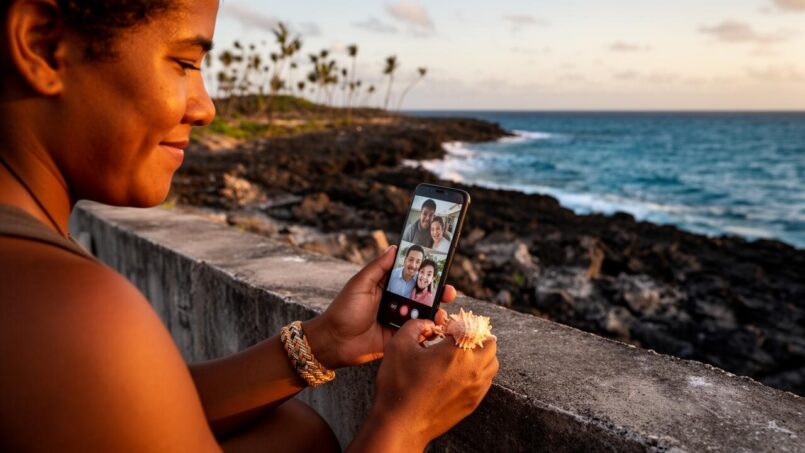
Keeping in touch with your loved ones is crucial to cushion the shock of distance. The literature on distance‑separated families emphasizes the importance of regular, even mundane, communication. Everyday exchanges—weather, small anecdotes, meals—weave the fabric of connection as much as big conversations.
In Nauru, the slow and expensive connection makes video calls sometimes complicated, especially if you want to avoid blowing your budget already strained by the cost of drinking water, food, and transportation. You have to be creative and realistic.
Here is a table of some communication tools, with their limitations in the Nauruan context.
| Communication Method | Main Advantage | Limitations in Nauru |
|---|---|---|
| Video calls (Skype, Zoom) | Visual closeness, ideal for families | Heavily dependent on internet speed, costly in data |
| Voice messages (WhatsApp) | Expressive, low data usage | Still requires a sufficient connection |
| SMS / simple messaging | Reliable, little bandwidth | Less emotionally rich |
| Emails | Allow detailed stories and compressed photos | Time‑consuming to write, less spontaneous |
| Letters / postcards | Strong emotional impact, keepsakes | Slow, but paradoxically suited to an isolated island |
The key is to find a realistic frequency, adapted to technical constraints and your energy. Psychologists emphasize that it’s better to set regular appointments (once a week, every two weeks) rather than promising to “always give news” and feeling guilty when you don’t manage.
Be careful, however, not to lock yourself into a routine where all your social life remains oriented toward your home country. Spending your evenings only talking to people back home can heighten nostalgia and prevent you from building connections on the island. The balance is delicate: enough contact to feel supported, enough availability locally to put down roots.
Getting Involved in the Local Community: From Volunteering to Simple Presence
On a tiny island, every presence counts. Research on island communities shows that participation in local activities—festivals, prayer groups, sports clubs, district events—reduces the feeling of loneliness and strengthens collective resilience.
In Nauru, even though nightlife is almost nonexistent, social life does exist:
An overview of popular sports, celebrations, and social initiatives that shape community life in the region.
Widespread practice of Australian football, basketball, soccer, tennis, weightlifting, sailing, and swimming.
Events marking national holidays, religious occasions, or clan‑specific celebrations, strengthening social bonds.
Awareness initiatives against domestic violence and for gender equality, led by ministries, NGOs, and community leaders.
Participating, even modestly, in these spaces—by joining a sports team, helping at an event, attending a prevention campaign—not only helps you break out of isolation but also gives meaning to your presence in Nauru. And a sense of usefulness is a powerful antidote to homesickness.
Taking Care of Your Physical Health in a Fragile Environment
The body and mind are intimately linked. Homesickness often manifests through physical symptoms: fatigue, headaches, muscle tension, digestive issues. In Nauru, health conditions pose an additional challenge: a basic hospital system, almost forced recourse to medical evacuation to Brisbane for serious cases, and high cost of international health insurance.
Added to this is a concerning public health context: very high rates of type 2 diabetes and obesity, a diet often based on imported products high in sugar and fat, and limited access to affordable fresh fruits and vegetables.
Without becoming obsessive, it’s useful to establish a protective health routine to preserve your well‑being on a daily basis.
– regular physical activity (walking around the island, swimming, team sports);
– reasonable food choices, even with few options (limit sodas and snacks, prioritize available fresh products as much as possible);
– structured sleep, trying to keep fixed hours despite the heat or initial jet lag.
Studies on work in isolated conditions show that 10 minutes of daily meditation or deep breathing are enough to significantly lower perceived stress levels. This type of practice, combined with basic routines (shower, get dressed, sit‑down breakfast, make the bed in the morning), helps maintain a sense of normalcy—precious when you’re on the other side of the world.
When Homesickness Becomes Complicated: Recognizing the Warning Signs
Homesickness is not in itself a mental illness. It becomes concerning when it sets in, intensifies, and begins to disrupt all aspects of daily life: work, relationships, sleep, eating, motivation.
Certain indicators should alert you:
Several persistent symptoms, such as sleep disorders, social withdrawal, constantly sad or anxious mood, difficulty concentrating at work, and recurrent negative thoughts, may indicate severe exhaustion or depression requiring medical attention.
In Nauru, the mental health context is complex. Resources remain limited, even though the government, with support from regional and international organizations, is gradually strengthening care. Some numbers do exist:
– Ministry of Health’s Mental Health Unit: +674 557 3041;
– Mental health helpline associated with the hospital: +674 557 3020 (Monday to Friday, 8 a.m. to 5 p.m.);
– Community Health Center: +674 557 3071.
Emergency services (police 110, ambulance 111) are primarily oriented toward physical situations and do not always prioritize mental health crises. It is therefore crucial to build a personal support network around you.
For expatriates, a remote psychological consultation with a professional based elsewhere in the Pacific or in the home country can also be an option, provided you check technical and regulatory constraints. Nauru has previously regulated and restricted certain forms of telemedicine, so it’s necessary to check with your employer or insurer.
Coping with Logistical and Digital Isolation
In addition to nostalgia for home, there is often a second layer of loneliness: the feeling of being “out of the world” due to scarce flights, high ticket prices, and slow internet. Research on isolated islands shows that this double cut—physical and digital—intensifies homesickness.
A few avenues can loosen this grip:
To maintain a good balance during an island assignment, plan vacations in advance, even with tentative dates, to create a motivating horizon for a return. Also, negotiate with your employer for rest periods off the island, if your contract allows, to prevent burnout. Finally, adopt a targeted use of the internet: limit passive scrolling on social media and prioritize activities that truly nourish you, such as video calls, online courses, or creative projects.
It’s useful to remember what one behavioral psychologist summed up: technology mainly combats boredom, not loneliness. Embodied human relationships—even if new and imperfect—remain irreplaceable.
Finding Meaning in Your Stay: A Powerful Lever Against Homesickness
Many people come to Nauru for a strong reason: to contribute to a development project, to support a health program, to participate in governance reforms, to work with vulnerable populations. Others see it as a rare professional opportunity or a step toward a new citizenship.
Regularly reactivating this meaning helps put the pain of distance into perspective. Concretely, you can:
To make the most of your Nauru experience, write down the reasons you left. Also, note one positive point each week (a skill, an encounter, a beautiful moment, or a contribution). Finally, remind yourself that this stay, even if extended, is not necessarily permanent and is part of a larger life journey.
Many studies on expatriation show that people who manage to give meaning to their presence abroad—in terms of learning, contribution, or personal growth—adapt better, even if homesickness never completely disappears.
Balancing Individual Support and Collective Dynamics in Nauru
One final point deserves attention: how the country itself is evolving on these issues. Nauru, with its economic, health, and social challenges, has launched several initiatives to strengthen social protection, reduce inequalities, and combat gender‑based violence.
With support from the Asian Development Bank and partners like New Zealand and Ireland, the government has launched a strategy to reduce vulnerability and improve living standards. It specifically targets persons with disabilities, the elderly, single‑parent families, and survivors of violence, with the goal of building a more resilient society.
For an expatriate or newly arrived resident, understanding these dynamics and, if possible, contributing within your area of expertise, can bring deep satisfaction. Feeling integrated into a collective project—even on a small scale—transforms your perspective on your stay and reduces the feeling of being simply “stuck on a rock.”
In Summary: Taming Nostalgia Rather Than Denying It
Homesickness in Nauru is not an anomaly; it is a human reaction to an extreme situation: a break from the familiar world, geographic isolation, a micro‑society where everything is known, limited infrastructure, complex travel. Wanting to eradicate it completely would be illusory. However, it is entirely possible to make it livable, and over time, even integrate it as a background to the experience, without letting it take over everything.
A few structuring principles emerge:
To adapt to life in a new country, it’s essential to normalize the experience by understanding that most expatriates go through a difficult, sometimes prolonged, phase. Multiply your anchors by creating a personal cocoon, routines, local relationships, and community commitments. Nurture your roots without cutting your new branches: keep regular contact with your family and friends, while leaving room for your current life. Take care of your health in a potentially fragile healthcare context, focusing on physical activity, sleep, diet, and self‑compassion. Finally, don’t hesitate to ask for help if symptoms worsen, by mobilizing existing services and your human networks.
What may first appear as a purely negative ordeal—being far from home on a remote island with few distractions—can, under certain conditions, become an experience of self‑knowledge, cultural discovery, and solidarity. In Nauru, this transformation happens less through modern gadgets and more through a return to the essentials: human connections, a slower pace, and sustained attention to what you feel, here and now.
Disclaimer: The information provided on this website is for informational purposes only and does not constitute financial, legal, or professional advice. We encourage you to consult qualified experts before making any investment, real estate, or expatriation decisions. Although we strive to maintain up-to-date and accurate information, we do not guarantee the completeness, accuracy, or timeliness of the proposed content. As investment and expatriation involve risks, we disclaim any liability for potential losses or damages arising from the use of this site. Your use of this site confirms your acceptance of these terms and your understanding of the associated risks.

Cyril Jarnias is an independent expert in international wealth management with over 20 years of experience. As an expatriate himself, he is dedicated to helping individuals and business leaders build, protect, and pass on their wealth with complete peace of mind.
On his website, cyriljarnias.com, he shares his expertise on international real estate, offshore company formation, and expatriation.
Thanks to his expertise, he offers sound advice to optimize his clients' wealth management. Cyril Jarnias is also recognized for his appearances in many prestigious media outlets such as BFM Business, les Français de l’étranger, Le Figaro, Les Echos, and Mieux vivre votre argent, where he shares his knowledge and know-how in wealth management.





