
 Published on and written by Cyril Jarnias
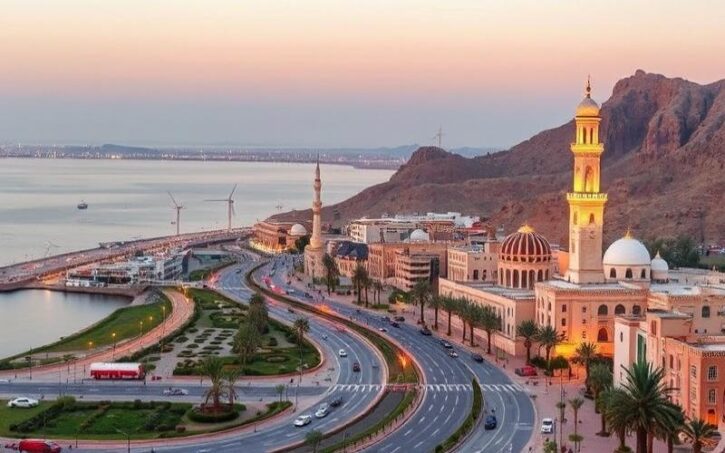
Studying in Oman remains a rather niche choice for French-speaking students, while the country ticks more and more boxes: higher education in English, universities recognized in international rankings, a safe environment, a reasonable cost of living, and strong economic momentum driven by Vision 2040. Behind the postcard image—deserts, fjords, beaches, and millennia-old forts—a genuine academic and professional hub is taking shape.
This article details the essential information for pursuing higher education in Oman: the university system, main institutions, costs, student life, housing, visa procedures, as well as job and research prospects. It aims to provide the factual elements needed to assess whether the country is a credible destination for a study abroad project.
A Higher Education System in Full Acceleration
Oman has undergone a spectacular transformation of its educational landscape in just a few decades. In the early 1970s, the country had barely three schools with fewer than 1,000 pupils. Today, there are over 1,287 schools with more than 820,000 pupils, and most importantly, a higher education sector that has grown from a single institution in the 1990s to about thirty universities and colleges.
This expansion of higher education is driven by the ministry (MoHERI) and supported by the quality authority (OAAAQA). The latter manages institutional accreditation and the national qualifications framework, ensuring a clear degree structure and gradual improvement of academic standards.
The country’s trajectory is also guided by Vision 2040, a strategic plan that makes the development of human capital, research, and innovation a central axis. The stated goal is to build a knowledge-based economy, where universities play a key role, both as training centers and as research hubs connected to labor market needs.
Why Choose Oman for Higher Education?
Choosing a country still relatively unknown as a study destination requires solid reasons. In the case of Oman, several arguments clearly emerge from official data.
Academically, Omani institutions are gaining strength in international rankings. Sultan Qaboos University (SQU), the country’s main public university, is now ranked 334th in the world in the QS World University Rankings 2026, after climbing nearly thirty places in one year. It is also in the Top 10 of Arab World universities according to QS. Other universities – University of Nizwa, Dhofar University, Sohar University, National University of Science & Technology, German University of Technology in Oman (GUtech), A’Sharqiyah University – appear in the QS ranking for the Arab region, and about ten Omani institutions are listed in the Times Higher Education World University Rankings.
Scientific publications from higher education institutions in Oman increased by nearly 37% in one year.
Financially, studies and daily life remain more affordable than in traditional major host countries. Annual bachelor’s degree fees for an international student average between 1,000 and 3,500 OMR in the public sector, and around 2,000 to 4,000 OMR (or more for some specialized programs) in the private sector, amounts generally lower than those in North America, the UK, or Australia. The cost of living for a student is also reasonable, with a typical monthly budget often estimated between 350 and 550 OMR, including housing, a more competitive level than in most Western or Gulf capitals.
Oman is regularly cited as one of the safest countries in the Middle East, with low crime rates, a welcoming population, and a clean, multicultural capital, Muscat. For a foreign student, this offers a quiet study environment conducive to work, away from regional tensions.
The country also offers particular cultural and linguistic interest. Arabic is the official language and society is strongly imbued with Islamic traditions. At the same time, English is widely used, especially in business and higher education, where many programs are taught entirely in English. Studying in Oman thus allows for both pursuing a degree in English (useful for an international career) and immersing oneself in Arab culture and language.
Finally, from an opportunities perspective, the country’s geographical location—at the junction of the Gulf, the Indian Ocean, South Asia, and East Africa—confers a growing role in logistics, trade, energy, tourism, and technology. Sectors like engineering, oil and gas, IT, health, logistics, and finance offer many internships and jobs, even though competition is regulated by the “Omanisation” policy which gives priority to Omani citizens.
Overview of Universities and Higher Education Institutions in Oman
The Omani higher education landscape is divided between public and private institutions, and between “national” universities and campuses or partners of major foreign universities.
Among the major public institutions, Sultan Qaboos University holds a unique place. Founded in 1986, it is the main public university and hosts over 15,000 undergraduate students and more than 1,600 master’s and doctoral students. It offers over 70 undergraduate programs and nearly 100 graduate programs, spread across nine colleges (medicine, engineering, economics and political science, science, arts and humanities, etc.), as well as a major university hospital. Its College of Economics and Political Science was the first public business school in the Arab world to obtain EQUIS accreditation, a highly recognized label in the field of management.
Sultan Qaboos University
The public system also includes the University of Technology and Applied Sciences (UTAS), the Military Technological College, specialized colleges like the College of Banking and Financial Studies or health institutions (College of Health Sciences).
On the private side, the offering is particularly dense and diverse. Key examples include:
Overview of the main Omani universities and colleges, categorized by type and pedagogical approach.
Institutions offering a wide range of academic programs, such as University of Nizwa, Dhofar University, Sohar University, Muscat University, A’Sharqiyah University, and University of Buraimi.
Institutions with a professional focus like Middle East College (MEC), Modern College of Business and Science (MCBS), Majan University College, Gulf College, Sur University College, Mazoon College, Oman Tourism College, Scientific College of Design, Oman Dental College, International Maritime College Oman.
Institutions with strong foreign academic affiliations: German University of Technology in Oman (linked to RWTH Aachen), Muscat University (partners Cranfield and Aston), Middle East College (affiliated with Coventry University), Majan University College (linked to University of Bedfordshire), Arab Open University (with the British Open University), and Caledonian College of Engineering (partner of Glasgow Caledonian University).
There are also structures specialized for certain demographics, like Al Zahra College for Women, as well as technical or management colleges.
This mosaic of institutions is accompanied by increasing international visibility. Several private universities have obtained 5 QS Stars, like Modern College of Business and Science or Sohar University, a sign of recognition of their standards in teaching, employability, internationalization, or infrastructure.
A Wide Range of Programs, in Arabic and English
The fields of study covered in Oman are very varied and encompass most major academic disciplines. For an international student, the most attractive majors are often those taught in English, particularly in the following areas: engineering (mechanical, electrical, civil, petroleum, environmental, chemical, mechatronics), computer science and technology (computer science, IT, cybersecurity, software engineering, artificial intelligence, data science), business (management, marketing, finance, accounting, logistics and supply chain, international trade), health sciences (nursing, pharmacy, public health, medical laboratory technology, dentistry), as well as tourism-hospitality, architecture, design, or education.
University programs in Arabic, notably in law, Islamic studies, Arabic language and literature, Quranic sciences, or some humanities, require good proficiency in the language. Placement tests may be required to assess candidates’ level before admission.
The usual duration of studies follows international standards: about four years for a bachelor’s degree, two years for a master’s, between two and four years for a doctorate. The organization may be based on credit systems (like “credit hours”), inspired by Anglo-Saxon models, which facilitates international degree recognition.
Most universities require proof of English proficiency for admission to English-taught programs. The most frequently cited thresholds for standardized tests are as follows:
| Program Level | Typical IELTS Minimum | TOEFL iBT (indicative equivalent) |
|---|---|---|
| Bachelor’s | 5.0 – 5.5 | ~60 – 70 |
| Master’s | 6.0 – 6.5 | ~79 – 90 |
| PhD | 6.5 – 7.0 | ≥ 90 |
In some demanding fields (medicine, pharmacy, health), the required levels may be higher than for humanities majors. Preparatory English pathways (foundation or preparatory courses) exist for students whose level is deemed insufficient, sometimes with a semester or a year of language reinforcement before joining the main program.
How to Get into an Omani University as a Foreign Student?
Admission procedures differ depending on whether one is an Omani student or an international student. Omani citizens wishing to join a public university go through a centralized system managed by the Higher Education Admission Center (HEAC), which coordinates placements based on results from the General Education Diploma (secondary school leaving certificate). International students, however, apply directly to their chosen university or college.
To apply for a university program, prepare the following documents: diplomas and transcripts (secondary for a bachelor’s, university for a master’s/doctorate), proof of English level (IELTS, TOEFL, etc.), a valid passport (often 6 months after entry), passport photos, a motivation letter, sometimes academic recommendation letters, proof of financial means (sponsor, scholarship), and possibly a medical certificate and a police clearance certificate.
Application fees are common and often around 100 to 150 OMR. Some universities allow the submission of uncertified copies for an initial review of the application but require originals (or certified true copies) upon final registration.
For degrees obtained abroad, an equivalence procedure via the Omani Ministry of Education or MoHERI (Ministry of Higher Education, Research and Innovation) is often necessary for official recognition in the local system. This step is particularly important for students wishing to pursue master’s or doctoral studies in Oman.
Once the letter of admission is received, the next step is the student visa application, which goes through the university and the Royal Oman Police.
Cost of Studies and Living in Oman: What to Expect?
The budget question is central to any study abroad project. In Oman, the final bill combines tuition fees, housing, food, transportation, and various incidental costs (health insurance, study materials, leisure, etc.).
Regarding tuition fees, the range is wide depending on the type of institution (public or private), level (bachelor’s, master’s, doctorate), and field (medicine, engineering, business, arts, etc.). Nevertheless, some benchmarks can be outlined:
| Type of program / institution | Indicative annual range for international students |
|---|---|
| Bachelor’s in a public university | Approximately 1,200 – 4,000 OMR |
| Bachelor’s in a private university or college | Approximately 2,000 – 4,000 OMR (sometimes up to 10,000 OMR) |
| Master’s (public) | Approximately 1,800 – 4,500 OMR |
| Master’s (private) | Approximately 3,000 – 12,000 OMR |
| MBA and specialized master’s degrees | Approximately 3,500 – 6,000 OMR (or more in some schools) |
| Doctorate | Approximately 4,000 – 8,000 OMR |
Some institutions apply per-credit pricing, with amounts around 70 OMR per credit hour for some daytime programs. Highly professional or international partnership programs (engineering, health, MBA, cybersecurity…) tend to be at the higher end of the ranges.
The estimated monthly cost of living for a student in Oman, including housing, can reach up to 550 OMR.
| Expense Item | Indicative Range (OMR / month) |
|---|---|
| Housing (room or shared apartment) | 80 – 300 (≥ 400 for a studio downtown) |
| Food / groceries | 30 – 250 |
| Utilities (electricity, water, AC, internet) | 20 – 90 |
| Phone / Mobile internet | 8 – 25 |
| Local transportation | 10 – 60 |
| Health / insurance | 10 – 20 (or 80–150 OMR per year) |
| Studies (books, supplies) | 15 – 40 |
| Leisure and miscellaneous | 20 – 70 |
By comparison, a monthly cost of 350–550 OMR positions Oman at a level lower than that of Western countries and some Gulf neighbors, while still higher than most South Asian countries. For a student on a tight budget, the choice of housing (university dormitory, shared accommodation, private residence) is the main lever for optimization.
Finding Accommodation While Studying in Oman
Student housing in Oman combines several options: university residences (on-campus), hostels managed by universities or private providers, homestays (room with a host family), apartments, or shared rooms.
Example of the full services offered by some campuses, like GUtech’s in Oman, with strict supervision and dedicated infrastructure.
Over 640 beds reserved for female students on campus, with off-campus residences for interns and male students.
Unlimited Wi‑Fi, equipped kitchens, common laundry, TV lounge, and study room per building.
Maintenance, cleaning of common areas, and 24/7 security ensured by on-site supervisors.
Presence of a resident nurse and organization of weekly trips to shops.
Other institutions like Sur University College or University of Buraimi have significant female dormitories, with several hundred rooms organized in multi-story buildings, as well as related services (reading rooms, shared kitchen, TV areas, playgrounds, presence of supervising staff, continuous security). Al Buraimi University College, for example, lists detailed rates: about 280 OMR per semester for a single room, 240 OMR for a double room, and 200 OMR for rooms for three or four female students.
A varied range of private housing is available in the capital, from dedicated student residences to shared apartments, offering various services and amenities.
Like The Myriad Muscat, these Purpose-Built Student Accommodations offer furnished rooms with Wi-Fi, laundry, kitchen, and often common areas, coworking spaces, or gardens.
Several options like Legacy, Basil, Heritage, or Sukoon Hostel offer rooms, sometimes with breakfast included, and services like 24/7 reception.
Examples: Mazoon College Hostel or Middle East College Female Accommodation. These accommodations are generally reserved for students of the partner institution.
Numerous single rooms or shared apartments are listed on specialized platforms, offering a more independent arrangement.
Prices vary significantly depending on the standard and location. A dormitory bed can start around 1.3 OMR per night, while a room or small apartment can be found from about 80 OMR per month, with higher prices in central or sought-after neighborhoods (Al Khuwair, Al Ghubrah, etc.).
For students who prefer cultural immersion, homestays – rooms with host families – constitute an interesting solution, allowing one to practice Arabic and discover Omani habits up close, provided local cultural norms are respected (particularly regarding dress code and gender mixing).
Student Services, Health, and Security
Omani universities have developed a range of support services to assist students, particularly international ones. Dedicated services (Student Support Services, Student Affairs, International Office) often centralize the management of housing, transportation, airport pickup, visa assistance, health coverage, as well as psychological counseling or support for students with disabilities.
Universities in Oman, like Muscat University and University of Buraimi, have dedicated units for student support. These services centralize requests and offer comprehensive support: psychological counseling, accommodations for students with disabilities (reserved parking and adapted access), health management via a clinic, housing, transportation, cafeterias, and a counseling center (EDRAK).
Several institutions, like Sur University College, University of Buraimi, GUtech, or Oman Dental College, offer on-campus clinics providing basic care and emergency interventions, with dedicated nursing staff and, if needed, transfers to city hospitals. In residences, the presence of nurses and fire extinguishers, first aid equipment, and permanent security guards is common.
It is strongly recommended to take out health insurance covering medical expenses, emergencies, and ideally repatriation in Oman. Verify that the policy meets local legal and institutional requirements, even if the university offers options.
In terms of security, Oman benefits from a generally very safe environment, with a low crime rate. Campuses and residences nevertheless apply strict regulations (residence handbooks, codes of conduct) and can penalize violations through disciplinary procedures. The main concern relates more to road accidents – the country has a high level of road fatalities, which calls for caution when traveling, especially on intercity roads.
Campus Life, Clubs, and Student Activities
Student life in Oman is not just about classes. Many campuses offer sports facilities (natural grass soccer fields, gyms, multi-sports halls, padel courts, etc.), dining spaces (cafeterias, restaurants), and relaxation areas (game rooms with pool, foosball, air hockey, coworking spaces). Muscat University, for example, has set up a Student Common Area with various games and a 250-seat auditorium, as well as a Learning Resource Centre for academic work.
Universities like GUtech and Muscat University offer a wide range of student clubs (science, media, community service, theater, arts, culture, environment, photography, sports, music, etc.) that animate campus life. Students often have the opportunity to initiate the creation of new clubs based on their interests.
Student councils (Student Advisory Council, Student Council) constitute another pillar of university life, allowing students to be represented in certain bodies and influence decision-making. These structures are generally elected and have dedicated contacts (general email addresses, presidency, etc.).
Participating in volunteer activities, such as charity fairs or blood donation drives, is encouraged. This allows for building connections with Omani society and developing transversal skills in organization, project management, and communication. This approach aligns with the university philosophy that values a student experience beyond the academic framework to contribute to personal development and civic engagement.
Getting Around, Eating, Adapting to the Climate
A student’s daily life in Oman is also shaped by mobility, dining, and climate. The country has a public bus network, but cars remain the dominant mode of transport, especially outside Muscat. Some institutions offer shuttle services: National University provides transport solutions for its students; Sur University College organizes weekly transfers to the market and for specific needs (outings, activities, hospitalization), particularly for female students; University of Buraimi provides buses for off-campus residences, company visits, shopping, or recreational outings.
This is the seating capacity of the main ‘Student Oasis’ restaurant at the University of Buraimi.
The climate, on the other hand, requires some adaptations. In most of the country, summer temperatures can become very high, requiring good hydration, sun protection, and sometimes limiting outdoor activities during the hottest hours. Some regions, like Sur, nevertheless experience milder periods (moderately cool climate from autumn to late winter, warmer and drier the rest of the year). In the south, around Salalah, the monsoon phenomenon (khareef) creates a more humid and temperate microclimate.
Work, Internships, and Career Prospects After Graduation
The question of employability is central when choosing a country for studies. In Oman, the context is mixed for international students. On one hand, the economy is diversifying and seeking skills in many sectors; on the other, the “Omanisation” policy reserves jobs primarily for nationals.
Concretely, international students have internship opportunities, particularly in the country’s major companies – energy (Shell, Petroleum Development Oman, Schlumberger…), engineering, consulting, IT, finance, hospitality, logistics, education, etc. Many organizations offer fixed-term internship programs (from a few weeks to several months), often in the summer, and some provide logistical support (housing, visa formalities, monthly stipend).
Part-time work during studies is generally prohibited without a specific work visa. Exceptions are possible for mandatory or curriculum-linked internships, subject to authorization from the Ministry of Labor. After graduation, there is no automatic job-search visa: to stay in Oman, the student must obtain a job offer and a sponsor for a work visa, which requires being very competitive in the local market.
Prospects vary greatly by sector. Demand remains strong in IT (developers, data analysts, cybersecurity specialists), engineering (civil, oil and gas, infrastructure), health (doctors, nurses, pharmacists), logistics and supply chain, tourism and hospitality, digital marketing, and finance. Salaries are rather attractive on a regional scale, with average monthly salaries, for example, that can be around 800 to 1,500 OMR in engineering or IT, and higher for some medical or managerial positions.
For an international student, a degree obtained in Oman can serve as a springboard towards:
– employment in Oman, if an employer is willing to sponsor a work visa despite the “Omanisation” context;
– a career in other Gulf countries, where regional experience and proficiency in English (or even Arabic) are valued;
– further studies (master’s or doctorate) or employment internationally, as degrees from major Omani universities are increasingly recognized.
Student Visa and Legal Framework: What You Need to Know
For any foreign student who is not already a resident, obtaining a student visa is an essential step. The procedure falls under the Royal Oman Police (ROP), but it is the host institution (university, college, or institute) that submits the application on the student’s behalf once admission is confirmed.
The student visa is generally valid for one to two years, with multiple entries, and can be renewed as long as the student remains enrolled and in good standing. Processing times vary, but one should expect an average of two to four weeks, sometimes longer depending on the period. It is advisable to start the procedure at least one month before the planned departure date, or more.
Documents required for the visa generally include:
To obtain a student visa, it is necessary to provide: a copy of a valid passport (at least six months after entry), a recent photo, an official letter of acceptance from the university specifying the program and start date, a completed application form in English (for non-Arabs) and signed by the institution, proof of sufficient financial means to cover at least the first year of tuition and living expenses, a medical certificate validated by the Ministry of Health (notably for certain countries), health insurance covering the visa duration (generally one year, renewable), and sometimes proof of accommodation (university residence contract or lease).
The official basic cost of the student visa is around 30 OMR, but additional fees may apply (internal university processing fees, service fees, security deposit, etc.). For renewals, the institution must produce a letter attesting to the continuation of studies and the student’s good academic standing.
The student visa does not automatically grant the right to work. Any paid activity requires specific authorization, generally for internships integrated into the curriculum. Failure to comply with conditions (unauthorized work, overstaying, dropping out of studies) can result in fines or visa cancellation.
Finally, once on site, the student must obtain a Resident Card within 30 days of arrival. This local identity document is subject to a fee and requires renewal, with penalties applied for delays.
Scholarships and Funding: What Options for a Foreign Student?
The range of scholarships related to Oman is quite rich, even if it remains fragmented among different actors today. On the Omani side, the Ministry of Higher Education manages a general directorate of scholarships, which oversees schemes intended primarily for citizens but also supports cultural and scientific cooperation programs with friendly and neighboring countries. An “Omani Scientific and Cultural Cooperation Program,” for example, grants tuition fee scholarships to students from other Gulf states and “friendly” countries.
In addition to national schemes, private Omani universities, like Muscat University, offer their own scholarship programs for national students, sometimes extended to internationals. Furthermore, public-private partnerships, notably with companies like Petroleum Development Oman or charitable foundations, fund targeted scholarships, particularly in medical and technical sectors.
For non-Omani students coming from Europe, Africa, or Asia, funding often comes through external schemes: scholarships from foreign governments, Islamic Development Bank programs, scholarships from international organizations, bilateral programs (like those aimed at funding studies in the MENA region), or scholarships from universities in their home country that include Oman among possible destinations.
For a French-speaking student, the essential work consists of: mastering the specific linguistic nuances of French, adapting their learning methodology to the academic requirements of the French-speaking world, and deepening their understanding of the cultural and literary references specific to the Francophone world to succeed in their educational journey.
– identify available scholarships in one’s home country that accept Oman as a destination;
– check with Omani universities if specific aid is offered to foreign students (fee reductions, merit scholarships, partial exemptions);
– explore regional or sectoral programs (health, engineering, energy, STEM, etc.) that fund higher education in Gulf countries.
One must keep in mind that tuition fees remain the student’s responsibility in the majority of cases, especially in the private sector, but the overall cost (fees + living) is often lower than in other destinations.
Culture, Daily Life, and Integration
Studying in Oman isn’t just about attending lectures: it’s also living daily in a society strongly marked by Islam, a culture of modesty and respect for hierarchies, while being open and hospitable.
Attire should be modest in public: shoulders, legs, and cleavage covered, non-transparent or overly tight clothing. The veil is not mandatory daily, except in certain religious places. Public displays of affection are very frowned upon, even illegal. Alcohol consumption is only allowed in licensed establishments (hotels, clubs, certain restaurants) or in private.
The workweek follows the regional rhythm: Friday and Saturday are the weekend, Sunday is a study and work day like any other. Schedules may be adjusted during Ramadan, with shorter days and activity concentrated in the evening.
Arabic is the official language used in daily life and administration. However, English is very widespread in higher education, large companies, tourism, and services. A foreign student can therefore live using mainly English, but learning a few Arabic phrases is greatly appreciated and facilitates integration.
Leisure activities are plentiful: hiking in the Hajar mountains, camping in the Wahiba Sands dunes, swimming on the coast’s beaches, snorkeling or diving, visits to forts and souks, concerts or performances at the Royal Opera House Muscat, exploring wadis and oases. This “nature and heritage” dimension sometimes compensates for a student nightlife less developed than in Western or Asian metropolises.
In Summary
Pursuing higher education in Oman means betting on a university system in full take-off, largely English-speaking, supported by a long-term state strategy and a diversifying economy. It also means accepting a very safe but culturally demanding living environment, where discretion and respect for Islamic social norms are paramount, and where professional opportunities exist but are strongly conditioned by the “Omanisation” policy.
For an open-minded French-speaking student, Oman offers an alternative to traditional destinations with controlled costs, a serene environment, and proximity to regional markets. It allows for dual linguistic immersion (English for studies, Arabic for daily life) and provides access to increasingly internationally recognized universities, despite a climate and culture requiring good adaptability.
The key to success lies in meticulous preparation: choice of institution and program based on professional goals, verification of accreditations and required English level, development of a realistic budget, proactive search for financial aid, anticipation of visa procedures, and a thorough understanding of the legal and cultural framework. With these elements in hand, Oman can become much more than an exotic destination: a genuine academic and professional springboard on the scale of the Middle East and beyond.
Disclaimer: The information provided on this website is for informational purposes only and does not constitute financial, legal, or professional advice. We encourage you to consult qualified experts before making any investment, real estate, or expatriation decisions. Although we strive to maintain up-to-date and accurate information, we do not guarantee the completeness, accuracy, or timeliness of the proposed content. As investment and expatriation involve risks, we disclaim any liability for potential losses or damages arising from the use of this site. Your use of this site confirms your acceptance of these terms and your understanding of the associated risks.

Cyril Jarnias is an independent expert in international wealth management with over 20 years of experience. As an expatriate himself, he is dedicated to helping individuals and business leaders build, protect, and pass on their wealth with complete peace of mind.
On his website, cyriljarnias.com, he shares his expertise on international real estate, offshore company formation, and expatriation.
Thanks to his expertise, he offers sound advice to optimize his clients' wealth management. Cyril Jarnias is also recognized for his appearances in many prestigious media outlets such as BFM Business, les Français de l’étranger, Le Figaro, Les Echos, and Mieux vivre votre argent, where he shares his knowledge and know-how in wealth management.





