
 Published on and written by Cyril Jarnias
Settling in the Marshall Islands is a dream: lost atolls in the middle of the Pacific, turquoise lagoons, a slow pace of life. But behind the postcard, a crucial question arises for every expatriate: how to get medical care locally, and what happens in case of a serious problem?
The healthcare system, while well-structured for a small island state, is very limited beyond basic care. It is crucial to know the existing facilities, costs, medical evacuation procedures, and insurance requirements for your personal safety.
This article provides a comprehensive and highly practical overview of healthcare for expatriates in the Marshall Islands, based solely on data available in official reports and documents cited in the research dossier.
A modest healthcare system, split between two hubs and dozens of dispensaries
The Marshall Islands have just over 50,000 inhabitants spread across about thirty inhabited atolls and islands, with more than 1,200 islets in total. Two-thirds of the population is concentrated on Majuro and Kwajalein (where Ebeye is located), while the rest live on outer islands that are sometimes very remote.
The healthcare system reflects this geographical fragmentation. It has a fairly clear structure, but is weakened by a shortage of human resources, equipment, and by maritime or air distances.
A three-tier architecture
Health authorities organize care according to a “tiered” system:
The Marshallese healthcare system is structured in three levels to ensure medical coverage across the entire archipelago.
Located in Majuro, it handles the vast majority of surgical procedures and specialized care for the entire country.
The main one is in Ebeye. They provide basic care and stabilize complex cases before transfer to Majuro.
50 to 60 health centers or dispensaries spread across the outer atolls, staffed by locally trained health assistants.
In practice, almost all doctors in the country are based in Majuro, with an extreme concentration of skills: about 95% of the medical workforce works there. Many atolls have never had a resident doctor; instead, Health Assistants—indigenous personnel trained by the ministry—provide the first line of care, 24/7, for the populations of remote islands.
Two central public hospitals: Majuro and Ebeye
The only two major public hospitals structure the healthcare offering:
| Public Hospital | Location | Primary Role | Level of Care |
|---|---|---|---|
| Leroj Atama Medical Center (Majuro Hospital) | Delap, Majuro Atoll | National referral hospital, largest facility in the country | Primary, secondary, and some tertiary care |
| Leroj Kitlang Health Center (Ebeye Hospital) | Ebeye Island, Kwajalein Atoll | Secondary hospital for a very densely populated island | Primary care, basic hospitalization, emergency stabilization |
Both facilities handle most routine needs: general medicine, simple emergencies, maternity, pediatrics, infectious or chronic diseases, basic dental care. However, their technical capabilities remain limited, especially for interventional cardiology, oncology, major surgery, or specialized intensive care.
A network of dispensaries on the outer islands
On atolls outside Majuro and Ebeye, care relies on a network of health centers managed by Health Assistants—men and women trained through a demanding national program. These facilities provide primary care: consultations, minor trauma care, pregnancy monitoring, vaccinations, prevention, and screening.
Over 30,000 annual visits were recorded at outer island health centers in the 2000s.
For an expatriate assigned to a remote atoll, this means locally available care will be very basic, provided by a health assistant, with the possibility of radio guidance from Majuro or Ebeye, but without specialized examinations, advanced imaging, or a full laboratory.
Majuro: the heart of the healthcare system
For most expatriates, Majuro is the home base or an essential transit point. It is also where most medical resources are concentrated.
Majuro Hospital: a national hospital… with limited resources
Leroj Atama Medical Center, often called Majuro Hospital, is the referral hospital for the entire country. Located in Delap, near the Capitol building, it has dozens of beds (numbers vary by source) and a modest but complete technical platform for a small island nation.
It includes:
– a single operating room, handling about 500 procedures per year,
– a small intensive care unit,
– a maternity ward,
– a pediatric unit,
– general internal medicine,
– a general surgery department,
– a laboratory and radiology department with X-rays and ultrasound,
– the only CT scanner in the country, often out of service according to available reports,
– a dialysis unit with 8 stations, consistently saturated with a waiting list.
The hospital treats the most common pathologies in the archipelago: widespread diabetes, tuberculosis, cardiovascular diseases, childhood illnesses, trauma, and tropical infections like dengue or leptospirosis. Specific programs exist for diabetes and maternal and child health.
The quality of care is considered adequate and meets basic international standards, but it is limited by chronic understaffing, high demand, inconsistent availability of heavy equipment and medications, and sometimes long waits for certain services like dentistry.
Nevertheless, expatriates report positive experiences in many accounts, highlighting the dedication of the teams and the effectiveness of care given the available resources.
Practical organization for consultations in Majuro
For an expatriate living in Majuro, the public hospital remains the mandatory stop for many medical needs, even if some prefer the few private facilities for more comfort. Daily operations are quite codified.
Upon the first visit, you must purchase a hospital card, costing $17.50, which then serves as a medical “passport.” This card covers the cost of subsequent consultations and medications prescribed within the public system. It is a very advantageous mechanism for residents, but it does not eliminate co-payments nor replace international insurance for major care.
Outpatient consultations operate on a first-come, first-served basis. It is advisable to arrive very early in the morning, around 8 AM, to get a number and be assigned a slot later in the day. Another strategy is to come in the late afternoon, after the morning rush.
The wait for an appointment can be long, particularly in certain services like dentistry, where a non-urgent appointment may require up to a month’s delay.
At night, teams are reduced to a strict minimum. In case of hospitalization of a relative, it is not uncommon for a family member or private caregiver to stay on site to supplement the staff, which often surprises expatriates accustomed to larger on-call teams.
Private facilities in Majuro: a very limited alternative
The private offering in Majuro remains limited but can be a valuable option for expatriates, especially to reduce wait times and benefit from more personalized care.
It includes:
– one private medical clinic, Majuro Clinic, run by Dr. Alex Pinano, a Filipino physician naturalized in the Marshall Islands who has been practicing there for decades. The clinic is located on Delap, on the lagoon side, across from the Majuro Electric Company and also described as facing the tourism office (Marshalls Visitors Authority) on “Small Island”;
– a private dental clinic;
– two optometry offices (opticians/optometrists).
These facilities primarily target wealthy residents and foreigners. Consultations are generally more expensive than in the public sector, but offer greater comfort, shorter wait times, and often better availability of English-speaking practitioners.
Majuro has three pharmacies, including the private Medi‑Source pharmacy, located across from the hospital. Run by pharmacist Sandy Alfred, a former hospital administrator, it is particularly useful for expatriates. Indeed, Medi‑Source has the ability to order specific or locally scarce medications, which is valuable for people on particular treatments.
Medication availability: a real point of vigilance
Authorities and diplomatic missions are very clear: the availability of medications, whether prescription or over-the-counter, is unpredictable in the Marshall Islands. Drug and medical supply shortages are recurrent, not only on the outer islands but also in Majuro and Ebeye.
Practically, this means an expatriate must:
– arrive with an adequate supply of their chronic medications, ideally for several months,
– keep medications in their original packaging, accompanied by the doctor’s prescription,
– check with the Ministry of Health and Human Services (MOHHS) that the brought medications are legal in the country (a contact email is provided by the authorities),
– anticipate renewals, keeping in mind that a prescription is considered expired one year after its issuance date.
Specialized remote dispensing services for expatriates exist internationally (such as Expatriate Prescription Services), but their use depends on the home country, delivery agreements, and local regulatory framework.
Ebeye: an overwhelmed hospital at the heart of an overcrowded island
The other major medical center in the country is Ebeye, a small island in Kwajalein Atoll sometimes called the “slum of the Pacific” due to its extreme population density and strained infrastructure. Over 15,000 residents live in a very small space, with challenging sanitary conditions.
Ebeye Hospital, officially named Leroj Kitlang Memorial Health Center, is a secondary facility with more modest capabilities than the main Majuro Hospital. Its bed count, though variable by source, is significantly lower. Additionally, it lacks a dedicated intensive care unit, illustrating disparities in healthcare infrastructure within the region.
It provides:
– outpatient consultations,
– short hospital stays,
– maternity care with pre- and postnatal follow-up,
– pediatrics,
– management of common infectious diseases (tuberculosis, respiratory infections, diarrhea, etc.),
– treatment of child malnutrition,
– stabilization of emergencies before possible transfer to Majuro or to the American clinic on Kwajalein.
Ebeye Island faces overcrowding, difficulties with access to clean drinking water, and inadequate sanitation. Its proximity to the U.S. military base on Kwajalein offers a transfer option for serious medical cases to a better-equipped hospital, but this access remains limited and subject to prevailing military conditions.
A major infrastructure project led with support from the Asian Development Bank has resulted in the completion of a new hospital structure in Ebeye, with about 35 beds, two operating rooms, and modernized emergency and maternity services, while also improving water, sanitation, and electricity generation on the island. However, on the ground, the hospital remains overcrowded and understaffed relative to the population’s needs.
The outer islands: basic care… and long crossings in case of emergency
For the two-thirds of the population living on the outer atolls, access to healthcare is a real obstacle course.
Health centers on atolls such as Jaluit, Wotje, Ailinglaplap, Maloelap, Utrik, Mejit, Mili, Rongelap, Likiep, Enewetak, as well as Aur and Ebon provide basic care through Health Assistants, supported by traditional midwives, especially where the assistants are men.
These centers can offer:
– general medical consultations,
– very simple emergency care (sutures, dressings, stabilization),
– vaccinations,
– pregnancy and child monitoring,
– some dental care in rare cases (e.g., on Wotje).
Outer island health centers suffer from a shortage of staff, equipment, and medications. A study reveals that their activity is predominantly curative, at the expense of preventive actions like vaccination or prenatal follow-up, due to lack of resources and time.
For an expatriate based on an outer island, this has very concrete consequences:
Boat evacuations can take several days depending on the weather: some evacuations from remote atolls require up to three days at sea if conditions permit. In case of serious injury, local resources may prove insufficient, sometimes forcing 12-hour crossings to Majuro. Internal air evacuations remain rare, costly, and dependent on weather conditions and available resources.
Surgeon in Majuro
For safety reasons, many expatriates assigned to remote islands therefore negotiate working conditions that include frequent rotations to Majuro or another medical center, as well as robust medical evacuation coverage.
Common diseases and structural health challenges
Living in the Marshall Islands is not only about managing access to care; it also means facing a particular health environment, marked by a “triple burden” of diseases.
An explosion of non-communicable diseases
The Marshall Islands have one of the highest rates of diabetes in the world. According to studies, between one-quarter and half of adults have type 2 diabetes. Obesity, hypertension, and cardiovascular diseases are also very prevalent, resulting from a rapid dietary transition and significant sedentary lifestyles.
Hospitals in Majuro and Ebeye have developed specific programs for managing diabetes and hypertension, but resources are limited, and access to medications (insulin, maintenance treatments) is not always guaranteed continuously.
For an expatriate, local chronic diseases pose a significant risk during extended stays and adoption of the local lifestyle. Furthermore, the healthcare system is heavily burdened by the management of these diseases, reducing its availability for other medical needs.
Infectious diseases still present
Tuberculosis remains endemic, with an incidence rate above 40 cases per 100,000 people, justifying certain vaccination recommendations (BCG) for long stays or high-risk occupations. Dengue is also present, along with other mosquito-borne viral infections.
Respiratory and diarrheal infections are common, especially among children, and are one of the leading causes of infant mortality. Measles outbreaks have affected the country, leading authorities to make measles vaccination (via the MMR vaccine) mandatory for travelers of certain ages, with specific rules for infants.
For expatriates, the message is clear: strictly update your vaccination schedule (including MMR, hepatitis A and B, typhoid, tetanus-diphtheria-pertussis, and possibly rabies for isolated stays), prevent mosquito bites, and follow strict water and food hygiene rules.
Maternal, child, and mental health: concerning gaps
The country has maternal and child health programs supported by international funding (Title V MCH), but indicators remain fragile. In the outer islands, some high-risk pregnant women are forced to move to Majuro one month before their due date, causing family disruptions and economic difficulties.
The healthcare system has a major blind spot concerning mental health. According to the WHO, there is an almost total absence of trained psychiatrists or psychologists, no psychiatric hospital beds, and a treatment gap estimated at 90% for mental disorders, accompanied by a concerning suicide rate, especially among young people. Only a few local NGOs try to fill this void through community programs, but the offering remains extremely limited.
For an expatriate, this means that any serious psychiatric issue will have to be managed… outside the country. Especially since English-speaking psychiatrists or psychologists are virtually nonexistent locally, and the possibilities for legal recourse in case of problems (e.g., medical malpractice or negligence) are extremely limited.
Healthcare costs: an inexpensive public system, but operates on a cash basis
On paper, the cost of healthcare in the Marshall Islands is very low, especially for Marshallese citizens covered by the basic national insurance scheme. However, this reality is misleading for expatriates.
Official rates of the public system
The Republic of the Marshall Islands has a national health insurance scheme, structured in two tiers: a basic plan, to which citizens are automatically enrolled, and a supplemental plan (Supplemental Health Insurance) offering expanded options for care outside the country.
Under this basic plan, rates in public hospitals are as follows:
| Type of Service (public) | With National Basic Insurance | Without National Insurance |
|---|---|---|
| Full outpatient visit (consultation, lab, imaging, pharmacy) | $5 | $20 |
| Emergency room visit | $17 | $35 |
| Admission (hospitalization) | $10 | $110 |
In addition to these amounts, the system includes a 4% co-payment for all services used. Costs are therefore extremely low compared to Western standards, thanks to significant public subsidies.
For expatriates enrolled in the French basic scheme, medical care is billed according to the conventional fee schedule. For those not enrolled, the rates applied are “without insurance,” but these amounts generally remain moderate.
Cash payment, no international direct billing
In practice, most doctors and hospitals require immediate cash payment before any treatment or admission. Credit cards are not systematically accepted. The international direct billing system (billing directly to a large European or North American mutual insurance company) is rare or nonexistent, except in special cases, such as for certain TRICARE or GeoBlue members at the U.S. base hospital on Kwajalein.
U.S. Medicare and Medicaid programs do not cover care received outside the United States. Additionally, most healthcare facilities abroad do not directly accept private U.S. insurance. Therefore, even with insurance, you generally need to pay medical costs upfront and then seek reimbursement from your insurer.
The Majuro hospital card
A local specific: in Majuro, patients must purchase a hospital card costing $17.50 on their first visit. This card serves as a pass for subsequent consultations and covers, to some extent, the cost of medications prescribed within the public hospital.
For a long-stay expatriate, this card is essential, but it does not change the fact that the hospital may require cash payment for other services, nor the need for international insurance for any evacuation or major treatment.
Health coverage for expatriates: between local scheme, supplemental fund, and international insurance
For foreigners, the administrative and insurance environment is more complex than for Marshallese citizens.
Conditions for accessing national insurance
Marshallese citizens are automatically covered by basic insurance. Foreigners, however, can only access it under certain conditions:
– be a legal resident, with proper immigration papers,
– be affiliated with the Marshall Islands Social Security Administration (MISSA),
– have contributed regularly for at least one year.
This is therefore not an immediate solution for a newcomer. Furthermore, certain treatments and conditions are explicitly excluded from coverage outside the country under this scheme (some forms of cancer with low survival probability, purely palliative treatments, cosmetic surgery, numerous medical devices, etc.).
The Supplemental Health Fund: a complementary safety net… for integrated residents
Many long-term expatriates living in Majuro, often employed by the government or institutions, contribute to the Supplemental Health Fund, a supplementary fund managed by the state.
This fund finances in particular:
– medical evacuations (medevacs) to Hawaii, Manila (Philippines), or Taipei (Taiwan),
– health check-ups or scheduled follow-ups in these destinations.
This is an important tool for the local population and for expatriates deeply integrated into the administrative system, but it remains difficult to access for a newly arrived foreigner or someone working for a private international organization.
Why international insurance is essential
Organizations specializing in international mobility are unanimous: for an expatriate, relying solely on the local system or the Supplemental Health Fund is a very bad idea.
The reasons are multiple:
– physical accessibility to care is limited (two main hospitals for the entire country, island dispersion, complex evacuations);
– the local technical platform cannot treat serious conditions like many cancers, cardiovascular surgeries, neurosurgery, or certain complicated emergencies;
– medications and supplies may be lacking, even for standard treatments;
– medical air evacuations, essential in case of serious illness, are extremely costly, often exceeding $100,000 for a full repatriation to Hawaii or another regional center;
– local ambulances, when available, do not have the level of equipment or paramedical staff expected in high-income countries. It is sometimes even safer to reach the hospital by taxi or private vehicle.
Robust international health insurance is a minimum condition for safety, not a luxury. It must necessarily include coverage for medical care received outside the country of residence, as well as a guarantee for medical evacuation and repatriation.
Specialist brokers like Pacific Prime, for example, recommend prioritizing comprehensiveness of coverage over price, including:
– hospitalization and surgery,
– outpatient care,
– maternity (if needed),
– dental and vision (optional),
– prescription medications,
– medical evacuation and repatriation (mandatory in this context).
Insurers like Cigna Global, AXA, GeoBlue, April International, or other major names in the international market offer plans with high annual limits (often $1 to $2 million, or even unlimited) and 24/7 assistance services for organizing evacuation and admission to a referral hospital.
Numerical example: the financial weight of a repatriation
Testimonials from expatriates show just how expensive an evacuation can be. One documented case mentions an accident abroad with:
– €16,000 in hospital costs,
– €50,000 for repatriation, including two successive air ambulances.
In the Marshall Islands, where the distance to Hawaii, Guam, or the Philippines is considerable, amounts frequently exceed $100,000 for a full medicalized flight evacuation, especially if a specialized medical team and heavy equipment (ventilator, monitoring, etc.) are needed.
Without insurance, it is simply unrealistic to expect to be able to finance such an expense on your own.
Medical evacuation: how does it work from the Marshall Islands?
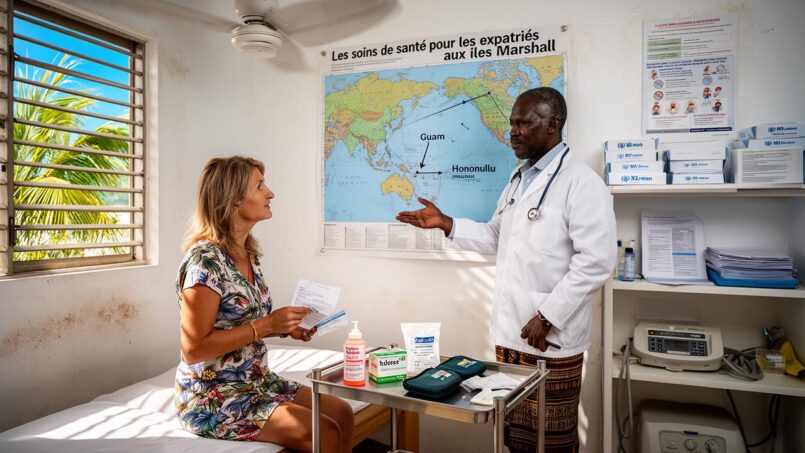
On the ground, several private international operators handle medical evacuations to better-equipped hospitals, mainly in Hawaii, Guam, the Philippines, or Taiwan.
Companies like Angel MedFlight Worldwide Air Ambulance, Horizon Air Ambulance, Air Ambulance 1, 247 Medevac, or AirMed International are cited in available documents as operating in the Pacific region and specifically in the Marshall Islands. They offer:
– air ambulance flights in medicalized jets,
– commercial flights with stretcher,
– accompaniment by specialized medical teams,
– logistical coordination (relations with the receiving hospital, ground transfer, overflight and landing formalities, visas, translation, etc.).
Generally, for an evacuation to take place, two main conditions must be met. First, the destination hospital (e.g., in Hawaii, Manila, or Taiwan) must have given formal agreement to admit the patient, often evidenced by a prior written agreement. Second, the medical necessity of the transfer must be clearly established and documented by healthcare professionals. This medical justification is an essential condition (sine qua non) for insurers to agree to cover the evacuation costs.
For an evacuation to be arranged, two main conditions must be strictly met. First, the destination hospital (for example in Hawaii, Manila, or Taiwan) must have formally agreed to admit the patient, often documented by a prior written agreement. Second, the medical necessity of the transfer must be clearly established and documented by healthcare professionals. This medical justification is an essential condition (sine qua non) for insurers to agree to cover the evacuation costs.
In the case of the Marshall Islands, the evacuation can be initiated:
– by Majuro or Ebeye Hospital, through the Medical Referral Office,
– by the expatriate’s international insurer, in coordination with an assistance company,
– by the Supplemental Health Fund for eligible members.
For a resident of Kwajalein, an intermediate step may involve being transferred to the U.S. base hospital before a potential medical flight, though with access constraints specific to the military status of the base.
Entry conditions, vaccination, and prevention for expatriates
Even before settling in the Marshall Islands, it is essential to prepare your medical and vaccination file.
Required and recommended vaccinations
Marshallese authorities now impose clear requirements:
– proof of measles vaccination (via the MMR vaccine) for all travelers aged 6 months to 62 years born in 1957 or later, unless medically contraindicated with a certificate;
– completed primary COVID-19 vaccination series at least two weeks before entry for adults, with the possibility of exemption for medical reasons or for certain essential workers, upon request to the Minister of Health.
For infants aged 6 to 11 months traveling to certain destinations, an additional dose (‘zero dose’) of the MMR vaccine is strongly recommended at least two weeks before departure, in addition to the usual schedule at 12 and 15 months. Upon arrival, proof of this vaccination is required for any child under 5 years old, under penalty of denial of entry into the country.
Beyond these requirements, specialized centers (CDC, WHO, European or Canadian health authorities) recommend that travelers to the Marshall Islands be up to date for:
– routine vaccines: diphtheria-tetanus-pertussis, polio (with adult booster), measles-mumps-rubella, chickenpox, seasonal flu, occasionally shingles;
– “travel” vaccines: hepatitis A, hepatitis B, typhoid, possibly rabies for stays in remote areas or for people in contact with animals;
– some additional vaccines depending on the profile and length of stay: pneumococcal (for those over 65 or immunocompromised), BCG (long stays with high exposure to tuberculosis), or even vaccination against dengue for individuals who have already been infected and are traveling to risk areas.
Daily prevention
Once on site, the same principles as in the rest of the tropical Pacific apply:
To protect your health during your stay, adopt the following measures: only consume safe water (bottled with cap, boiled, or treated) and avoid ice cubes and questionable raw foods. Protect yourself from mosquitoes using repellents, long clothing, and mosquito nets to reduce the risk of dengue and other arboviruses. Avoid any contact with blood or bodily fluids of unknown origin and practice safe sex to prevent hepatitis B and HIV. In case of an animal bite or scratch, immediately wash the wound with soap and water and consult a doctor, as the risk of rabies is moderate but real. Finally, avoid prolonged and close contact with people suspected of having active pulmonary tuberculosis.
An appointment at a travel medicine clinic 4 to 8 weeks before departure generally allows for optimizing the vaccination schedule and obtaining personalized advice.
Language barrier and access to English-speaking doctors
Linguistically, the Marshall Islands present an interesting paradox for expatriates: the population overwhelmingly speaks Marshallese, but English proficiency is generally high, especially within the small expatriate community and among healthcare staff.
Reports indicate that the availability of English-speaking doctors remains limited due to overall understaffing. Additionally, in certain contexts like the outer islands or during consultations with local staff less familiar with English medical vocabulary, misunderstandings can occur.
For a non-English-speaking expatriate, the additional language barrier then becomes critical. Hence the benefit of:
– choosing insurance that provides access to facilities with multilingual staff during evacuations;
– relying locally on local colleagues, an employer, or an embassy to facilitate communication in case of hospitalization.
Why the Marshall Islands remain a “manageable” destination… under conditions
Despite the impressive list of limitations and challenges, overall assessments of expatriate life in the Marshall Islands rate the country’s friendliness at 7/10 and a healthcare system score slightly above average (52.8 on a scale where higher is better). The expatriate community, though small, is generally supportive and English-speaking, and the locals are perceived as welcoming.
However, the Marshall Islands are not a destination where you can improvise your health. For an expatriate, the key takeaways are clear:
Routine care (minor injuries, infections, simple pregnancy monitoring, basic pediatrics, stable chronic conditions) is generally available, especially in Majuro and Ebeye. Conversely, any serious condition, major surgery, cancer treatment, specialized intensive care, or significant psychiatric management requires evacuation abroad. Access to medications is unpredictable, and medical evacuations are extremely costly, making robust health insurance and thorough preparation before the stay essential.
By anticipating, choosing the right international coverage, arriving with a clear medical file and an adequate stock of treatments, expatriates can live and work in the Marshall Islands while limiting risks. Conversely, leaving without insurance or preparation means accepting dependence on a strained system, designed primarily for basic care, and gambling with your health.
In an isolated island state, several hours of flight from the nearest major regional hospital, health is not just another logistical detail. It is the cornerstone of any successful expatriation project in the Marshall Islands.
Disclaimer: The information provided on this website is for informational purposes only and does not constitute financial, legal, or professional advice. We encourage you to consult qualified experts before making any investment, real estate, or expatriation decisions. Although we strive to maintain up-to-date and accurate information, we do not guarantee the completeness, accuracy, or timeliness of the proposed content. As investment and expatriation involve risks, we disclaim any liability for potential losses or damages arising from the use of this site. Your use of this site confirms your acceptance of these terms and your understanding of the associated risks.

Cyril Jarnias is an independent expert in international wealth management with over 20 years of experience. As an expatriate himself, he is dedicated to helping individuals and business leaders build, protect, and pass on their wealth with complete peace of mind.
On his website, cyriljarnias.com, he shares his expertise on international real estate, offshore company formation, and expatriation.
Thanks to his expertise, he offers sound advice to optimize his clients' wealth management. Cyril Jarnias is also recognized for his appearances in many prestigious media outlets such as BFM Business, les Français de l’étranger, Le Figaro, Les Echos, and Mieux vivre votre argent, where he shares his knowledge and know-how in wealth management.





