
 Published on and written by Cyril Jarnias
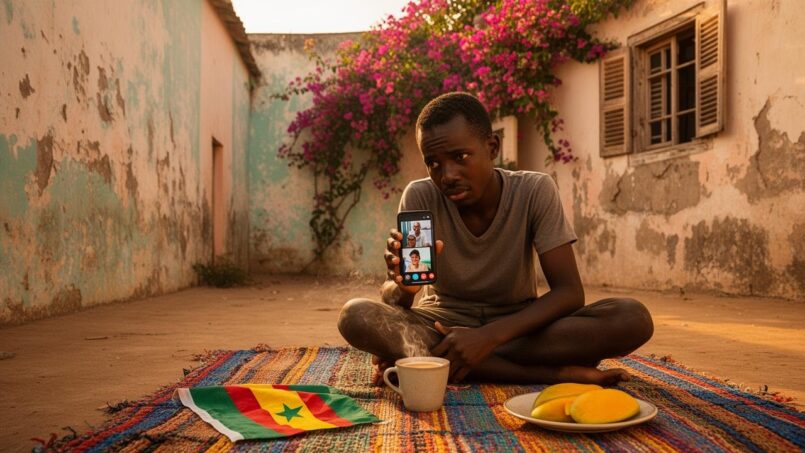
Moving to Guinea-Bissau, whether for humanitarian work, an expatriate contract, studies, or an entrepreneurial project, is rarely a trivial transition. As a fragile country with limited infrastructure, both warm and disorienting, it disrupts the frame of reference for most newcomers. In this context, homesickness is not a sign of weakness, but a normal reaction to a radical change in living environment.
To transform nostalgia into a period of learning, it is advisable to understand your emotions, lean on the local culture, organize your daily life, and maintain your long-distance connections despite imperfect connectivity. This article offers concrete strategies based on the science of adaptation, the reality of the country, and the resources available on the ground.
Homesickness is a form of distress linked to separation from one’s familiar environment. Researchers describe it as an emotional and psychological reaction to missing one’s original living environment, loved ones, habits, language, and sense of belonging. It is extremely common among people who move abroad, including seasoned professionals.
Between 20% and 90% of expatriates experience more or less marked homesickness during their first year abroad.
Manifestations can be emotional, cognitive, physical, and behavioral: sadness, anxiety, irritability, obsessive thoughts about the home country, negative comparisons between “home” and Guinea-Bissau, sleep disorders, fatigue, loss of appetite, social withdrawal, lack of motivation, difficulty concentrating. This picture can be daunting, but most of the time, it gradually lessens with adaptation, especially when one implements active strategies to cope.
The Adaptation Curve: From the Honeymoon Phase to True Anchoring
Research on acculturation often shows a trajectory in several stages. The first days sometimes resemble a “honeymoon”: curiosity, enthusiasm, a sense of adventure. Then comes a phase of crisis or culture shock, where fatigue, frustration, and homesickness intensify. Recovery and adaptation appear later, as one becomes familiar with the country, leading to a form of lasting comfort.
A witness who moved to a culturally very different environment took about four weeks to regain a normal energy level and feel less disoriented. This timeframe, while not a rule, illustrates the importance of giving the body and mind time to digest changes, especially in a context like Guinea-Bissau’s. The goal is not to avoid homesickness at all costs, but to manage it so it doesn’t become paralyzing.
Building a Routine in a Country with a Disorienting Pace
In a country with limited infrastructure, unstable electricity, uncertain transportation, and a work pace that may seem slow, building a routine might seem paradoxical. Yet it is one of the best defenses against homesickness.
Adaptation specialists insist: it’s not the perfection of the schedule that matters, but its regularity and sustainability. A routine provides structure to otherwise chaotic days, creates a sense of control, and reassures the brain.
You can think of the routine around three axes: body, mind, and environment.
Taking Care of the Body: Exercise, Sleep, Nutrition
Even with little sports equipment, it is possible to move every day. The science is clear: 30 minutes of physical activity per day, even moderate (brisk walking, cycling, small strengthening sessions), improves mood, sleep quality, and stress resistance. In Guinea-Bissau, walking in the neighborhoods of Bissau, a morning jog along a beach, or a bit of gymnastics in your living room work just fine.
To counter sleep disruptions related to jet lag, heat, mosquitoes, or noise, it is beneficial to establish a ritual. This can include avoiding screens before sleeping, reading a few pages, listening to calm music, or practicing deep breathing. Maintaining regular bedtimes and wake-up times also helps stabilize the body’s internal clock.
Regarding diet, the temptation is great to fall back on imported industrial products, often expensive and not very nutritious. However, research emphasizes the role of a balanced diet for mental health. Taking advantage of markets (Bandim in Bissau, but also the more modest markets in neighborhoods or villages) to buy rice, fish, vegetables, cassava, fruit, using palm oil in moderation, discovering dishes like *caldo de mancarra* (peanut stew) or jollof rice, is good for both the body and integration.
To summarize these well-being levers in the Guinea-Bissauan context:
| Area | Simple Actions Adapted to Guinea-Bissau |
|---|---|
| Physical Activity | Daily walk, cycling, light jogging on the beach, home exercises |
| Sleep | Fixed schedule, reading or music before bed, reducing screen time |
| Nutrition | Shopping at the market, home cooking, limiting ultra-processed products |
| Hydration | Drinking potable water regularly throughout the day |
Organizing Your Daily Life Despite the Ambient Chaos
In an environment where not everything depends on you—power outages, random mobile network, rain blocking roads—strictly following a to-do list can quickly become frustrating. Specialists suggest following your energy and mood levels from day to day rather than checking off tasks at all costs. This allows you to adjust the program (“light” day, “productive” day) without judging yourself.
Useful benchmarks for effectively organizing and planning your day.
| Time of Day | Main Objective | Example Activities |
|---|---|---|
| Morning | Anchoring and energy | Walk, light exercise, planning, work on the most difficult task |
| Midday | Concrete progress + social contacts | Work, appointments, lunch with colleagues or neighbors |
| Late Afternoon | Exploration or practical management | Shopping, discovering a new neighborhood, market, local cafe |
| Evening | Slowing down and connecting with “home” | Video call, reading, journaling, movie, breathing or light meditation |
The idea is not to lock yourself into a military schedule, but to give the day a reassuring framework. As studies on habits remind us, the key to making these routines stick is to start small and “graft” new habits onto already automatic actions (what’s called “habit stacking”): for example, writing three lines in your journal right after brushing your teeth at night, or doing five minutes of stretching after your morning coffee. After three to four days, a habit already starts to be easier; after three to four weeks, it becomes much more natural.
Making Your Home Your Own: Turning a Roof into a Refuge
In a country marked by poverty, water and power outages, and a failing healthcare system, your home becomes a true psychological sanctuary. Whether you live in a “high-end” apartment in Bissau Velho with a generator, or in a more basic house on the outskirts or in the provinces, how you invest in this space plays a major role in homesickness.
Upon arrival, a few gestures strengthen the feeling of “home”: cleaning or having it cleaned, arranging your belongings, using your own sheets, hanging a few photos of loved ones, taking out your favorite mug, an important book, a piece of clothing you love. Small, portable things (photos, a cap, a dish towel, a notebook, a scarf) act as emotional anchors.
Physically organize your living space to support and encourage good daily habits.
Prioritize a workspace, even a modest one, rather than working from your bed, to separate activity and rest times.
Leave your exercise mat in sight to naturally encourage you to do physical exercises.
Create a space dedicated to reading, free from digital distractions, to encourage relaxation and concentration.
Set up a specific place to sit and drink your tea, a ritual that invites you to slow down and take a break.
Finally, in a country where you can quickly feel overwhelmed by the unpredictability of the outside world, keeping your interior somewhat tidy soothes. A realistic strategy is to do a ten-minute “express tidy-up” before going to bed (dinner cleared away, basic dishes, a few items put back in their place) and to set one or two days for laundry.
We could summarize this logic of making your home your own as follows:
| Home Aspect | Effect on Homesickness | Concrete Examples |
|---|---|---|
| Familiar Objects | Affective anchoring, reduces feeling of uprooting | Photos, mug, book, pillow, small symbolic object |
| Spatial Organization | Supports habits, sense of control | Work space, exercise corner, calm screen-free corner |
| Minimal Maintenance | Reduces mental load | 10 min of tidying in the evening, fixed laundry day, clear surfaces |
Taming Guinea-Bissauan Culture Rather Than Avoiding It
Homesickness worsens when you remain withdrawn, constantly comparing the host country to your country of origin. Berry’s acculturation work shows that the strategy most favorable to mental health is generally integration: preserving one’s cultural identity while gradually entering that of the host country.
In Guinea-Bissau, integration first involves understanding local social codes, strongly marked by a philosophy of solidarity and respect (sometimes akin to the idea of Ubuntu). Time devoted to greetings, asking about family, sharing tea or a meal is not “wasted time”: it is the fabric of social life.
Languages: Entering the Country Through Words
Officially they speak Portuguese, the street speaks mostly Kriol, villages are divided among more than twenty local languages (Balanta, Fula, Mandinka, Manjaco, etc.). English remains marginal, French is present but far from universal. For many newcomers, this creates a feeling of isolation and reinforces homesickness.
In Guinea-Bissau, learning to say hello, thank you, how are you, to introduce yourself in Portuguese or Kriol, immediately changes the relationship. It is perceived as a sign of respect and often triggers a smile, spontaneous help, an invitation.
Studies on Integration
Even a modest learning effort, a few minutes a day, can make a big difference in the feeling of foreignness. Some immersion programs include intensive oral-focused Kriol or Portuguese courses, which clearly shows that language is seen as the main entry key.
Gestures of Respect and Belonging
Social codes are sometimes far from those you’re used to, but knowing them soothes many misunderstood situations that would otherwise fuel homesickness.
The handshake is longer than in Europe or North America. It is appropriate to address the oldest or most important person first, using ‘Senhor’ or ‘Senhora’ followed by the last name. Prefer the right hand for eating, giving, or receiving an object. Avoid overly revealing clothing, especially in rural areas or near mosques. Refusing an invitation to a meal or tea bluntly is poorly perceived; it is better to gently explain or propose another time.
Rather than seeing these codes as constraints, consciously experimenting with them can become a kind of cultural observation game. Each small progress—managing a fluid greeting in Kriol, remembering to greet the elder first, bargaining politely at the market without offending—becomes a micro-victory over the feeling of being an outsider.
Building Local Connections: The Best Antidote to Loneliness
One of the major causes of homesickness among migrants is the feeling of not belonging to a community in the host country. In Guinea-Bissau, the expatriate can easily find themselves in a very restricted bubble: NGO or international organization colleagues, a few cafes in Bissau frequented by the same faces, embassy events. This is comfortable, but often insufficient to quiet a deep nostalgia.
Research on cultural adaptation confirms it: the quality of the local social network—whether compatriots, other foreigners, or Bissau-Guineans—is decisive for psychological well-being.
Introducing Yourself to Neighbors, Getting Out of the Expat Bubble
Even if you don’t share the same language, knocking on a neighbor’s door to introduce yourself, exchanging your first name, a smile, a handshake, can be the starting point for simple but reassuring connections. In Bissau or the provinces, inhabitants are often described as welcoming and curious about foreigners, provided they take a step towards them.
Community organizations, local associations, neighborhood structures, programs like “Community Empowerment Program” or *djumbai* (community meetings to discuss societal issues) are all opportunities to meet residents outside the formal professional framework. Even as a simple observer, participating in these spaces offers a dive into the social functioning of the country and breaks the sensation of floating above society.
Finding Your “Tribes” by Interest
The other powerful way to fight homesickness is to continue or initiate hobbies. Studies conducted in other contexts show that continuing at least one familiar activity (daily reading, music, sports, writing, cooking) in the new country provides reassuring identity continuity.
In Guinea-Bissau, several activities promote social integration: participating in a local soccer group, jogging with colleagues, or nature outings (mangroves, Bijagós Islands, parks). Investing in community projects (literacy, environmental protection, tutoring) is also valued. New rituals can be created linked to local culture, like attending the Bissau Carnival, a Tabanka festival, a cultural festival, or joining a traditional dance or music group.
To avoid remaining passive, it’s useful to set a small weekly goal: meeting a new person, discovering a new place, participating in an event. Saying “yes” to an invitation more often, even if you politely leave earlier if tired, opens many more doors than you might imagine.
Maintaining a Balance Between Social Time and Alone Time
That said, being constantly solicited, especially in a culture where relationships are very collective, can also be exhausting. Homesickness is not cured by overstimulation. Research emphasizes the importance of keeping moments for yourself, also allowing for “low battery” phases, without guilt.
Finding the right balance between outings, commitments, and quiet evenings at home is a very personal adjustment. The important thing is to avoid both extremes: complete isolation, which fuels nostalgia and rumination, and a headlong rush into forced sociability, which prevents you from settling in and integrating what you’re experiencing.
Staying Connected to Loved Ones Despite Difficult Connectivity
For someone moving to Guinea-Bissau, access to mobile networks and the internet is far from guaranteed. The country remains very dependent on 2G and 3G, with 4G essentially available in Bissau and unevenly so. In many rural or island areas, coverage is very weak, even nonexistent. Power outages further disrupt the connection.
Yet, studies on homesickness are clear: maintaining regular contact with family and friends from the country of origin strongly reduces the feeling of uprooting. The challenge is therefore to adapt your tools and expectations to the technical reality of Guinea-Bissau.
Understanding the Telecom Landscape to Better Organize
The country mainly has two mobile operators, MTN Guinea-Bissau and Orange Guinea-Bissau, which share the vast majority of subscribers. The 2G network roughly covers 70 to 80% of the territory, 3G perhaps reaches half the population, and 4G remains embryonic, concentrated in central Bissau.
After your arrival, two main solutions exist to obtain a mobile internet connection: either purchase an international eSIM before your departure, or get a local SIM card once on the ground.
The two basic solutions can be summarized as follows: the two solutions are complementary and must be adapted to the specific needs of each situation.
| Option | Advantages in Guinea-Bissau | Specific Limitations |
|---|---|---|
| International eSIM | Immediate activation, no waiting in line, no local documents required | Higher cost, depends on the same poor local network, data only |
| Local SIM (MTN / Orange) | Much lower cost, better alignment with local offers | Requires passport, in-store procedures, possible language barrier |
eSIM providers like Airalo, Esimatic, Holafly, Nomad, or Roafly offer plans including Guinea-Bissau. For a first short stay, the eSIM provides a connection lifeline upon landing, which is precious to prevent the “total void” upon arrival, particularly anxiety-inducing. But for a long stay, the local cards, cheaper, are generally more suitable.
In any case, it is crucial to keep in mind that the quality of the connection will sometimes remain low, even with the best option. Anticipating this reality protects against frustration and helps adjust expectations.
Maximizing the Quality of Long-Distance Exchanges
With limited bandwidth, certain communication formats work better than others. Audio calls via WhatsApp, Telegram, or Viber often work better than video, and consume less data. Sending asynchronous voice messages also allows you to maintain a rich connection, even when the network cuts regularly.
To communicate from Bissau, applications like WhatsApp, Skype, Instagram, FaceTime, Google Meet, or Zoom are effective if you have access to good Wi-Fi (available in some cafes or hotels). For families without internet in their home country, services like BOSS Revolution or digital calling cards allow calling landlines or mobiles at predictable rates.
The essential thing, to combat homesickness, is to turn calls home into regular rituals rather than rare, emotionally charged events. A weekly call at a fixed day and time with family, a few spontaneous voice messages to friends, a family WhatsApp group to share photos of life in Bissau or your duty station village: all this helps recreate continuity.
You can draw inspiration from this type of framework:
| Type of Link | Realistic Frequency with Local Connectivity | Preferred Form |
|---|---|---|
| Parents / Partner | 1 scheduled audio/video call per week | WhatsApp call or equivalent, sometimes video if network |
| Siblings / Close Friends | A few messages or voice notes during the week | WhatsApp, Telegram, photos, short voice notes |
| Extended Family | Monthly check-in or for important events | Audio call, small group messages, emails |
Adapting the times based on the time difference and the windows when the network is most stable (often morning or late evening) also helps make these appointments more reliable.
Using Food as a Bridge Between “Home” and Guinea-Bissau
Studies on homesickness show that food holds a special place in nostalgia. Sudden cravings for dishes from home aren’t just about taste: they embody memories, an identity, shared moments with family or friends. Not being able to find these flavors can accentuate the feeling of loss.
Conversely, cooking recipes from home or discovering local cuisine can become powerful tools to alleviate homesickness.
Recreating Familiar Flavors with Available Means
In Guinea-Bissau, you won’t always find all the ingredients from your home cuisine, but a good part of the world’s dishes can be approximated by playing with local rice, vegetables, fish, meat, available spices, and peanuts. Markets and a few grocery stores in Bissau sometimes allow you to find imported products, but you often have to accept the logic of “culinary improvisation.”
Rather than waiting to be able to reproduce a dish from home exactly, the challenge is to rediscover the sensory “signatures” that really matter: a certain texture, a spice combination, a type of sauce. That is often enough to soothe nostalgia a little.
Keeping a small notebook of recipes adapted to Guinea-Bissau, where you note how you replaced one ingredient with another, can turn this constraint into a creative game. On days of low morale, starting a “home” recipe then becomes a form of self-care.
Discovering Guinea-Bissauan Cuisine as Grounding Terrain
At the same time, exploring local cuisine helps anchor your experience in the country. Eating no longer serves only to satisfy hunger but becomes a cultural gateway. Sharing a plate of rice with fish, tasting *caldo de mancarra*, discovering the local way of preparing grilled fish, learning to appreciate *ataya* (green tea prepared in several servings) with neighbors, transforms your view of the country.
To discover authentic Bissau cuisine, prioritize markets like Bandim and small eateries near universities, hospitals, or heavily frequented streets. These places, far from the more “international” restaurants in the center, offer a true reflection of local food. The best indicator is to observe where the city’s workers and residents have lunch.
You can, for example, set yourself the mini-project of tasting a new typical dish each week, or asking a colleague to show you how their family prepares a traditional dish. This shared learning creates connection, gives conversation topics, and occupies the mind differently than nostalgic rumination.
Taking Care of Your Mental Health in a Very Limited System
Another factor not to underestimate regarding homesickness in Guinea-Bissau: the healthcare system is very fragile, and mental health resources are extremely scarce. The doctor-to-population ratio is well below international standards, hospitals are far from fully operational, and there have been times recently with no practicing psychiatrists in the entire country.
In this context, psychological disorders—including severe homesickness—are often interpreted through spiritual or social prisms (curse, ancestors’ anger, etc.), which can reinforce stigmatization and delay seeking medical help. Yet, screening studies estimate that at least 12% of adults in general consultation have an identifiable mental disorder.
Realistic Self-Care Strategies
Facing this reality, self-care and informal support take on particular importance. Some concrete levers, in addition to the routines seen above:
To facilitate adaptation to a new context, several practices are beneficial: keeping a journal in the evening to deposit your thoughts and emotions, which can improve sleep quality; regularly practicing simple deep breathing or meditation exercises, sitting in a calm place and focusing on your breath for a few minutes; allowing yourself to feel emotions like sadness or nostalgia without judgment, accepting them as normal phases of the process; and finally, identifying in advance trusted resource persons in your circle (colleague, local friend, supervisor) to talk to in case of significant low morale.
When and How to Seek Help
Remembering that intense homesickness can turn into depression or an anxiety disorder if it continues without improvement is important. Signs like persistent sadness, loss of interest in almost everything, severe sleep disorders, recurrent dark thoughts, should alert you.
On the ground, access to specialized mental healthcare is limited, but initiatives supported by international organizations (like WHO and NGOs) are working to integrate it into primary care. For people with a good internet connection and appropriate insurance, teleconsultation with a professional (psychologist or psychiatrist) based abroad is a possible option, provided you ensure confidentiality and the quality of the therapeutic setting.
Certain international platforms also list helplines and support services that are free or low-cost, accessible by phone, messaging, or chat. Without replacing ongoing psychotherapy, this type of occasional support can provide a safe space to express what you’re going through.
Finally, for expatriates benefiting from institutional support (UN, international NGOs, large companies), approaching the HR service or the psychosocial support mechanisms provided for in contracts is a step not to hesitate to take. Homesickness and its consequences on work are now better recognized as an issue of performance and well-being.
Adopting a Learning Mindset Rather Than a Survival One
Beyond techniques and routines, the way you narrate your experience in Guinea-Bissau to yourself plays a huge role in how you experience homesickness. Research on cultural adaptation emphasizes the importance of a “coping” posture: considering difficulties as problems to be tamed, not as fate.
This does not mean denying the sometimes harsh realities of the country—poverty, lack of infrastructure, fragile healthcare system—nor forcing yourself to be happy. But it is possible to cultivate a perspective that also seeks small sources of joy: a sunset over the mangroves, a shared laugh while mixing Portuguese, Kriol, and gestures, a child from the neighborhood greeting you by your first name, an impromptu meal at neighbors’, a quiet evening reading while a tropical storm rumbles in the distance.
A simple tool, supported by several studies, is to keep a daily mini-list of three things you are grateful for: a pleasant detail, a bit of progress, a discovery. This type of gratitude practice, even if it may seem naive at first, helps rebalance attention, often magnetized by frustrations and lacks, especially in an exile situation.
It is crucial to accept being imperfect in your adaptation, to make cultural mistakes, and to not always follow your routine. Adaptation is not linear: it includes moments of regression and ‘blues’, even after several months. It’s essential to see these phases as passing waves and not a return to zero, to avoid adding guilt to the discomfort.
Making It a Meaningful Experience
Managing homesickness in Guinea-Bissau is therefore juggling several levels at once: the very concrete (water, electricity, network, housing), the relational (neighbors, colleagues, family at a distance), the cultural (languages, social codes, cuisine, festivals), the psychological (emotions, routines, self-care), and the symbolic (what this stay in a country rebuilding itself means for you).
By combining:
To live well abroad, it is advisable to establish a flexible but real routine, to make your home an invested refuge, and to cultivate active curiosity for the local culture. It’s also important to set up a pragmatic strategy to maintain the link with loved ones despite technical constraints, and to work regularly on your mental health.
homesickness gradually loses its paralyzing grip. It doesn’t disappear completely, and that’s not necessarily the goal. It rather becomes the inevitable flip side of a powerful experience, one that leads to weaving unexpected connections, discovering inner resources, and forging with Guinea-Bissau a relationship that goes far beyond the framework of a simple mission abroad.
In a country where so much remains to be built, this relationship can, in time, give your stay a meaning that also lessens the pain of being far from home.
Disclaimer: The information provided on this website is for informational purposes only and does not constitute financial, legal, or professional advice. We encourage you to consult qualified experts before making any investment, real estate, or expatriation decisions. Although we strive to maintain up-to-date and accurate information, we do not guarantee the completeness, accuracy, or timeliness of the proposed content. As investment and expatriation involve risks, we disclaim any liability for potential losses or damages arising from the use of this site. Your use of this site confirms your acceptance of these terms and your understanding of the associated risks.

Cyril Jarnias is an independent expert in international wealth management with over 20 years of experience. As an expatriate himself, he is dedicated to helping individuals and business leaders build, protect, and pass on their wealth with complete peace of mind.
On his website, cyriljarnias.com, he shares his expertise on international real estate, offshore company formation, and expatriation.
Thanks to his expertise, he offers sound advice to optimize his clients' wealth management. Cyril Jarnias is also recognized for his appearances in many prestigious media outlets such as BFM Business, les Français de l’étranger, Le Figaro, Les Echos, and Mieux vivre votre argent, where he shares his knowledge and know-how in wealth management.





