
 Published on and written by Cyril Jarnias
The night in Guinea-Bissau is nothing like a scene of flashy neon signs or giant clubs in Dakar. Here, people go out mainly to chat, dance close to the rhythms of gumbe or kizomba, nibble on grilled fish in the smoke of street barbecues, and listen to musicians just a few feet away. The nightlife is modest, but intensely local, driven by open-air neighborhood bars, small discos, and a surprisingly lively cultural scene around Bissau.
Good to know:
This guide highlights the neighborhoods, bars, clubs, and cultural venues that come alive at night, while recommending staying vigilant and following practical tips to avoid unpleasant surprises during your outings.
Understanding the Spirit of Nights in Guinea-Bissau
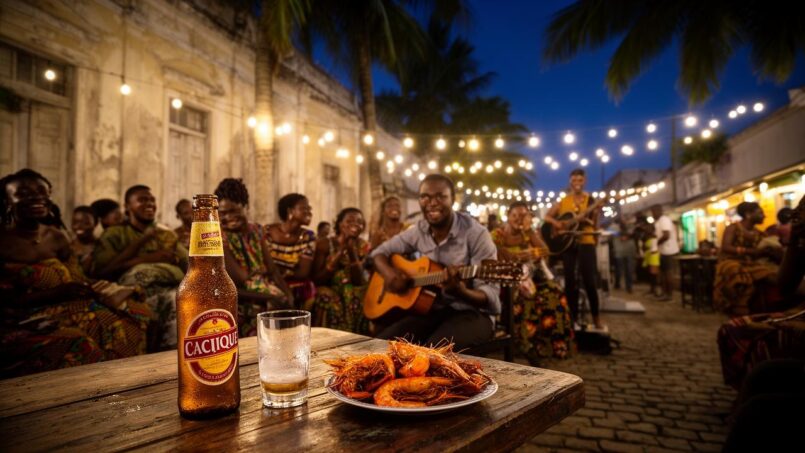
Evenings in Guinea-Bissau feel more like a big neighborhood party than a tour of luxurious nightclubs. The action happens outdoors, around plastic chairs lined up on the sidewalks, under the faded colonial facades of Bissau, on a beach, or in a market saturated with music.
Example:
Bars typically open around 6 PM. The atmosphere is calm at first, with colleagues having a beer after work, families sharing a plate of fish, or neighbors stopping by for a Djumbai (local beer). It’s only around 10 PM that the volume goes up, speakers are brought out onto the sidewalk, and customers settle in for the evening. Peak times are Friday and Saturday.
Music is everywhere. You constantly hear mixes of reggae, gumbe, Afro-zouk, kizomba remixes, sometimes Afrobeat or hip-hop, often played on battery-powered speakers. But what makes Bissau special are the small live music stages where musicians sometimes gather impromptu, right up close to the audience.
Tip:
The low tourism levels play a key role. Unlike Senegal or The Gambia, international visitors are few and far between. The result: no ‘tourist traps’ with inflated prices, little pressure to ‘party’ at all costs, but a nightlife designed first and foremost for locals. Prices remain reasonable, dress codes are relaxed, and people will almost always approach you in Kriol to invite you to dance or simply ask what brings you to the country.
Where to Go Out in Bissau: The Major Nightlife Neighborhoods
Nearly all organized nightlife is concentrated in the capital. To get your bearings, it’s best to think in terms of neighborhoods: each has its own vibe, hours, and crowd.
Baixa: The Downtown That Wakes Up After Midnight
Baixa, downtown Bissau, is the heart of the night when other areas start to slow down. This is where the energy shifts after midnight, when neighborhood bars gradually close and those wanting to keep the night going move to a few clubs and bars open until 2:30 or 3 AM.
The streets aren’t spectacular, but the density of small bars, kiosks, and discos is impressive by the country’s standards. The area is lively, but side streets empty quickly after midnight: it’s best to stick to well-lit main roads.
Notable spots in Baixa include container bars, clubs with a humid atmosphere, and restaurants that transform into bars after dark.
Pracinha and Amílcar Cabral Avenue: The Strip of Cafés and Bars
Pracinha refers to the lively area around Amílcar Cabral Avenue, Bissau’s main artery running from near the Heroes’ Square to the port. It’s a sort of nocturnal backbone: cafés, bars, small restaurants, street stalls, and music spilling out of open doors.
In the evening, the sidewalks fill with plastic chairs facing the street, people drink Portuguese or local beer while watching cars pass by, and it’s easy to hop from one bar to the next on foot. This is also where you’ll find several establishments popular with both Bissau-Guineans and expats.
Quebra-Canela: The Beach for Chilling on Weekends
Quebra-Canela beach becomes the main relaxation hub on weekends. On the sand or in the bars lining the shore, families and friends come to swim in the late afternoon, eat grilled fish, and stay into the evening. At night, the vibe is more laid-back than in Baixa: people listen to music, chat, watch matches on TV, or sometimes play rugby on the sand.
If you’re looking for a relaxed evening with the sound of waves in the background, this is one of the best spots.
Bissau Velho: The Colonial and Cultural Enclave
Bissau Velho, the old town, still has colonial buildings with worn charm. It’s not the densest area for bars, but you’ll find a few interesting addresses, streets suitable for an early evening stroll, and especially several nearby cultural venues that animate the nightlife: cultural centers, restaurant-concerts, artistic events.
Caution:
The Pidjiguiti port, site of the 1959 massacre that sparked the independence struggle, is now an important social space, animated by colorful pirogues and street vendors.
Markets and Squares: The Night as a Public Square
One of Bissau’s surprises is its markets at night, especially the Bandim market, the country’s largest, and the vast Mercados market on Estrada da Granja do Pessube. At nightfall, these places transform into true urban lungs where the smells of local cuisine, music, laughter, and jostling intermingle.
“Empire Square”, for example, is described as packed with people after dark: children, elderly, teenagers—everyone gathers there for lack of large parks or formal leisure spaces. You can find everything: shoes, wax fabric, electronics, toys, phones, plus food. People eat on the go, listen to an impromptu DJ, watch gamblers at stalls. It’s a raw slice of Bissau-Guinean nightlife.
Bars and Lounges: Where It All Begins
Most evenings start at a bar, often simple, sometimes very lively, almost always outdoors. Here’s a selection of iconic spots, with their respective atmospheres.
Avenue Bars and Popular Hangouts
Along Bissau’s main roads, nearly every corner seems to have its own little street bar. Some are known for their vibe, others for their grill, still others for their regular crowd.
Among the most frequently cited addresses:
Bars and Nightlife Spots in Bissau
A selection of popular establishments in Bissau, from bar-lounges to must-visit container bars, known for their lively atmosphere and good ratings.
Liberty Cafe Bar Lounge
Bar-lounge appreciated for its lively atmosphere, mixing international and local music. Very well rated online with about forty positive reviews.
Contentor Di Tony
Typical bar set up in a shipping container, extremely busy and well-rated. Recognizable by its bright lights and powerful music, it has over 150 positive reviews.
Bar CIJ Container Branch
Another container bar, more modest but also well-rated for its friendly and typically Bissau atmosphere.
SUNFON
Very well-rated bar, often mentioned for its dynamic atmosphere. Located near Lino Correia stadium and the square.
Kings Club
Considered a reference for live music in Bissau. A cultural hub where traditional music meets contemporary sounds.
Some bars stand out for their culinary specialty. Bar do Zema, for example, is known for its grilled dishes, making it an ideal starting point for an evening combining dinner and drinks. Others, like Baloba’s Bar, Assimiu, Bar Paris Moscovo Bissau Guiné, Bar Santo Baratos, Bar de Toni, FREE BAR, or Ju’slounge, represent that constellation of neighborhood bars forming the backdrop of local nightlife.
Amílcar Cabral Avenue and Its Must-Visit Spots
On Amílcar Cabral Avenue, several places have become landmarks for evening outings. For example:
Bars and Lounges in Bissau
Discover some of the most characteristic addresses in Bissau for an evening out, ranging from comfortable lounges to popular and authentic atmospheres.
Antika Bissau
Lounge located on the avenue, very well rated. It mixes local clientele, expats, and travelers in a decor more refined than average. Ideal for a comfortable early evening.
Kaipirinha
Bar right in the center, famous for its striking contrast: plastic chairs on dirt floor facing a five-star hotel. Very low prices and a decidedly popular vibe.
LP Lounge (LP)
Small lounge appreciated for its caipirinhas, reputed to be among the best in Bissau. Run by the couple Lucille and Paulo, which reinforces the warm, ‘homely’ feel.
Nearby, Sagres Sidewalk Bar or the bar at the Hotel Império (often called Imperial Bar) extend this atmosphere halfway between café, hotel bar, and meeting place to watch matches or chat on the terrace.
Hotel Bars: Comfort and Impromptu Dancefloors
Hotel bars play an important role in the local nightlife. Many hotels in Bissau, especially the newer or more comfortable ones, rely on their bar to attract both guests and locals.
Example:
In Bissau, some hotel bars are important social hubs. The **Coimbra Hotel and Spa** offers a veranda bar known for its cocktails, city views, and cosmopolitan atmosphere, sometimes turning into an impromptu dancefloor on weekends. The **Hotel Royal** attracts a mixed crowd of expats and well-to-do youth in a polished setting, serving classic cocktails and imported beers. Finally, the **Ceiba Hotel**, a chic hotel hosting cultural events, sees its bar extend evenings after exhibitions or shows.
These hotel bars, in addition to the practical aspect (hotel taxis, security, possibility of going straight to your room), often serve as a bridge between international visitors and the local scene.
Some Key Figures
To get an idea of the popularity of certain establishments, here is a summary of ratings found online:
| Establishment | Type | Overall rating (reviews) |
|---|---|---|
| Liberty Cafe Bar Lounge | Bar | “Very good” (≈ 41 reviews) |
| Antika Bissau | Lounge | “Very good” (≈ 30 reviews) |
| Kings Club | Live music bar | “Good” (≈ 54 reviews) |
| Contentor Di Tony | Bar | “Good” (≈ 157 reviews) |
| SUNFON | Bar | “Excellent” (≈ 5 reviews) |
| Vereda Tropical | Club/pool | “Good” (≈ 39 reviews) |
| Pub Balafon | Pub/club | “Very good” (≈ 3 reviews) |
These numbers don’t tell the whole story, but they clearly show that the night scene revolves around a handful of very busy spots, complemented by a myriad of neighborhood bars.
Clubs and Discos: Small Venues, Big Atmosphere
Everyone agrees: Bissau only has a handful of proper discos. There are no mega-clubs with multiple levels or rooftop infinity pools. But the few existing clubs are more than enough to get the city dancing.
The Big References in Bissau
Among the most frequently mentioned discos and clubs:
Nightclubs and Discos
Main nightlife venues, known for their lively atmosphere and dance-oriented music.
Discoteca TABANKA
A pillar of the night scene with a often-packed dance floor. Peak atmosphere around 1 AM. Loud music: afro, kizomba, Afrobeats.
Discoteca Tropicana
Prominent disco, appreciated for its music and dance floor. Offers a typical club atmosphere.
Discoteca Fly
Club located near Che Guevara square, in a very lively area. Attracts a young crowd.
Matongue Club & Banbo
Other well-known nightspots among insiders, offering varied atmospheres.
Some accounts also mention a club called Insonias, frequented especially by diplomats and NGO workers, and Discoteca Tabanka once described as “the hottest spot in the country.” These places may change names or signs over the years, but the spirit remains the same: a tight dance floor, simple lights, a powerful sound system, and plenty of energy.
Balafon: Between Pub and Club
A special case is Pub Balafon, located in Baiana, sometimes described as a sort of “mini-club” on the ground floor of the Hotel Kalliste. Although classified as a pub, the atmosphere is often closer to a nightclub, with very loud music, a floor where girls dance, and a packed crowd especially from Thursday to Sunday. On weekends, it can be hard to find a seat.
For some travelers, Balafon represented their ‘closest disco experience’ in Bissau, with music deemed excellent and efficient service. Cristal beer is mentioned there, as in several other bars in the city.
Travelers
Vereda Tropical: Pool Club on the Outskirts
Vereda Tropical is another notable address, both club and establishment with an outdoor pool, located on Pansau Na Isna Avenue. The place attracts a varied crowd, especially during special events. The main draw: the combination of a dance space and a relaxation area around the pool, quite rare in the region.
Atmosphere, Prices, and Dress Codes
In all these clubs, the codes remain simple. No strict dress code or door selection: the vibe is much more relaxed than in Dakar or Banjul. The upside: no “wardrobe stress” or opaque entry policies. The downside: you have to accept a certain rawness: basic lighting, sometimes distorted sound, approximate air conditioning.
Entrance fees, when they exist, remain modest, and drinks are sold at roughly the same price as in neighborhood bars. The near absence of a “tourist markup” is particularly evident on beers, which stay affordable, especially in places like Kaipirinha.
Nighttime Cultural Scene: Much More Than Bars
Limiting Bissau-Guinean nights to bars and clubs would mean missing one of its strengths: a real evening cultural life, driven by cultural centers, restaurant-concerts, and a performing arts theater.
The Major Cultural Centers
Three institutions play a key role in the evening cultural life of the capital:
– Centro Cultural Franco-Bissau-Guineense: central venue for concerts, music festivals, film screenings, debates, and exhibitions. It has hosted events like jazz festivals (“Jazz in The House”), concerts by major local names (Kimi Djabaté, Zé Manel, Binham Quimor, etc.), programs related to activism or Africa Day, as well as multi-arts festivals.
– Centro Cultural Português: another pillar, focused on music, dance, and literature. It hosts concerts, percussion shows, jazz evenings, or album launches, often in the early evening.
– Centro Cultural José Carlos Schwarz: particularly associated with traditional music and dance (for example the “Tina’s Festival” dedicated to a local music style), as well as performances by groups like the Association Culturelle Netos de Bandim.
19
The hour at which cultural evenings are scheduled in these centers, mixing diverse audiences.
Ur-GENTE: Theater and Transdisciplinary Arts
A newer venue, Ur-GENTE – Centro de Artes Cénicas Transdisciplinar de Bissau, is establishing itself as a multidisciplinary theater and artistic space in the São João neighborhood. You’ll find plays, hybrid performances mixing dance, music, and visual arts, workshops, and artist residencies.
Evenings there are less about “bars” and more about “shows,” but they deeply contribute to the city’s nightlife, attracting a young and creative audience. The address retains a laboratory feel, where traditional aesthetics intersect with contemporary approaches.
Restaurant-Concerts and Themed Evenings
Several restaurants regularly transform into live music venues in the evening:
Good to know:
Several restaurants in Bissau are important cultural stages. Coqueiros Bissau is a hub for nighttime concerts, hosting artists like Demba Baldé and groups such as Africa Tradição, with jazz evenings and traditional Sunday gatherings. Dassy Restaurant organizes events like poetry evenings in Kriol. Other establishments like Papa Loca or Dona Fernanda can also occasionally serve as venues for intimate concerts.
In the evening, these places often allow you to combine a meal (grilled fish, African or Senegalese cuisine, Portuguese dishes) with a show, in a much more family-friendly atmosphere than in clubs.
Music and Dance: A Rich Landscape
The richness of the cultural night in Bissau-Guinea also stems from the diversity of musical styles expressed there.
Gumbe is often cited as the country’s most emblematic genre, a polyrhythmic fusion of about ten local musical traditions. Alongside it, you find styles like tina, kussundé (strongly linked to the Mandinka), kundere sounds from the Bijagos islands, Balanta rhythms like brosca, or Mandinka djambadon. These styles infuse the evenings, whether in their traditional forms or modern variations mixed with Afrobeat, hip-hop, or Afro-zouk.
Traditional instruments – kora, balafon, calabashes, lutes like the kusunde, handmade drums, xequerés – regularly appear on stage, often accompanied by electric guitars, synthesizers, or Brazilian percussion, especially during collaborations with capoeira musicians or MPB as part of events like “BPM Friday Night” (Brazilian music nights).
Good to know:
Dance is a central cultural expression, present through the National Ballet and its contemporary choreographies inspired by traditions, festivals like that of the tina which highlight initiation dances, and clubs where collective dances reveal the social and spiritual dimension of music.
Festivals and Major Nighttime Events
Throughout the year, a multitude of events punctuate Bissau’s evenings: birthday concerts (Ernesto Silva, Justino Delgado), album launches (Zé Manel, Sambala Kanouté), music festivals, craft weeks, “activism in Africa” evenings with concerts, slam, DJs, screenings.
But the highlight of the festive calendar remains Carnival. Over four days, just before Lent, the capital transforms into a huge open-air stage. Hundreds of groups from all over the country parade, representing different ethnicities, in costumes made from natural materials – shells, leaves, skins, plant fibers, fish scales. Traditional music (kora, balafon, Manjaco and Balanta “telephone” drums) resounds everywhere, and the party extends to the outskirts of the 24 de Setembro stadium, where shows by groups like Tabanka Djaz or international guests like Koffi Olomidé take place.
At night, during carnival, Bissau barely sleeps: it’s perhaps the only time of year when the city comes close to a continuous party.
Drinking and Eating at Night: Grills, Beers, and Palm Wine
In Guinea-Bissau, drinking and eating are hardly separate: most bars serve something to eat, and the streets start grilling as soon as night falls.
The Barbecues on Rua 14 de Novembro
From around 11 PM, Rua 14 de Novembro turns into a corridor of barbecue. The sidewalks get covered with makeshift braziers grilling fish, skewers, chicken, often served with fried cassava (yucca) or rice. Customers from nearby bars – or just passersby – order a plate, sit on improvised stools, or bring their meal back to their table.
Tip:
This corridor of street grills is an ideal solution for after the club. Open 24/7 or nearly so, the cafés and stalls allow you to eat a hot meal before heading home to sleep.
Local and Imported Beers
The Portuguese heritage and membership in the West African region create a varied beer landscape. On tables, you often find:
– Super Bock and Sagres, Portuguese beers deeply rooted in Bissau;
– Cristal, another popular beer;
– and the local beer Djumbai, produced in the country and served in neighborhood bars as well as in some trendier spots.
Prices generally remain affordable, especially in street bars like Kaipirinha, where a cold beer on a plastic chair beats many a neighboring capital’s rooftop.
Cocktails and Local Drinks
The flagship cocktails of the Lusophone region, caipirinha and caipiroska, are easy to find in more polished bars, lounges like Antika Bissau or LP, or in hotel bars. Their quality obviously depends on the bartender, but some establishments have made them a specialty.
Caution:
In popular areas, homemade palm wine is a traditional drink still consumed. It is strongly recommended to only take a small sip initially, as its artisanal fermentation leads to significant variations in its alcohol content and quality.
Coffee, fresh fruit juices, and sodas round out the picture, especially during the day and early evening.
Safety and Practices: Enjoying the Night Without Naivety
The night in Guinea-Bissau can be warm and welcoming, but it also requires real vigilance, especially in Bissau.
Crime and Petty Theft
Pickpocketing, bag snatching, phone theft, and theft from vehicles are common, more so in crowded areas like markets (Bandim, port, Mercados) or at festive gatherings. After 1 AM, petty theft tends to increase.
It is therefore recommended to:
– not flaunt jewelry, large wads of cash, or the latest smartphones;
– keep money and phone in a hard-to-reach pocket or a discreet pouch;
– leave passports, unnecessary bank cards, and valuables in the hotel safe;
– avoid straying from well-lit main roads to take a “faster” alley.
Violent assaults targeting foreigners seem rare, but cases exist, and perpetrators are not always hesitant to use violence. With police and emergency services having limited resources, it’s best not to test their limits.
Nighttime Travel
Bissau’s streets are poorly lit and in bad condition. In the evening:
Tip:
For your nighttime journeys, opt for hotel taxis or pre-booked yellow taxis. Avoid walking alone, especially outside central neighborhoods like Baixa and Pracinha, or in areas identified as riskier (Mindara, Reino). If you must walk, stick to large, well-lit avenues and in a group. Note that ride-hailing apps are not yet a reliable option in the country.
Night driving is to be avoided: degraded roads, nearly non-existent lighting, vehicles without lights, and risk of banditry on stretches outside built-up areas.
Money and Payments
The nighttime economy operates almost exclusively in cash. Many bars:
– have no card payment terminal or have machines that are often faulty;
– lack small change.
It is therefore prudent to:
– keep small denomination CFA notes to pay for your drinks;
– withdraw money during the day from identified reliable ATMs;
– avoid going out with too much cash on you.
Behavior, Alcohol, and Respecting the Codes
The relaxed atmosphere should not make you forget a few unwritten rules:
Good to know:
Dress appropriately (avoid swimwear and bare chests away from the beach). Visible drunkenness is frowned upon, especially in working-class neighborhoods. It’s wise to avoid political discussions in bars, as debates can become heated. During Ramadan, be discreet and speak softly to respect those fasting.
For female travelers, the risk level is assessed as moderate to high when alone. It is preferable to:
– go out accompanied or with a trusted guide;
– keep a close eye on your drinks (the risk of drink spiking exists);
– politely but firmly refuse persistent advances, without letting yourself be isolated;
– prioritize more structured venues (hotel bars, well-established lounges) over the roughest bars if alone.
Photos, Music, and Consent
Music and dance hold an almost sacred place in Bissau-Guinean society. Some artists or spectators consider that a photo “steals” a part of the soul or energy. It is therefore good practice to:
– always ask for permission before photographing musicians, dancers, or individuals;
– not film performances in an intrusive or commercial manner without agreement.
The rule also applies on the dance floor: join a circle or group only if invited, avoid imposing yourself.
Timeline of a Typical Night Out in Bissau
To get your bearings, here’s how a big night in the capital generally unfolds.
In the late afternoon, activity dies down as shops close (often between 6 PM and 6:30 PM). Around 6 PM, bars start opening, but the atmosphere remains very calm: a few regulars, sometimes football matches on TV.
Between 8 PM and 10 PM, most people have a meal – either at home, or in a restaurant like Coqueiros, Papa Loca, Dona Fernanda, or in a neighborhood maquis. The first bar meetups start, especially on Fridays.
Example:
From 10 PM onwards, the evening atmosphere intensifies: the music volume increases, chairs spill onto the sidewalks, and speakers are placed on the street. On Rua 14 de Novembro, the first braziers are lit. In clubs, attendance starts to rise, though the dance floor isn’t full yet.
After midnight, those still full of energy migrate to Baixa: Tabanka, Tropicana, Fly and their ilk gradually fill their dance floors. In some clubs, the atmosphere peaks around 1 AM.
From around 2:30 AM, most places start emptying, the music lowers, the staff stack chairs. A few 24-hour cafés and grill stalls, however, continue to serve those leaving the discos, until 3 AM or 3:30 AM.
During Ramadan, this timeline compresses: many places close earlier, the atmosphere is less noisy, and the family or religious dimension is more apparent.
Nightlife Outside Bissau
Outside the capital, organized nightlife remains limited. The most notable example is Bubaque Island in the Bijagos archipelago, known for its very relaxed atmosphere. There, the evening often boils down to a few beach bars, impromptu parties between travelers and locals, grilled fish by the water, and informal gatherings under the stars.
Good to know:
In Bafatá, nightlife is mainly driven by occasional events, such as regional culture and arts festivals. These events typically combine concerts, dances, and neighborhood parties.
In Summary: A Human-Scale Night, Deeply Local
Nightlife in Guinea-Bissau doesn’t try to compete with neighboring capitals in terms of decibels or spectacular settings. It offers something else: an intimate experience, where you can chat with your table neighbors, see a great musician play two feet away, feel the smoke from the embers on your skin, and hear the mix of Kriol, Portuguese, and local languages in the warm night.
Tip:
To make the most of your stay, combine several typical experiences: watch a sunset on Quebra-Canela beach, dine to the sound of music at Coqueiros, attend a cultural evening at the Franco-Bissau-Guinean Cultural Center, enjoy cheap local beers on Amílcar Cabral Avenue, and, if the mood strikes, end the night at a lively club like Tabanka or Tropicana.
With a little caution, plenty of curiosity, and respect for local codes, Bissau-Guinean nights will offer you a rare glimpse: that of an African capital where the party still serves first and foremost as “social glue,” rather than just a spectacle for sale.

Cyril Jarnias is an independent expert in international wealth management with over 20 years of experience. As an expatriate himself, he is dedicated to helping individuals and business leaders build, protect, and pass on their wealth with complete peace of mind.
On his website, cyriljarnias.com, he shares his expertise on international real estate, offshore company formation, and expatriation.
Thanks to his expertise, he offers sound advice to optimize his clients' wealth management. Cyril Jarnias is also recognized for his appearances in many prestigious media outlets such as BFM Business, les Français de l’étranger, Le Figaro, Les Echos, and Mieux vivre votre argent, where he shares his knowledge and know-how in wealth management.





