
 Published on and written by Cyril Jarnias
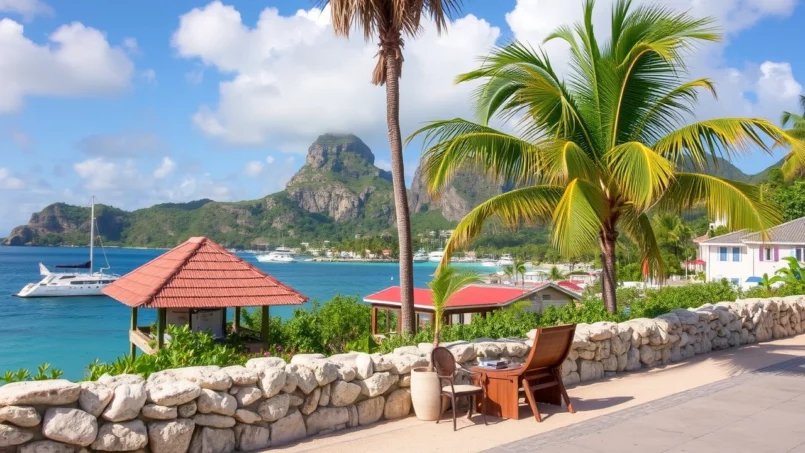
Imagining your new life in Saint Barthélemy often means thinking of postcard-perfect beaches, dinners by the water, and small roads lined with bougainvillea. But behind the luxury postcard image lies a very real society, with its own codes, habits, and a strong identity, halfway between France and the Caribbean. For a future expat, understanding these cultural differences is not a detail: it is often what makes the difference between an idyllic stay and a difficult integration.
Saint Barthélemy is a French overseas collectivity with a distinct way of life and customs. They result from a blend of French, Creole, Swedish, and Caribbean influences, which show in the pace of life, family relationships, dress code, language, work, and business. It is not simply an extension of mainland France or an ordinary vacation destination.
A strong local identity: French, Caribbean… and very “St. Barth”
From an administrative standpoint, Saint Barthélemy is an overseas collectivity of the French Republic. People pay in euros, the basic laws are French, and residents are French citizens. But reducing the island to this status would miss its cultural reality.
The population, around 10,000 inhabitants, is often described as conservative in the positive sense: attached to its ancestors, traditions, environment, and community cohesion. The territory’s small size – barely 21 to 25 km² depending on the source, for 8 to 11 kilometers in length – reinforces the feeling of an “extended village” where almost everyone eventually crosses paths.
The island was inhabited by the Arawaks and Caribs before Christopher Columbus arrived in 1493. Colonized by the French in the 17th century, it was then under Swedish control for nearly a century, which influenced its architecture and symbols (such as the Three Crowns on its coat of arms). Returned to France in 1878, slavery was abolished in 1847 under Swedish administration. Becoming an overseas collectivity in 2007, its historical journey shapes a distinct identity, halfway between the mainland and Creole culture.
This mosaic of influences is reflected in daily culture: a blend of French sophistication, Caribbean warmth, a taste for the sea and luxury, but also an attachment to calm, discretion, and family life. The international image of a destination for billionaires and celebrities does not erase this local foundation; on the contrary, it coexists with a fabric of long-established families who are very proud of their roots.
A chic but surprisingly relaxed atmosphere
For an expat, the first impression is often one of deliberate refinement: top-tier hotels, gourmet restaurants, designer boutiques, prestigious nautical events, dream villas. People readily speak of a “posh,” exclusive, very fashionable atmosphere.
Beyond the glamorous appearance, daily life is characterized by simplicity, intimacy, and relaxation. The absence of large resorts, skyscrapers, mega-casinos, and massive cruise ship arrivals favors tranquility and a certain quality of life. Local priorities are eating well, enjoying the sea, seeing friends, and respecting the environment.
This combination – ostentatious luxury for visitors, simplicity and discretion for residents – can be surprising. You might spot a yacht owner in flip-flops and a wrinkled linen shirt, a Michelin-starred chef in shorts at the market, or a billionaire seated at a small beach restaurant where everyone uses the informal “tu.” Understanding that vulgar displays of wealth are frowned upon, while quality and comfort are valued, is a key point of adaptation.
Language and communication: French as the key to integration
On paper, expats have it easy: French is the official language, English is widely spoken in hotels, restaurants, and shops. Yet smoothing over linguistic edges is fundamental to being accepted beyond the tourist circle.
A linguistic landscape more complex than it seems
Saint Barthélemy is Francophone by status and usage: roughly three-quarters of the population uses French daily. It is the language of school, administration, local media, and formal exchanges.
But the island is also a linguistic meeting point:
| Languages spoken in Saint Barthélemy | Approximate share of population | Main context |
|---|---|---|
| French | ~74% | Administration, school, local life |
| English | ~12% | Tourism, business, commerce |
| Creole / local patois | ~3% | Heritage, elderly, family circles |
| Italian | ~2% | Italian community, tourism |
| Portuguese | ~1% | Portuguese community |
| Other (Spanish, etc.) | Minority | Immigration, tourism |
Alongside standard French, several dialects coexist: a specific Saint Barthélemy patois, forms of Creole, a local English from Gustavia sometimes called “St. Barth English.” These languages and dialects are in decline, especially among the young, but retain strong identity value for the older generation.
Although English is widely used in tourism and international business, allowing one to live without perfect French in international circles, relying solely on this language confines you to a social bubble of expats and passing visitors.
Politeness codes: “Bonjour” is not optional
In this culture very oriented toward respect, simply greeting someone properly makes a huge difference. On the island, entering a shop, a small supermarket, or an office without a “Bonjour, Madame” or “Bonjour, Monsieur” is perceived as rude. Same for an “Au revoir” or “Bonne journée” when leaving, whether you bought something or not.
In practice, a few phrases are enough to show goodwill:
– “Bonjour / Bonsoir“
– “S’il vous plaît“
– “Merci“
– “Excusez-moi“
– “L’addition, s’il vous plaît“
– “Parlez-vous anglais ?“
Grammar mistakes or accents are not a problem; on the contrary, the effort itself is appreciated. Conversely, assuming everyone must speak perfect English, or raising your voice when there is a misunderstanding, immediately closes doors.
Gestures, tone of voice, and personal space
Non-verbal communication generally follows French codes. People shake hands at first meetings, maintain eye contact as a sign of respect and sincerity. Among friends or acquaintances, the “bise” – two light kisses on the cheeks – is common, but should not be improvised with just anyone: here again, it is best to let the other person make the first move.
Tone of voice is a strong cultural marker. Exuberant outbursts, very loud volume, boisterous laughter in public are frowned upon, especially in restaurants or quiet streets. Conversation should remain polite, without aggressiveness or excessive familiarity. Asking too quickly about money, religion, or private life can be perceived as intrusive.
Personal space should also be respected: don’t spontaneously tap a stranger on the shoulder, don’t kiss everyone you just met, and avoid displays of enthusiasm deemed “invasive.” Saint Barthélemy is a small island, but symbolic distance matters.
Relationship with time: between French culture and “Caribbean time”
The way time is managed is one of the major sources of misunderstanding in expatriation, and Saint Barthélemy is no exception. The island combines a French influence – where punctuality is important in the professional world but more flexible socially – with a Caribbean rhythm, slower, sometimes called “island time.”
Punctuality: different depending on context
Research in chronemics (the study of time in communication) shows that cultures fall on a continuum between monochronic (strict time, tight schedules) and polychronic (flexible time, priority on relationships). The United States, Germany, or Japan embody the first approach; many countries in Latin America, Africa, or the Caribbean embody the second more.
Saint Barthélemy falls in an intermediate zone, influenced by:
Perception of punctuality differs across cultures. In France, it is expected at work and for official appointments, but a slight delay is tolerated for dinners or private parties. In Caribbean culture, the priority given to the quality of the relationship and the present moment leads to greater flexibility for social gatherings.
Concretely, this gives:
– for a professional appointment, at city hall, the bank, or a lawyer’s: arriving on time, even a few minutes early, is the implicit norm;
– for dinner at friends’ place: showing up 10 to 15 minutes late is seen more as polite than rude; arriving early may embarrass the hosts;
– for a party or informal event: a margin of 15 to 30 minutes after the stated time remains widely acceptable.
Studies in cross-cultural psychology confirm that definitions of “being on time” vary by country and context (work vs. friendly gathering). The more economically developed a country, the lower the tolerance for lateness on average; but in all cases, people are more lenient about lateness for social events than professional ones. Saint Barthélemy generally follows this pattern.
For an expat, perception of punctuality in France requires adaptation depending on one’s culture of origin. People from very strict cultures (like Germany, Japan, or the Netherlands) should expect some flexibility, especially for services or event organization. Conversely, those used to a very relaxed approach (as in some Latin American or Middle Eastern countries) must understand that the French administration takes deadlines and appointment times very seriously.
Service time and deliberate slowness
Life in the tropics has historically been paced by natural cycles rather than by the industrial clock. In Saint Barthélemy, this translates to a more relaxed rhythm than in mainland France: responding quickly is not necessarily a sign of seriousness; doing things slowly and deliberately is.
This perception can be destabilizing in restaurants or shops: “slow” service, long waiting times, lengthy midday breaks. Yet pushing to speed up, getting angry, or complaining loudly makes everyone lose face and will brand you as “difficult.” Accepting, as much as possible, this different temporality is part of integration.
Social integration: codes, invitations, and village life
In a tight-knit island community, integration is not just about language. Implicit social rules – how you introduce yourself, how you behave at the table, how you return an invitation – ensure the smooth functioning of collective life.
Beyond the “Bonjour” mandatory in shops, the way people greet each other structures relationships:
– at first contact: a firm handshake, but not overly strong, eye contact and a smile;
– between neighbors or colleagues with whom a bond has been established: one can gradually move to the informal “tu” and the cheek kiss, but the initiative often comes from the local person or the older one;
– in very formal or administrative situations: prefer “Monsieur,” “Madame,” even “Maître” for a lawyer, with systematic formal “vous.”
Familiarity is not declared; it must be earned. Asking to use first names right away, calling everyone by their first name from the start, or spontaneously using “tu” can be perceived as too fast, even disrespectful.
Invitations and dinners: an art de vivre à la française
Meals hold a central place in the culture, and Saint Barthélemy is no exception. French dining etiquette is largely observed:
A few social conventions observed during a meal at a restaurant in France, reflecting the importance given to the meal as a moment of sharing.
It is customary to wait for the server or host to indicate your seat at the table.
Keep your hands visible on the table, generally without resting your elbows on it.
The meal is a convivial moment that should not be rushed. It is frowned upon to hurry the server, ask for the check immediately after the main course, or plan a dinner on a very tight schedule (e.g., one hour).
Being invited to someone’s home is a sign of trust. Bringing a small token – a bottle of wine, flowers (avoid chrysanthemums, associated with funerals), chocolates – is highly recommended. Discussing business during aperitifs, on the other hand, is discouraged unless the host brings it up. Among the French, as in Saint Barthélemy, the professional sphere is willingly separated from the private sphere.
Responding to invitations in a timely manner is a mark of respect, while canceling at the last minute without a serious reason can damage the relationship. To integrate well, it is important to return the invitation, for example by proposing a dinner or an outing in turn.
Religion, holidays, and community life
The majority of the population claims Catholicism, even if religious practice may be less intense than before. Nevertheless, major religious holidays – Christmas, Easter, Assumption, All Saints’ Day, the patron saint’s feast on August 24 – remain important moments, with masses, processions, family meals, and ceremonies.
The cemeteries lit with candles on All Saints’ Day, the patronal festivals, traditional costumes worn during processions are more than folklore: they express the continuity of a community that, despite the arrival of expats and tourists, holds onto its bearings. Attending these events with respect, without imposing oneself, can be an excellent way to understand the soul of the place.
The year is also punctuated by many festivals: carnival, neighborhood parties, regattas (Bucket Regatta, Les Voiles de St Barth), music festival, film festival, culinary events like the Gourmet Festival. Participating, as a simple spectator or volunteer, allows you to enter the island’s rhythm and meet locals in a relaxed context.
Dress code: casual elegance, the island’s golden rule
If there is one area where cultural difference is visible from day one, it is appearance. In Saint Barthélemy, dress style is a language in its own right.
A general code: chic without ostentation
Overall, the island cultivates an aesthetic inspired by the French Riviera: neat appearance, clean lines, natural fabrics, light colors. People often speak of “casual chic” or sophisticated “resort wear.” Residents and locals favor:
Key characteristics for putting together elegant outfits suited to summer heat.
Choose natural materials like linen, cotton, silk, or Giza cotton for optimal comfort.
Opt for streamlined silhouettes that still maintain a well-structured fit suited to your body type.
Neutral, pastel, white, or beige tones, which can be accented with a few brighter touches.
Fine jewelry, straw hats, natural fiber bags, and oversized sunglasses for an elegant finish.
Conversely, overly flashy outfits – loud colors, aggressive patterns, XXL logos, bulky jewelry, stiff evening suits – clash in this landscape where luxury is meant to be understated. The message is clear: quality is preferred over showiness, personality over glitz.
Dress by location: the beach/town boundary
A basic rule is non-negotiable: swimwear belongs on the beach, not in town. Walking around in a bikini or shirtless in Gustavia or in St. Jean restaurants is frowned upon, even considered a disrespect to the local population.
Here is a summary of accepted practices:
| Location / situation | Appropriate attire | Attire to avoid |
|---|---|---|
| Beaches | Swimsuit, sarong, shorts, light t-shirt | Full nudity, except designated areas |
| Many beaches (not all) | Monokini (topless often tolerated) | Topless on more family-oriented beaches |
| Town (Gustavia, St. Jean, etc.) | Shorts or light pants, dress, shirt | Swimsuit only, shirtless, wet clothes |
| Restaurants, cafés, shops | Casual chic, dry clothing | Soaked tank top, bare feet, beach top |
| Fine dining and evening events | Elegant dress, linen shirt, well-cut pants, chic sandals or loafers | Three-piece suit, strict tie, stiletto heels on cobblestones |
| Churches, religious ceremonies | Modest attire: covered shoulders, long skirt or pants | Deep neckline, very short shorts, thin straps |
The climate (around 77–90°F / 25–32°C, high humidity) makes thick, synthetic, or dark fabrics uncomfortable. Very high heels are often impractical on cobblestones, steep streets, or sandy paths; flat shoes or moderate wedge heels are more suitable.
For an expat wishing to blend in, investing in a few quality, simple, well-cut pieces is more relevant than multiplying spectacular outfits.
Working and doing business: French bureaucracy, island rhythm
On the professional front, Saint Barthélemy combines two realities: that of a very open economy, geared toward high-end services, and that of a French territory subject to a notoriously heavy administrative tradition.
A service economy, dominated by tourism
The island lives essentially from tourism, luxury retail, construction, and real estate. There are several thousand active businesses, mostly services. A significant portion is run by women, which nuances the image of an exclusively male environment.
Starting (or taking over) a business follows well-defined procedures:
To create your structure, you must contact the competent body according to your activity: the business formalities center (CFE or CEM) for commercial activities like real estate (including professional cards), URSSAF for liberal professions, and the Chamber of Trades for craft activities (requiring proof of qualification through a diploma or three years of experience).
All businesses must pay an annual contribution (CFAE) and a waste treatment tax according to their sector. Social protection for the self-employed is managed by the Caisse de Prévoyance et Santé.
This structuring requires the expat to have a good understanding of French labor law, contracts, employee protection, as well as local tax obligations, which are relatively autonomous within the French and European framework.
Bureaucracy: rigor, formalism, and patience
Research on expatriate adaptation shows that about 20% return prematurely to their home country due to difficulties managing cultural differences, including perception of time and relationship with administration. In Saint Barthélemy, these factors are clearly to be anticipated.
Administrative services place great importance on:
– original documents;
– multiple photocopies;
– following forms and procedures precisely;
– appointments made in advance;
– polite and formal tone (Madame, Monsieur, formal “vous”).
Delays may seem long, but pushing abruptly, raising your voice, or ignoring politeness codes is counterproductive. Keeping complete archives (copies of forms, proof of submission, emails, acknowledgments of receipt) is vital in this highly documented system.
For complex matters – immigration, taxation, structured business creation, estate planning – hiring a local lawyer, a relocation specialist, or an experienced tax advisor familiar with French structures and international agreements often represents a worthwhile investment.
Daily life and customs: shops, tipping, environment
Beyond work, the way one consumes, moves about, and respects the natural surroundings reflects deeply rooted norms.
Business hours and shopping habits
Shops, banks, and services follow a French logic with a strong island imprint:
– open in the morning, closed for a long lunch (often from noon to 3 PM);
– widespread Sunday closure, except for a few very touristy shops;
– reduced hours on the eve and day after certain public holidays.
Sunday is a real day of rest, family, beach, and mass. Trying to run administrative errands, demanding a service be open, or making multiple professional calls on that day goes against local culture.
Prices are generally fixed, especially in luxury boutiques in Gustavia. Haggling is neither expected nor appreciated. Some negotiation may be possible at certain markets or with artisans. Politeness is mandatory: greet upon entering and say thank you, even without making a purchase.
Tipping culture: between France and North America
For North American expats, the tipping question is often a source of confusion. In France and therefore in Saint Barthélemy, service is included in the bill (in principle around 15%), as servers are salaried. The tip (“pourboire” literally meaning “for a drink”) is an optional extra to thank for good service.
On the island, practice has adapted to international tourism:
| Service | Usual practice |
|---|---|
| Restaurants | Service included, leave 5 to 10% extra if service was good; over 10% reserved for exceptional service |
| Bars, cafés | Round up or leave a few euros |
| Hotels (bellhop, housekeeping) | €1 to €2 per service or per day |
| Taxis | About 10% of the fare |
| Guides, excursions | 10 to 15% depending on satisfaction |
| Fully staffed luxury villas | Often a 5 to 10% service charge already included; extra at the client’s discretion |
Some establishments have been criticized for illegally adding a “gratuity” of 15 to 20% on top of the included service, prompting local tourism authorities to react. This shows that practice is evolving under the influence of the American clientele, accustomed to 20-25% tips. For an expat, it is best to stick to local customs, leave tips in cash when possible, and not be intimidated by possible “tip” lines added to receipts.
The island is small, resources are limited, and the impact of tourism is quickly visible. Environmental protection is therefore not just a slogan: it is a collective reflex.
A few cultural benchmarks are essential for better understanding and adapting to a new environment or interacting in a cross-cultural context.
– wasting water is heavily frowned upon, especially during the dry season: water comes partly from a desalination plant and from cisterns;
– littering in nature or on the beach is socially unacceptable, and may attract direct remarks;
– sea turtles, coral reefs, and local wildlife are specifically protected in the Nature Reserve: anchoring is prohibited in certain areas, use of buoys is mandatory, disturbing animals is forbidden;
– single-use bags, straws, and plastics are increasingly discouraged, even regulated.
For an expat, spontaneously adopting these behaviors – reducing water consumption, sorting waste, limiting noise pollution, respecting hiking trails – is not just about ecology: it is showing respect for what residents consider their most precious asset.
Getting around and safety: caution on the roads, trust in the streets
Saint Barthélemy is often cited as one of the safest territories in the Caribbean. Violent crime is rare, and many villas remain open during the day. This does not preclude basic caution – not leaving valuables in plain sight, for example – but the feeling of security is real and precious.
However, road traffic requires constant vigilance:
Driving is on the right. Roads are often narrow, steep, and winding, sometimes without shoulders. Parking is limited, especially in Gustavia where blue zones with time limits require a parking disc. The lack of public transportation makes a car or scooter almost essential.
The island’s small size sometimes encourages relaxed driving, but accidents are not rare. For newcomers, renting a compact vehicle, well-suited to the coast and tight turns, is preferable to an oversized SUV. High heels and unstable sandals should also be avoided for driving or walking on the capital’s cobblestone slopes.
Living year-round: between intimacy, cost of living, and administrative constraints
Expatriating to Saint Barthélemy is not simply extending a vacation indefinitely. Year-round living means dealing with a high cost of living, a tight real estate market, limited infrastructure, and a specific legal regime.
The price of imported goods – food, materials, equipment – far exceeds those in mainland France. Desalinated water and electricity are among the major expense items. Schools are available up to high school, but higher education requires leaving for other territories.
Obtaining tax residency or a long-term status requires meeting strict conditions, such as actual presence for several years, center of interests on the island, and involvement in the community. The legal framework remains French, but taxation and procedures are adapted to the local context and international transparency obligations.
For those who succeed in this bet, Saint Barthélemy offers in return a rare lifestyle: safety, proximity to nature, quality basic infrastructure, access to a gastronomic and cultural offering far superior to what is usually found on an island of this size, and above all a social fabric that, once trust is earned, proves solid and loyal.
Understanding to better integrate
Studies on expatriation show that the main cause of failure is not a lack of technical skills, but the inability to decode and accept another value system: relationship to time, work, hierarchies, social rituals. Saint Barthélemy perfectly illustrates this observation.
Arriving with the idea that it is simply a “little piece of France” or, conversely, a “tropical Disneyland for the rich” is the best way to miss the essential. The island is a living social organism, with its memory – Native American, African, Swedish, French – its fragilities, limited resources, celebrations, pains (hurricanes, crises, reconstructions), codes of civility, and unspoken rules.
Advice for understanding Saint Martin
For the expat who accepts to learn – greet in French, slow down the pace, respect water and beaches, adopt elegance without ostentation, understand the weight of religious holidays, navigate administration patiently, listen more than speak at first – the reward is commensurate: finding not just a dream setting, but a community to which one can truly belong.
It is this cultural difference, ultimately, that one must grasp before expatriating to Saint Barthélemy: you do not come only to inhabit a landscape, you come to share, in your own way, a singular way of inhabiting the world.
Disclaimer: The information provided on this website is for informational purposes only and does not constitute financial, legal, or professional advice. We encourage you to consult qualified experts before making any investment, real estate, or expatriation decisions. Although we strive to maintain up-to-date and accurate information, we do not guarantee the completeness, accuracy, or timeliness of the proposed content. As investment and expatriation involve risks, we disclaim any liability for potential losses or damages arising from the use of this site. Your use of this site confirms your acceptance of these terms and your understanding of the associated risks.

Cyril Jarnias is an independent expert in international wealth management with over 20 years of experience. As an expatriate himself, he is dedicated to helping individuals and business leaders build, protect, and pass on their wealth with complete peace of mind.
On his website, cyriljarnias.com, he shares his expertise on international real estate, offshore company formation, and expatriation.
Thanks to his expertise, he offers sound advice to optimize his clients' wealth management. Cyril Jarnias is also recognized for his appearances in many prestigious media outlets such as BFM Business, les Français de l’étranger, Le Figaro, Les Echos, and Mieux vivre votre argent, where he shares his knowledge and know-how in wealth management.





